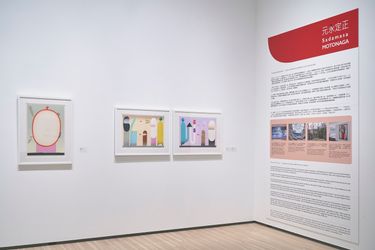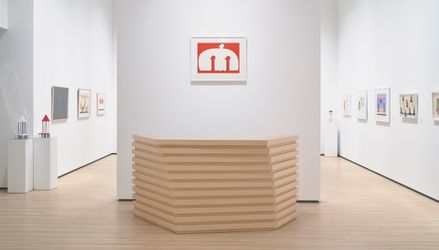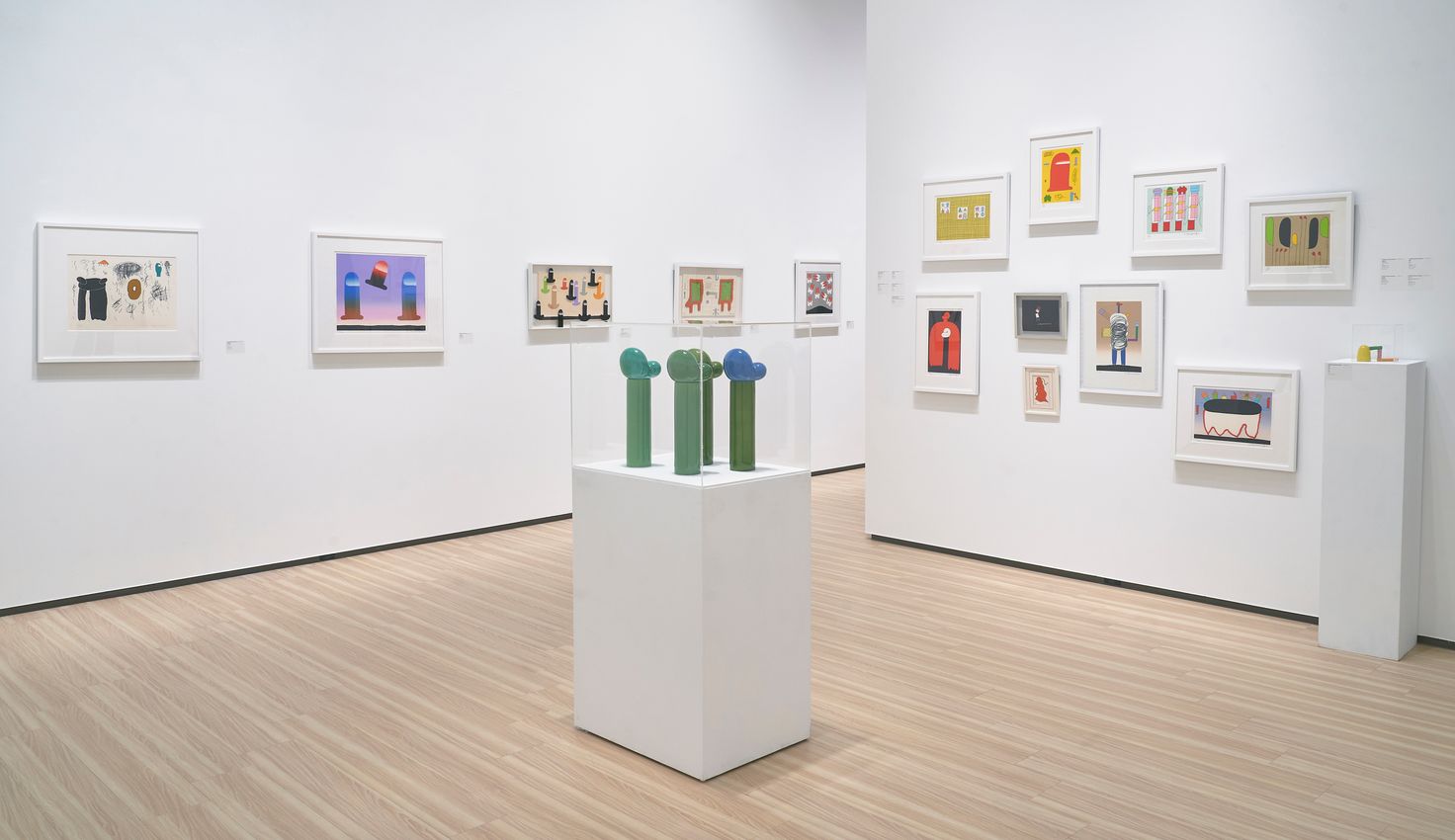
‘My style is the top style.’ Self-taught artist, Sadamasa Motonaga said confidently.
Motonaga was a core member of Gutai Art Association 1. He sought new means of expression, unprecedented forms, brilliant colours and experimentation. He initially became famous for his drip paintings, which were inspired by the traditional Japanese technique of ‘tarashikomi’ (wet-in-wet). Applying layers of liquid paint that were absorbed into the canvas in an irregular way.
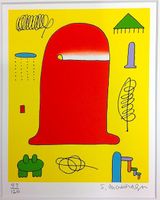
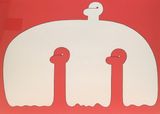
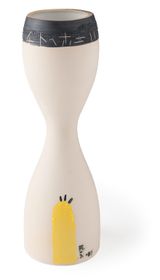
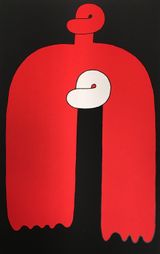
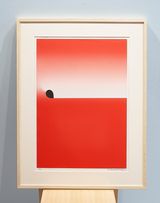
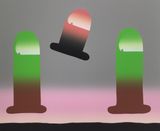
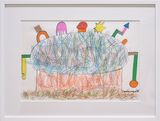
Thereafter in the 1970s, the artist’s scratchy hand-drawn forms reappeared along with the use of canned spray paint, creating a style that was fresh and raw, akin to graffiti and animation. Creating paintings that are characterised by simple lines and a gentle palette of muted primary colours.
‘He was human so he had his cold side too, but just his presence close at hand filled you with warmth. Perhaps it was a kind of aura.’ Etsuko, the wife of Motonaga, pays tribute to him as an artist of human warmth.
Motonaga had a unique sense of humour and an optimistic attitude. He sometimes styled himself comically an artist of ‘aho ha (a foolish school).’ His style was to work obeying his own feeling, without putting emphasis on art theories or ideas, while describing himself as foolish. In the latter stage of his creative career, he also created picture books for children. His humorous style has been popular through all ages.
In the spring of 2013, the exhibition ‘Gutai: Splendid Playground’ took place at Solomon R. Guggenheim Museum in New York. At that exhibition, Sadamasa Motonaga’s Work (Water), installed in the huge wellhole of the museum. Comprising a series of vinyl sheets with dyed water, hung like hammocks. Gravity pulled the sheets into curved forms, allowing the water to pool at the bottom, while the changing natural light subtly affected its jewel-like colors throughout the day.


Sadamasa Motonaga is one of the representative artists from the first generation of Gutai Art Association. In his later career, Motonaga is also active as author of children’s books, and his specific style of humour is well known among people of all ages. Motonaga belongs to Gutai group from 1955 to 1971. He develops one after another his own innovative ideas such as “Water Sculpture”, which hangs vinyl bags filled with painted water, application of traditional dripping method of Japanese painting “Tarashikomi” to his own style, adoption of airbrush for scattering acrylic paint, etc. Motonaga gets experience in oversea from his early period including contracts with Martha Jackson Gallery (New York) and International Centre of Aesthetic Research (Turin, Italy). The artist is highly acclaimed in international exhibitions such as Venice Biennial, Seoul International Print Biennial, Torino Premio Risone International Exhibition, etc.


Established in 1967, Whitestone Gallery is a leading Japanese gallery presenting a broad spectrum of Japanese art from the post-war to contemporary in spaces across East Asia.

A respected voice in contemporary art discourse.
Focusing on ambitious storytelling and insightful art-world commentary. Ocula Magazine publishes in-depth interviews, critical essays and timely analysis on the artists, exhibitions and ideas driving the global art world.
Learn more about Ocula Magazine
Showcasing the best of the art world.
Ocula partners with galleries from around the world to highlight their artists, artworks and exhibitions. Gallery membership is by application and invitation, with each member vetted by an independent panel.
Learn more about Ocula Membership

Specialises in the sale of major artworks.
Led by a team with deep ties to the world’s leading auction houses, galleries and collectors. Ocula’s advisory team offers bespoke services to high-net-worth clients from around the world who are looking to acquire the best of contemporary and modern art.
Learn more about our team and services