Press Release

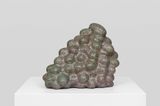
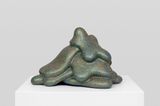
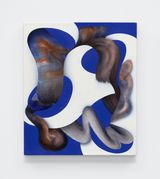
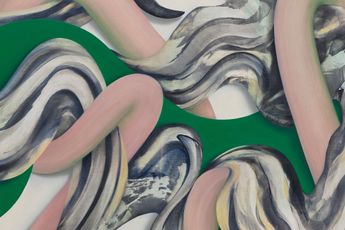
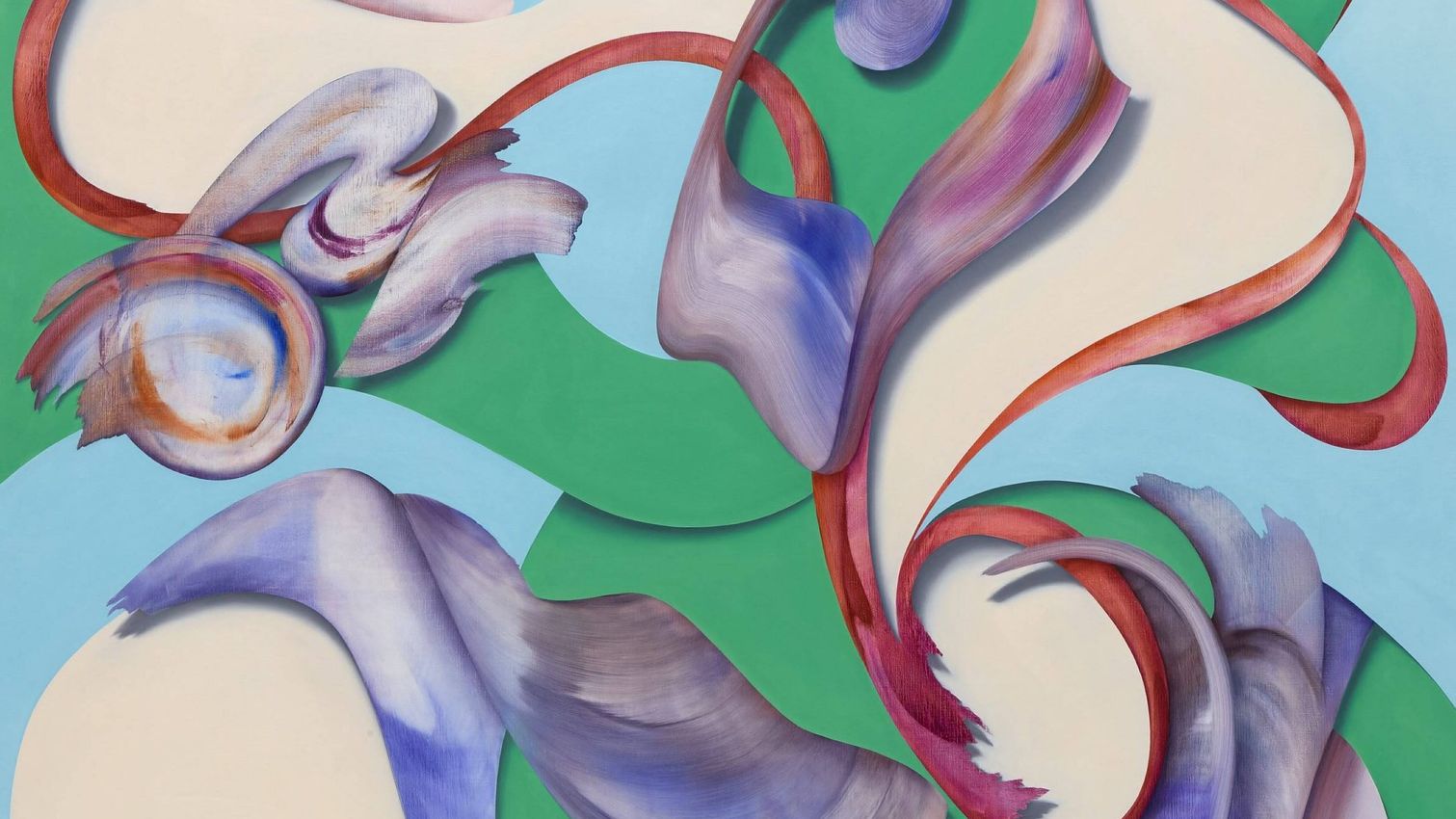
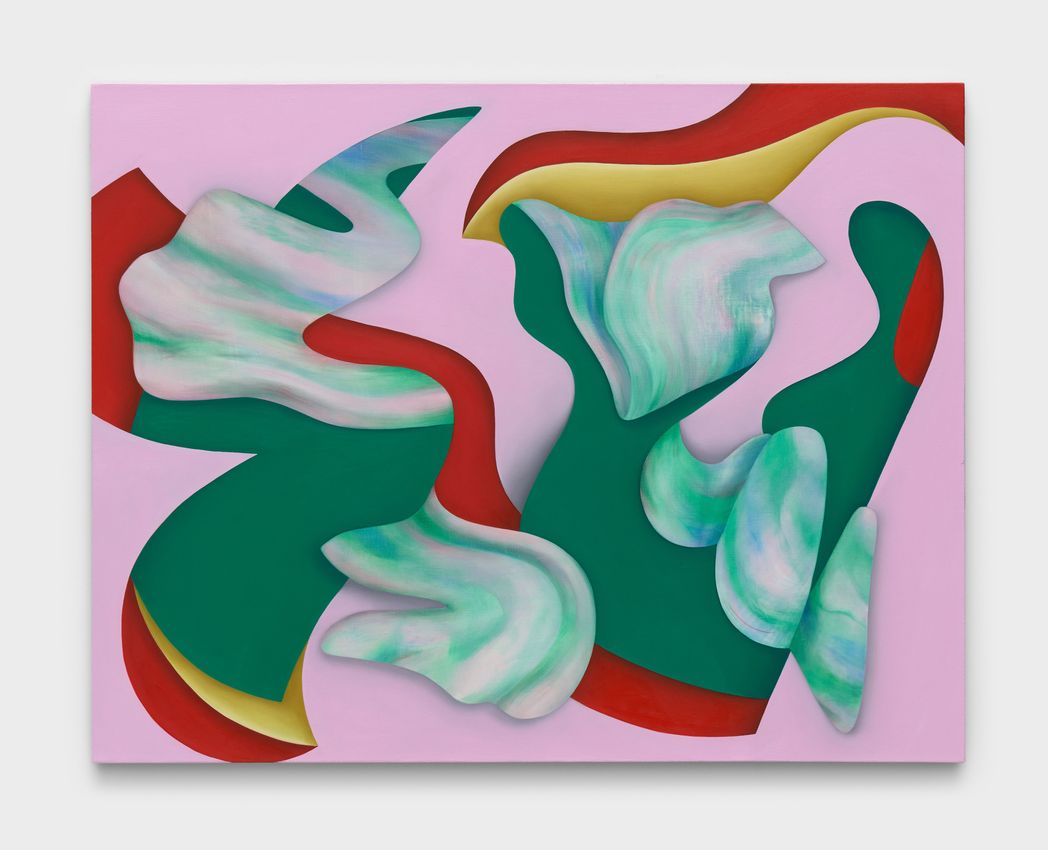
Fired and painted brings together a recent series of paintings by Lesley Vance (b. 1977) and a group of ceramic sculptures by Ken Price (1935-2012). Two American artists of different generations and disciplines but whose abstract works share a number of affinities. Taking scale as a departure point, Vance has pushed her practice in new directions for this exhibition, her fifth with the gallery. The presentation not only includes her largest canvas to date but also some of her smallest, together with an ensemble of medium-format paintings. Through the interplay of scales and volumes, Fired and painted suggests resonances between the different art forms and opens up a dialogue on the themes of colour, surface, form and spatiality.

Lesley Vance has long been fascinated by the relationship between ceramics and painting, both of which involve the application of fluid mediums onto neutral supports. Moreover, she also cites Ken Price as a key source of inspiration. A relentless innovator in the field of ceramic sculpture, Price is best known for his biomorphic forms that he finished, from the 1980s onwards, with acrylic paint instead of traditional glazes. Typically applying up to seventy layers of pigment and multiple colours to each work, he sanded these down to create striking, mottled effects. Colour is one of the key themes that links these two artists: both artists use its material qualities and allow it to determine their work in a physical and expressive sense.

Price and Vance also focus on reduction as a means of creation. Vance, who is interested in synergy and dissonance, often restricts her palette to a handful of shades in order to explore their full, tonal potential. In terms of composition, too, the act of removal is as important as the constructive process. She likens it to a form of ‘reverse collage’. Price, on the other hand, condensed a broad spectrum of colours into hues that read, from a distance, as a uniform colour value. He said: “Colour has been an integral part of most of the work I’ve made, but there’s not much to say about it. Colour is complete in itself. It doesn’t need any support from art, representation, language, or anything else. It’s hard to control... Colour conveys emotion, but you can’t really control that either.” Vance’s paintings, in which colour functions autonomously on both a structural and atmospheric level, echo this sentiment.

Both of the artists’ oeuvres revolve around movement. Price’s sculptures have a fluid, molten-like quality—as if a thick, viscous liquid has been stopped mid-pour. Vance’s paintings are dynamic compositions in which shapes and colours are indivisibly and inexplicably linked: they advance and recede, emerge and disappear, separate and converge. Price’s and Vance’s works are neither static nor lifeless. Both convey the idea of arrested movement in their art, as though motion has been temporarily suspended rather than permanently ended. And the roots of their practices, while abstract, ultimately lie in reality: Price found inspiration in the strange alien-like rock forms and ancient pottery of New Mexico, while an arrangement of objects, a glazed ceramic surface, or even another painting can all be catalysts for the gestures and shapes that determine the course of Vance’s paintings.

Price developed a highly personal approach to process and materials, and the same is true of Vance. His sculptures are flawlessly finished, inscrutable and luminous, and reveal nothing of the methodology behind their curious and otherworldly presence. The same sensibility is also found in Vance’s canvases, the surfaces of which are just as radiant and reticent. A mysterious quality surrounds both types of work: it is impossible to imagine the interior structure of a Price sculpture, just as the viewer will search in vain for a structural hierarchy in Vance’s paintings.

Finish is a crucial component of Price’s sculptures, which he described as “rounded forms with active surfaces.” Just as one might say of Vance’s paintings, in reverse, that they are “flat surfaces with active forms.” It is precisely this interaction—between colour, surface, form and spatiality—that links their work across disciplines and generations.

Lesley Vance (b. 1977, Milwaukee, WI, USA) lives and works in Los Angeles. Always circled whirling, her first solo institutional exhibition was recently organised by the Columbus Museum of Art, Columbus, OH, USA (2023). Vance’s work is held in numerous public collections: San Francisco Museum of Modern Art, San Francisco; Metropolitan Museum of Art, New York; Dallas Museum of Art, Dallas; Milwaukee Art Museum, Milwaukee; Museum of Contemporary Art, Los Angeles; The Museum of Modern Art, New York; Los Angeles County Museum, Los Angeles; Walker Art Center, Minneapolis; and The Whitney Museum of American Art, New York, among others. Her work is also currently included in 50 Paintings at Milwaukee Art Museum, Milwaukee.

Ken Price (1935-2012) participated in the Whitney Biennial in 1979 and 1981. His first retrospective took place in 1992 at the Walker Art Center, Minneapolis. A major travelling retrospective was organised by the Los Angeles County Museum of Art (2012-2013) and designed by his friend Frank Gehry. His works are included in important public and private collections around the world including the Metropolitan Museum of Art, New York; Museum of Modern Art, New York; San Francisco Museum of Modern Art, San Francisco; Whitney Museum of American Art, New York; Victoria and Albert Museum, London; Walker Arts Center, Minneapolis; and Stedelijk Museum, Amsterdam.

Read More

Artists Exhibiting

Also Exhibiting at Xavier Hufkens

About the Gallery
Xavier Hufkens is one of Europe’s leading galleries for contemporary art. Located in Brussels, the gallery maintains a diverse exhibition programme with solo exhibitions of the gallery artists as well as group exhibitions and special projects. The gallery deals in a distinctive combination of painting, drawing, sculpture, photography, video and installation-based work.

The origins of the gallery date back to 1987, when Xavier Hufkens opened a gallery space in an un-refurbished warehouse in the neighbourhood of the South Station (Midi) in Brussels. During the early years, the focus of the gallery was upon mid-career and emerging artists and the gallery is known for having introduced some of the most influential contemporary artists to Brussels at a time when they were still relatively unknown. British sculptor Antony Gormley, who is still affiliated with the gallery, Felix Gonzalez-Torres and Rosemarie Trockel all showed in Belgium for the first time with Xavier Hufkens (Gormley in 1987; Gonzalez-Torres in 1991 and Trockel in 1993).

In 1992, the gallery moved to a 19th-century townhouse at 6 rue Saint-Georges, close to the Avenue Louise. Completely renovated by Belgian architects Paul Robbrecht, Hilde Daem and Marie-José Van Hee, the house quickly gained a reputation for being not just one of the most beautiful contemporary art spaces in the Belgian capital, but also one of the most interesting. The expanded exhibition programme coincided with the additional representation of a number of established artists from Belgium and abroad, including Richard Artschwager, Thierry De Cordier and Jan Vercruysse. In 1997, Hufkens expanded the gallery further by annexing the adjacent building and a number of new artists joined the gallery, including Louise Bourgeois, Roni Horn and Thomas Houseago.

A second space in the same street, at 107 rue Saint-Georges, opened in spring 2013. Located in the Galerie Rivoli, a mixed-use commercial development from the 1970s, the new gallery space was designed by Swiss architect Harry Gugger, who was previously in partnership with Herzog and De Meuron. Slegten & Toegemann, Brussels, managed the project.

An eclectic but very clear vision underpins all of the gallery’s activities: ‘The definition of the gallery was established from the start. The common thread, then and now, is quality over and above everything else, which I find more intellectually challenging than a forced definition. From the early days I juxtaposed established artists such as Michelangelo Pistoletto with someone like Felix Gonzalez-Torres when he was totally unknown. Today I still mix my work: I have no problem showing Malcolm Morley … alongside Robert Ryman, or Willem de Kooning.’ [Xavier Hufkens in The Art Newspaper, Issue 220, January 2011, published online: 20 January 2011]

Xavier Hufkens represents some thirty artists from different generations. He was part of the six-member selection committee for Art Basel during seven years and also participates in up to five international Arts Fairs annually. The gallery has partnerships with the estates of Louise Bourgeois, Willem de Kooning, Robert Mapplethorpe and Alice Neel.
View Gallery Profile
Address
44 rue Van Eyck
Van Eyckstraat
Brussels
Belgium
Opening Hours
Tuesday – Saturday
11am – 6pm
(1)
Brussels 44 rue Van Eyck, Van Eyckstraat
Xavier Hufkens
44 rue Van Eyck, Van Eyckstraat, Brussels, Belgium

Opening hours
Tuesday – Saturday
11am – 6pm
The art world in focus