Press Release

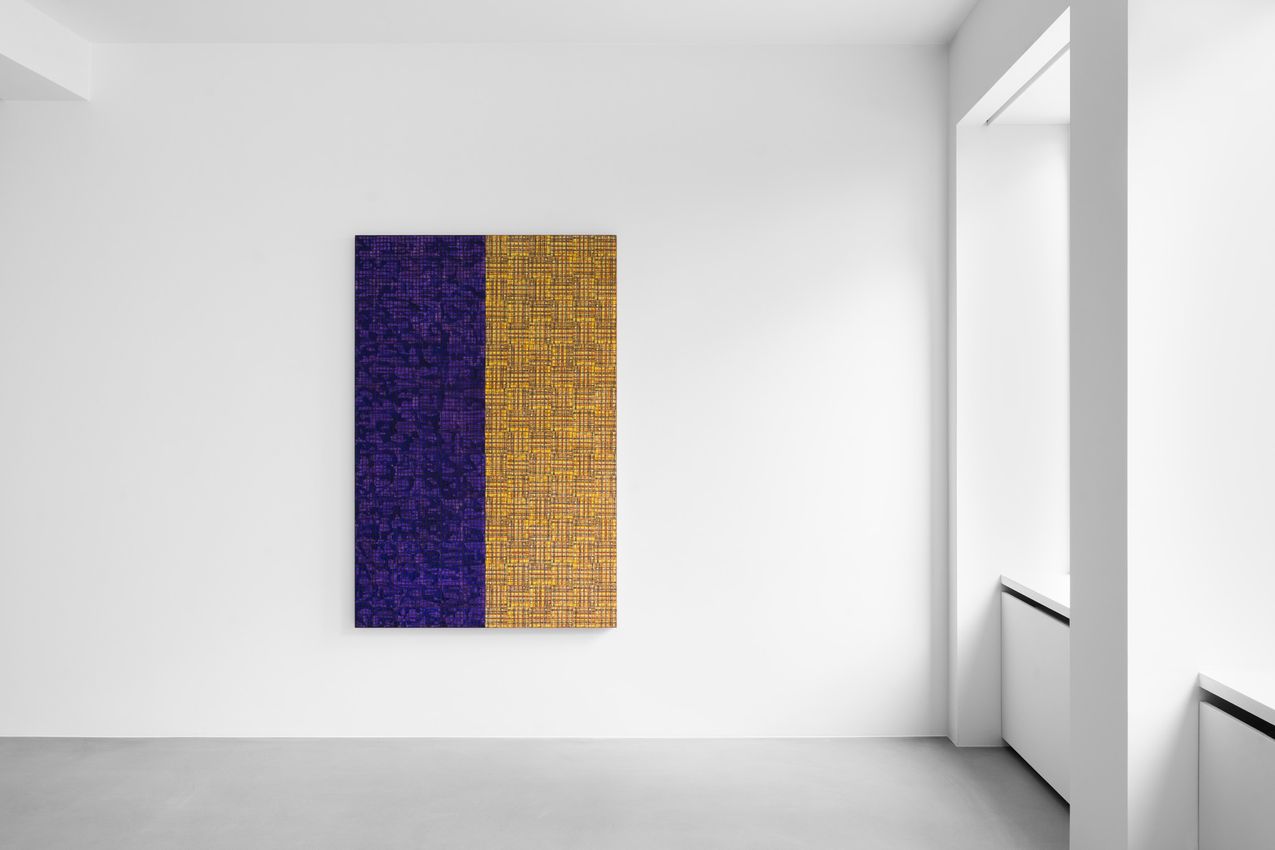
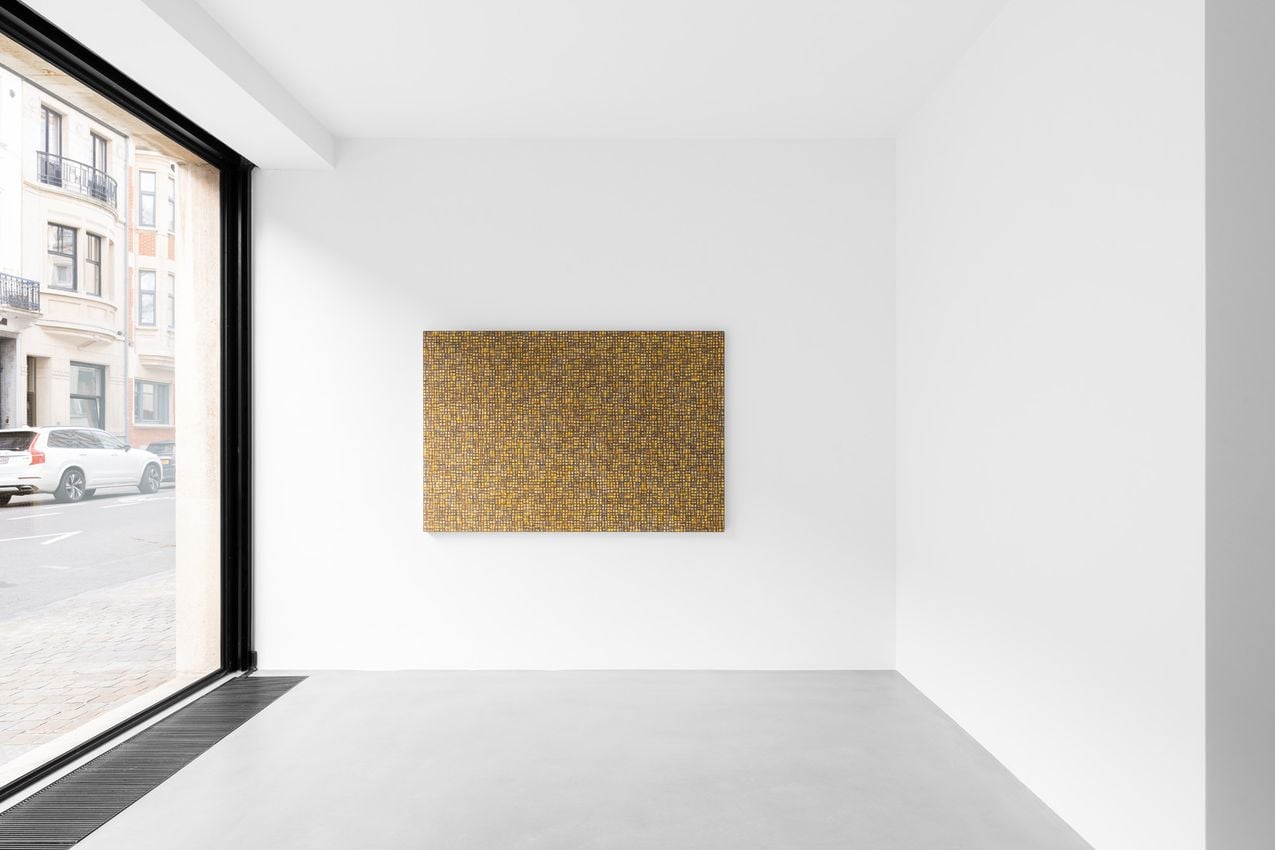
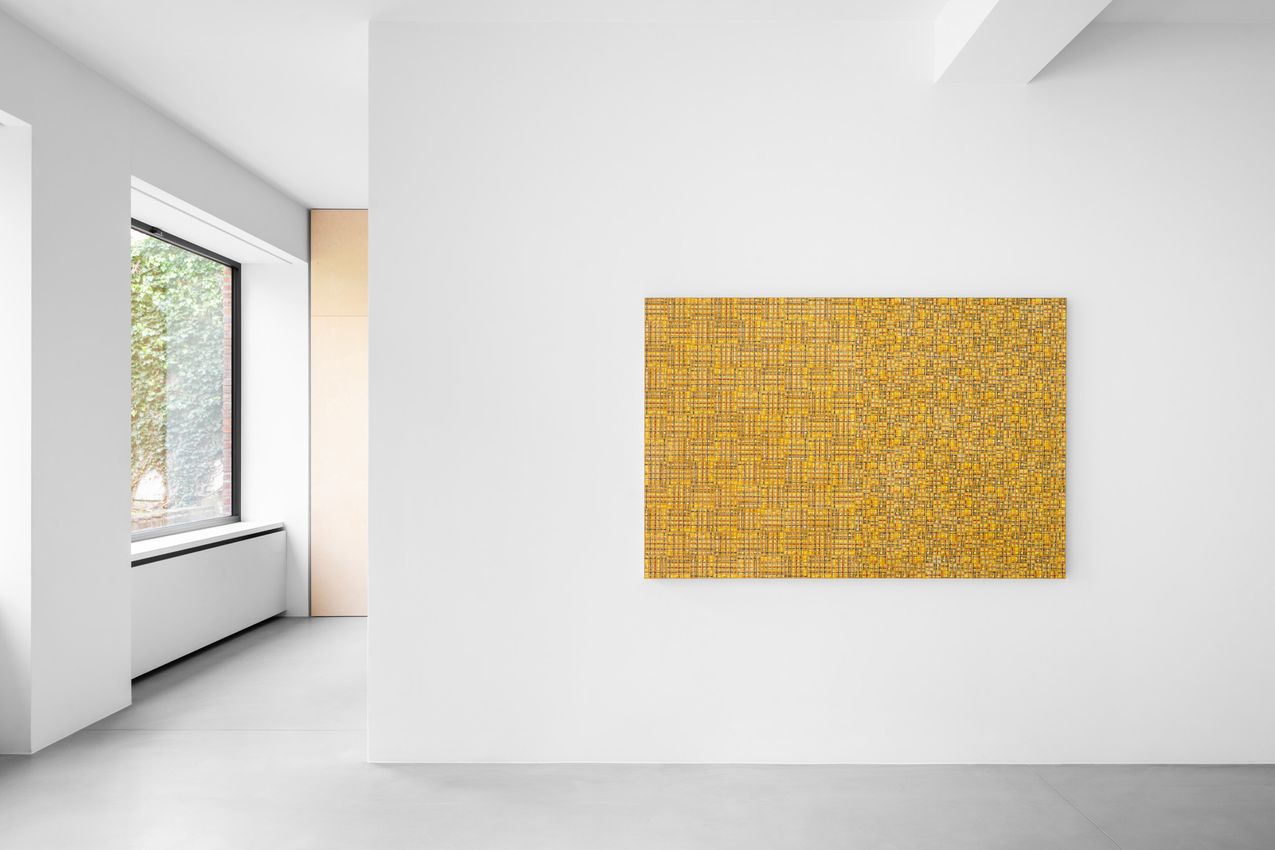
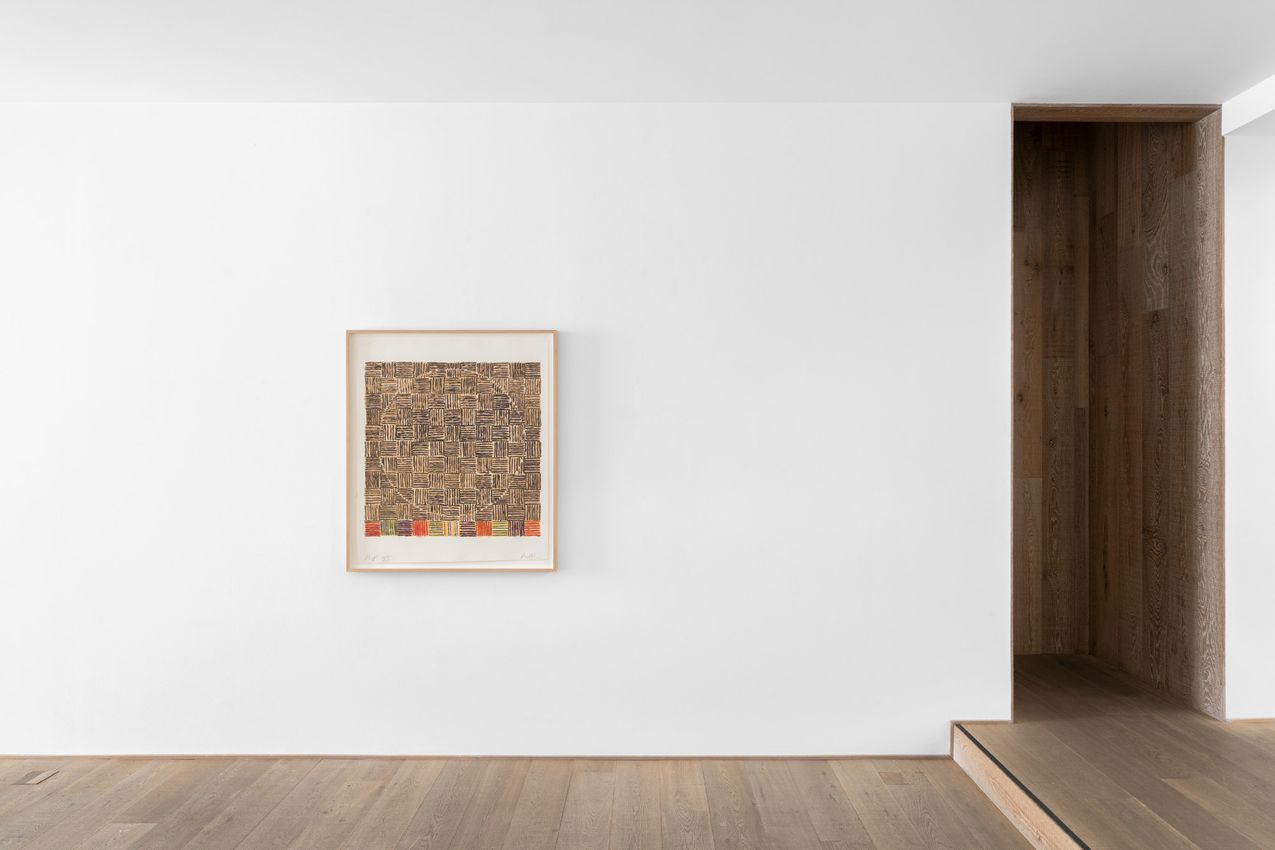
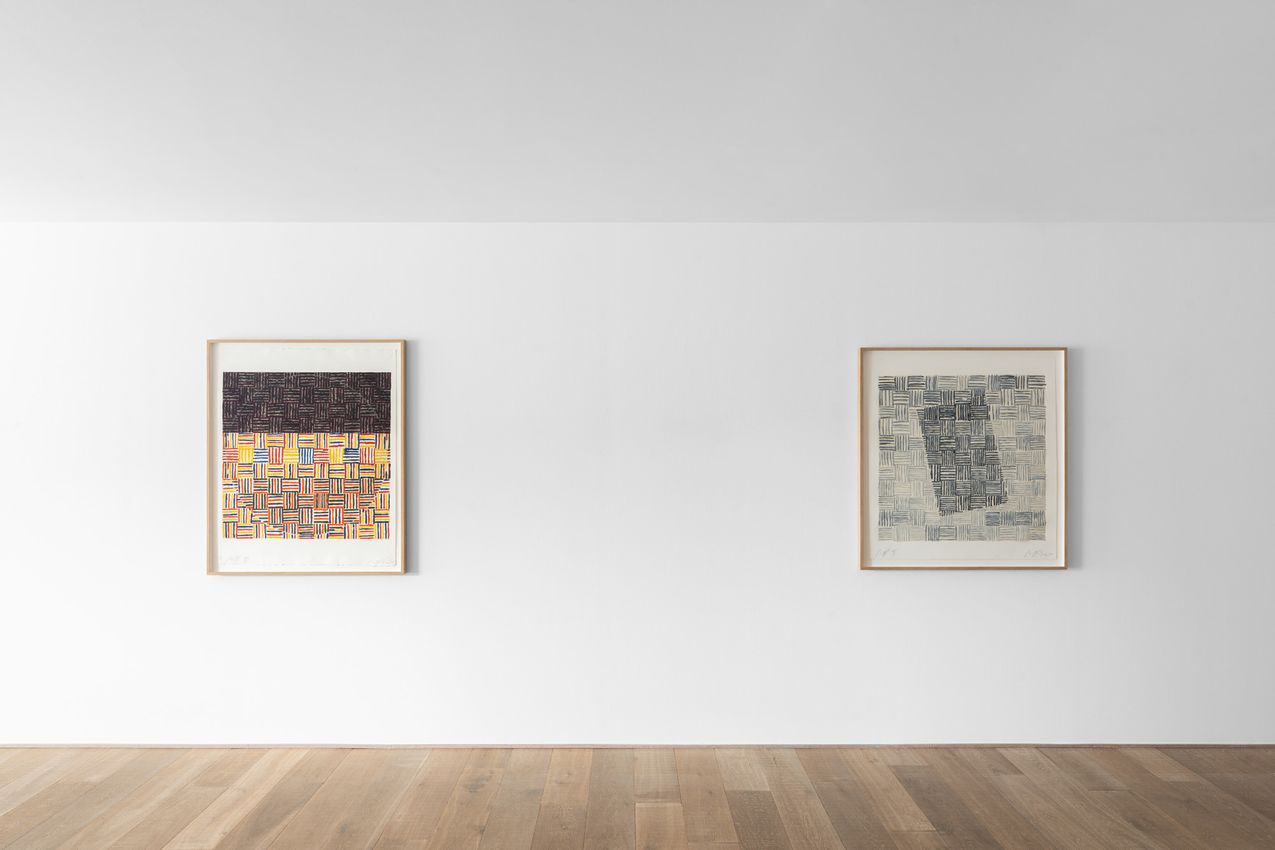
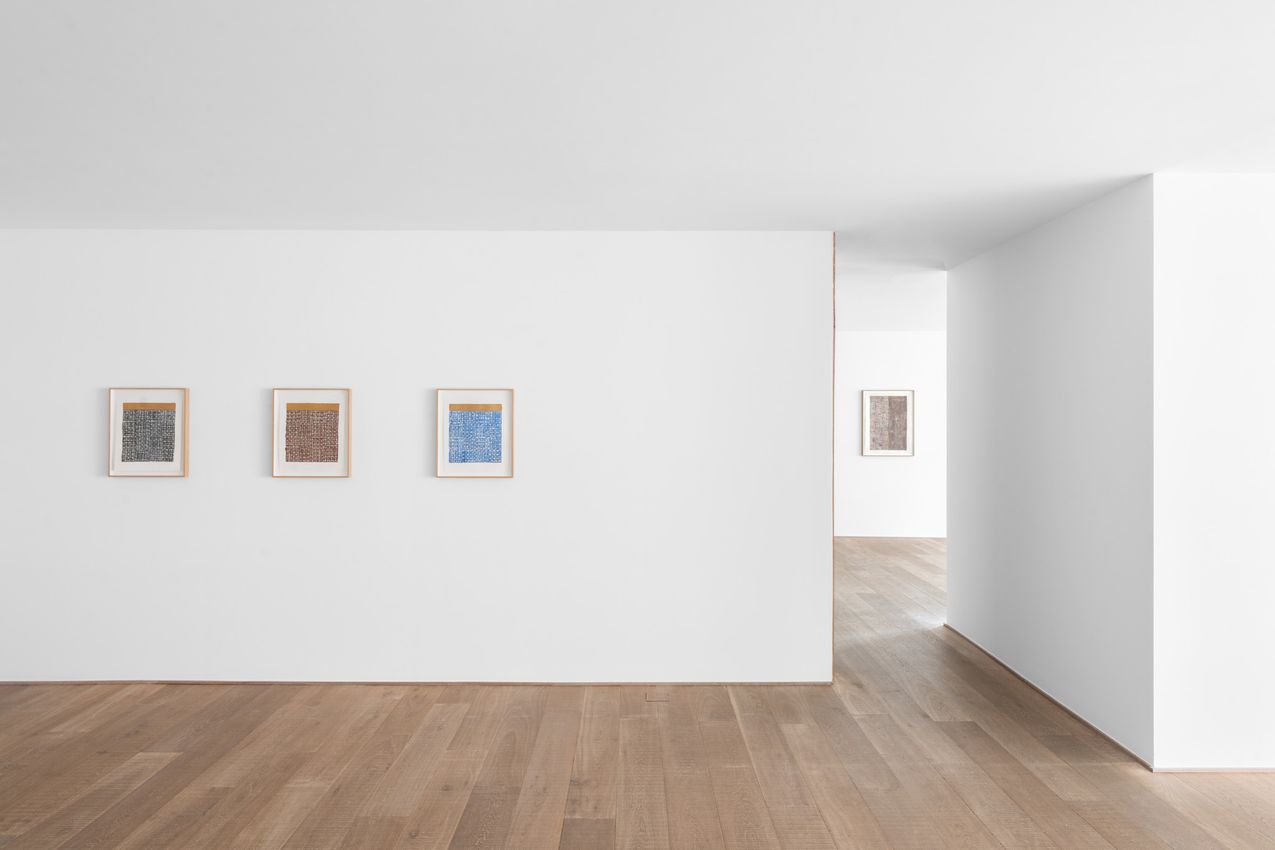
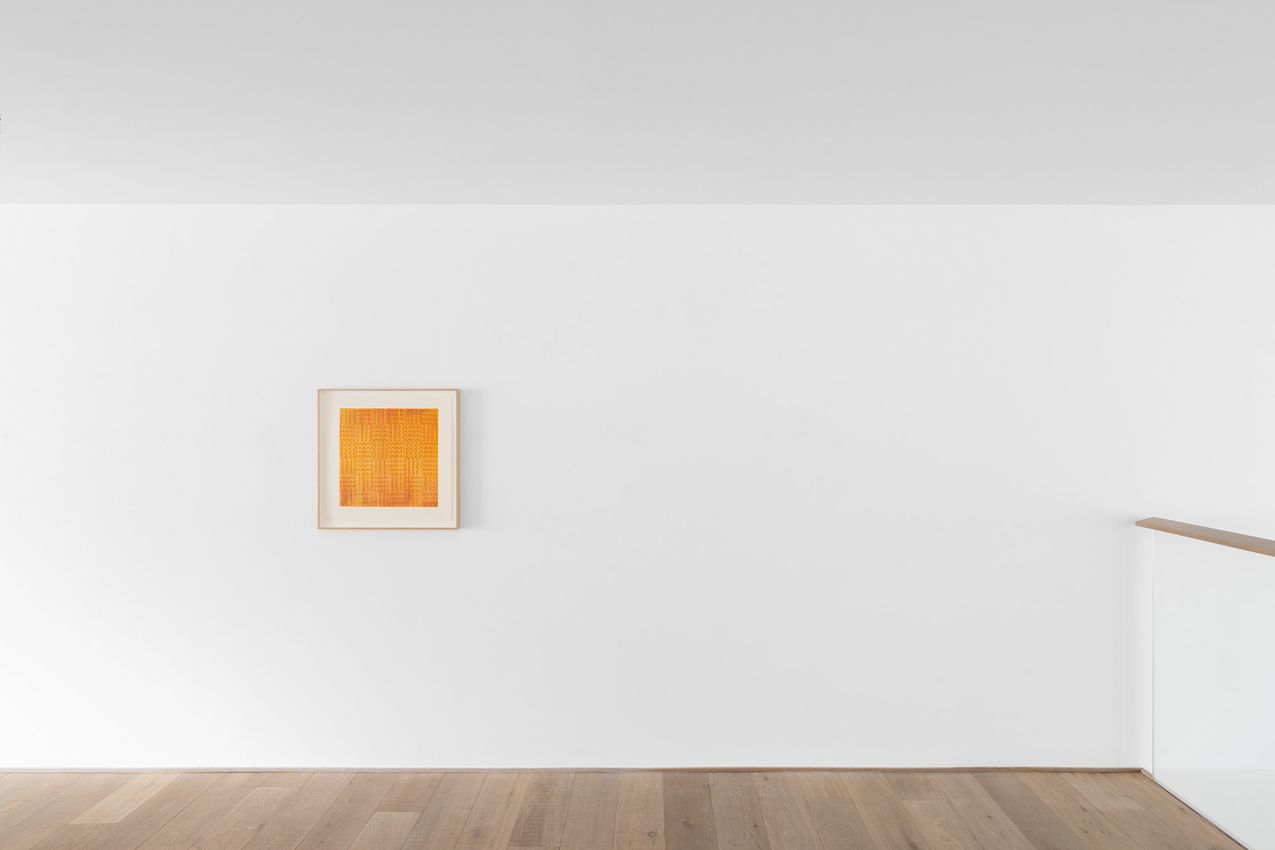
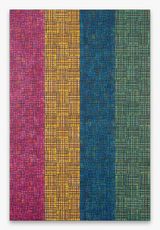
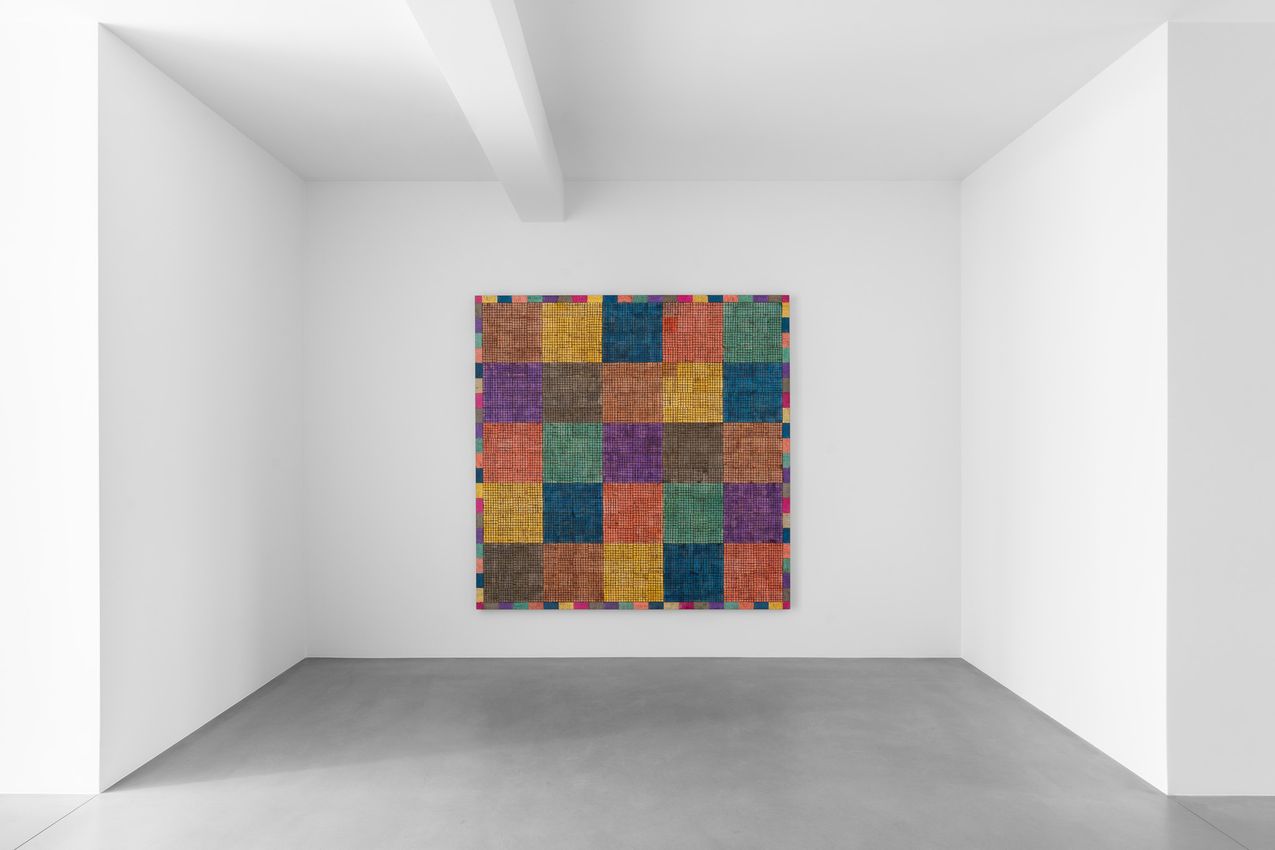
For his debut solo exhibition with the gallery, McArthur Binion (b. 1946, Macon, Mississippi), presents a new body of work created in Chicago, where he primarily lives and works. Large format oil-stick paintings are assembled in the Van Eyck gallery under the title Visual:Ear, a reference to Binion’s abiding interest in the visual translation of music into colour and form. Paper:Work, on show in the Rivoli gallery, presents a corpus of recent drawings. The exhibition provides a comprehensive overview of the artist’s oeuvre across a wide range of scales and showcase the latest developments in his decades-long practice.

The paintings in Visual:Ear draw a decisive loop in Binion’s work andhark back to an idea that first crystalised over fifty years ago, while he was studying for his MFA in painting at Cranbrook Academy of Art in Bloomfield Hills, Michigan. Deeply immersed in music, especially jazz, Binion became fascinated by non-verbal means of communicating his experiences. His earliest work on the theme was Drawn Symphony:in:Sane Minor (1971), a hand-drawn images atop ten pages of musical manuscript paper. The term ‘visual ear’ also dates from this period, with Binion first using it in his 1973 graduate thesis. These works—which represent Binion’s earliest attempts to convey the rhythms and sensations of music in words and images—remained dormant in his mind, but nonetheless present, until they were reactivated and visualised for his on-going series of ‘Visual:Ear’ paintings. The works make use of an abstracted, collaged image of a musical score, Still Standing Stuttering, by Pulitzer prize-winning composer Henry Threadgill (b. 1944), which Binion personally commissioned as a response to his painting Stuttering:Standing:Still (2013). The images in Visual:Ear are made up of varied compositions of Still Standing Stuttering. The inclusion of the printed music represents an unprecedented opening up of the oeuvre to external influences. Prior, Binion had almost exclusively used autobiographical source material in his work, most famously pages from his address book or passport, photos of his childhood home, his hands, or historical images pertaining to his early life in rural Mississippi. Working with the music score images was the catalyst for a quatre mains of sorts, one that resulted in what Binion calls the ‘under conscious’ of the work. The Visual: Ear paintings are a “handmade, geometric way to insert the music score into the work.”

The ‘under conscious’—whether autobiographical or music related—is a hallmark of Binion’s work and is usually composed of printed material. On top of this, the artist adds a heavy layer of paint-stick marks. The visual language is that of minimalism and abstraction: lines, serial patterns and geometric shapes. To borrow a musical term, the works have a binary form, with the two elements ultimately merging into an indivisible whole. This interweaving, which lies at the core of Binion’s practice, creates multiple fields of tension: between the personal and impersonal, between mechanical reproduction and slow, labour-intensive mark-making, and between the revealment and concealment of the ‘under conscious’. The works not only testify to Binion’s sustained interest in music but also his belief in learning to look by listening, and likewise, to listen by looking. As he himself states, the works in the ‘Visual:Ear’ series represent ‘the clarification of [his] character as a painter’.

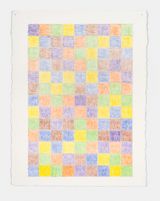
An extensive selection of McArthur Binion’s recent drawings are presented in Paper:Work. The artist creates these studies, as he does his paintings, using a two-handed technique. Replacing the ‘under conscious’ is an initial ground painting to which Binion applies a secondary layer of patterns, and marks, thereby mirroring the dual structure of the large-format paintings. The titles of the drawings, such as DNA:Search and Self-Portrait, allude to their deeply personal significance. Binion has long investigated the work of the black avante-garde through his own identity and broader collective, cultural self- hood. His recent work, titled Modern Ancient Brown, is the perfect summation of Binion’s introspective yet outward-looking quest. It is also the name of the foundation that he established in Detroit, Michigan in 2019. The organisation actively supports the intersection between the visual and literary arts both nationally and in the Detroit community. In Paper:Work, the artist reveals his most personal studies, made during moments of intense concentration when, as he himself says, ‘I’m not discovering the under-conscious, I’m becoming it’.

With thanks to Camille Bacon for her contributions to the text.

McArthur Binion lives and works in Chicago. His work were featured prominently in the 57th Venice Biennale, VIVA ARTE VIVA. Solo exhibitions of his work have been organised at Museo Novecento, Florence, Italy (2020); the Cranbrook Art Museum, Bloomfield Hills (2018); the Contemporary Art Museum, Houston (2012). Binion’s work is in numerous public and private collections and his most recent venture is the Modern Ancient Brown Foundation that provides funding and workspaces to help young visual artists and writers of colour find their voices.

Read More

Installation Views

About the Artist

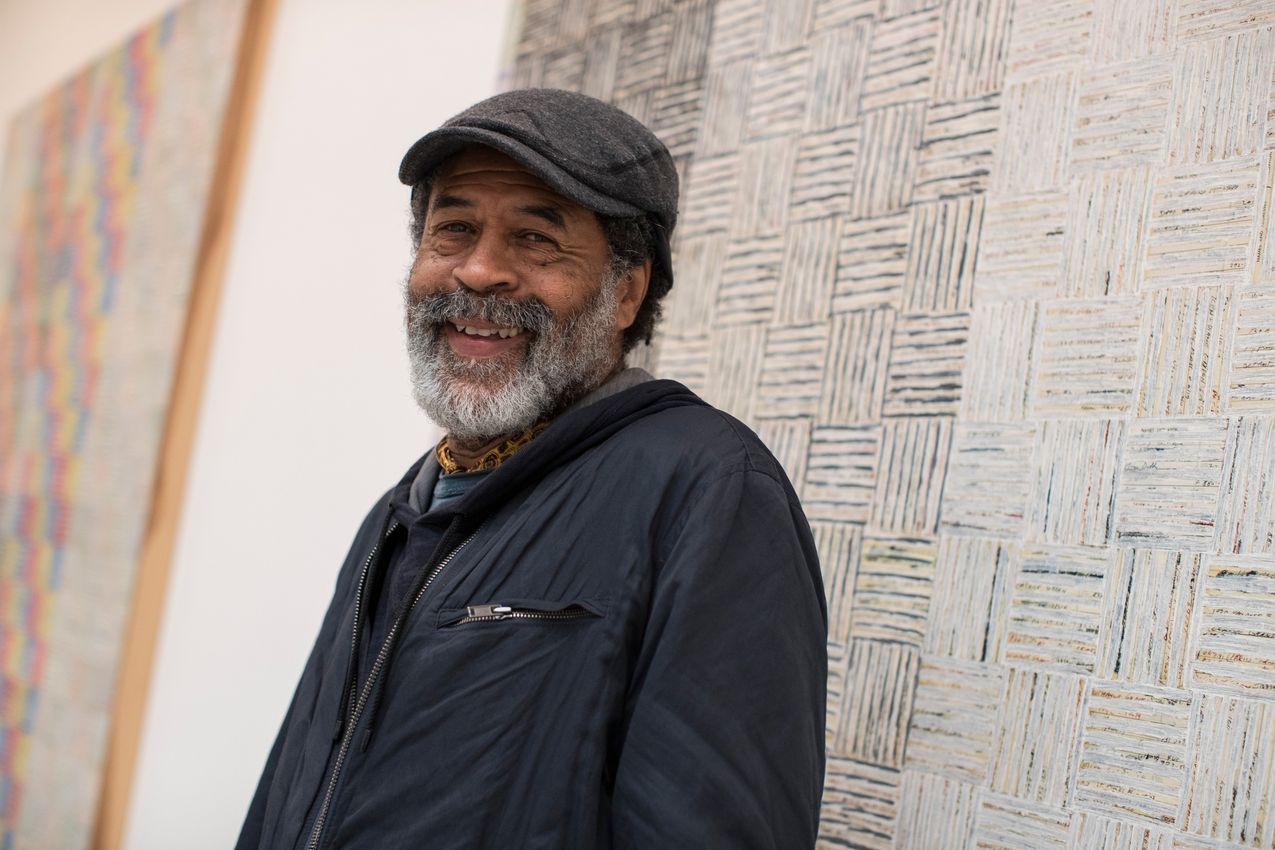
In a career spanning four decades, McArthur Binion (b. 1946, Macon, Mississippi, USA) has gained recognition as an artist, writer and teacher. He became the first African American to obtain a master’s degree in fine arts in painting from Cranbrook Academy of Art (1973) and also holds a degree in creative writing. These dual passions – words and images – define his life and work to this day. After graduating, Binion moved to New York and immersed himself in the city’s vibrant creative scene, then dominated by minimalism and Pop Art. Friends with artists such as Brice Marden and Jean-Michel Basquiat, Binion pursued an artistic career and accepted the first of several notable teaching positions.

View Artist Profile

Also Exhibiting at Xavier Hufkens

About the Gallery
Xavier Hufkens is one of Europe’s leading galleries for contemporary art. Located in Brussels, the gallery maintains a diverse exhibition programme with solo exhibitions of the gallery artists as well as group exhibitions and special projects. The gallery deals in a distinctive combination of painting, drawing, sculpture, photography, video and installation-based work.

The origins of the gallery date back to 1987, when Xavier Hufkens opened a gallery space in an un-refurbished warehouse in the neighbourhood of the South Station (Midi) in Brussels. During the early years, the focus of the gallery was upon mid-career and emerging artists and the gallery is known for having introduced some of the most influential contemporary artists to Brussels at a time when they were still relatively unknown. British sculptor Antony Gormley, who is still affiliated with the gallery, Felix Gonzalez-Torres and Rosemarie Trockel all showed in Belgium for the first time with Xavier Hufkens (Gormley in 1987; Gonzalez-Torres in 1991 and Trockel in 1993).

In 1992, the gallery moved to a 19th-century townhouse at 6 rue Saint-Georges, close to the Avenue Louise. Completely renovated by Belgian architects Paul Robbrecht, Hilde Daem and Marie-José Van Hee, the house quickly gained a reputation for being not just one of the most beautiful contemporary art spaces in the Belgian capital, but also one of the most interesting. The expanded exhibition programme coincided with the additional representation of a number of established artists from Belgium and abroad, including Richard Artschwager, Thierry De Cordier and Jan Vercruysse. In 1997, Hufkens expanded the gallery further by annexing the adjacent building and a number of new artists joined the gallery, including Louise Bourgeois, Roni Horn and Thomas Houseago.

A second space in the same street, at 107 rue Saint-Georges, opened in spring 2013. Located in the Galerie Rivoli, a mixed-use commercial development from the 1970s, the new gallery space was designed by Swiss architect Harry Gugger, who was previously in partnership with Herzog and De Meuron. Slegten & Toegemann, Brussels, managed the project.

An eclectic but very clear vision underpins all of the gallery’s activities: ‘The definition of the gallery was established from the start. The common thread, then and now, is quality over and above everything else, which I find more intellectually challenging than a forced definition. From the early days I juxtaposed established artists such as Michelangelo Pistoletto with someone like Felix Gonzalez-Torres when he was totally unknown. Today I still mix my work: I have no problem showing Malcolm Morley … alongside Robert Ryman, or Willem de Kooning.’ [Xavier Hufkens in The Art Newspaper, Issue 220, January 2011, published online: 20 January 2011]

Xavier Hufkens represents some thirty artists from different generations. He was part of the six-member selection committee for Art Basel during seven years and also participates in up to five international Arts Fairs annually. The gallery has partnerships with the estates of Louise Bourgeois, Willem de Kooning, Robert Mapplethorpe and Alice Neel.
View Gallery Profile
Address
44 rue Van Eyck
Van Eyckstraat
Brussels
Belgium
Opening Hours
Tuesday – Saturday
11am – 6pm
(1)
Brussels 44 rue Van Eyck, Van Eyckstraat
Xavier Hufkens
44 rue Van Eyck, Van Eyckstraat, Brussels, Belgium

Opening hours
Tuesday – Saturday
11am – 6pm
The art world in focus