




CHEVRON HASSETT
b. 1994, New ZealandChevron Hassett (Ngāti Porou, Ngāti Rongomaiwahine, Ngāti Kahungunu, Irish/Pākehā; b. 1994, Te Awakairangi Lower Hutt) is an Aotearoa New Zealand artist working across sculpture, whakairo, photography, and public installation.
Based in Tāmaki Makaurau Auckland, Hassett is best known for projects that explore urban indigeneity, colonisation, and the representation of Māori communities, often grounded in the realities of urban life. Key works include the photographic installation JustUs (2020) Enjoy Contemporary Art Space), the architectural sculpture Te Kupenga (2024) shown in Sculpture on the Gulf, 2024, and the solo exhibition Far, far away (2023) at Artspace Aotearoa. In addition to the aforementioned, his work has been shown at Te Tuhi, Govett-Brewster, The Dowse, Artspace Sydney, and he has received the Ngā Manu Pīrere Award (2017) and The Arts Foundation Springboard Award (2022).
In 2026, along with Jimmy Ma’ia’i, Harrison Freeth, and Lolani Dalosa, Hassett presented the performance work SPADES at the Aotearoa Art Fair’s Horizons programme, which centred on a SPADES hangi stall and the distribution of takeaway hangi packs to fair goers.
Background
Hassett grew up in Stokes Valley, Te Awakairangi, closely connected to Koraunui Marae, an urban marae that shapes his focus on Indigenous urbanisation and community. He completed a Bachelor of Design (Hons) at Massey University in 2016 and a diploma in Indigenous Art specialising in Whakairo Māori, combining research-based inquiry with customary carving and design.
Practice and Key works
Moving between galleries, public space, and community contexts, Hassett lets site-based research guide his choice of medium. He brings together reclaimed materials, architectural forms, and Māori spatial languages—verandahs, waharoa, lightboxes—to question how Māori presence and histories appear in the built environment.
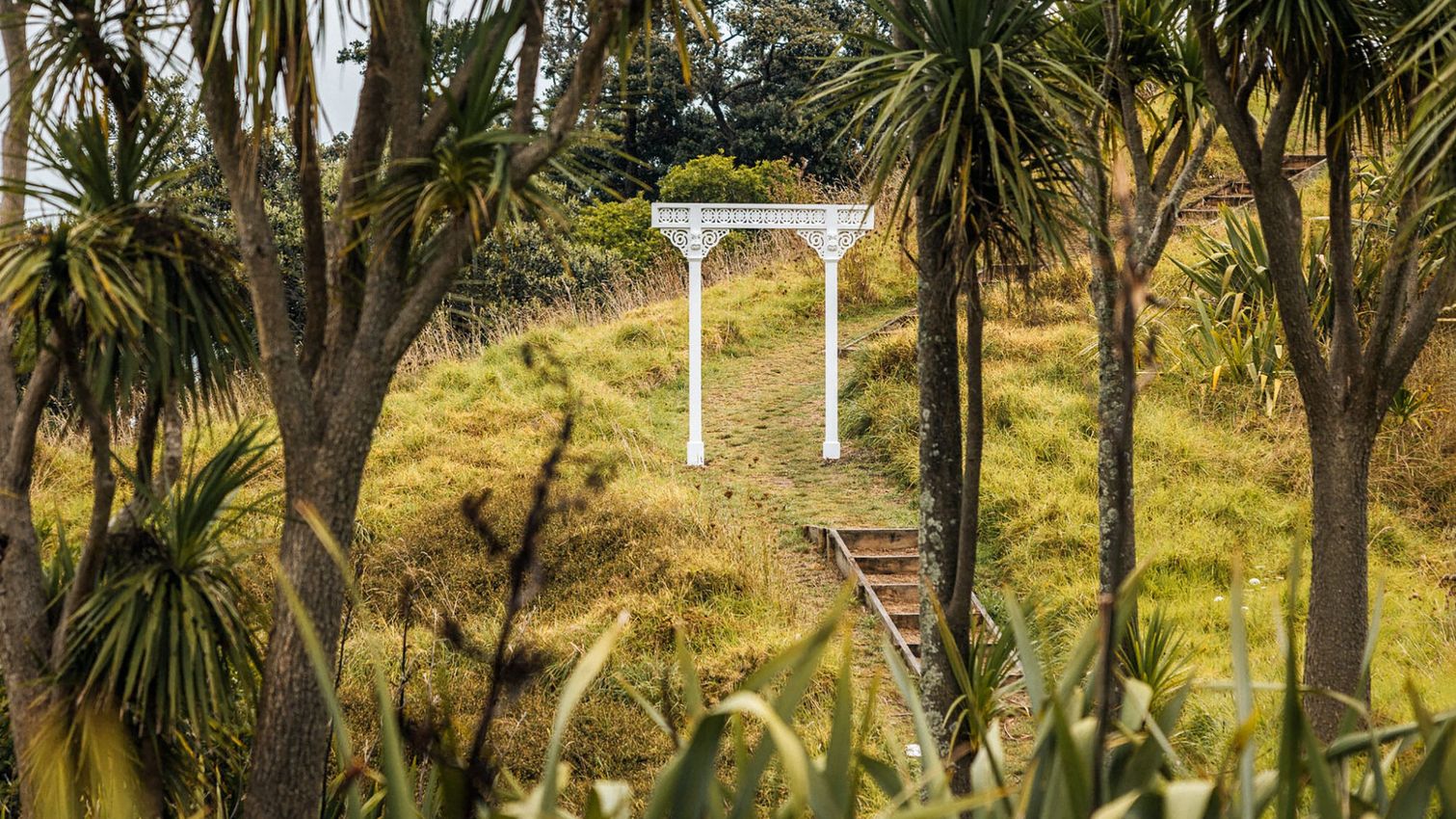
In JustUs (Enjoy, 2020), Hassett presented portraits responding to the criminalising imagery of Māori men in media, later removing the images and leaving uniforms in their place to foreground issues of visibility and control. For Te Kupenga (Sculpture on the Gulf, 2024), he fused a carved waharoa with a colonial villa verandah, using tōtara, treated pine, pāua, and acrylic to address gentrification and the displacement of Māori families in Auckland’s central suburbs. Far, far away (Artspace Aotearoa, 2023) extended these concerns, reflecting on distance between people, histories, and places through sculptural and spatial installations.
Themes and Recognition
Hassett’s work centres on urban indigeneity, colonisation, gentrification, and the misrepresentation of Māori—particularly Māori men—in media and public discourse. Whanaungatanga and kaupapa Māori underpin his methods, which weave academic research with spiritual and relational dimensions.
He has held solo exhibitions at Artspace Aotearoa and Enjoy, and participated in programmes at Te Tuhi, Gus Fisher Gallery, Govett-Brewster, The Dowse, Artspace Sydney, and Aotearoa Art Fair’s Horizons. Awards include Creative New Zealand’s Ngā Manu Pīrere Award (2017), a Toi Pōneke residency (2019), The Arts Foundation Springboard Award with mentor Brett Graham (2022), and Objectspace’s 2026 Courtyard Plinth Commission.
Chevron Hassett FAQs
Who is Chevron Hassett?
Chevron Hassett is a Tāmaki Makaurau-based artist of Ngāti Porou, Ngāti Rongomaiwahine, Ngāti Kahungunu and Irish/Pākehā heritage, born in Te Awakairangi Lower Hutt in 1994. He works across sculpture, whakairo, photography, and public installation, addressing urban indigeneity and colonisation.
What is he best known for?
Chevron Hassett is best known for works that merge Māori carving and architectural forms with photographic strategies to critique how Māori are represented and housed in urban environments. Notable projects include JustUs (2020), Te Kupenga (2024), and Far, far away (2023).
Where has he exhibited?
Chevron Hassett has exhibited at Artspace Aotearoa, Enjoy Contemporary Art Space, Te Tuhi, Govett-Brewster, The Dowse, Sculpture on the Gulf, Artspace Sydney, and in public sites such as Courtenay Place Lightboxes.
What awards has he received?
Chevron Hassett received Creative New Zealand’s Ngā Manu Pīrere Award in 2017 and The Arts Foundation Te Tumu Toi Springboard Award in 2022 and was announced as Objectspace’s Courtyard Plinth Commission artist for 2026.
Ocula | 2026

Explore and Follow Artists Shaping Contemporary Art
A respected voice in contemporary art discourse.
Focusing on ambitious storytelling and insightful art-world commentary. Ocula Magazine publishes in-depth interviews, critical essays and timely analysis on the artists, exhibitions and ideas driving the global art world.
Learn more about Ocula Magazine
Showcasing the best of the art world.
Ocula partners with galleries from around the world to highlight their artists, artworks and exhibitions. Gallery membership is by application and invitation, with each member vetted by an independent panel.
Learn more about Ocula Membership
Specialises in the sale of major artworks.
Led by a team with deep ties to the world’s leading auction houses, galleries and collectors. Ocula’s advisory team offers bespoke services to high-net-worth clients from around the world who are looking to acquire the best of contemporary and modern art.
Learn more about our team and services