






CONNIE ZHENG
ChinaConnie Zheng is a Chinese-born artist, writer, experimental filmmaker, and scholar of environmental and land-based art practices based in Berkeley, California. Her interdisciplinary practice moves fluidly between multiple media—including large-scale cartographic drawings, video and film, performance, text-based installation, and participatory projects—to examine the entangled histories of colonialism, environmental destruction, and diasporic experience.
Background
Born in China and raised in New England, Zheng brings a distinctly transnational perspective to her investigations of how natural worlds have been transformed into financial capital, and how memory, ecology, and place shape collective identity. Her work frequently diagrams dynamic relationships between human and more-than-human worlds, drawing from film, contemporary art, mythology, natural science, popular culture, and speculative fiction to articulate counter-narratives to racialised and neoliberal constructions of climate apocalypse.
Zheng earned a BFA in Economics and English (Creative Nonfiction) from Brown University, an MFA in Art Practice from the University of California, Berkeley, and is currently pursuing a PhD in Visual Studies at the University of California, Santa Cruz. She holds positions as a 2024–2025 Dickinson Endowment Artist-in-Residence at Harker School in San Jose and was a 2023 YBCA 100 awardee.
Artistic Practice
Zheng’s multidisciplinary approach centres on several interconnected concerns: the visual culture of colonialism and plantation systems; the political potential of seeds and botanical knowledge; the aesthetics of speculative futures; and the role of mapping as a tool for both domination and liberation. Her practice emphasises participatory and collaborative methodologies, creating spaces for collective thinking and counter-hegemonic knowledge production.
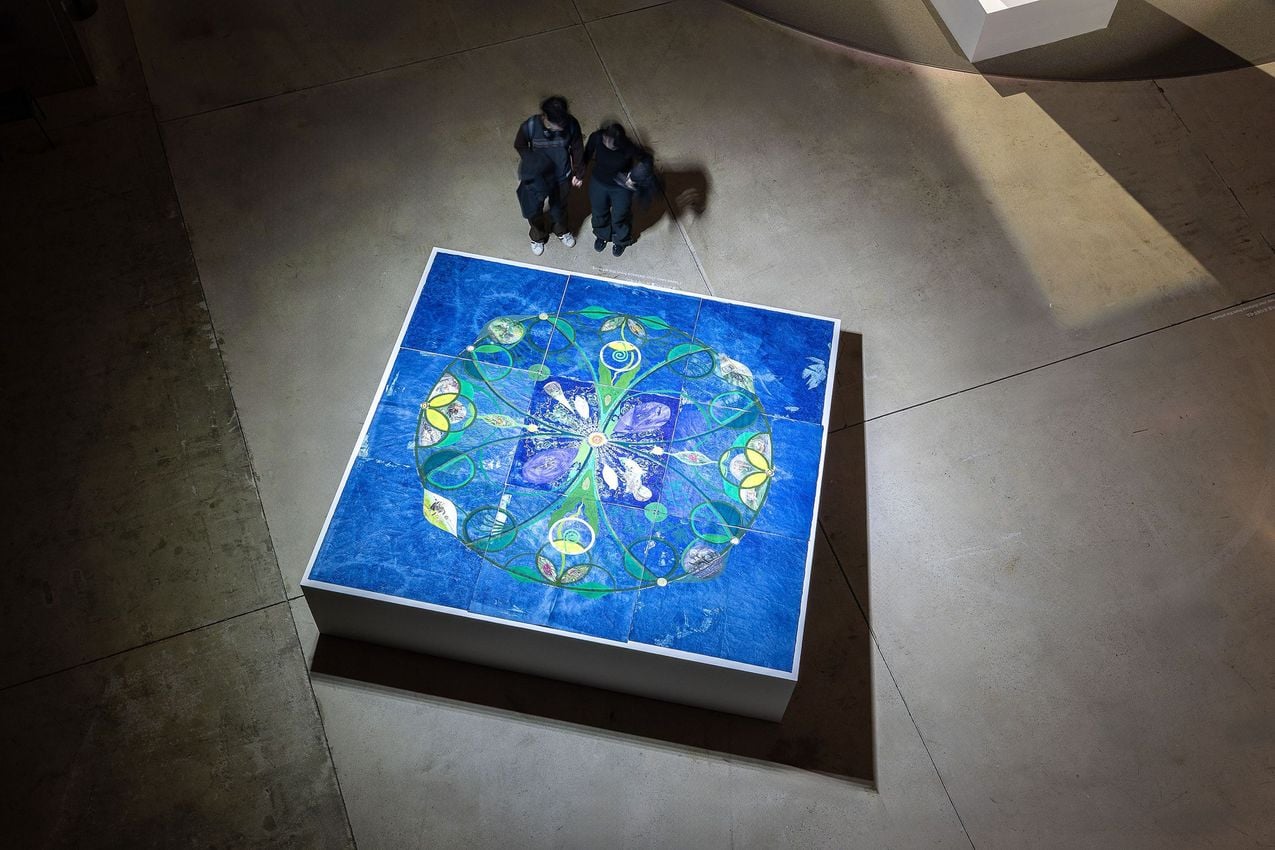
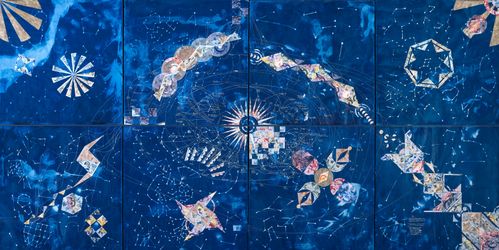
Her large-scale mixed-media drawings function as visual arguments, layering cartographic information, text, and imagery to trace the flows of colonial extraction and contemporary capital. Works such as As It Is: Nothing Lasts Forever (2025) and How to Make a Golden State (2023) diagram how living worlds have been transformed into commodities and financial systems since the age of European colonisation.
Concurrently, Zheng engages seed exchange, field recording, and experimental film to explore alternative epistemologies and survival strategies. These projects envision botanical knowledge and diasporic practices as resources for imagining collective futures beyond extractive logics. Her research interests span maps and spatial knowledge, contemporary art of North America and East Asia, video and moving image, environmental justice, and foraging practices.
Connie Zheng Exhibitions
Zheng’s work has been exhibited and screened internationally. Recent presentations include:
- Manifesto of Spring, National Asian Culture Center, Gwangju, South Korea (September 2025–February 2026, ongoing)
- How It Is Nowadays, Root Division, San Francisco (November 2025–January 2026)
- The Plantation Plot, Ilham Gallery, Kuala Lumpur, Malaysia (April–September 2025), featuring her monumental cartographic work As It Is: Nothing Lasts Forever, commissioned by KADIST and Ilham Gallery
- Fabrications, St. Joseph’s Art Society, San Francisco (May–August 2025)
- Artist in Residence, Willapa Bay AiR, Oysterville, Washington (September 2025)
- Constellations: Racial myths, land, and labour, Esker Foundation, Calgary, Alberta (September–December 2024)
- GROW, Palo Alto Art Center, Palo Alto (September–December 2024)
- Phygital Care, Root Division, San Francisco (December 2024–January 2025)
Collections and Recognition
Zheng’s work is held in the collections of the Kadist Foundation (San Francisco) and the David Rumsey Map Center at Stanford University. She has received support from numerous institutions, including fellowships from the Headlands Center for the Arts, grants from the Oak Spring Garden Foundation and the Puffin Foundation, a Kadist Research Fellowship (2020), and a Regent’s Fellowship from UC Santa Cruz (2020–2021). In 2024, she received a Graduate Student Research Fellowship from the Agricultural Experiment Station at UCSC and was awarded a Speculative Pasts and Empathetic Futures grant in collaboration with the Chinese Culture Center of San Francisco.
Critical Reception
Zheng’s work has garnered significant critical attention. Her exhibition The Plantation Plot was reviewed in ArtReview, ArtAsiaPacific, and STIRworld, with critic Ellen Lee writing of her work’s capacity to diagram the transformation of colonial territories and living worlds into ‘vibrant nonliving worlds of finance capital’. The exhibition was characterised as studiously engaging multiple intersectional frameworks—ecology, economics, postcolonialism, and gender—to illuminate the ongoing legacies of plantation systems in the contemporary global economy.
Her inclusion in Ocula’s 2026 Artists to Watch list recognises her emerging significance within the international contemporary art landscape, particularly for her innovative approach to environmental art, postcolonial critique, and speculative practice.
Connie Zheng FAQs
Who is Connie Zheng?
Connie Zheng is a Chinese-born artist, writer, and experimental filmmaker whose work focuses on environmental and land-based art practices. She is currently based in the Bay Area and is also a scholar of visual and environmental studies.
What themes does Connie Zheng explore in her art?
Her multidisciplinary practice engages ecology, climate crisis, diasporic memory, and environmental justice, often through speculative and narrative strategies. She frequently works with maps, seeds, food, and field recordings to diagram relationships between human and more-than-human worlds.
What mediums and formats does Connie Zheng work in?
Connie Zheng’s projects span large-scale maps, experimental films, participatory seed exchanges, drawings, and text-based works. Her installations often invite audience participation and unfold across print, moving image, and spatial interventions.
Where has Connie Zheng exhibited her work?
Connie Zheng’s work has been exhibited and screened internationally and is held in the collections of KADIST and the David Rumsey Map Center at Stanford University. She has participated in residencies and exhibitions at institutions such as Headlands Center for the Arts, YBCA, and other contemporary art venues.
What is Connie Zheng’s educational background?
Connie Zheng holds BAs in Economics and English from Brown University and an MFA in Art Practice from the University of California, Berkeley. She is currently a PhD candidate in Visual Studies at the University of California, Santa Cruz, where she researches environmental artworks and land-based practices.
Ocula | 2026

Representative Artworks
View story
View story
View story
View story

Explore and Follow Artists Shaping Contemporary Art
A respected voice in contemporary art discourse.
Focusing on ambitious storytelling and insightful art-world commentary. Ocula Magazine publishes in-depth interviews, critical essays and timely analysis on the artists, exhibitions and ideas driving the global art world.
Learn more about Ocula Magazine
Showcasing the best of the art world.
Ocula partners with galleries from around the world to highlight their artists, artworks and exhibitions. Gallery membership is by application and invitation, with each member vetted by an independent panel.
Learn more about Ocula Membership
Specialises in the sale of major artworks.
Led by a team with deep ties to the world’s leading auction houses, galleries and collectors. Ocula’s advisory team offers bespoke services to high-net-worth clients from around the world who are looking to acquire the best of contemporary and modern art.
Learn more about our team and services