





New Rules: The Artists to Watch for 2026
Save to My OculaOur editors share their thoughts on the names who will be making an impact during the coming year.
Dala Nasser
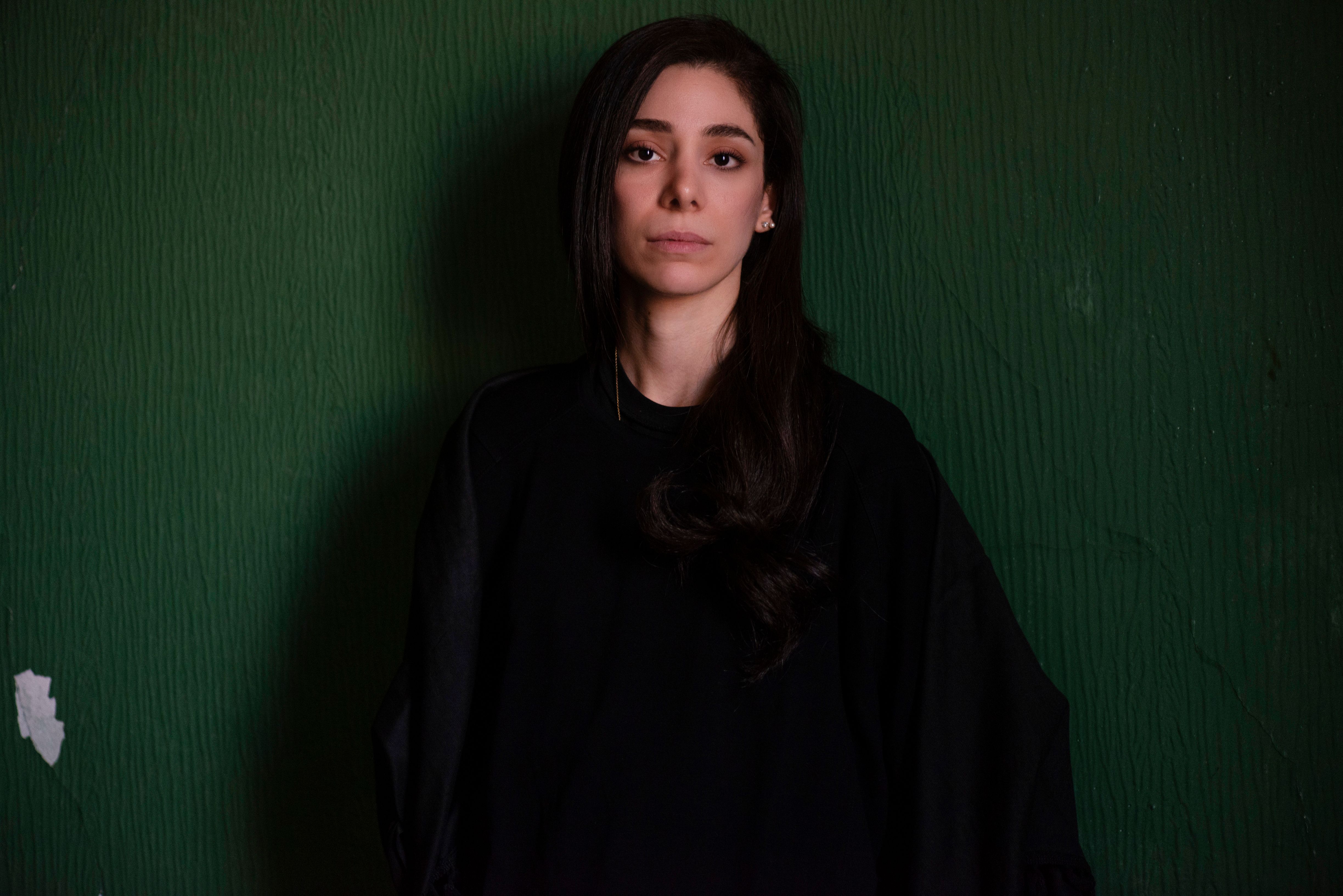
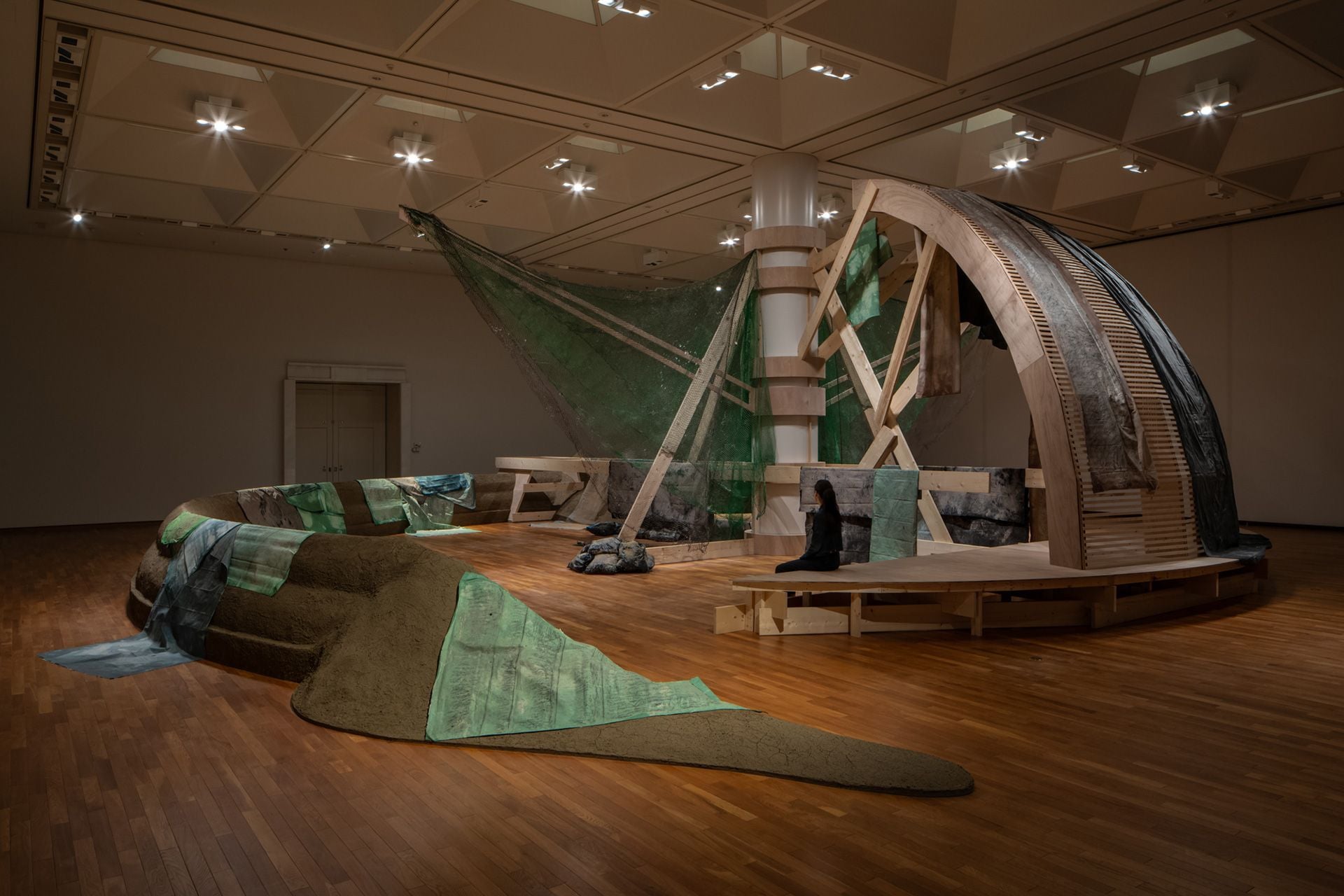
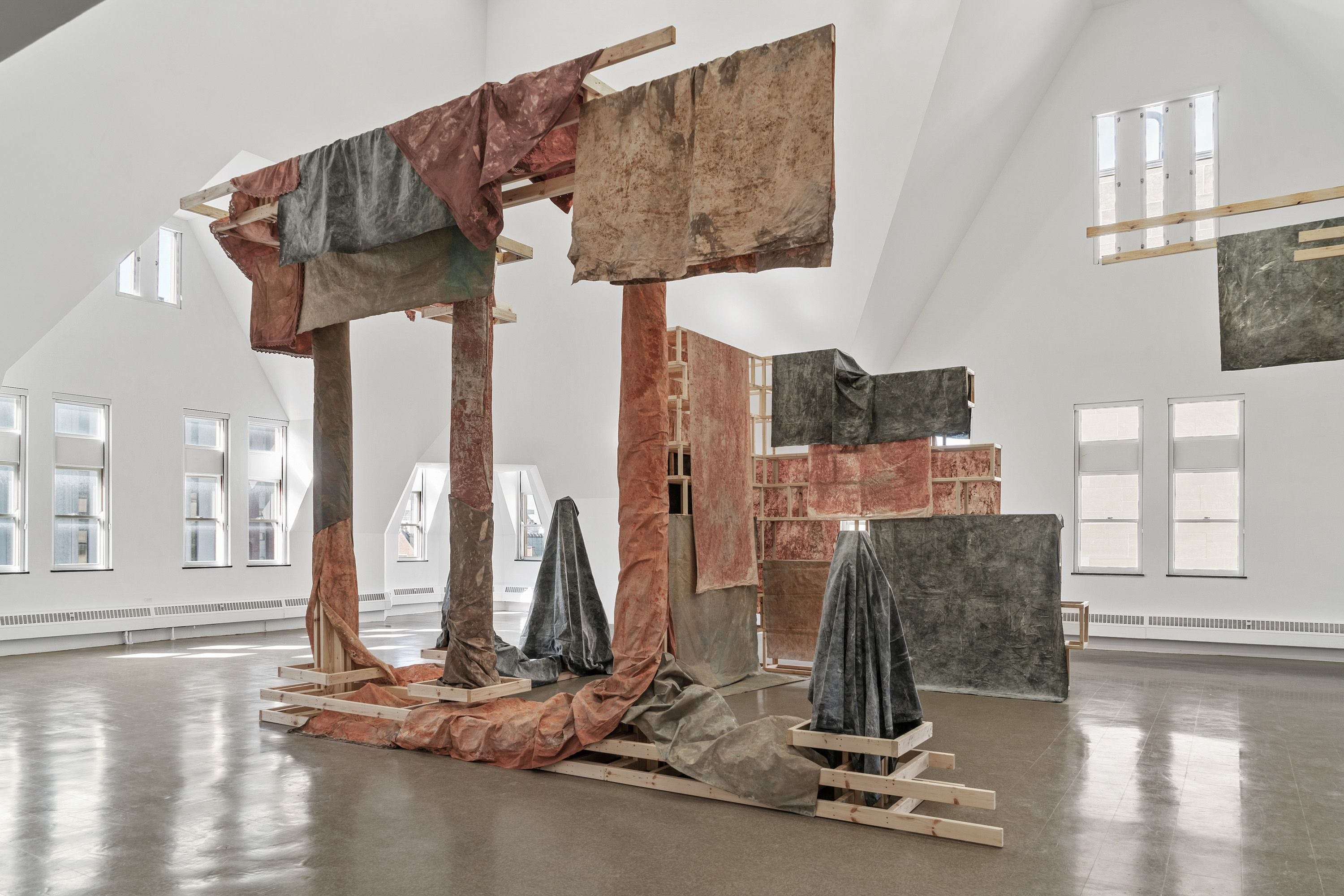
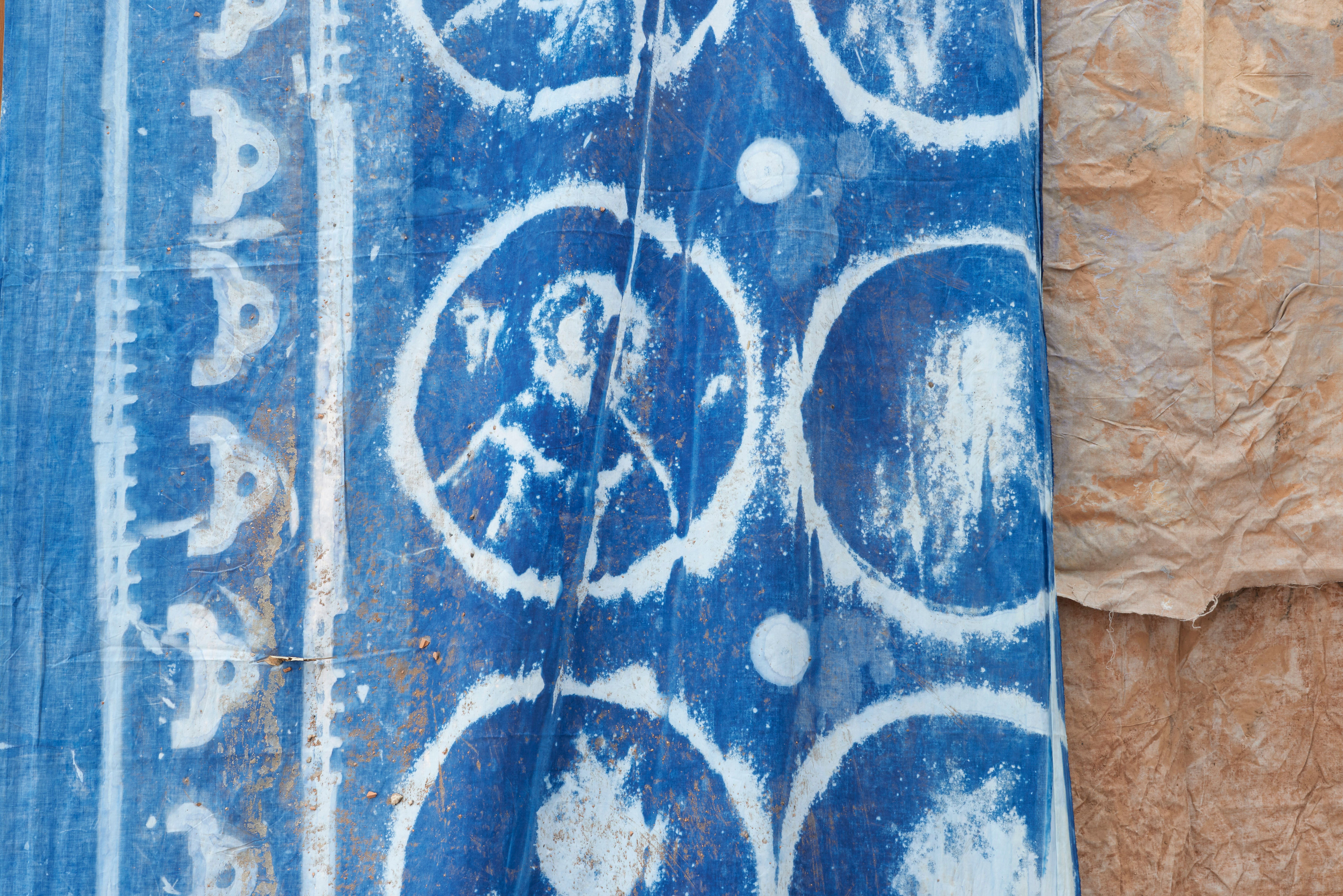
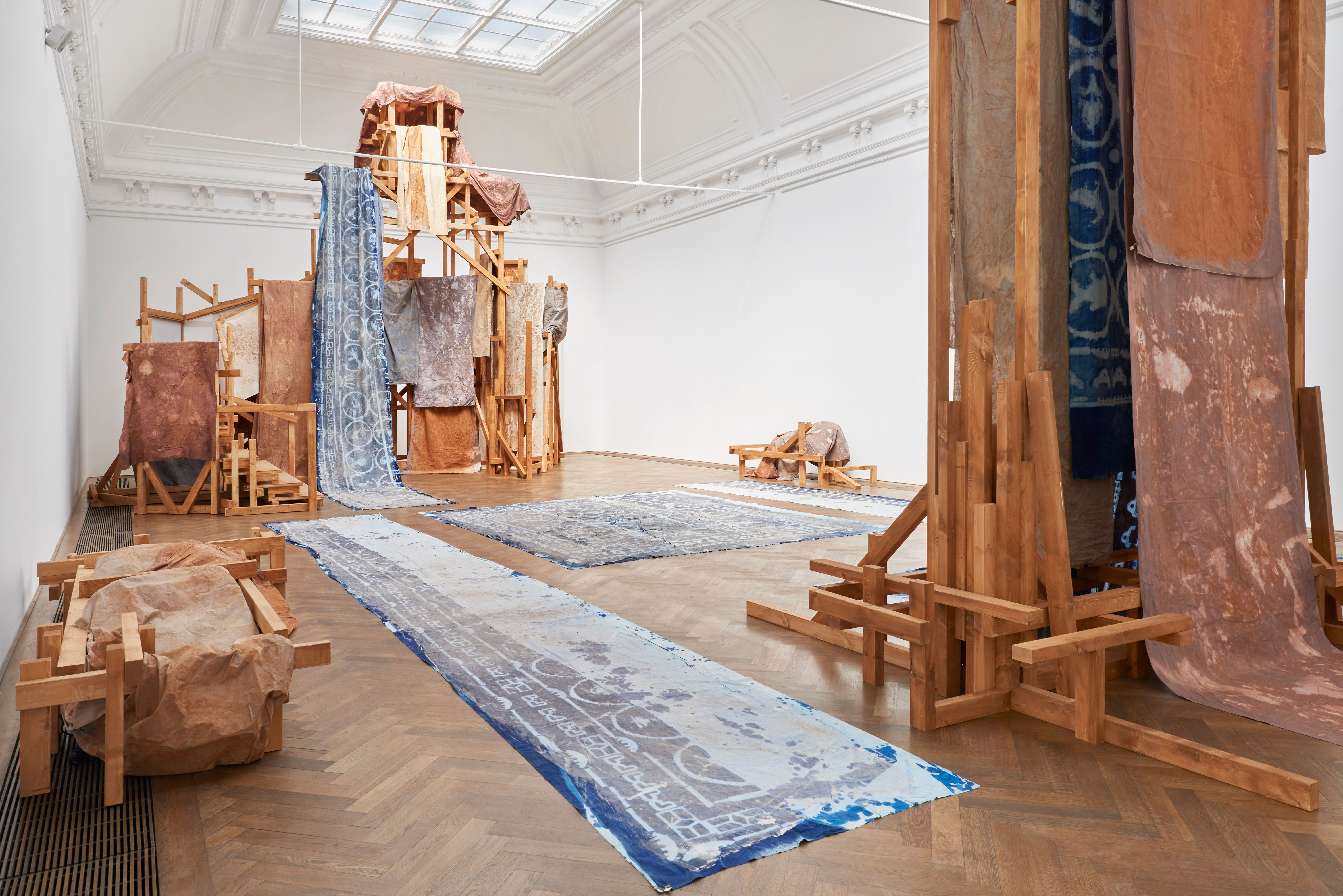
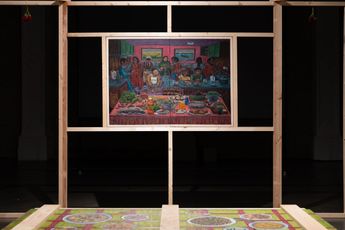
When Dala Nasser dipped cloth in salted water and left it out to dry a decade ago, she found that crystals sprouted from the fabric. ‘It was the first time that I experimented using material as information,’ she reflected in an interview last year. The Lebanese artist is acutely aware of how even the most elemental materials are political and can be used both as evidence and weapons of dispossession. In Lebanon, tap water is not safe to drink, while the commercial circulation of bottled water raises the stakes of an economy of privilege within a deeply unequal society. At Kunsthalle Basel last May, Nasser reconstructed the destroyed Byzantine church of Kabr Hiram with a vast sound installation built from a wooden structure draped with fabrics dyed with indigo, walnut shells and black tea. Some of these fabrics were treated with cyanotypes, introducing the photographic image as a hazy tool for remembering. Next month, the artist will bring a new series of fabric rubbings and cyanotypes to Nottingham Contemporary in the U.K. (in an exhibition co-commissioned with Peer and KM21), this time collected from the graves of artists, writers, poets and filmmakers from across Lebanon, Egypt, Jordan and England. As with all her work, she asks us to confront the unspoken histories contained within not only manmade memorials but natural landscapes and rivers—through war, occupation and times of freedom. – Louise Benson

Connie Zheng
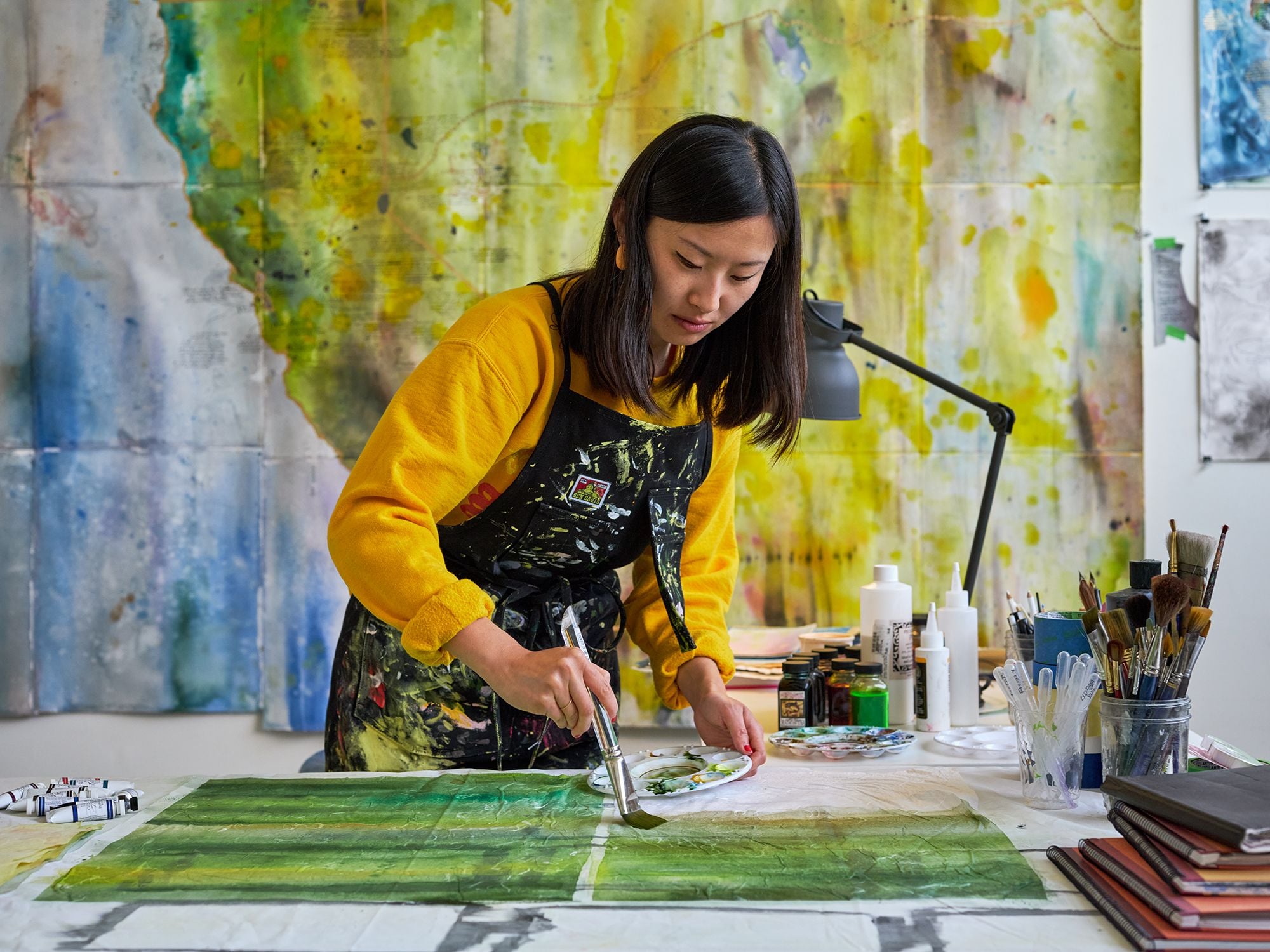
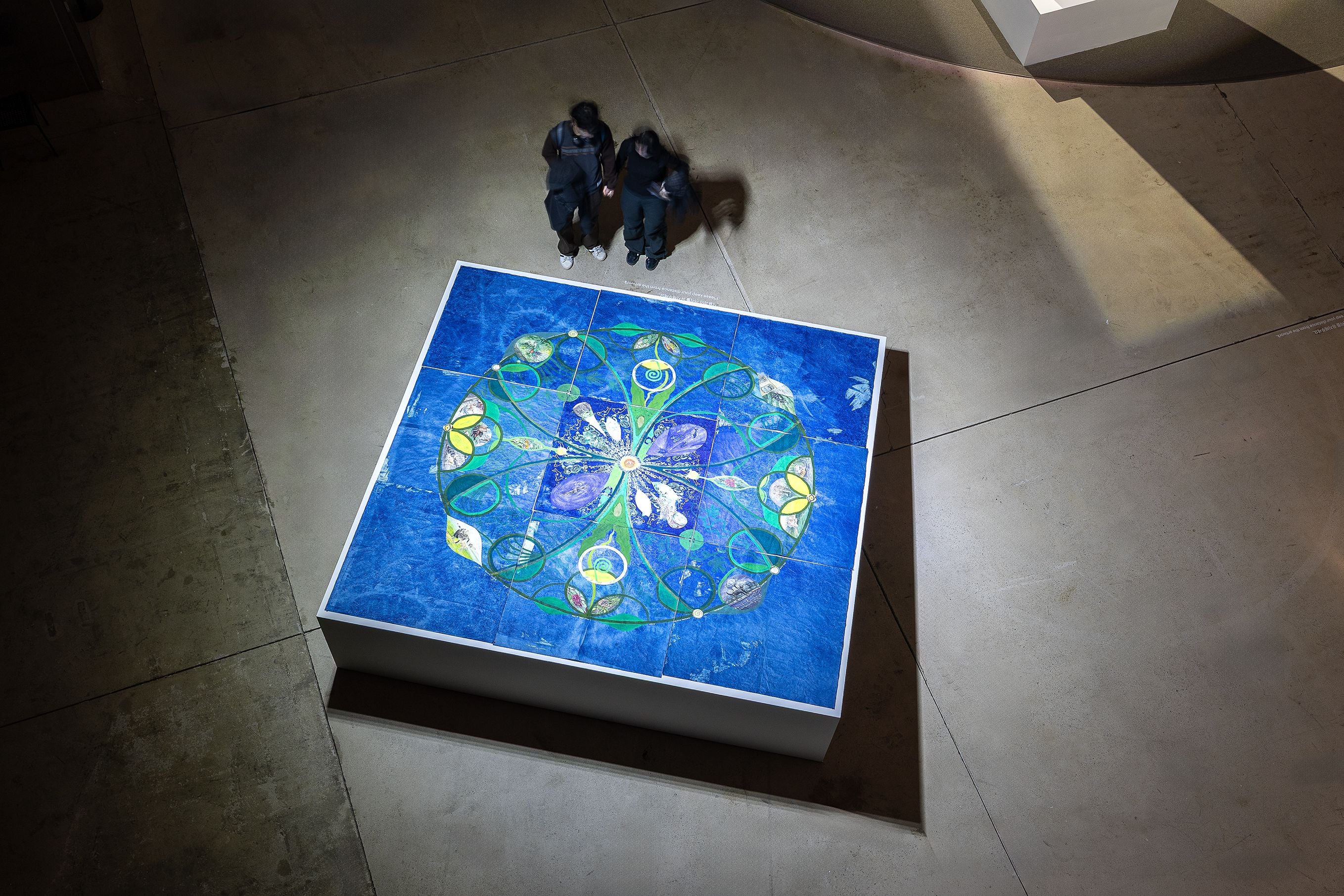
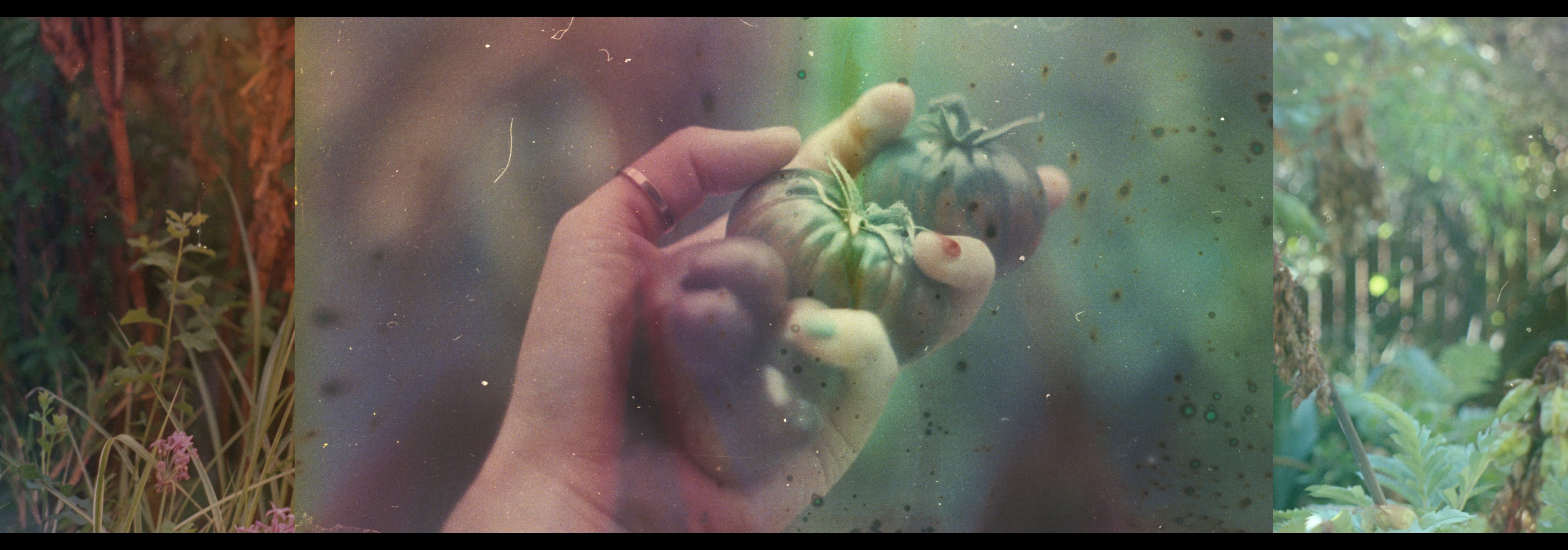
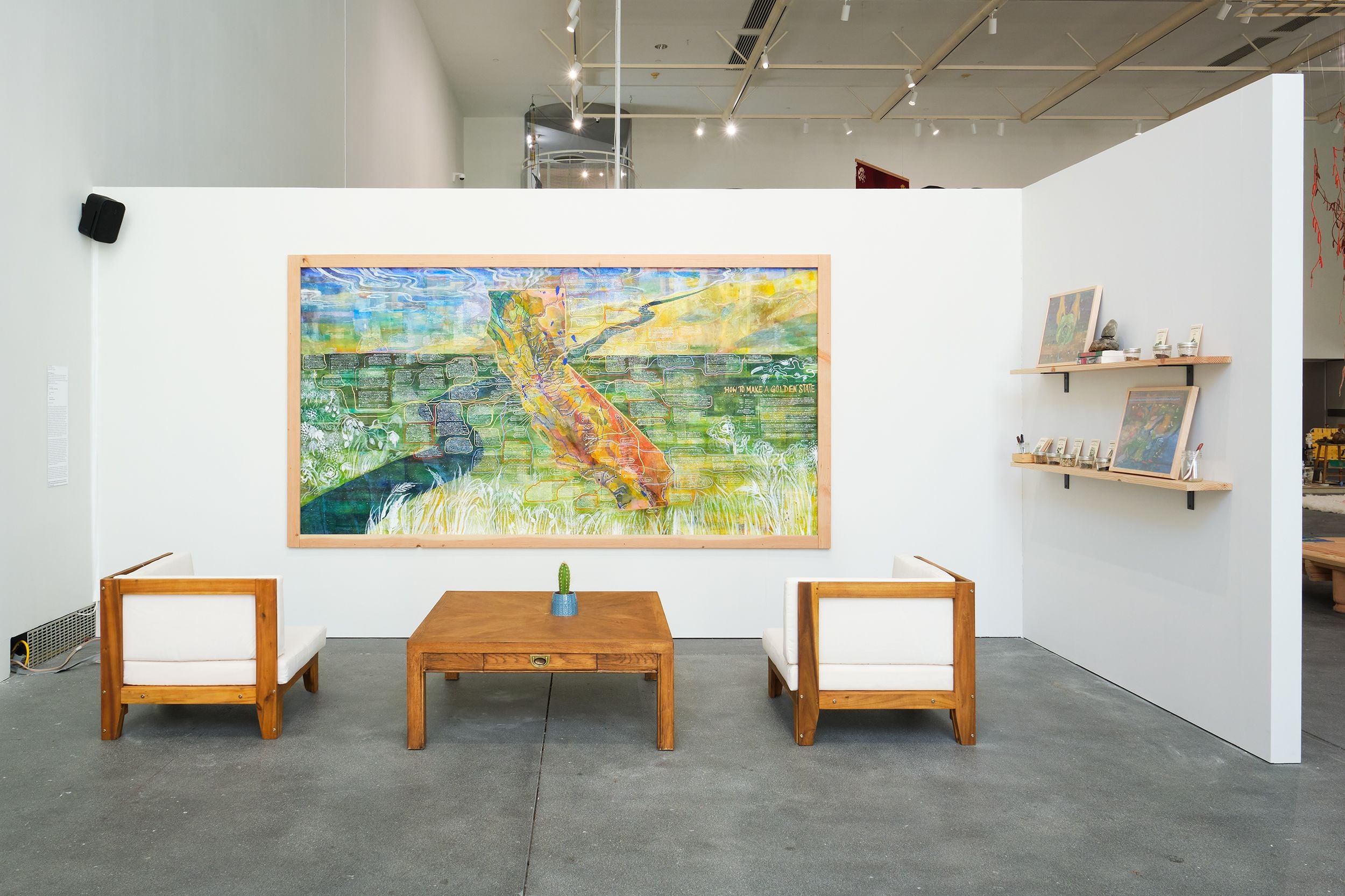
Among the year’s most noteworthy single works that thrive in curated contexts, Connie Zheng’s As It Is: Nothing Lasts Forever (2025), commissioned for The Plantation Plot at Ilham Gallery, Kuala Lumpur (2025), has captivated critics and repeatedly appeared in reviews as a lead image. The canvas maps plantation economies and resource extractivism through horoscope-inspired corporate networks, with reimagined colonial banknotes collaged alongside seed catalogues, teasing the tension between tangible wealth and market speculation across 15th-century colonial legacies and contemporary continuities. Her latest Revolutionary Planting Calendar (2025), installed in Manifesto of Spring (on view until 22 February 2026) at Gwangju’s National Asian Culture Center, conjures a cosmos of revolutionary symbols—black panthers, Zapatista snails, and amaranth, a once-banned plant now emblematic of Indigenous food sovereignty, resonating with the city’s legacy as a site of democratic struggle. The Berkeley-based, Chinese-born artist wields a versatile toolkit—from field recordings and experimental film to workshops and exhibition-making—but in 2025, her practice moved into a spectacularly painterly focus. – Zian Chen

Nina Hartmann
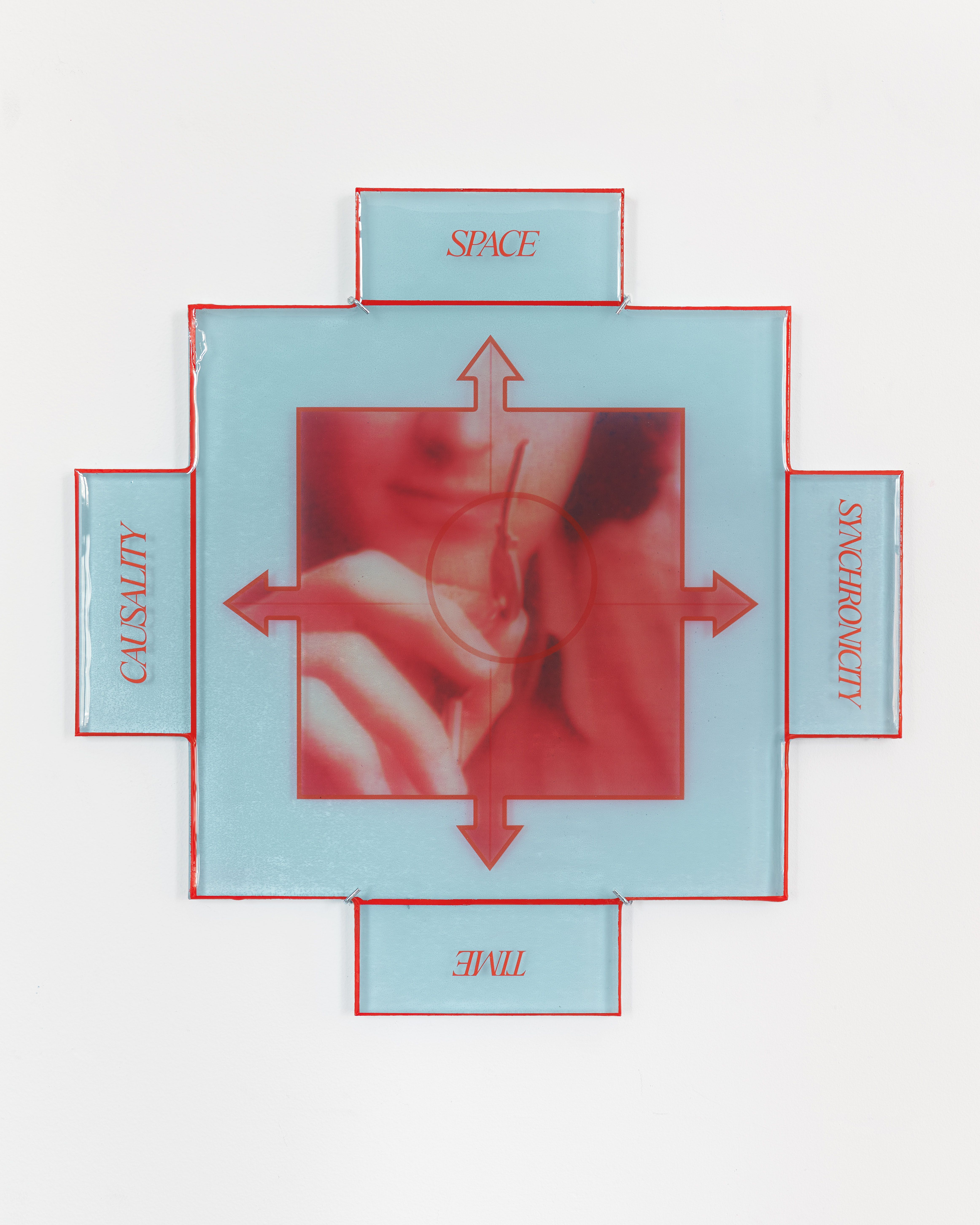
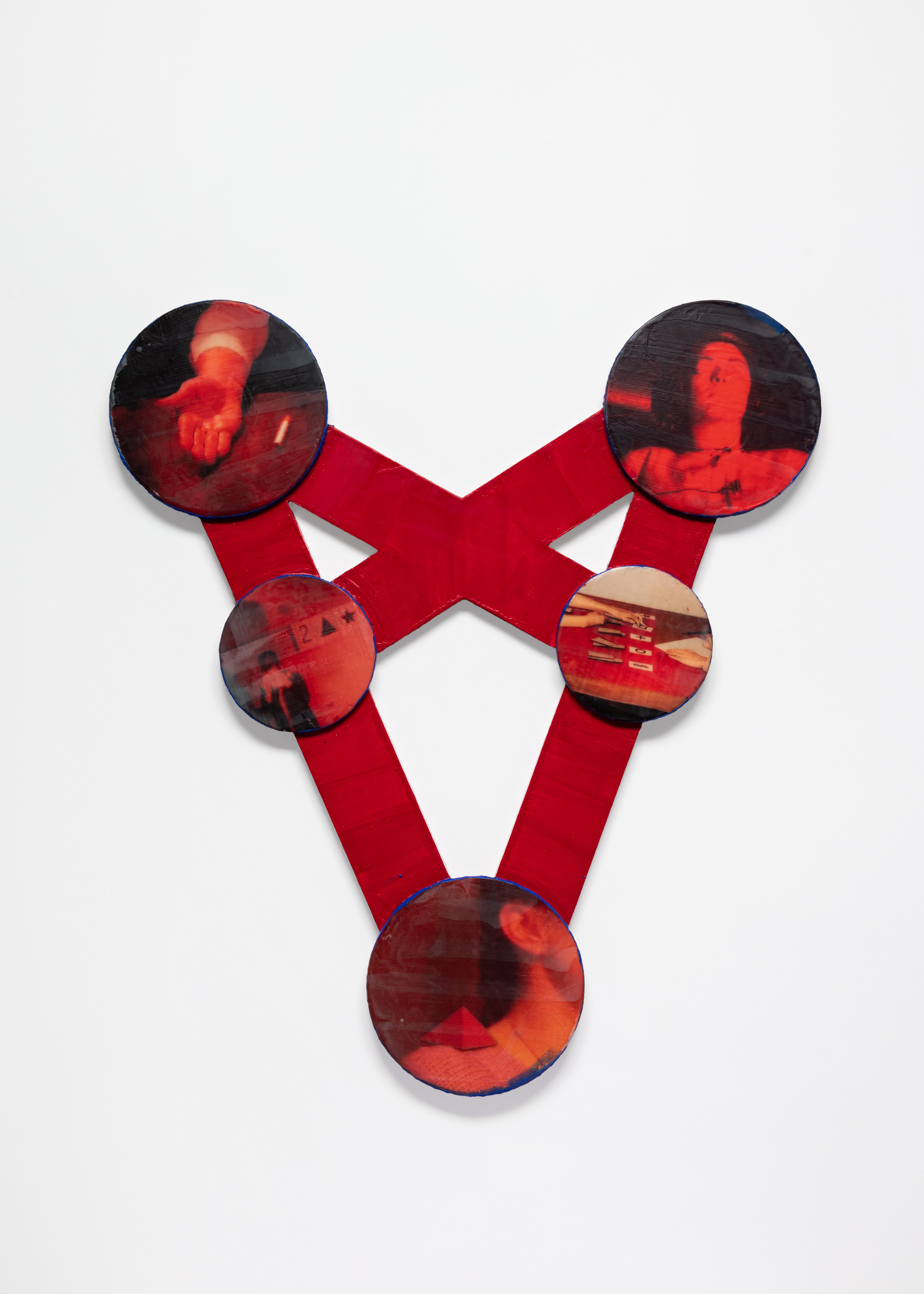
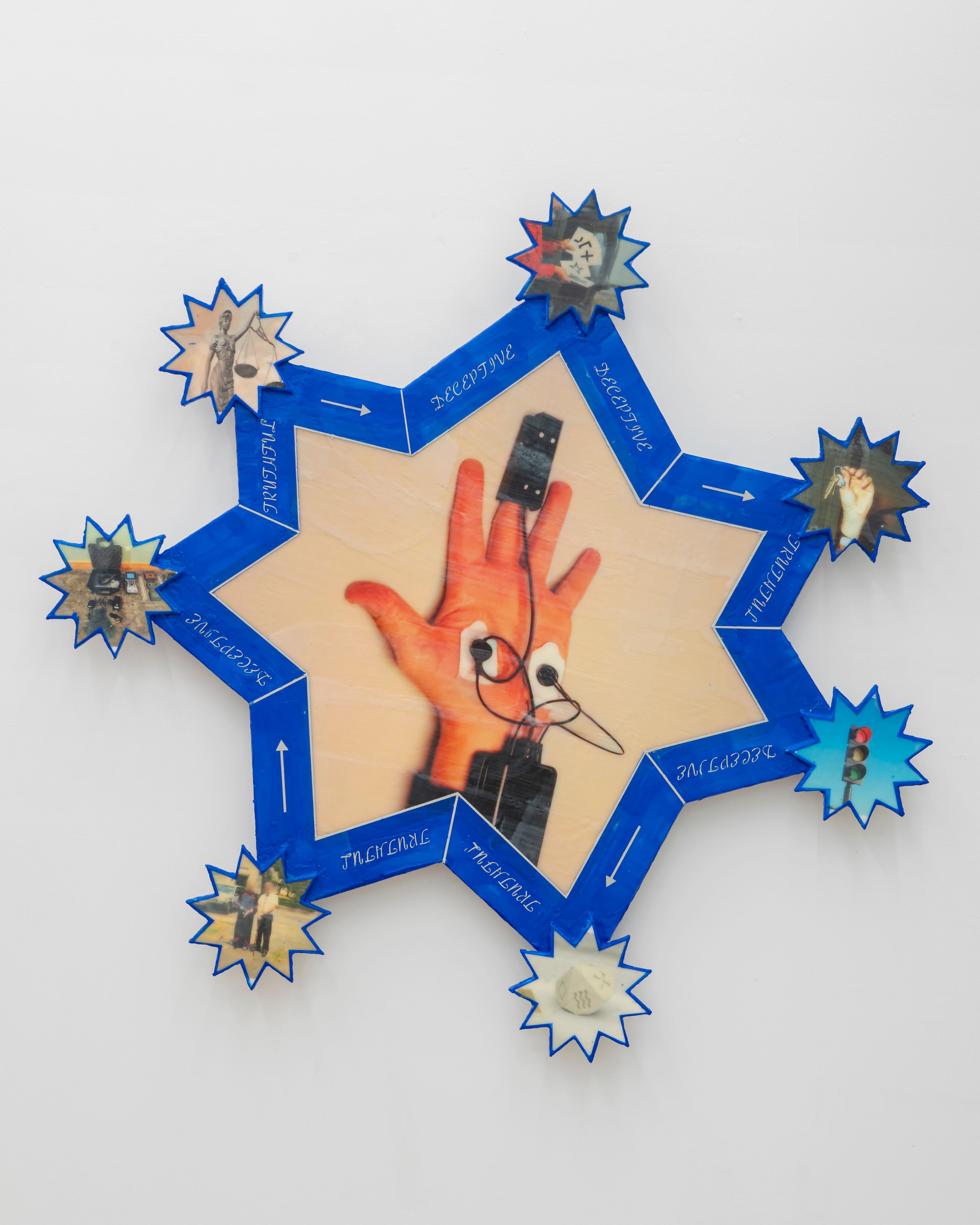
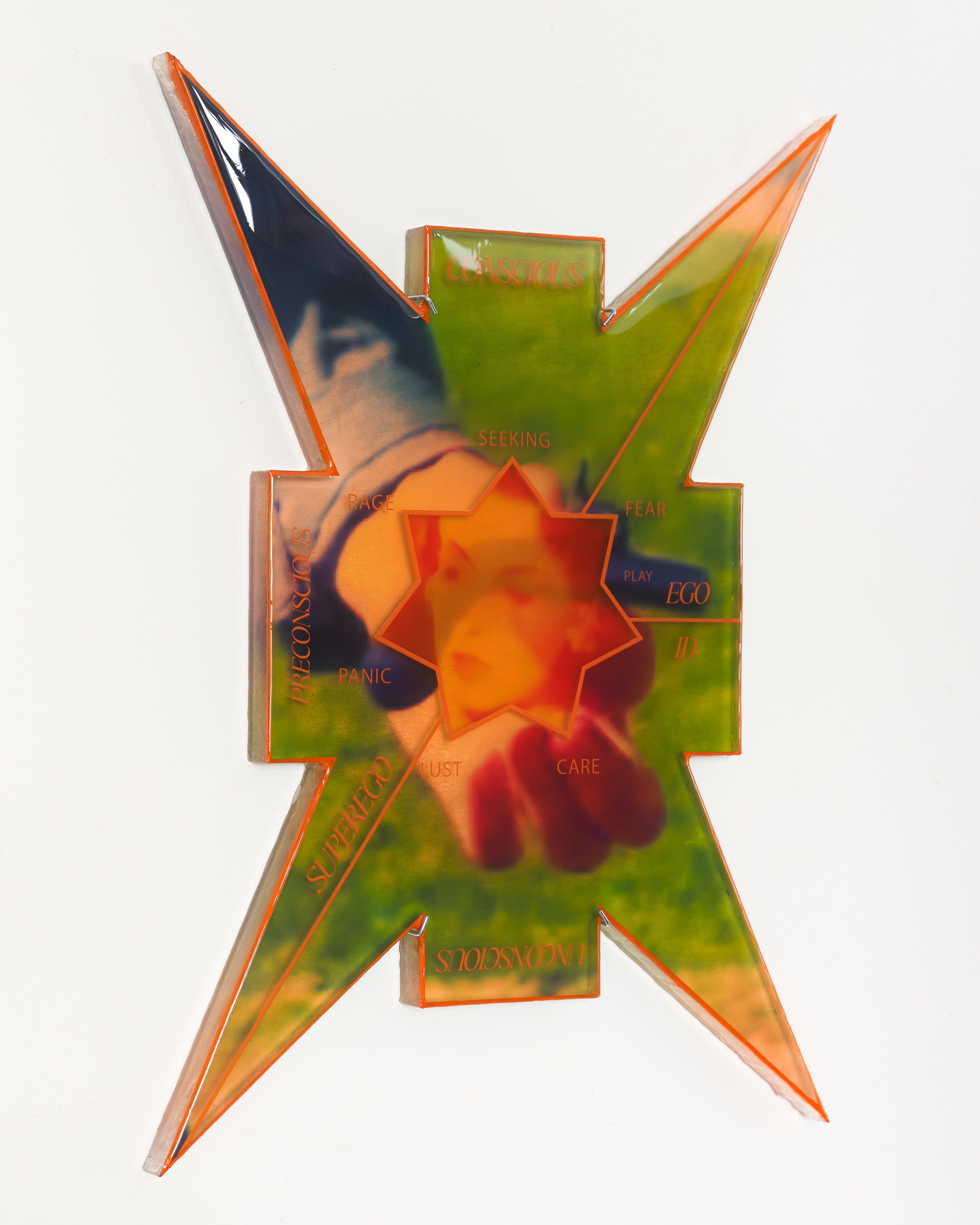
While they resemble sacred objects of worship created by a yet-to-be-discovered secret order, Nina Hartmann’s symbolically loaded resin works have a more vernacular antecedent: the DIY plaques and memorials commonly found in dive bars—particularly those in Miami, where the artist grew up. For her upcoming New York show at Silke Lindner in April, Hartmann has been diving deep into governmental and non-governmental archives ‘to unearth more buried timelines of history’. She adds: ‘I’ve also been documenting architecture and visual relics in Washington, D.C., which are being worked into the new pieces.’ While Hartmann draws inspiration from quotidian markers such as bar plaques, street signs and business graphics—‘I find these human moments of creative expression in unlikely places such a source of inspiration, like a perfect composition in a printed-out “cash only” sign in a bodega. I’m constantly documenting graphics in small shops in my neighbourhood in Queens’—she also focuses on occluded representations of power. ‘I’ve been especially interested in learning about symbolism in Freemason architecture that has been integrated into government spaces,’ says Hartmann. ‘This is part of a broader investigation within my practice into the aesthetic strategies employed by official government spaces to cultivate power and authority.’ – Aimee Walleston
Betül Aksu
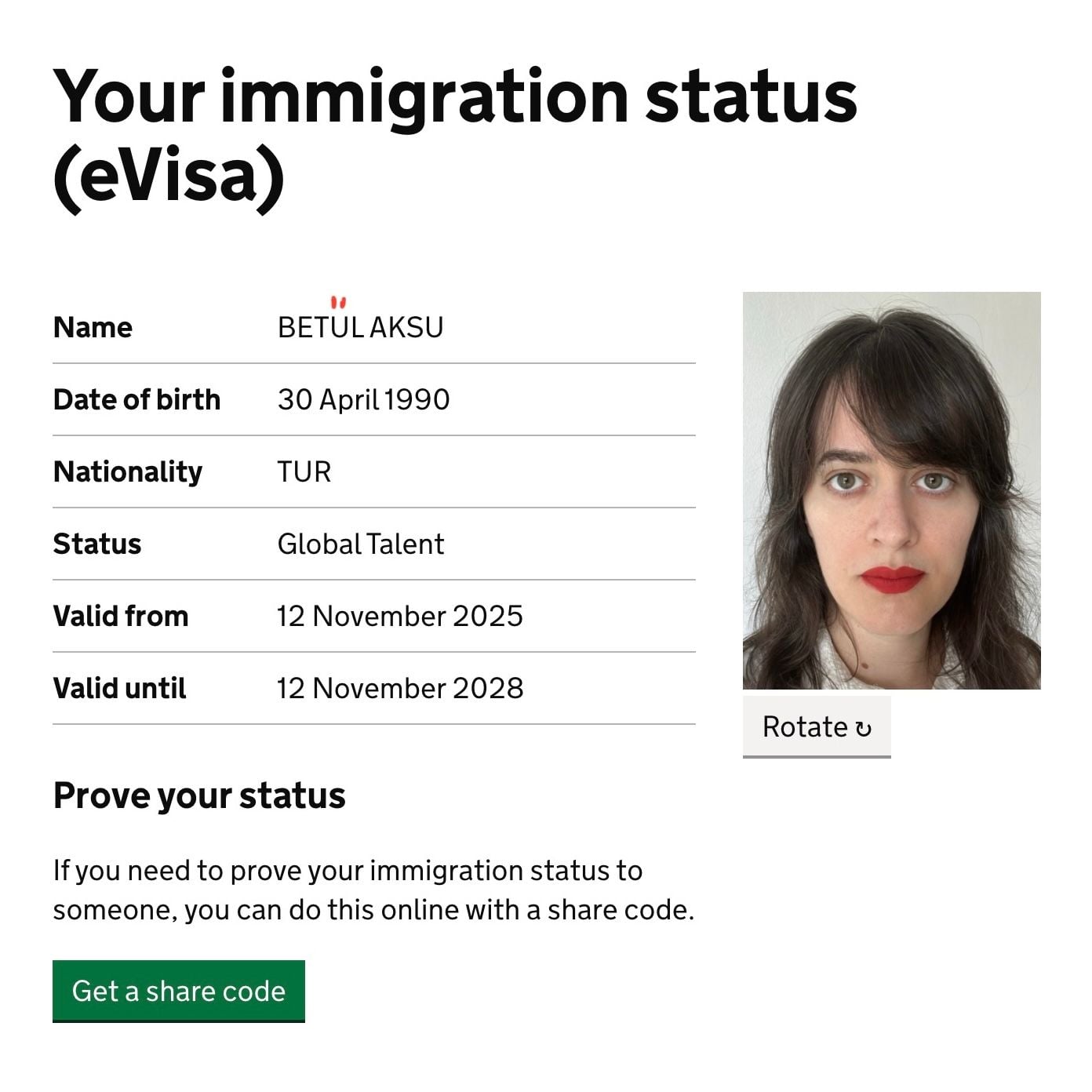
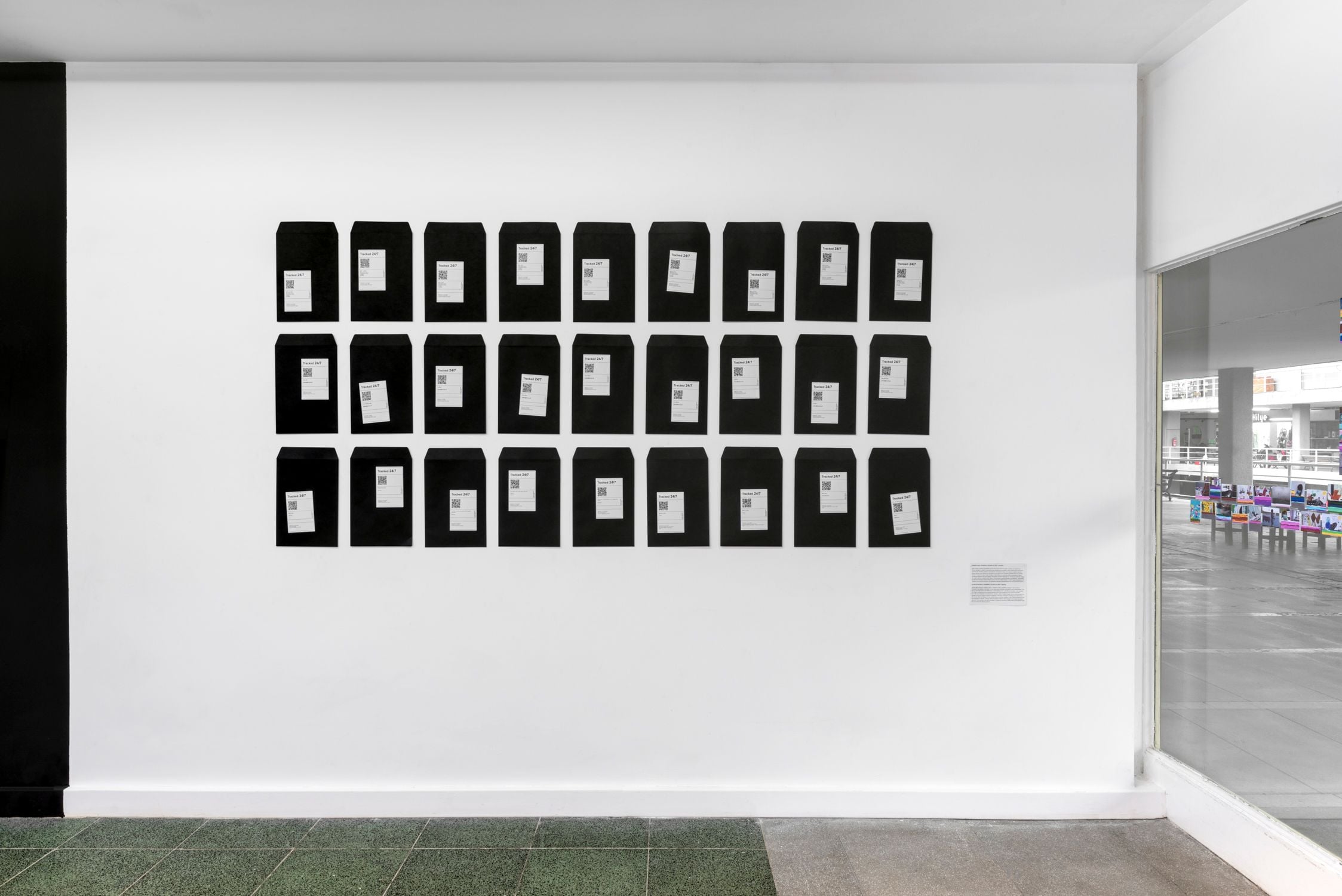
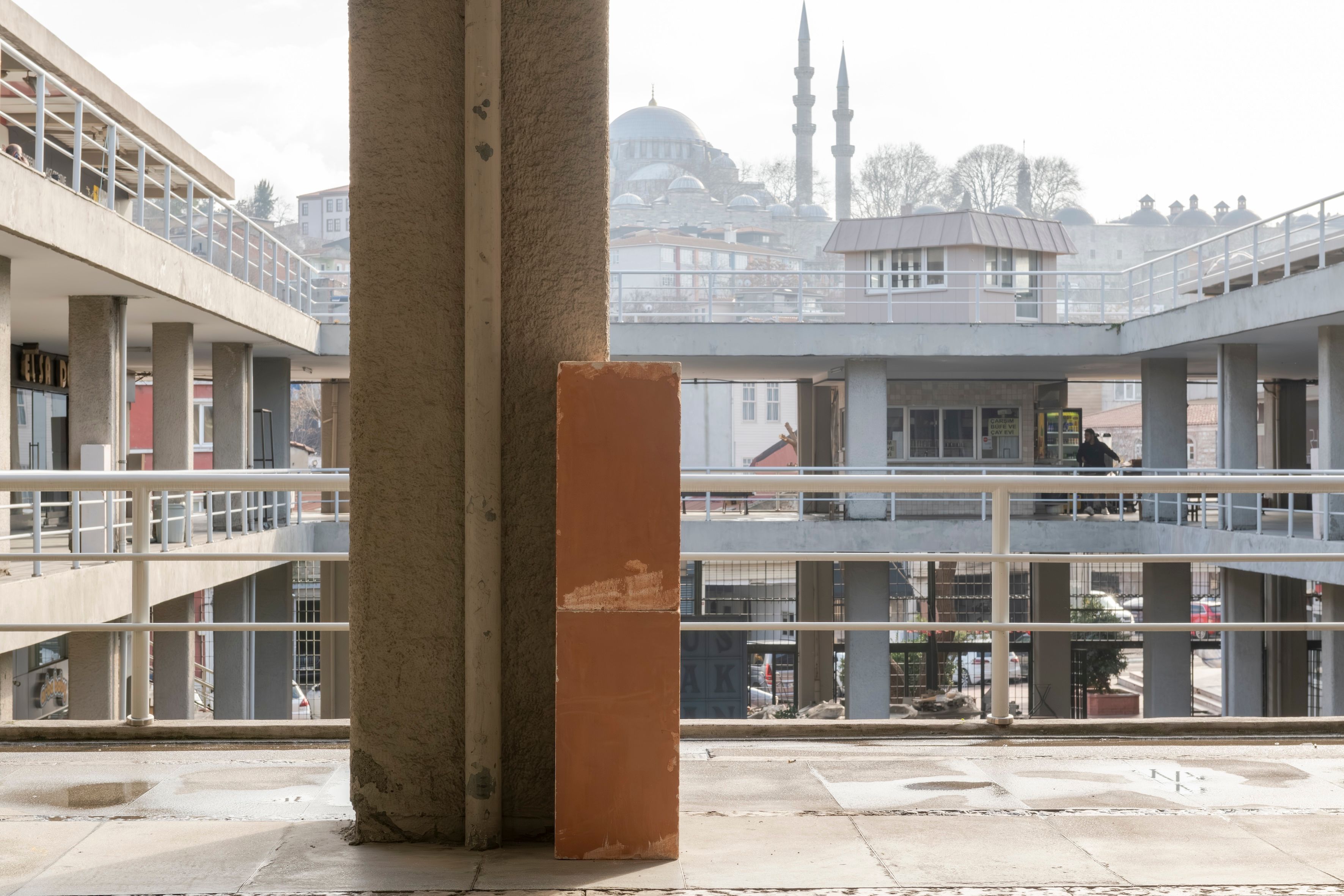
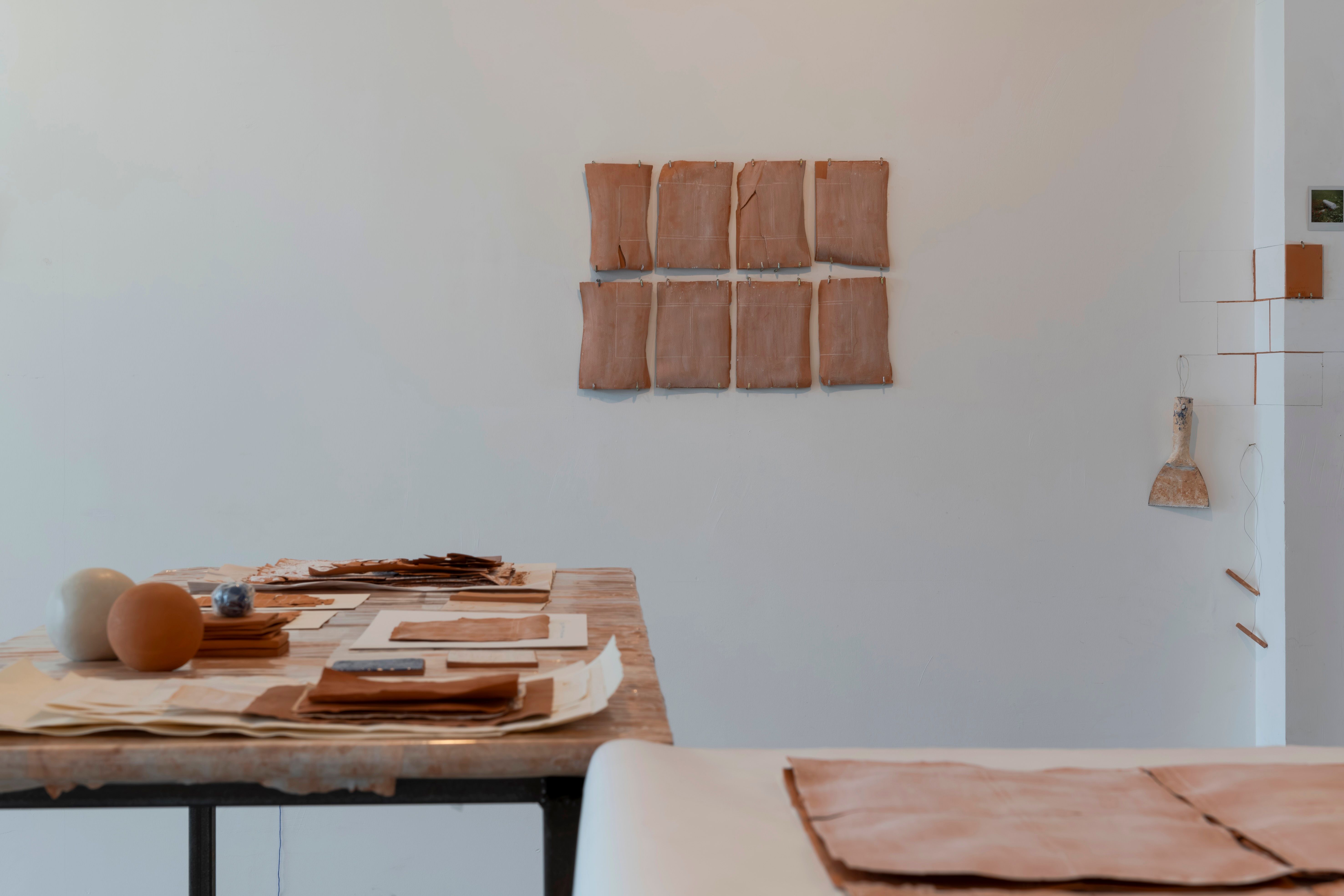
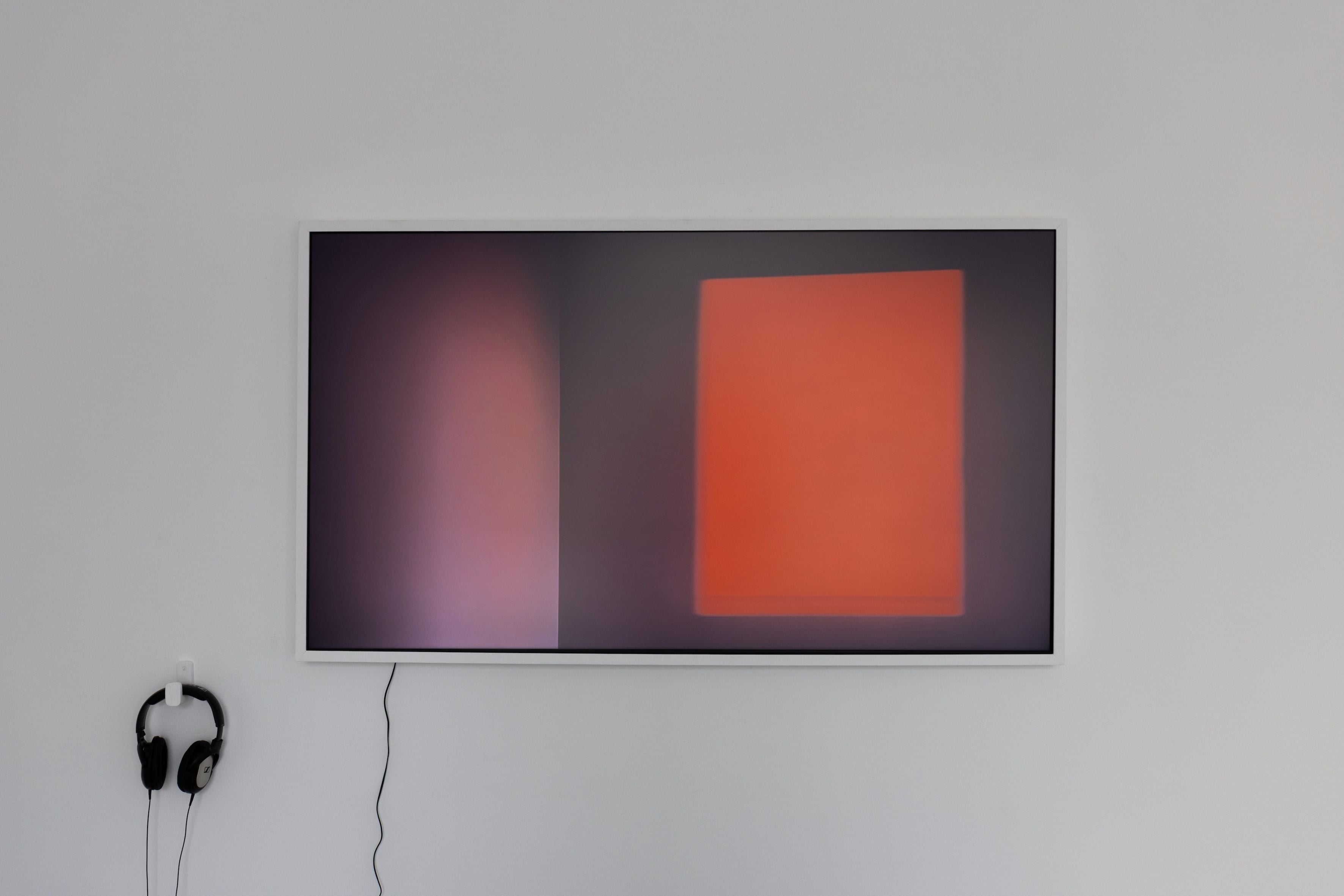
‘Open your eyes… move your fingers… curtains not wide enough…’ A soft, rhythmic voiceover unfolds like a half-remembered instruction manual. In a bedroom, a Turrell-like field of light slowly shifts, coaxing the body through the choreography of waking up. Betül Aksu’s quietly affecting video, turn the page, my hand (2024), shown at the 2025 Sharjah Biennial, lingers long after its modest five-minute duration. Encountering Aksu’s work often feels like being gently compelled to reckon with the smallest, most intimate mechanisms of living. At times we meditate alongside her; at others, a bitter laugh escapes. In Landing Card (2023–2025), the Turkish-born artist completes U.K. immigration forms by blacking out all information except the dots above İ and ü—diacritics that stubbornly leak her identity. After moving into her 19th home, she wrapped 19 cardboard boxes in adhesive tape that reflects light, peels away and resists heat or water, arranging them on a movable platform that registers belonging as provisional (lives here and there, 2022). In November 2025, Aksu was granted a U.K Global Talent visa and the İzmir- and London-based artist has embarked on a three-year performance documenting daily realities to probe what, exactly, being deemed a ‘global talent’ implies. – Shanyu Zhong

Mohammed Z. Rahman
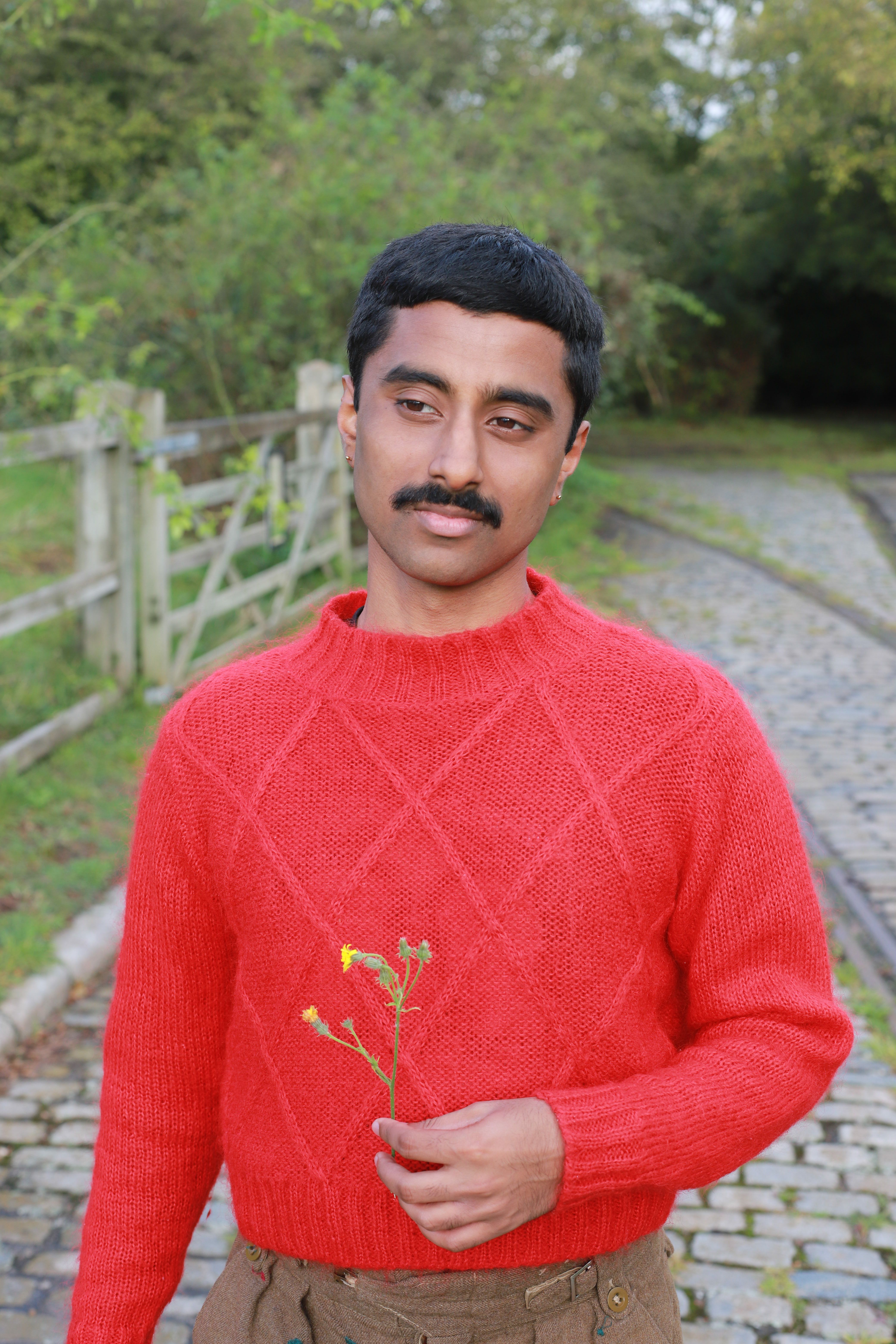
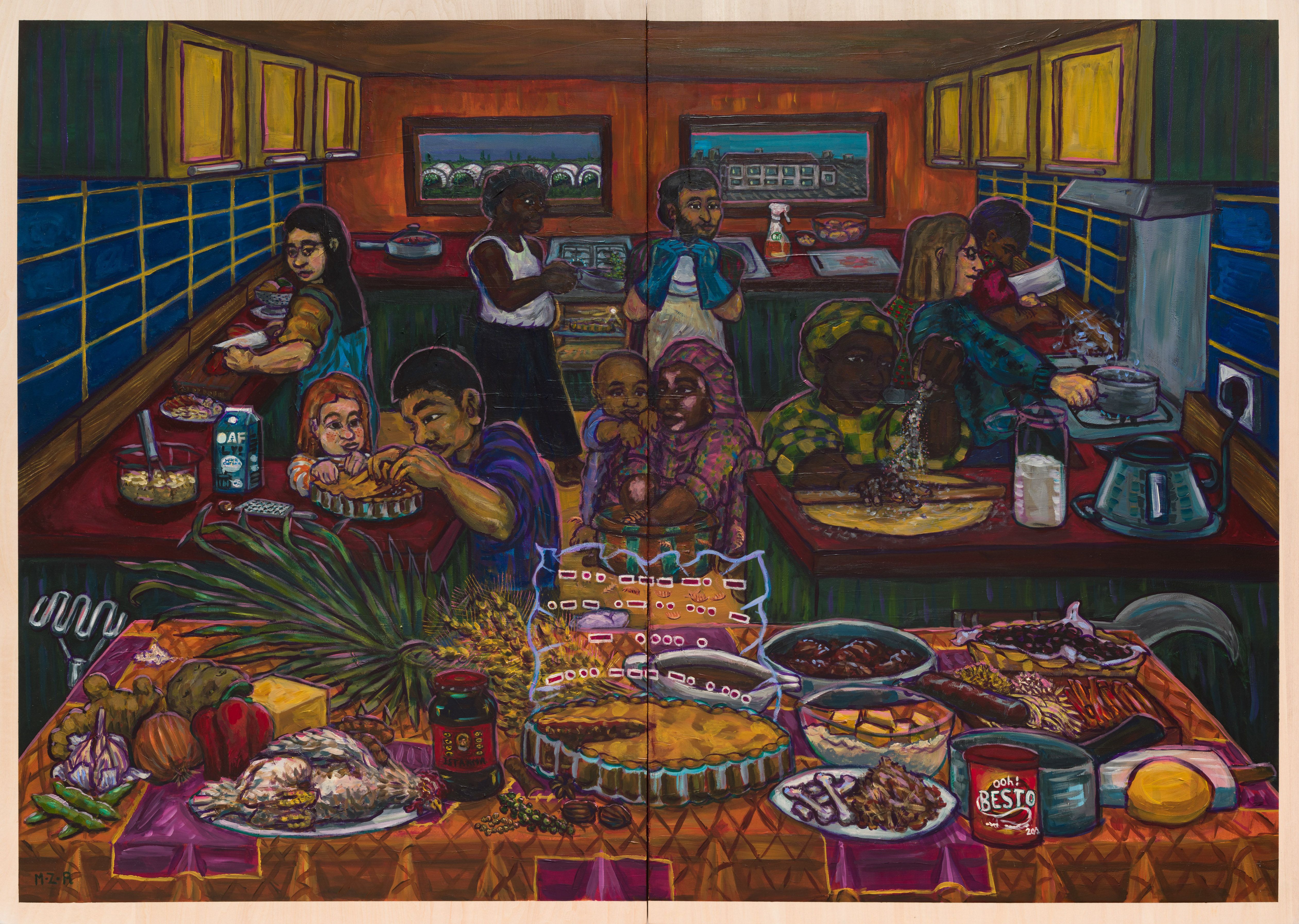
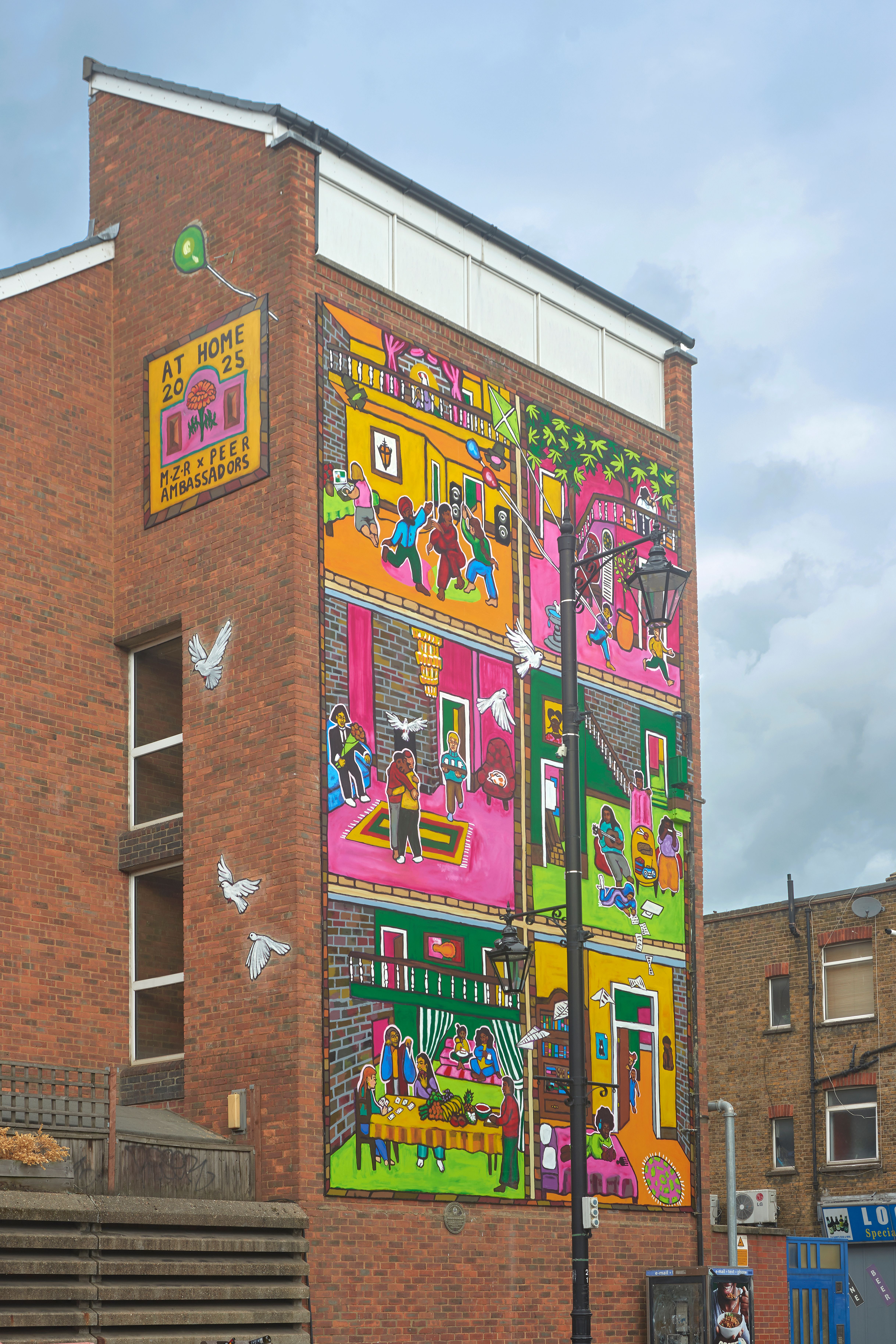
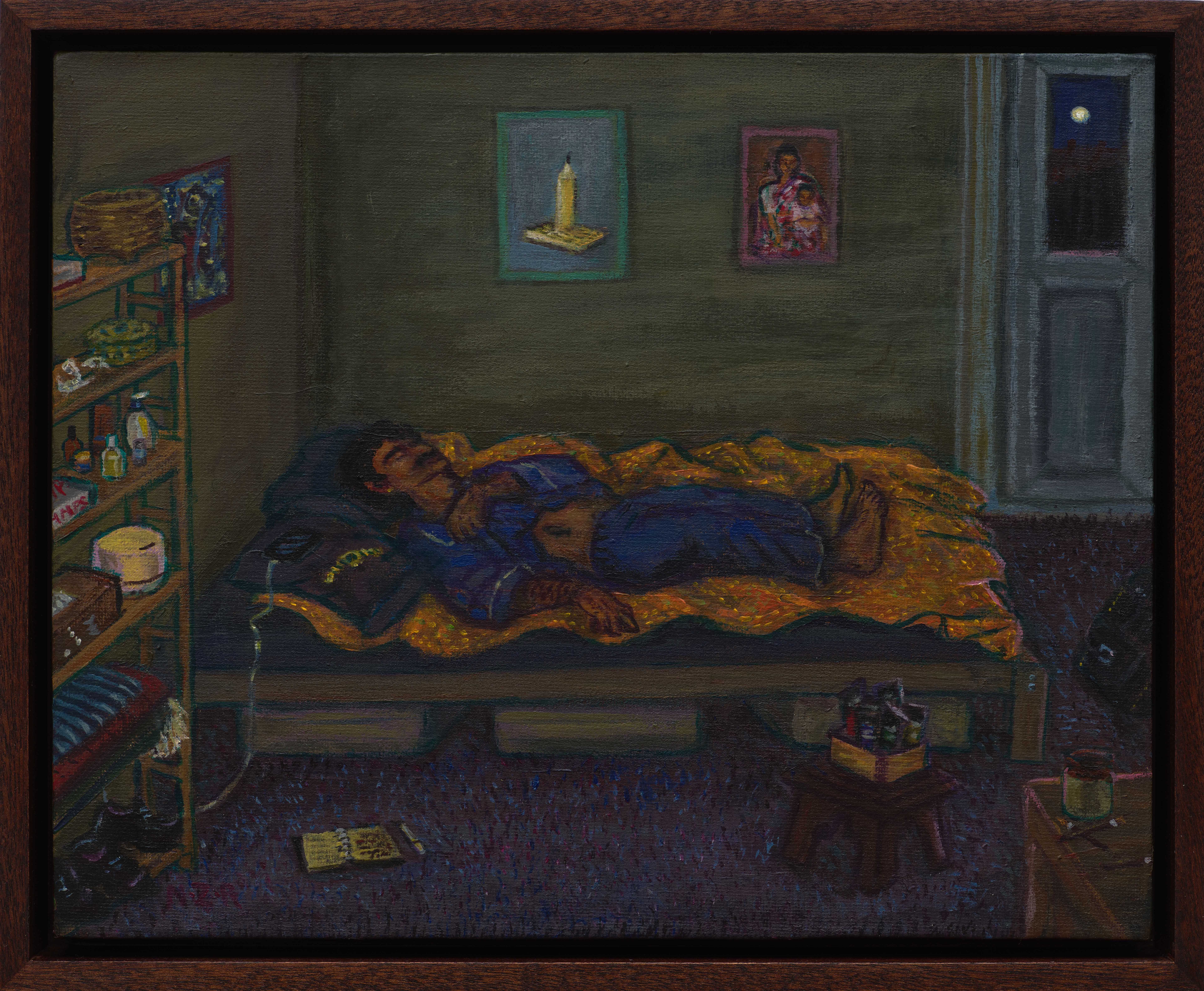
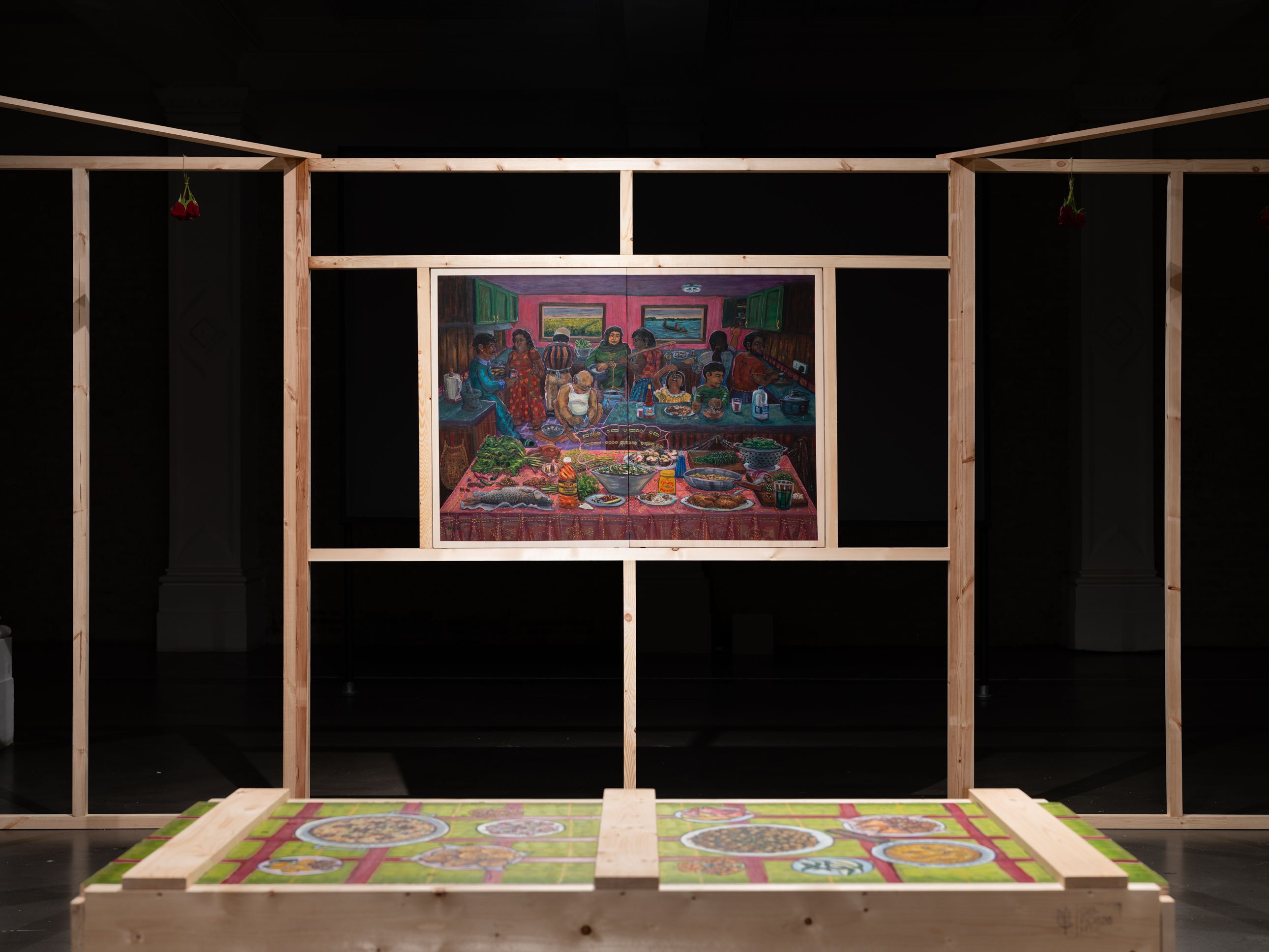
One of the things I love about London is its proliferation of suburban murals, and Mohammed Z. Rahman’s permanent work At Home, unveiled in the East London neighbourhood of Hoxton last August, is a radiant example, with six vignettes depicting family activities—kite-flying, gathering around the dinner table, playing music—on the brick face of a residential block on the Arden Estate. The scenes are also emblematic of Rahman’s paintings: colour and communion; commotion and stillness all at once. However, At Home exists on a completely different scale to the work I saw at his 2024 Phillida Reid show, which included painted matchboxes (Lovers’ Vigil, 2024). Dream-like, lucid and enchanting, Rahman’s style has been likened to surrealism or social realism—movements that, the artist says, have flourished in times of social unrest: ‘The former, in that it allows one to dream beyond current conditions and process the unconscious, and the latter, to give voice to the everyday lived experience of the working and non-ruling classes, acting against hegemony.’ Following a busy 2025 with shows at Whitechapel Gallery, Peer and Art Basel Miami Beach, 2026 promises further scaling up for Rahman, with Art Now at Tate Britain opening in June and, further ahead, a solo show at Chapter in Cardiff, opening in early 2027. – Misong Kim
Chan Ting
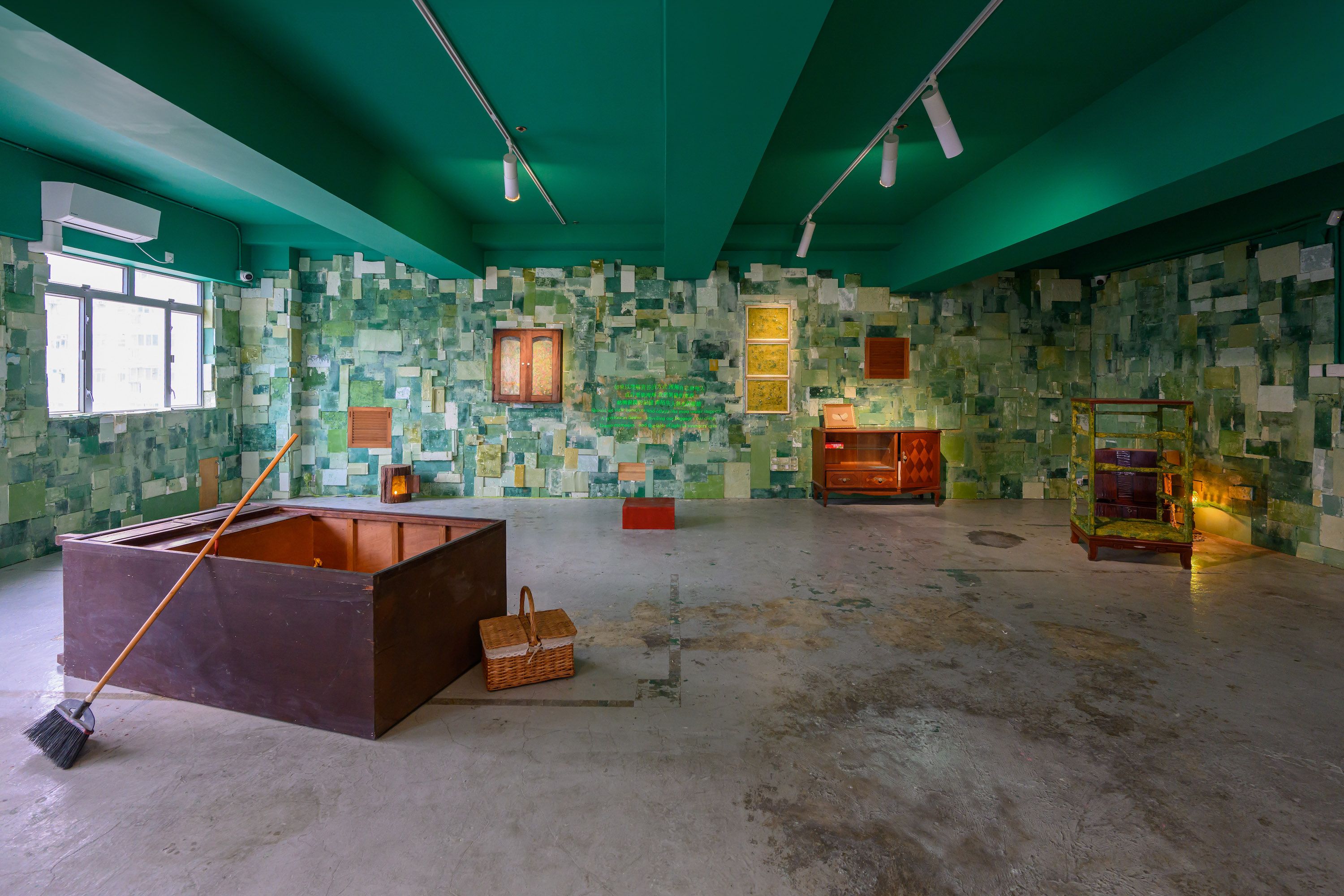
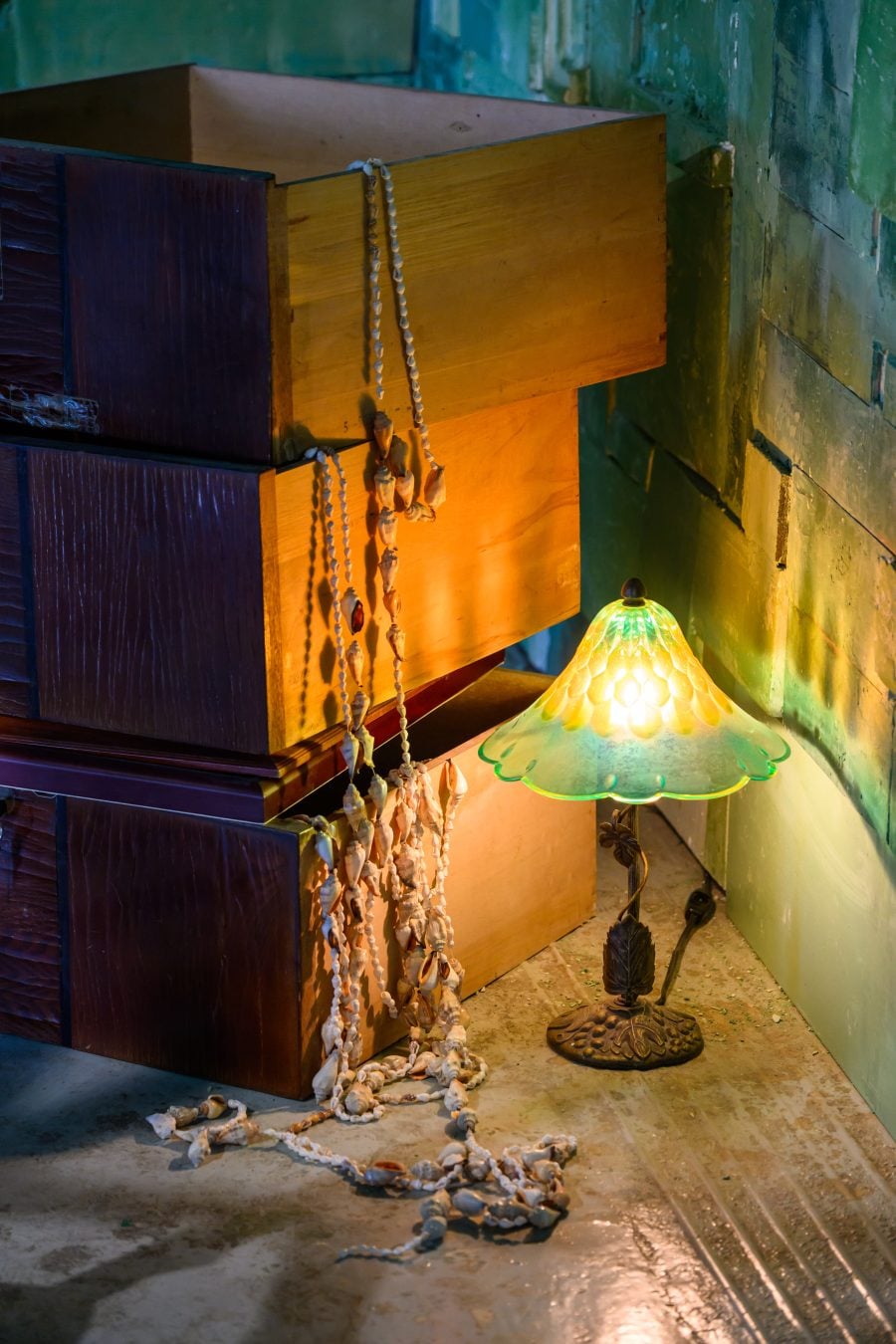
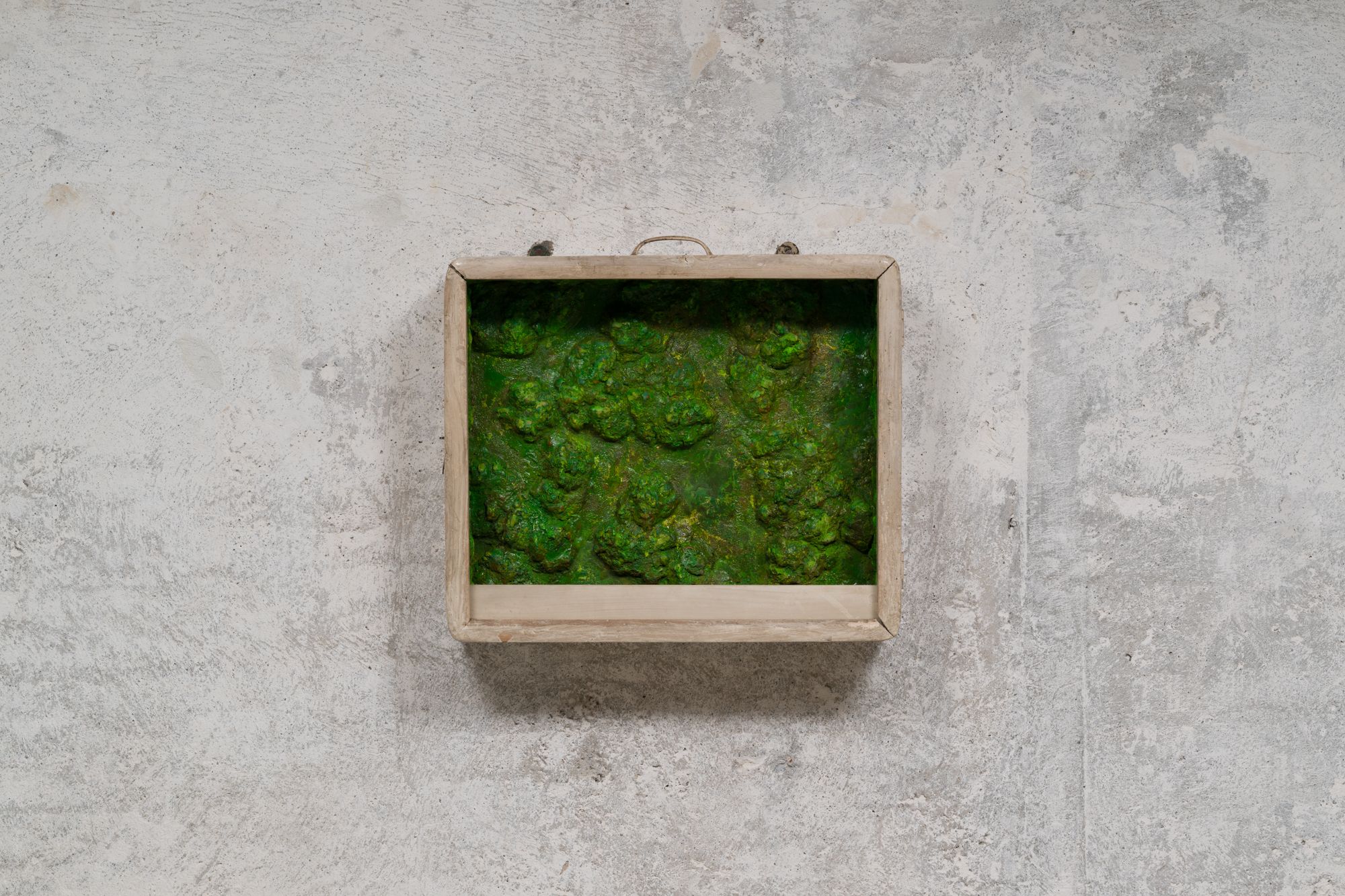
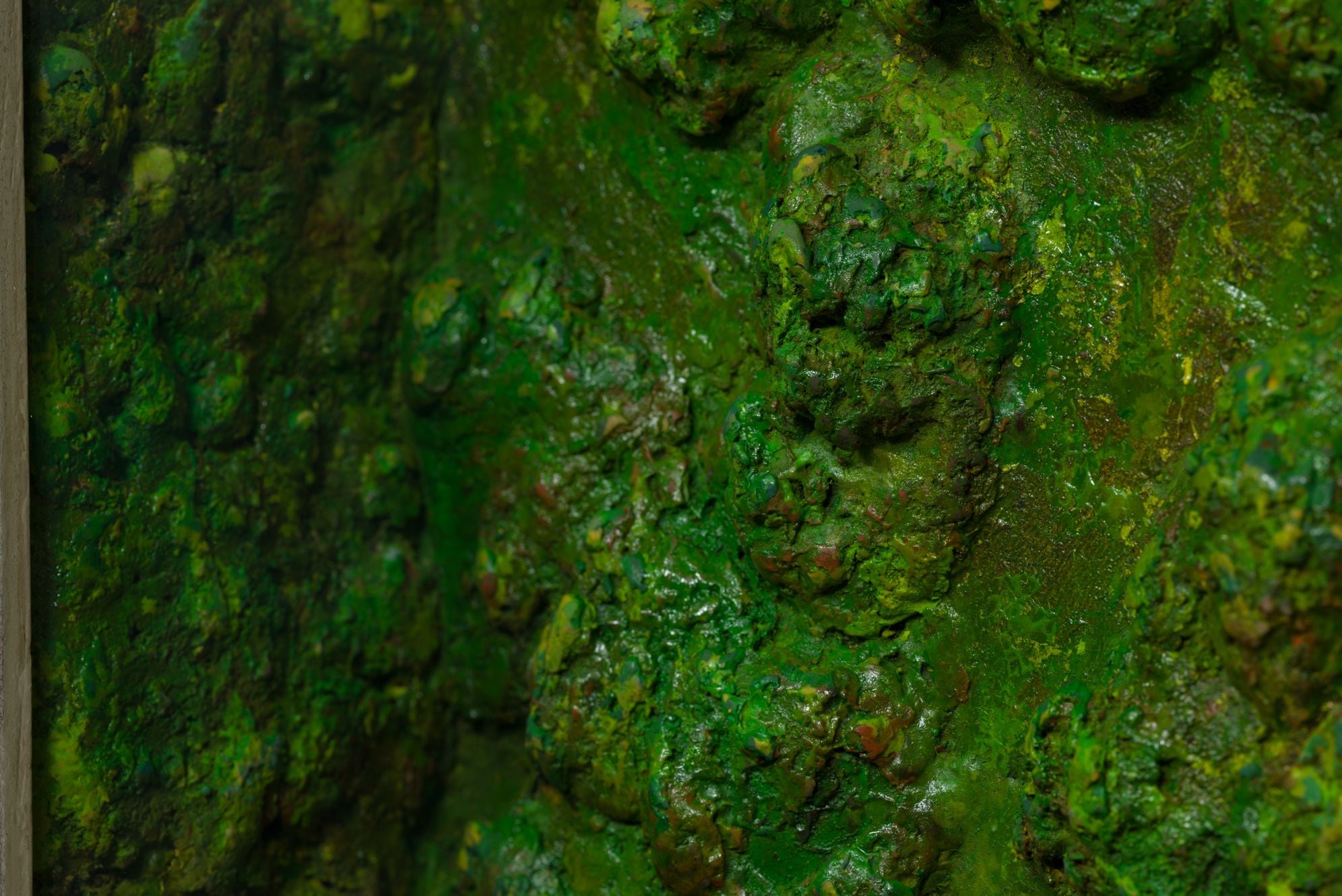
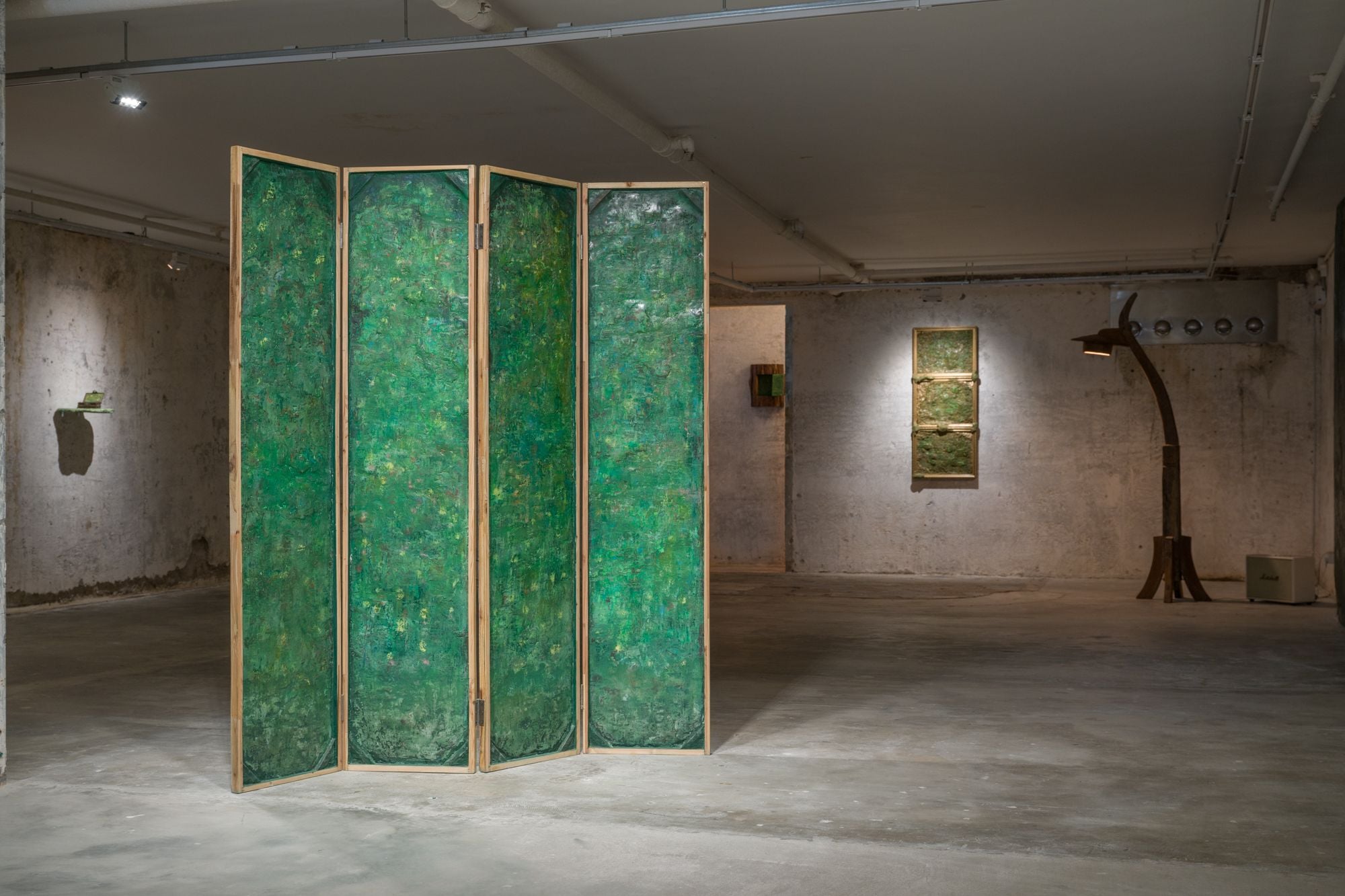
At Inside-Out Art Museum, it took me a moment to register that the artist practising radical sound experiments—once a co-founder of the now-closed Negative Space—was the same Chan Ting I remembered primarily as a sculptor: meticulously cloaking found furniture in a moss ‘skin’, or preserving a breathing marsh of paint, hair and dust inside a sealed box. Sound, sculpture, moving image—none operate in isolation within Chan’s practice. Born in 1993, Chan is a trained hypnotherapist and energy healer and she folds these sensibilities into a morphing but resilient ecosystem shaped by touching, walking, treasure-hunting and dreaming in Hong Kong, the city of her upbringing. Following two major solo exhibitions in 2024 at PHD Group (Chan Ting: dreamskin) and Para Site (Moss Wonders), 2025 was comparatively quiet. Her series Abandoned Abundance (2025), currently on view at PHD Group, brings together second-hand objects coated in industrial green paint, sanded back and varnished, re-examining intrinsic function, value, and the residue of personal histories embedded in everyday things. In 2026, Chan will showcase a solo presentation at Art Basel Hong Kong, followed by a residency at Next Door to the Museum on Jeju Island. – Shanyu Zhong
Coumba Samba
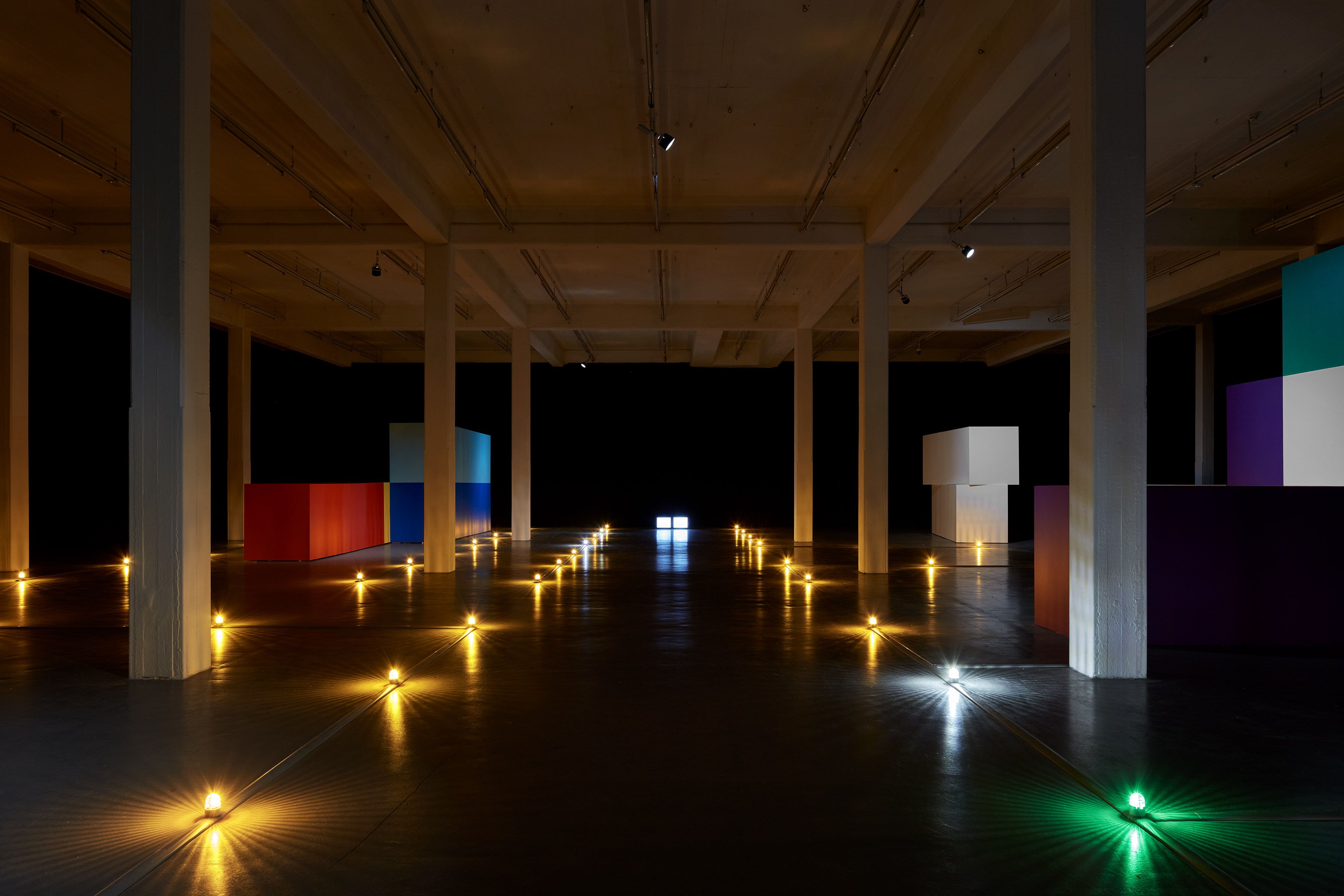
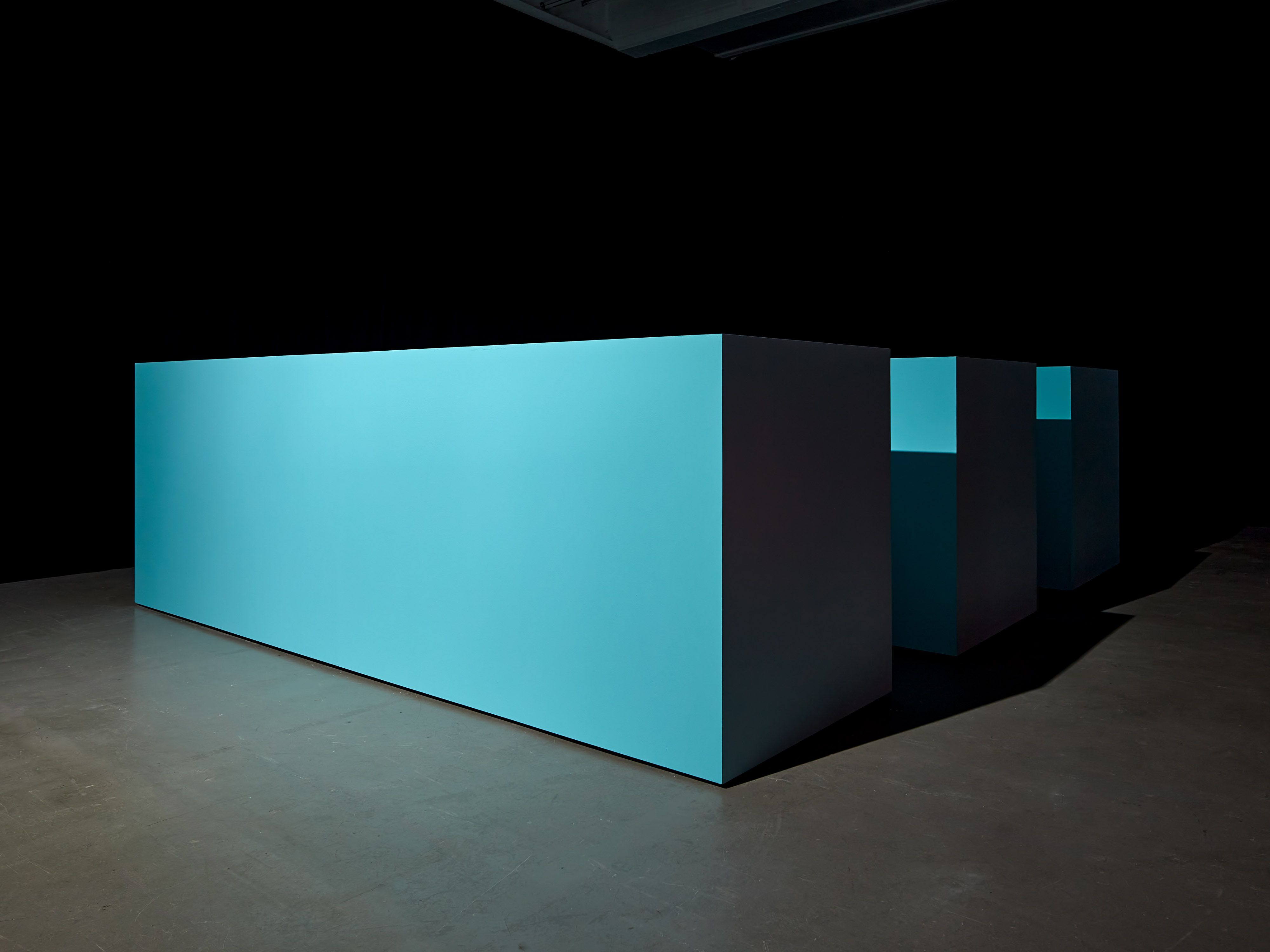
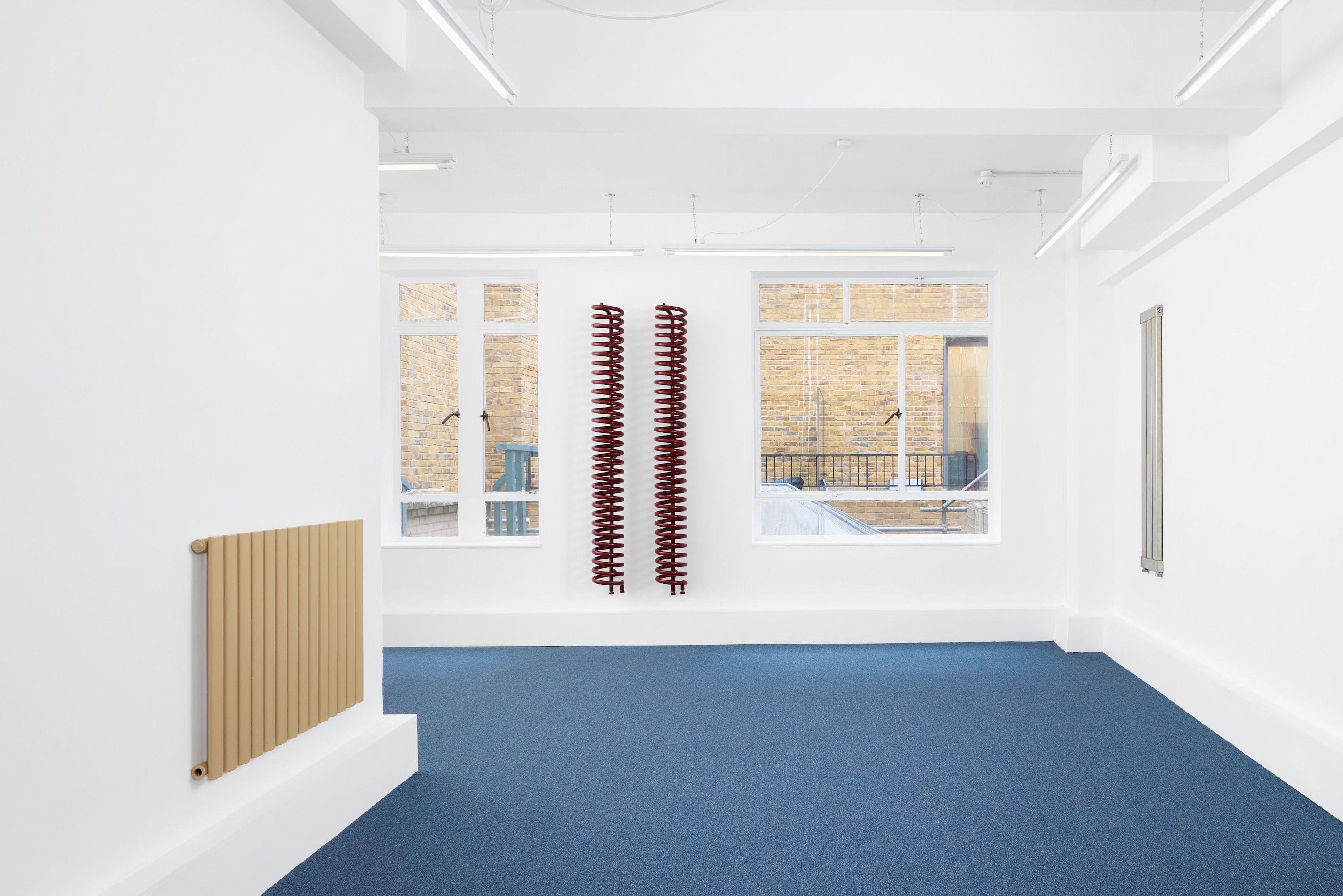
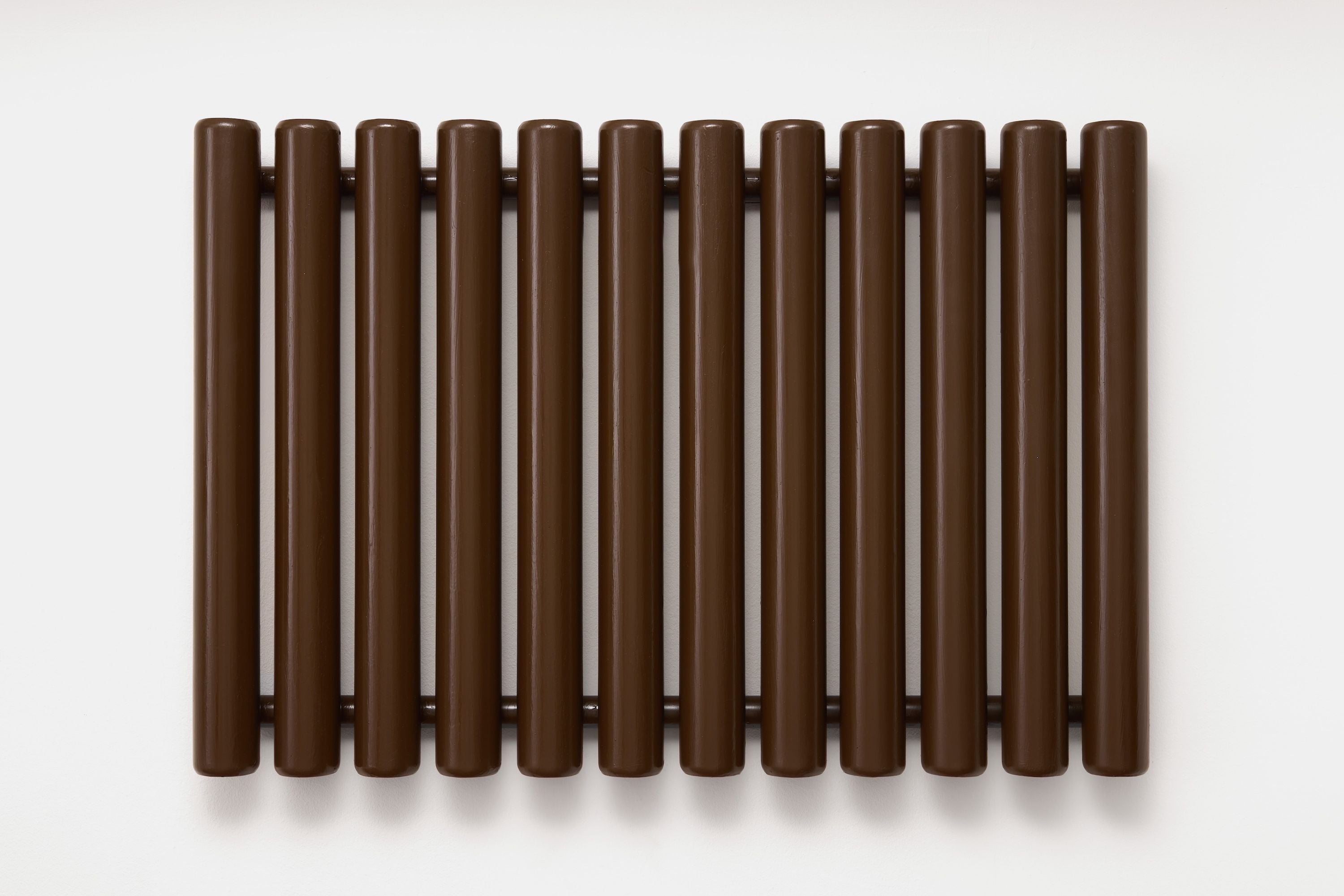
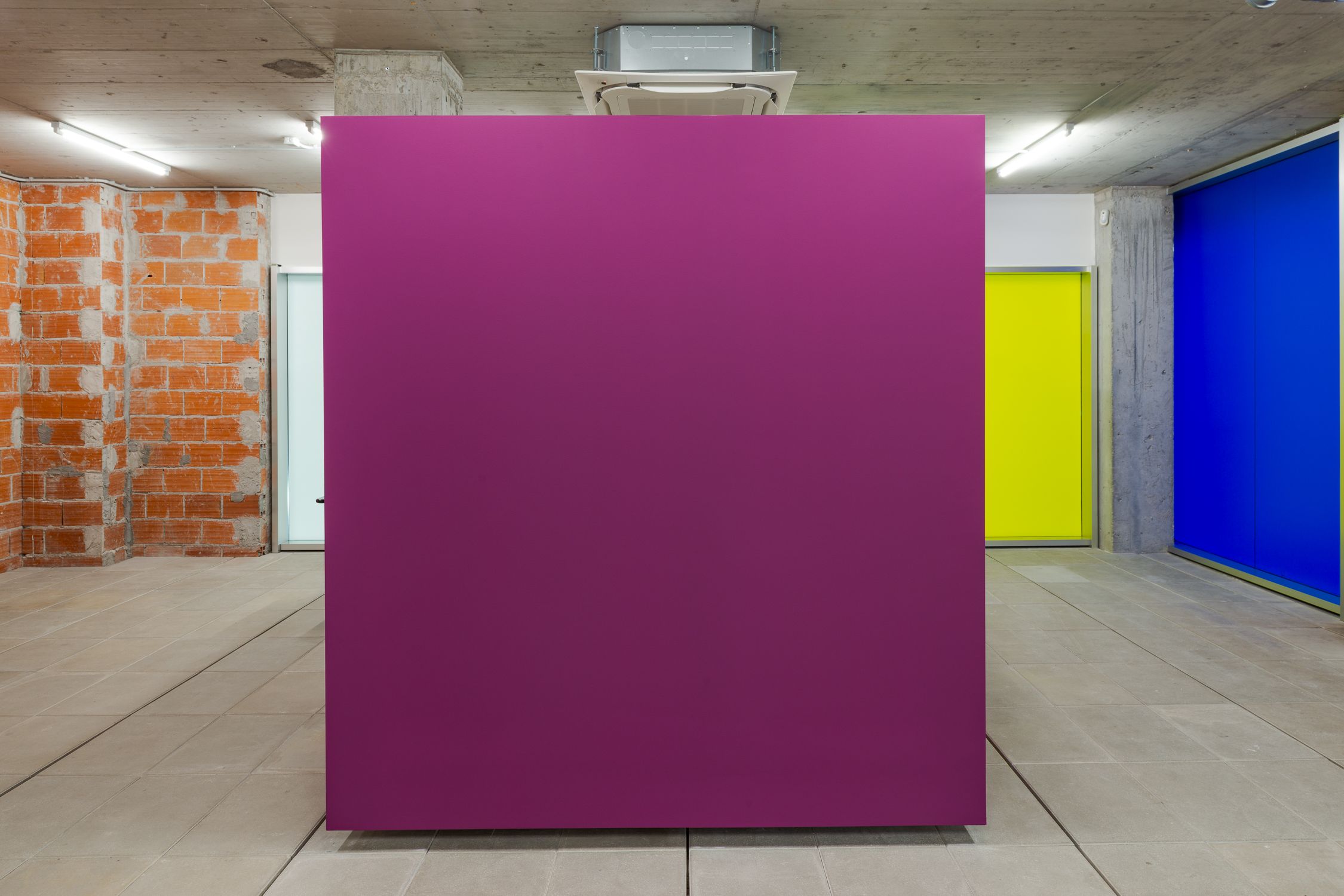
In 25-year-old Senegalese American artist Coumba Samba’s work, symbols of diplomacy are streamlined into their base constituents: steel radiators, beams, shipping containers, national flags, primary colours and hues taken from stock images of diplomatic meetings. When I asked if she resists classifying as minimalist the work shown in her 2024 solo show, Red Gas at Arcadia Missa, she stated: ‘Definitely not, but also yes’. Samba’s practice outlines how visual forms of colonialism ingratiate themselves on to the super-structures of the present, triumphantly perverting any formal or symbolic legacies she shares with sculptural forebearers like Donald Judd or Dan Flavin. Since her groundbreaking U.K. performance Capital (2024) at Cell Project Space, in 2025 Samba exhibited two solo shows: The National Expo at ETH Zurich and deutschland at Hamburg’s Kunstverein. Presented by London based gallery Galerina, her most recent work, Wild Wild Wall, consisting of 176 square steel posts, spans the back wall of Kunsthalle Basel and features the desaturated tones of a U.S. Border Patrol badge. Coumba also forms one half of the electronic duo New York, with her partner Gretchen, whose performances’ carefully considered styling often mimics the chromatics of Coumba’s work. Their new EP, PUSH, was released in September 2025. – Lydia Eliza Trail
Hoda Afshar
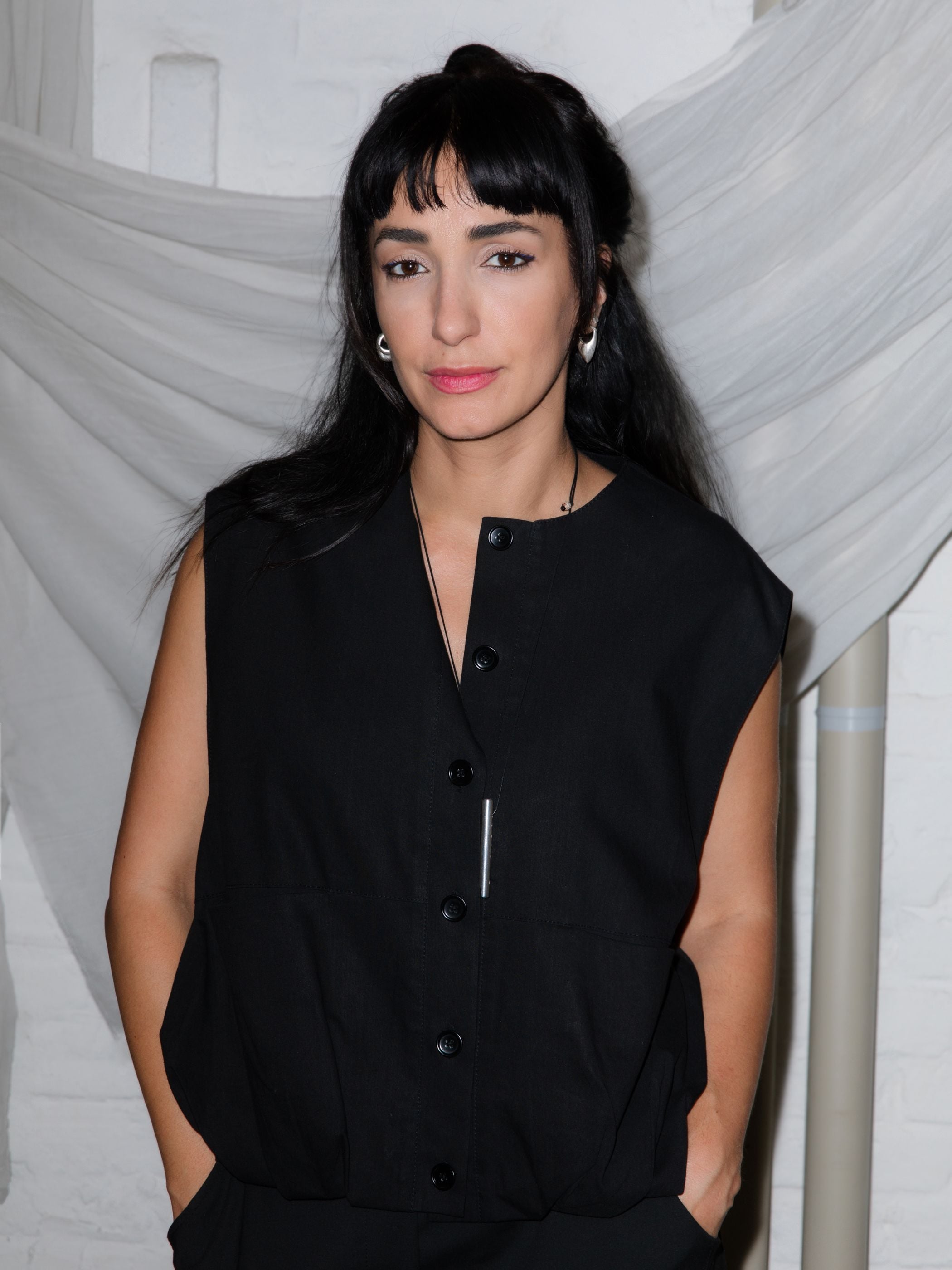
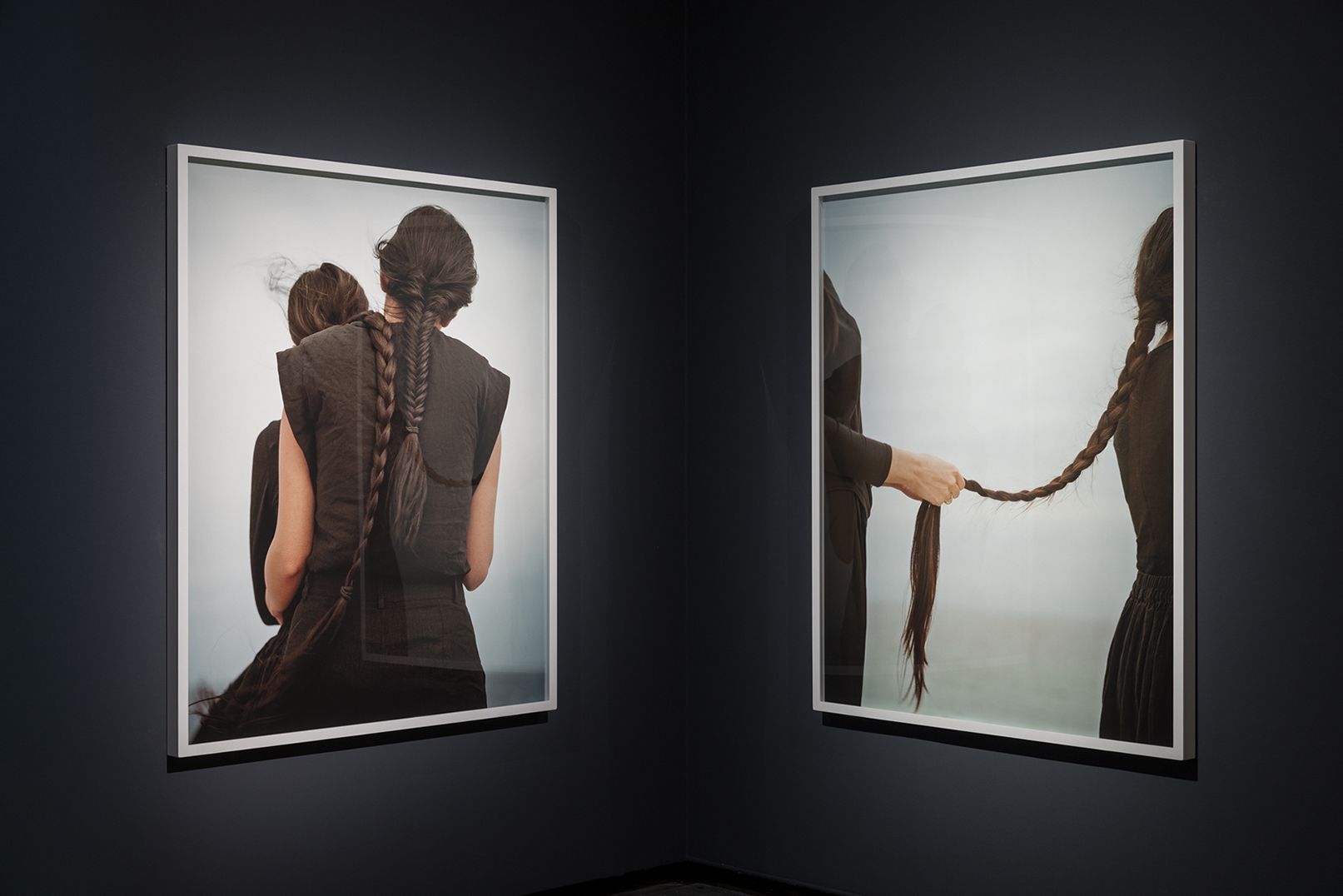
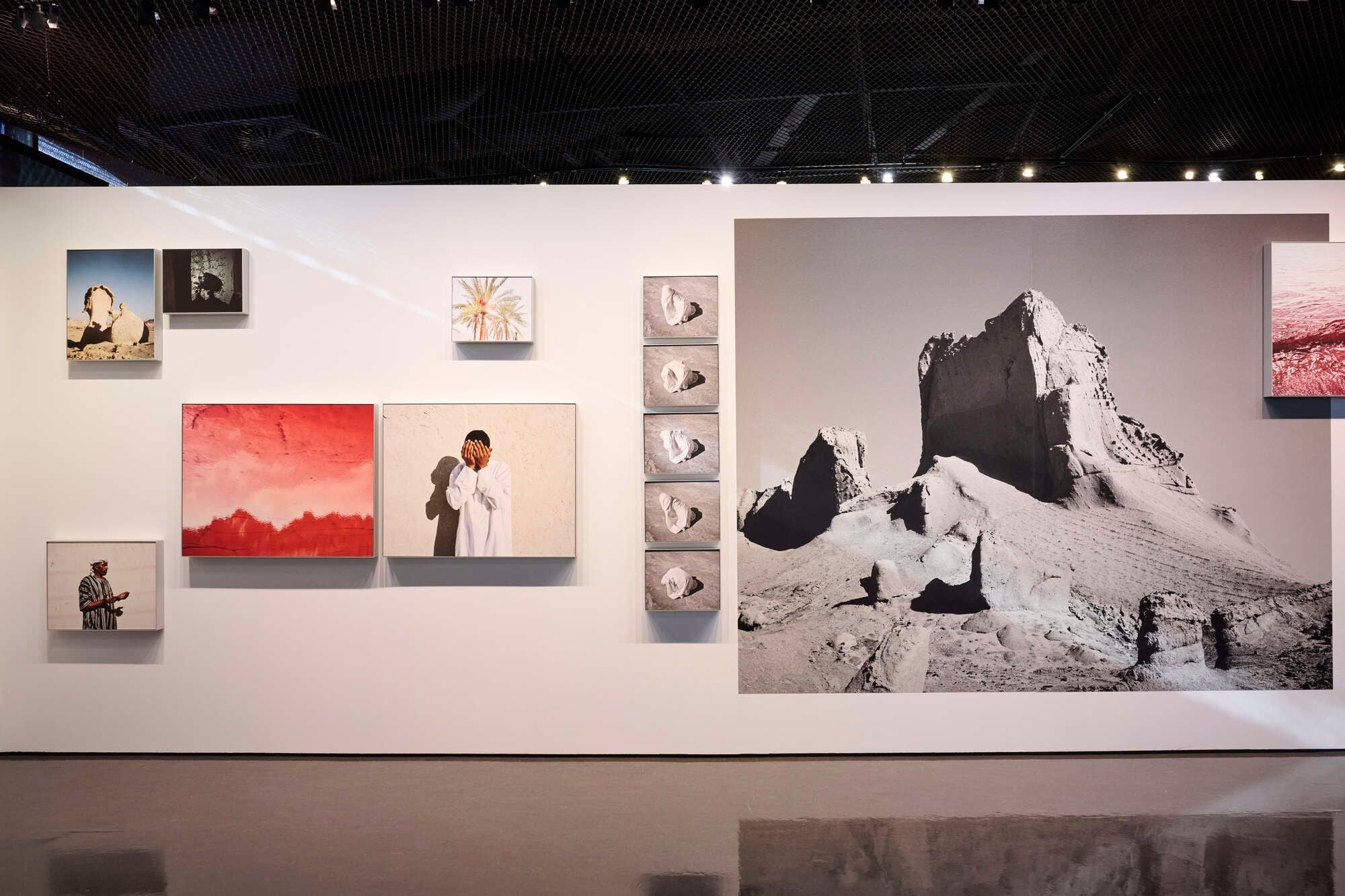
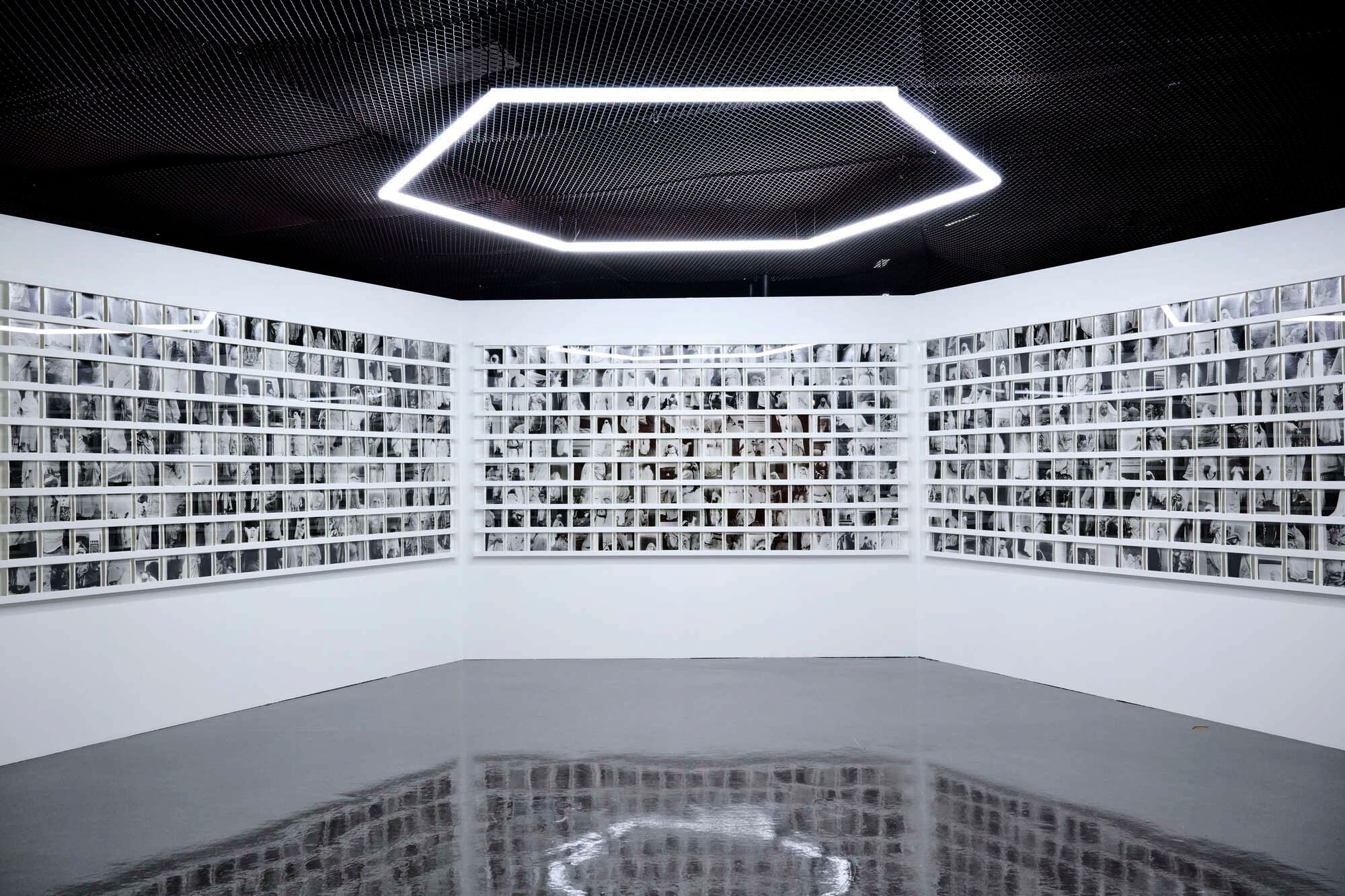
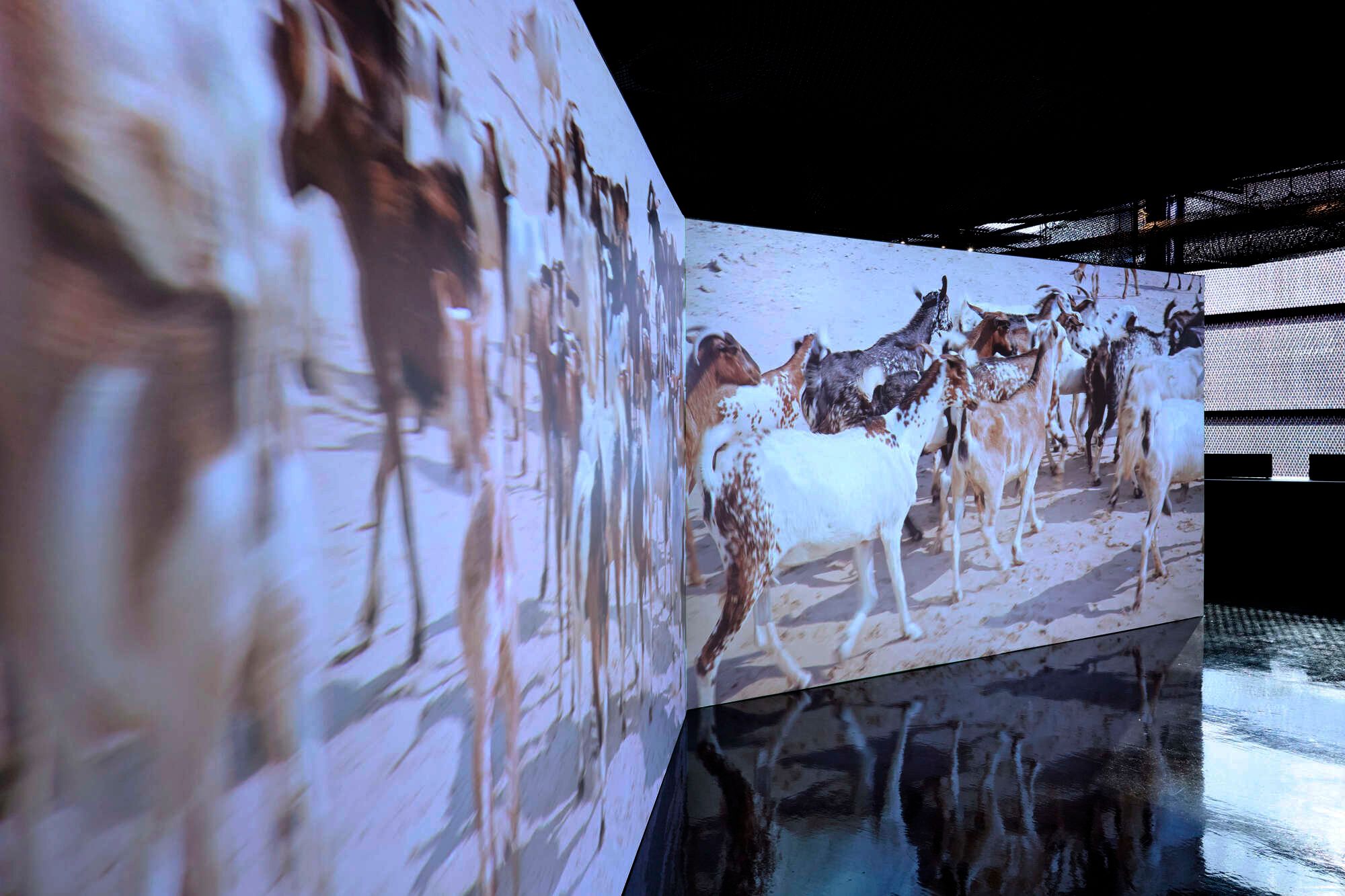
‘For as long as I lived in Iran, I was fighting against the patriarchy in my own country,’ said Hoda Afshar, who was born in Tehran four years after the Islamic Revolution of 1979, when the hijab became the mandatory dress code for all women. Yet upon moving to Australia at the age of 24, she was then ‘confronted with the way that the West treats my body and my image.’ It is this tension between the two forces that animates The Fold, Afshar’s exhibition currently on display at the Musée du quai Branly – Jacques Chirac in Paris and in the artist’s new monograph of the same name. One of the first artists invited to delve into the museum’s ethnographic archives, Afshar came across a collection of images taken by French psychiatrist and photographer Gaëtan Gatian de Clérambault of veiled women in Morocco in the early 20th century. Owing to a glitch in the museum’s digital system, each image downloaded by Afshar appeared in a tightly cropped version of the original. This disruption of the photographic gaze is central to Afshar’s practice, which includes subjects as varied as an interrogation of the incarceration of First Nations children in Australia (for which she won the National Portrait Prize in 2025), and a reflection on how the invisible force of the wind can shape superstition, trading routes and landscapes. She asks us to open our eyes and see the unseen. – Louise Benson
Marcos Kueh
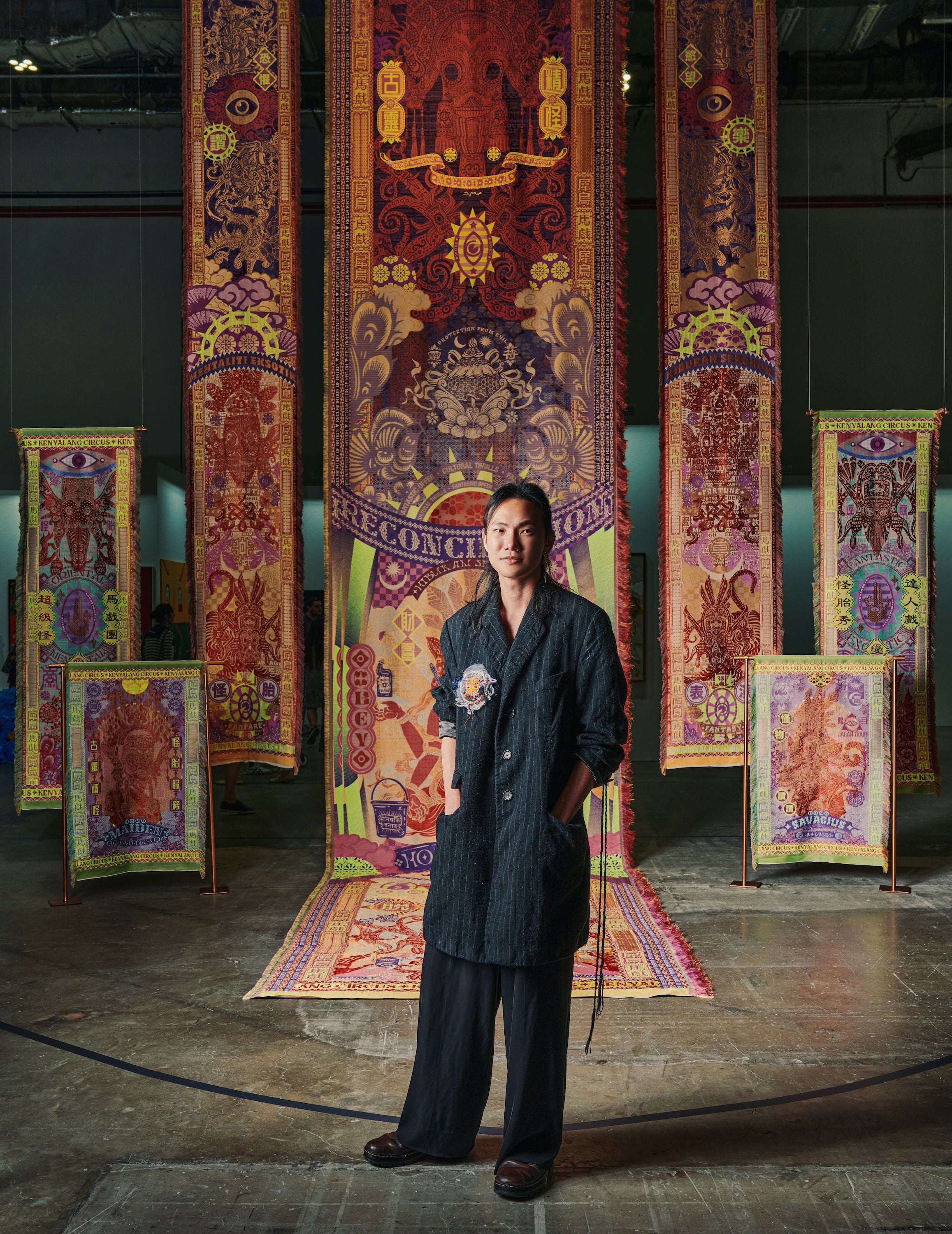
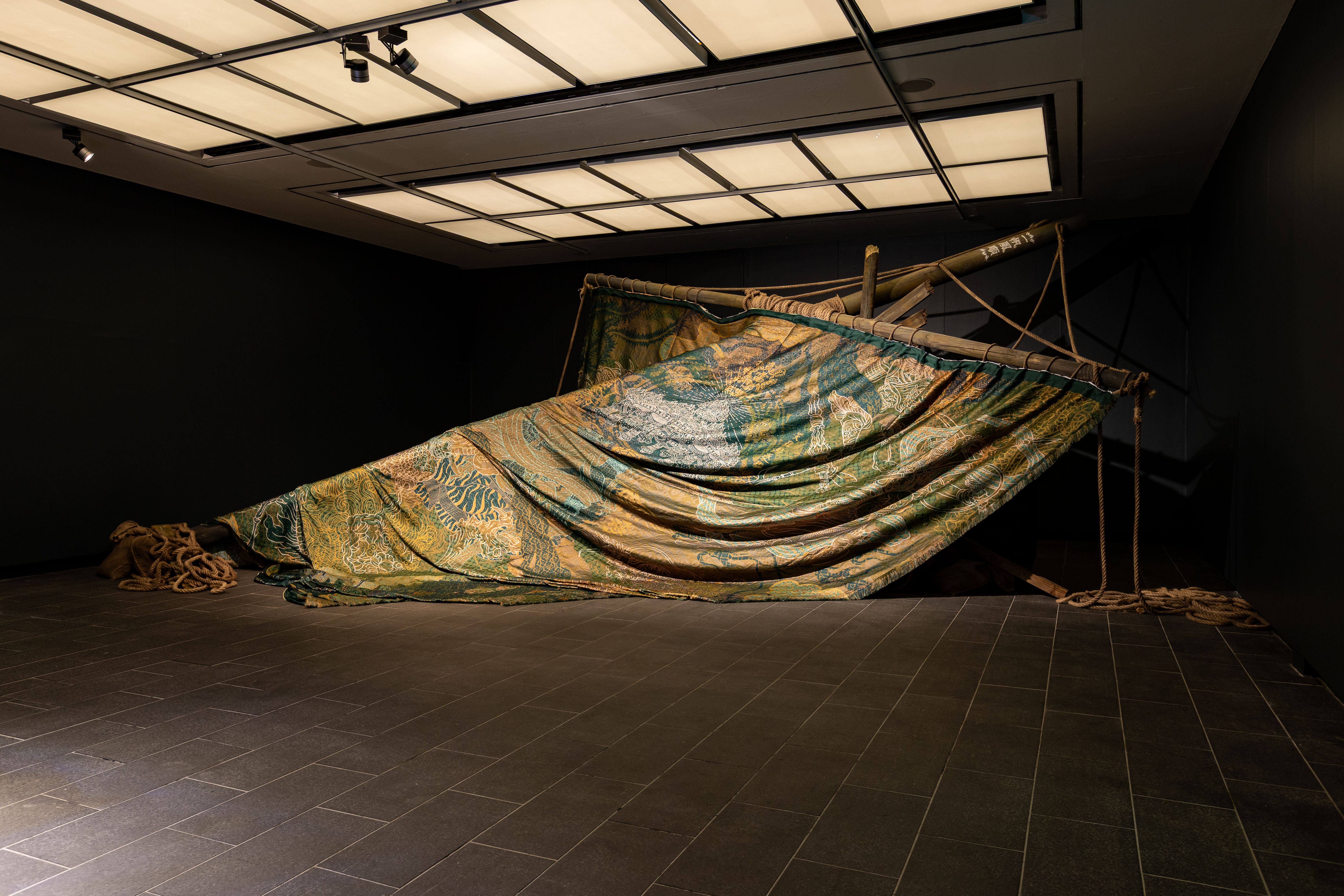
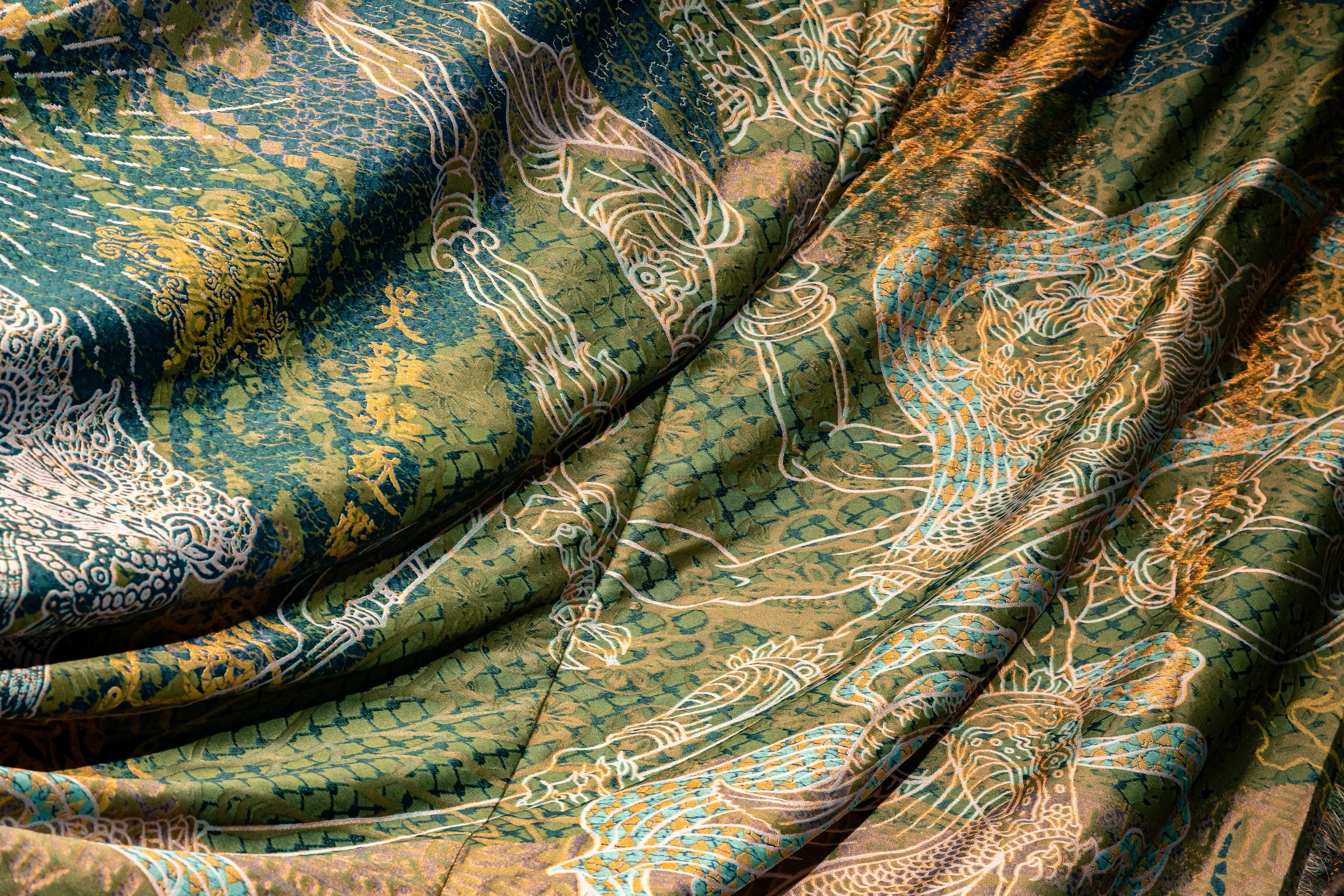
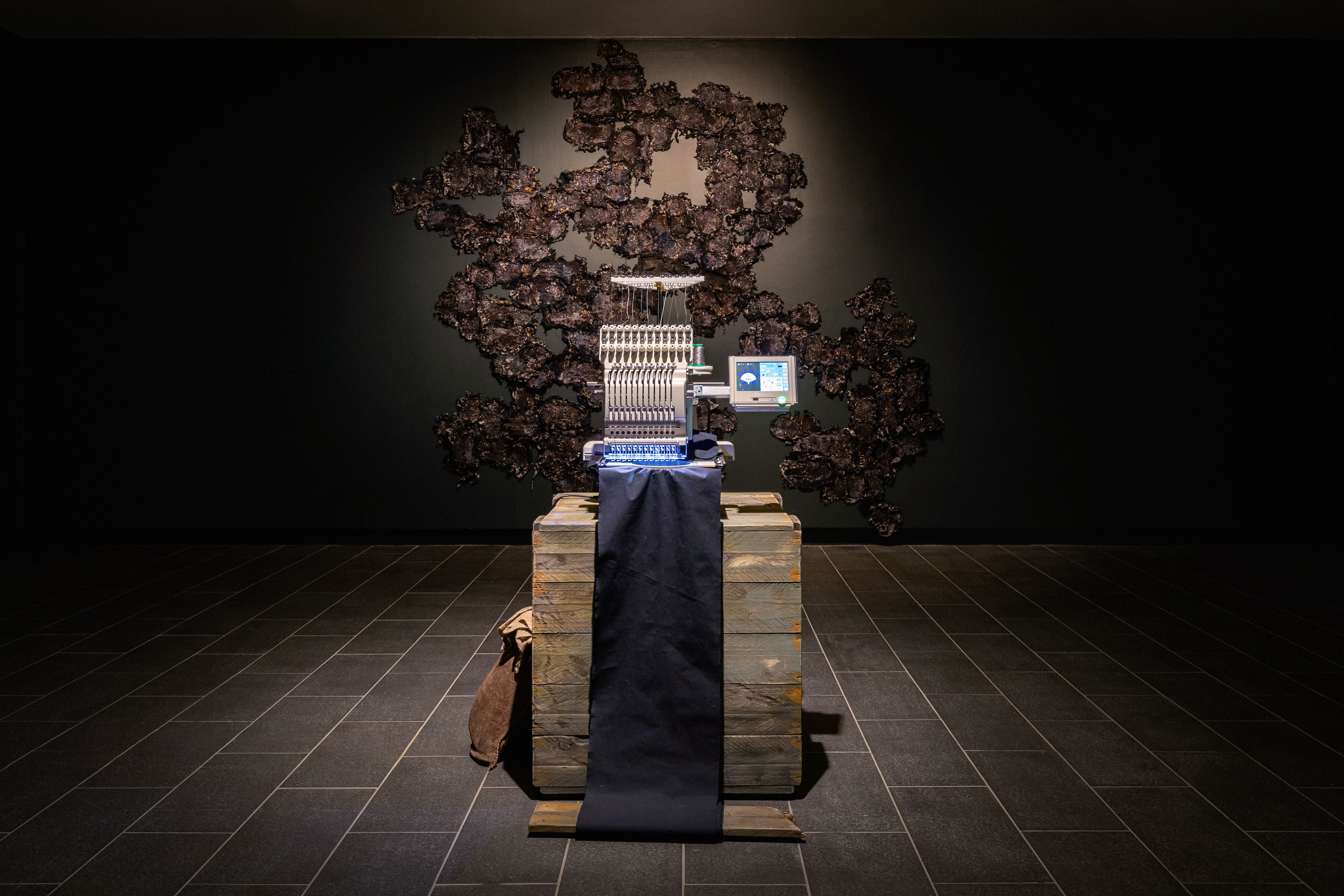
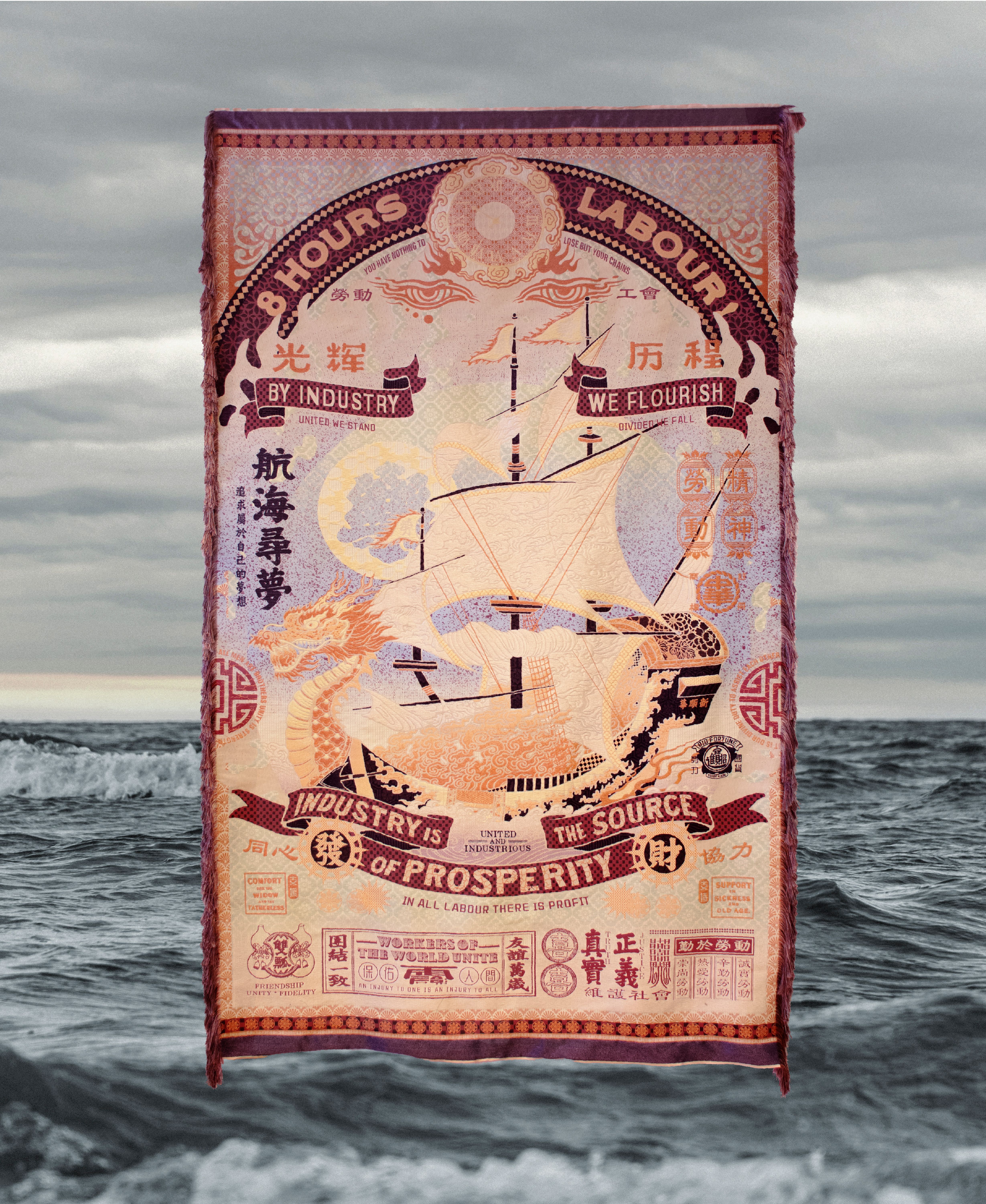
Emerging swiftly after his 2022 graduation, Sarawak-born and Netherlands-based Marcos Kueh was featured in group exhibitions at Manifesta 15 and Kunstinstituut Melly, establishing a textile practice that is at once ancestral and futuristic—one Jakarta-based friend described his work at Art Jakarta to be ‘like your grandmother knitting a spacesuit’. In 2025, he presented his first institutional solo, Smooth Sailing (25 October 2025–11 January 2026) at esea contemporary in Manchester, anchored by a major immersive installation comprising a grounded mast and sail, a continuously operating embroidery machine, and deadstock textiles embroidered with well-wishes, Chinese talismans and vintage business logos. Multipurpose and visually electrifying, Kueh’s textiles both encode his research—at Manchester residency institutions and the People’s History Museum—and inhabit scenographies that conjure layered histories: here, a grounded mast and sail; elsewhere, textiles suspended like rainforest canopies or arranged in echoes of traditional Chinese ceremonial spaces, calligraphy included. Next stop: Hong Kong, where he’ll debut a major commissioned work in a group show at CHAT come March—his first foray into East Asia. – Zian Chen
Rim Park
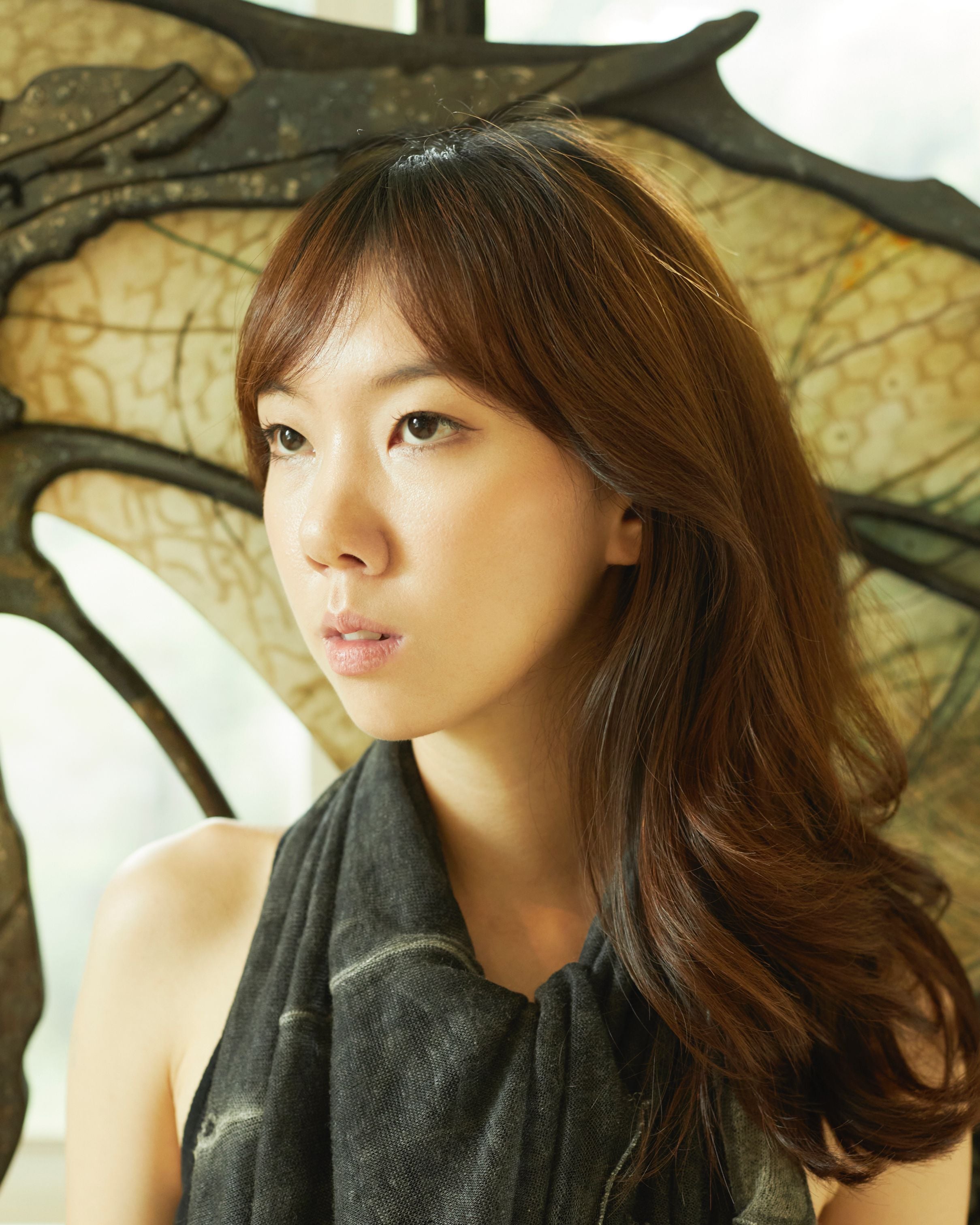
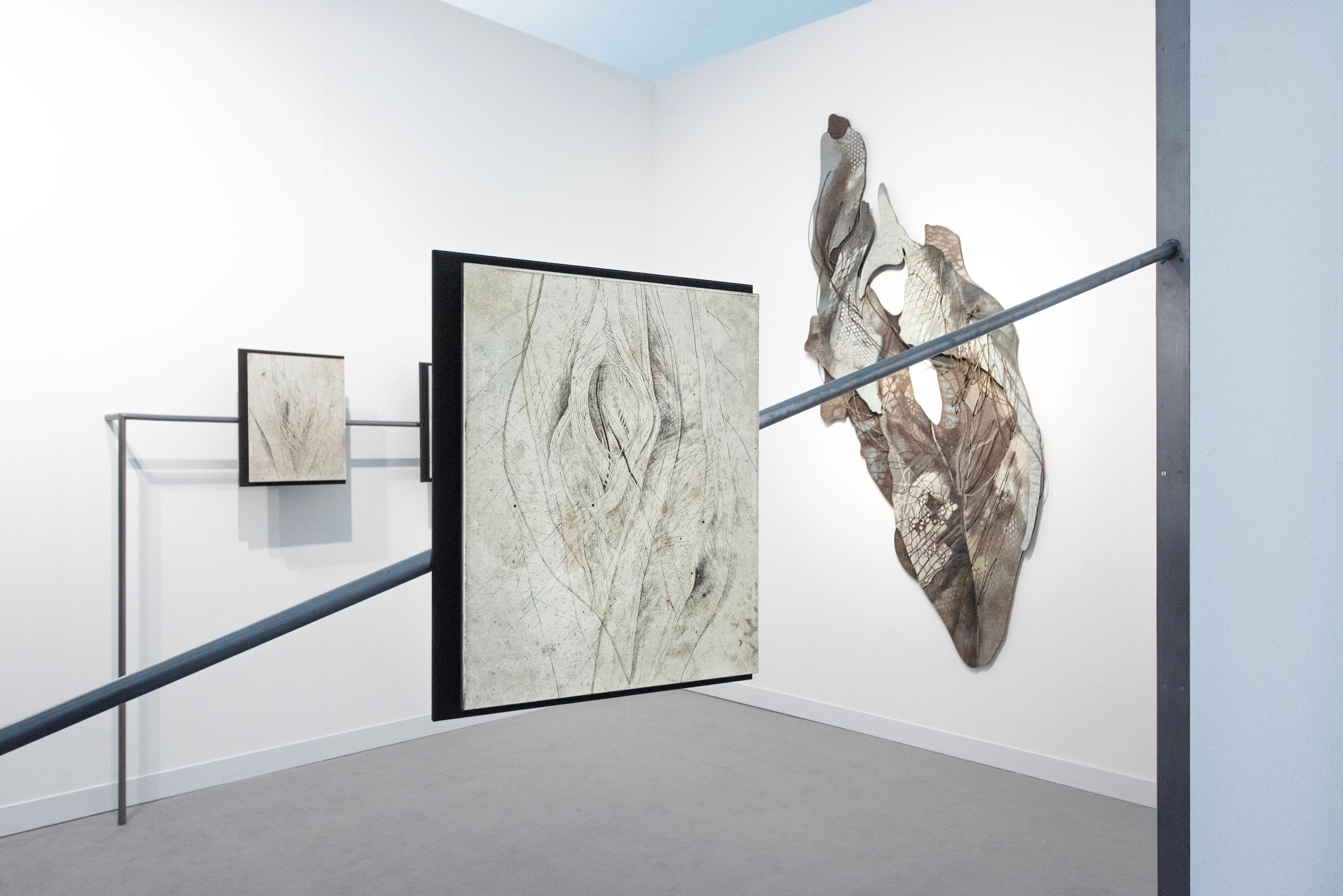
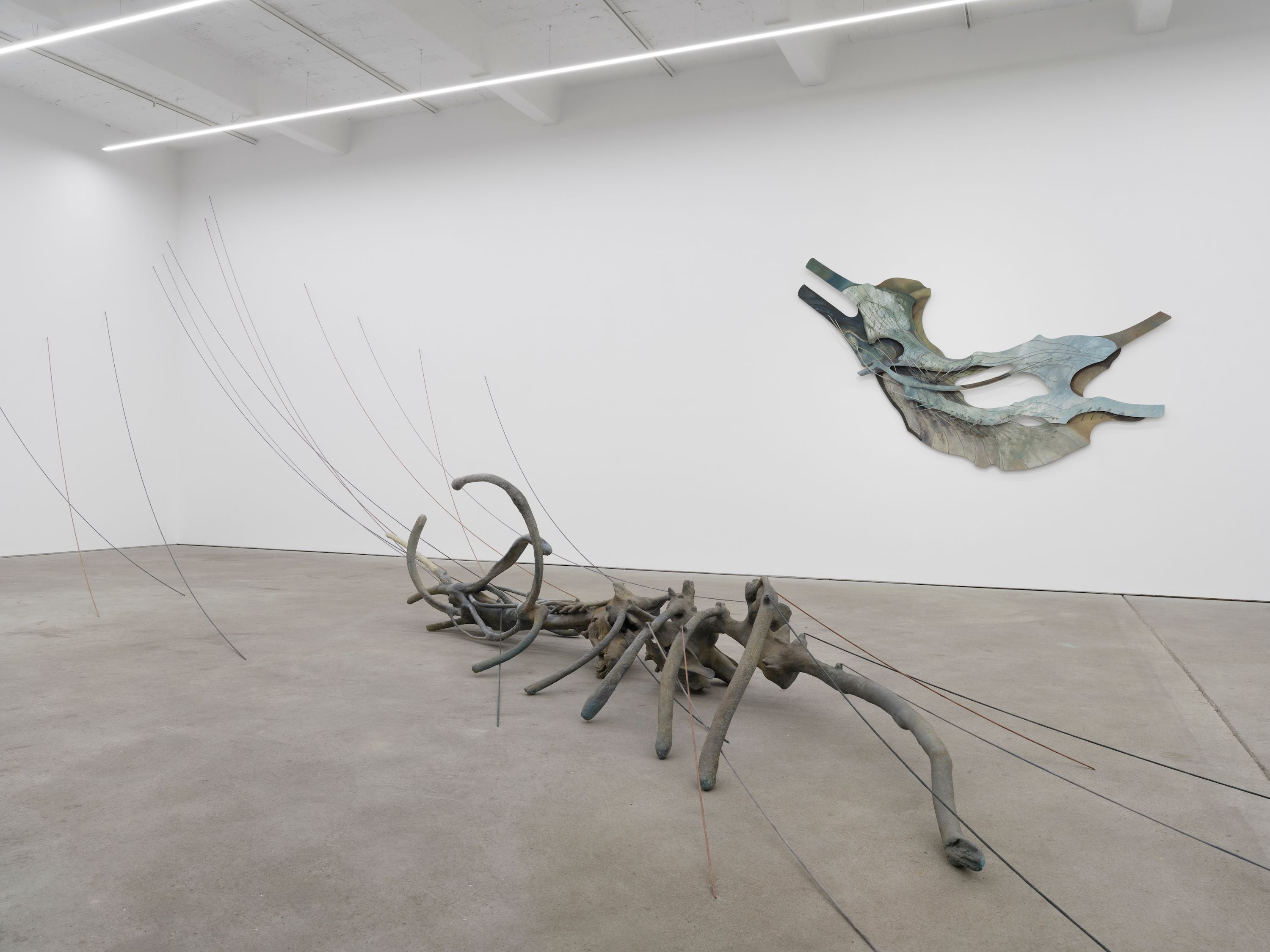
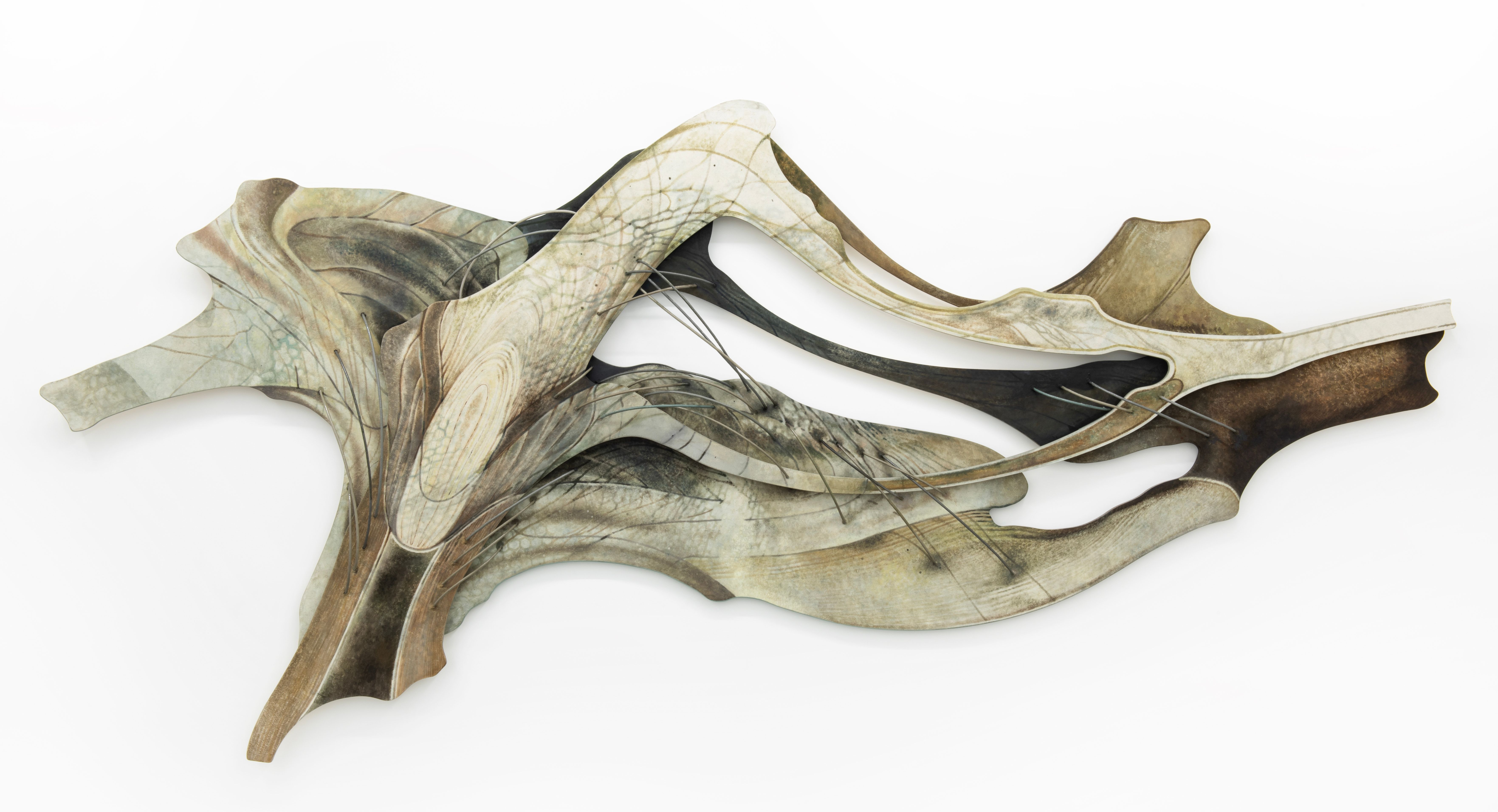
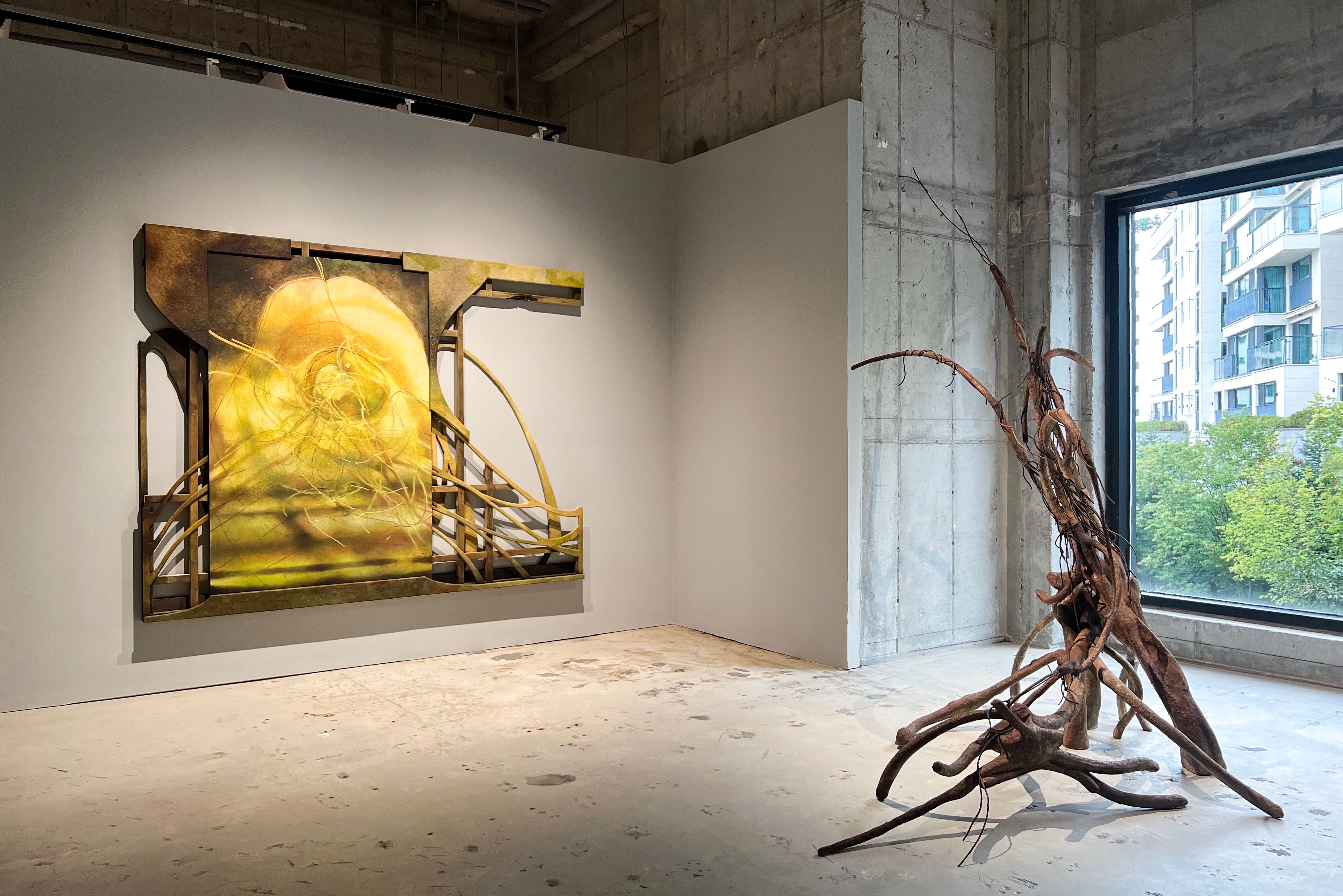
A show of Rim Park’s gives the effect of seeing the fleshy undersides or wounds of a gallery space, or of peering into a cavernous bodily interior—in her 2025 solo show Radix at Kraupa-Tuskany Zeidler in Berlin, for instance, a spine-like driftwood form bisected the room, with amorphous, layered pieces reminiscent of exposed muscles and tendons installed on the surrounding walls. But despite their initial appearance of architectural preoccupation, Park’s works develop out of her encounters with often remote bush and landscapes—the artist will venture out for fieldwork and reinterpret organic forms in intricate, sinuous paintings, etchings and sculptures. Incorporating materials such as Korean paper, birch wood, plants and leaf litter, Park builds up oils and pigments in thin, translucent layers in a delicate meditation on decomposition, deconstruction and assemblage. Park (b. 1998) is currently studying her MFA in printmaking at Seoul National University, and is represented by hot young Seoul gallery CYLINDER (which presented her work at both Frieze Seoul and Frieze London last year). For 2026, expect to see her in group shows at Doosan Art Center, PCO, and CYLINDER TWO, plus more projects to be announced. – Misong Kim

Women’s History Museum
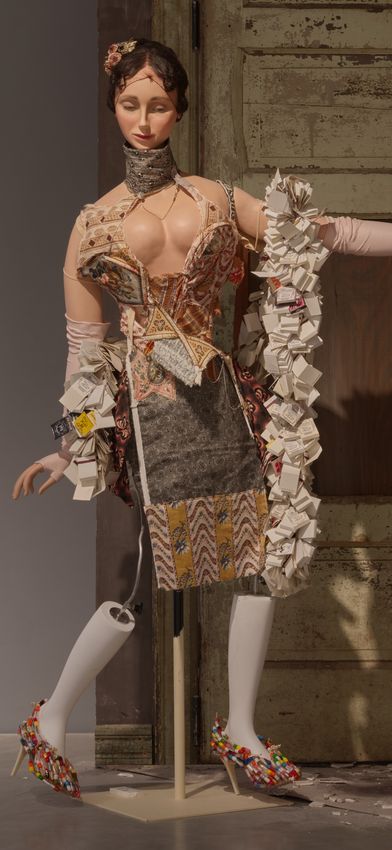
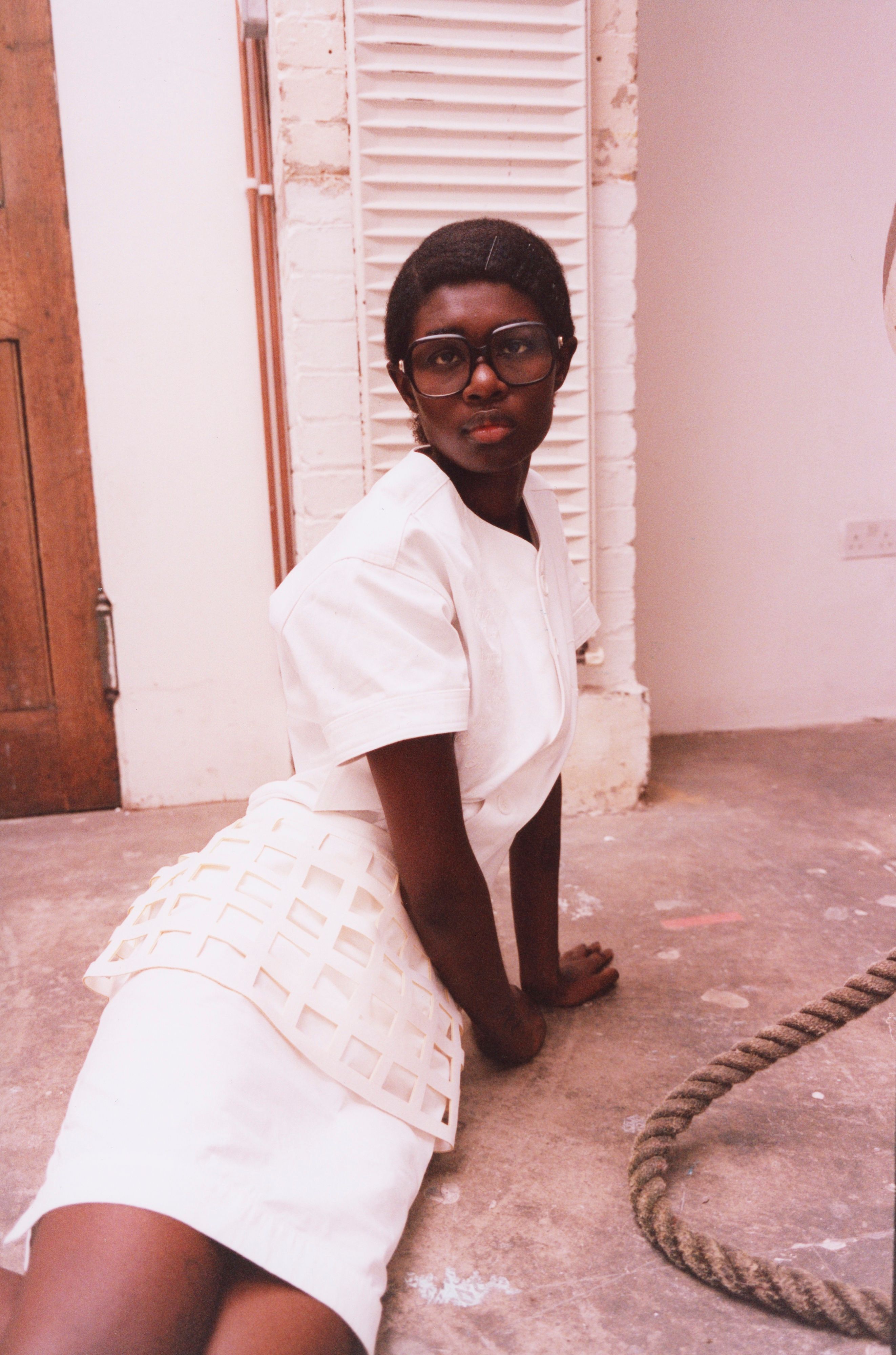
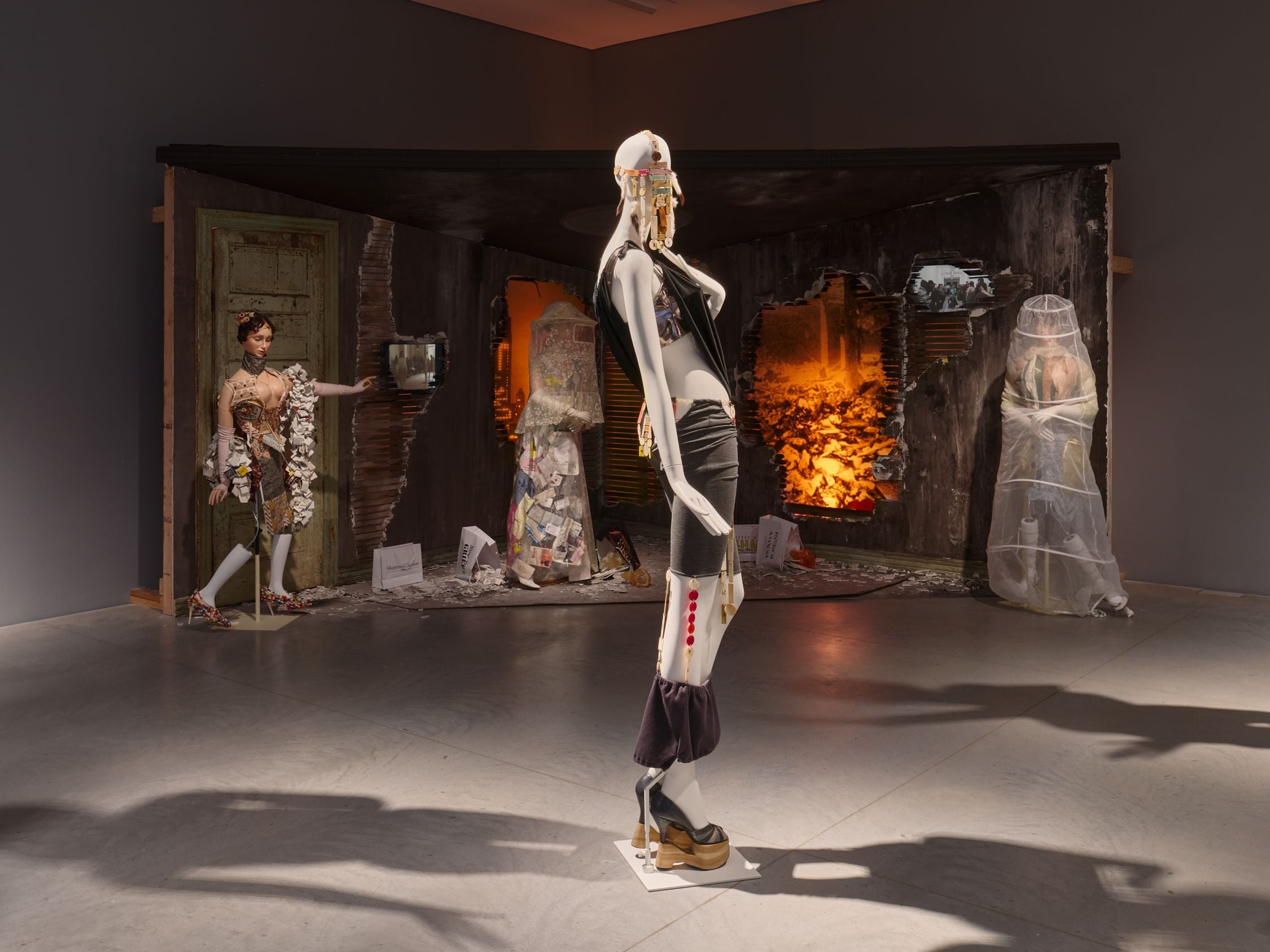
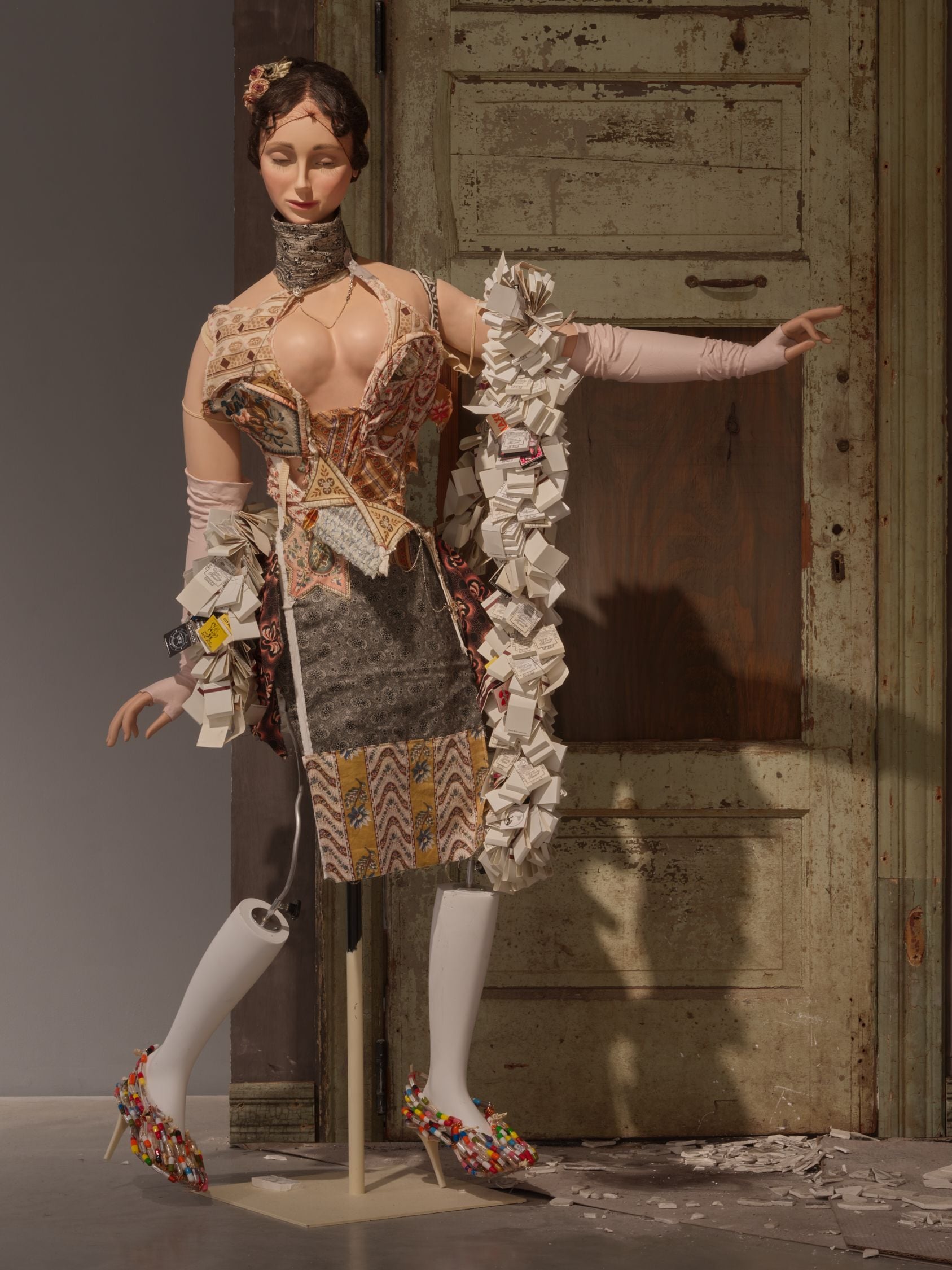
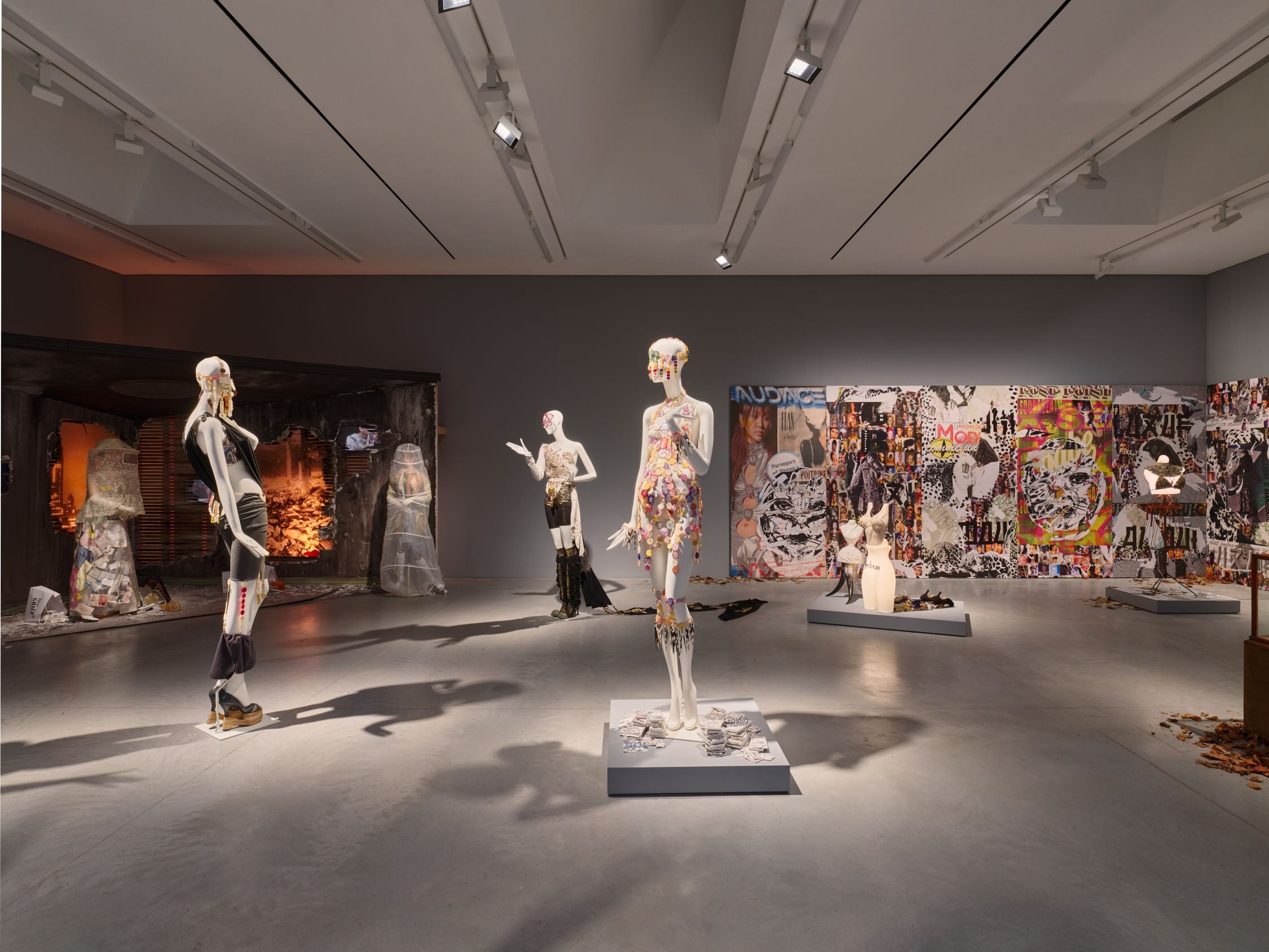
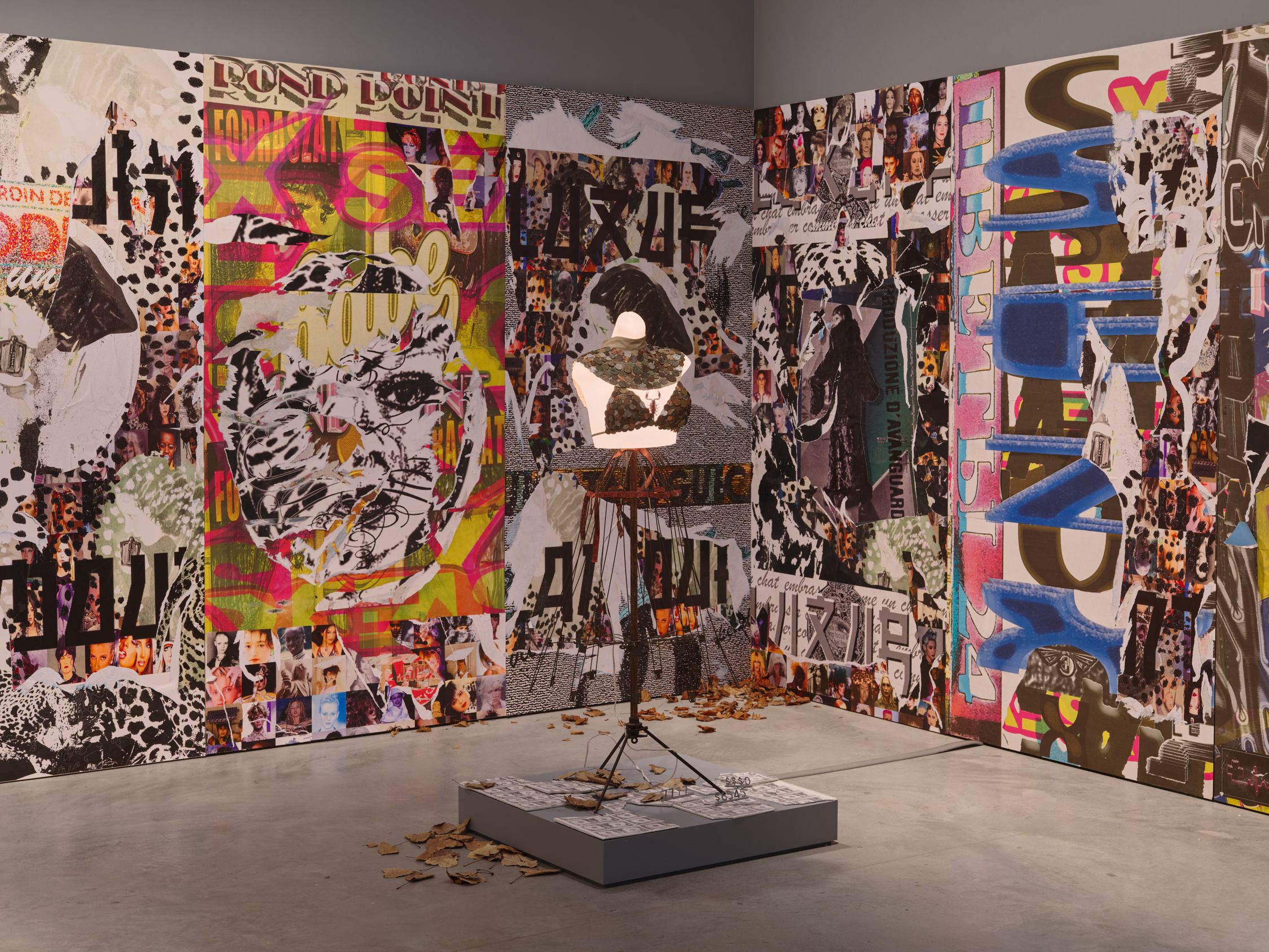
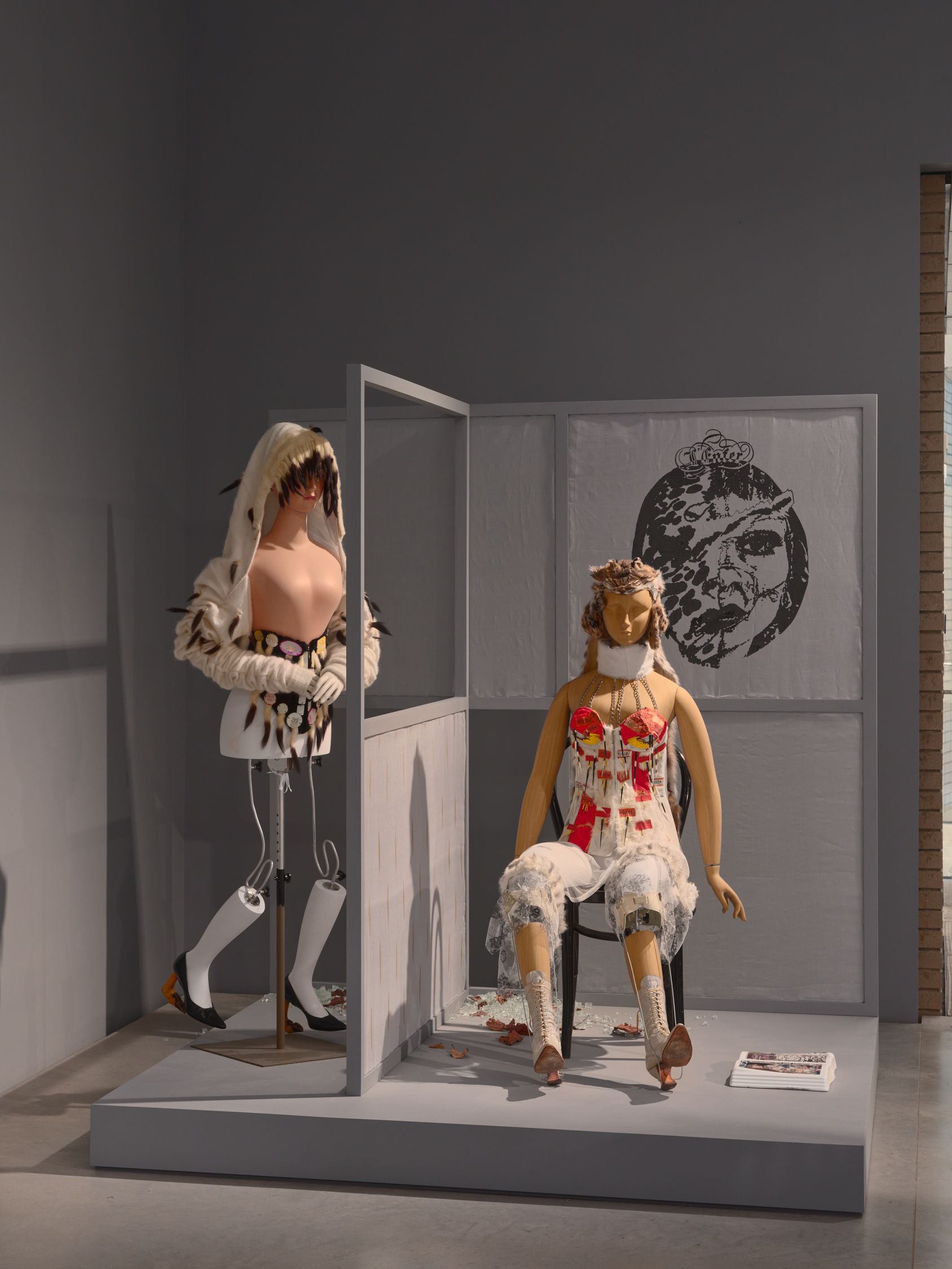
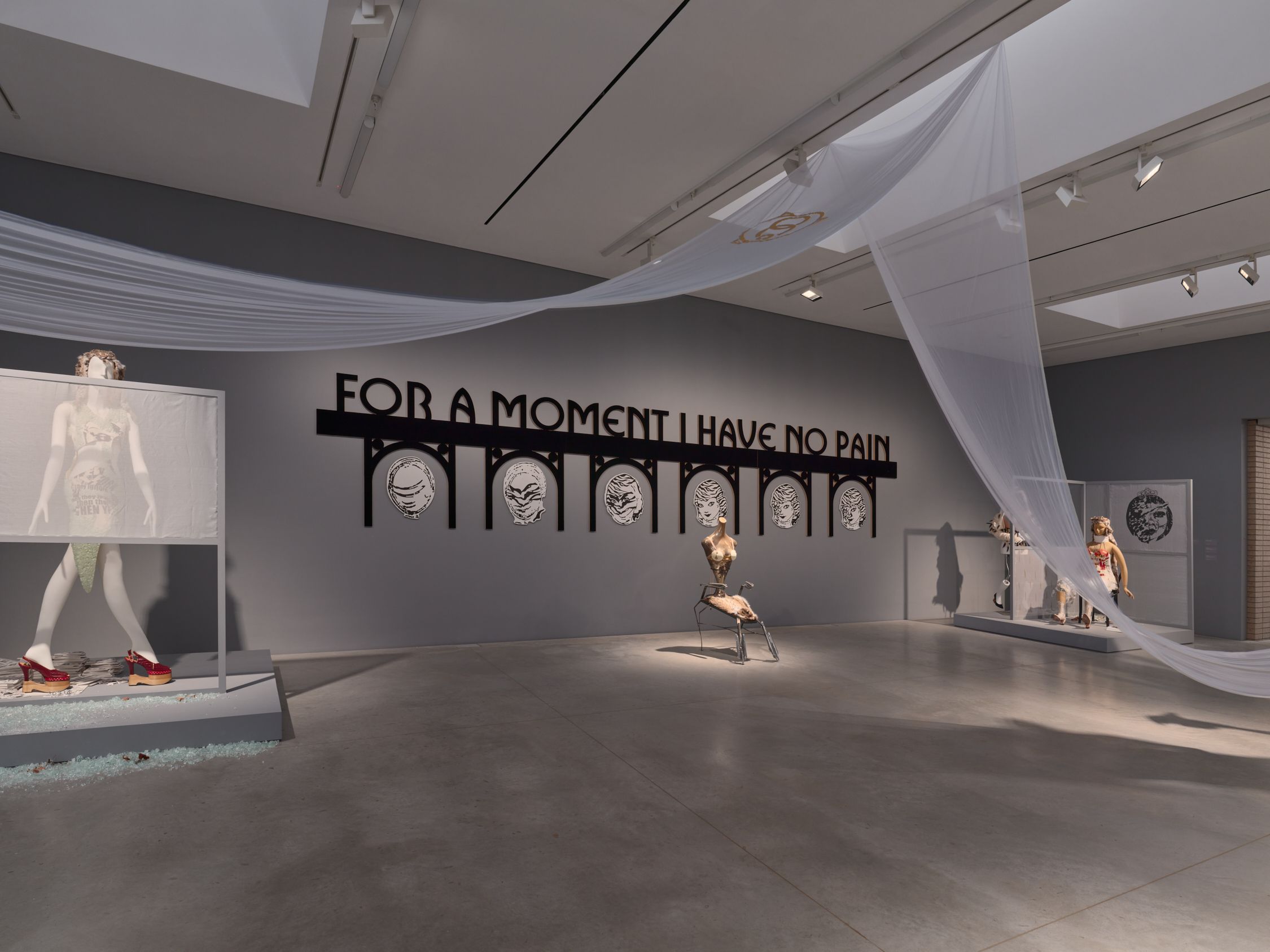
Women’s History Museum (WHM) was founded by Mattie Barringer and Amanda McGowan and plays cat-and-mouse with the high-speed aesthetic washing machine of Instagram. The duo adopt a Web 1.0 “blog” aesthetic website to sell vintage fashion selections, handmade clothes and displays of exhibition history, while also operating an NYC store. The duo’s framing of their sartorial offerings as not just vintage but archival allows for the overlap of their commercial and artistic practice. They concluded 2025 with a show at Amant in New York titled Grisette à l’enfer and a presentation within BAAB, a biennial organised by cult-fashion magazine CURA. The duo take inspiration from sources as varied as Théâtre de la Mode, a 1945 travelling exhibition of miniature haute couture mannequins, and the writings of German philosopher Walter Benjamin on storefronts, to generate a parade of mannequins that represent a ‘ruinous commercial landscape’. WHM exists alongside a wider craft revival in art, and a nostalgia for gothic-tinged visual cues that roots itself firmly in the sartorial ghosts of previous periods. The duo will continue their archival impulse in the new year, participating in CONDO London with Soft Opening, and featuring in Greater New York 2026 at MoMA PS1 in April. – Lydia Eliza Trail

Aki Sasamoto
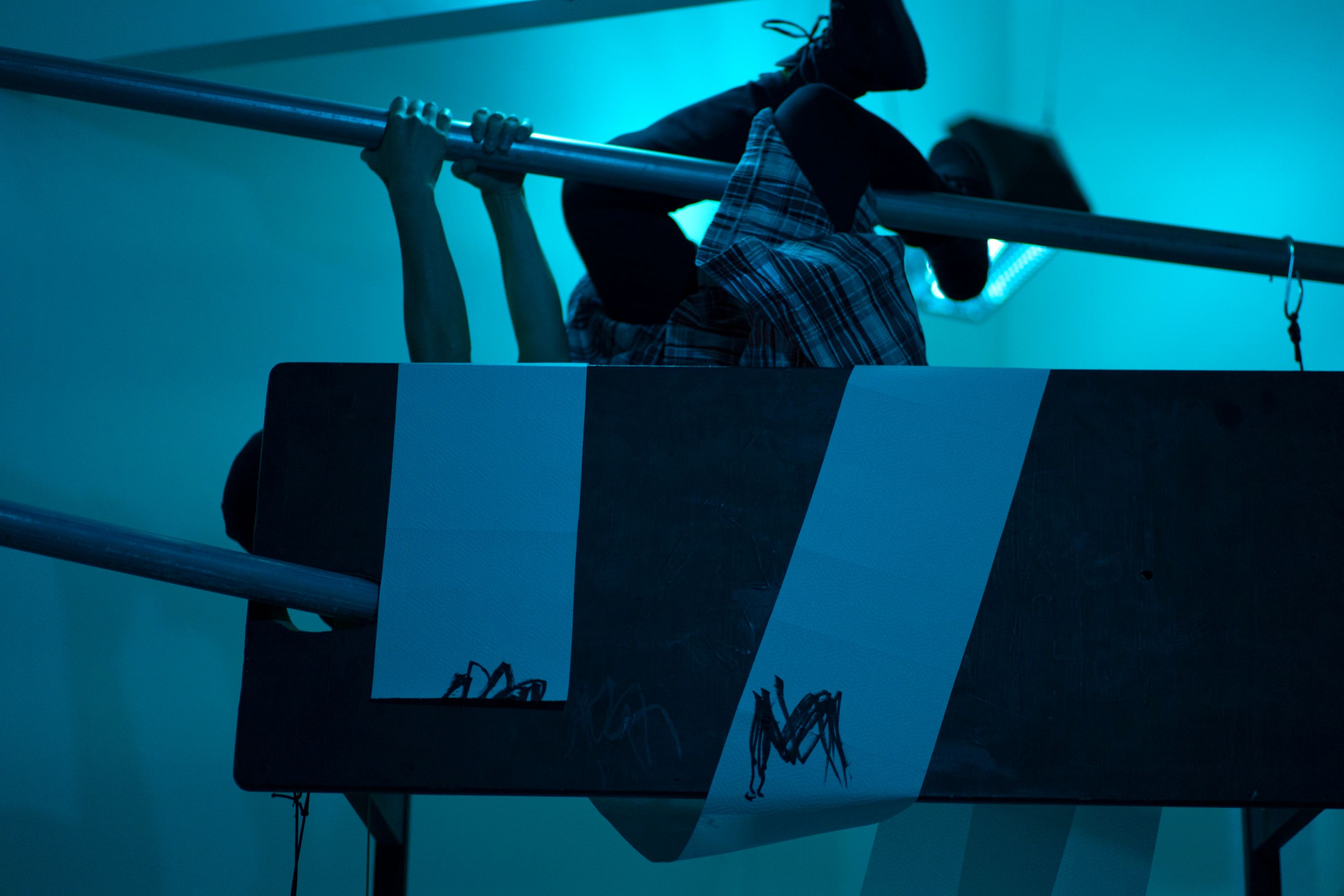
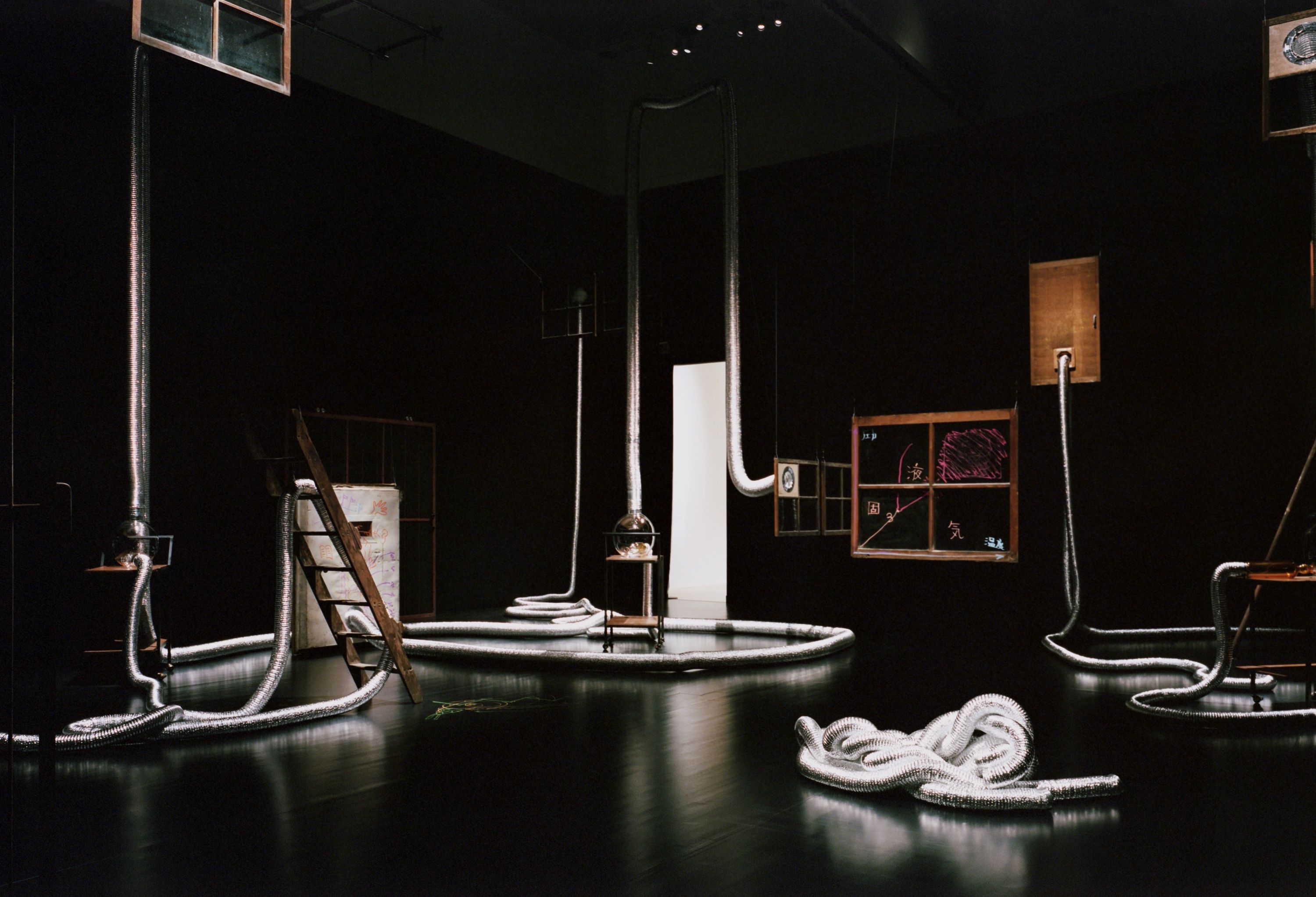
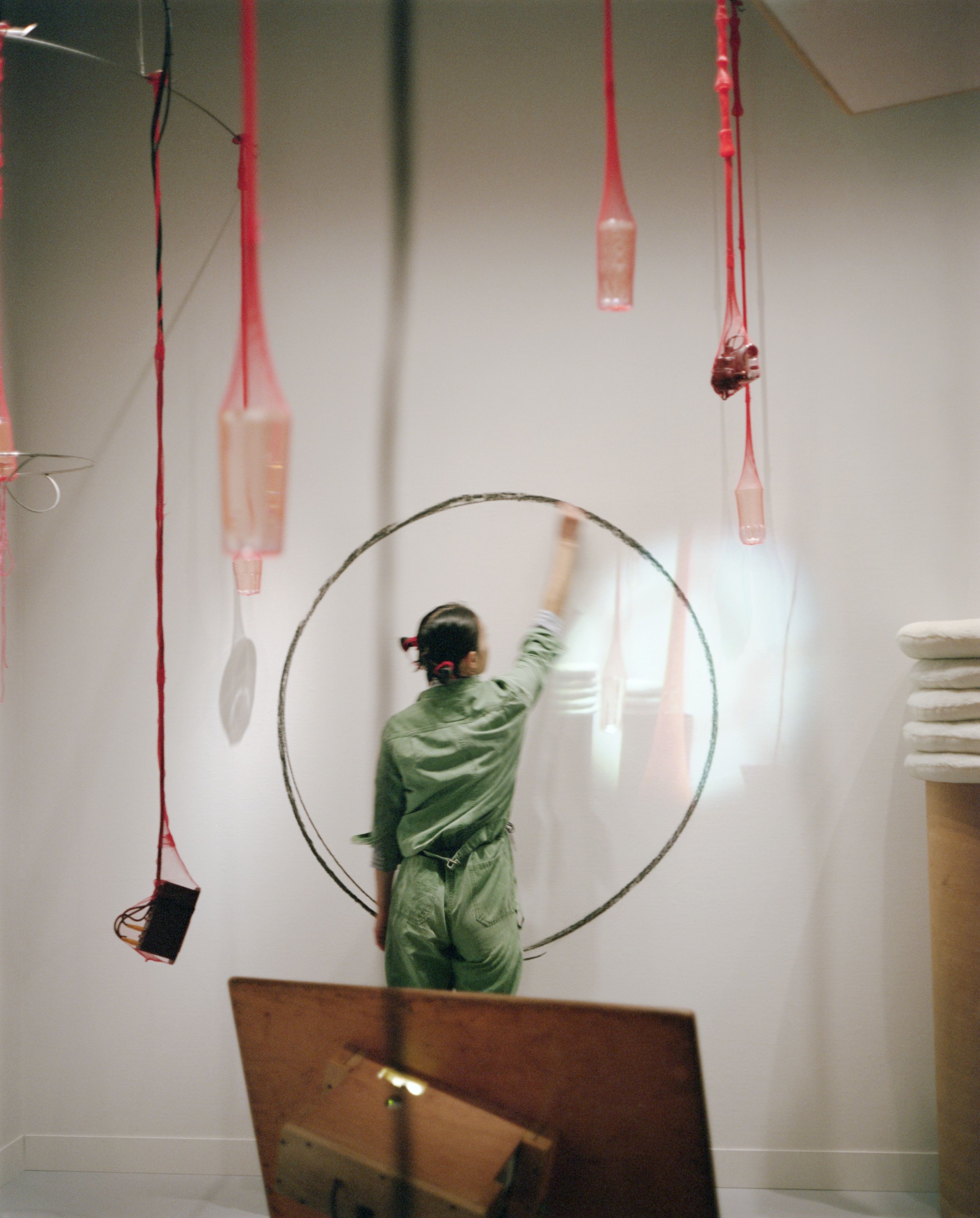
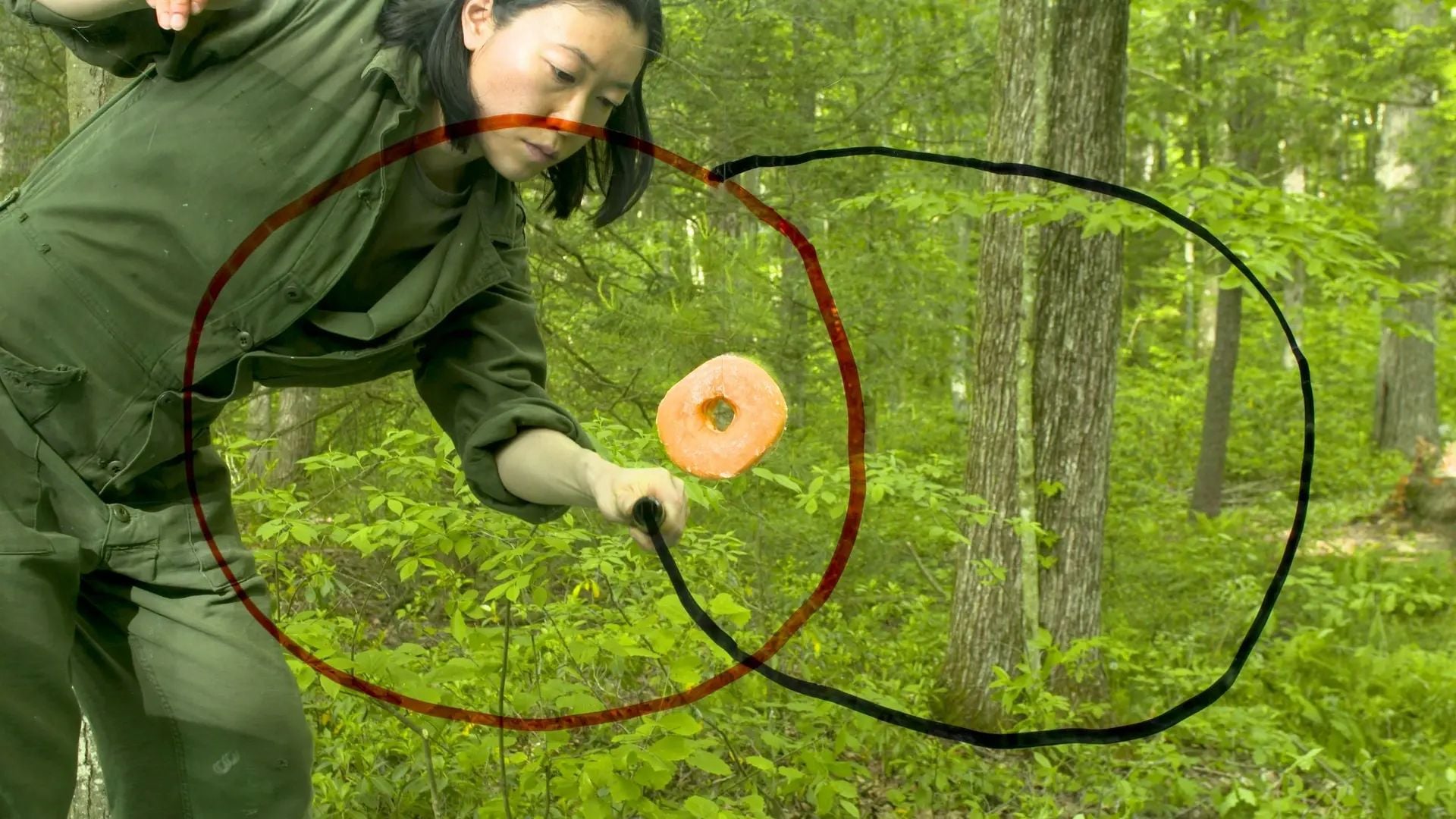
Aki Sasamoto draws diagrams on many things: two doughnut-shaped forms sketched on to a monumental sheet of glass improbably installed in the woods (Do Nut Diagram, 2018), or a vibrantly coloured wind-condition chart mapping the micro-ecosystem at New York’s St. Mark’s Church (Phase Transition, 2020). These diagrammatic gestures rarely stay put. In her choreographed improvisations, performance and installation fold into one another through absurd encounters with domestic objects, such as tugging herself into an oversized bin bag, climbing inside a washing machine, or pacing across a table in sandals laced with kitchen knives. 2025 marked a landmark year for the Kanagawa-born, New York-based artist, who presented her first mid-career retrospective, Aki Sasamoto’s Life Laboratory, at the Museum of Contemporary Art Tokyo. Spanning early performances, sculptural installations, videos and drawings, the exhibition framed her practice as an evolving system, where bodies, objects and thought processes remain perpetually in flux. In February 2026, Sasamoto will debut Grilled Diagrams, her first solo institutional exhibition in the U.K. at Studio Voltaire. The project centres on a site-specific installation inspired by cooking shows and street food carts, activated through live performances in which the artist once again tests how meaning emerges through movement and improvisation. – Shanyu Zhong
Erin Jane Nelson
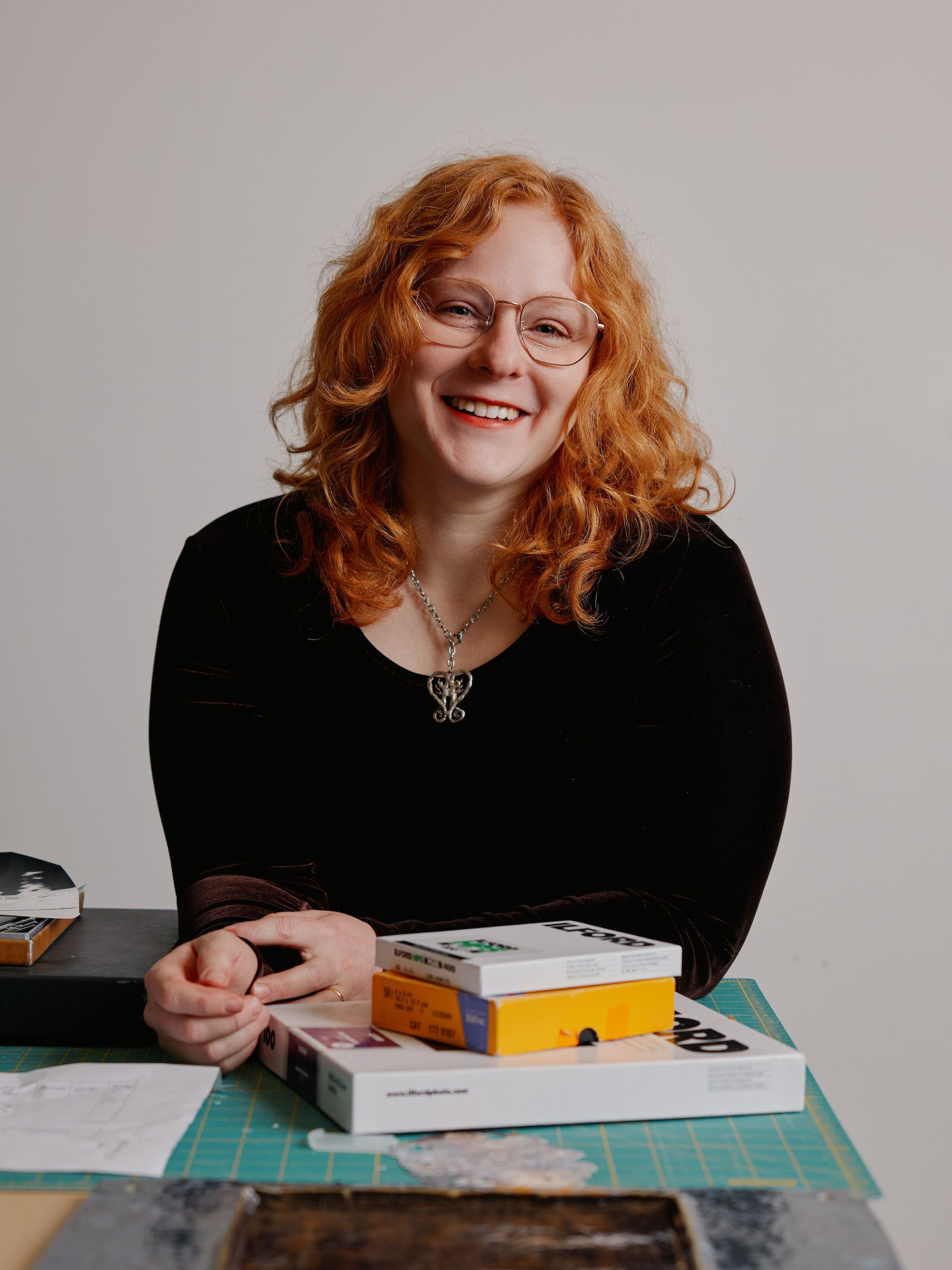
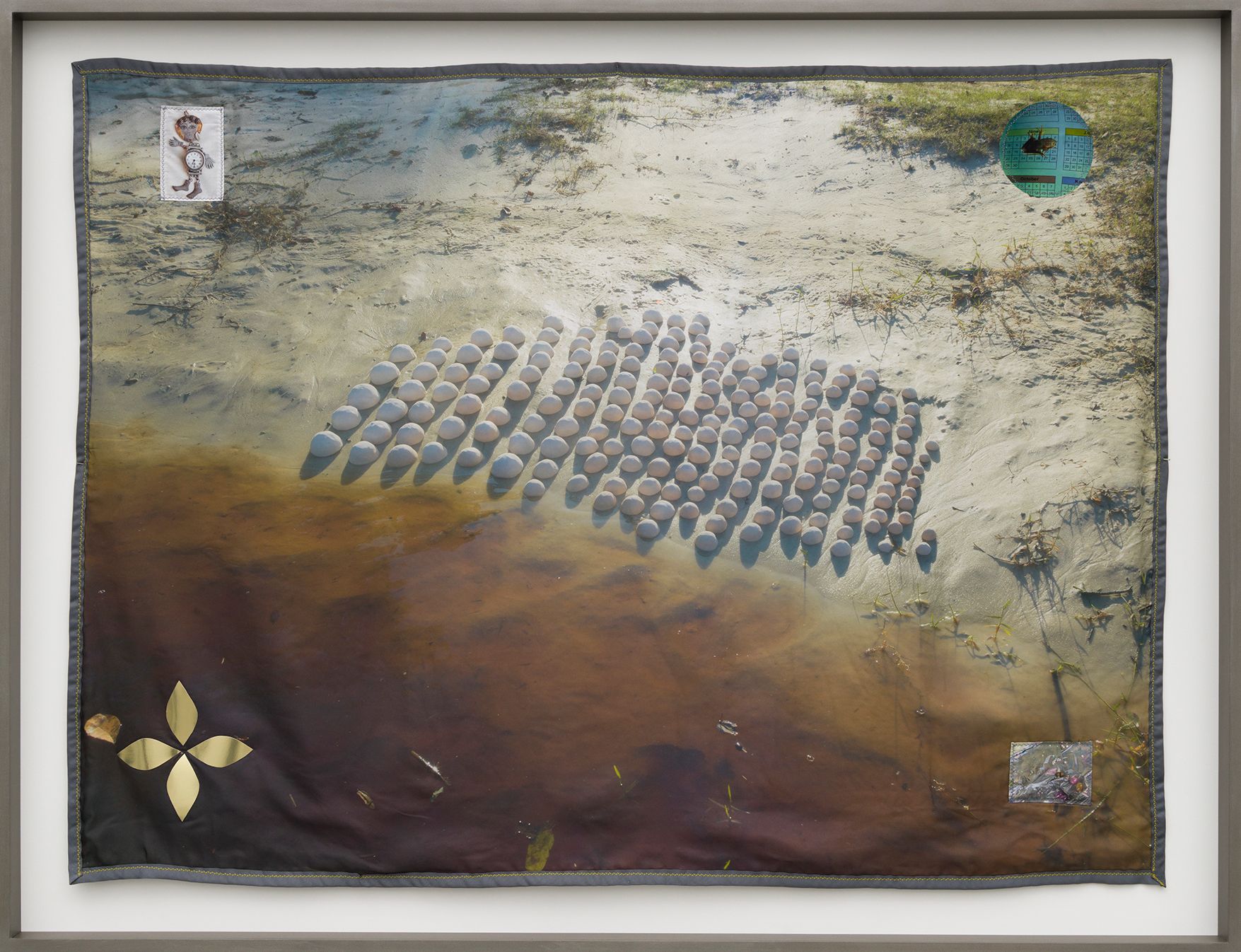
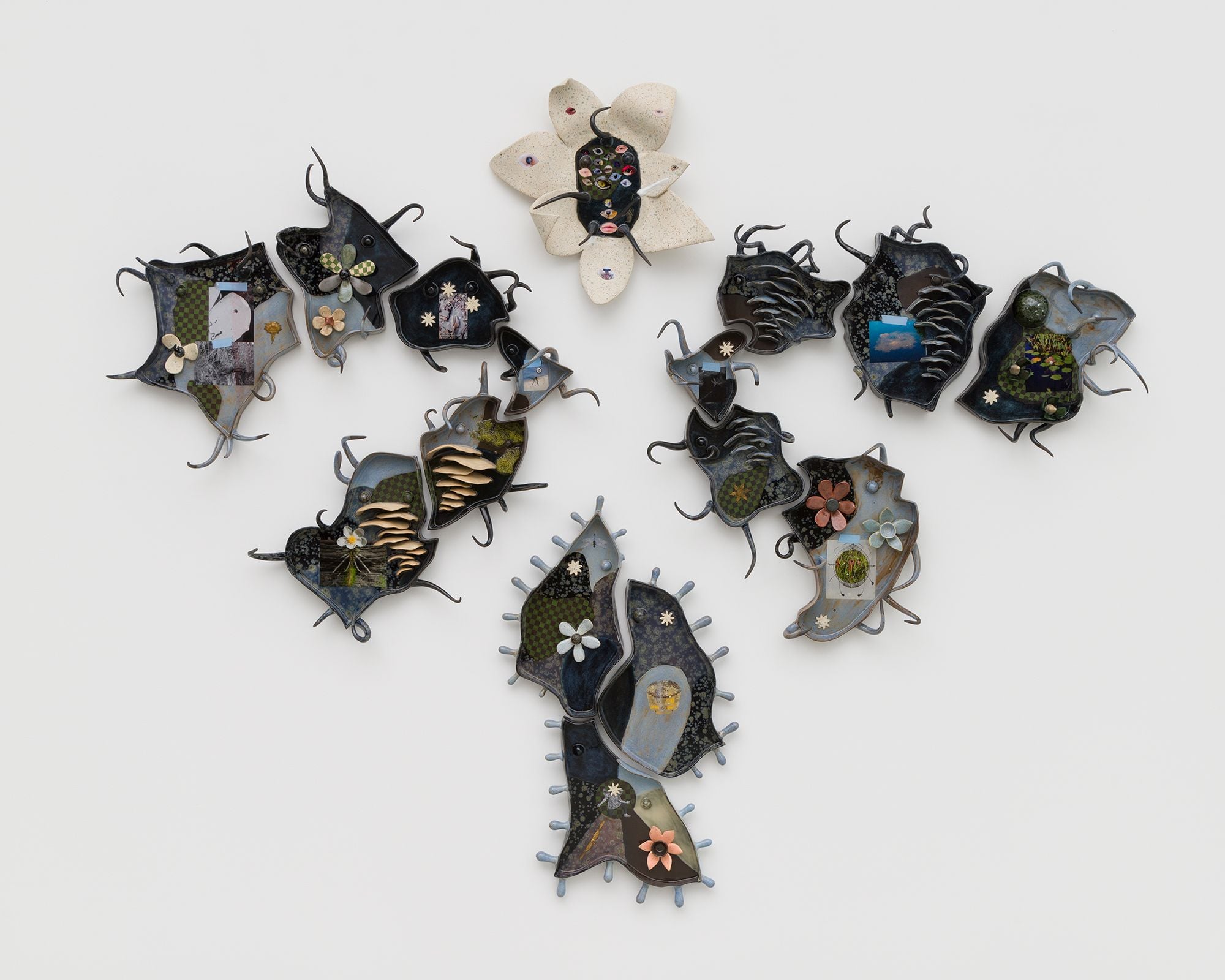
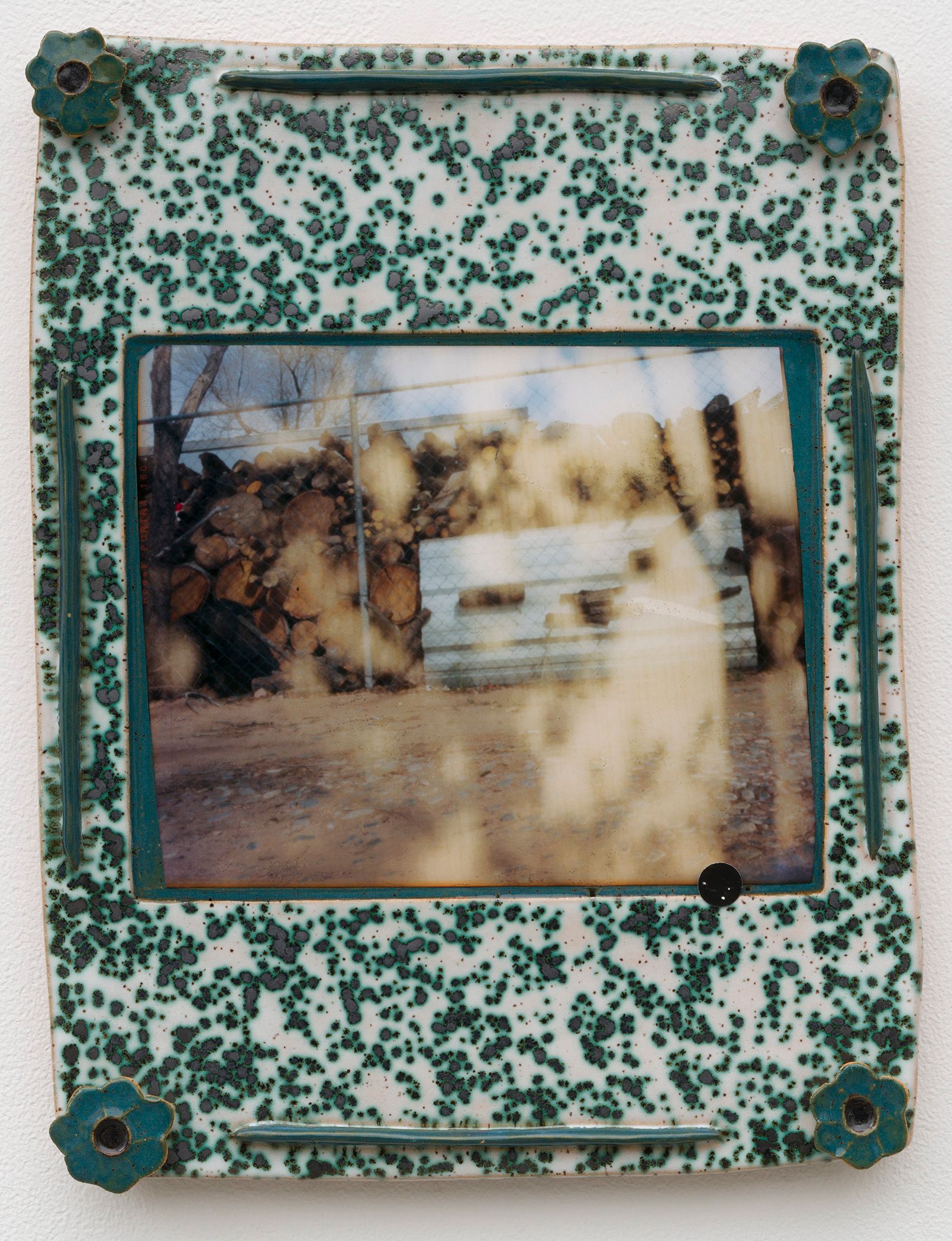
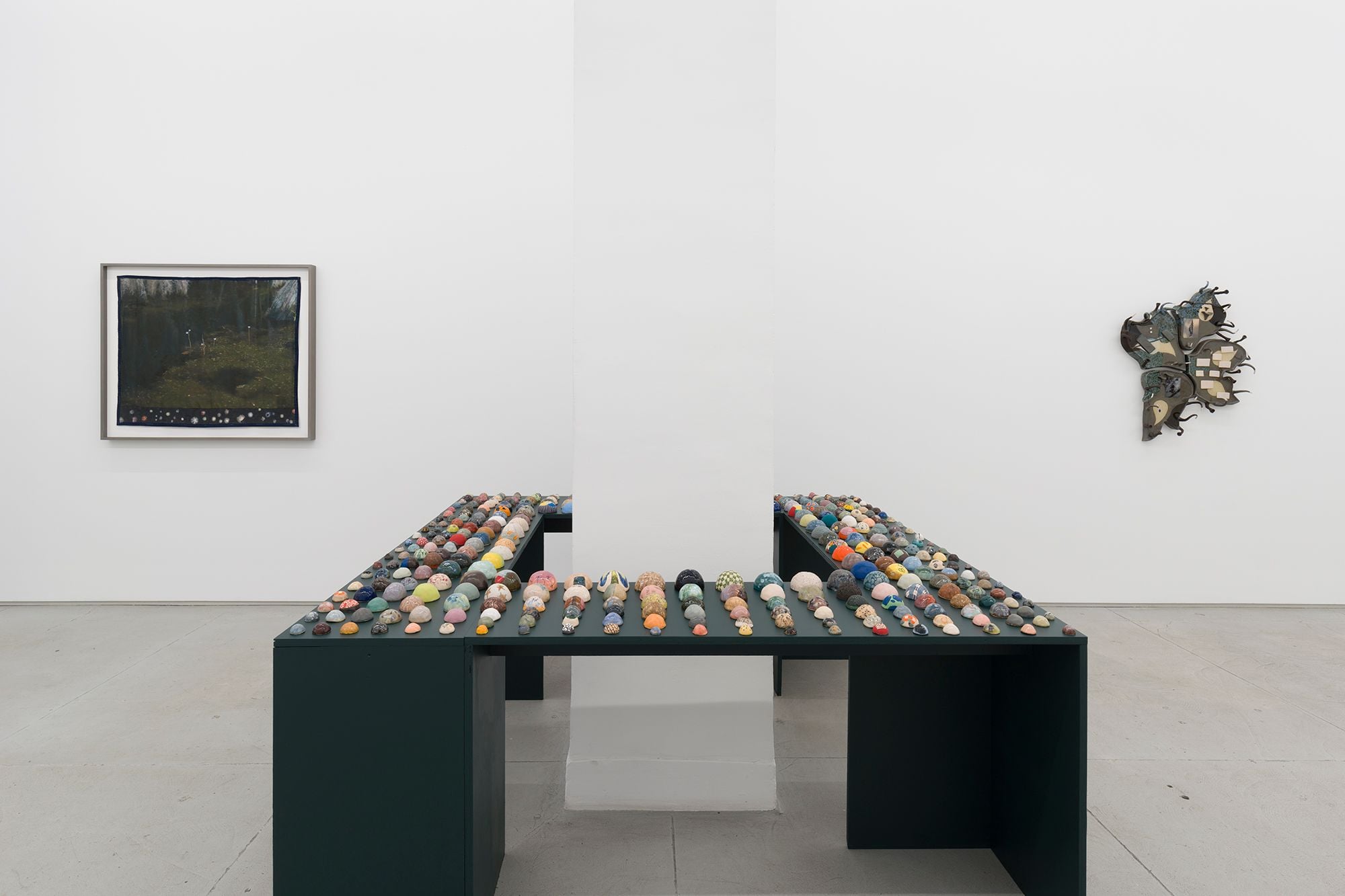
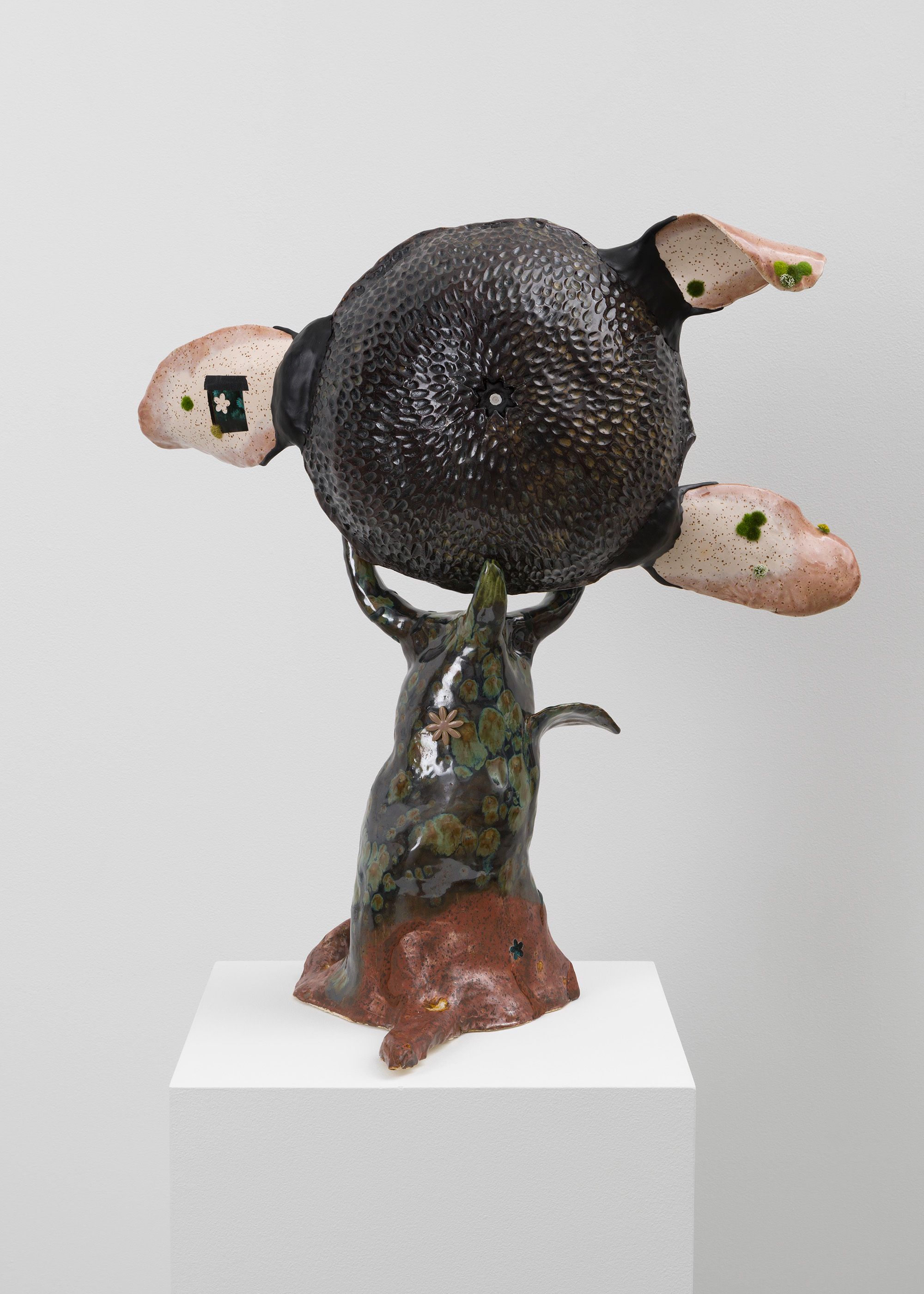
‘I began meaningfully making art at the age of 13 because I needed content for my DeviantArt profile,’ Erin Jane Nelson wrote in 2021 in an essay memorably titled ‘The LiveJournal to Sotheby’s Pipeline’. She reflected on the positive impact of the heyday of the art blog on the trajectory of creative kids from ‘unsexy suburban hell holes without any meaningful access to art in their day-to-day lives’. Nelson continues to make work that straddles the world of the internet emo-kid and the landscapes of her Southern upbringing. To call her a photographer is too narrow a frame, and yet the photographic image is at the heart of all Nelson’s experiments in ceramics, textiles, collage and found objects. Over the past year, she has exhibited pinhole cameras fashioned from clay alongside the resulting grainy images they captured, which are themselves incorporated into their own ceramic frames with nostalgic, girlish signifiers of flowers and pearls. The overall effect is one of uncanny spirituality, each work a shrine to her own personal history alongside that of a long lineage of female-led craft, which together form a counterpoint to the often-exclusionary art-historical canon. In 2023 Nelson was awarded a Guggenheim Fellowship, while in 2026 she will present new work as part of the Whitney Biennial, bringing her unique blend of high and low tech to New York. Talk about that pipeline holding strong. – Louise Benson
Michella Bredahl
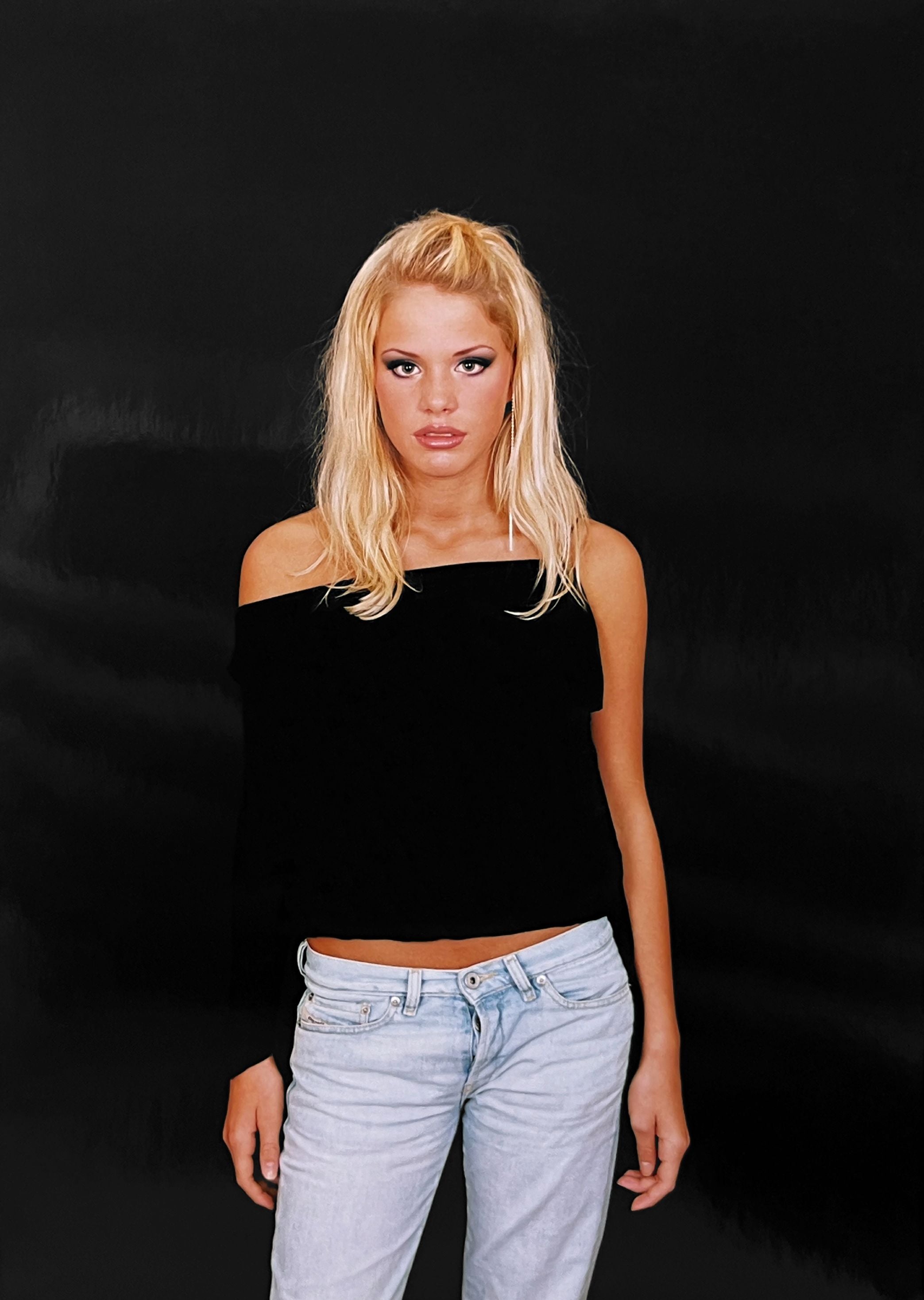
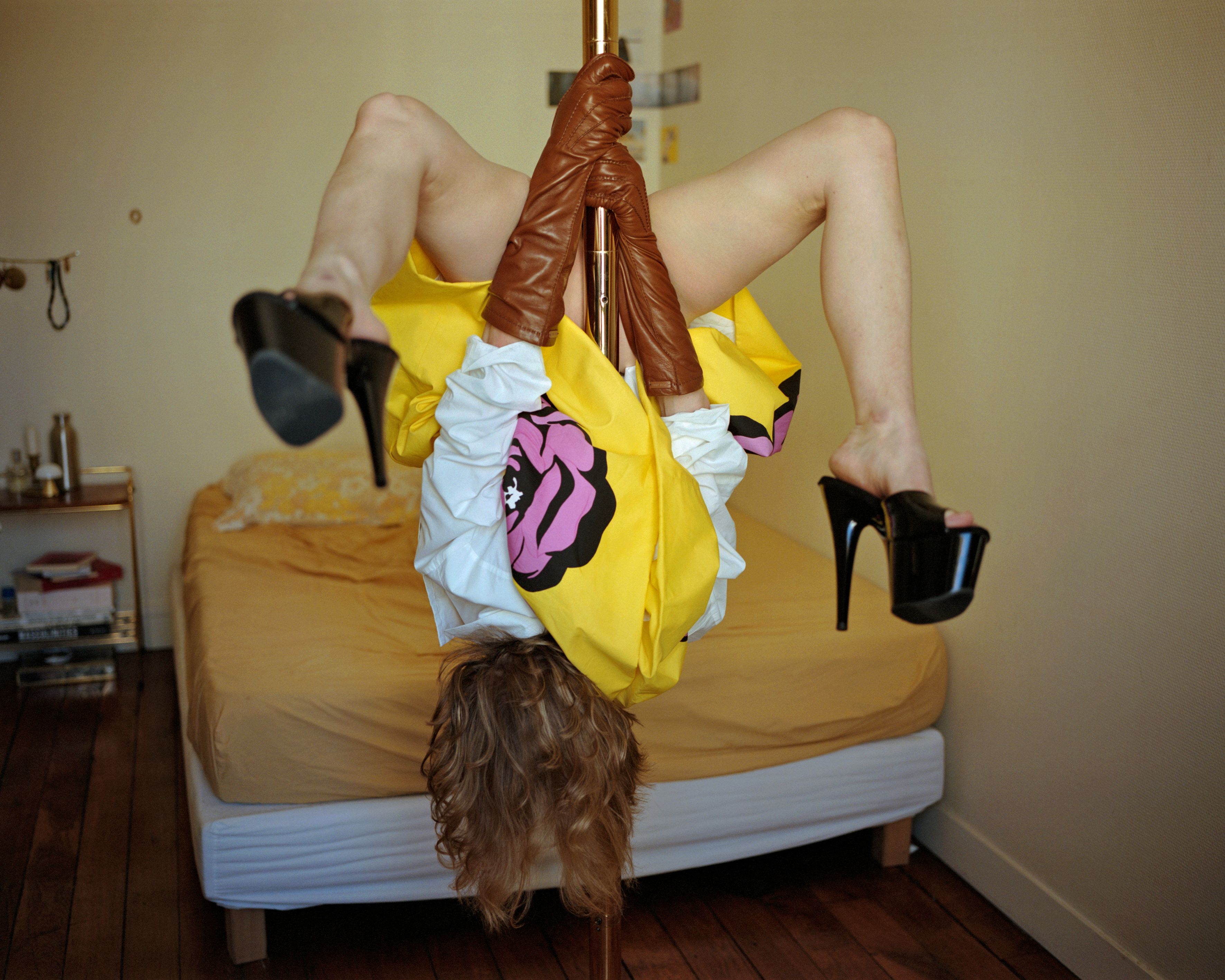
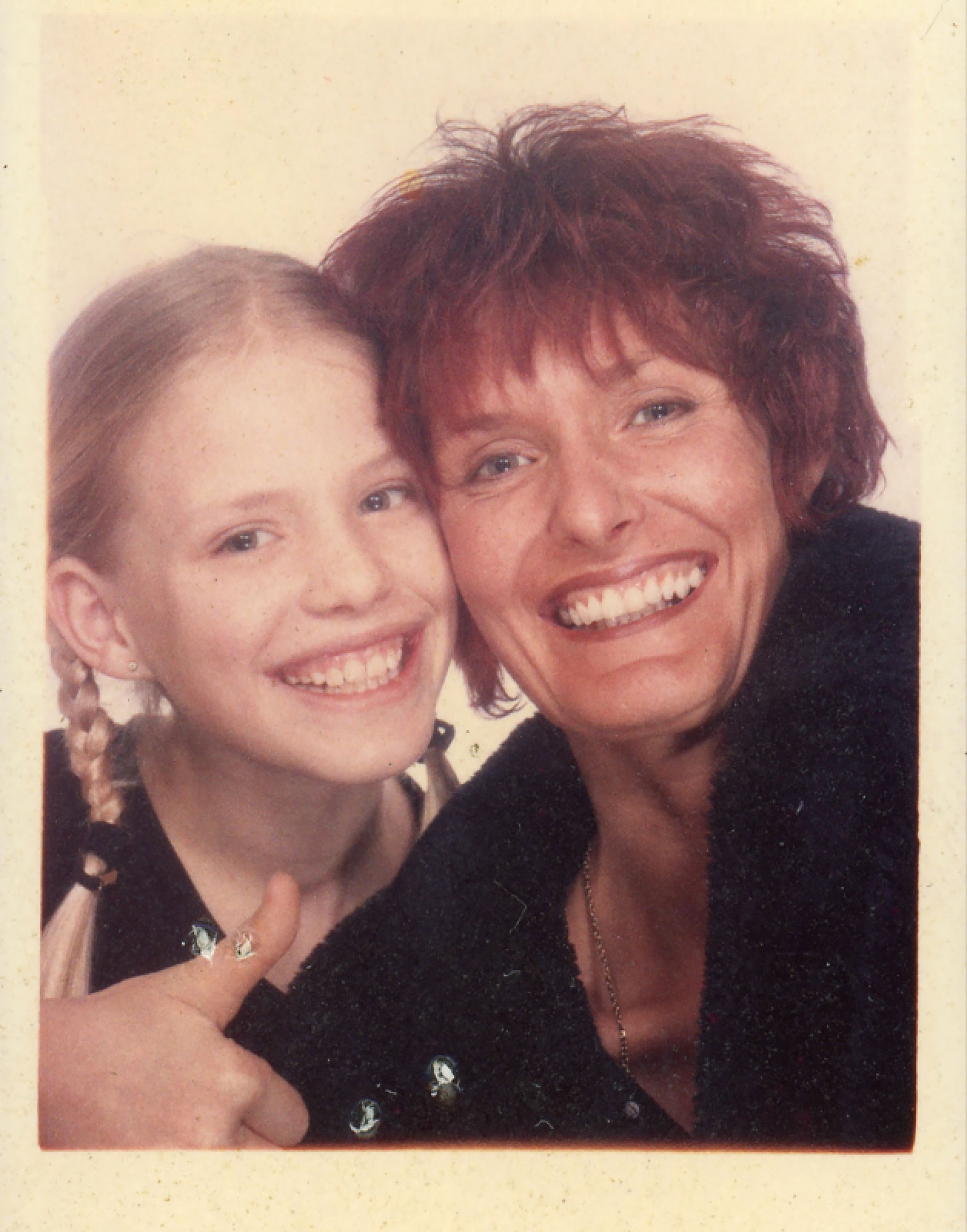
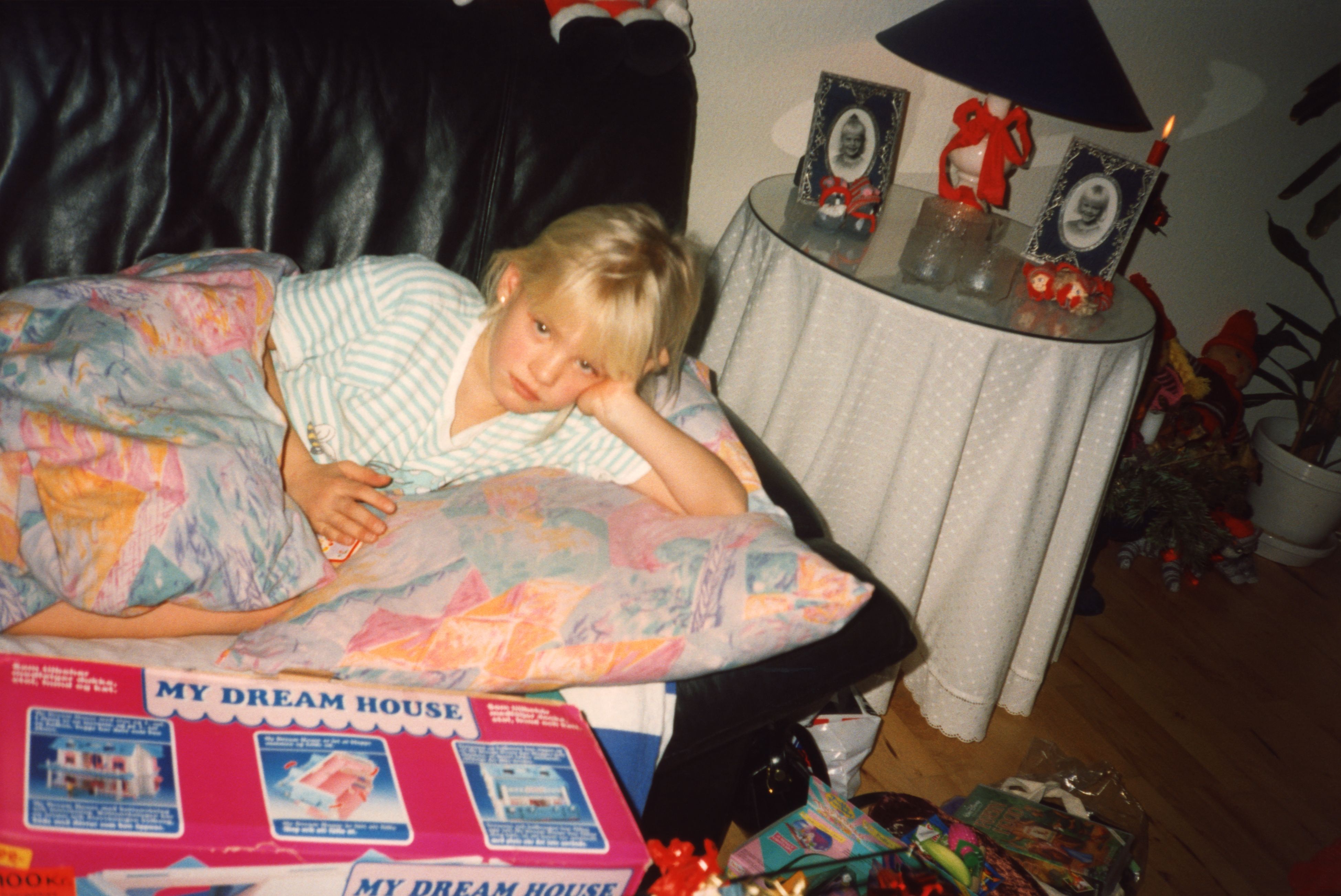
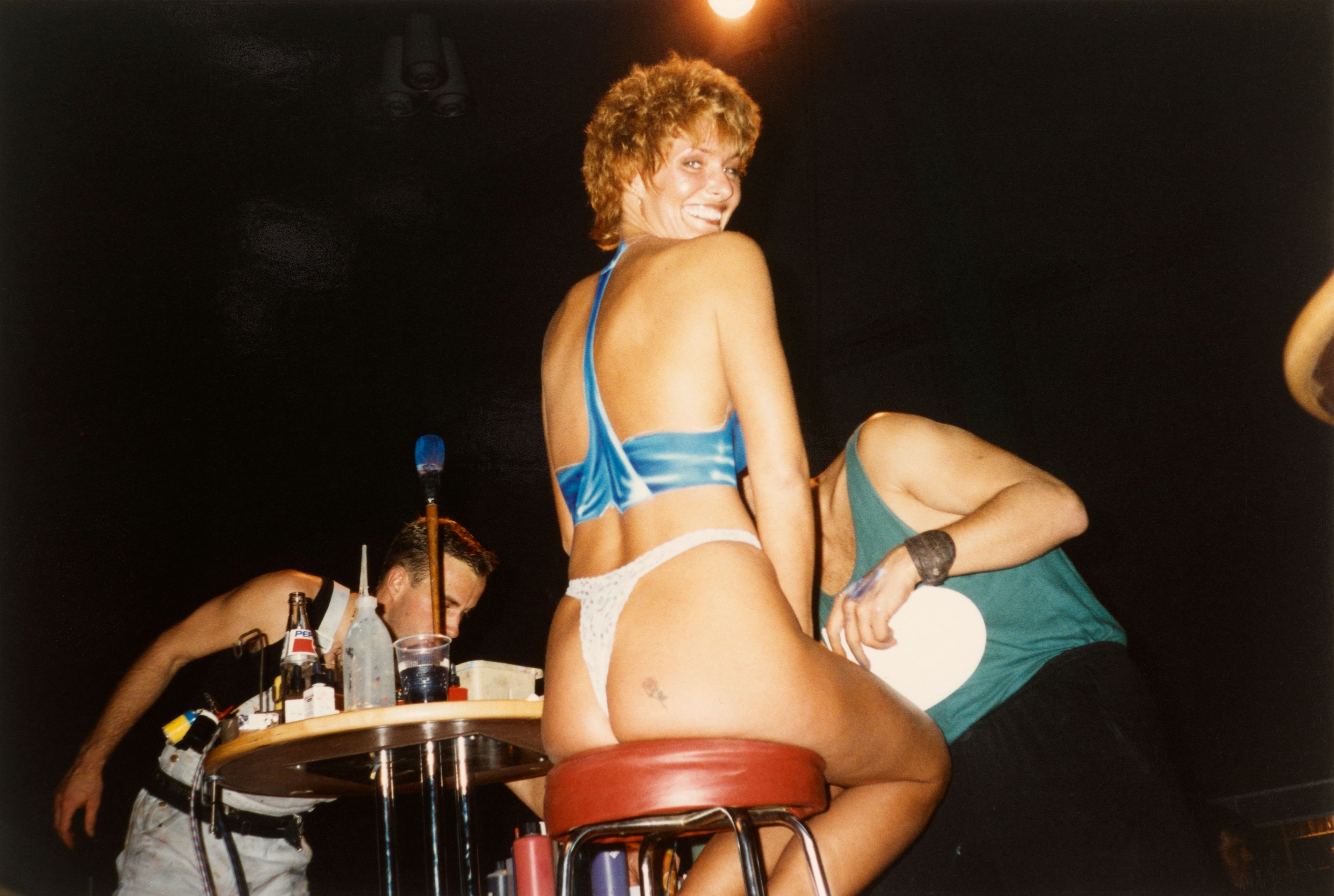
Michella Bredahl’s photographs present the ungraspable truth of the feminine experience. ‘Femininity, as I experience it, often carries vulnerability, but I see that vulnerability as a form of strength,’ says the artist. Bredahl grew up in the Høje Gladsaxe housing project outside Copenhagen, a neighbourhood defined as a ‘vulnerable area’ (udsat boligområde) based on high immigrant populations, low income and high crime—in a country with deep antipathy to such areas and populations. Aged 14, Bredahl was ‘discovered’ and began travelling the world as a model; she went on to study film. An exhibition now on at Huis Marseille in Amsterdam, Rooms We Made Safe, explores self-portraiture from her earlier years, and also features images made by her mother. ‘[My mother’s work has] never been presented before, and being able to give it the space and attention it deserves felt very special. Sharing that moment with her was incredibly important to me,’ says Bredahl. This past September, she returned briefly to her former career, walking in the S/S 2026 Miu Miu show (she also went behind the camera to photograph a campaign for the house). In 2026, Bredahl’s work will be shown at Kunstmuseum Brandts and at the National Museum at Frederiksborg Castle in Denmark. – Aimee Walleston
YoungEun Kim
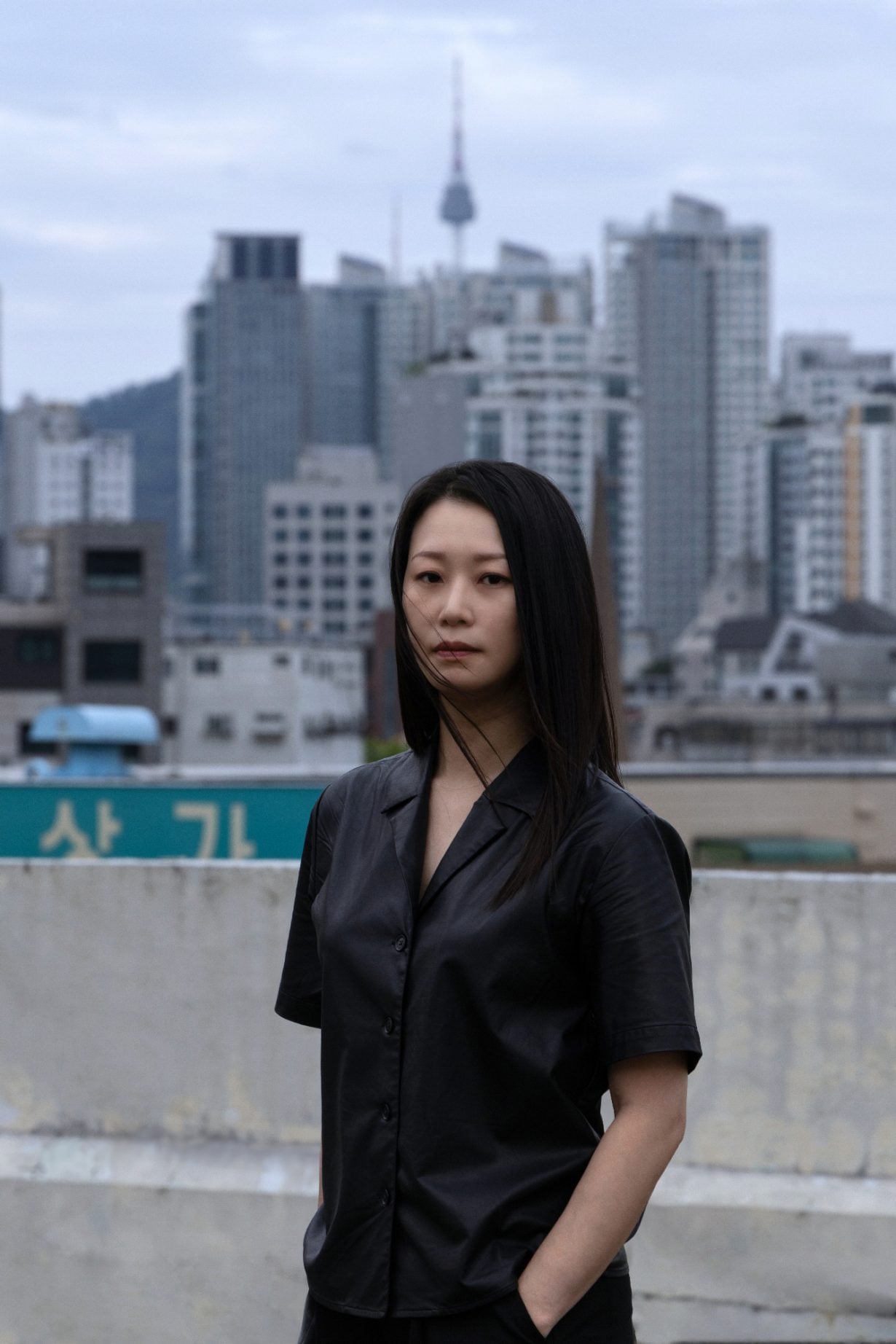
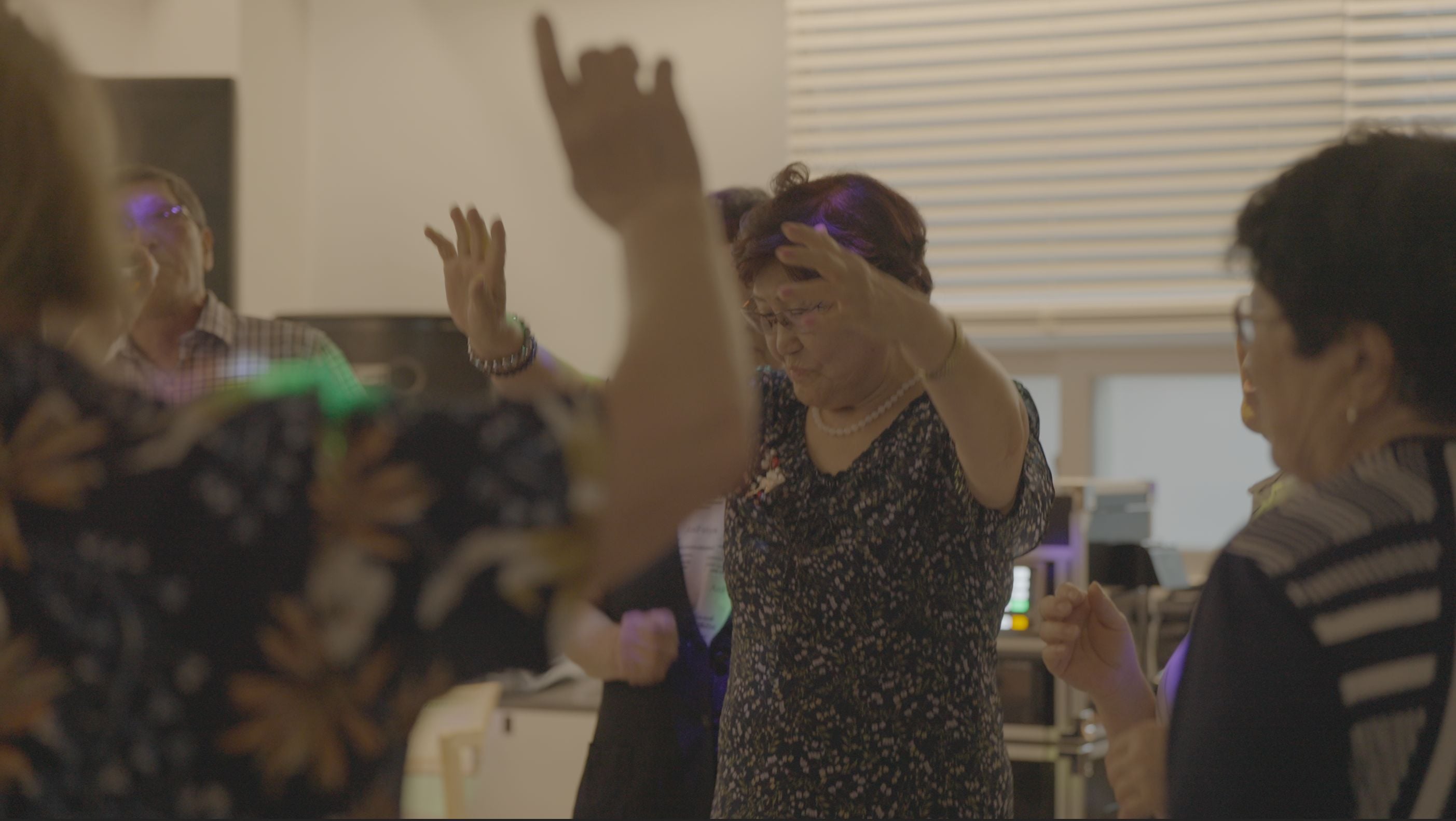
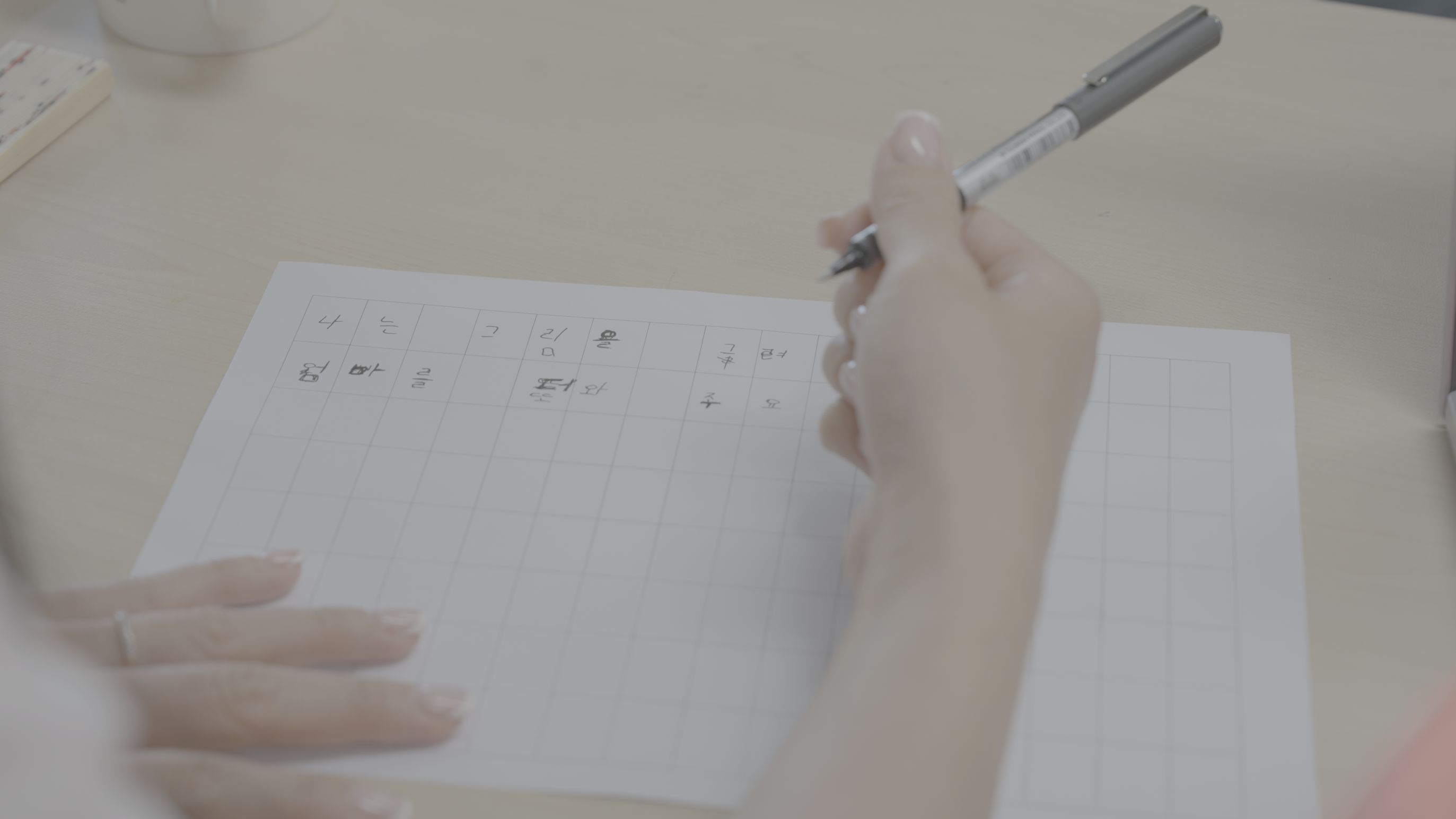
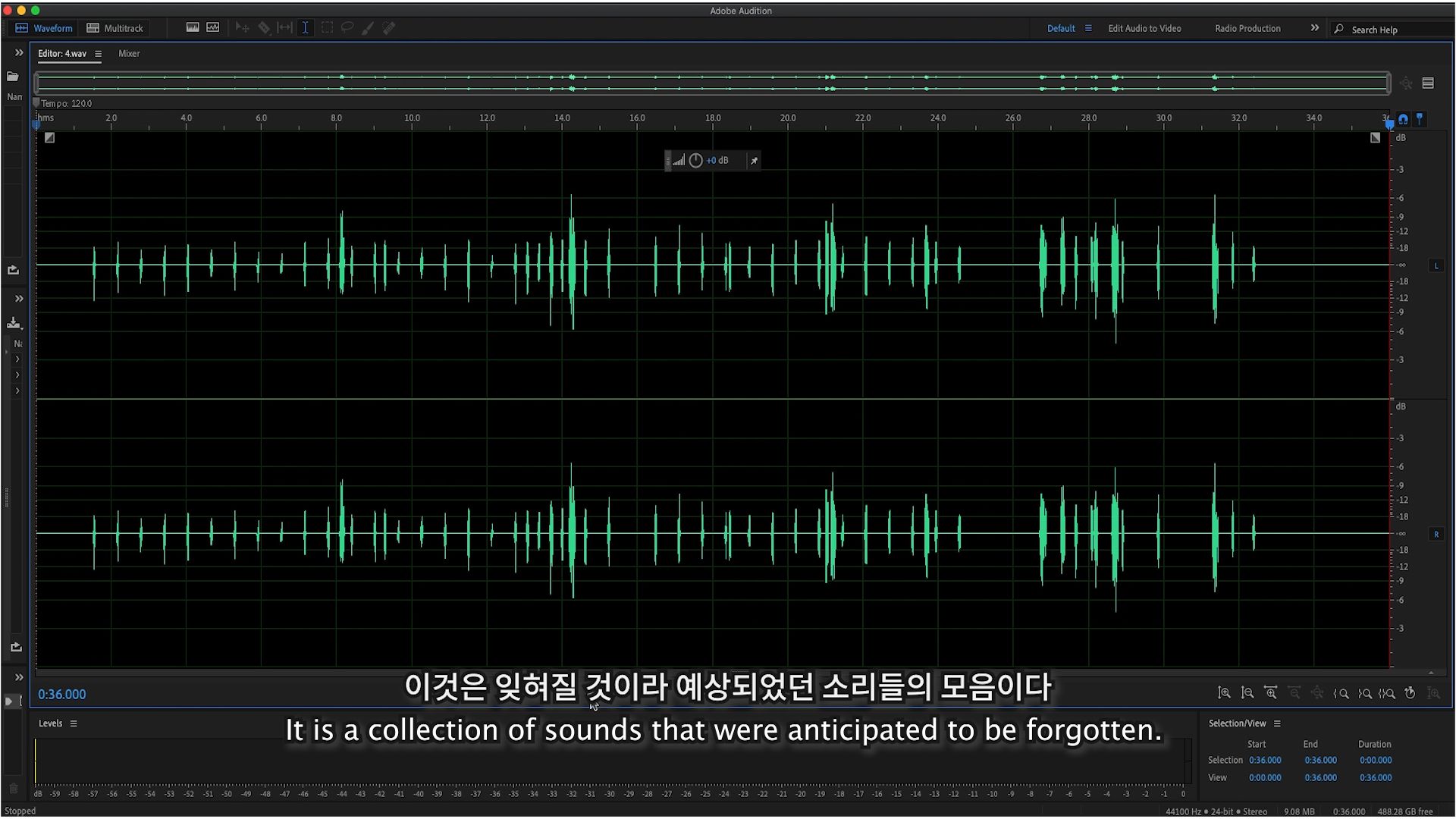
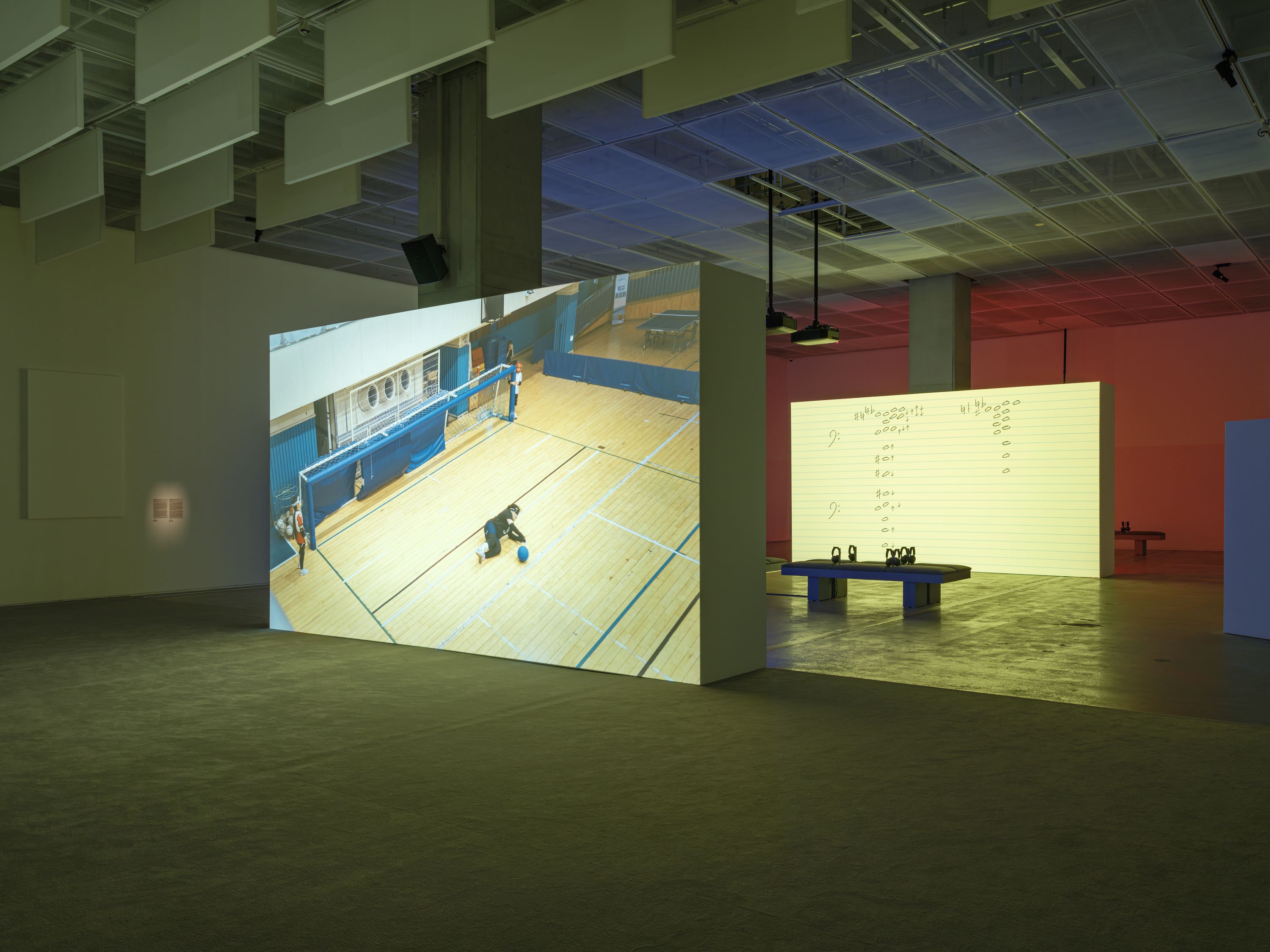
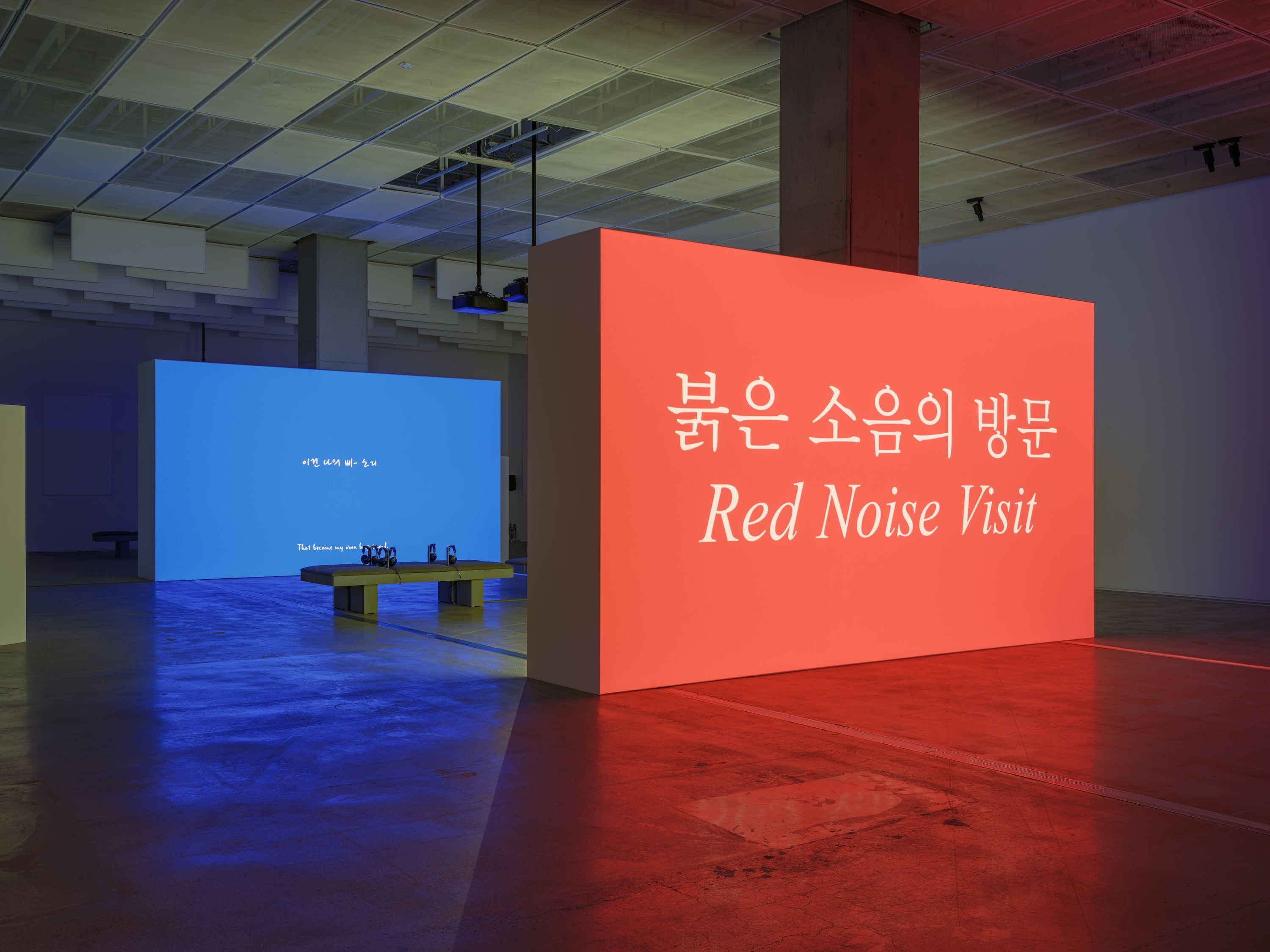
I began following YoungEun Kim’s work at the 2024 Gwangju Biennale, where her video essay A Story of Oseonbo: Sounds Lost in Translation (2022) rendered Western musical notation unpronounceable by Korean singers as sonic traces of colonial power, delivering the exhibition’s most precise aural-political moment. In 2025, Kim gained wider recognition: winning the 2026 ACC Future Prize and shortlisted for the Korea Artist Prize. Running at MMCA in Seoul until 1 February 2026, the Korea Artist Prize finalists’ exhibition offers a comprehensive view of Kim’s work, in which she reinvents the film essay through sonically rich sources. Listening Guests (2025) layers diasporic voices—a Korean diaspora recounting her return home and sport for the hearing-impaired, or peers recalling wartime listening after singing Japanese enka—examining how sound shapes experience through relocation and adaptation. Go Back To Your (2025) collides street racism with Eminem and Pussycat Dolls, with the latter cheekily ‘[beeping]’ the silenced parts, transforming absence into sly, surprising beauty. It’s fair to imagine Kim’s upcoming ACC Future Prize solo (August 2026–January 2027) might drop a cheeky ‘[beep]’ into the triumphant hum of the broader Korean art world, where high-tech image blasts and Korean Wave optimism often reign supreme. – Zian Chen

Josiane M.H. Pozi
G I’m just feeling like I just don’t wanna, I don’t want to cause a scene.
B Yeah, exactly I don’t either.
G Okay good. Wonderful. We’re good?
B I love you of course we’re good.
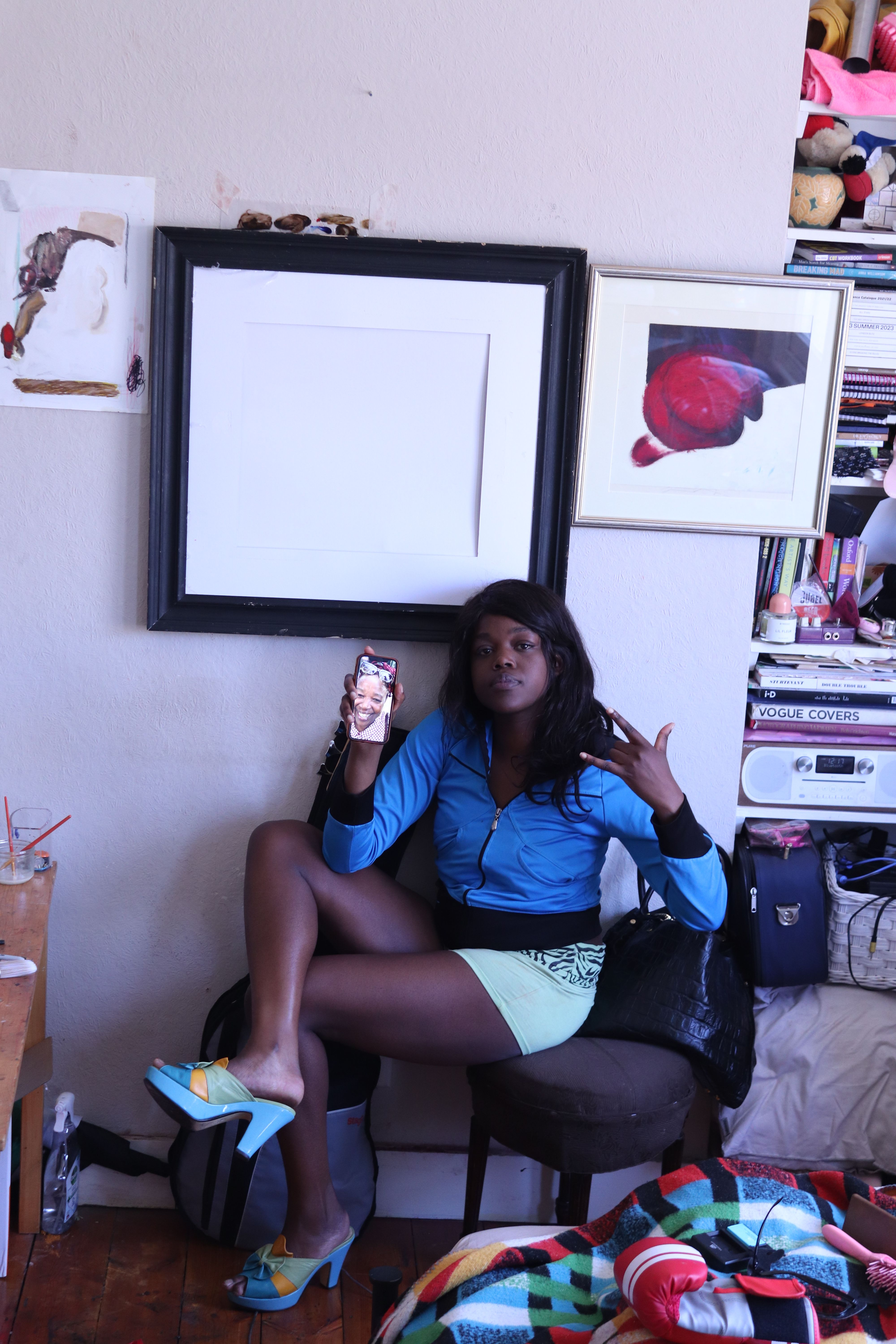
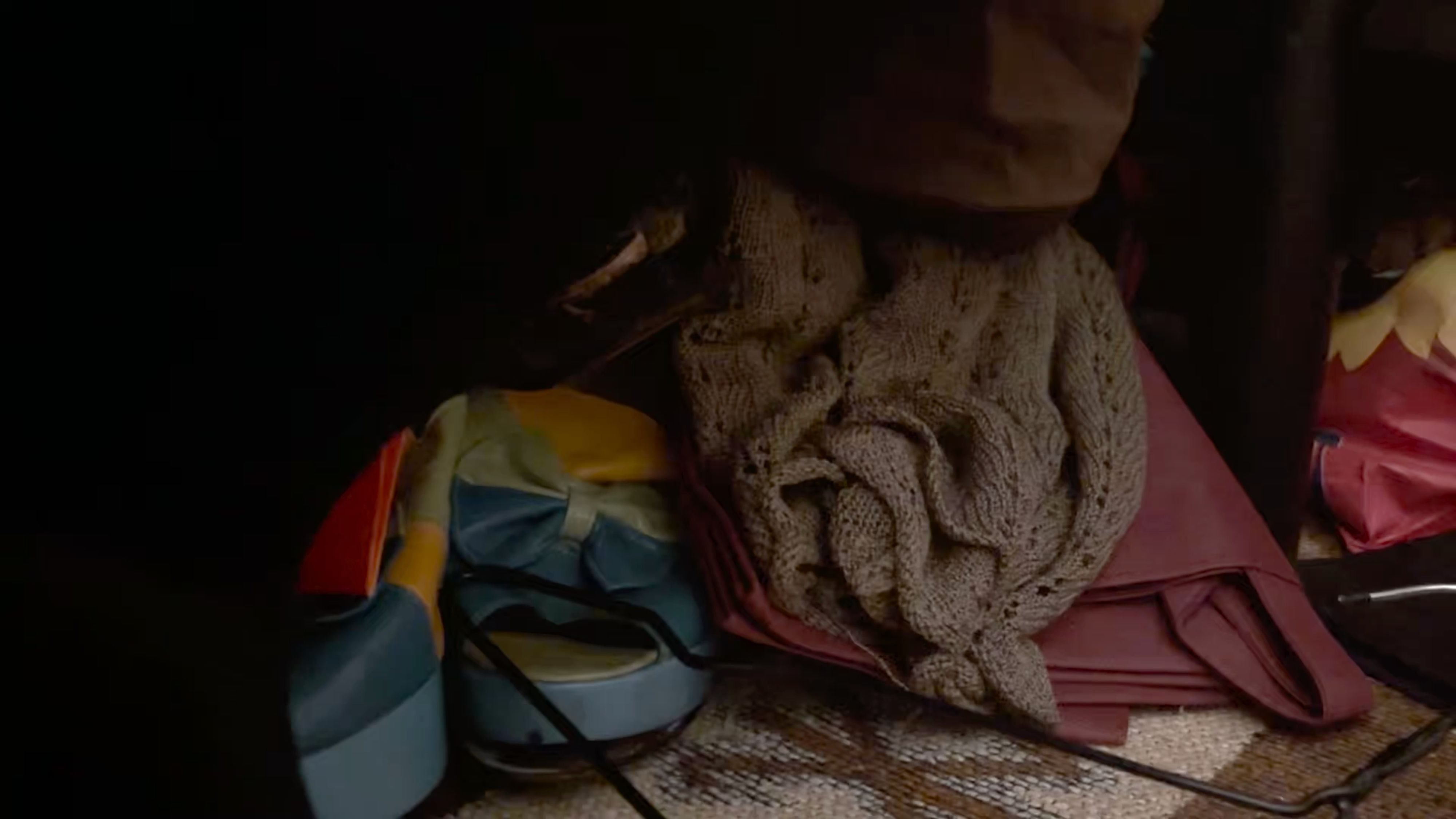
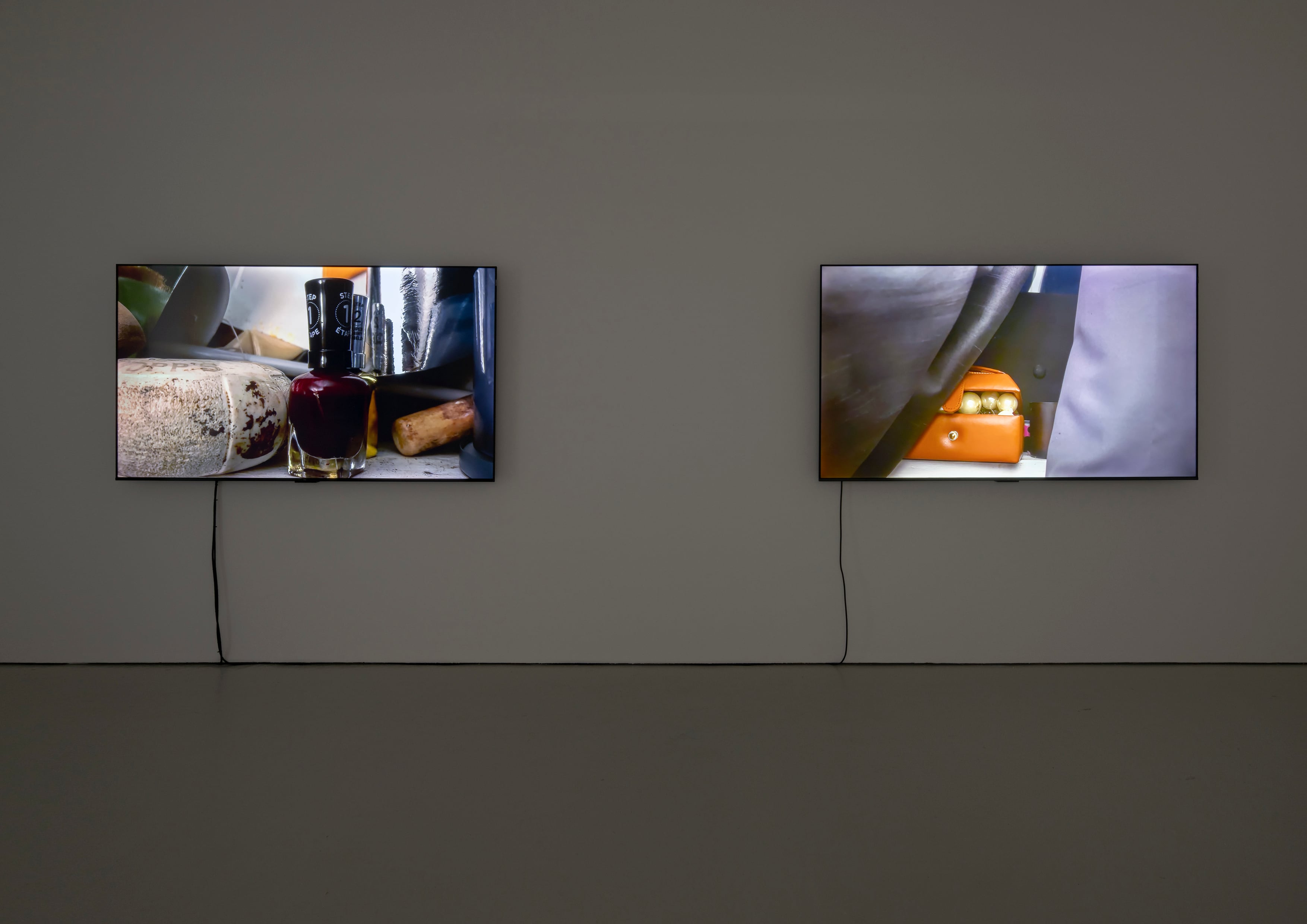
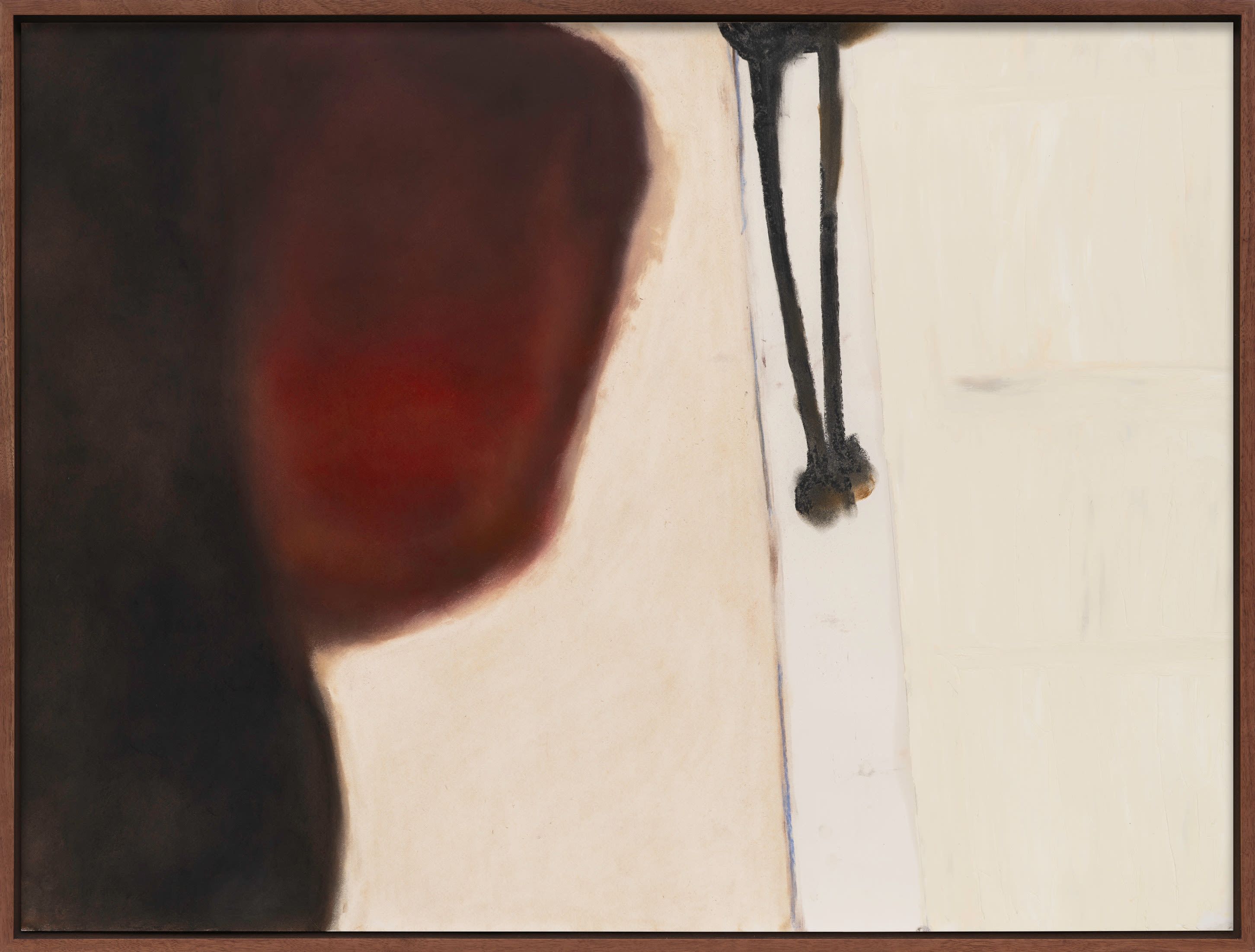
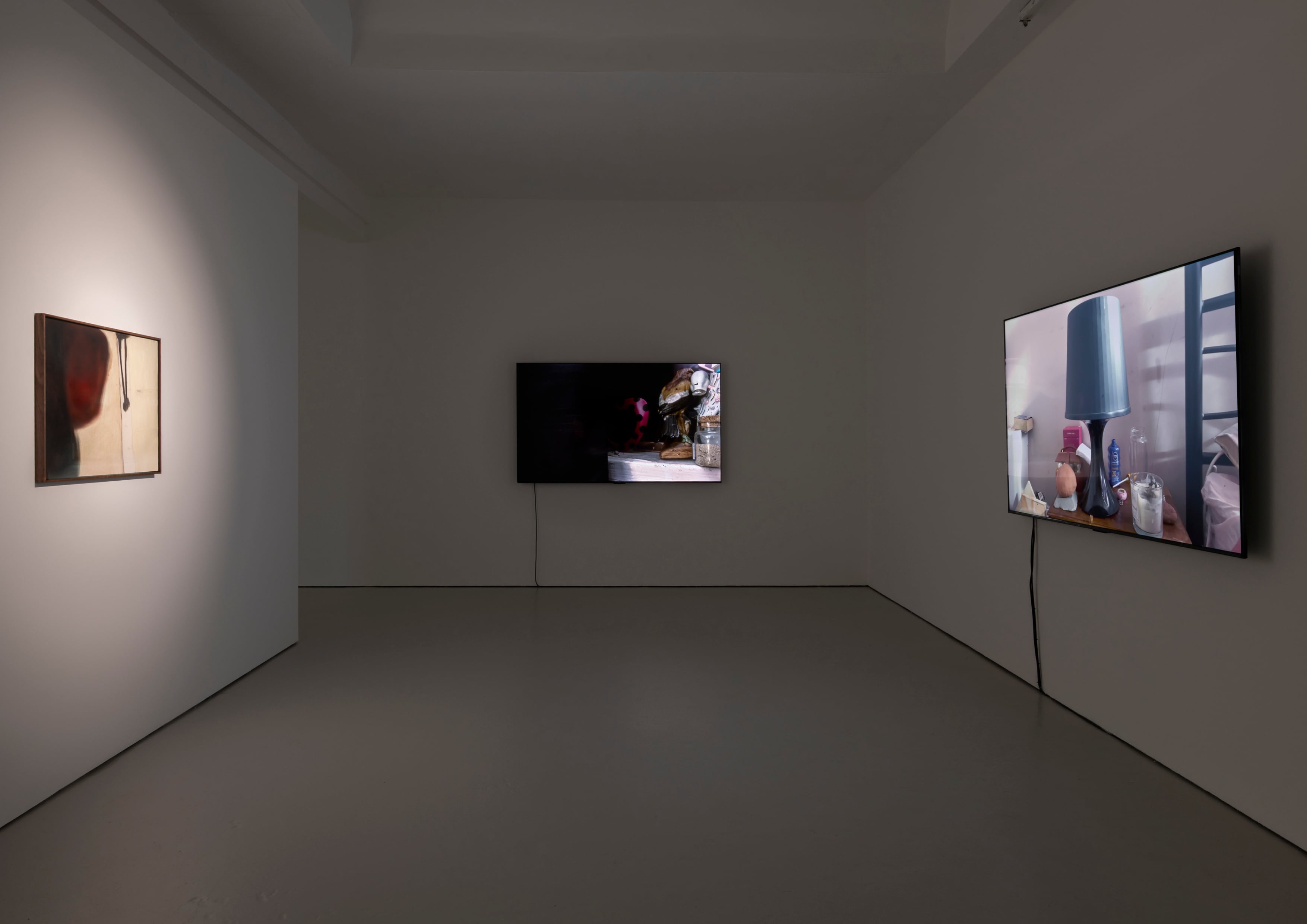
The above extract, from the play MC (2023), typifies Josiane M.H. Pozi’s work, which documents instances of linguistic mundanity, disassociation and alienation of contemporary community (whether it be a south London house party, a family gathering or an Instagram livestream). Pozi’s video work, as MoMa PS1 curator Kari Rittenbach writes, carries a ‘heartbreaking proximity’. Her depictions of speech and intimacy are fragmented, mimicking the pitfalls of memory: representing scenes as banal as a messy bedside table and as poignant as a father-daughter relationship. In her most recent show, United Kingdom London, Portrait O.A.Y.G. (2025), Pozi showcased five 25-minute videos, featuring barely moving still lifes of an achingly specific domestic space. Contrasted against two abstracted oil paintings Me from Above (2025) and Me in My Room (2025), the artist created a mixed-media auto-archive, emphasised by a press release made up of a ‘Paint by Numbers’ palette of her own face. Don’t miss Pozi’s Tumblr CV, which includes a video of the artist drinking tea superimposed over a hologram of Timothée Chalamet. – Lydia Eliza Trail

Tibor Dieters
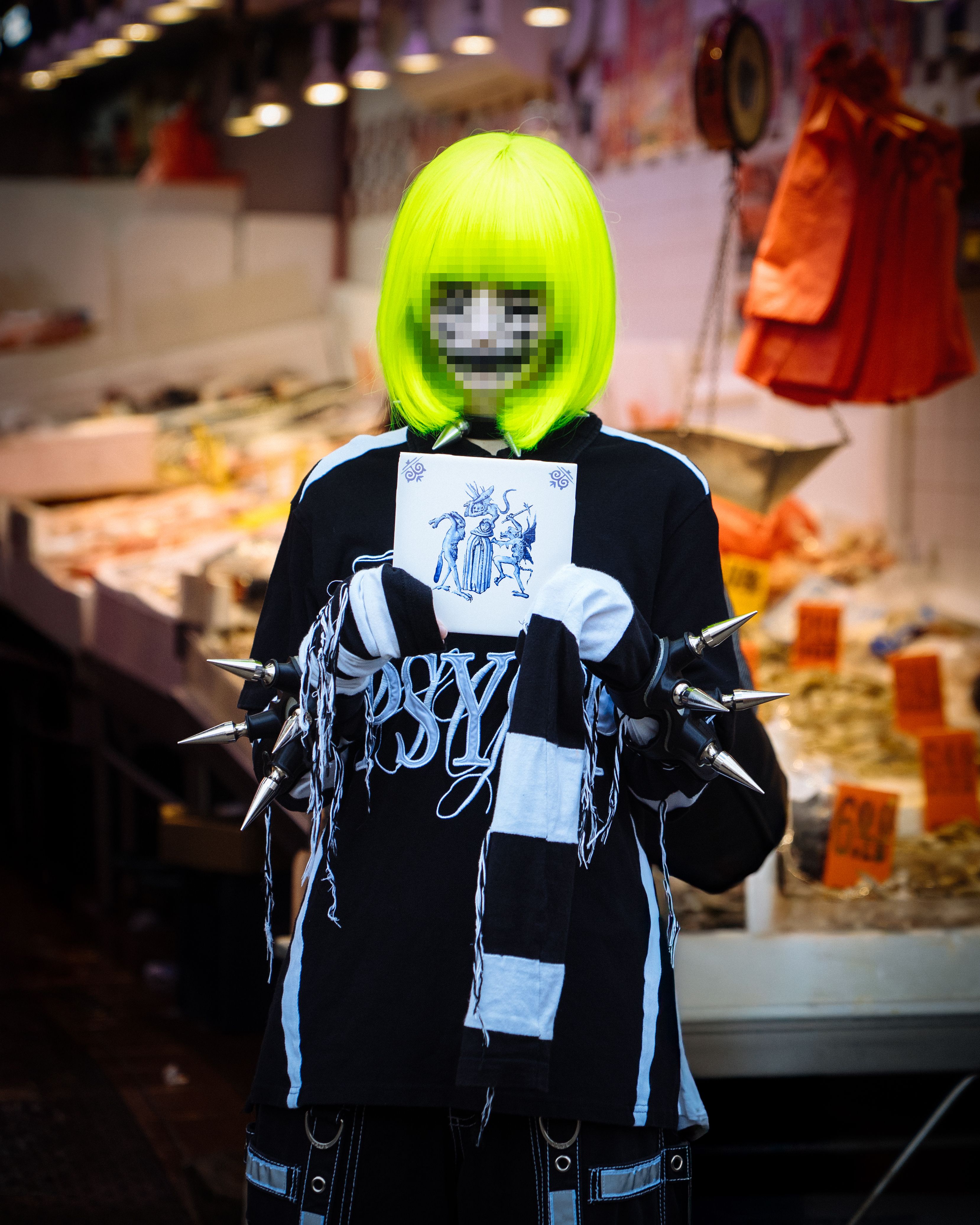
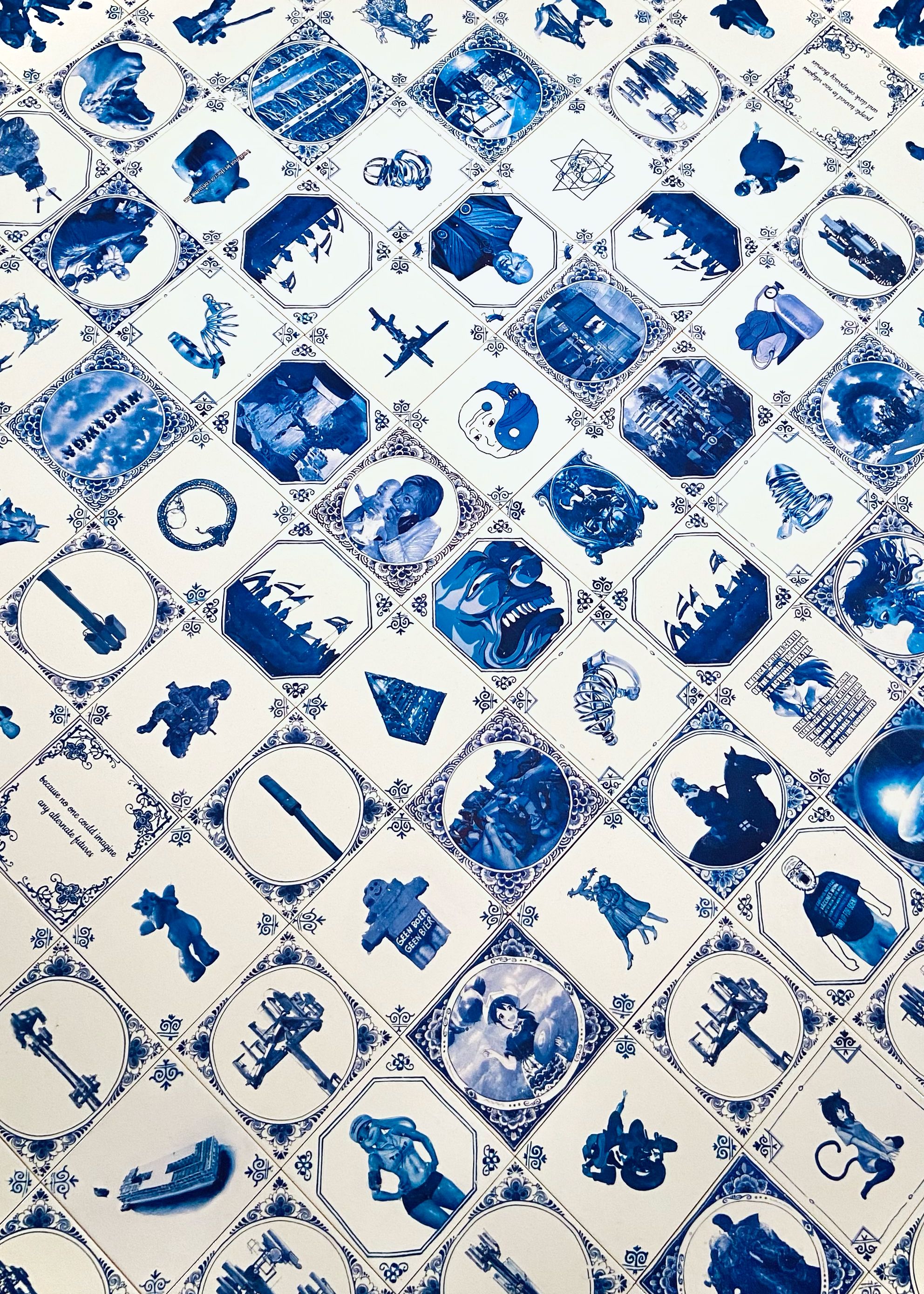
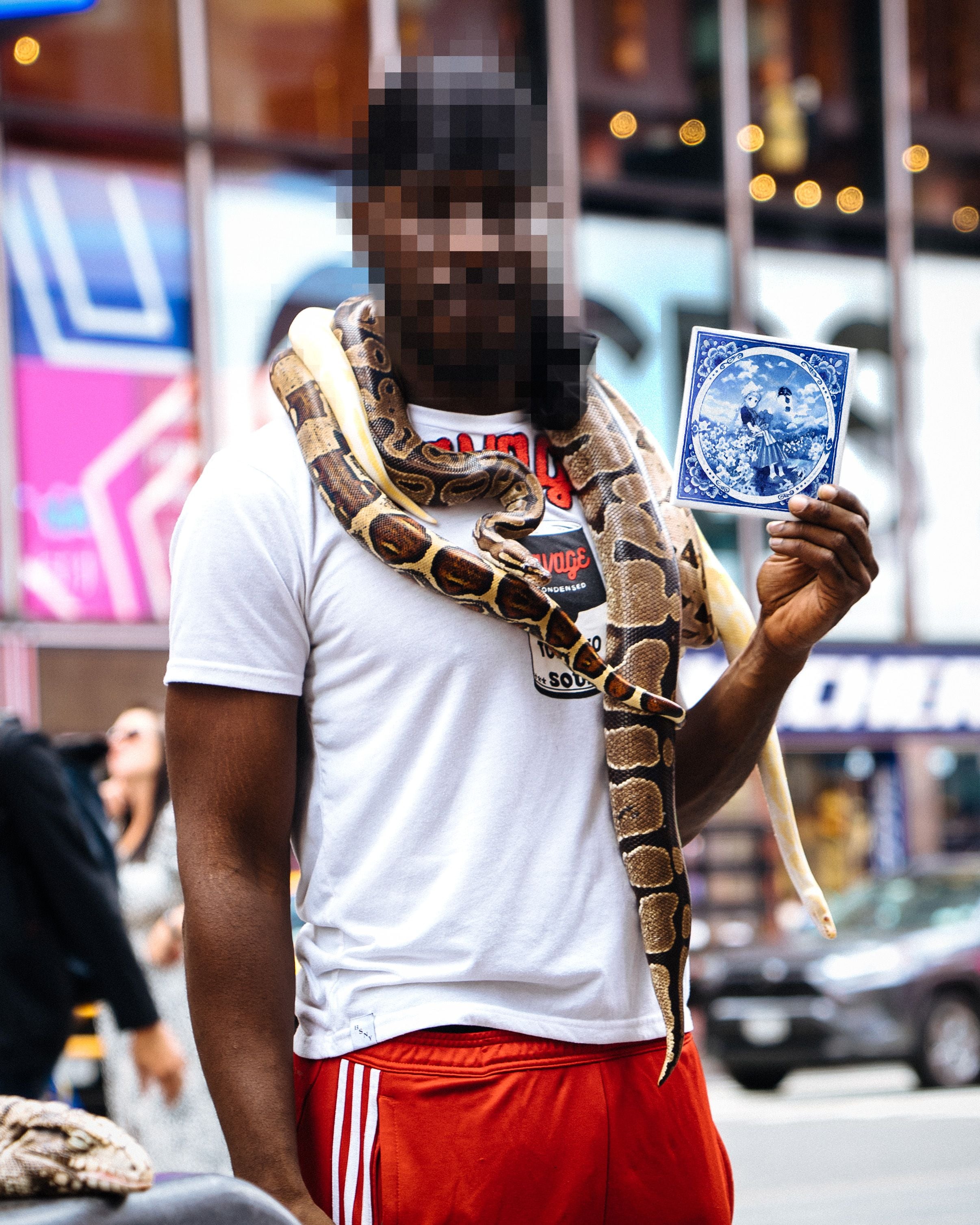
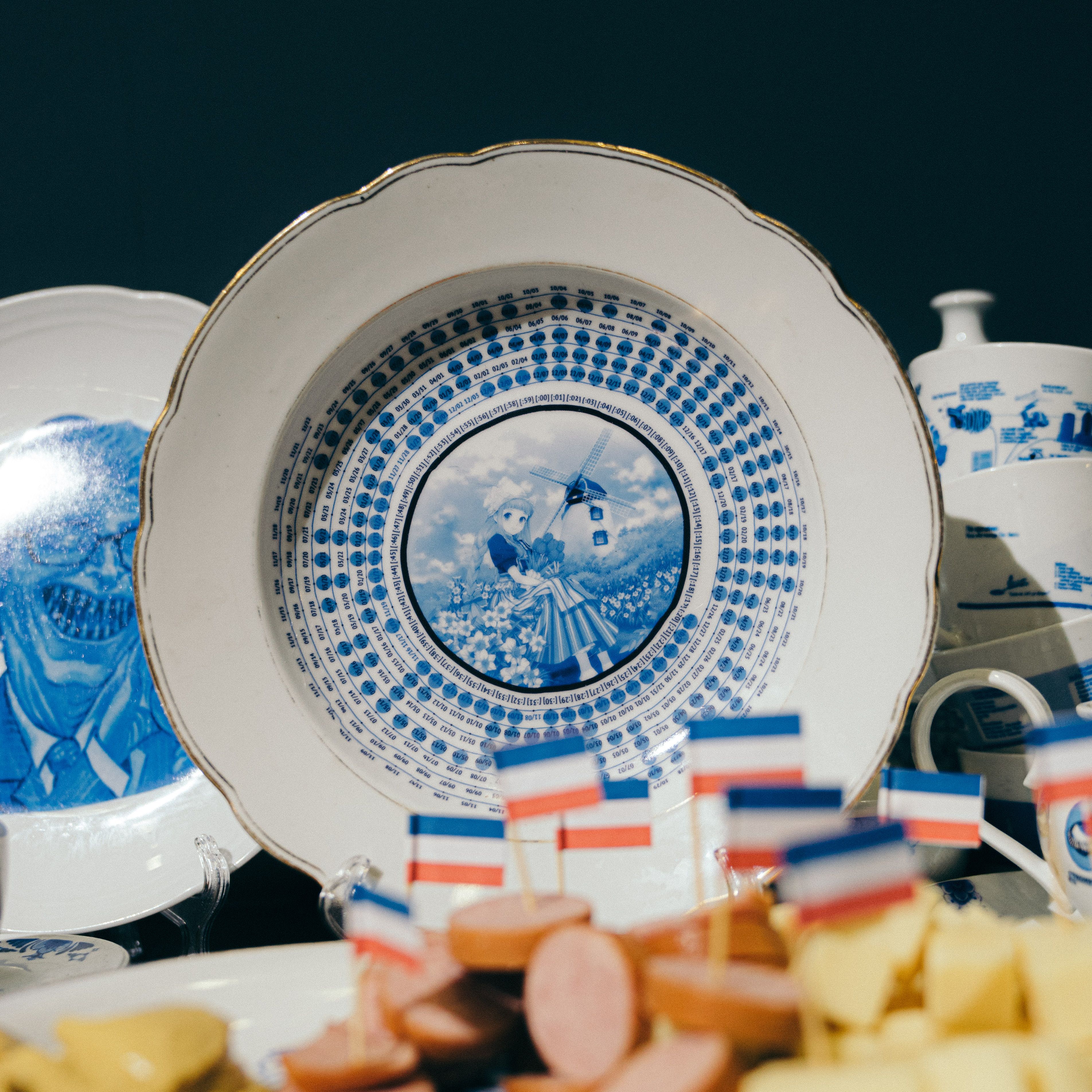
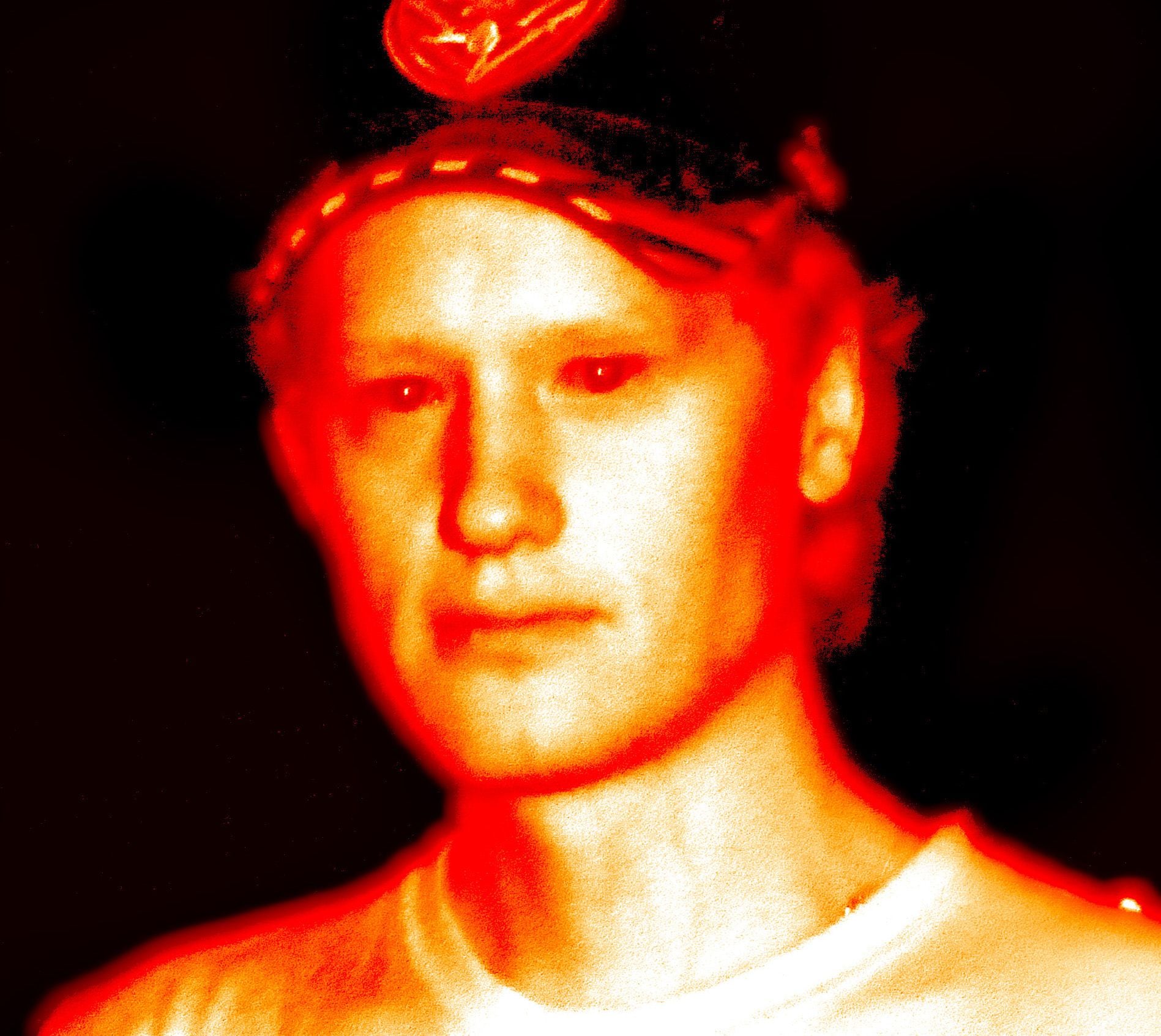
Amsterdam-based artist Tibor Dieters has developed a practice that avoids art world wankery in favour of trenchant cultural insight. ‘I started to wonder why the conversations we were having in the group chat seemed to produce a more compelling discourse than the LED-lit one-on-ones at the white cube-type of gallery space,’ he says. ‘Since then I’ve found ways to experiment with work outside the traditional margins of the art world.’ Dieters is perhaps best known for his ‘Extremely Online Delft Blue’ tiles (2023–ongoing), in which he crafts Delftware featuring imagery developed and circulated by online communities. The works were inspired by ‘the surge of fringe political identities gaining mainstream popularity in the Netherlands’. Looking ahead to 2026, Dieters is finding new creative mana from an unlikely source: ‘I’ve been observing the gradual militarisation of my country, and have been genuinely inspired by the prolific aesthetic output of the Defense Department, (however bizarre that may sound).’ Currently, Dieters’ work is ‘exhibited in the bathroom of a fictitious Zillow listing alongside a who’s who of the terminally online. And fingers crossed, but I am most likely collaborating with [REDACTED]. But I can’t say a lot about that yet.’ – Aimee Walleston

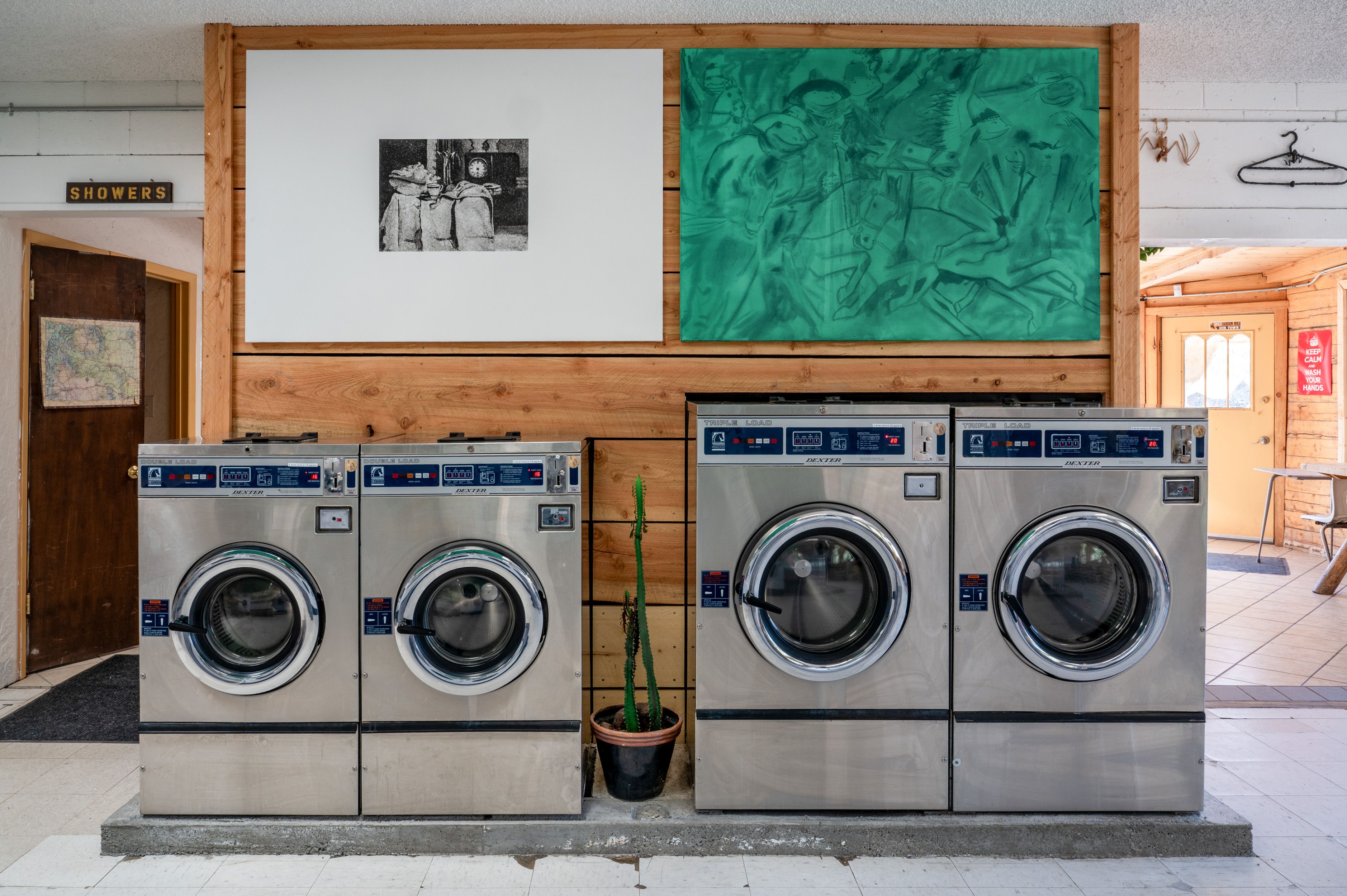
Brook Hsu
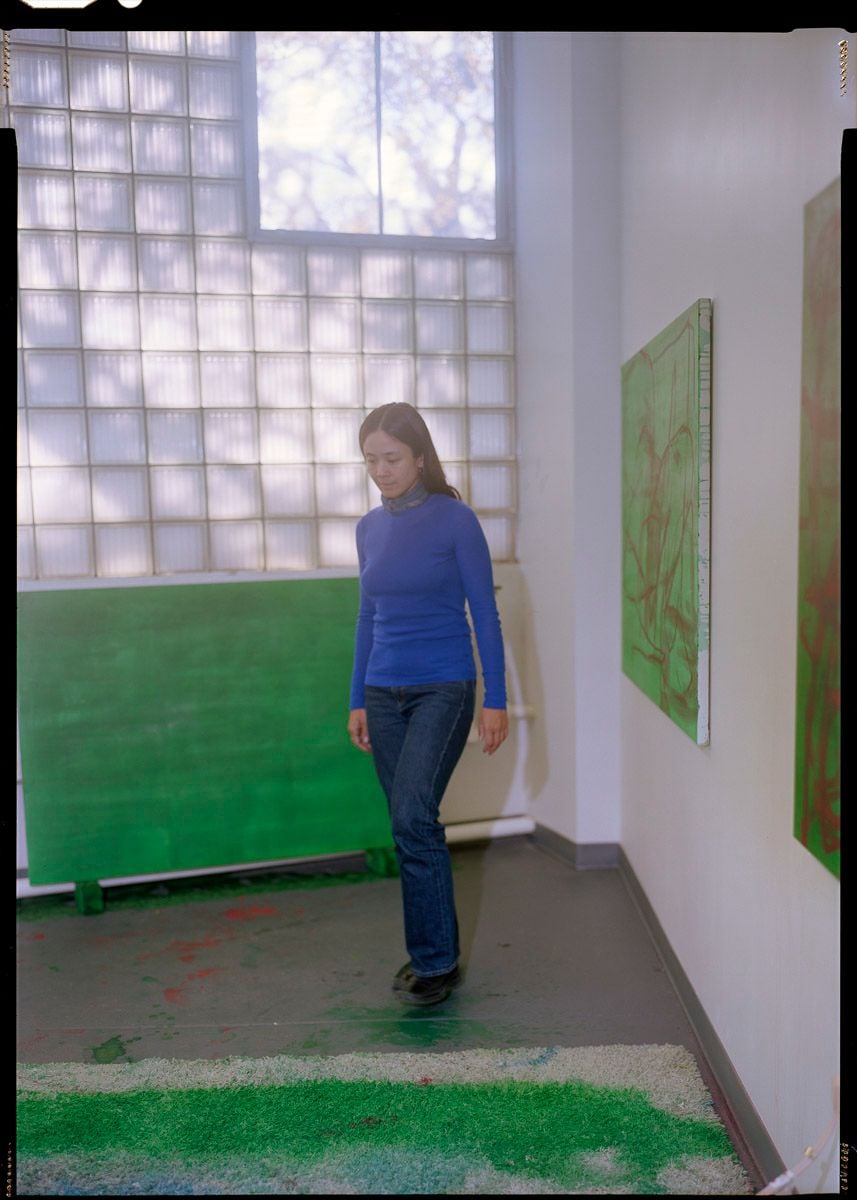
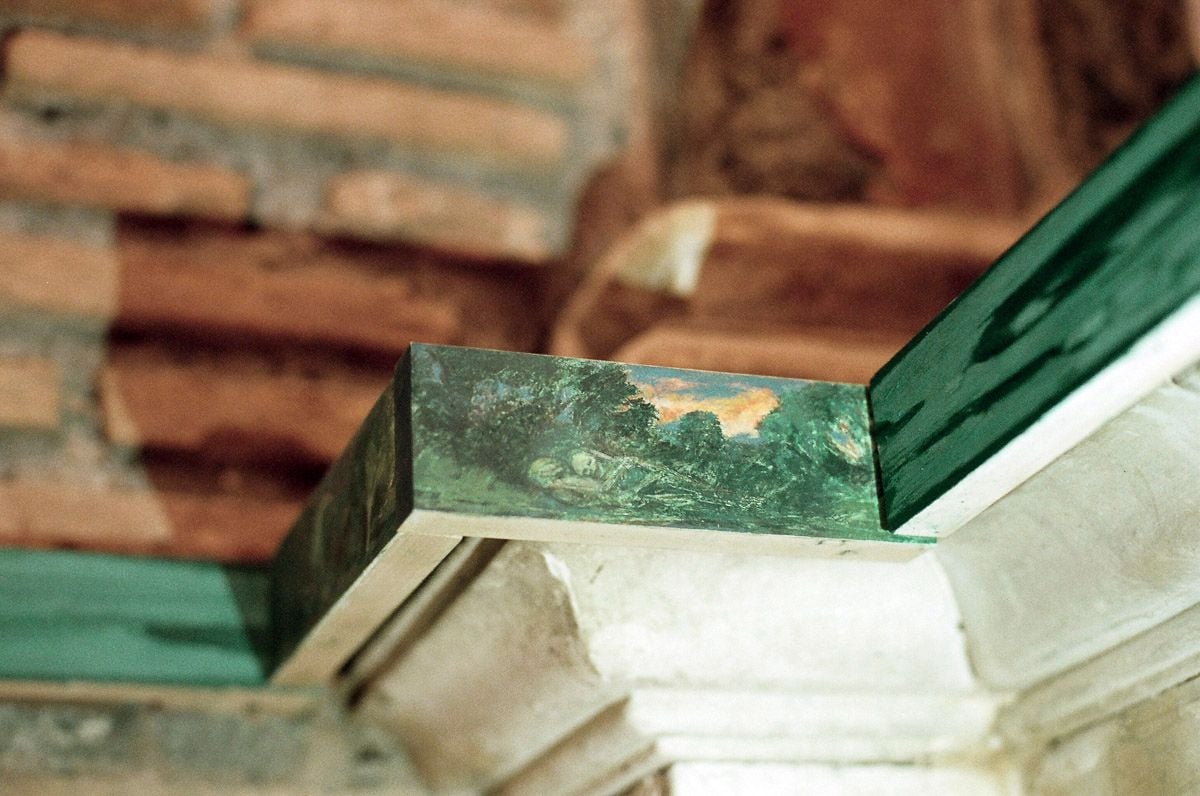
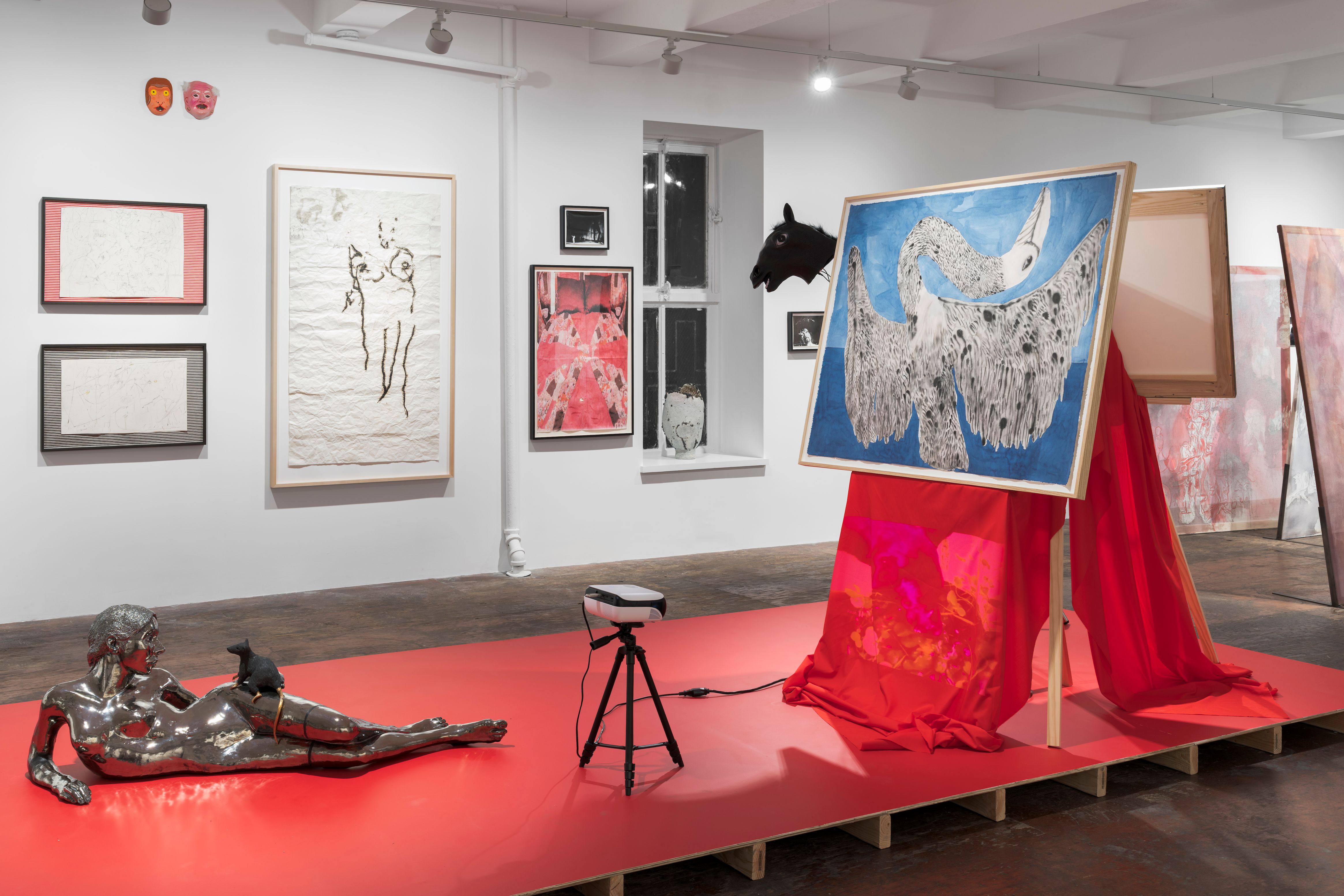
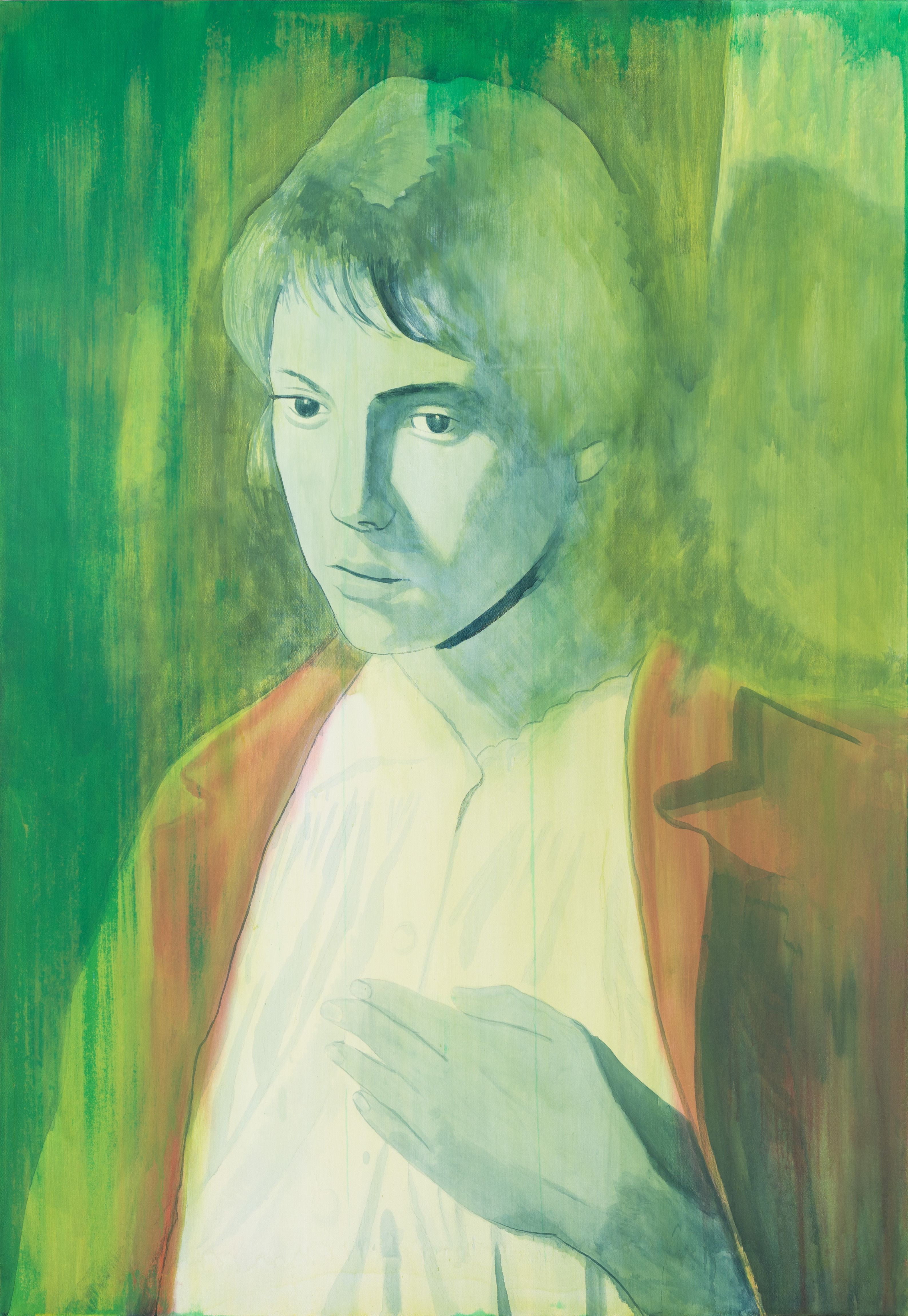
My earliest impression of Brook Hsu’s work was an emerald-green waistline encircling the mottled interior walls of Sant’Andrea de Scaphis in Rome. Decorative from a distance, the 2022 painted-wood installation revealed itself, up close, as densely oversaturated with skeletons and fluid landscapes. It encapsulated what the Taiwanese American artist, who is based in New York and Wyoming, does with quiet precision: an intimate, non-linear mode of storytelling that moves between loss, love, humour and the unsayable residues of memory. Hsu’s paintings, sculptures and writings draw freely from mythology, art history, cinema and literature, folding these references into personal sentiments. Increasingly, this sensitivity to atmosphere and structure has extended beyond her own works. In 2025, Hsu curated the group exhibition From Being Jealous of a Dog’s Vein at Kiang Malingue’s New York space. Centring radical approaches to traditional mediums—particularly works on paper and ceramics—the artist-curator aims to unsettle the assumed neutrality of the gallery and transform it into a kind of ‘garden theatre’, where objects, images and viewers unfold together in time. – Shanyu Zhong
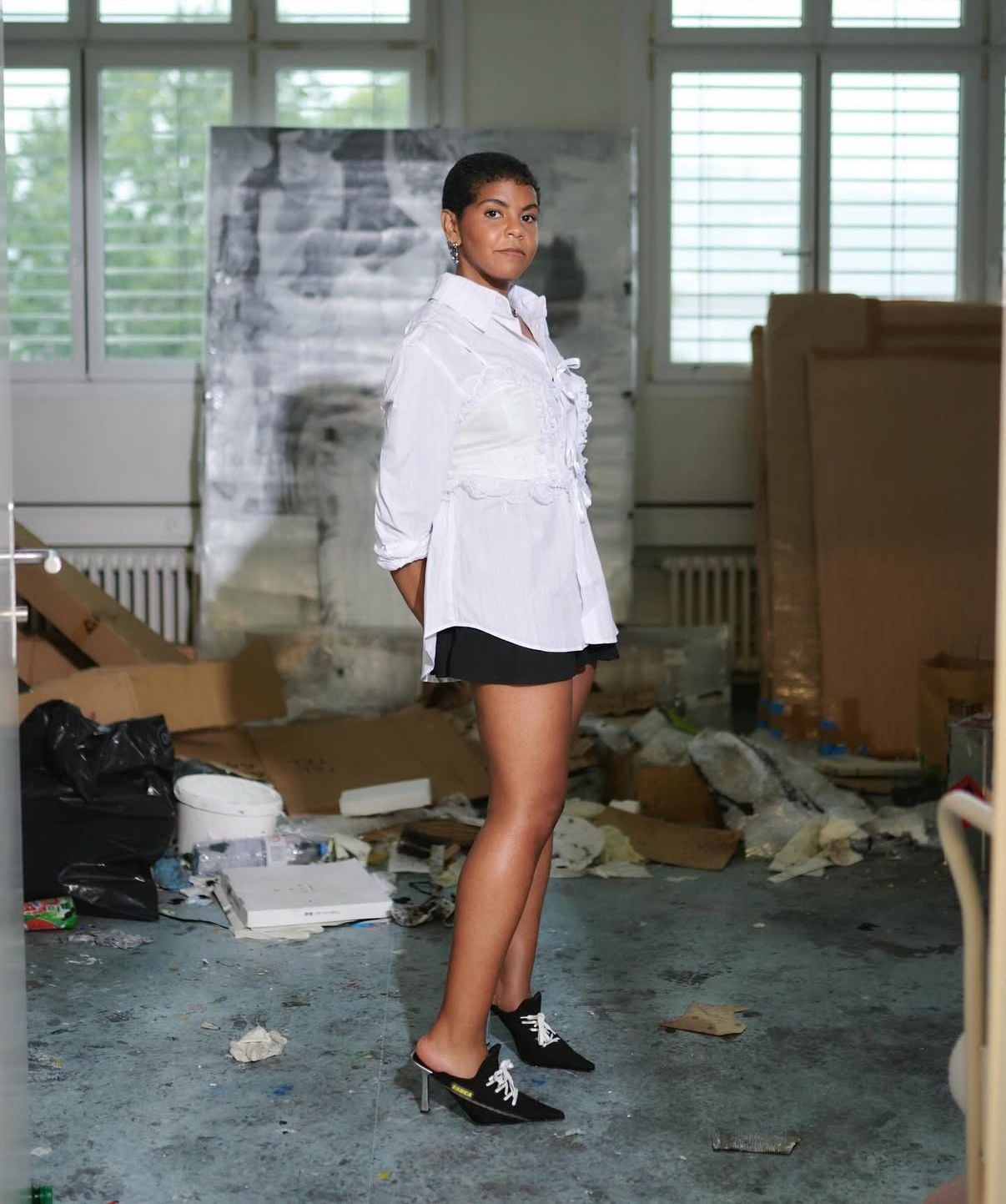
Jasmine Gregory
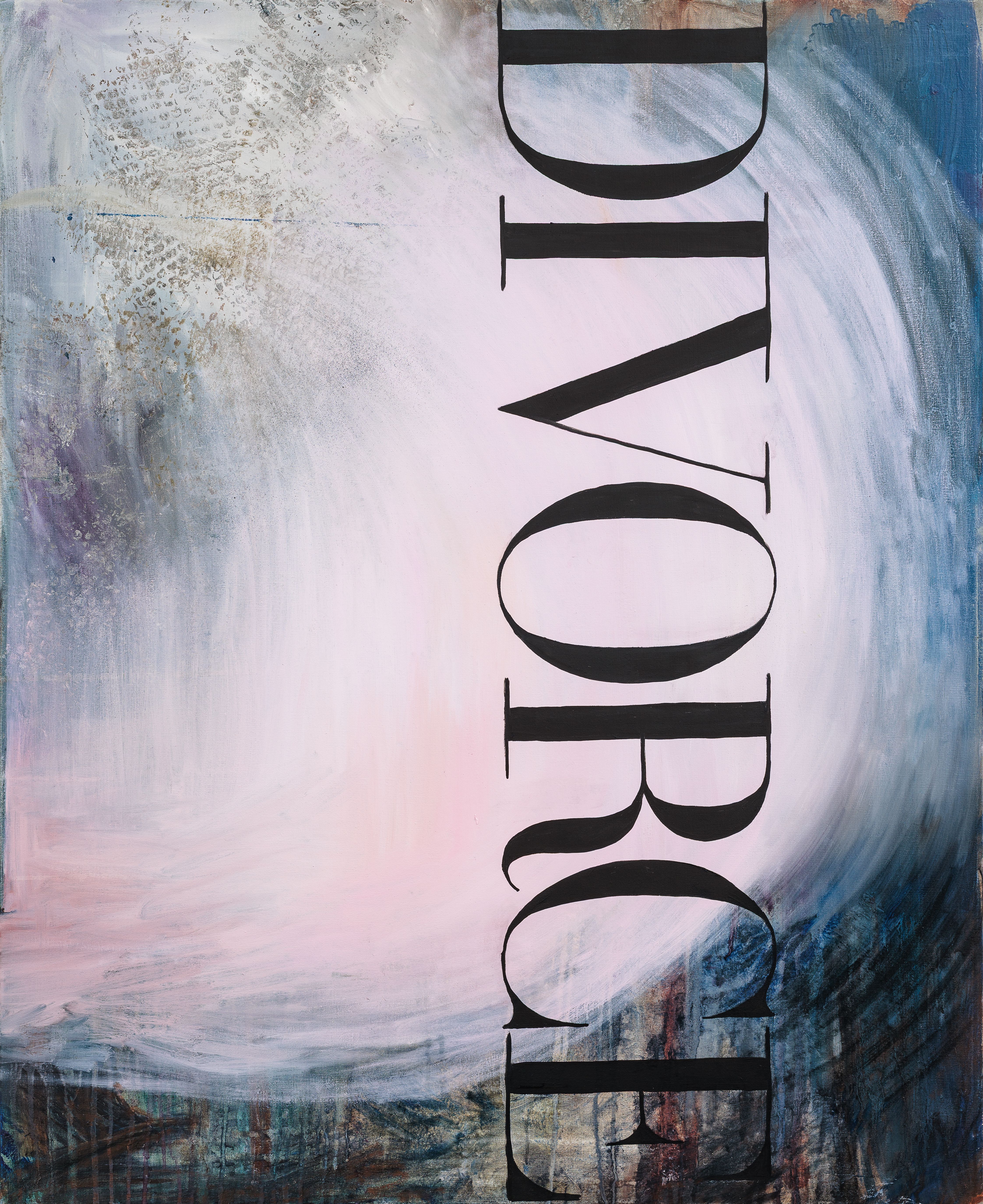
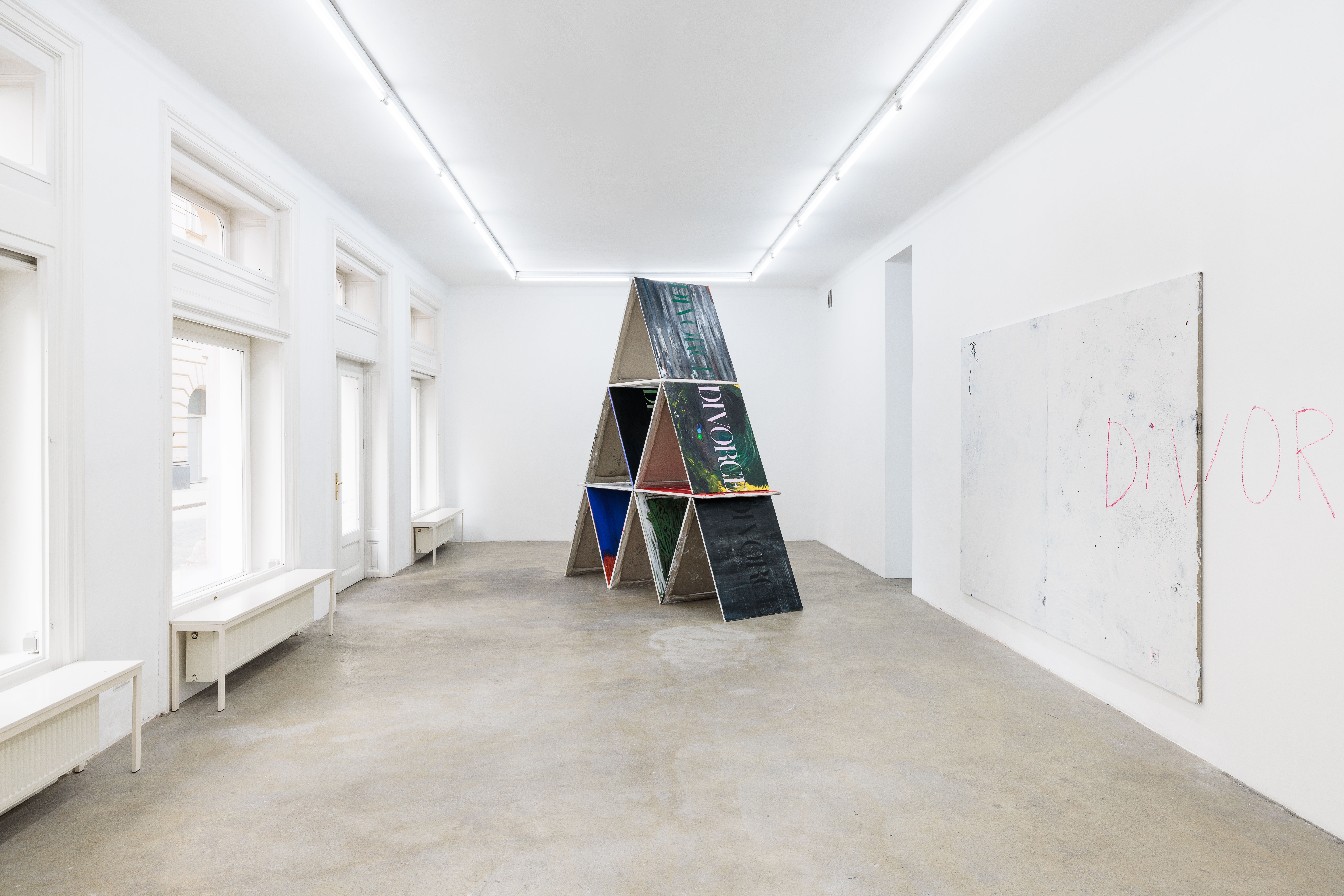
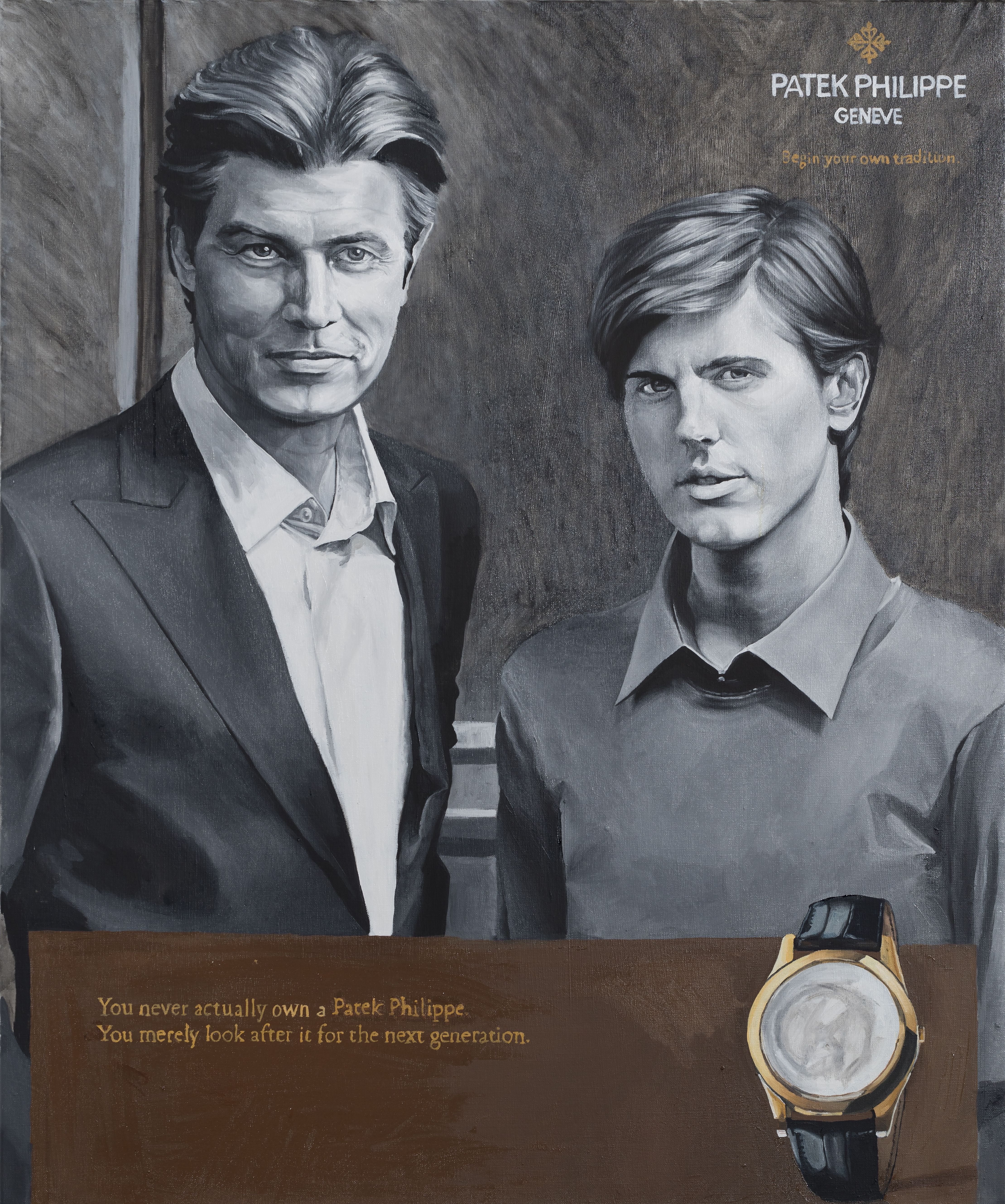
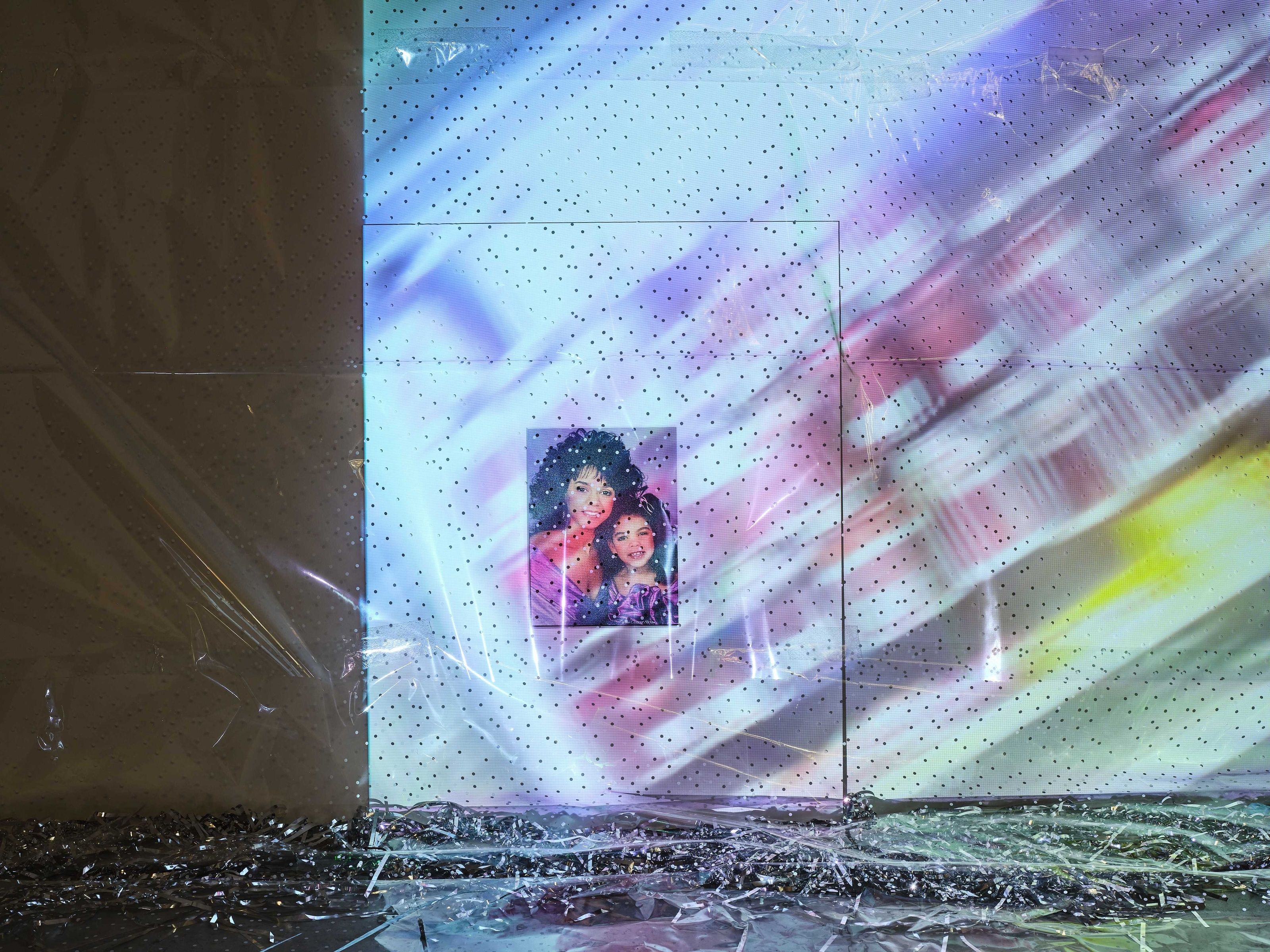
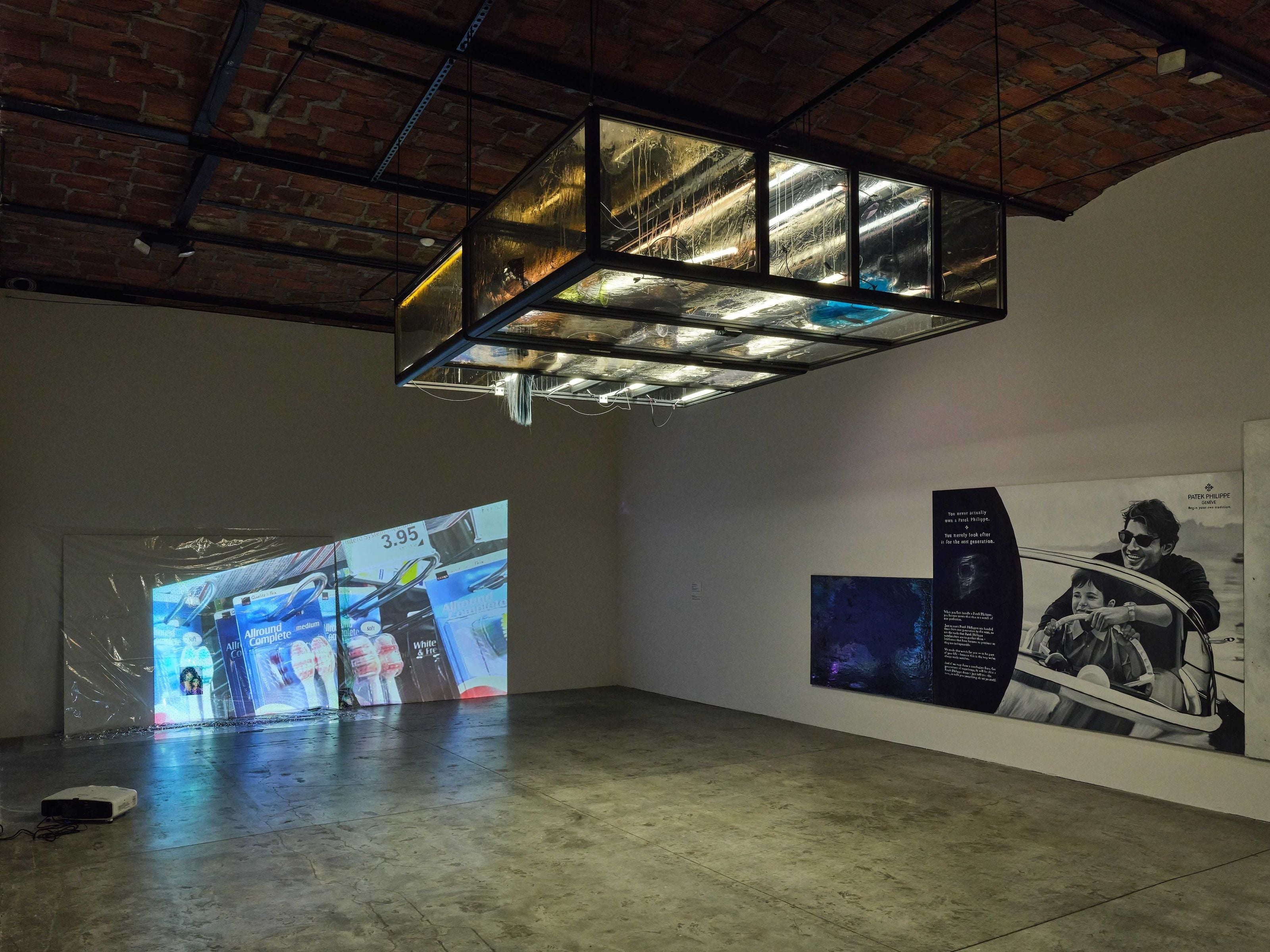
There is a push and pull between desire and remorse, and between promise and reality, that animates the work of U.S. artist Jasmine Gregory, who last year displayed tongue-in-cheek advertisements for divorce in her solo exhibition Audacity Unlimited at Soft Opening in London and Diva’s Lounge at Sophie Tappeiner in Vienna. Gregory has described her paintings as ‘literally stains’, an ethos that could be applied to much of her multidisciplinary work, to which she frequently adds found objects (including lace, a clothes hanger, puzzle pieces and googly eyes) and spilled wine, as she places under scrutiny the financial and cultural value ascribed to an otherwise ordinary object when it is designated and displayed as an artwork. In Who Wants to Die for Glamour, Gregory’s first institutional show in the U.S. at MoMA PS1, adverts aimed at the super-wealthy were slyly, meticulously appropriated by the artist in large canvases that tugged pointedly at the history and hierarchy of painting not only as a system of belief, but an impossible promise of something more than the sum of its constituent parts—much like the fantasy peddled by the clutches of consumerism. Don’t miss her in the group show Genuine Fake Premium Economy at London’s ICA this May, which interrogates commodity culture through the lens of satire. What is the art world, Gregory asks, but the ultimate marketing campaign? – Louise Benson
Steph Huang
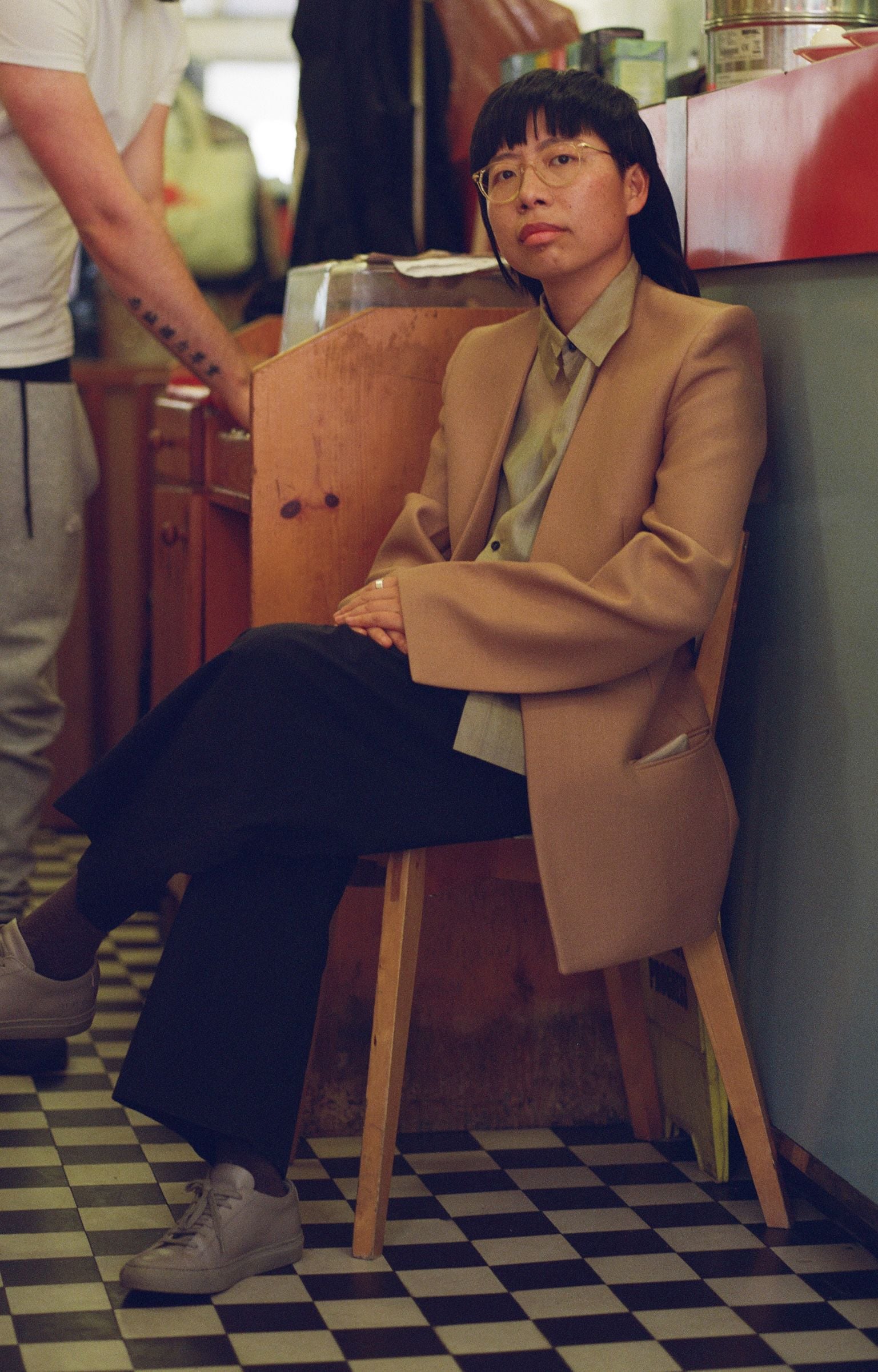
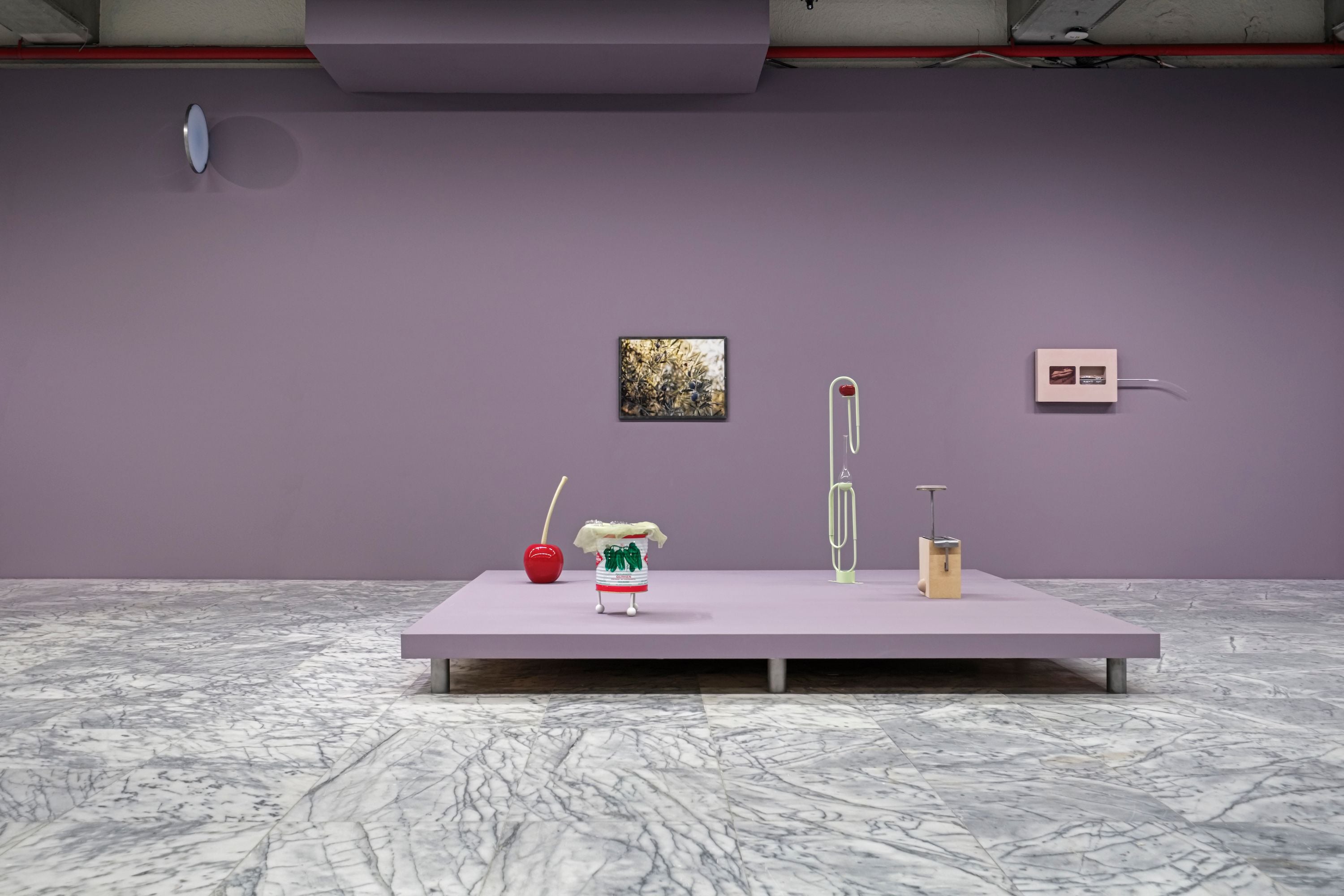
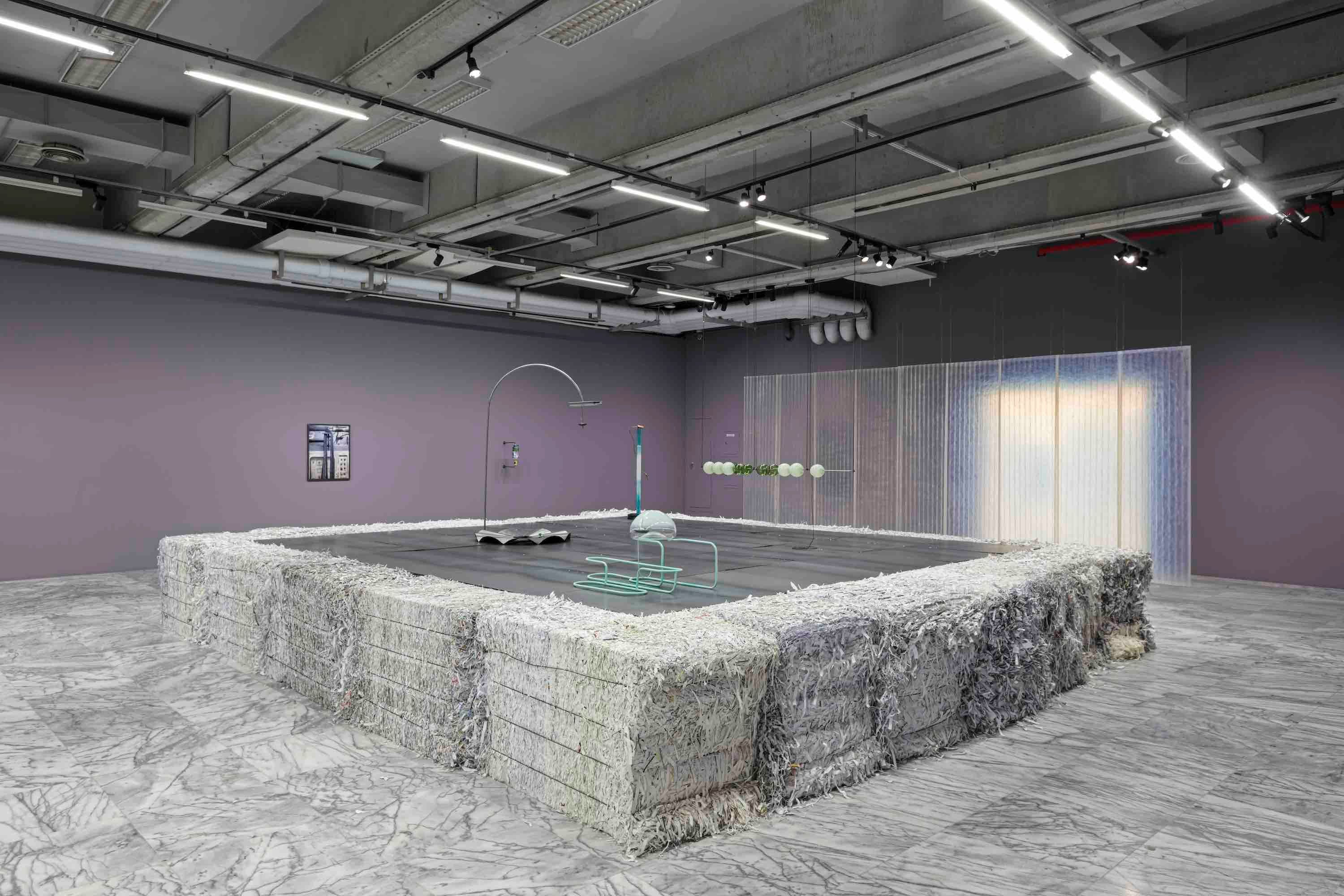
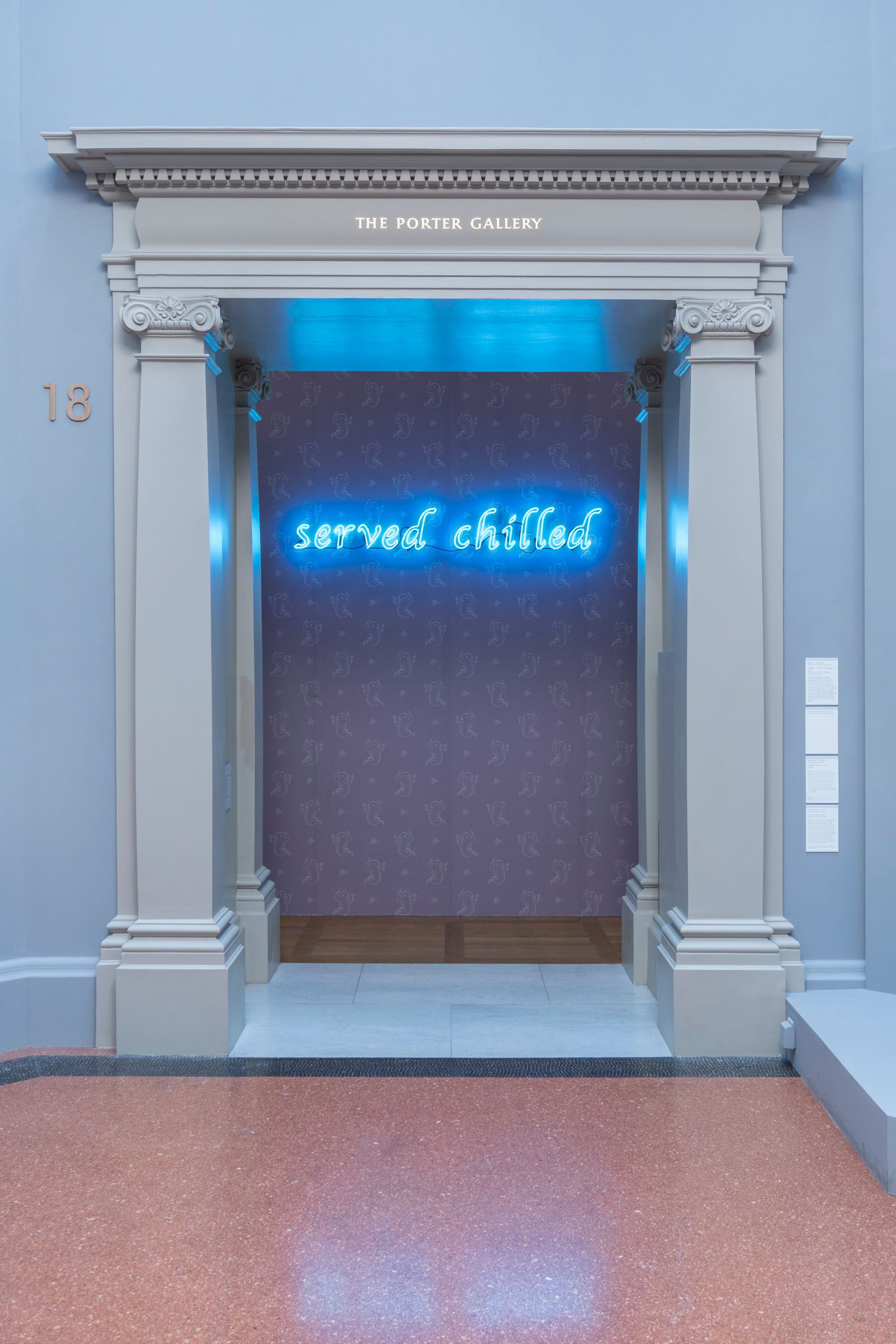
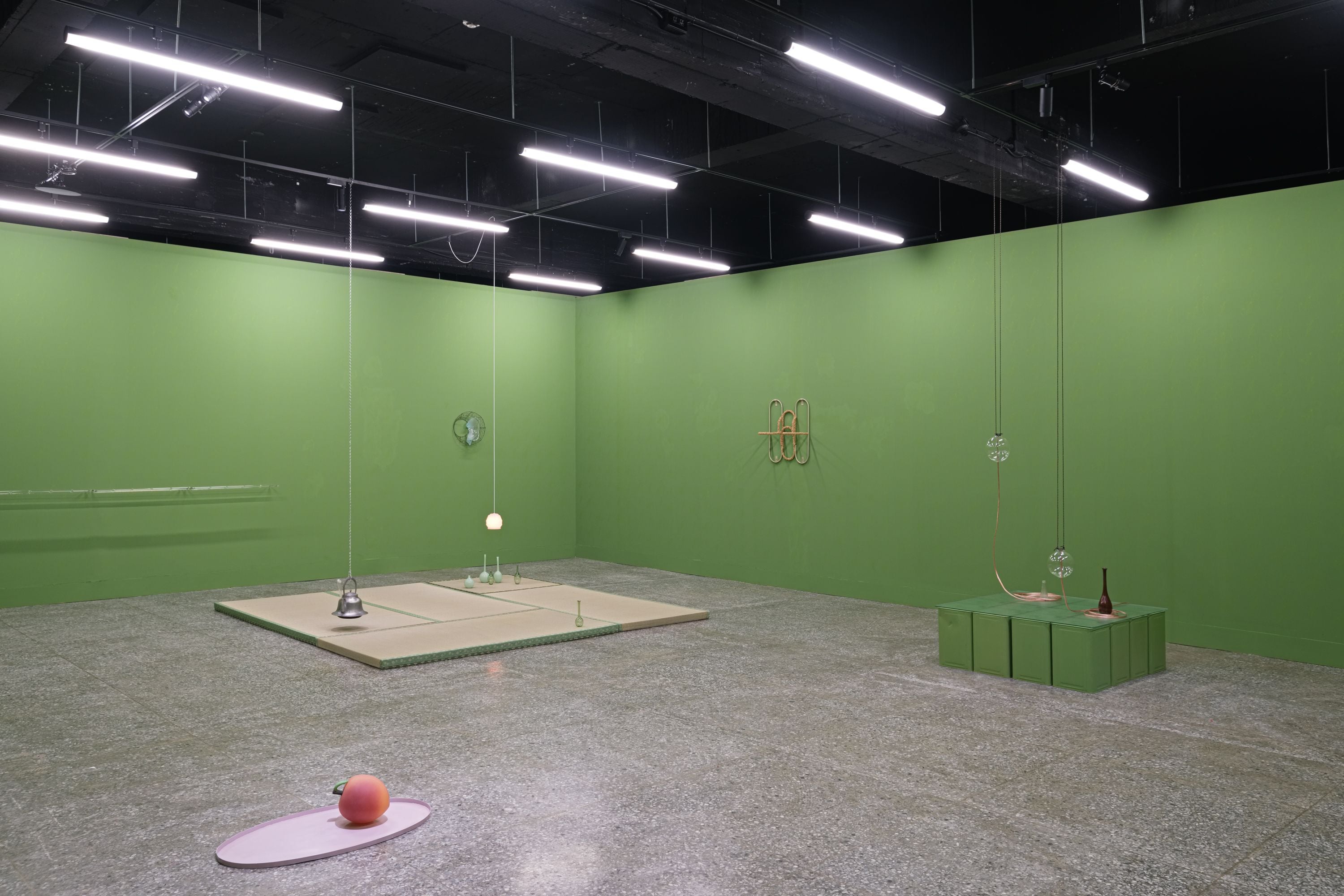
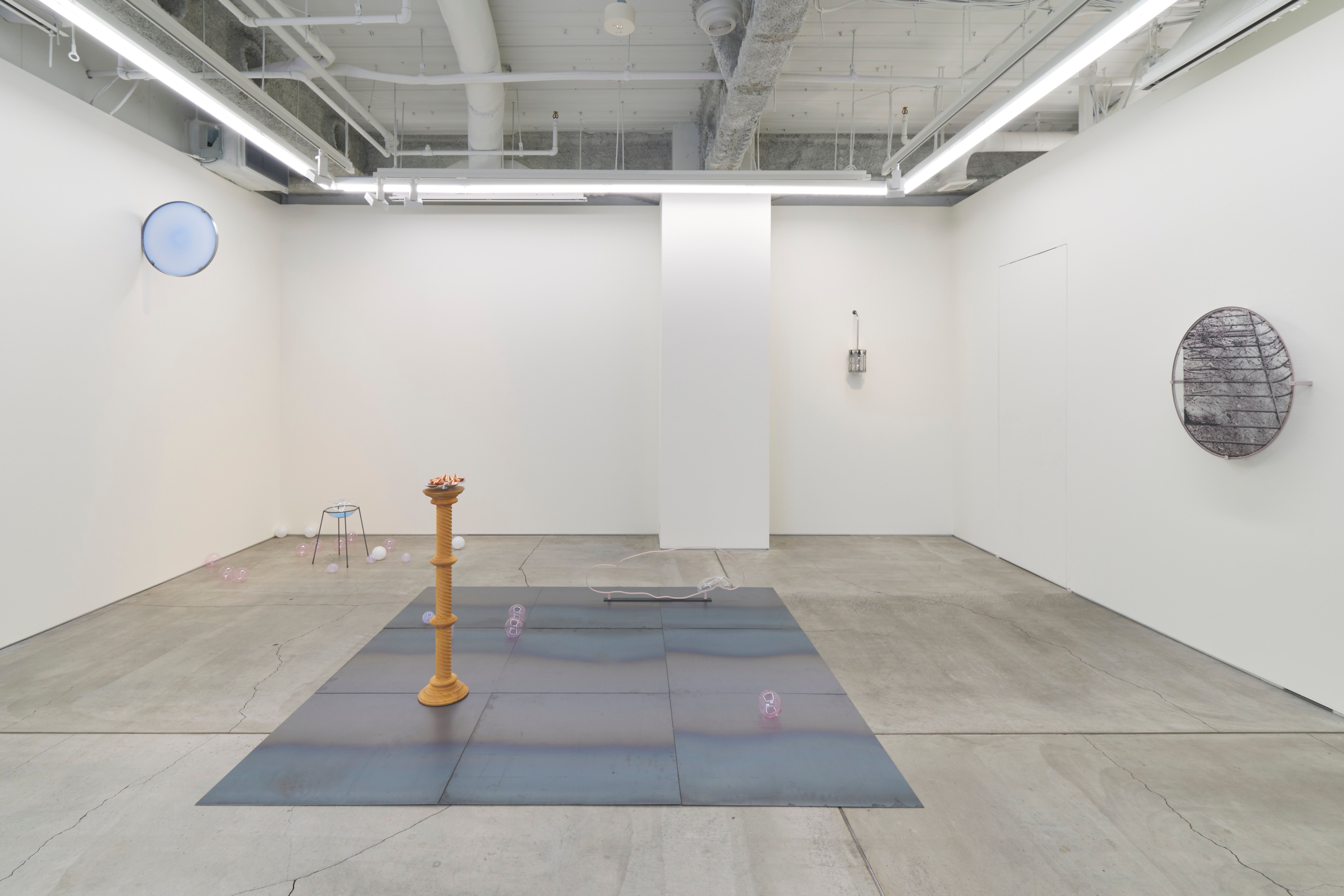
When I met Taiwanese artist Steph Huang in January last year at her South London space at Studio Voltaire, her desk was lined with ingredients (dried beans and lentils, a couple of tins of Mutti Polpa, stock powder, courgettes, an onion, a lime, a bottle of red wine), sustaining many a late night’s work from the collective kitchen. (‘Cooking and making sculptures—it’s all the same method,’ Huang, formerly a chef, has said.) On her reading rotation at the time was Chris van Tulleken’s book Ultra-Processed People (2023), about the effects of ultra-processed food on our health and the environment. It’s these related transnational networks of the production, distribution and consumption of food that Huang wants to uncover—and humanise—in her practice, whether filming scallop divers around Britain’s ports and fishing towns (See, See, Sea at Tate Britain, 2024) or assembling found and fabricated objects and food-like forms into a makeshift deli (Lili Deli at Taipei Fine Arts Museum, 2025). In 2026, expect a solo project with Public Gallery in London, a solo at TKG+ in Taipei, both scheduled for autumn, along with a project at Art Basel Hong Kong with Perrotin. – Misong Kim
Michelle Uckotter
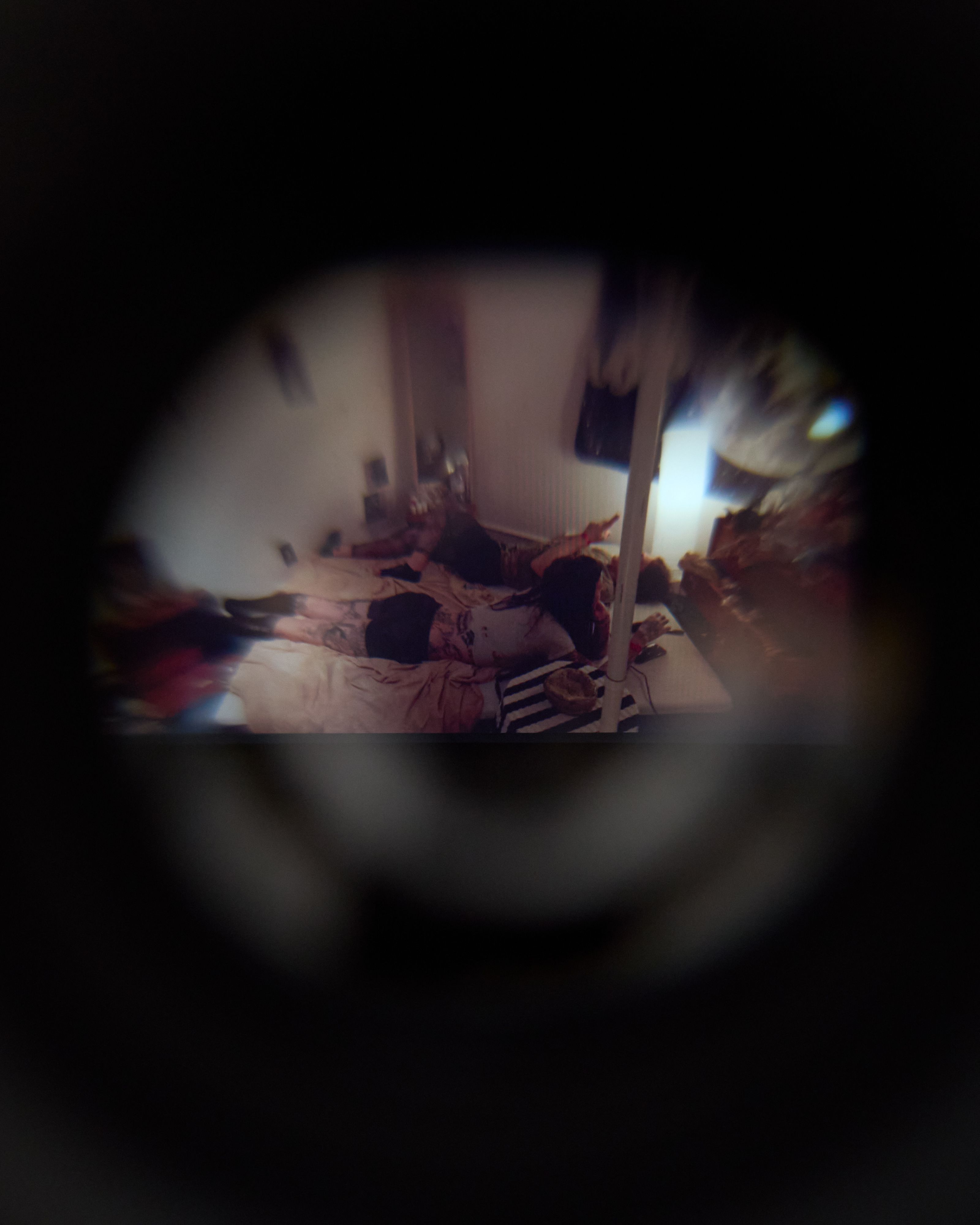
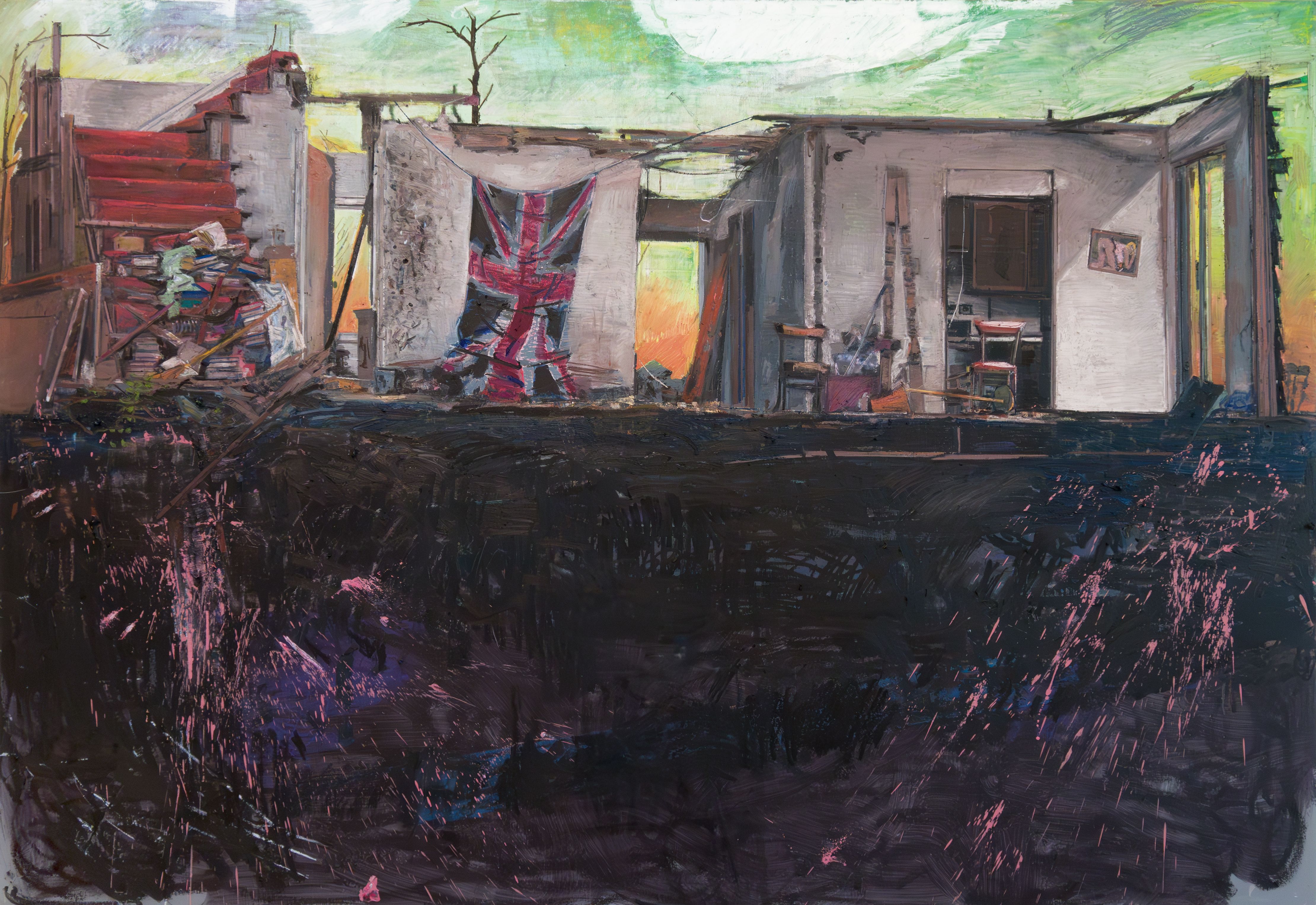
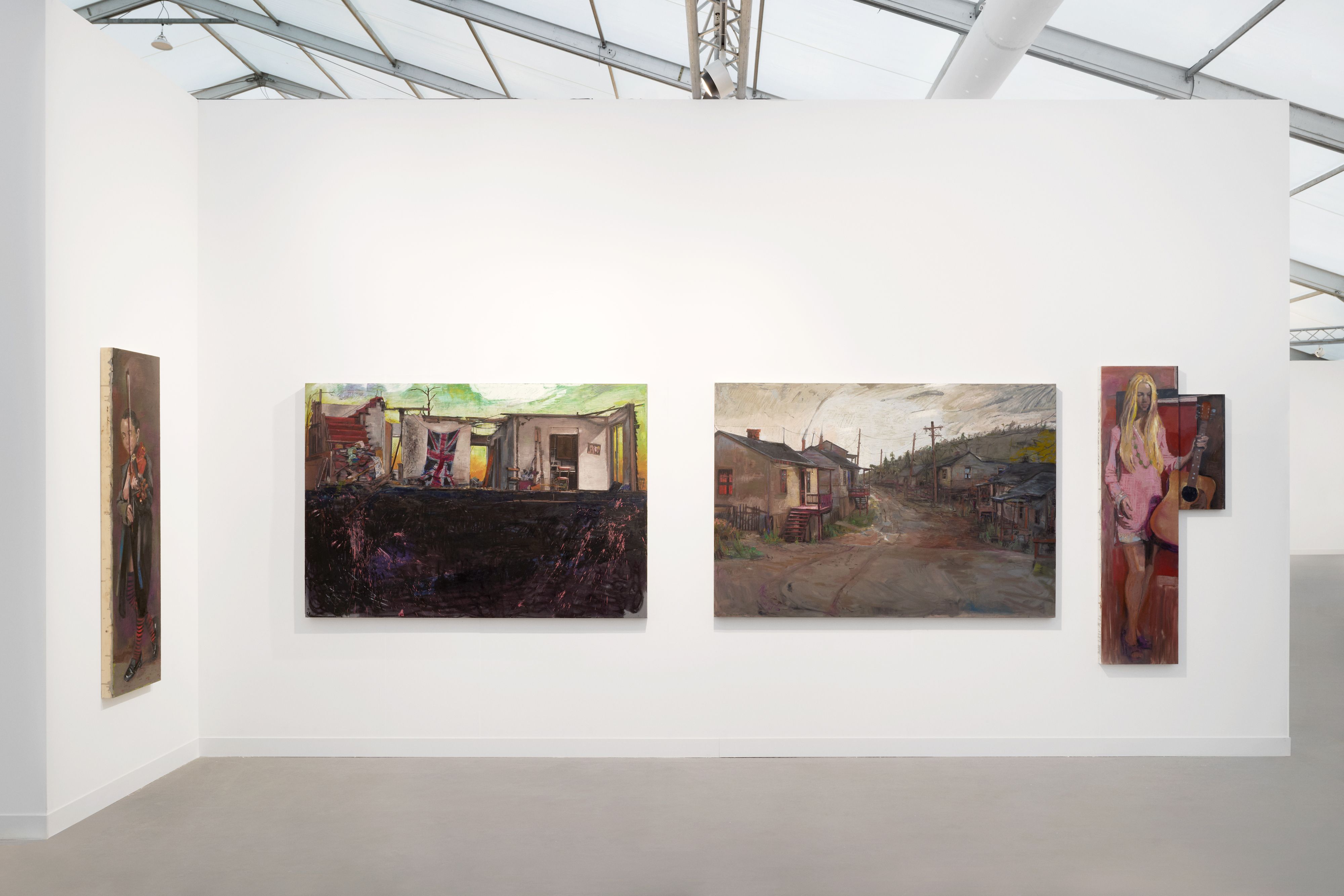
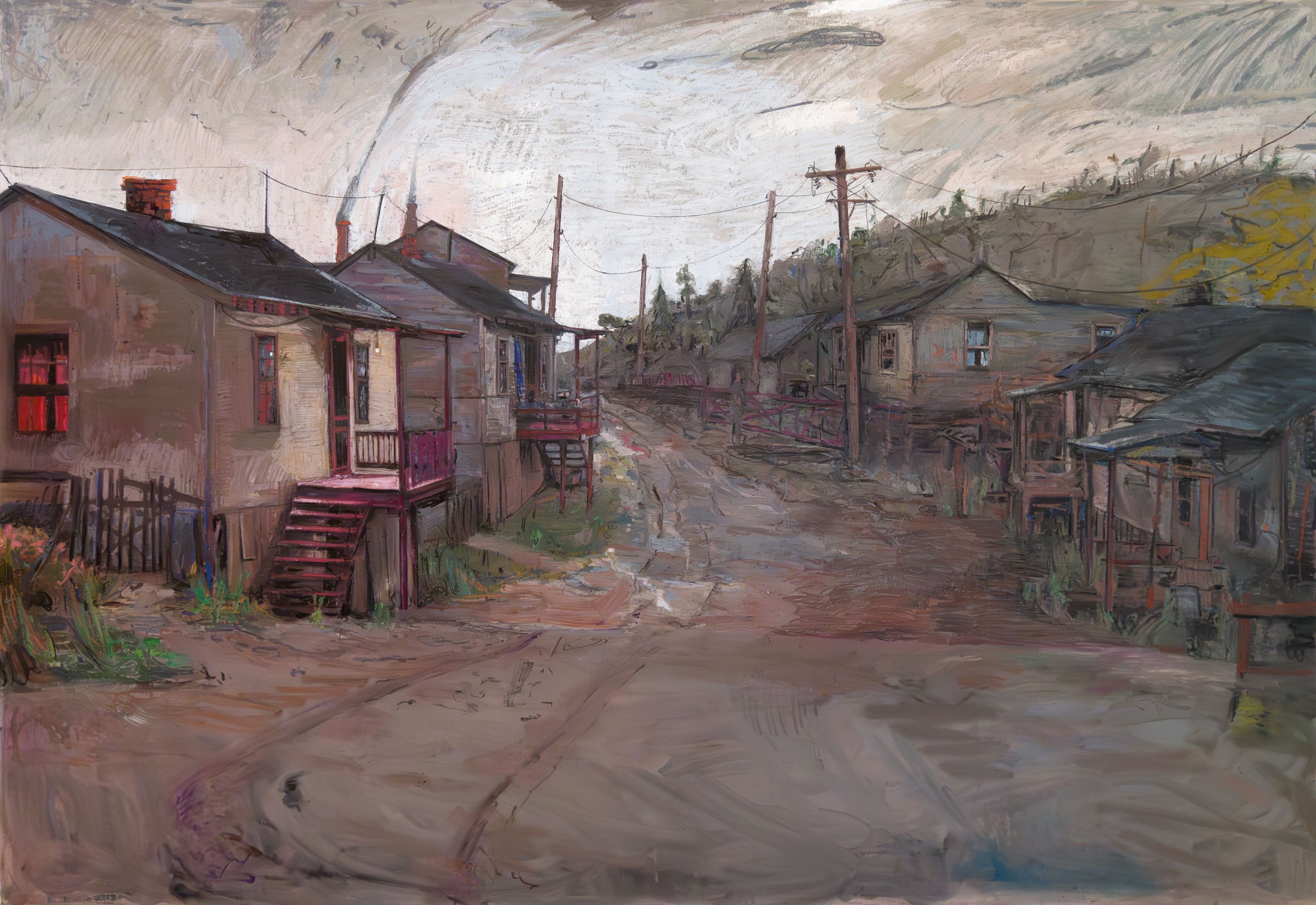
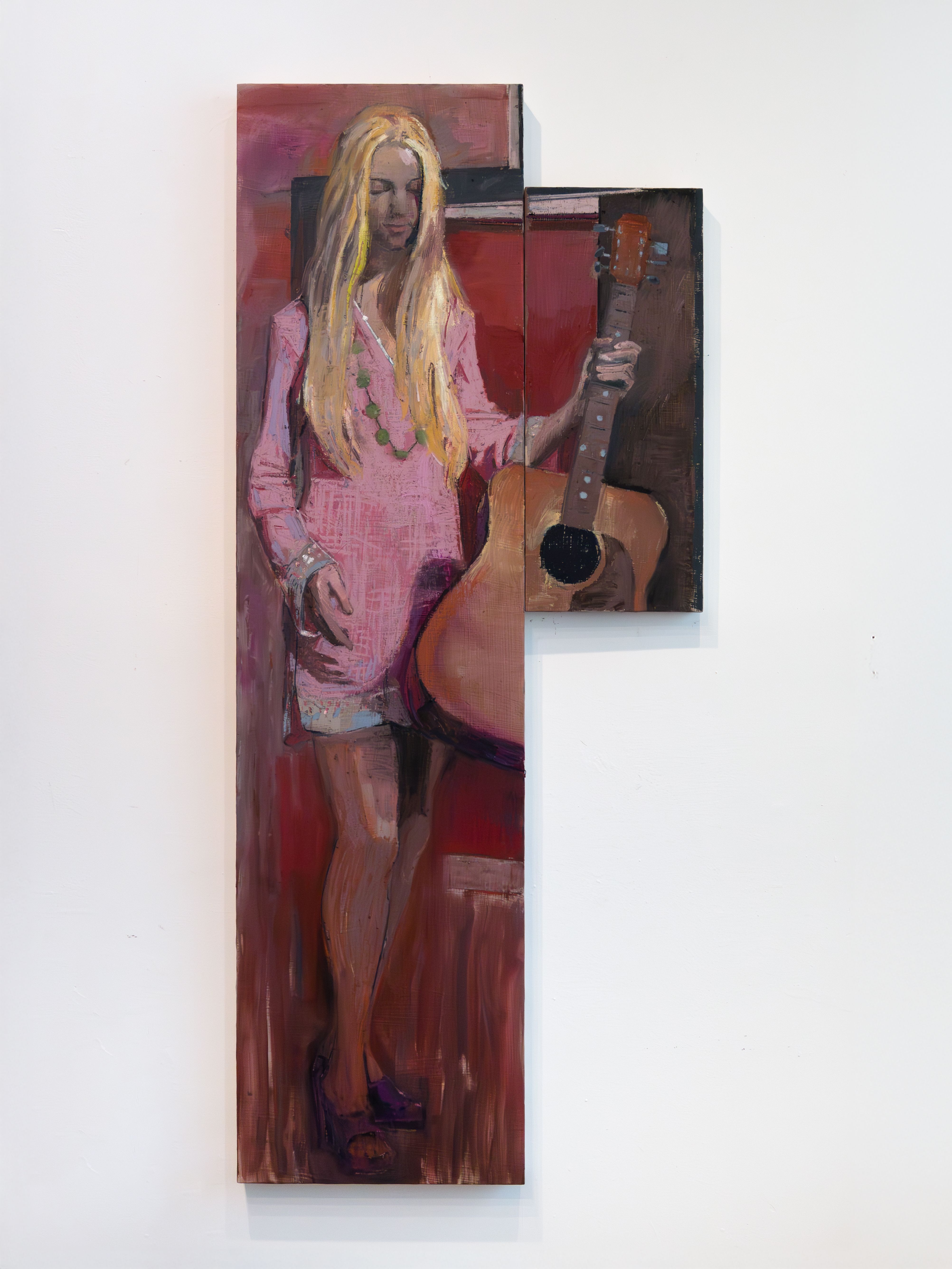
U.S. painter Michelle Uckotter literalises what American critic Barry Schwabsky has abstractly termed ‘the zombie figurative’. Her female figures occupy spaces one could only describe as creepy: abandoned attics, Midwestern apocalyptic landscapes, backrooms, scarlet motel carpets. This mixture of high-low resulted in King’s Leap gallery winning the Focus Stand Prize at Frieze London in 2025. In the presentation, titled Sins of the City, Uckotter exhibited landscape paintings alongside a viewfinder within the booth (a reference to Marcel Duchamp’s 1966 Étant Donnés) where several young transwomen performed on the set of a messy New York apartment. This ‘staging’ has its antecedents in Uckotter’s earlier works, such as the installation of an antiquated wooden door in 2023, Terrible Place, Glory Hole. When the viewer ‘peeps’ through, they see a miniature construction of an attic containing a doll’s wig. While Uckotter’s subject matter is abject, her painting style and dislocated composition is rooted in 18th-century masterpieces, such as Hagar in the Wilderness (1835) by French artist Camille Corot, a work she showed me on a cracked iPhone during a house party in London. If we’re in luck, 2026 will see the continued blossoming of Uckotter’s stage-play installs. – Lydia Eliza Trail

Timoteus Anggawan Kusno
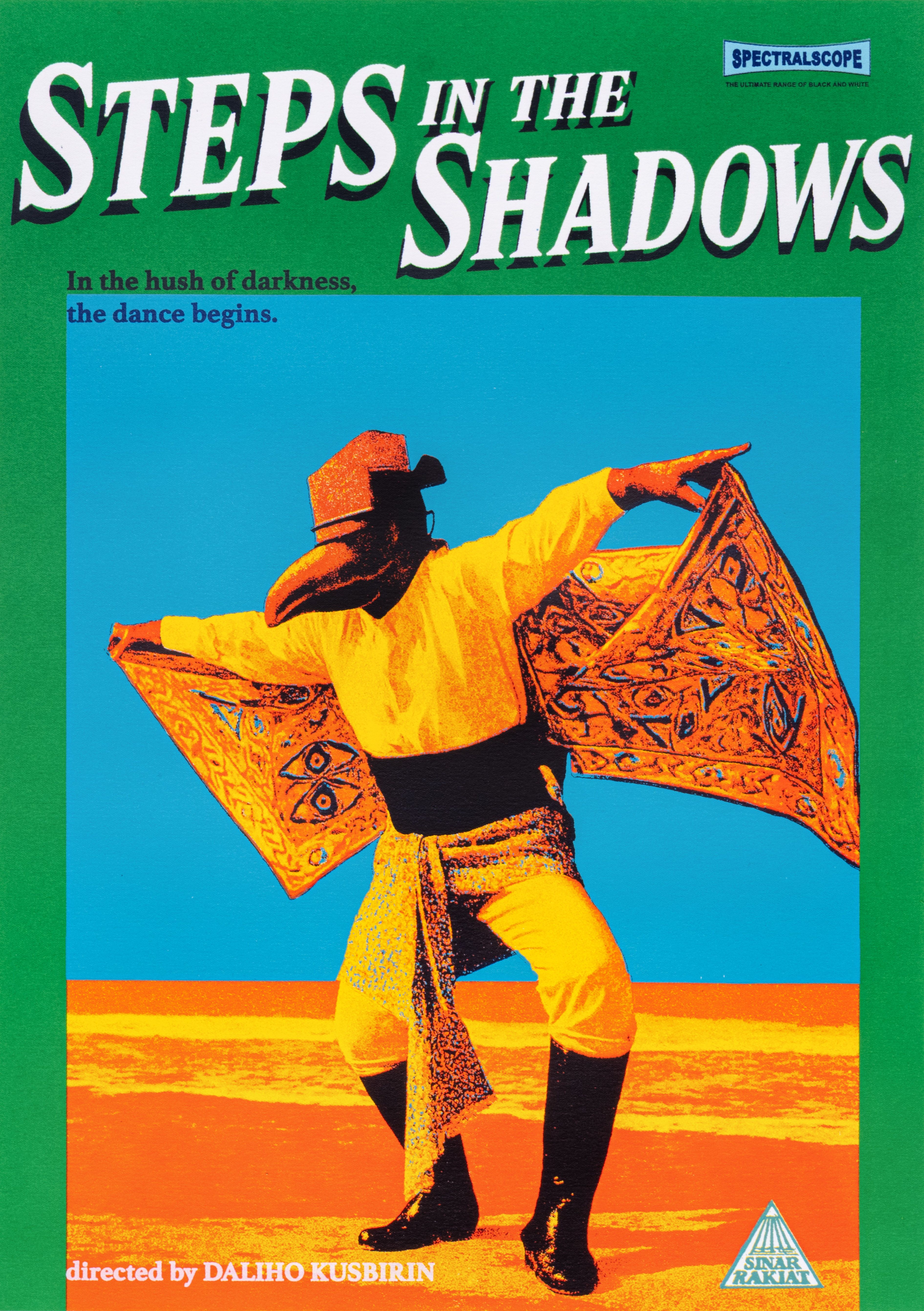
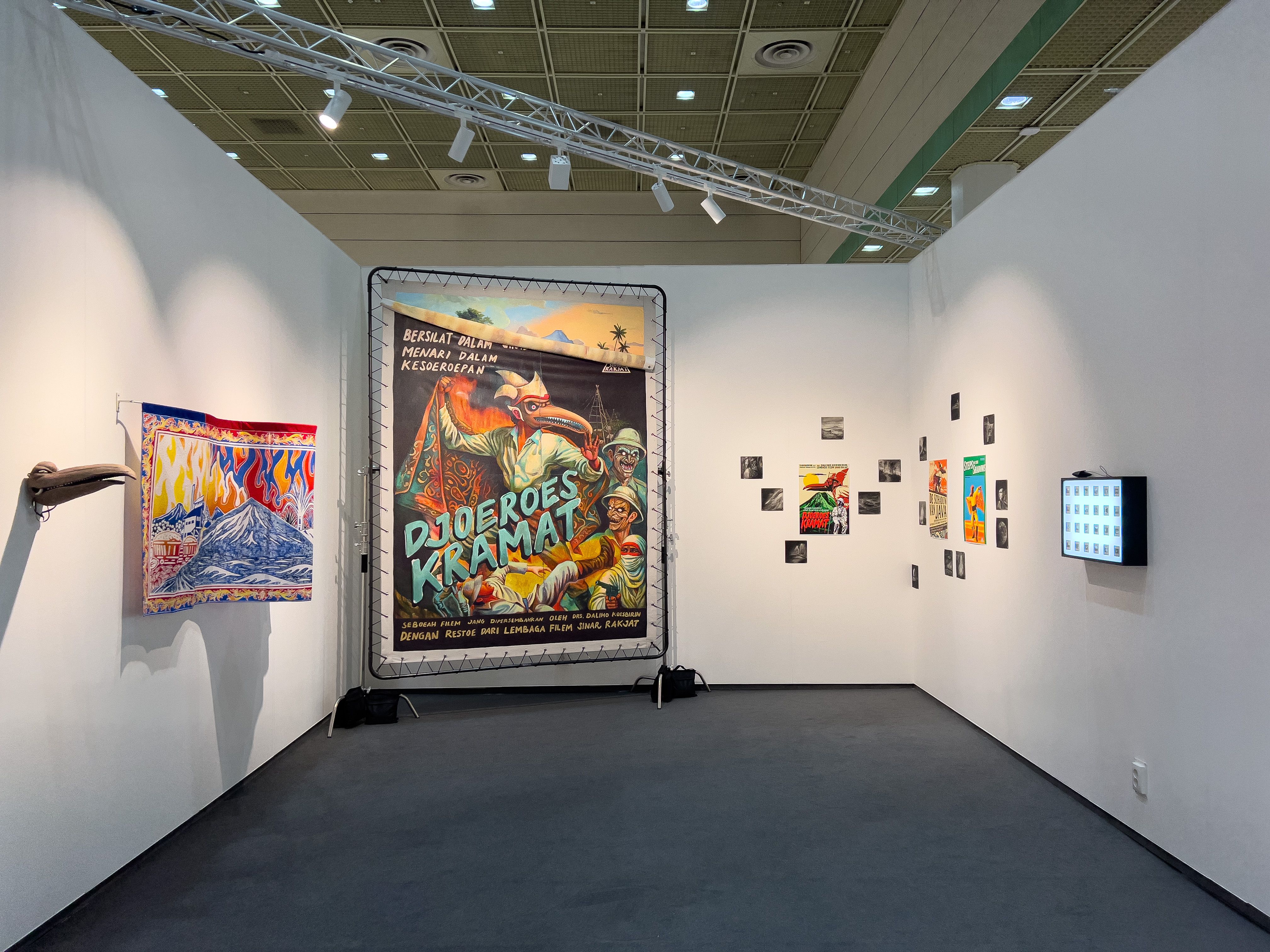
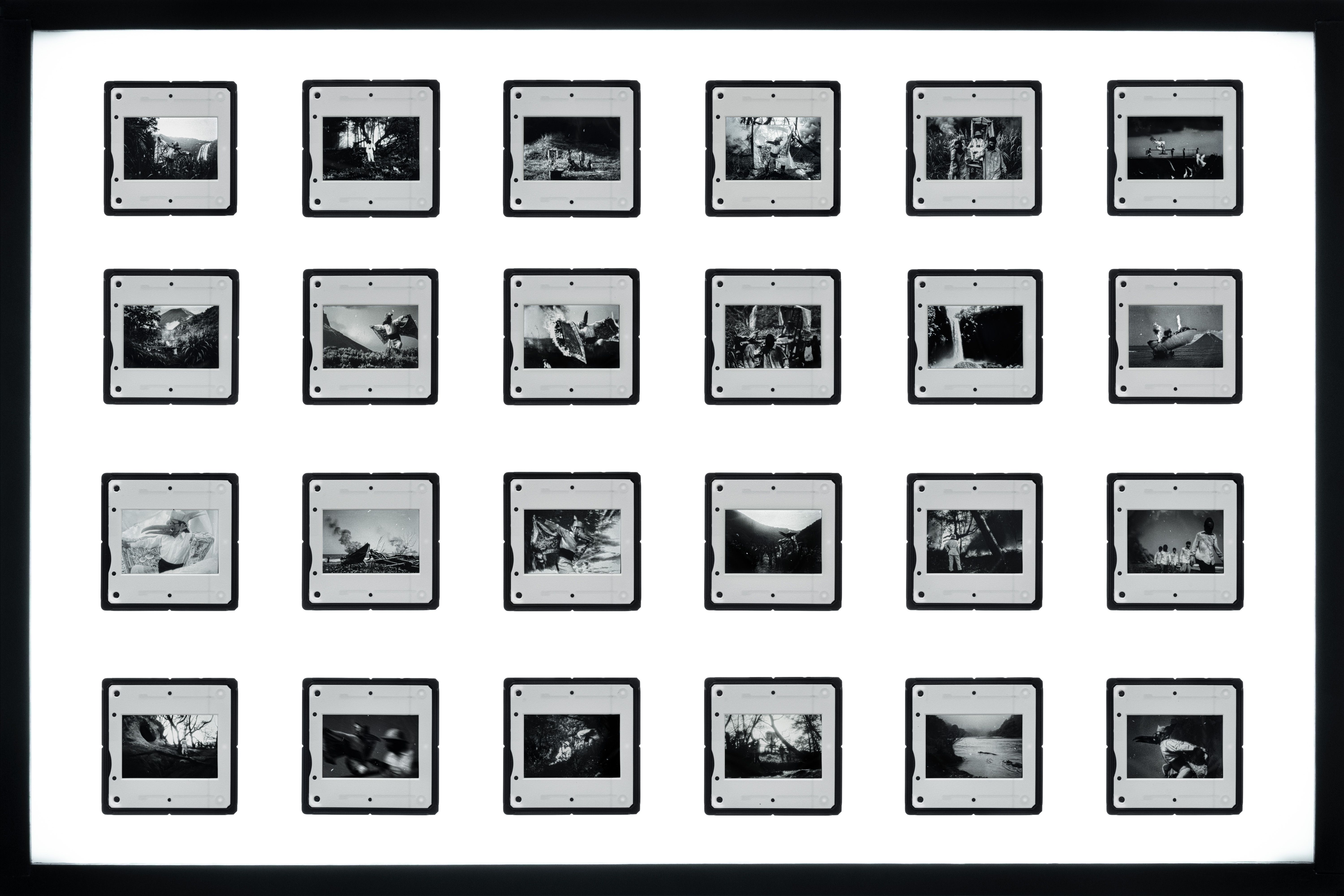
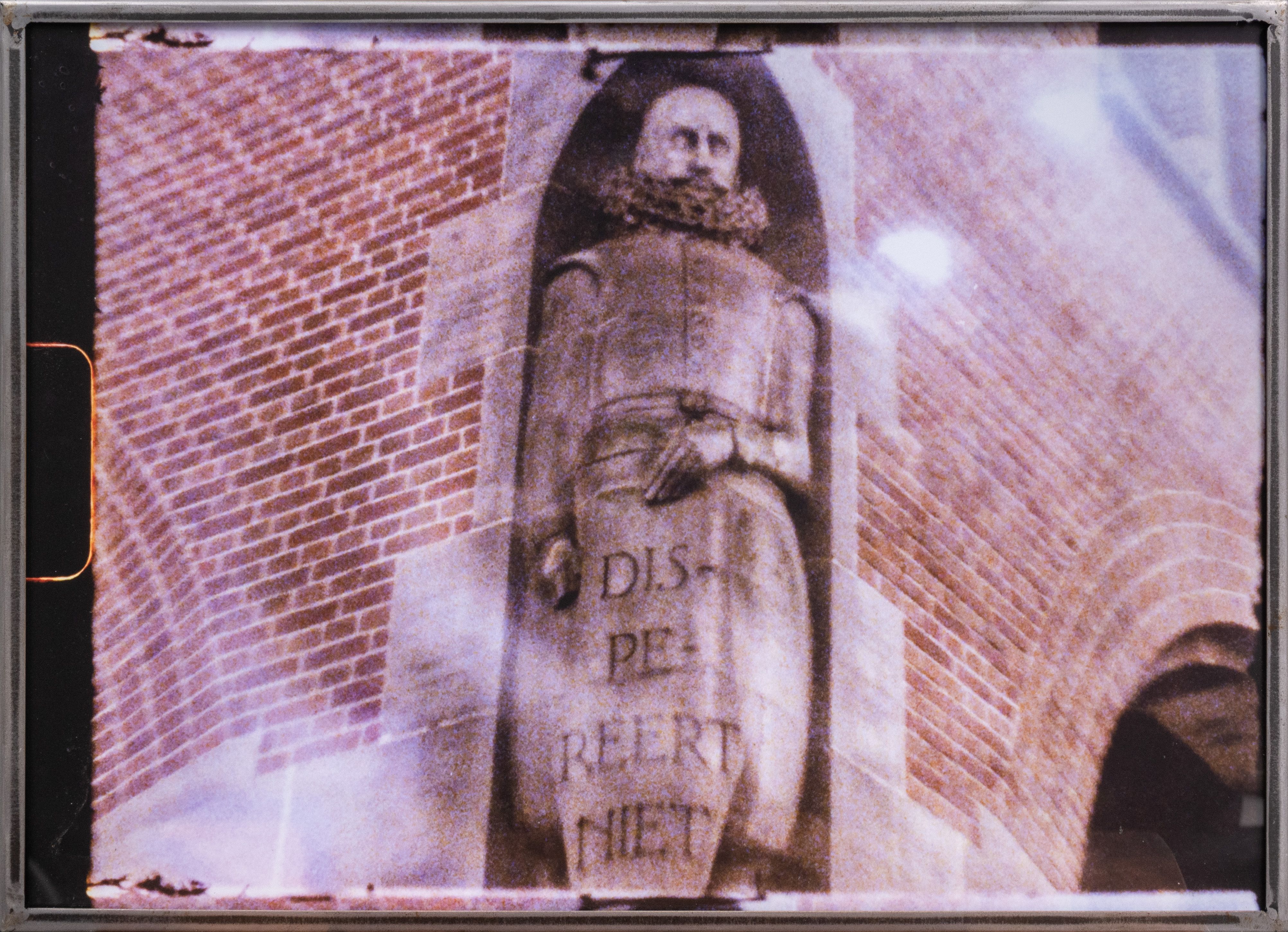
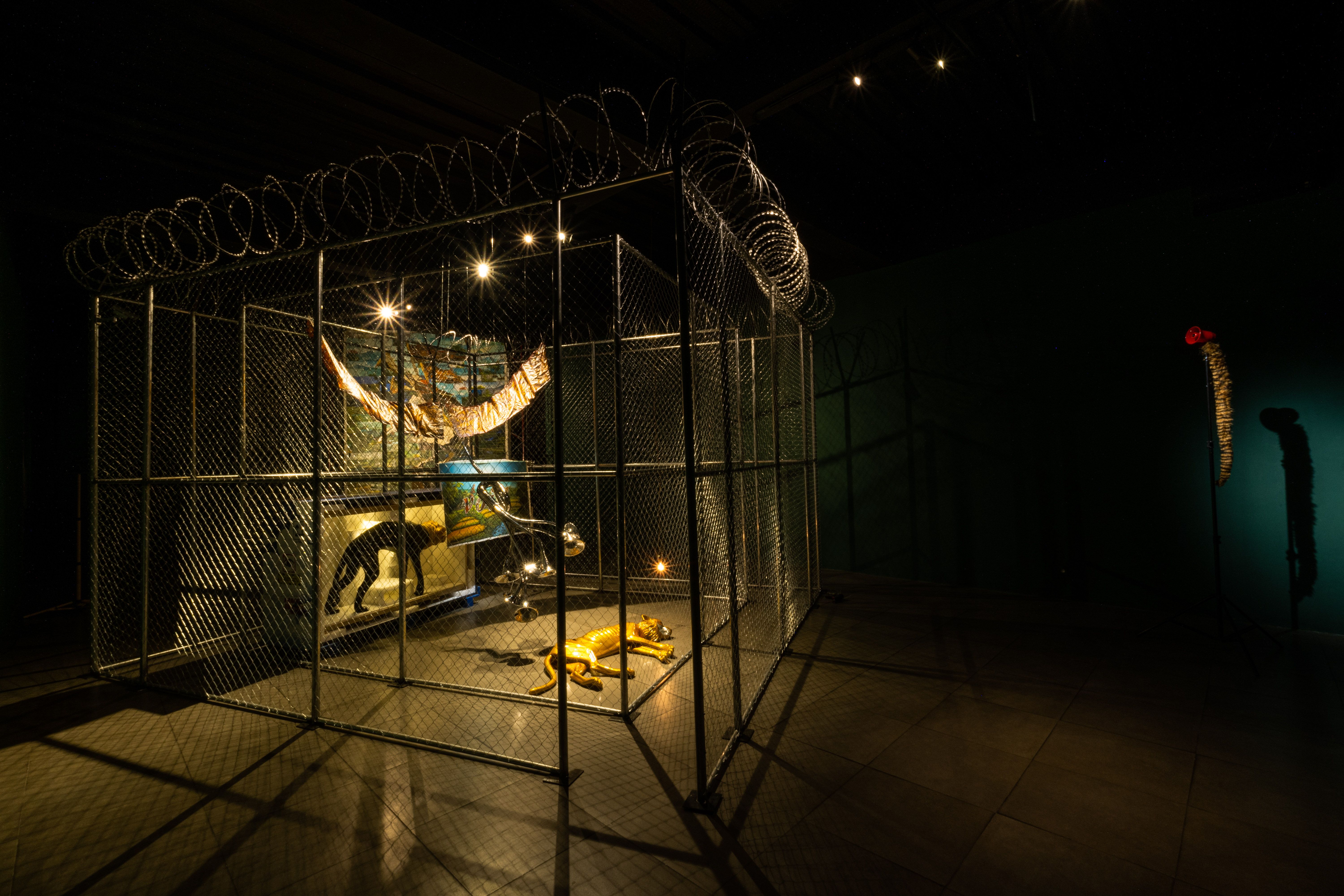
Timoteus Anggawan Kusno’s presentation at Kohesi Initiatives’ award-winning booth at Frieze Seoul last year was the last place I expected to see a full-of-energy installation about an Indonesian martial arts film. Titled Djoeroes Kramat, the fictitious film is re-presented by Kusno as an archival record of a piece of culture purportedly lost in the politically turbulent period of 1960s Indonesia, through paraphernalia including film slides and hand-painted posters. Kusno speculates on the slippages and synergies between myth, memory and history. ‘How, through the intersection of visual art and cinema, can we illuminate the invisible and actively listen to what remains unheard?’ he asks. The Yogyakarta-born artist continues his cross-disciplinary projects in 2026: his film Sola Fata will premiere at the 55th International Film Festival Rotterdam. He’ll also continue working on his first feature film titled Orphaned Atlas, produced in Indonesia and France. ‘The film follows a young man who enters a time-distorted forest,’ Kusno says, ‘and discovers that his settlement is entangled in a regime experiment in engineered forgetting, where past and future collapse into a multitude of haunted presents.’ – Misong Kim
Muyeong Kim
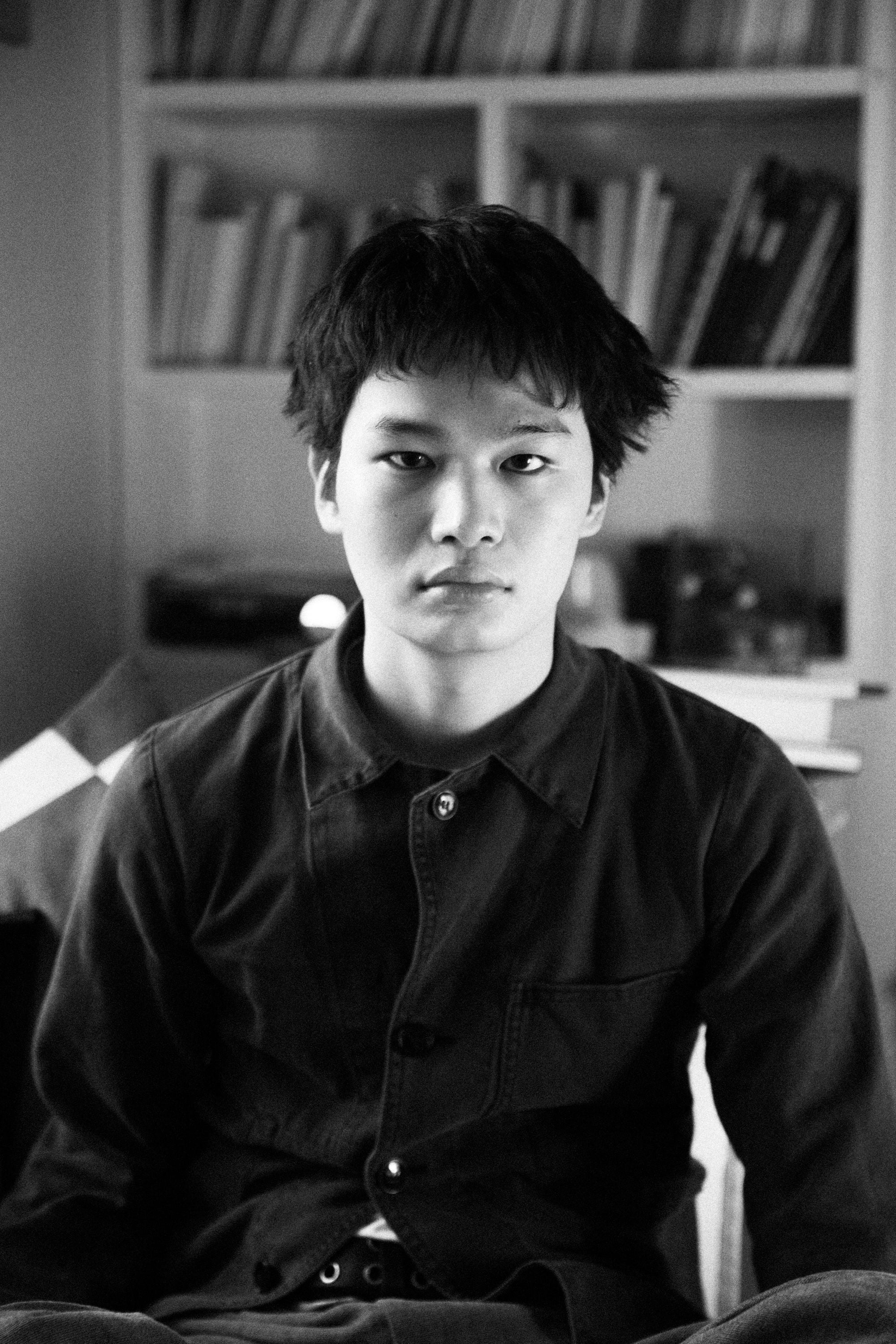
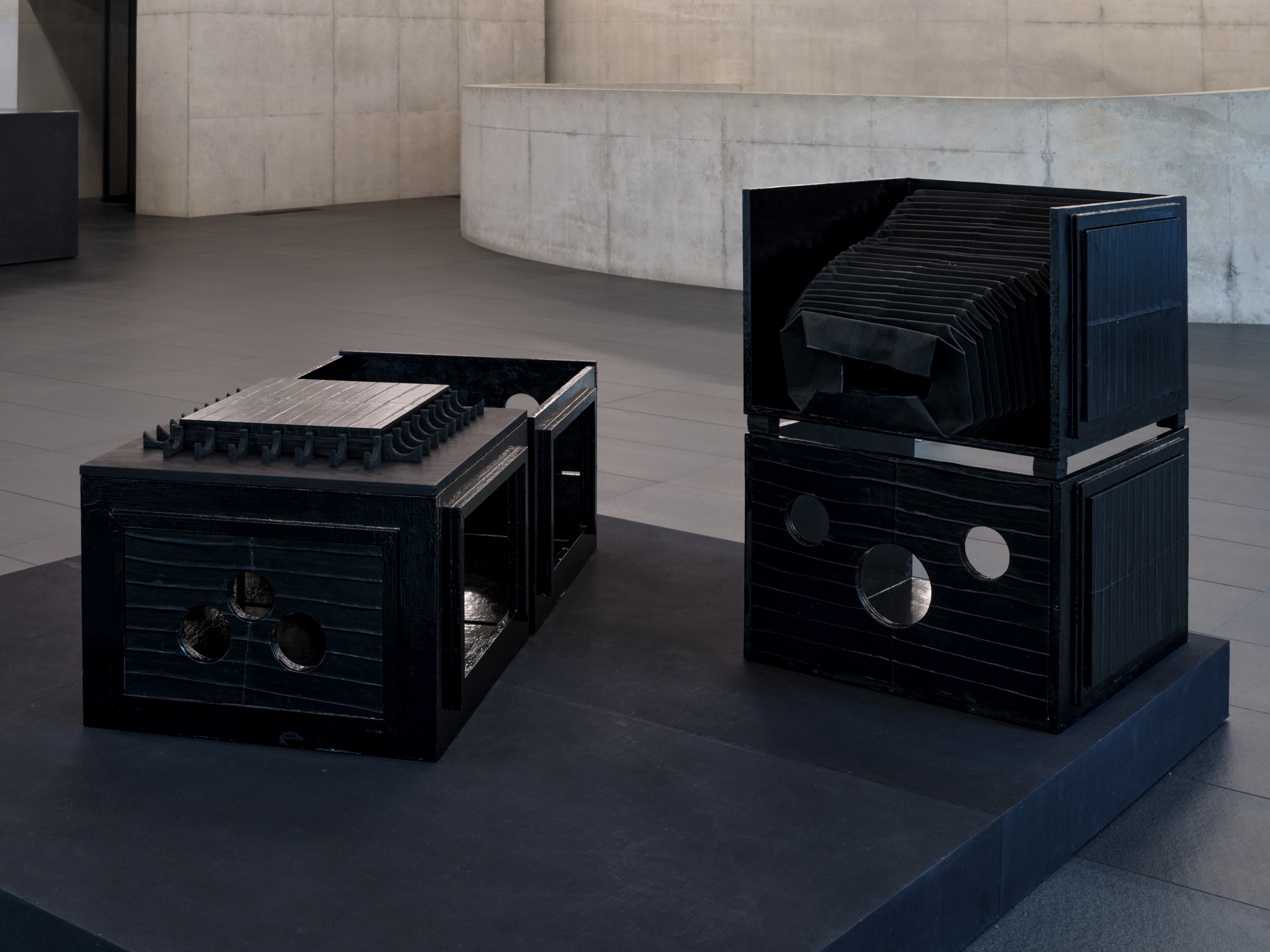
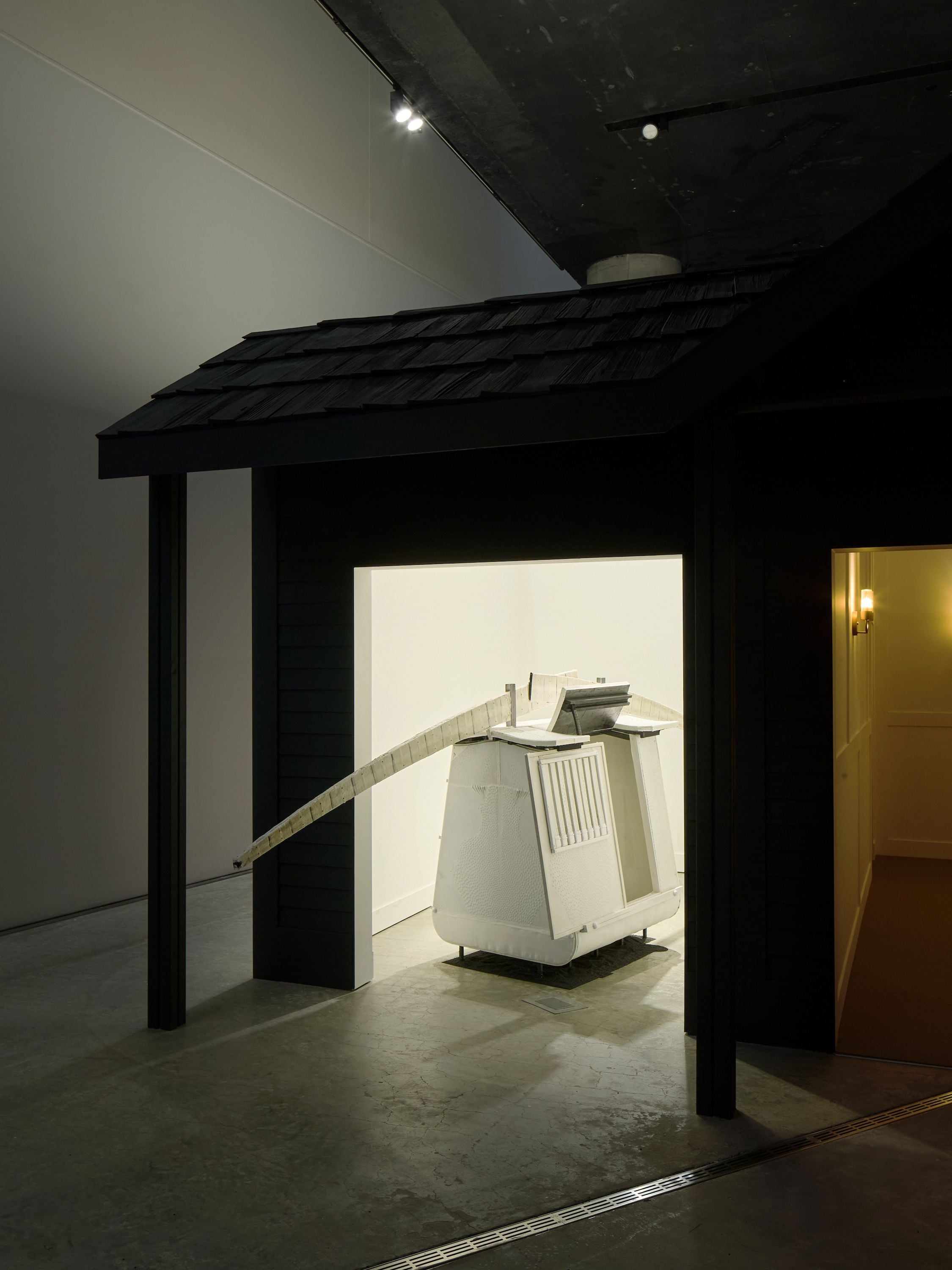
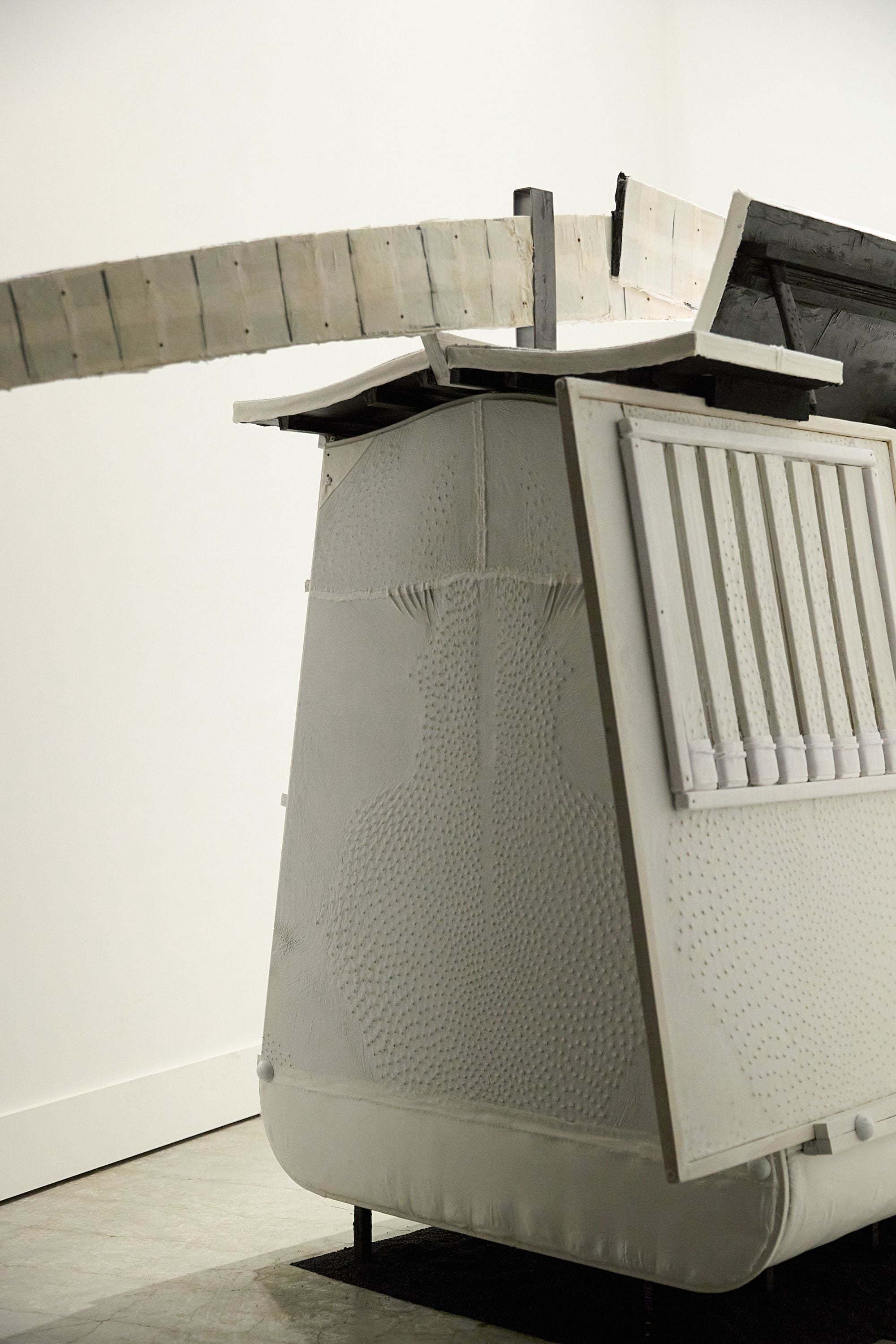
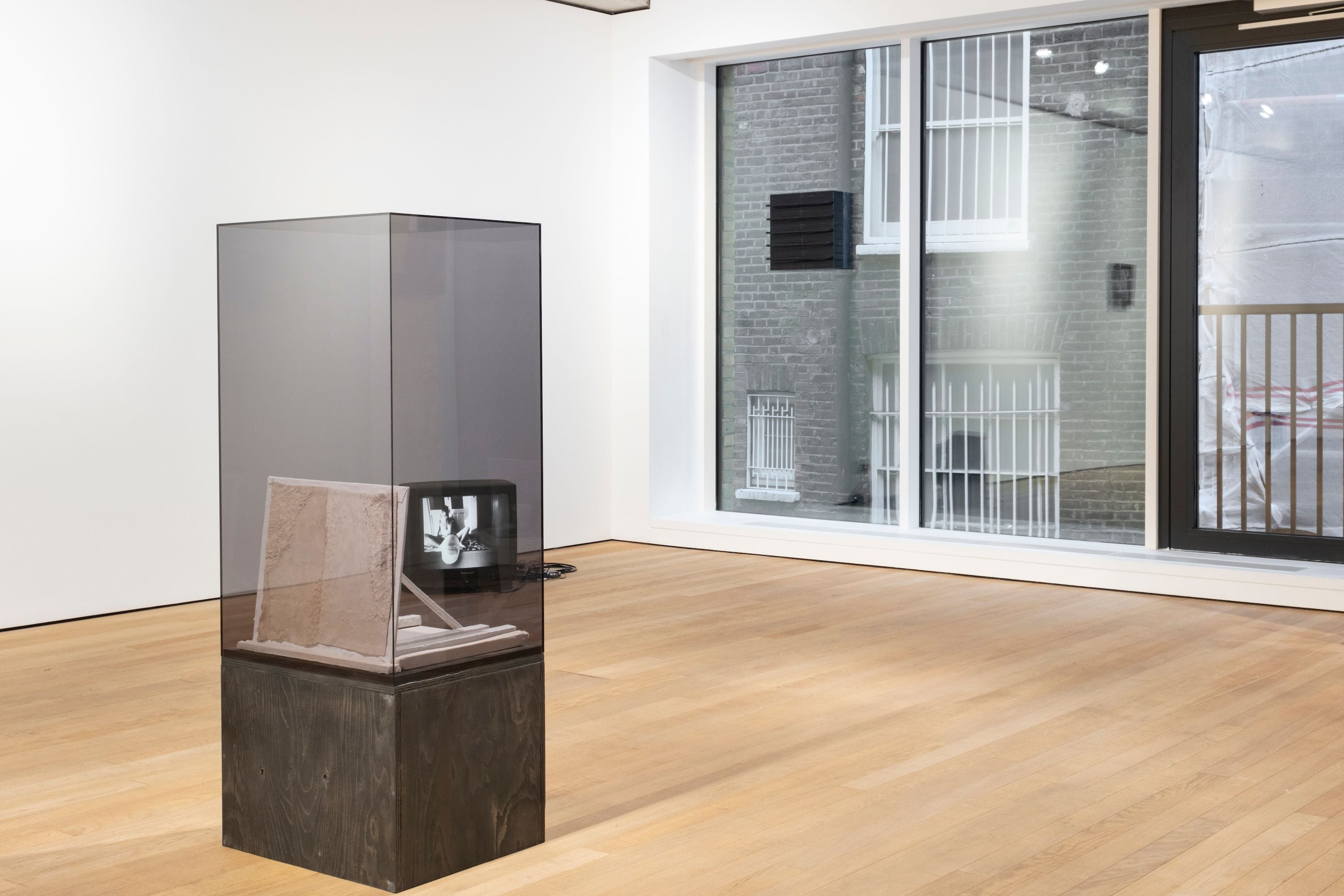
Since his breakout year of 2024, when he received the 1st Amado Art Award in Seoul, Muyeong Kim has drifted from the intimate rigour of bodily performance—often circulating through video—toward meticulously crafted sculptural conjurations, where control, desire, and spatial complexity intertwine. Over the past year, the impression he gives has subtly shifted from the miniature, obsessively staged works—glimmering with ostrich-skin hints—first encountered at Amado Art Space towards a more focused, still-evolving engagement with pinhole-box sculptures and 19th-century visual mechanisms. Photography enters as a quiet accomplice: windows become provisional lightboxes, images hover between exposure and concealment, and vision feels gently coerced. Recent works range from a sawing-illusion prop, echoing large-format early cameras, presented at the Songeun Art Award exhibition in Seoul (12 December 2025–14 February 2026) to a found 1910s pinhole camera submerged in a glass aquarium, suspended between relic and device. Looking ahead, 2026 promises a duo-solo at Abraham et Wolff, Paris (a project space of Galerie Jocelyn Wolff), in dialogue with Louis-Léopold Boilly’s visual experiments, and an early institutional solo in Seoul (soon to be announced), extending his probing choreography of theatre, spectatorship and immersive space. – Zian Chen
Aisling Hamrogue
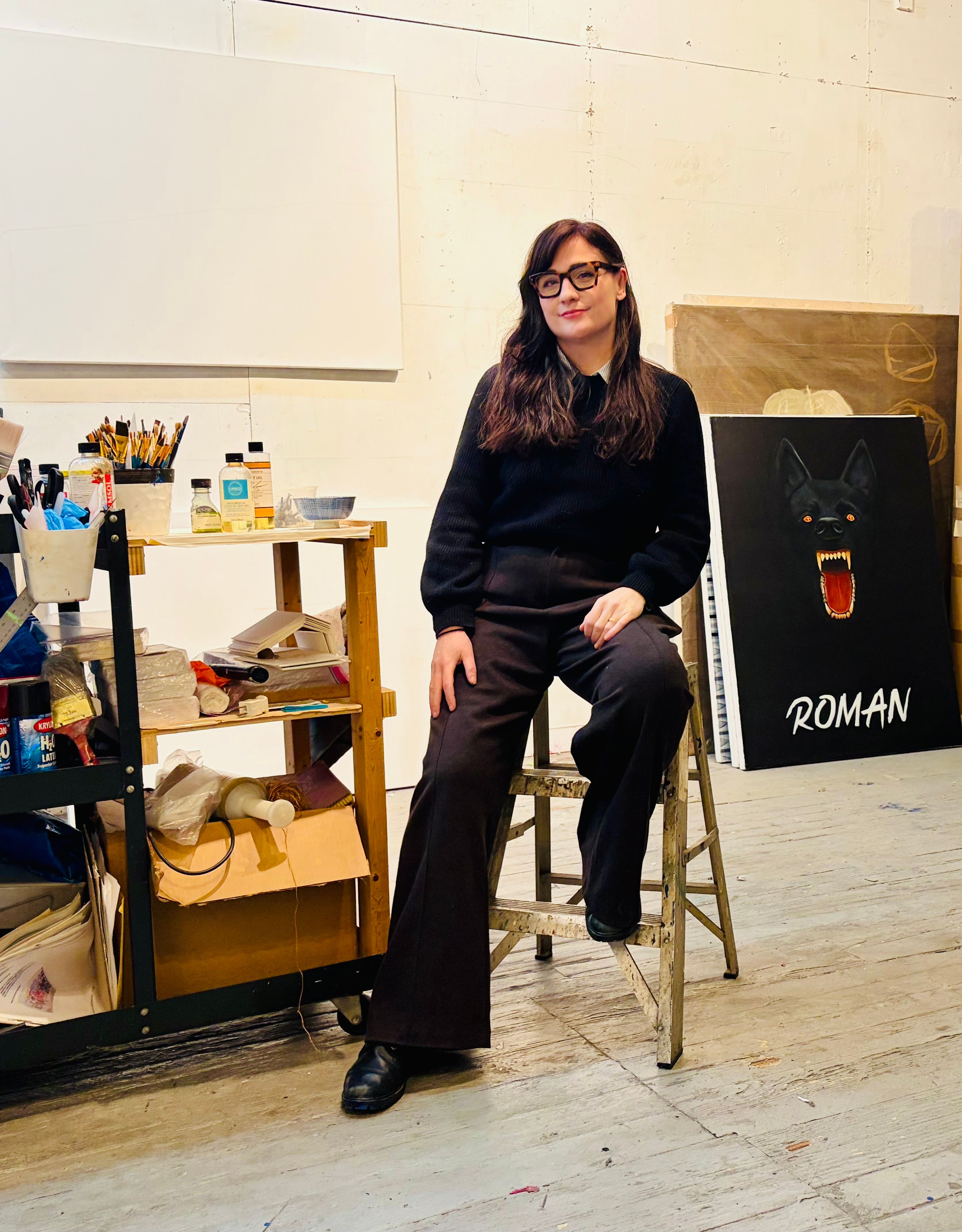
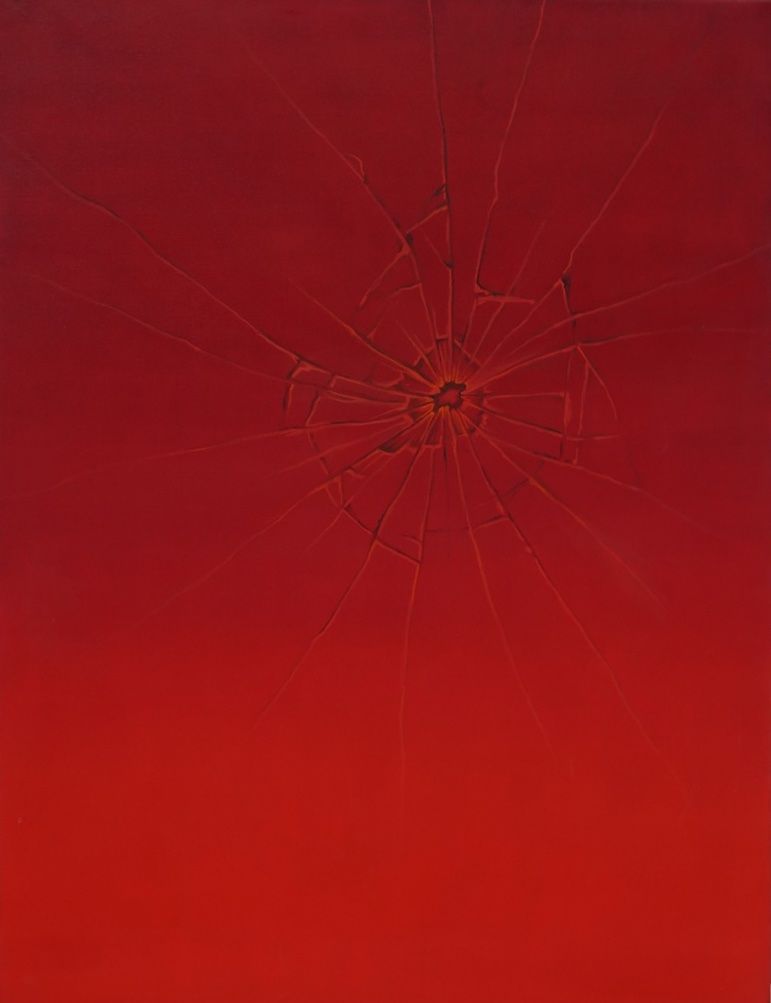
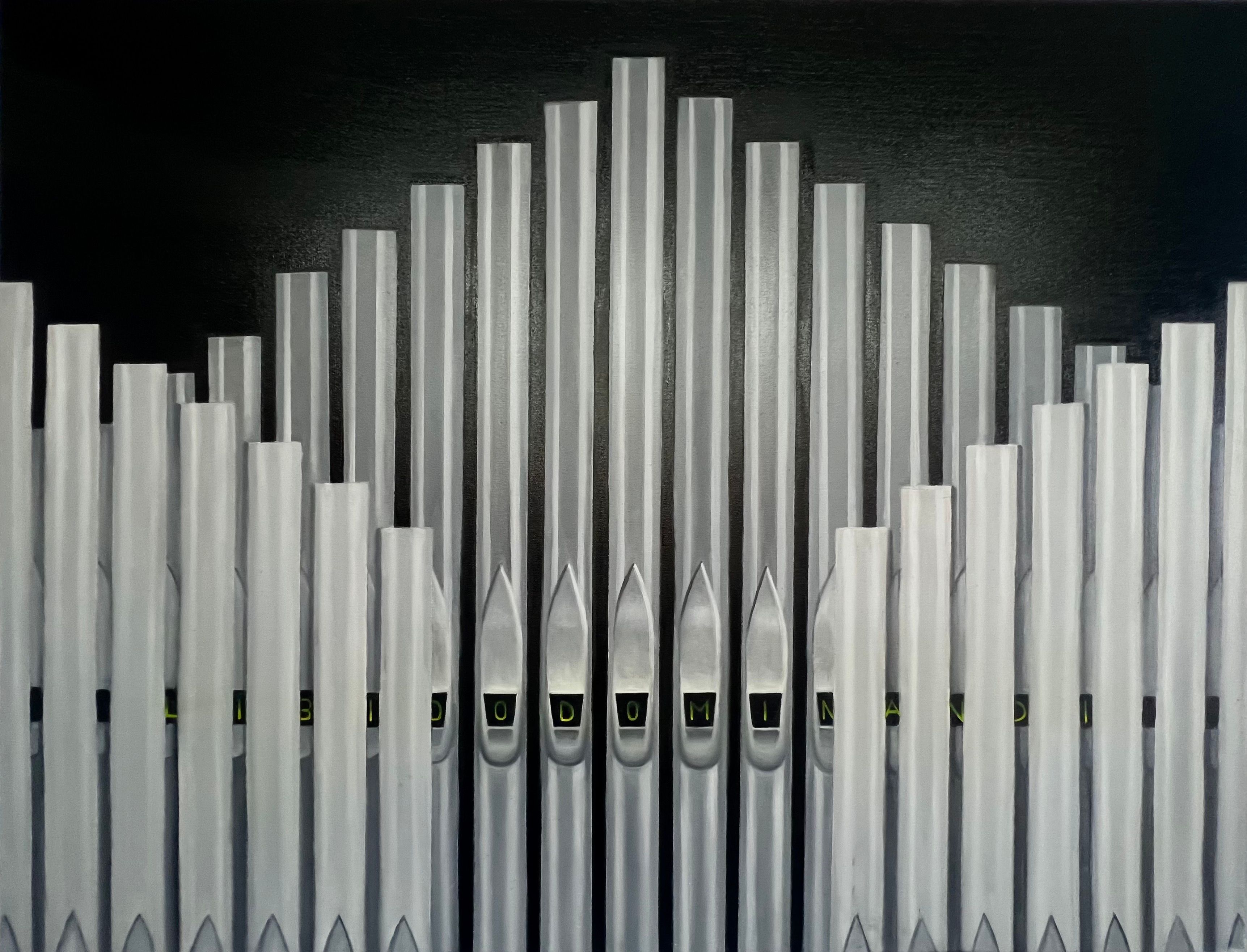
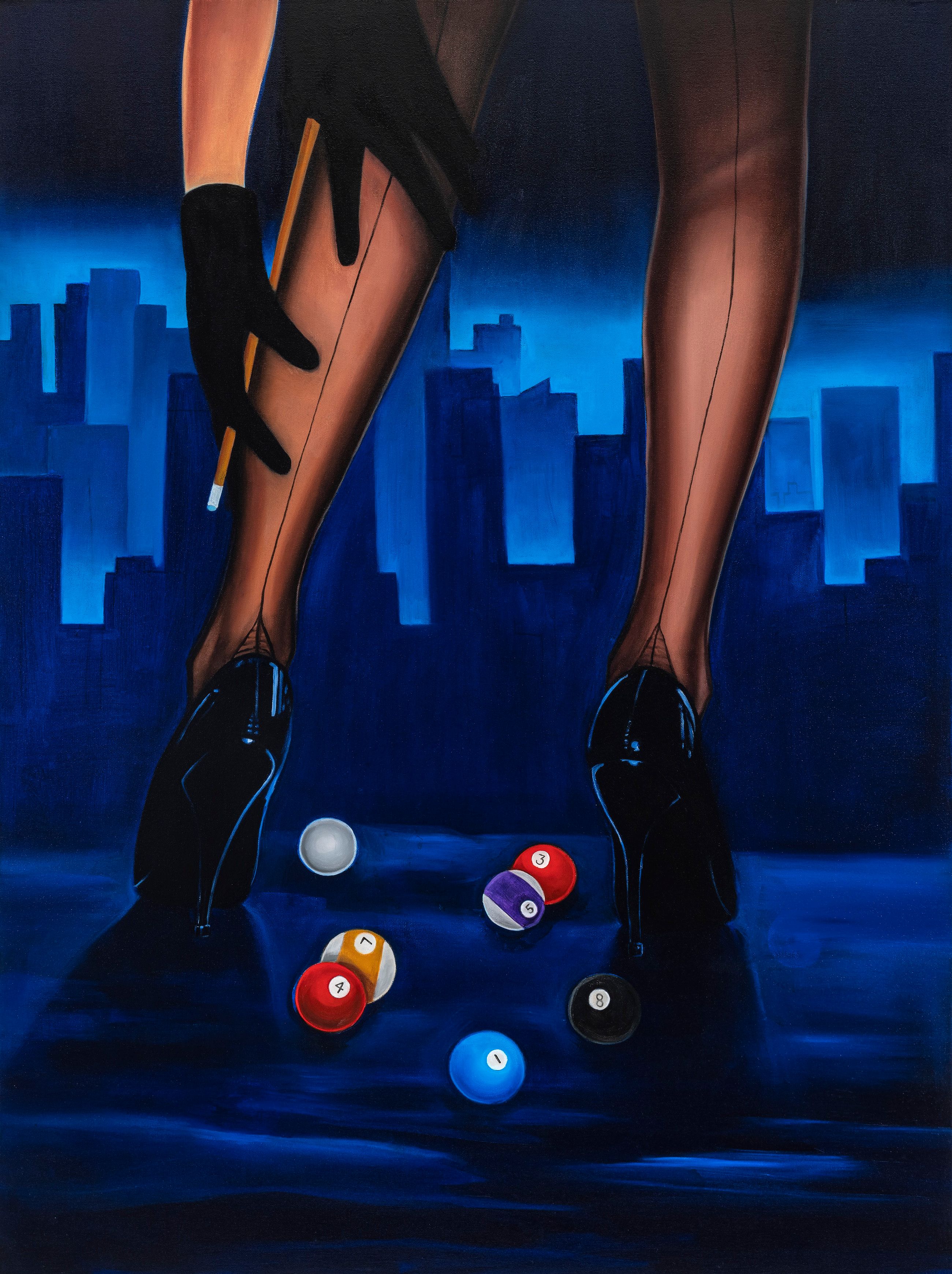
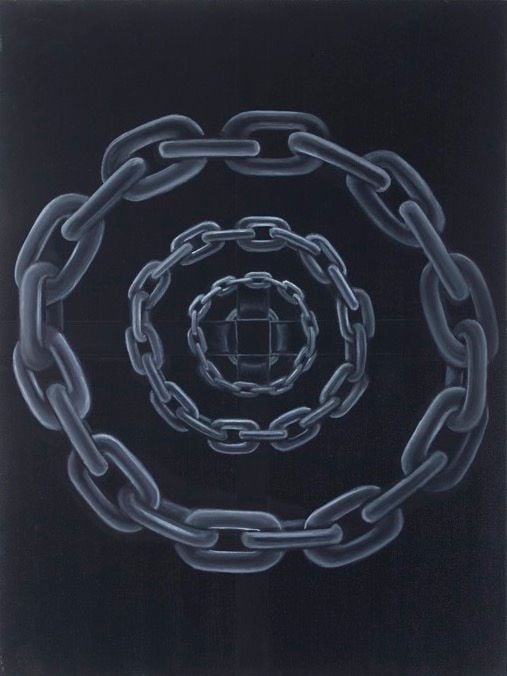
Experiencing New York-based artist Aisling Hamrogue’s oil paintings in person is like bumping into someone you’ve fantasised about sleeping with—their sexual wickedness fills the room with a heady, erotic charge. Often featuring elements found in fetish subcultures, including chains, seamed stockings, and leather daddy peaked caps, Hamrogue finds inspiration in myriad sources—though the genre of horror holds great sway over her imagination. ‘As a teenager I was completely obsessed with horror films,’ says Hamrogue. ‘This was my entryway into art. I am aware that horror films are devoted in a large part to the total destruction of the female form. But upon deeper inspection these films underscore powerful drives and taboos inherent to human sexuality.’ Horror iconography also helps Hamrogue access a visual language that releases her from the overbearing grip of art history: ‘My fidelity to the style persists because, in a way, mimicking this imagery provides me with a conceptual freedom that lies outside of the tradition of an art historical canon.’ In 2026, Hamrogue will be exhibiting her work in a soon-to-be-announced New York presentation, and she recently moved into a studio in an old loft in Tribeca: ‘I am looking forward to painting in that incredibly romantic and historic space.’ – Aimee Walleston —[O]
Main image: Connie Zheng, As It Is: Nothing Lasts Forever (2025) (detail). Ink, pencil and collage of intaglio and cyanotype on plant-fibre papers. 234 x 351 cm. Courtesy the artist. Photo: Kenta Chai.




A respected voice in contemporary art discourse.
Focusing on ambitious storytelling and insightful art-world commentary. Ocula Magazine publishes in-depth interviews, critical essays and timely analysis on the artists, exhibitions and ideas driving the global art world.
Learn more about Ocula Magazine
Showcasing the best of the art world.
Ocula partners with galleries from around the world to highlight their artists, artworks and exhibitions. Gallery membership is by application and invitation, with each member vetted by an independent panel.
Learn more about Ocula Membership
Specialises in the sale of major artworks.
Led by a team with deep ties to the world’s leading auction houses, galleries and collectors. Ocula’s advisory team offers bespoke services to high-net-worth clients from around the world who are looking to acquire the best of contemporary and modern art.
Learn more about our team and services