





Dai Guangyu
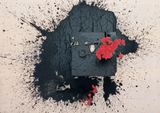
b. 1955, ChinaDai Guangyu was born in 1955 into a scholarly family in Chengdu, Sichuan Province. From childhood he was trained in calligraphy, painting and literature, and his career as a contemporary artist is comprised of his longstanding practice as a visual and performance artist, a curator and cultural critic, and a poet. His work engages Chinese art history, ink painting culture, as well as Chinese poetics and politics, and his sustained public performance art practice changed the course of performance art in China.
One of the main leaders of China’s pivotal 1985 New Wave movement in the southwest, he organised and participated in Red Yellow Blue—Young Artists of Sichuan, the first modern art exhibition in Sichuan province, at the Sichuan Art Gallery (1986), and participated in the landmark 1989 China Avant-Garde Exhibition at the National Art Museum of China in Beijing. After the demise of the 1989 student movement protests, when Chinese art went into a withdrawn, depressive state, Dai Guangyu continued his active interventionist work, curating exhibitions and public performance interventions away from the capital. In 1990 and 1991, he organized exhibitions that had a major impact on the developmental trajectory of contemporary art in southwestern China, including a three-person solo, and the group show 000,90 Modern Art Exhibition at the prominent Chengdu Art Salon space. In 1992, he was selected by curator Lü Peng for The First Chinese Art Biennale of the 1990s in Guangzhou, winning the Award for Excellence there.
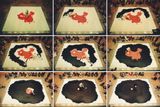
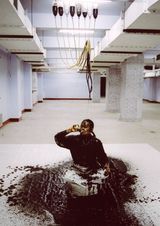
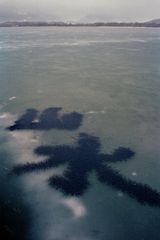
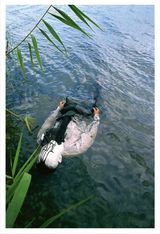
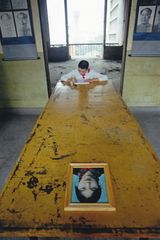
From 1995, Dai Guangyu emerged as one of China’s most influential performance artists and leader of the Chengdu Public Performance Art movement. Major achievements include organizing the largest-scale public performance art intervention of that era in China, Keepers of the Waters, in July and August 1995, in Chengdu; engaging over 10,000 members of the public with water pollution issues; In Defense of Memory (1998), which successfully halted the demolition of a library dating from the Qing Dynasty; and he organised collective interventions to protest the 2001 official ban on performance art.
His work has been shown in numerous biennale, triennials, performance art festivals and group and solo exhibitions, including Secret Signs—Contemporary Chinese Art in the Name of Writing (Secret Signs—Zeitgenössische chinesische Kunst im Namen der Schrift), Deichtorhallen, Hamburg, Germany (2014); “OSTRALE Biennale of Contemporary Art,” Dresden, Germany (2014); 55th Venice Biennale collateral exhibition, Voice of the Unseen, Venice, Italy (2013); Shanshui - Poetry Without Words? Landscape in Chinese Contemporary Art (Shanshui—Poesie ohne Worte? Landschaft in der chinesischen Gegenwartskunst), Kunstmuseum Lucern, Switzerland (2011); Action-Camera: Beijing Performance Photography, Morris and Helen Belkin Art Gallery, Vancouver, Canada (2008); FOTOFEST’08 International Photography Biennale, China Under Construction II, Deborah Colton Gallery, Houston, US (2008); Made in China, Louisiana Museum of Modern Art, Humlebaek, Denmark (2007); Vital-International Chinese Live Art Festival, Chinese Arts Centre, Manchester, UK (2006); Dashanzi International Art Festival, Transborder Language Performance Art, 798 Art Factory, Beijing, China (2004 and 2005); 7th and 8th Nippon International Performance Art Festival (NIPAF) (2002 and 2003); First Chinese Art Triennial Guangzhou Triennial, Guangzhou Art Museum, China (2002); First Chengdu Biennial, Chengdu Museum of Modern Art, Chengdu, China (2001) China! Contemporary Painting, Museum of Modern Art, Bonn, Germany (1996); First Biennale of Chinese Art in the 1990s, Guangzhou, China (1992).
Dai Guangyu’s artworks belong to major private and public collections, including the Uli Sigg collection, the Bonn Modern Art Museum collection, the Joan Lebold Cohen Collection, etc. His artworks have been featured in numerous art magazines, academic journal articles and PhD dissertations, and books such as Art of the 20th Century (Cologne: Taschen Verlag, 1998), and he is Associate Editor-in-Chief of the Humanities & Arts series (Shanghai: Sanlian Books, 1997-present). He lives and works in Sichuan.
Courtesy INKstudio









Explore and Follow Artists Shaping Contemporary Art
A respected voice in contemporary art discourse.
Focusing on ambitious storytelling and insightful art-world commentary. Ocula Magazine publishes in-depth interviews, critical essays and timely analysis on the artists, exhibitions and ideas driving the global art world.
Learn more about Ocula Magazine
Showcasing the best of the art world.
Ocula partners with galleries from around the world to highlight their artists, artworks and exhibitions. Gallery membership is by application and invitation, with each member vetted by an independent panel.
Learn more about Ocula Membership
Specialises in the sale of major artworks.
Led by a team with deep ties to the world’s leading auction houses, galleries and collectors. Ocula’s advisory team offers bespoke services to high-net-worth clients from around the world who are looking to acquire the best of contemporary and modern art.
Learn more about our team and services