The art world in focus
Subscribe to our newsletter for news and insights on artists, galleries and exhibitions.

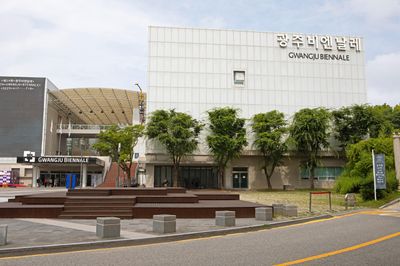
The biennale’s decision overturns the position outlined last week, when it denied accusations of political censorship.Photo: Pavel Dudek via Alamy.
Amid mounting pressure from artists, curators, politicians and cultural organisations, The Gwangju Biennale Foundation has agreed that a Taiwanese presentation will be permitted to go ahead under the name “Taiwan Pavilion” when the South Korean biennial opens to the public next week.
The decision overturns the position outlined by the foundation last week, when it denied accusations of political censorship and insisted that administrative requirements meant that the Taiwanese show must be presented under the name of its institutional organiser, the National Taiwan Museum of Fine Arts (NTMoFA).
Chen Hsiang-Wen, curator of the Taiwanese pavilion, told Ocula that it will be up to Taiwan’s Ministry of Culture to respond officially to the biennale, but offered her thanks to the arts community of Gwangju, which has rallied in support of the Taiwanese presentation in recent days.
“This was never about winning or losing; it was simply about putting things back on the right course,” she said. “We are all working hard to defend our names—both literally and in all that they signify. I trust that the Gwangju Biennale will remain a place of freedom, open to every community.”
Works due to be shown in the Taiwan Pavilion arrived in South Korea around 18 August, but remained uninstalled after the Asia Culture Center (ACC), the venue for the Taiwan exhibition, declined to grant installation access while the naming dispute remained unresolved. According to Chen, access was granted on 26 August, giving the pavilion team nine days to prepare before the biennale opens on 5 September.
The biennale foundation’s U-turn follows interventions by Taiwan’s Ministry of Culture and an open letter titled You Must Change Your Name—an adaptation of this year’s biennale theme, You Must Change Your Life.
Initiated by Chen and the pavilion’s nine participating artists, the letter, which argued that an artistic institution should not become an instrument for suppressing how participants identify themselves, attracted signatures from 35 additional artists and curators connected to the biennial, including main-exhibition curator Park Gahee and, later, the biennale’s Singaporean artistic director, Ho Tzu Nyen.
In Gwangju, a separate statement issued on 25 August and signed by 24 local arts organisations sought an official apology from the biennale foundation, alongside safeguards against a recurrence. Signatories also demanded the resignation of the foundation’s president, Youn Bummo, who was appointed in July last year, having helped to organise the inaugural edition more than 30 years previously.
The same 24 organisations have welcomed the biennale’s decision to authorise the use of “Taiwan Pavilion”, but questioned the wording of the organisation’s announcement. The statement also cautioned that the organisation should “reflect deeply and carefully consider what the identity of the Gwangju Biennale pavilions is and what administrative procedures should be followed going forward”.
They also criticised delays to the installation of the Taiwanese presentation, and called on hosting venue, ACC, to “actively co-operate and provide support to resolve the difficulties caused by the delays thus far and ensure that the exhibition can be held normally”.
The dispute also prompted an intervention from Min Hyung-bae, Gwangju’s mayor and chair of the Gwangju Biennale Foundation.
Speaking yesterday at a senior municipal officials’ meeting, Min said he opposed political or administrative intervention in art and described the controversy as damaging to Gwangju’s cultural reputation. “I am ashamed,” the politician said. “For artists to protest against Gwangju, demand corrective action and call for the person responsible to step down—for such a situation to arise is profoundly shameful for Gwangju.”
Referring to the foundation’s decision-making process, Min added: “I am currently chair of the Biennale Foundation, after all. Once this is over, I will hold those responsible to account.”
In a recent statement on the Taiwan presentation, biennial organisers asserted that they had “not intervened in, or censored, exhibition planning or content”, and said the organisation “respects the freedom of artistic creation and the independent operation of every voluntarily participating pavilion”.
The 16th Gwangju Biennale opens on 5 September and continues until 15 November. Its pavilion programme is organised separately from the main exhibition and comprises presentations by countries and cultural institutions at venues across the city.

A respected voice in contemporary art discourse.
Focusing on ambitious storytelling and insightful art-world commentary. Ocula Magazine publishes in-depth interviews, critical essays and timely analysis on the artists, exhibitions and ideas driving the global art world.
Learn more about Ocula Magazine
Showcasing the best of the art world.
Ocula partners with galleries from around the world to highlight their artists, artworks and exhibitions. Gallery membership is by application and invitation, with each member vetted by an independent panel.
Learn more about Ocula Membership
Specialises in the sale of major artworks.
Led by a team with deep ties to the world’s leading auction houses, galleries and collectors. Ocula’s advisory team offers bespoke services to high-net-worth clients from around the world who are looking to acquire the best of contemporary and modern art.
Learn more about our team and services