





The Exhibitions Not to Miss in Seoul This Autumn
Save to My OculaAs the art world flocks to Seoul for Frieze and Kiaf, a swathe of exhibitions are opening, away from the mega-fairs. Ocula’s editors select the pick of the shows.
Ed Atkins, 1 day in space (until 31 October) at Gladstone Seoul
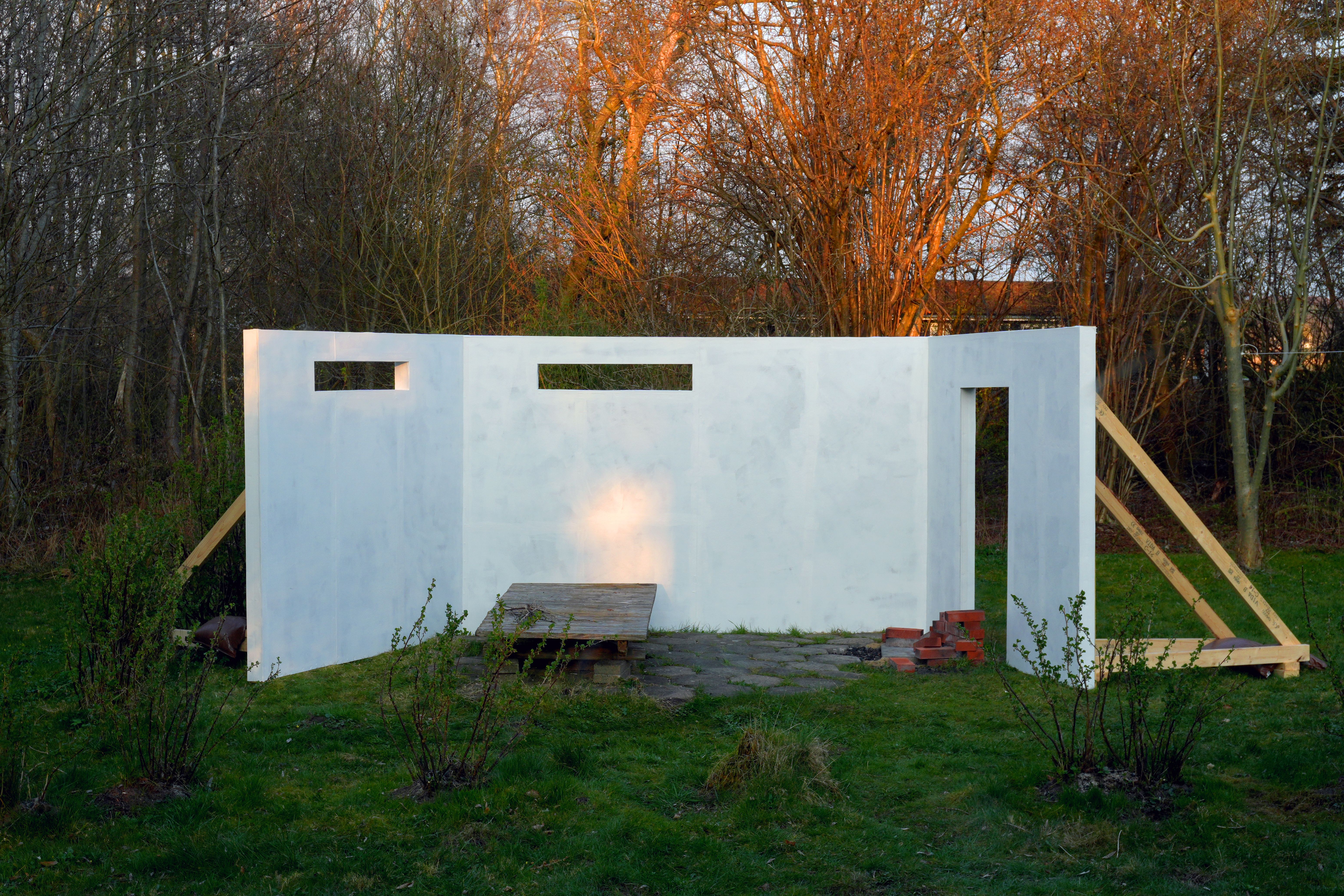
The wall texts in Ed Atkins’ 2025 show at Tate Britain were not written by curators but by the artist himself, in the first person. This level of personal involvement is reflective of Atkins’ interest in feelings: principally, of loss and failure and how those can be represented digitally. His video work Hisser (2015), for instance, depicts a digitally rendered avatar masturbating in solipsistic despair, while The Worm (2021) shows a CGI-stand in for Atkins conducting a painfully awkward phone call with his mother during lockdown. In his new exhibition at Gladstone Seoul, 1 day In space, the artist continues his exploration of the individual, but using more analogue mediums. Passive Mech (2026) is a timelapse film capturing the gradual decline of a cardboard stage set, which Atkins filmed over the course of a month through his daughter’s bedroom window, mulling over the idea that a photograph has captured a moment already passed. A series of frottages (a rubbing technique invented by Max Ernst in 1925) capture the texture of Atkins’ family’s bed linen.—Lydia Eliza Trail
Park Seo-Bo, Changing Unchanging (until 18 October) at Kukje Gallery
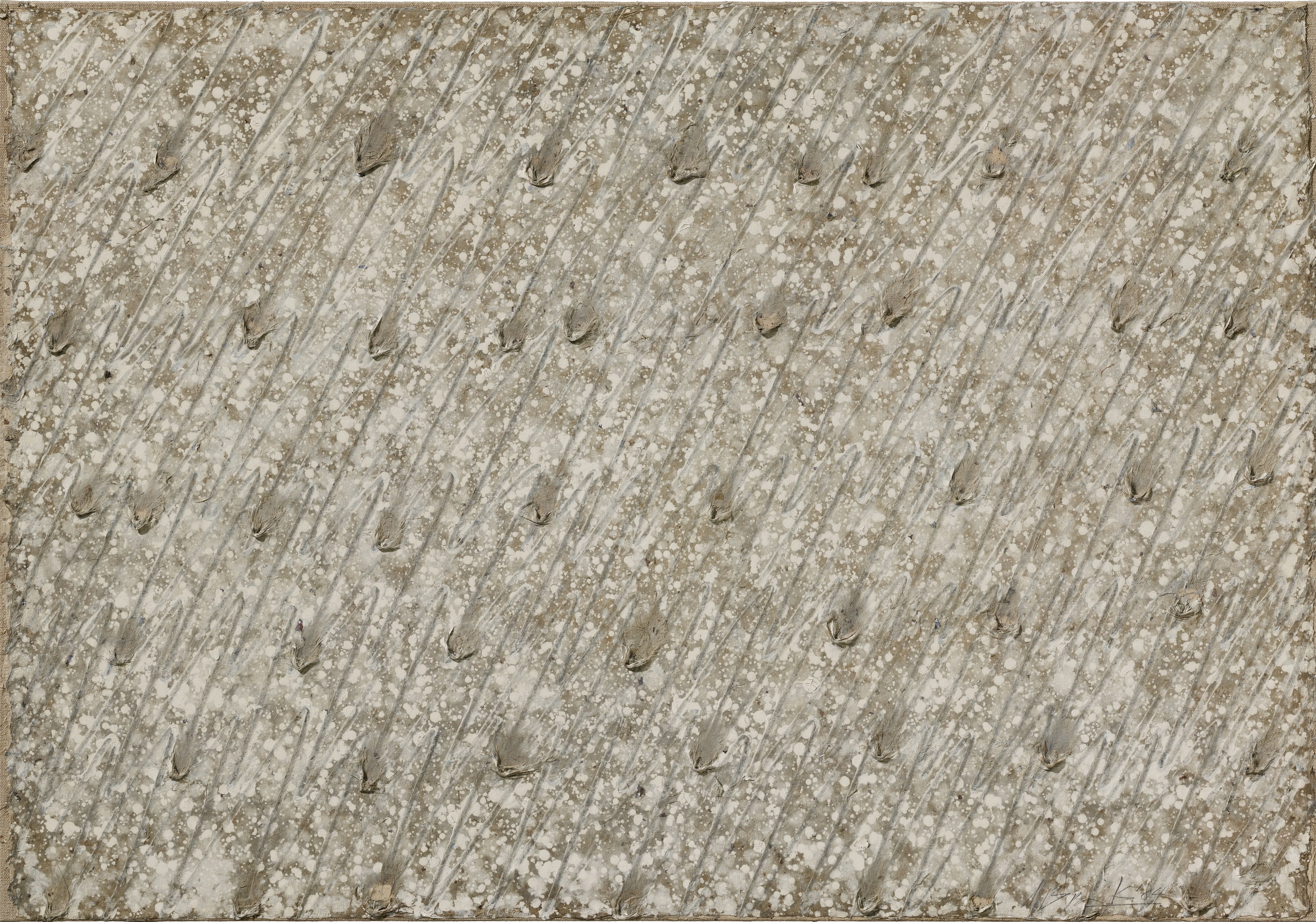
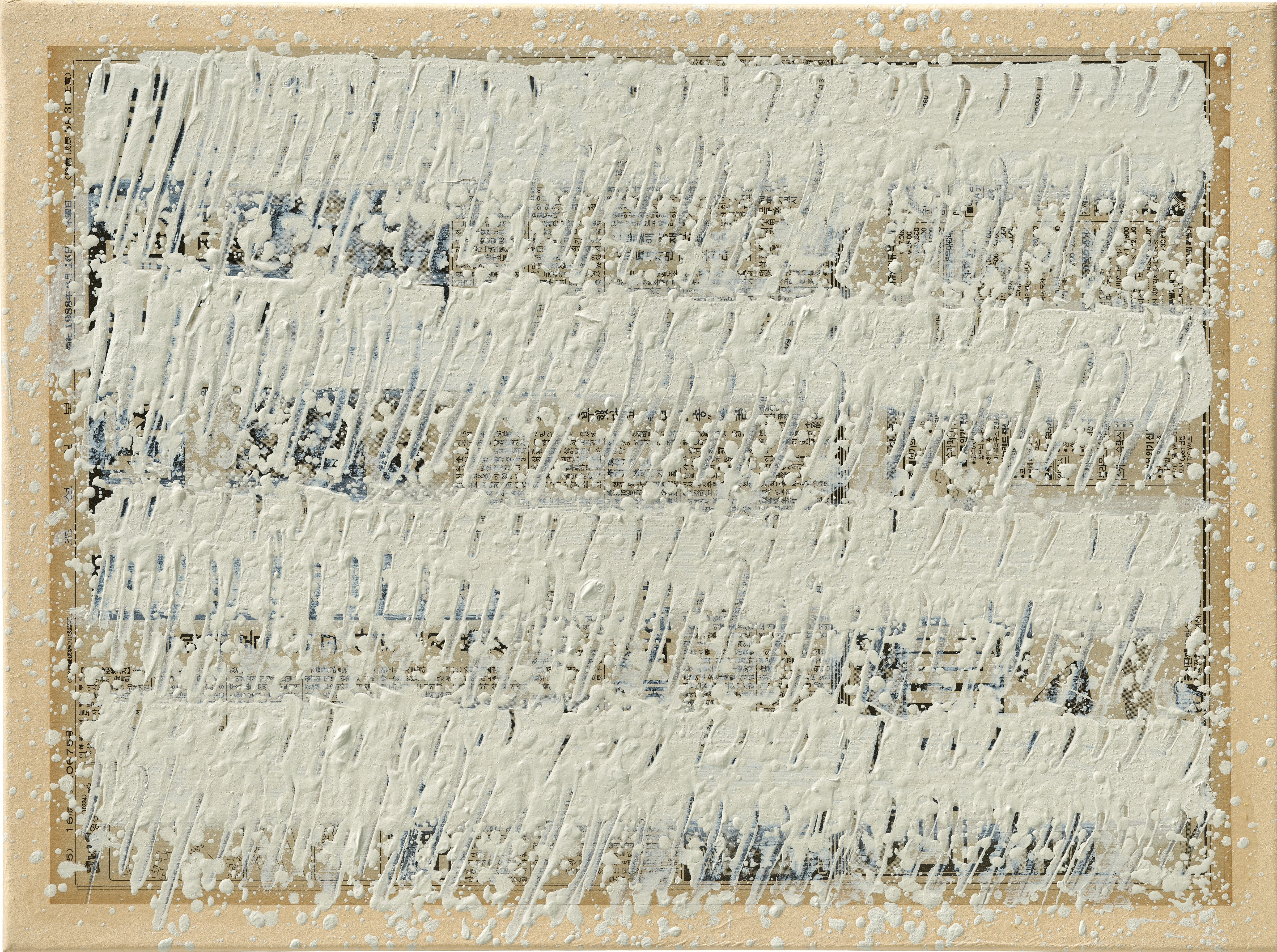
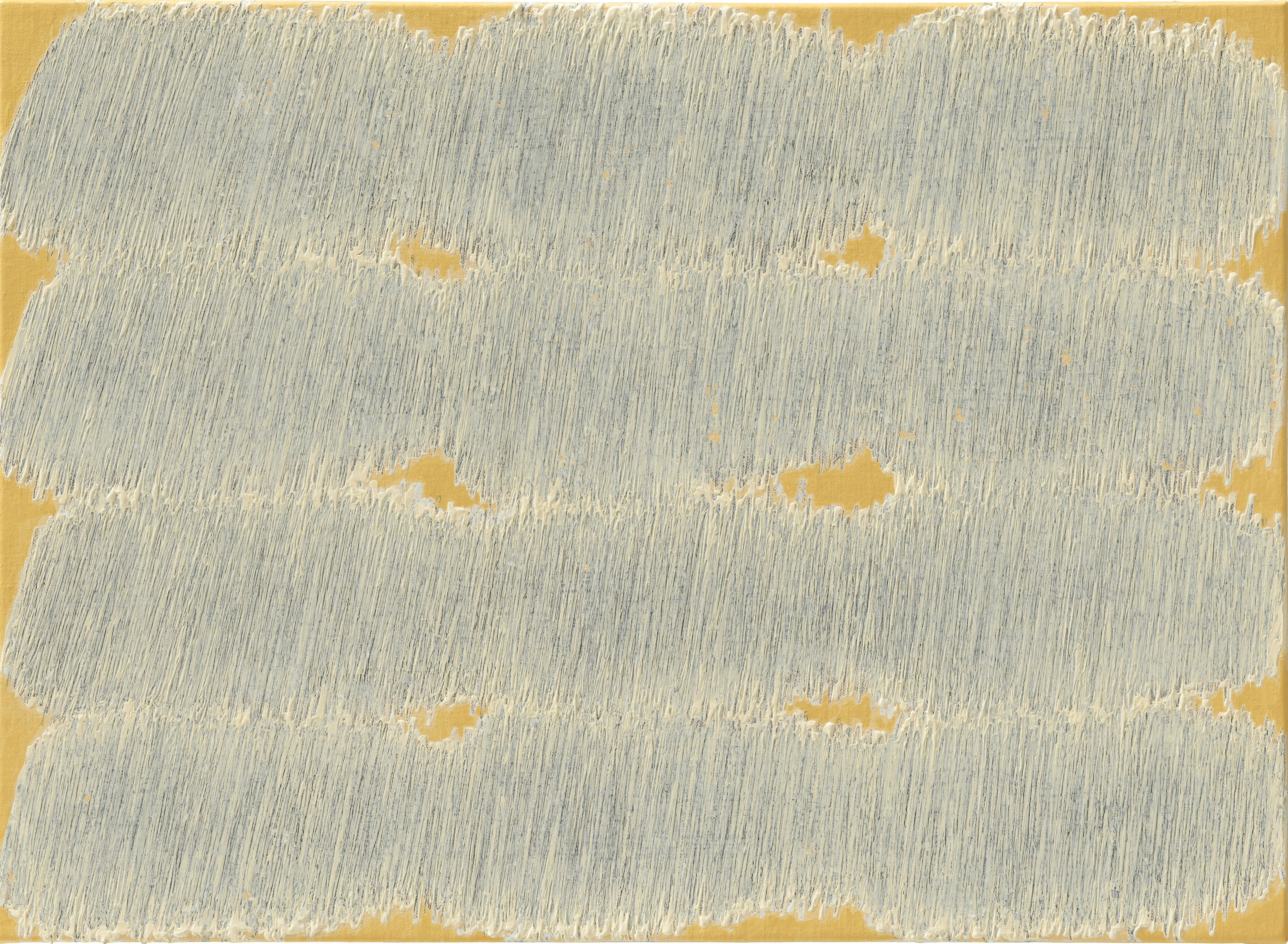
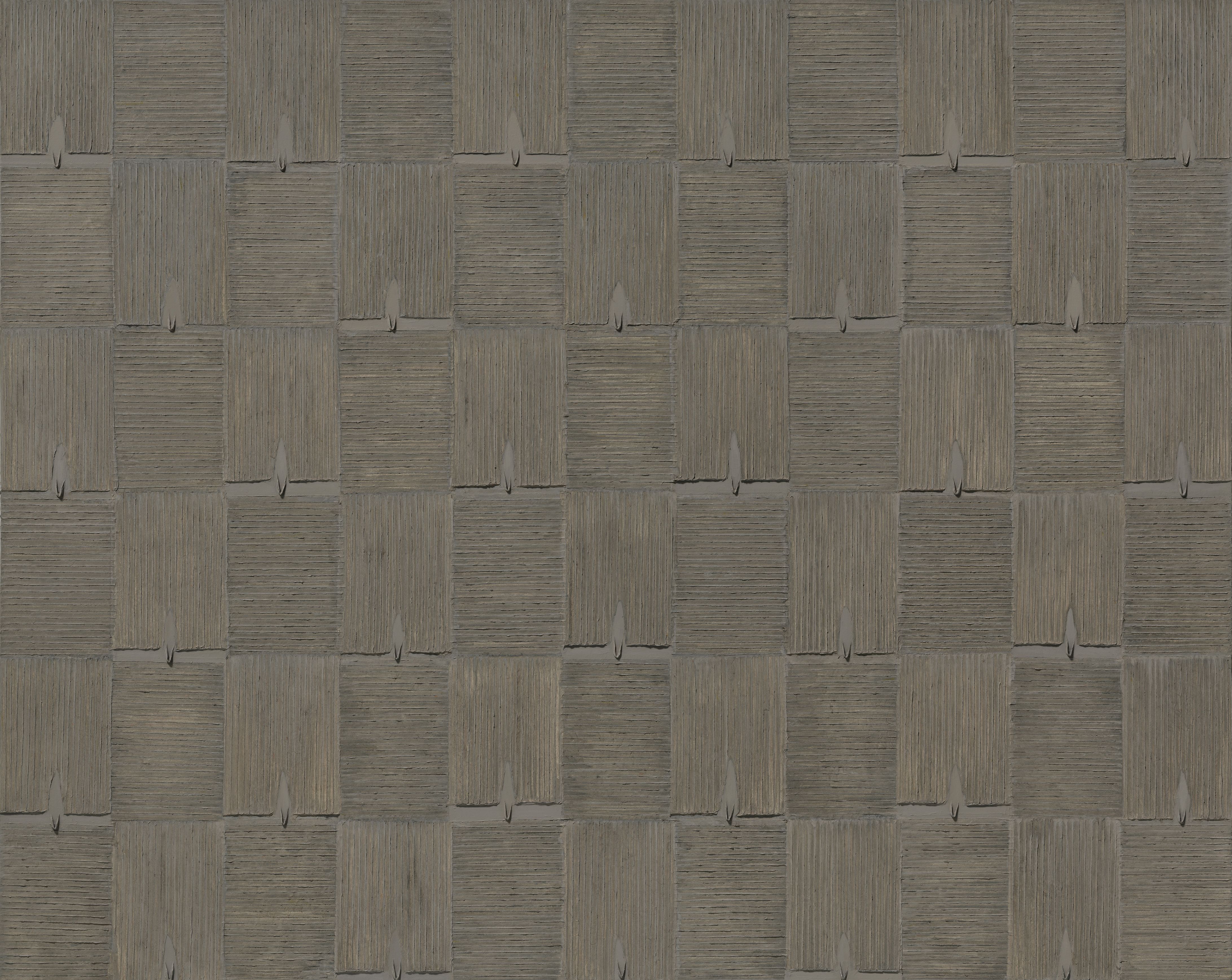
Park Seo-Bo was one of the pillars of the Dansaekhwa (monochrome painting) South Korean abstract art movement, but his legacy is somewhat contested. In 2023, five months before his death, the Gwangju Biennale abolished a prize bearing his name after local artists argued that his distance from Korea’s pro-democracy struggles sat uneasily with an event rooted in the 1980 Gwangju Uprising (a mass protest against the military dictatorship). However, two major shows see the late artist reinstated in the mainstream art world. The 2,000-square-metre Park Seo-Bo Museum opened on 21 August near his former studio in Yeonhui-dong; three days later, Kukje Gallery opened Changing Unchanging, presenting 40 works that follow more than five decades of experiment. Running through the exhibition is Écriture (描法, myobop), literally a way of drawing as though writing. Begun in 1967 with repeated pencil lines drawn through wet white pigment, the practice expanded to absorb hanji (traditional Korean paper), ink and colour. Transcending a fixed monochrome style, it became Park’s means of exploring the question of how and why he should paint.—Shanyu Zhong
Yeoreum Jeong, 𝘛𝘩𝘦 𝘗𝘭𝘶𝘳𝘢𝘭 (until 17 October) at Doosan Art Centre
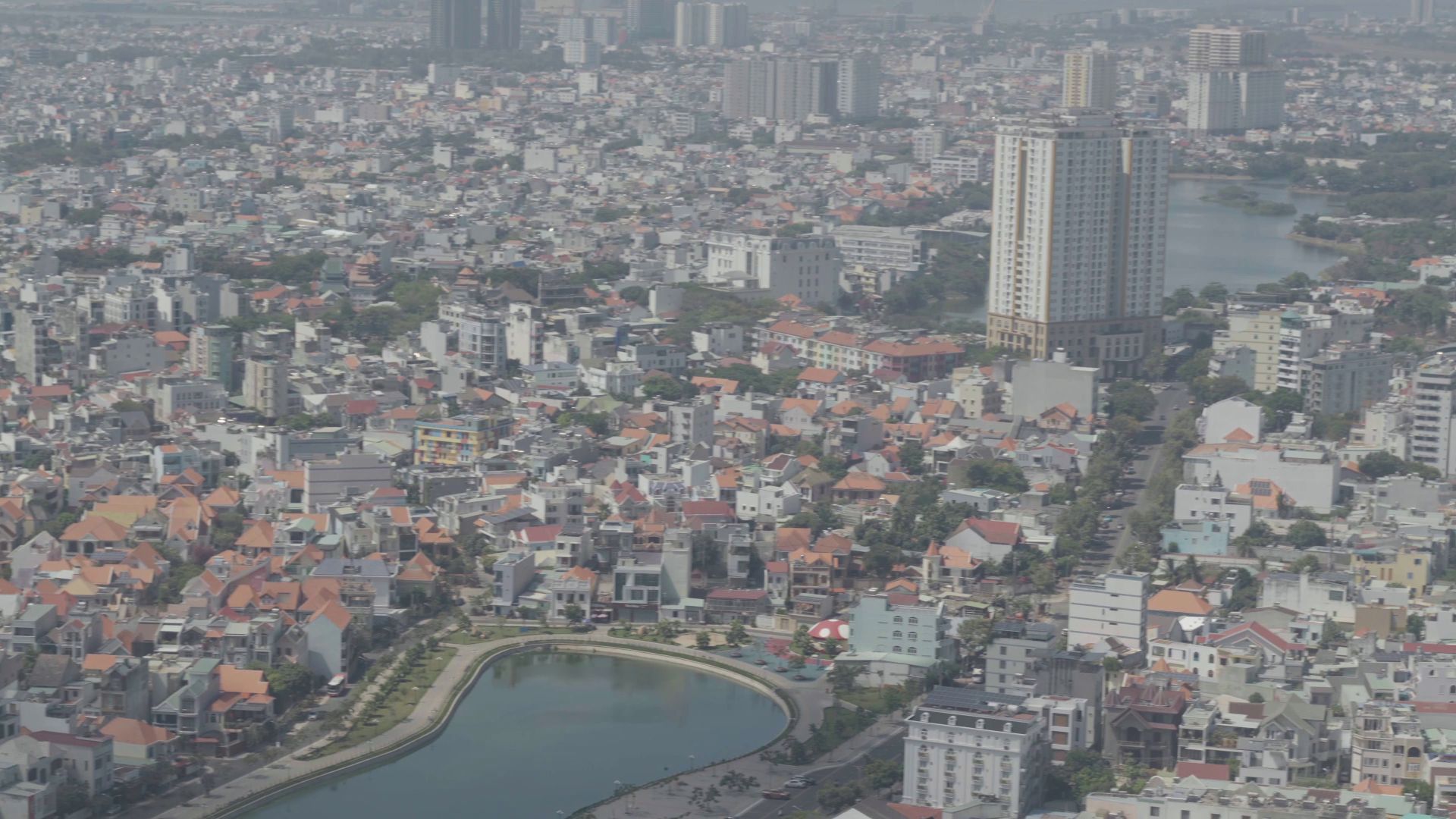
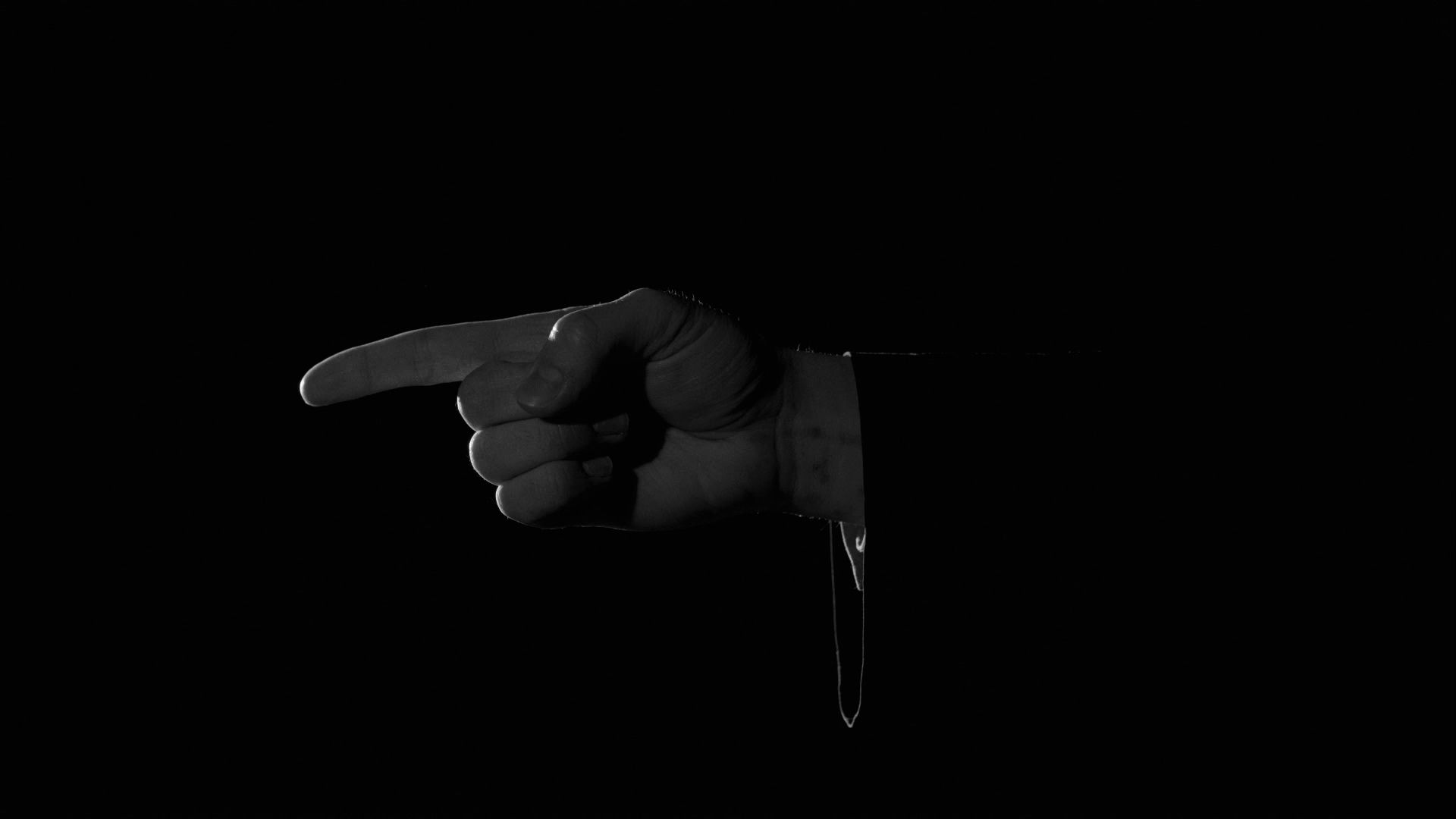
One of the more distinctive emerging voices of the Korean moving image scene, Yeoreum Jeong has developed an idiosyncratic way of investigating places through the technologies used to see them. Her subjects have included US military bases in Korea, pursued through satellite imagery, CCTV, AI and even Pokémon Go, which she once used to (virtually) enter the inaccessible Yongsan base. She also uses family photographs, found footage and fictional devices in her films, making her own search for evidence part of the story. Her new film The Plural (2026) follows another uncertain trail. It begins with an autobiography Jeong discovered, written by a man who left home in search of his father during the 1920s and was repeatedly displaced by East Asia’s political upheavals, becoming (in turn) a migrant, collaborator, refugee and emigrant. Jeong splices this account with archival footage and present-day landscapes until the individual almost disappears into the movements of history. Accompanied by two text installations, the compact three-work show asks what remains of individual agency when history keeps moving the ground beneath it.—Zian Chen
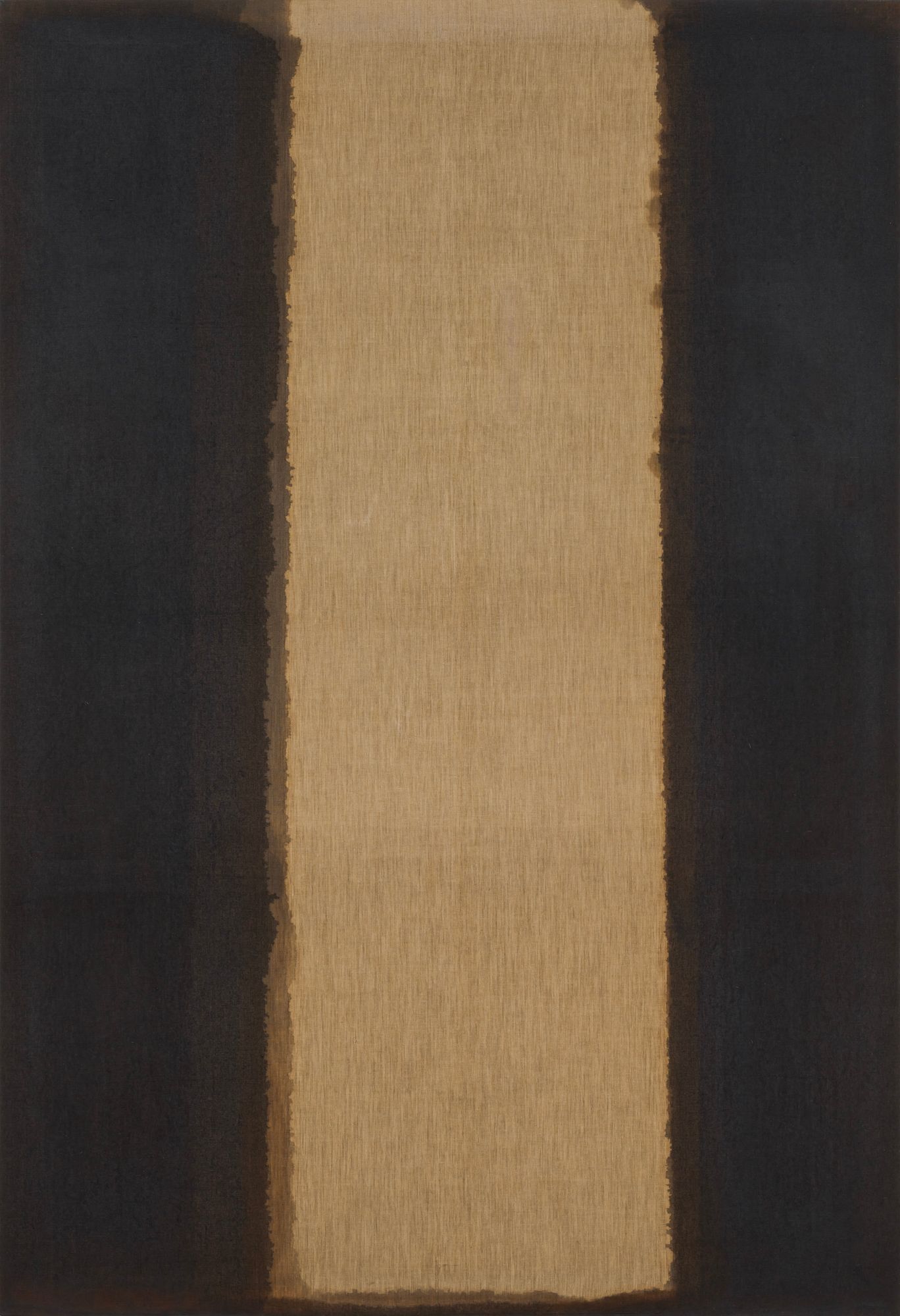
Yun Hyong-Keun, reimagine Yun Hyong-Keun (until 3 October) at PKM Gallery.
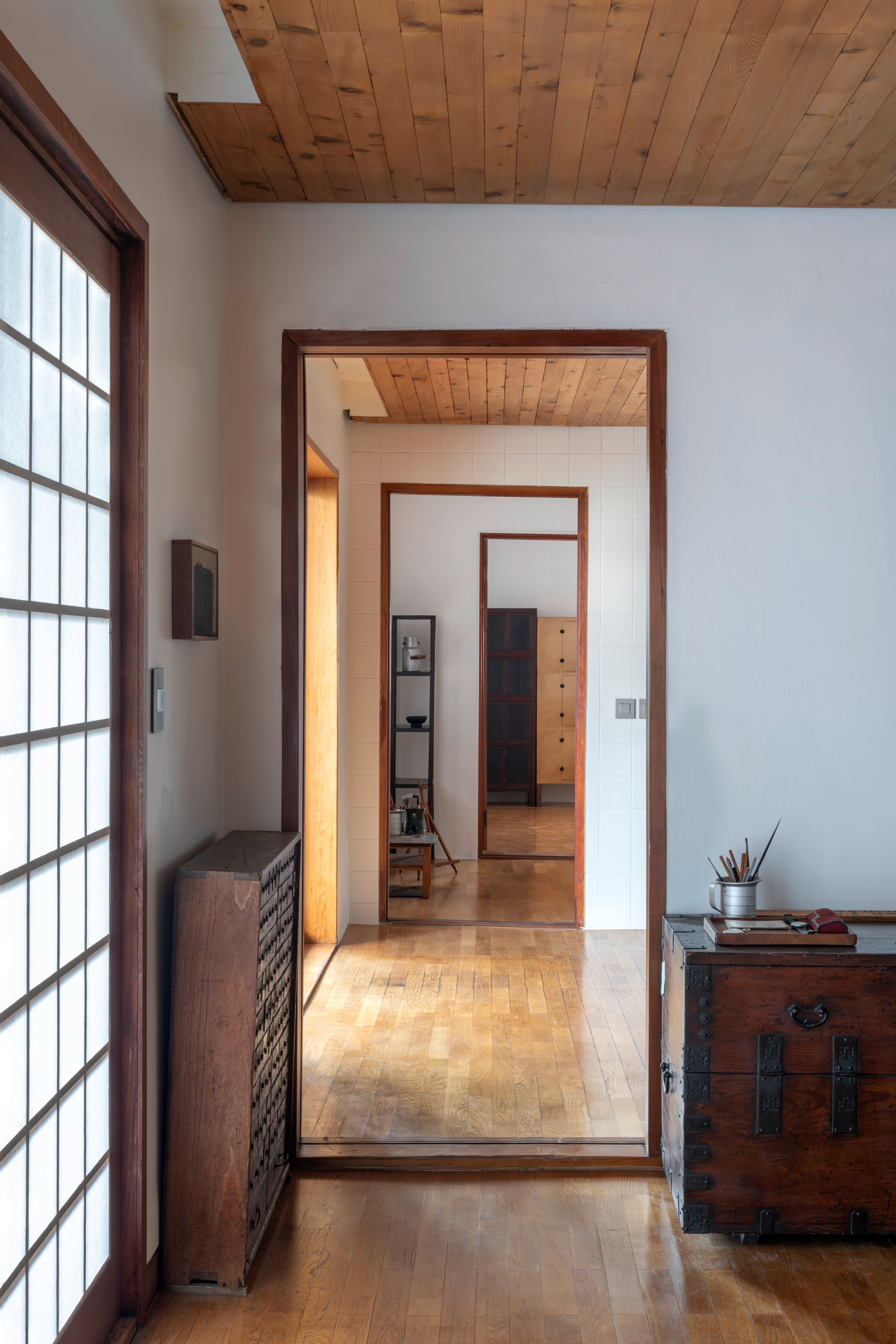
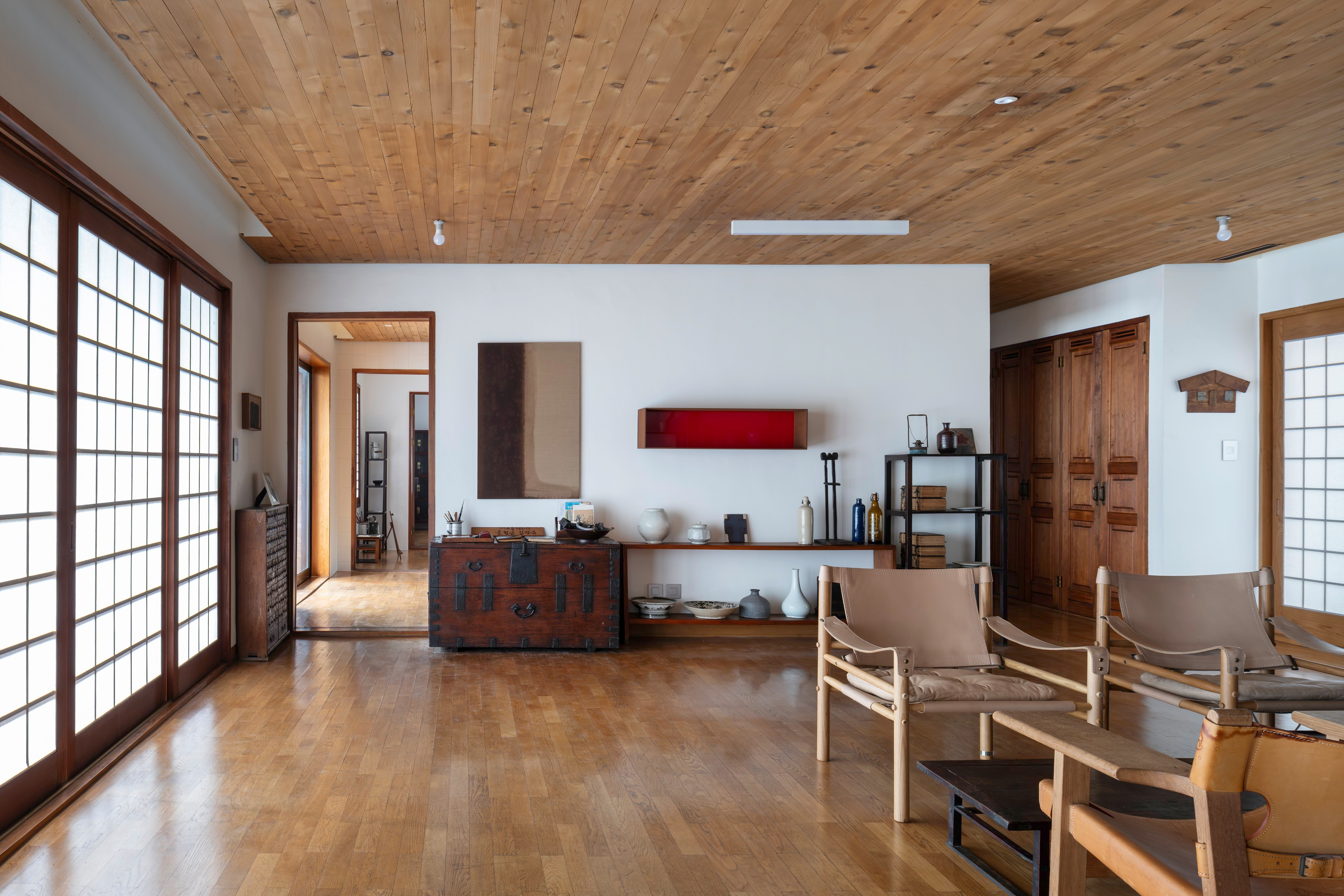
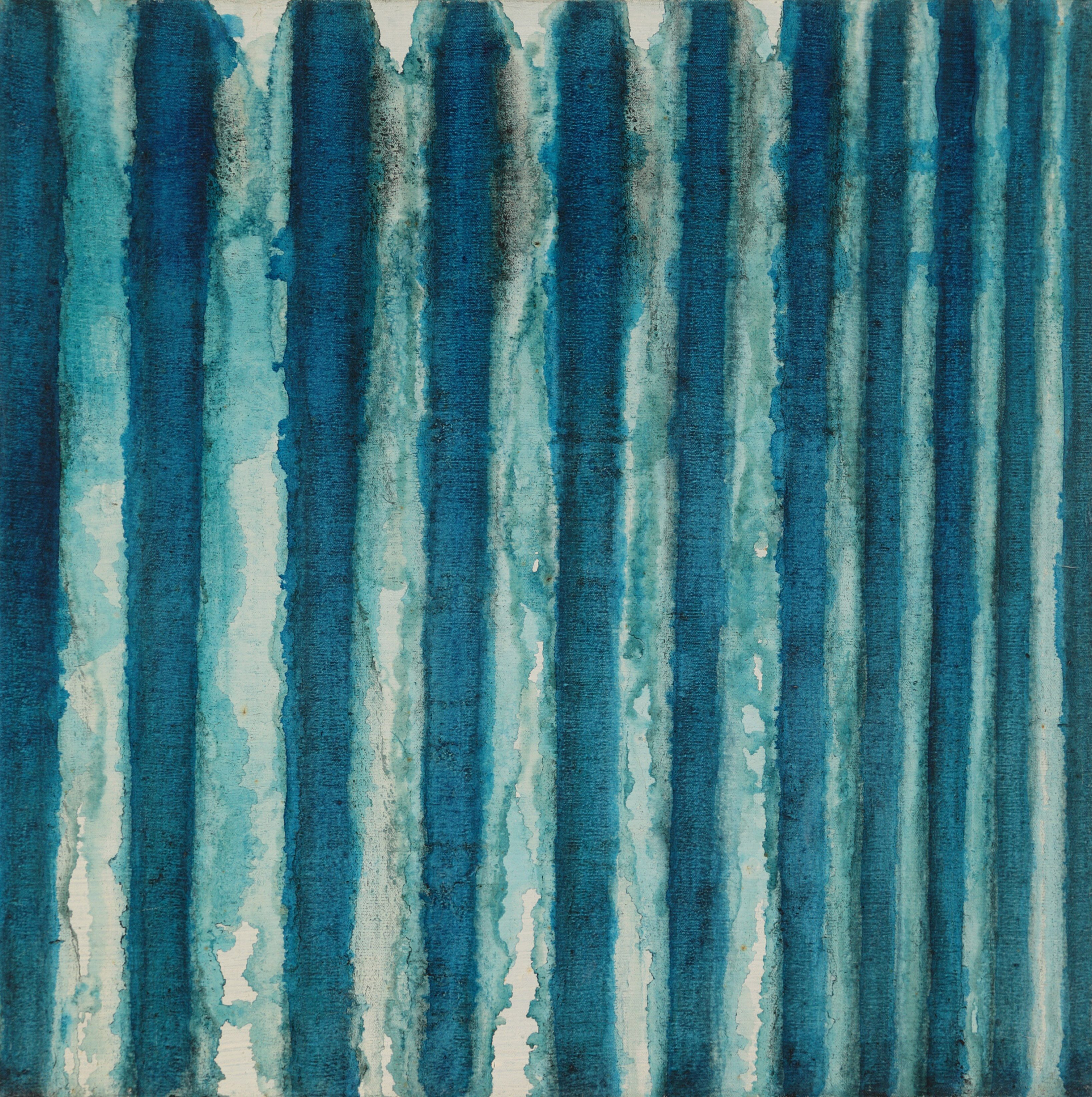
PKM Gallery presents a solo show of pioneering South Korean abstract painter Yun Hyong-Keun (born in 1928). Hyong-Keun was a forerunner of the South Korean Dansaekhwa (monochrome painting) movement of the 1970s. His life was tumultuous: he was imprisoned four times for dissent, (narrowly escaping a death sentence) and did not turn to art until his later years. PKM and the PKM+ annexe will show more than 30 of his works from the 1970s–2000s, tracking the artist’s increasing turn toward abstraction. The exhibition coincides with the opening of the artist’s home and studio to the public with Yun Hyong-Keun House, built within the Seogyo-dong neighbourhood of Seoul from Hyong-Keun’s own architectural designs. It comprises two floors: the first a studio, where the artist painted on to hanji (Korean paper made from the inner bark of the paper mulberry tree), and directly on the floor, and permanent exhibition space outlining the different periods of Hyong-Keun’s career.—Lydia Eliza Trail
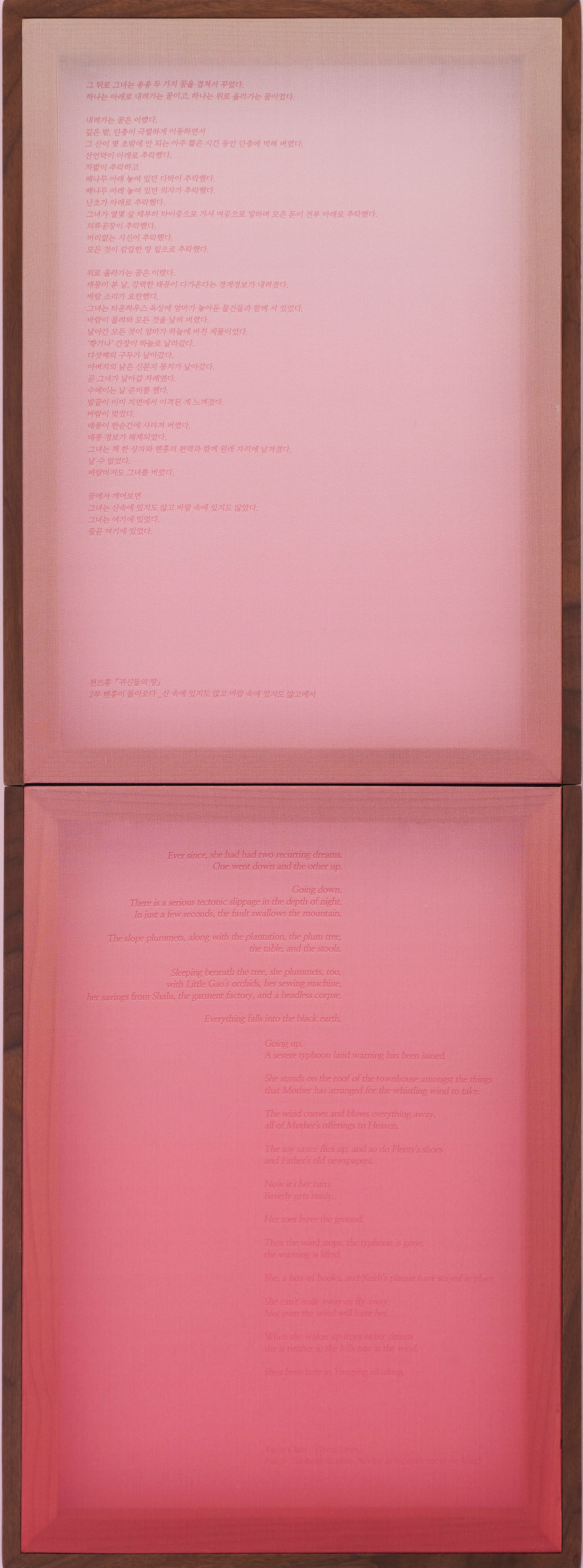
Naomi, Out of this Sea We Cannot Fall (until 5 September) at TINC (this is not a church)
Naomi: Out of this Sea We Cannot Fall is a research-led project exploring maritime folklore in Korea, China and Taiwan, centred on female figures: goddesses, ghosts and sacrificial heroines known as Mazu, Shim Chung, Yeongdeung and Lady Meng Jiang. That might sound like a lot of homework, but the show wears its research surprisingly lightly. Paintings proliferate across an eclectic range of formats, from traditional window screens to a mural that half-encircles the gallery, mixing remnants of shanshui (a traditional style of East Asian landscape painting and poetry) with the stranger pleasures of contemporary fantasy. Archival footage from old fantasy films brings another wonderfully uncanny register, while dioramic installations, music and correspondence make the exhibition feel less like a historical survey than a world some characters have wandered into and taken over. Across its many forms, the project asks how stories travel around the Yellow Sea, mutate along the way, and become vessels for memories that official histories rarely hold.—Zian Chen
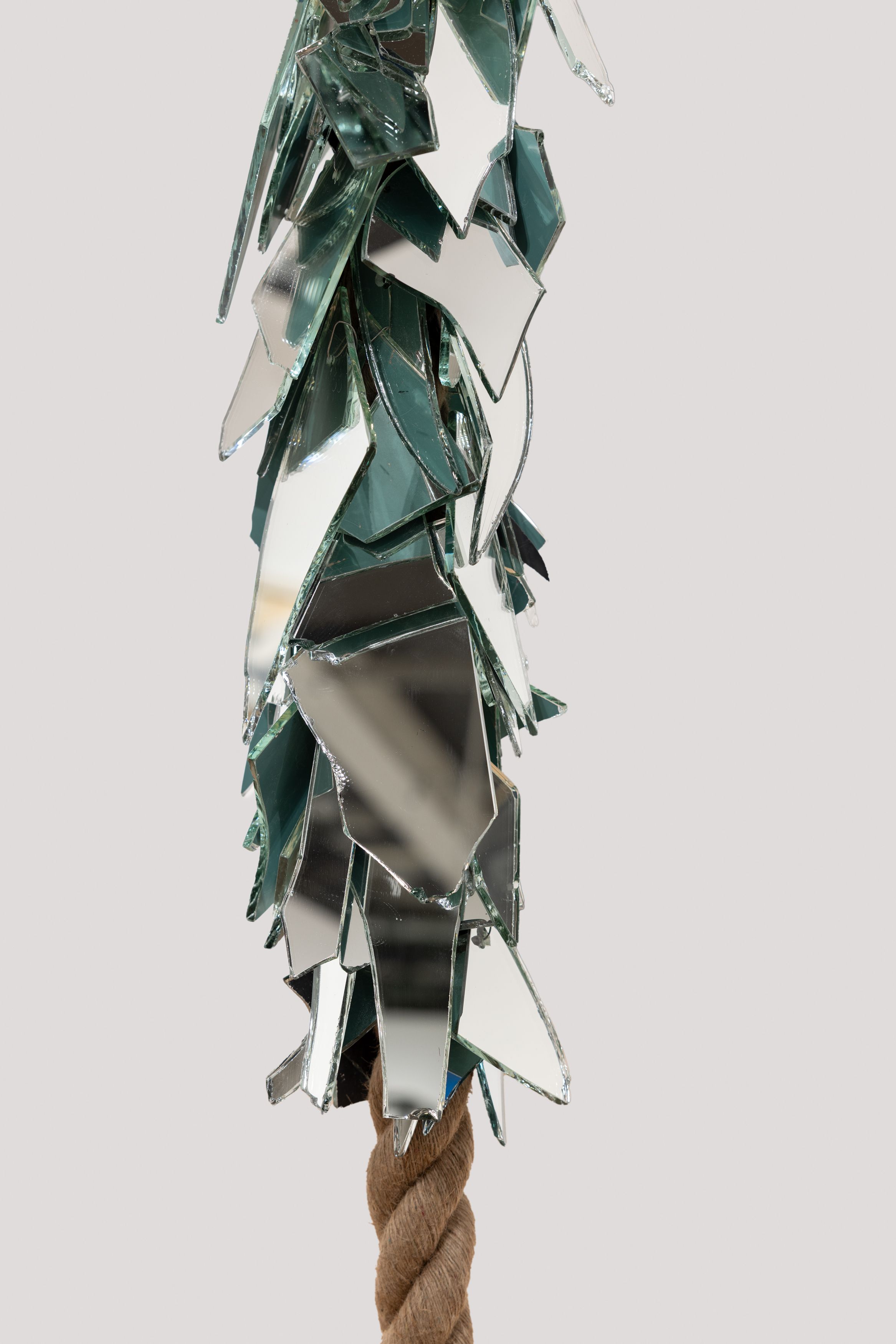
Kader Attia, Irreparable Repairs (until 17 October) at Lehmann Maupin
Inside the Arsenale at this year’s Venice Biennale, Kader Attia presented an installation constructed out of ropes, polished mirror fragments, dried flowers and herbs, sieves, paper weavings, projections and sound recordings. The work, Whisper of Traces (2026), began with the words of a Vietnamese shaman who believed that computer viruses are “spiritual entities” seeking to assert their dominance in the digital world. Via seemingly endless corridors and African ritual statues, it ends by asking us to critique the exaltation of artificial intelligence. With Irreparable Repairs at Lehmann Maupin in Seoul, the artist again explores shamanism, this time as just one element of a vast commentary on how societies and individuals bear the marks of historical trauma—and how those wounds are repaired, though never erased. He also returns to ropes and mirrors, once more creating hanging sculptures covered in many shards of distorting glass. In this new series, however, the sculptures are created in black glass. With this change, Attia goes a step further than he does in Venice, to ask: in this dystopian present, are we now entirely imprisoned by the algorithms that govern our lives?—Philippa Kelly
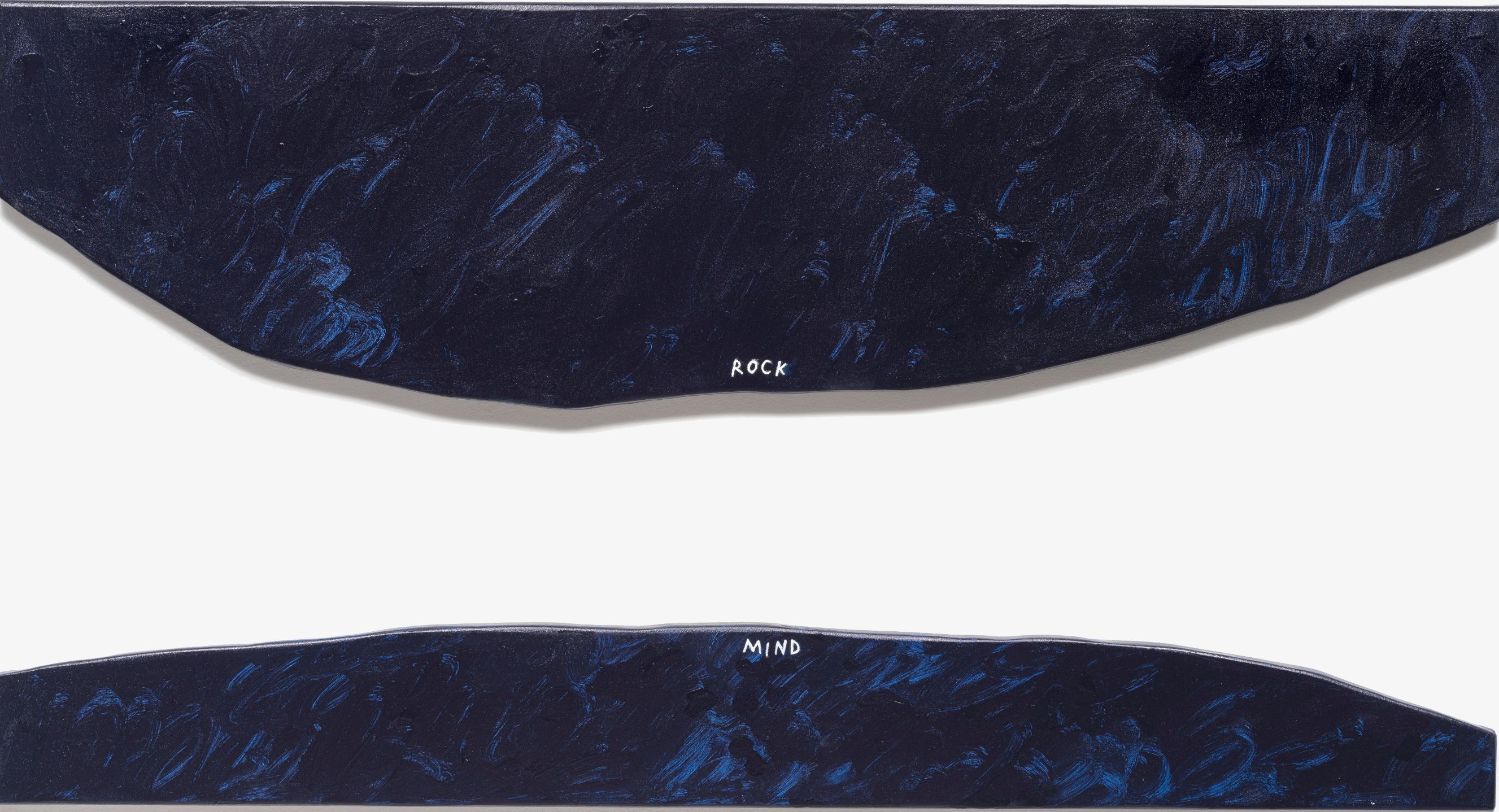
Christine Sun Kim, Moon Mind (until 18 October) at Gallery Hyundai (plus Have Many Dumb Fights Against Rock, until 29 November, at MMCA Seoul Box)
The California-born, Berlin-based artist Christine Sun Kim is known for her charcoal drawings and wall-scale murals using American Sign Language (ASL) and musical notation. This season, she is showing several new bodies of work. Kim has filled MMCA’s Seoul Box with animation and wall drawings shown on a curved screen made from 72 OLED panels, and contributed an iPad drawing reworking a cover from Vogue Korea’s archive, overlaying the cover model’s face with stave lines and markings p (piano, or soft) and f (forte, or loud). In Moon Mind, on show at Gallery Hyundai, that graphic vocabulary takes the form of a new body of shaped-canvas paintings. Around 40 new paintings and drawings explore memory, family and Kim’s Korean-American roots. The title itself draws these threads together: in ASL, “moon” and “mind” both involve a tap at the temple; the moon appears in expressions of time and the past; and Dal, her daughter’s name, means “moon” in Korean.—Shanyu Zhong
![Exhibition view: Koo Jeong A, Land of Ouss [Kangse] (2025-2026). LUMA Arles.](https://files.ocula.com/rf/5b/5bc6d205-5cc8-4999-b240-011ab3c099aa/250704-luma-koo-jeong-a-victorandsimon-gregoiredablon-61-large-1.jpg)
Koo Jeong A, Ousssmos (5 September–27 December) at Leeum Museum
Seoul-born artist Koo Jeong A has spent three decades making barely perceptible phenomena (scents, magnetic forces, phosphorescence) strangely tangible. In 2024, for instance, the artist, who uses gender-neutral pronouns, filled Korea’s Venice Pavilion with scents drawn from people’s memories of the country (Odorama Cities, 2024). In September, Koo returns for their largest Korean solo show to date, the third part of a series of exhibitions exploring the idea of Ousss, a word coined by the artist to describe energy and matter. Each exhibition has taken cues from the architecture of the buildings in which they were held: Frank Gehry’s fantastical LUMA Arles was populated with scents, rocks and glowing forms, while Peter Zumthor’s austere Kunsthaus Bregenz was sparsely charged with magnetism, gravity and phosphorescent light. At Leeum, where Jean Nouvel’s contemporary art wing sits alongside Mario Botta’s funnel-shaped wunderkammer for Korean antiquities, Ousssmos spills beyond the main exhibition space. Works surface in lobbies, between walls and among the historical collection, while the monumental glow-in-the-dark Mobiousss—part Möbius strip, spacecraft and skatepark—occupies its centre. Leeum becomes a test of how far Koo’s elusive universe can travel across different architectures, collections and histories.—Zian Chen
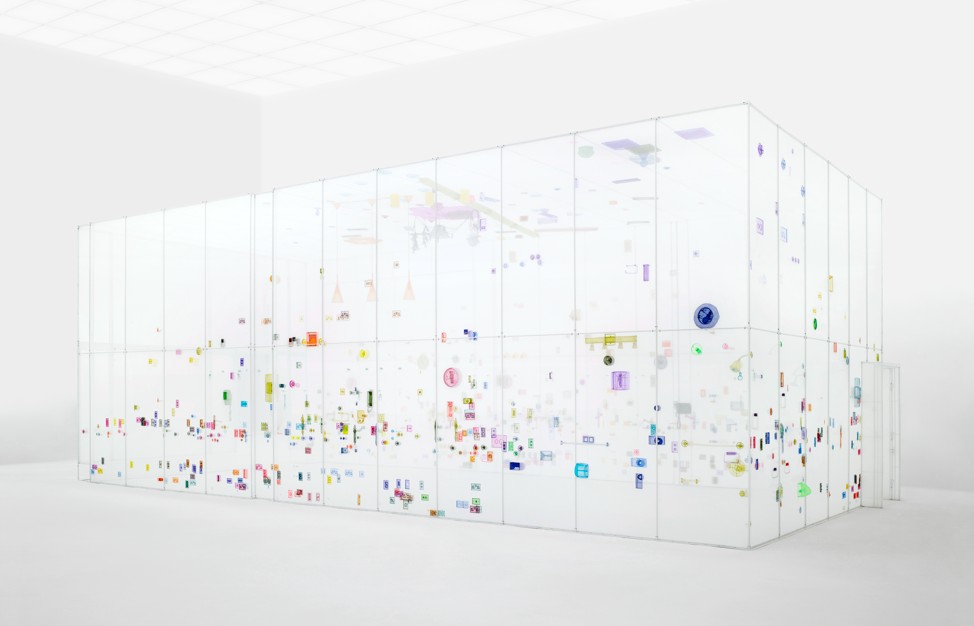
Do Ho Suh (until 9 February 2027) at National Museum of Modern and Contemporary Art, Korea
In Perfect Home: London, Horsham, New York, Berlin, Providence, Seoul (2024), Do Ho Suh sewed exact replicas of the fixtures and fittings of all of the houses he has lived in—in England, America, Germany and Korea—into a replica of his current London apartment to create a huge polyester palimpsest of his past homes that formed one “perfect home”. “The things people touch most in a house are door handles and light switches,” the artist has said. “If you held the same handle every day for 25 years, human warmth and energy would have soaked into it.” That piece, which features handles and switches from his former home in Seoul, is now being shown in Korea for the first time as part of a major retrospective at MMCA. The exhibition will bring together more than 500 works of drawing, sculpture, video and installation, including unseen works from his years as a student, major projects and ongoing commissions, forming a reflection on what it feels like to leave many homes and countries, and to carry them with you through life.—Baya Simons
Nam Hwayeon, Nap (until 30 September) at Ilwoo Space
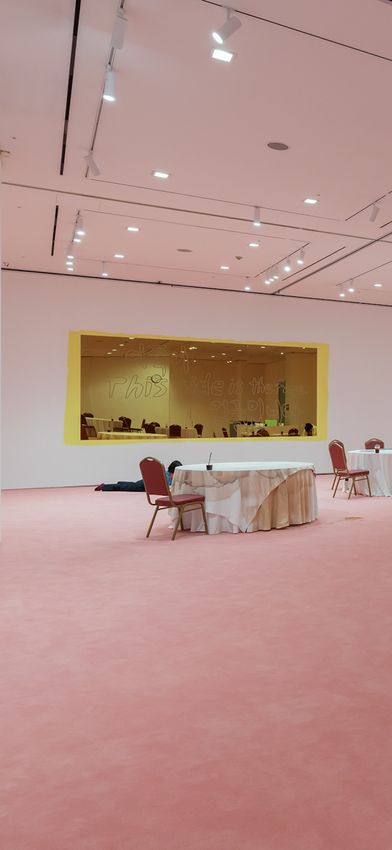
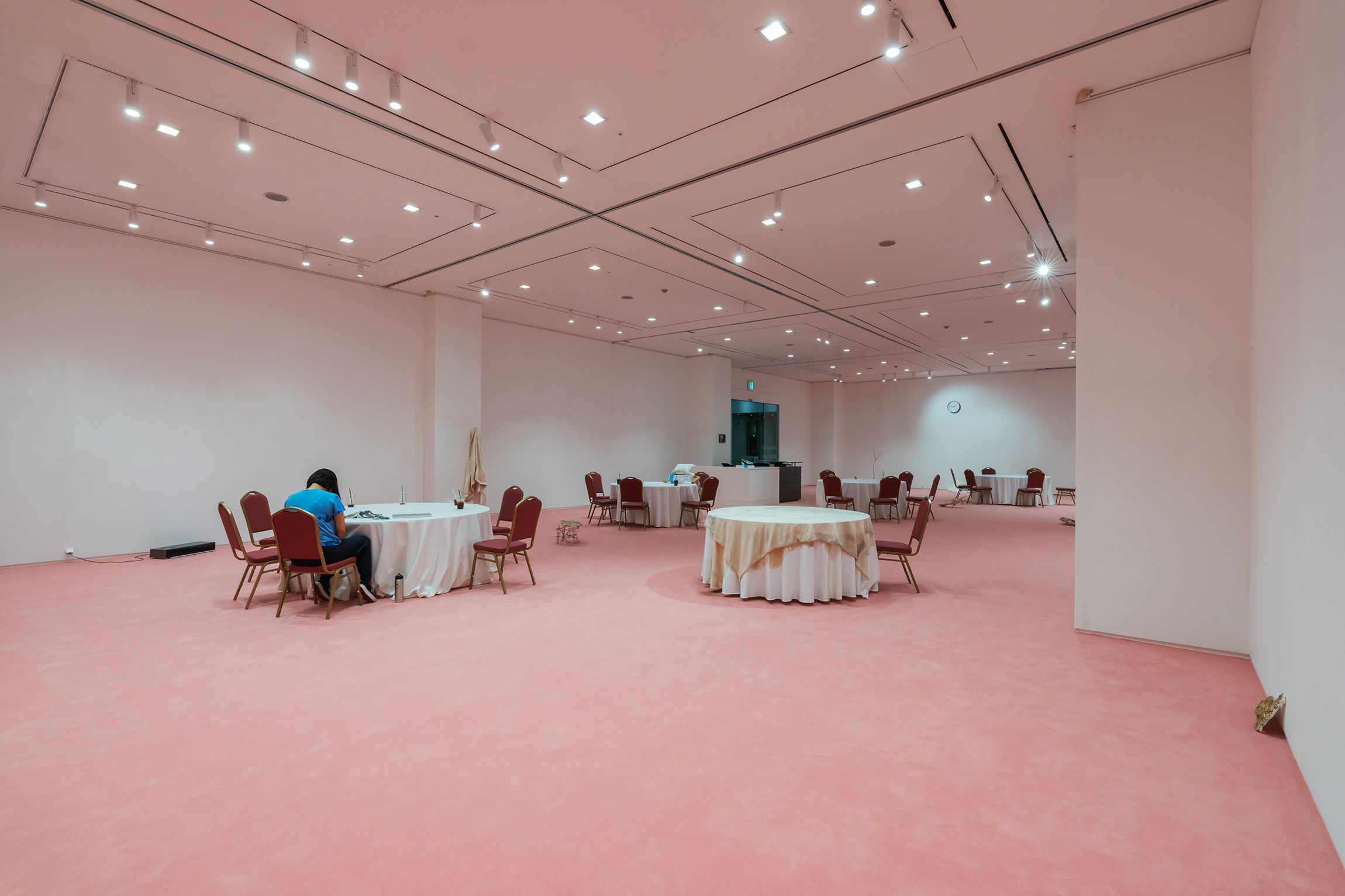
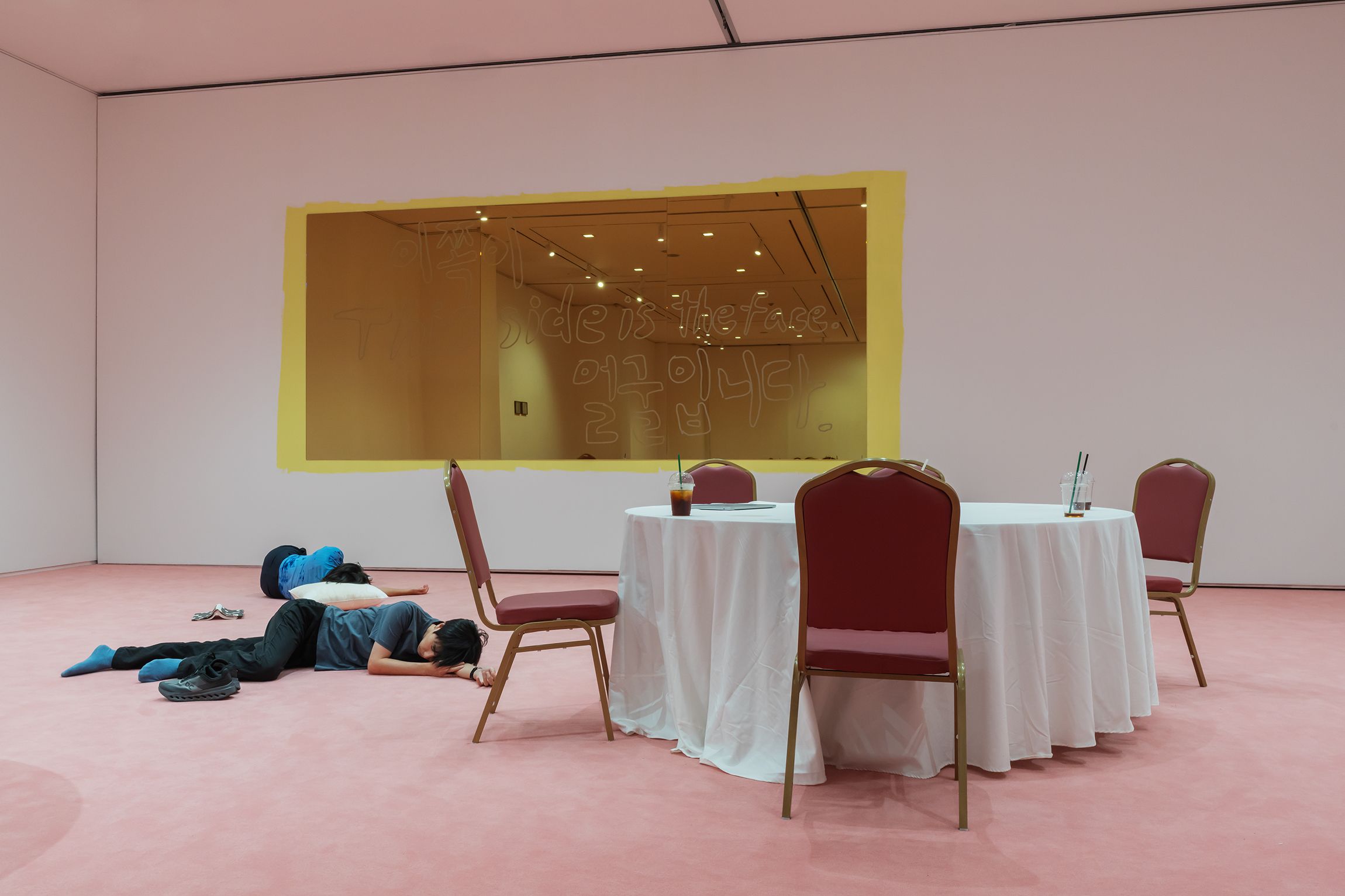
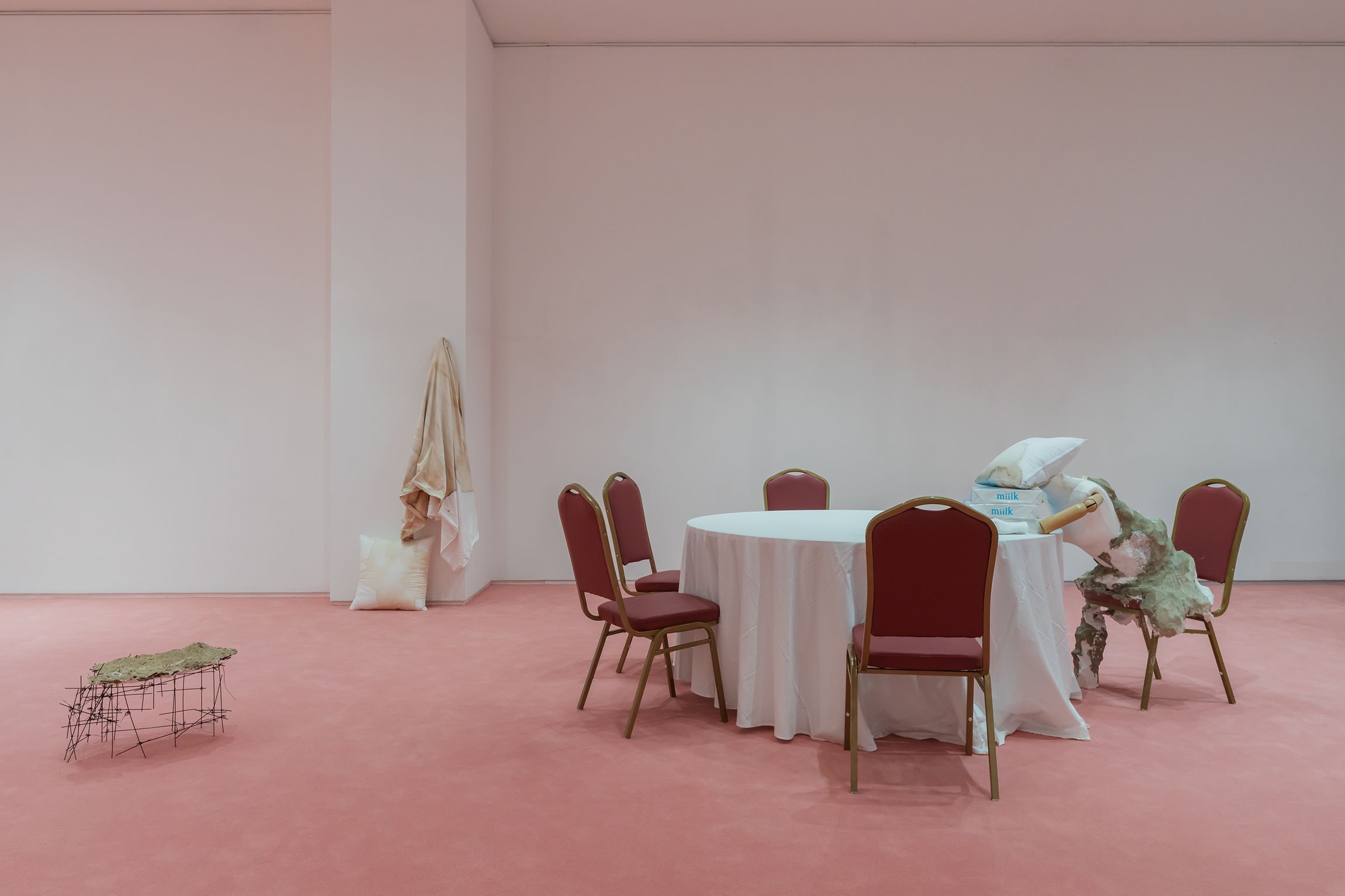
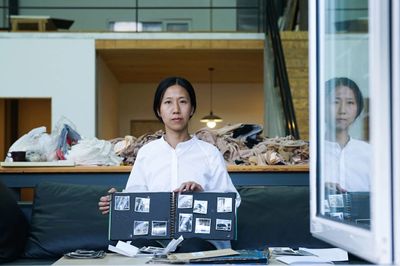
Ahead of Nam Hwayeon’s new commission for the Gwangju Biennale, which explores women, the Catholic faith and bodily agency in late-18th-century Joseon, she is showing in a Seoul solo titled Nap. This pursues another kind of bodily departure, extending the artist’s longstanding interest in how time is experienced, measured and escaped. At Ilwoo Space, she turns the exhibition floor into a theatrical environment: pink carpet, office furniture, clocks, mirrors, dead plants and sleeping mannequins sit alongside video, sound, sculpture and live performance. Performers lie down, lean into chairs or attempt to sleep, making the gallery feel somewhere between an abandoned office, a waiting room and the aftermath of a party. The show combines substantial new works with reconfigured earlier pieces. A 2014 project, Ant Time, tracking an ant’s movement returns in the form of plaster reliefs, while a new video, Like the Future (2026), sets commands such as “Get up now” against the slow melting of an ice figure. There is also a 24-hour livestream and a performance producing oversized paper cranes. —Zian Chen
Main image: Exhibition view: Nam Hwayeon solo exhibition 'Nap'. Image courtesy of the artist. Photo: CJY ART STUDIO.




A respected voice in contemporary art discourse.
Focusing on ambitious storytelling and insightful art-world commentary. Ocula Magazine publishes in-depth interviews, critical essays and timely analysis on the artists, exhibitions and ideas driving the global art world.
Learn more about Ocula Magazine
Showcasing the best of the art world.
Ocula partners with galleries from around the world to highlight their artists, artworks and exhibitions. Gallery membership is by application and invitation, with each member vetted by an independent panel.
Learn more about Ocula Membership
Specialises in the sale of major artworks.
Led by a team with deep ties to the world’s leading auction houses, galleries and collectors. Ocula’s advisory team offers bespoke services to high-net-worth clients from around the world who are looking to acquire the best of contemporary and modern art.
Learn more about our team and services