





ENRICO CASTELLANI
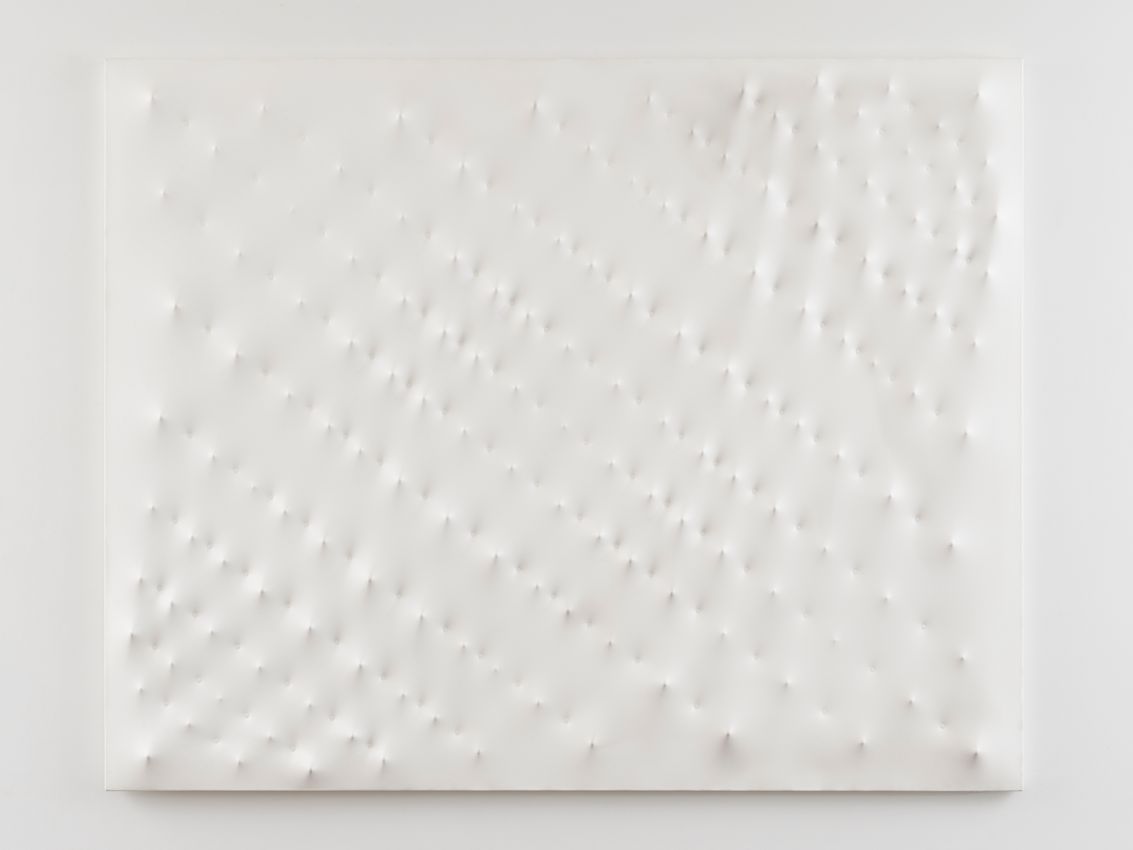
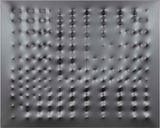
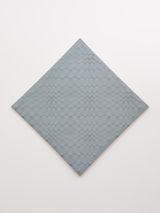
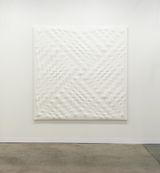
1930-2017, ItalyA prominent member of Europe’s postwar avant-garde, Enrico Castellani (1930–2017) invigorated the conventions of the modernist monochrome by engaging all dimensions of the canvas, both interior and exterior. In 1959, he established his seminal ‘Superficie’ series, stretching canvas over arrangements of hazelnuts (and later nails) to form undulating surfaces that appear to transform under light and shadow. He elaborated the series over the next five decades, creating dynamic topographies in a variety of hues, fabrics, and shaped canvases.
Born in Castelmassa, Italy, Castellani studied painting and sculpture at the Académie Royale des Beaux-Arts in Brussels and architecture at the city’s École de La Cambre. In 1956 he moved to Milan, where he and Piero Manzoni founded the influential Galleria Azimut and the publication Azimuth in 1959. Associating with Dusseldorf’s Group Zero, the artists established Milan as an epicentre for ZERO (1957–1966), the international network of artists reconceiving art’s relationship to light, space, and flux. In the 1960s, Castellani’s work was presented in ZERO exhibitions at such venues as the Stedelijk Museum, Amsterdam, and the Institute of Contemporary Art, Philadelphia, as well as in The Responsive Eye, the survey of Op art at the Museum of Modern Art, New York (1965). Betty Parsons Gallery mounted his first solo exhibition in New York in 1966. His work appeared in Documenta 4, Kassel (1968), and he represented Italy at the Venice Biennales of 1964, 1966, and 1984.
Castellani’s work featured prominently in the exhibitions ZERO: Countdown to Tomorrow, 1950s–60s at the Solomon R. Guggenheim Museum, New York (2014), and ZERO is INFINITY at the Yayoi Kusama Museum, Tokyo (2020). He is represented in the collections of such institutions as Centre Pompidou, Paris; Fondazione Prada, Milan; Peggy Guggenheim Collection, Venice; Stedelijk Museum, Amsterdam; Hirshhorn Museum and Sculpture Garden, Washington, DC; and Walker Art Center, Minneapolis. In 2010, he became the first Italian artist to receive the Praemium Imperiale for Painting from the Japan Art Association.
Courtesy Lévy Gorvy Dayan

Works at Lévy Gorvy Dayan



Works Elsewhere







Explore and Follow Artists Shaping Contemporary Art
A respected voice in contemporary art discourse.
Focusing on ambitious storytelling and insightful art-world commentary. Ocula Magazine publishes in-depth interviews, critical essays and timely analysis on the artists, exhibitions and ideas driving the global art world.
Learn more about Ocula Magazine
Showcasing the best of the art world.
Ocula partners with galleries from around the world to highlight their artists, artworks and exhibitions. Gallery membership is by application and invitation, with each member vetted by an independent panel.
Learn more about Ocula Membership
Specialises in the sale of major artworks.
Led by a team with deep ties to the world’s leading auction houses, galleries and collectors. Ocula’s advisory team offers bespoke services to high-net-worth clients from around the world who are looking to acquire the best of contemporary and modern art.
Learn more about our team and services