

GEORGE TJUNGURRAYI
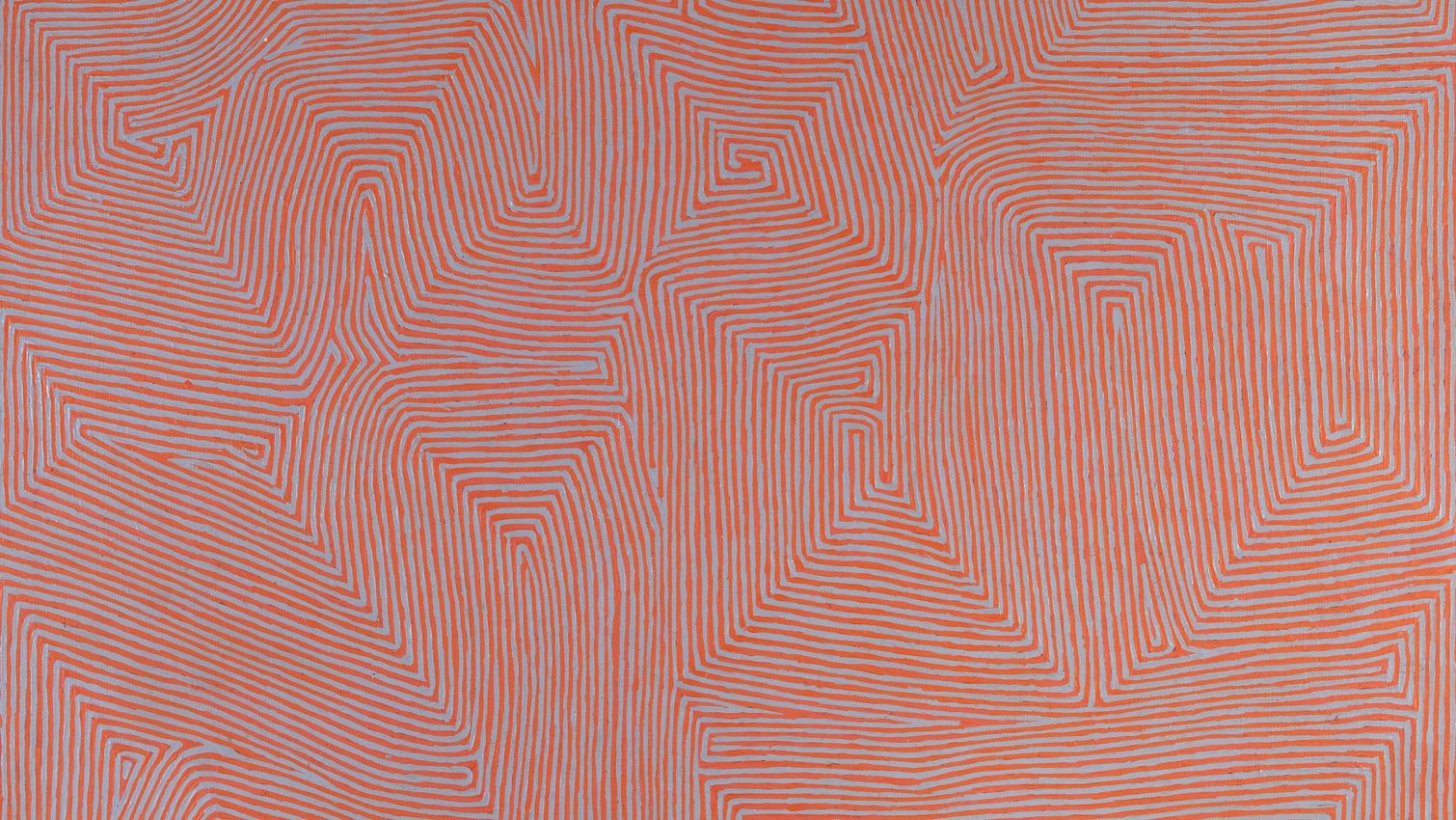
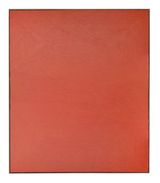
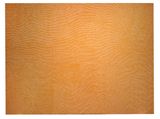
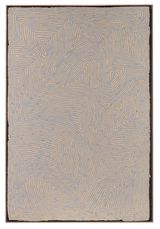
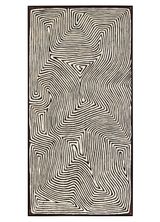
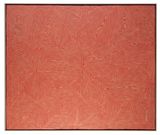
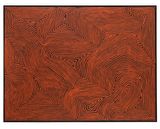
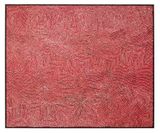
b. 1943, AustraliaGeorge Tjungurrayi’s paintings hold the eye in motion. Repeated lines advance, turn and interlock across the surface, generating an optical intensity that is immediate yet never self-explanatory. In Tjungurrayi’s mature work, the line is neither a detached formal device nor a code awaiting translation. What first appears radically economical becomes more complex the longer one looks: the line, colour, rhythm and repetition deepen with a confounding mathematical logic. Nothing here is incidental: every turn alters the structure of the whole.
To call this abstraction is both understandable and insufficient. If abstraction means art separated from subject, place or inherited meaning, the word obscures exactly what is being shown. Tjungurrayi’s formal innovation did not require him to leave cultural specificity behind. It emerged, and continues to emerge, through the discipline with which he articulates Country from a position of knowledge and authority entirely his own.
Discipline
Born near Kiwirrkura in a remote part of the Gibson Desert in Western Australia around 1943, Tjungurrayi came in from the desert via Mount Doreen and Yuendumu in the early 1970s. He began painting at West Camp at Papunya with Papunya Tula Artists in 1976. Over the course of his career, Tjungurrayi developed the linear language for which he is now known. In the early 1990s, his dotting gradually drew together until the dots became lines. It would be easy to read this as a simple evolution, dots resolving into something cleaner, more refined. What followed instead was a sustained investigation into what the line could carry, how knowledge, relationship and obligation could be concentrated within repeated linear structures.
The mature paintings possess an extraordinary tonal subtlety, and every brushstroke is loaded with the same deliberate care. Each line holds its own integrity as it turns, locks and interlocks with the lines beside it. This is virtuosity understood not as flourish but as endurance. The clarity of the surface is hard-won, never given, and it carries the discipline of the hand that made it: repetition as Tjungurrayi’s method, never simply his outcome.
This transformation in Western Desert painting, away from explicit iconography and towards increasingly linear forms, has sometimes been described as a move towards abstraction. That account mistakes a change in appearance for a retreat from meaning. Tjungurrayi’s paintings continue to make Country and Tjukurpa sensorially present. In this Pintupi context, Tjukurpa encompasses the relationships among ancestral Law, knowledge, Country, and the living obligations that bind people to the land and the social order established by ancestral journeys in the creation era. It does not belong to a finished past, nor is it offered as something to be remembered on the artist’s behalf. For Tjungurrayi, it remains an ongoing condition of the present.
Text by Vanessa Merlino. Courtesy D Lan Galleries














Explore and Follow Artists Shaping Contemporary Art
A respected voice in contemporary art discourse.
Focusing on ambitious storytelling and insightful art-world commentary. Ocula Magazine publishes in-depth interviews, critical essays and timely analysis on the artists, exhibitions and ideas driving the global art world.
Learn more about Ocula Magazine
Showcasing the best of the art world.
Ocula partners with galleries from around the world to highlight their artists, artworks and exhibitions. Gallery membership is by application and invitation, with each member vetted by an independent panel.
Learn more about Ocula Membership
Specialises in the sale of major artworks.
Led by a team with deep ties to the world’s leading auction houses, galleries and collectors. Ocula’s advisory team offers bespoke services to high-net-worth clients from around the world who are looking to acquire the best of contemporary and modern art.
Learn more about our team and services