

HIROSHI SENJU
b. 1958, JapanHiroshi Senju is globally recognised for his waterfall and cliff paintings, which straddle abstraction and figuration, while also using traditional Japanese artistic techniques. In 1995, he became the first Asian artist to receive an Honourable Mention at the Venice Biennale.
Early Years
Hiroshi Senju was born in 1958 in Tokyo, the oldest of three children (his siblings are successful musicians). He was interested in art from a young age, and in high school, when a teacher encouraged him to see an exhibition of nihonga painting, he was inspired to use those pigments. His childhood in Tokyo exposed him to a changing post-war city where western ideas blended with ancient elements. He gained his BFA at the Tokyo National University of Fine Arts in 1982 and his MFA from the same institution in 1984. In 1995, after receiving his Honourable Mention at the Venice Biennale, he moved to New York City.
Hiroshi Senju: Artworks
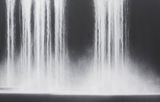
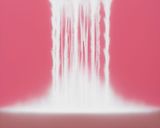
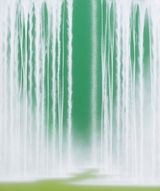
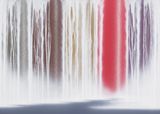
Hiroshi Senju mixes Western and Eastern practices in his art: paint-pouring combines with nihonga techniques using natural pigments and glue. Well-known for his Cliff and Waterfall series, he is inspired by both real-world travelling and the realms of his imagination.
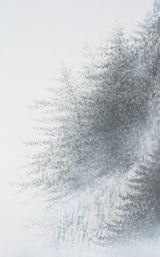
- Senju first considered the idea of the cliff in 2007. He was partly inspired by a crumpled piece of washi paper—looking at it closely, its creases reminded him of rocks. Sanju uses specific tools and materials to make his Cliff paintings: handmade brushes and mulberry washi from Echizen that can only be produced in winter. He begins by hand-creasing the paper, then applies pigments, allowing them to move naturally across the paper’s surface.
- In 2020, two huge Senju paintings were installed at Kongobuji Temple at Mount Koya on its 1,200th anniversary. Installed as fusuma (sliding doors), the paintings—which took three years to create—were installed in two rooms. The waterfall was placed in a space where the passing of Buddhist scholar Kobo Daishi is commemorated, while the cliff was in the ritual room.
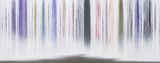
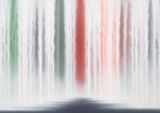
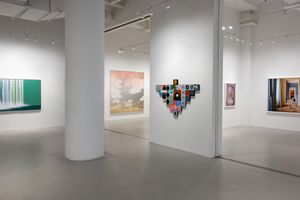
- Senju’s 2025 London exhibition Physical/Metaphysical invited viewers to see his waterfalls under two different light conditions. The “Dayfall” part of the show featured waterfalls in greens, greys, yellows, blues and pinks. The “Nightfall” area used UV light to give an “underwater” appearance to the waterfalls.
Hiroshi Senju: Select Public Commissions
- Waterfall, Foyer, Grand Hyatt Hotel, Tokyo (2003)
- Haneda Airport Domestic Terminal 2, Tokyo (2004) (assisted with art direction)
- Ceramic board murals, Akasaka Biz Tower and Shinjuku-Sanchome Metro Station, Tokyo (2008)
- Haneda Airport International Passenger Terminal, Tokyo (2010) (assisted with art direction)
- Hakata Station, Fukuoka (2011) (assisted with art direction)
- Mural, OUB Centre, Singapore (2012)
- Mural, Ekoin Temple (2013)
- Ceramic tile mural, JR Onagawa Station, Miyagi (2015)
Hiroshi Senju: Select Awards
- Excellence Award, 7th MOA Mokichi Okada Awards, Japan (1994)
- Honourable Mention, 46th Venice Biennale (1995)
- Received Konju-hosho (Dark Blue Ribbon Medal) (1998)
- Received Michiaki Kawakita Award (2000)
- Grand Prize, 13th MOA Mokichi Okada Awards, Japan (2002)
- Foreign Minister’s Commendation, Japan (2016)
- Isamu Noguchi Award, Japan (2017)
- Award for Excellence in Art, Japan America Society of Greater Philadelphia (2018)
- Member, Japan Art Academy (2020)
- Japan Society Award, New York City (2026)
- Named as a Person of Cultural Merit by the Japanese Government (2026)
Hiroshi Senju: Select Exhibitions
Select Solo Exhibitions
- Hiroshi Senju: Light of Silence, Heartbeat of Water, Fukuyama Museum of Art, Hiroshima (2026)
- The Melody of Water, The Splash of Water, Sagawa Art Museum, Shiga (2026)
- Physical/Metaphysical, Sundaram Tagore Gallery, London (2025)
- There is still a Light, Sundaram Tagore Gallery, London (2023)
- Senju’s Waterfall for Chicago, The Art Institute of Chicago (2021)
- Beginnings, Sundaram Tagore Gallery, New York City (2020)
- Hiroshi Senju Commemorating the Completion of Fusuma Paintings for Kongobuji Temple, Koyasan, Toyama Prefectural Museum of Art and Design (2018) (and touring)
- At World’s End, Sundaram Tagore Gallery, New York City (2017)
- Day Falls/Night Falls, Sundaram Tagore Gallery, Hong Kong (2013) (and touring)
- The Tale of Genji—the Skies of Heian Period, Sagawa Art Museum, Shiga (2013)
- Cliffs, Sundaram Tagore Gallery, New York City (2012)
- Hiroshi Senju: World of Blue—Echoes of Kaii Higashiyama, Higashiyama Kaii Setouchi Museum, Kagawa (2010)
- Out of Nature: Cliffs and Falling Water, Sundaram Tagore Gallery, Hong Kong (2009)
- Harukanaru Aoi Hikari, Sundaram Tagore Gallery, New York City (2007)
- Hiroshi Senju, Yamatane Museum of Art, Tokyo (2006)
- Hiroshi Senju—77 Panels of fusuma-e for Jukoin Annex of Daitokuji Temple, Fukuoka Asian Museum (2005)
- Hiroshi Senju—Waterfalls and Glasses, The Hakone Open-Air Museum, Kanagawa (1996)
- Hiroshi Senju, Taipei Fine Arts Museum (1995)
- Hiroshi Senju: 1980—1994, Takamura Museum, Yamanashi (1994)
- Flatwater, Maxwell Davidson Gallery, New York City (1993)
- The End of Dream, Manly Art Gallery and Museum, Sydney (1989)
Select Group Exhibitions
- Jingu Shikinen Sengu Hosan Bijutsuhin-ten, Jingu Museum, Mie (2026)
- Hybridity and Belonging in Contemporary Art_, Sundaram Tagore Gallery, London (2026)
- Frontiers Reimagined, 56th Venice Biennale (2015)
- Japan Setouchi Triennale, Kagawa (2013)
- Water, Fire, and Earth. The Source of Creativity, Contemporary Art Museum Kumamoto (2011)
- 5th Chengdu Biennale (2011)
- Setouchi Triennale, Kagawa (2010)
- Still /Motion: Liquid Crystal Painting, Mie Prefectural Art Museum, Mie (2008) (and touring)
- Masterpiece Collection of Yamatane Museum of Art, The Museum of Modern Art, Toyama (2007)
- 6th Gwangju Biennale (2006)
- Paintings on Fusuma at the Jukoin of Daitokuji Temple, Tokyo National Museum (2003)
- The essence of Contemporary Nihonga, Contemporary Art Museum Kumamoto (2003)
- The New Way of Tea, Japan Society and Asia Society, New York City (2002)
- The Scent and Shape of Ink, National Museum of Contemporary Art, Seoul (2002)
- 100 Years of Nihonga, The University Art Museum, Tokyo University of the Arts, (2000)
- History of Japanese-Style Painting, The Museum of Modern Art, Kamakura & Hayama, Kanagawa (1990)
- 100th Anniversary Exhibition of Tokyo University of the Arts, Nihonbashi Takashimaya, Tokyo (1987)
Further Reading
- Hiroshi Senju’s official website
- Artist profile page at Sundaram Tagore
- Conversation from Ocula (2017)
Hiroshi Senju FAQs
Is Hiroshi Senju an abstract or a figurative artist?
His paintings represent both concepts. Early works including A Far (1978) and Flatwater #4 (1993) include people and landscape detail, yet his Cliff and Waterfall series, for which he has perhaps become most well-known, sit at the intersection of abstraction and figuration. Senju has said: “There is no boundary for me between figurative painting and abstract painting. I move back and forth freely.”
Is there a Hiroshi Senju museum?
Yes. The Hiroshi Senju Museum opened in Karuizawa in 2011. Senju collaborated on the design with the architect Ryue Nishizawa and created a building flooded with natural light. Speaking to Ocula in 2017, Senju explained that museums “have a history of being used to display captured and stolen treasures from other cultures” but he added: “I believe that during my lifetime, the world will become a place where there is no need for walls, and where we trust each other. Therefore, the Karuizawa museum itself is a message to the 21st-century world of a world without borders.
What materials and techniques does Hiroshi Senju use?
Hiroshi Senju is one of the few contemporary masters of the nihonga technique. He makes pigments from stones, minerals, shells and corals mixed with glue made from animal hide, then pours paint (in an Abstract Expressionist manner, perhaps) on to mulberry paper on board.
Has Hiroshi Senju designed stage sets?
Yes—he designed (among other productions) The Magic Flute at Meguro Persimmon Hall, Tokyo (2024), the touring opera Yuzuru (2014), the opera Kamikaze in Tokyo (2013) and _the Japanese Classical Dance with Orchestra in Tokyo (2012).
Ocula

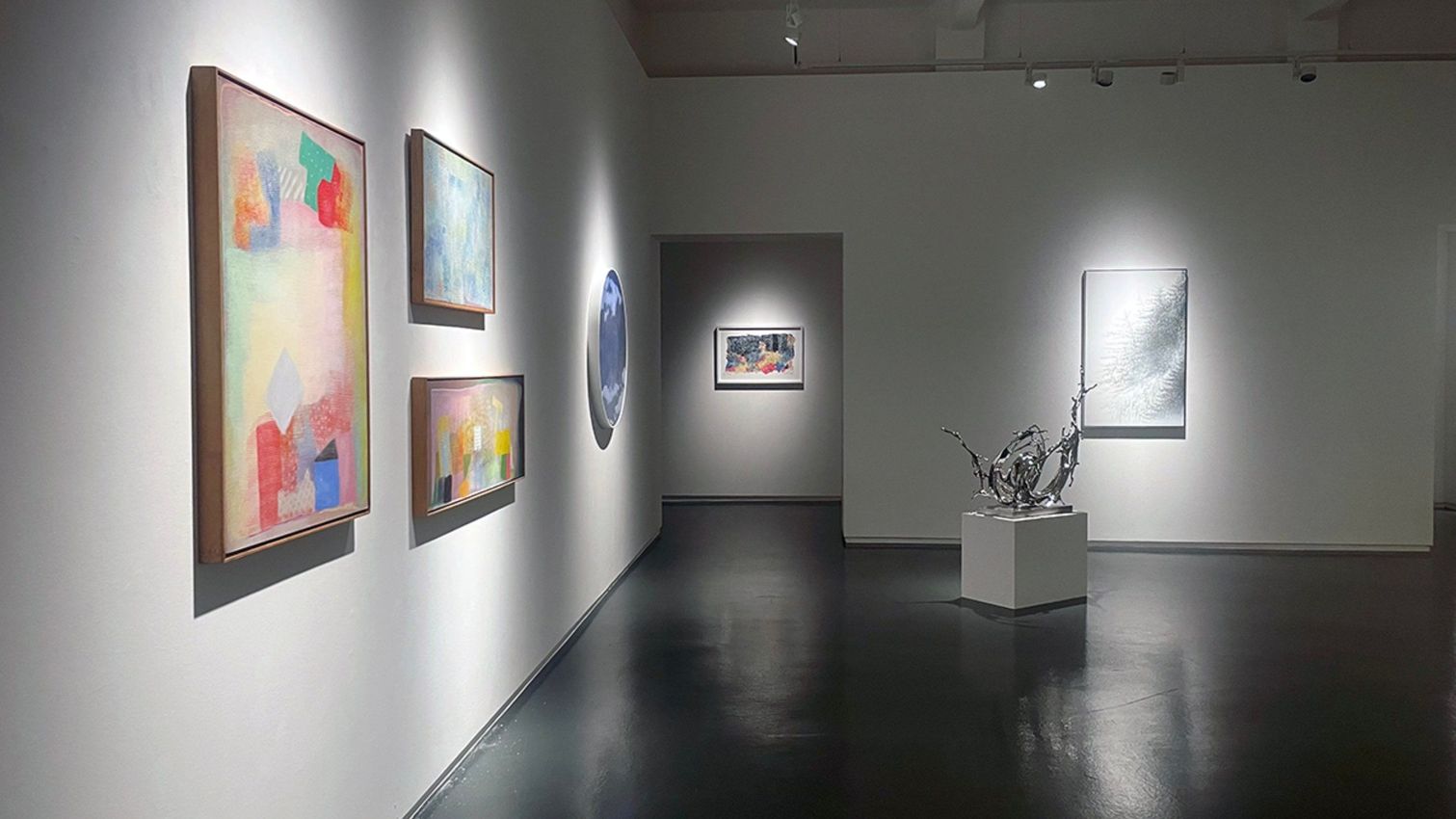
Explore Hiroshi Senju's Exhibitions On Now

View Hiroshi Senju's Artworks













Explore and Follow Artists Shaping Contemporary Art
A respected voice in contemporary art discourse.
Focusing on ambitious storytelling and insightful art-world commentary. Ocula Magazine publishes in-depth interviews, critical essays and timely analysis on the artists, exhibitions and ideas driving the global art world.
Learn more about Ocula Magazine
Showcasing the best of the art world.
Ocula partners with galleries from around the world to highlight their artists, artworks and exhibitions. Gallery membership is by application and invitation, with each member vetted by an independent panel.
Learn more about Ocula Membership
Specialises in the sale of major artworks.
Led by a team with deep ties to the world’s leading auction houses, galleries and collectors. Ocula’s advisory team offers bespoke services to high-net-worth clients from around the world who are looking to acquire the best of contemporary and modern art.
Learn more about our team and services