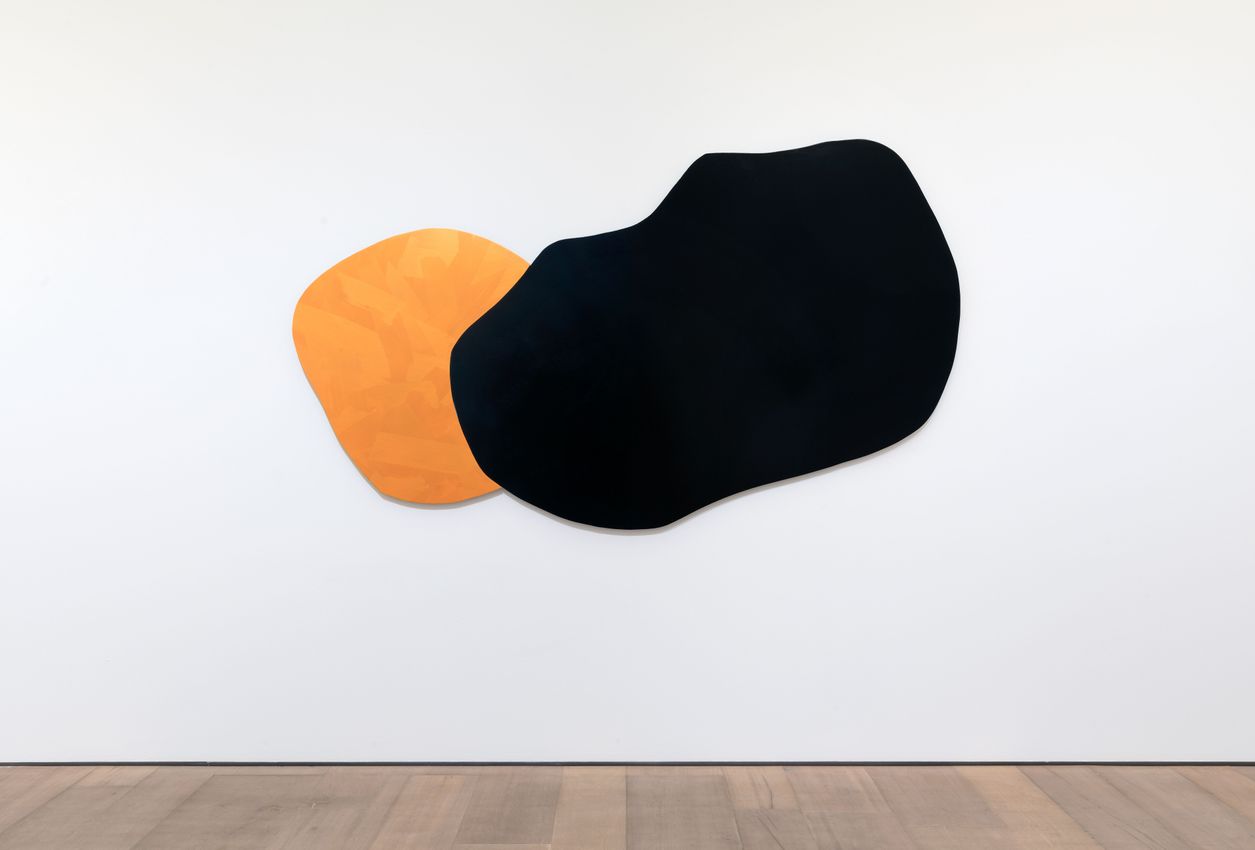
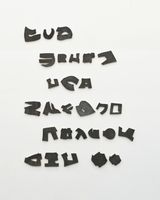
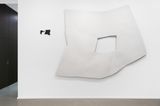
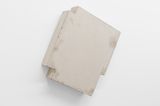
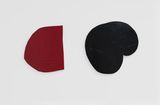
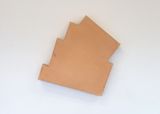
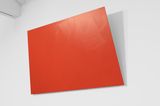
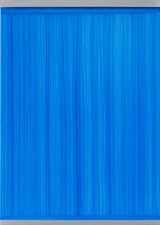
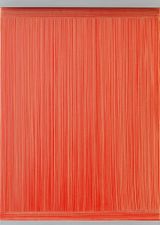
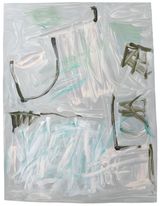
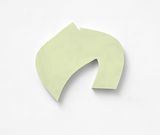
Made from simple materials and with ‘pure perception’ as their guiding ethos, Imi Knoebel’s paintings and installations communicate sentiments across form and colour.
Installations
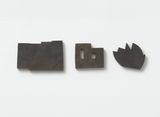
While studying under Beuys, Knoebel made Raum 19 (1968). Named after his studio at the time, this large-scale installation consists of 184 pieces of wood and fibreboard, including frames, cylinders, and cubes, which can be stacked, layered, and reconfigured in multiple ways.
Unpainted and untreated, Raum 19 paved the way for the neutral, pared-down works that would follow, all of which would prioritise form over idea. In the artist’s own words: ‘When I am asked about what I think when I look at a painting ... I look at it and can only take in the beauty, and I don’t want to see it in relation to anything else.’
White Paintings
During his studies, Knoebel grew more interested in high modernist principles, including the relationship between space, pictorial space, and colour.
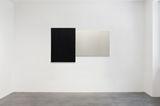
Accordingly, Knoebel’s early work included light projections and pure white paintings like Weisse Konstellation (1975/1987), four acrylic boards painted white and stacked diagonally atop one another against a wall.
Coloured Sentiment
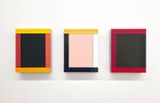
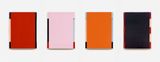
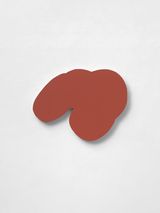
Later geometric paintings like the ‘Kinderstern’ (‘Star for Children’) series (1988—ongoing), which includes imperfect star shapes painted bright colours, depart from a strictly reductionist stance through the addition of colour while retaining the simplicity of familiar forms, recreating a toy block a child could play with.
Just as understated, An meine Grüne Seite 07-29 (2007), a white tent-like construction made from two boards propped against each other with the interior painted orange, appears almost sculptural in nature as it renounces the boundaries of the canvas.
Knife Cut Paintings
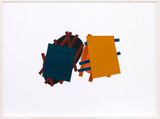
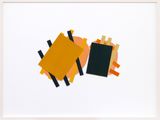
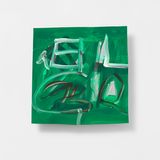
Knoebel is further known for his ‘Messerschnitt’ (‘Knife Cut’) paintings, a distinct painting style on paper that results in a cacophony of abstract shapes rendered in complementary colours, each partaking a dialogue with the next without ever touching the other.
Amongst them, Messerschnitt (1977) depicts morsels of brown aside curling red strips and hybrid triangles painted pink, showing the odd shapes in perfect harmony against a white background.
Later Work
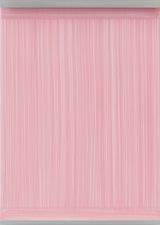
In Knoebel’s work, shape and colour alike arouse sentiments of liveliness and nostalgia in the viewer, which are emphasised by the simplicity of the artist’s subject matter.
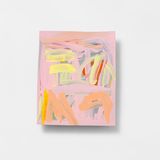
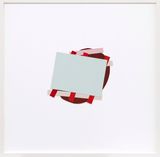
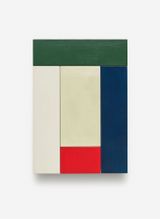
Resulting works like LUEB Go 1276w (2013), strips of colour plastered on a pink oval aluminium board, hint at a sense of playfulness while offering a sober contemplation of visual and formal interactions through its careful composition.