





MA QIUSHA
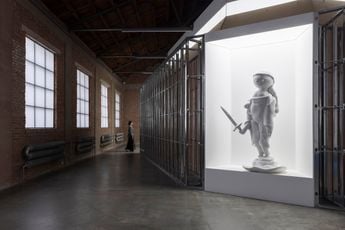
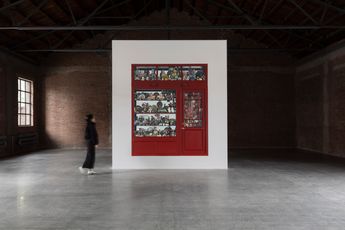
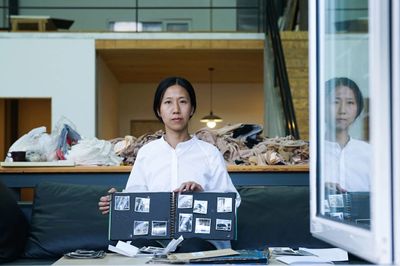
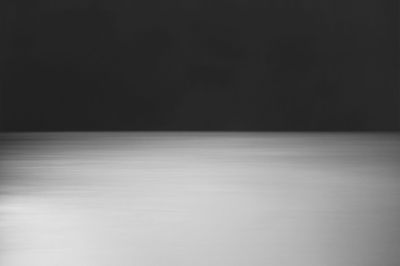
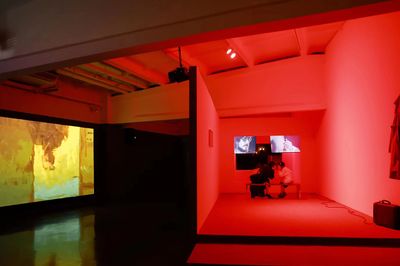
b. 1982, ChinaMa Qiusha’s work is often explicitly biographical and hyper-specific in its context. Her diversified art practice encompasses video, photography, painting and installation. Linking interestingly and cautiously with the conflicts and dilemmas that are encountered in daily experience, her works reveal strange imagination concealed beneath the surface of the mundane. These subtle experiences of daily life conveyed by the body, or by parts of the body, arise repeatedly in several of her works, mostly expressed as metaphorical postures of a more ambiguous nature. Another overarching theme in Ma Qiusha’s works is the intergenerational gaps, as she often demonstrates particular flair for injecting her art with subtle but unmistakable signs and symbols of the sociocultural transformations during the several recent high-speed decades that are deeply complex in their mining of personal and collective memories, offering audiences insights into lived, human experiences. In one sense, all of her work is imagistic, the often-used “window”, “cars” and “road” employed as rhetorical vehicles in various scenes to present the various perspectives for viewing conceived by the artist. Bringing together relationships, objects, structures and stories as a way to subvert dominant readings of their histories, her works stand out as increasingly crucial documents of the country’s tensions and its political and social shifts.
Ma Qiusha (b. 1982) received her BA in Digital Media Art from China Central Academy of Fine Arts in 2005 and MFA in Electronic Integrated Arts from Alfred University, New York in 2008. She currently lives and works in Beijing. Her solo exhibitions were held at Middlesbrough Institute of Modern Art, UK (2018); OCT Contemporary Art Terminal Xi’an, China (2018); Beijing Commune, Beijing (2019, 2016, 2014, 2013, 2012); Chinese Arts Centre, Manchester (2013); Ullens Center for Contemporary Art, Beijing (2011); Taikang Space, Beijing (2010, 2007), and etc. Ma Qiusha’s art have been shown at prestigious institutions including Tate Modern Museum (London); Centre Georges Pompidou (Paris); Groninger Museum (Groningen, the Netherlands); Borusan Contemporary (Istanbul); Zentrum für Kunst und Medientechnologie (Karlsruhe); Contemporary Arts Museum Houston (Houston, US); Tampa Museum of Art (Tampa, US); Museum of Fine Arts (St. Petersburg, US); Orange County Museum of Art (Orange County, US); Los Angeles County Museum of Art (Los Angeles); Smart Museum of Art (Chicago); International Contemporary Art Foundation, Bergen, Norway; Stavanger Art Museum, Norway; Portland Institute for Contemporary Art, Oregon; Tai Kwun Contemporary, Hong Kong; Ullens Center for Contemporary Art, Beijing; Minsheng Art Museum, Shanghai; OCAT Shanghai, China; OCAT Xi’an, China; A4 Art Museum, Chengdu, China; National Art Museum of China, Beijing and Art Museum of Central Academy of Fine Arts, Beijing, etc. She was nominated for the Pierre Huber Prize (2014) and “Young Artist of the Year” by Award of Art China (AAC) in 2017 and 2013.
Courtesy Beijing Commune

Works at Beijing Commune


Recently Exhibited








Explore and Follow Artists Shaping Contemporary Art
A respected voice in contemporary art discourse.
Focusing on ambitious storytelling and insightful art-world commentary. Ocula Magazine publishes in-depth interviews, critical essays and timely analysis on the artists, exhibitions and ideas driving the global art world.
Learn more about Ocula Magazine
Showcasing the best of the art world.
Ocula partners with galleries from around the world to highlight their artists, artworks and exhibitions. Gallery membership is by application and invitation, with each member vetted by an independent panel.
Learn more about Ocula Membership
Specialises in the sale of major artworks.
Led by a team with deep ties to the world’s leading auction houses, galleries and collectors. Ocula’s advisory team offers bespoke services to high-net-worth clients from around the world who are looking to acquire the best of contemporary and modern art.
Learn more about our team and services