






MARILIA KRANZ
1937-2017, BrazilMarilia Kranz was born and lived in the city of Rio de Janeiro, whose landscape is a recurring subject in her work. Having drawn since childhood, at the age of 17 she began her formal studies in art, studying painting at the Museum of Modern Art in Rio de Janeiro. In 1956, she joined the National School of Fine Arts, where she studied for three years. She also attended the studios of Catarina Baratelli (painting, 1963-66) and Eduardo Sued (engraving, 1971).
In the early stage of her production, until the mid-1960s, Marilia focused on drawing and the study of painting. Afterwards, she began to produce abstract reliefs in plaster, cardboard, and wood – works that were part of her first solo exhibition, in 1968, at Oca Gallery, in Rio de Janeiro. In 1969, after returning from trips to Europe and the United States, she started to produce reliefs using the vacuum forming technique with rigid polyurethane, fiberglass, resin, and industrial enamels; as well as sculptures with cut and polished acrylic, called Contraforms.
The artist innovated by producing frame-objects using the vacuum forming technique, which was not widespread in Brazil at the time, even in the industrial sector. In addition, the content of the works also had a strong experimental character. According to art critic Frederico Morais, the abstract and geometric forms explored in these works and in Marilia’s entire body of work would be closer to artists such as Ben Nicholson, Auguste Herbin, and Alberto Magnelli than to the constructivist trends that were prominent in Brazil, such as Concretism and Neo-concretism.
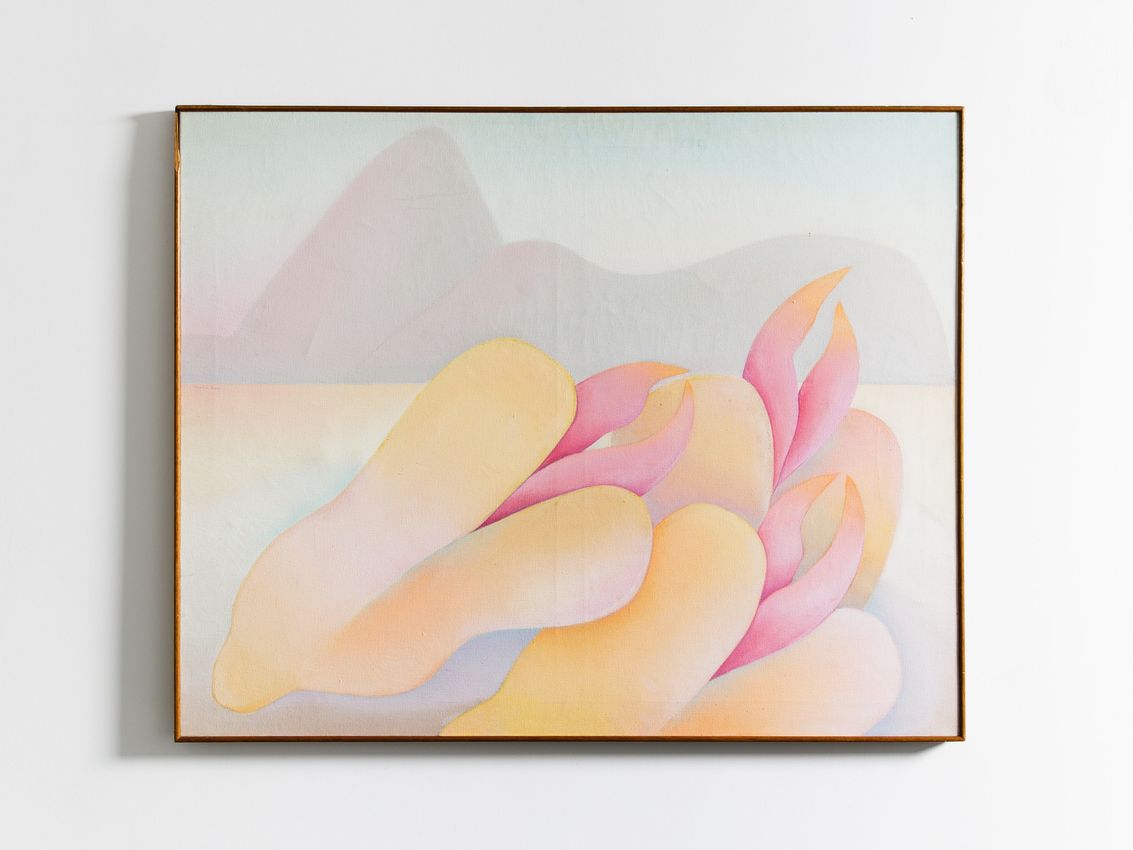
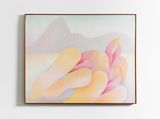
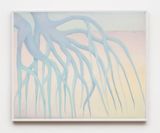
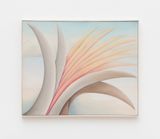
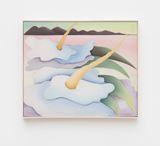
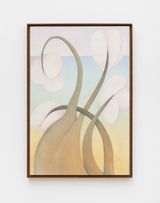
From 1974 on, she resumed her painting practice, addressing in her canvases elements of her favorite landscapes in Rio de Janeiro. Compared to artists such as Giorgio de Chirico and Tarsila do Amaral, her geometrized landscapes and figures, bordering on abstraction, contain solemnity and eroticism at the same time. Pastel tones, in turn, became her signature. “The color surrenders before the luminous intensity,” says Frederico Morais. When we look at the flowers and fruits that are featured in several of her paintings with great sensuality, we also think of Georgia O’Keeffe, considered by Kranz as her “soul sister”.
The artist is also known for her support of women’s sexual liberation and political freedom during the military dictatorship in Brazil, as well as her fight for environmental causes, being one of the founders of the Partido Verde in 1986.
Marilia Kranz has held exhibitions in galleries and national and international institutions and has received numerous awards for her paintings and sculptures, including: the sculpture award at the 13º Panorama de Arte Atual Brasileira, in 1981, and the acquisition prize at the Salão de Artes Visuais do Estado do Rio, in 1973. In 2007, there was the retrospective exhibition Marilia Kranz: reliefs and sculptures at the Museum of Modern Art in Rio de Janeiro, the occasion when the monograph Marilia Kranz was launched, written by the art critic Frederico Morais, who followed the artist during her entire career.
Text courtesy Galatea.












Explore and Follow Artists Shaping Contemporary Art
A respected voice in contemporary art discourse.
Focusing on ambitious storytelling and insightful art-world commentary. Ocula Magazine publishes in-depth interviews, critical essays and timely analysis on the artists, exhibitions and ideas driving the global art world.
Learn more about Ocula Magazine
Showcasing the best of the art world.
Ocula partners with galleries from around the world to highlight their artists, artworks and exhibitions. Gallery membership is by application and invitation, with each member vetted by an independent panel.
Learn more about Ocula Membership
Specialises in the sale of major artworks.
Led by a team with deep ties to the world’s leading auction houses, galleries and collectors. Ocula’s advisory team offers bespoke services to high-net-worth clients from around the world who are looking to acquire the best of contemporary and modern art.
Learn more about our team and services