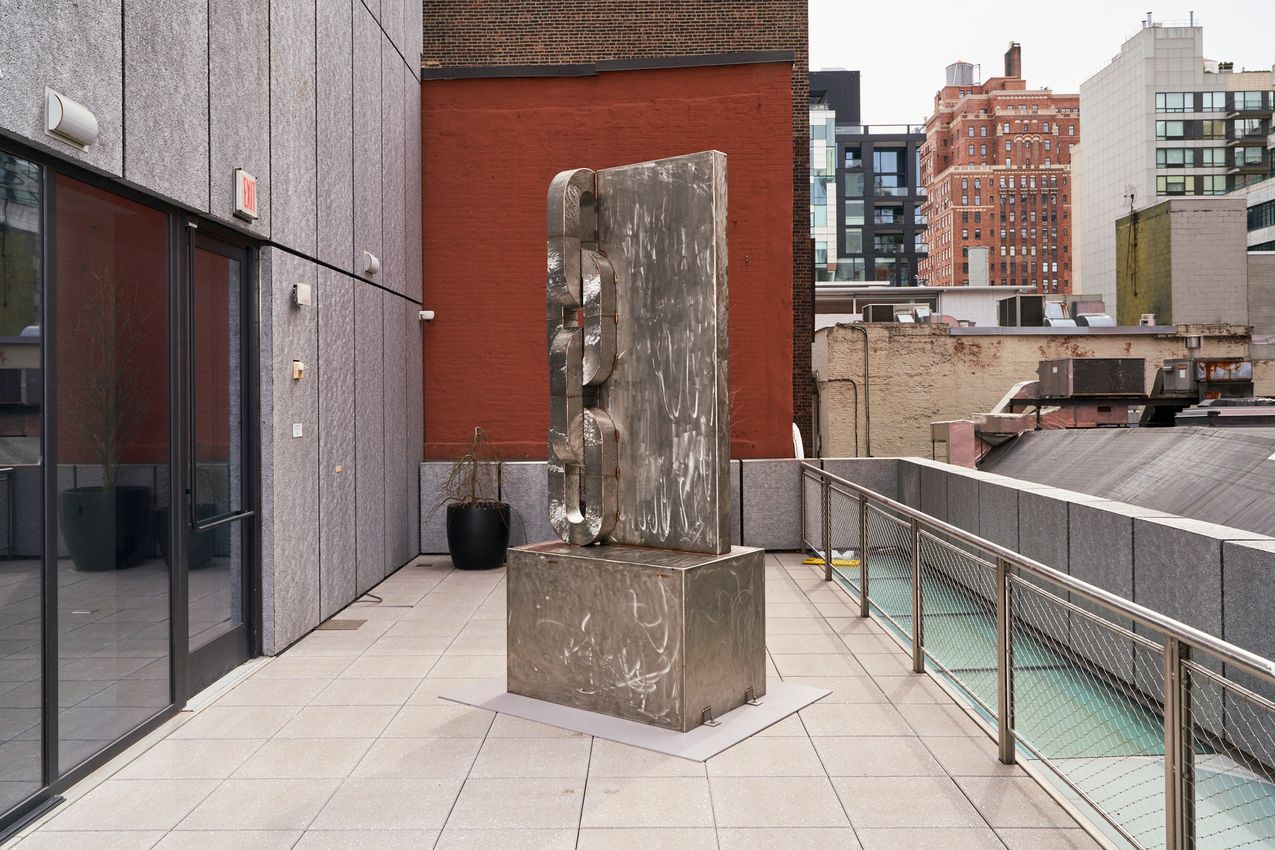
In 1970, Melvin Edwards became the first Black sculptor to have a solo exhibition at the Whitney Museum of Modern Art in New York.
Lynch Fragments Series (1963-Present)
In this series of work, Edwards welds together disparate scraps of found metal to create new art objects that investigate narratives of violence, oppression and creation.
The artist began Lynch Fragments (1963—Present) after finding inspiration in the socially-engaged practices of modernist sculptors Julio González and David Smith.
The Lynch Fragments series extends across three important periods of the artist’s life. Beginning in the 1960s, Edwards created sculptures in response to the racial violence occurring throughout the United States. By the 1970s, Edwards’ focus turned to the Vietnam War protests. Finally, from 1978 to present, the artist’s series looks to nostalgia and an exploration into Edwards’ interest in African culture and his own African heritage.
Each sculpture fuses metal objects such as nails, chains, spikes, bolts and hammers to create a threatening abstract form. Edwards’ tangles of welded scraps refer to the history of brutality, violence and intense physical labour of the black body.
Public Commissions
Edwards is a firm supporter of public art. He has contributed public sculptures to museums, universities and public housing projects since the 1960s.
Public commissions include Homage to My Father and the Spirit (1969) at the Herbert F. Johnson Museum of Art, Ithaca; Holder of the Light (1985) at Lafayette Gardens, Jersey City; and Asafo Kra No (1993) at the Utsukushi-Ga-Hara Open-Air Museum, Nagano Prefecture, Japan.
Smokehouse (1968-70)
Smokehouse (1968—70) was a New York City collective that helped to transform neighbourhoods by installing sculptures and painting murals on city walls. Edwards and artists William T. Williams, Guy Ciarcia and Billy Rose cleaned up sites around the city and actively engaged with members of different neighbourhoods to employ teenagers and elders who assisted during production.
Smokehouse used the transformative power of public art to enhance the value of contemporary urban life by creating an artist platform for the community, by the community.