





MONIKA CORREA
b. 1938, IndiaMonika Correa is an Indian artist who began working with fiber in the 1960s. It was in 1962 when she was in Boston that Correa learned the fundamentals of weaving from Marianna Strengell, who had retired from teaching at Cranbrook Academy.
On returning to Bombay, Correa started taking classes at the Weavers Service Centre which was run by the Governement of India, and it was here for a period of three months she had the opportunity to interact and engage with K.G. Subramanyan who was working on his own ‘fiber sculptures’ at the time. Subramanyan’s approach made a deep impression on the young Correa.
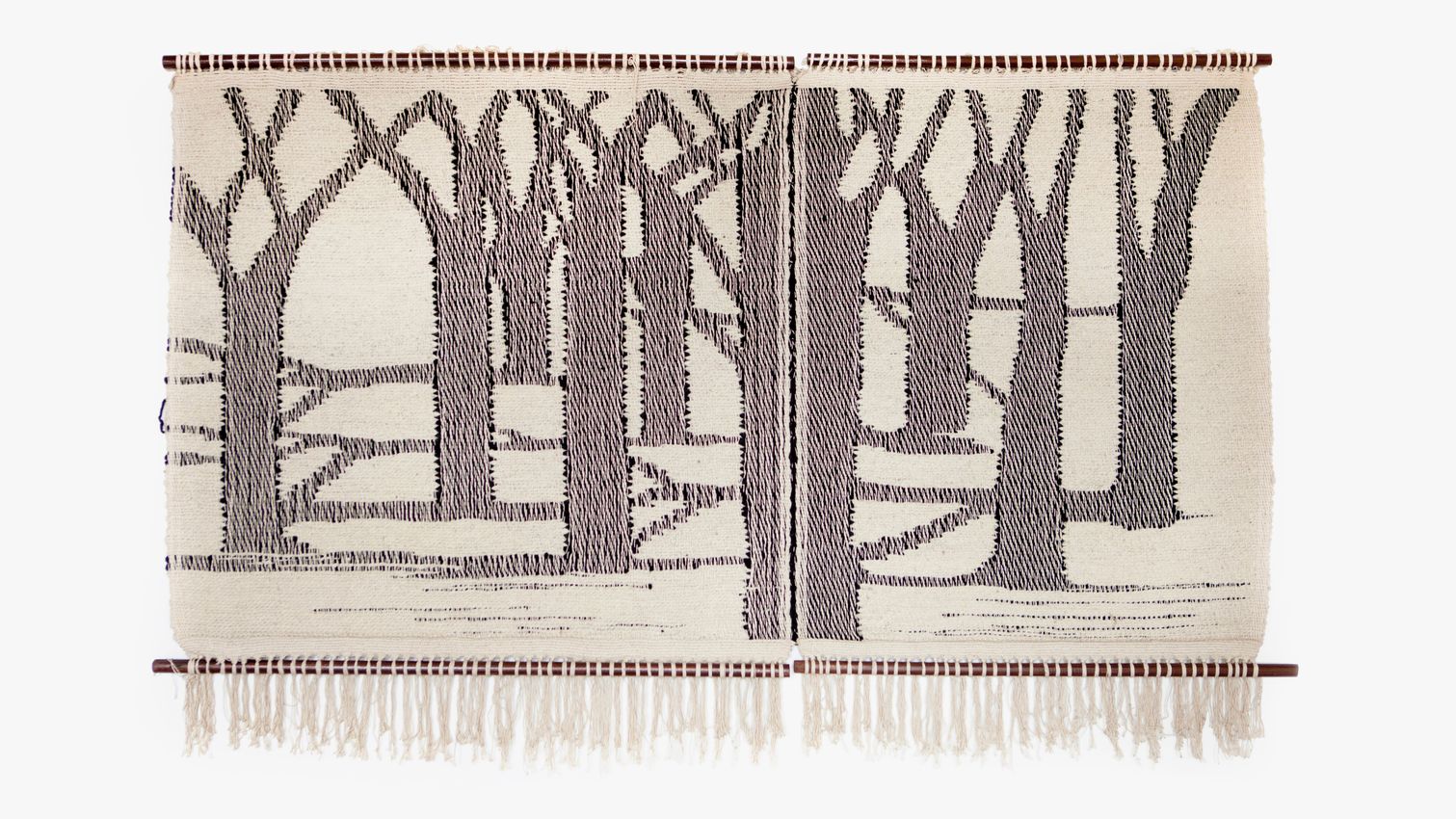
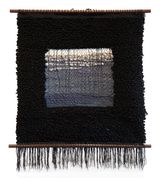
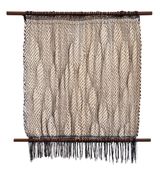
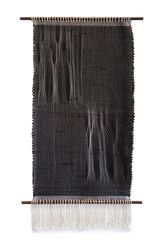
Correa first began making dhurries (floor carpets) in which she used the simplest forms: stripes and solid surfaces. Wherever possible in these dhurries and gradually in wall mounted works that include Mecca (1967) and Area of Darkness (1969), Correa would make the process of weaving itself visible—for example, the saw tooth edge formed in switching from one color to another, a technique found in the traditional weaving of countries like India, Peru and Mexico.
She would also take patterns and abstract them, blocking them and enlarging them to an unconventional scale, allowing the colors of the textile to truly stand out. Both of these techniques are visible in the work Lego from 1968, one of two works by Correa in The Met’s collection. It is a consummate example of Correa’s early experiments as a fiber artist and how she was consciously engaging with historical traditions techniques of weaving and reinterpreting them with a decidedly modernist sensibility.
Most of her weaving uses cotton for the warp and hand spun wool for the weft. Correa was introduced to this rough and textured wool (recalling the rija rugs) by John Bissel whose partner Madhukar Khera would send large bundles to her from Panipat. Correa would have the wool dyed in Bombay to the colors she favoured.
For Correa, this thick, handspun wool is as she has stated of ‘decisive importance to the development of [her] work. It has the grit and substantiality which gives a backbone to the weaving’. It is this quality of the wool that allows Correa to experiment and arrive at seminal weavings in which the reed is removed and weaving process goes from structured order of conventional weaving to a relative chaos of an unreeded aesthetic of improvisation.
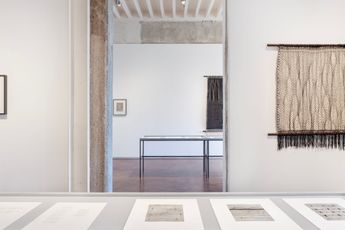
Her work has been shown internationally in solo and group exhibitions including: National Gallery of Canada, Ottawa (2025); La Biennale di Venezia, Venice (2024); Minneapolis Institute of Art (2022-23); Museum of Modern Art, New York (2019); Frieze, London (2019); Jawahar Kala Kendra, Jaipur (2018); The Whitworth Art Gallery, Manchester (2017); Dhaka Art Summit, Dhaka (2016); RMIT Gallery, Melbourne (2015).
Correa’s work is held by a number of leading collections, including Kiran Nadar Museum of Art, New Delhi; M+ Museum, Hong Kong; Metropolitan Museum of Art, New York; Minneapolis Institute of Art, Minneapolis; Museum of Fine Arts, Boston; Museum of Modern Art, New York; National Gallery of Canada, Ottowa; and Tate Modern, London.
Text courtesy Met Museum and Jhaveri Contemporary.

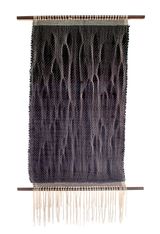
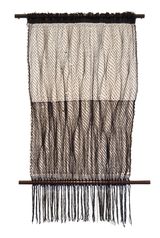
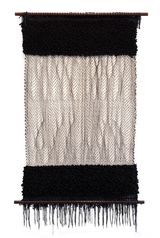
Works at Jhaveri Contemporary












Explore and Follow Artists Shaping Contemporary Art
A respected voice in contemporary art discourse.
Focusing on ambitious storytelling and insightful art-world commentary. Ocula Magazine publishes in-depth interviews, critical essays and timely analysis on the artists, exhibitions and ideas driving the global art world.
Learn more about Ocula Magazine
Showcasing the best of the art world.
Ocula partners with galleries from around the world to highlight their artists, artworks and exhibitions. Gallery membership is by application and invitation, with each member vetted by an independent panel.
Learn more about Ocula Membership
Specialises in the sale of major artworks.
Led by a team with deep ties to the world’s leading auction houses, galleries and collectors. Ocula’s advisory team offers bespoke services to high-net-worth clients from around the world who are looking to acquire the best of contemporary and modern art.
Learn more about our team and services