Press Release

Slippage and Slow Constructions: Monika Correa and Seher Shah

There are curious overlaps in the practices of Monika Correa and Seher Shah that emerge in the pairing in Woven Nights. Nearly four decades apart in age, the two women belong to different generations and geographies, separated further by experience and medium. Yet their shared attention to structure, rhythm, and materiality, and the affinities in their visual vocabulary, bind them as if familial.

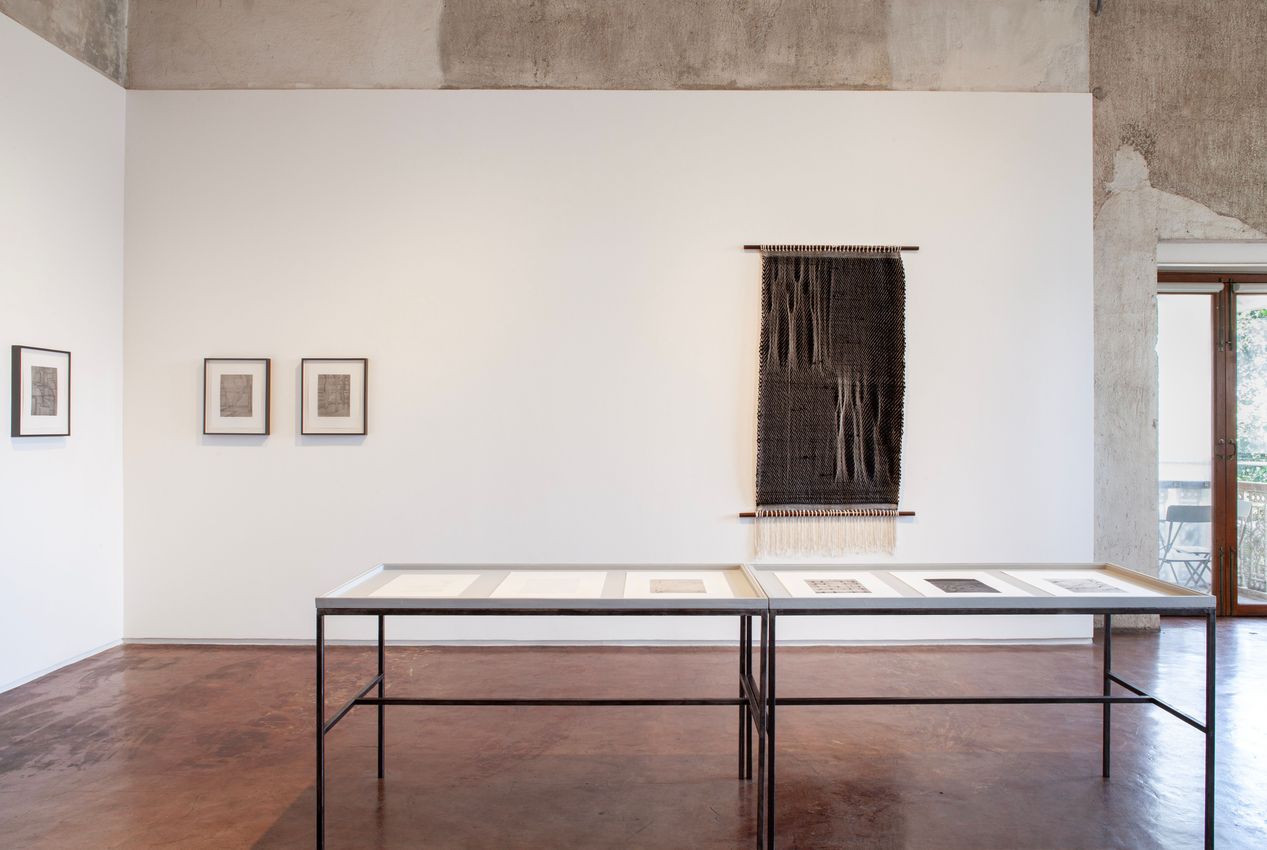
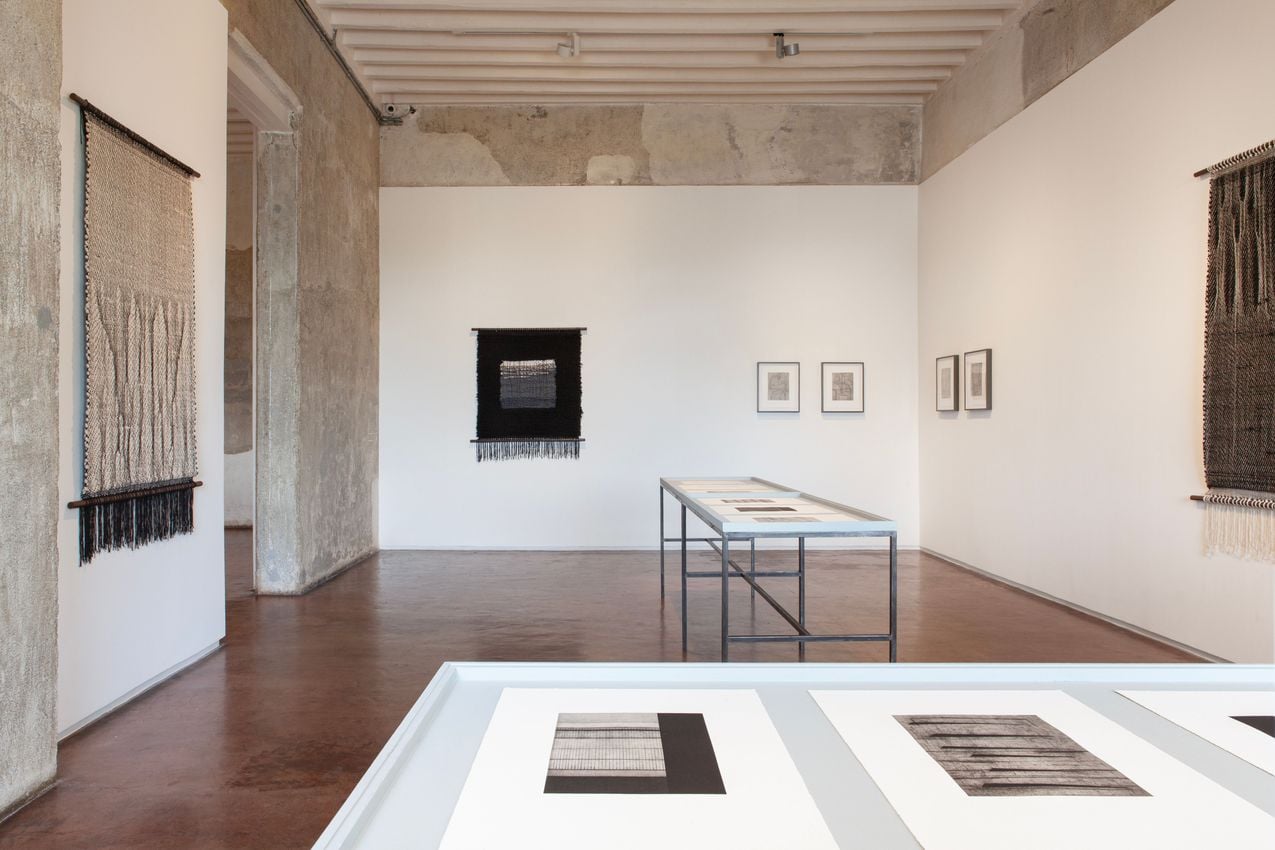
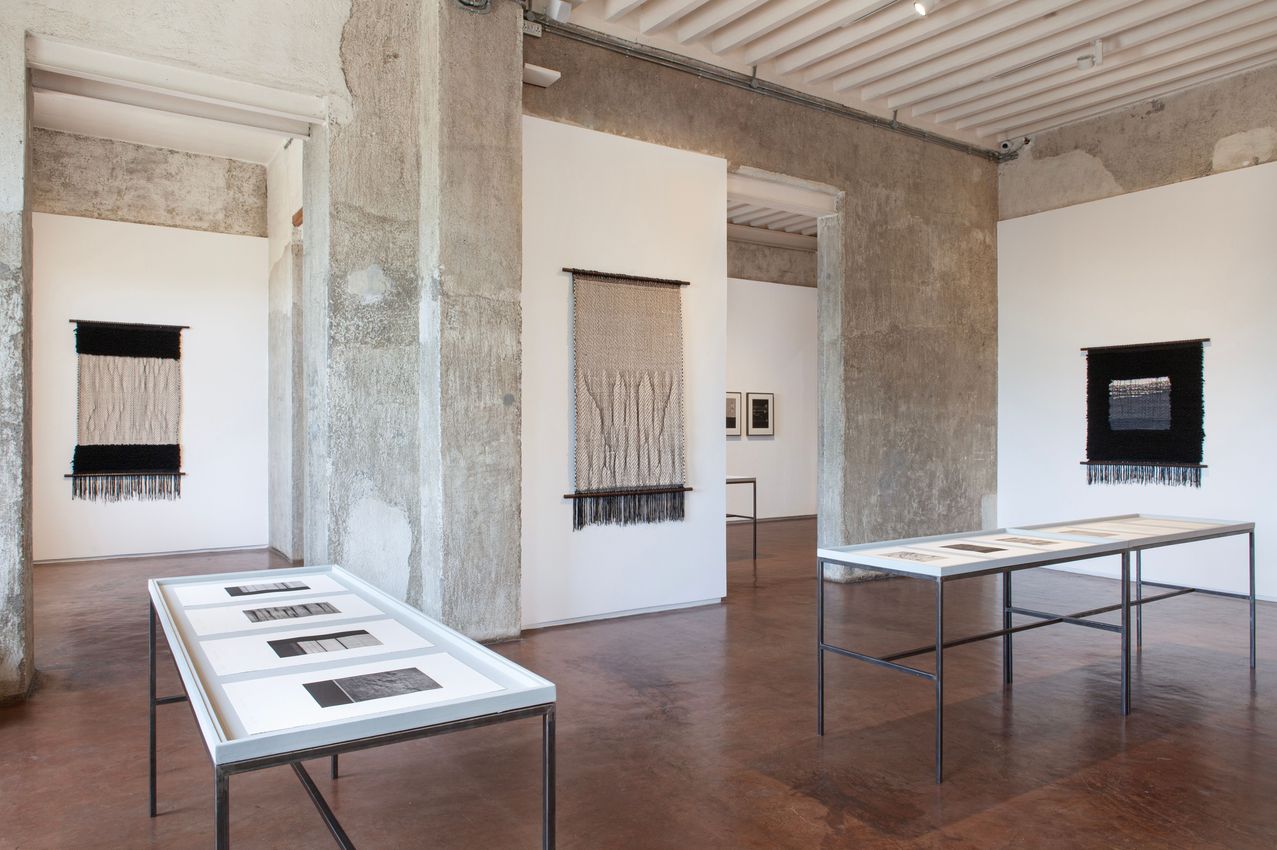
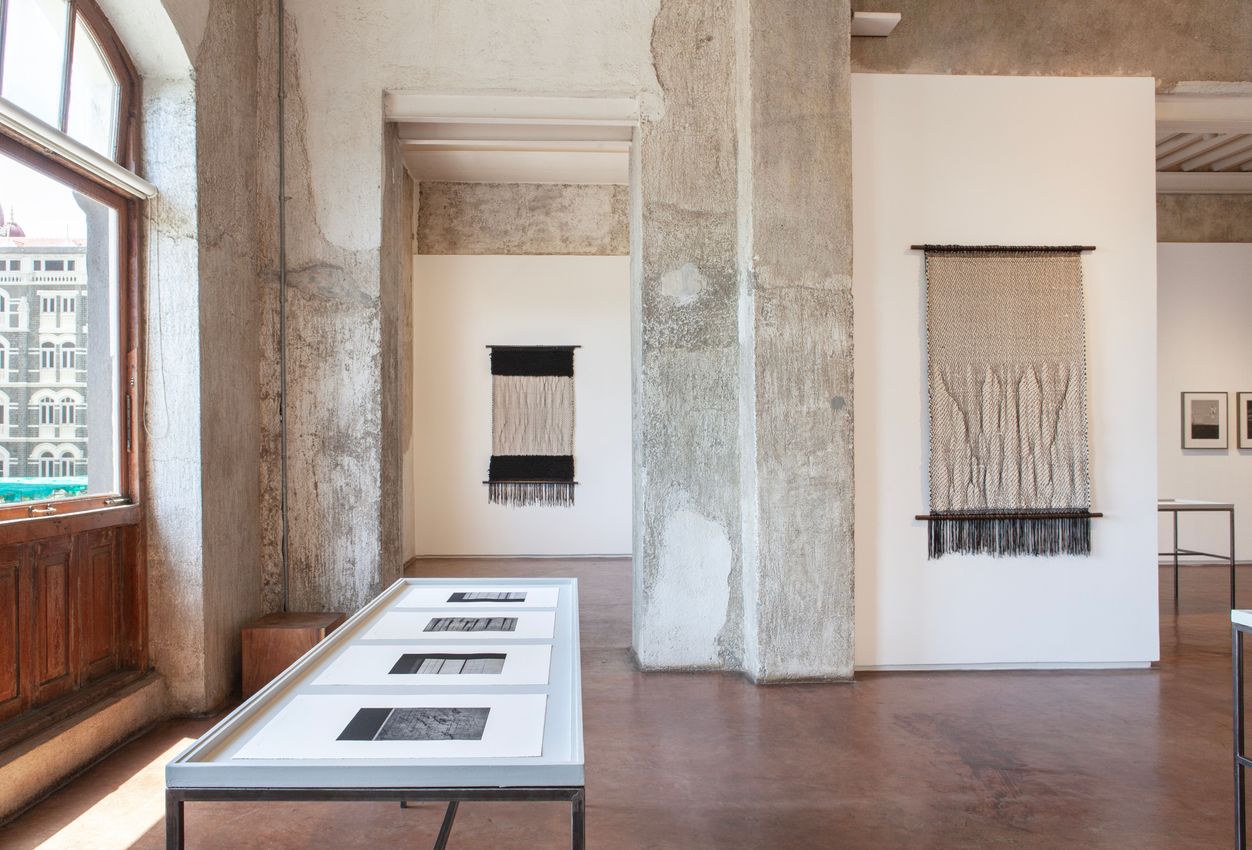
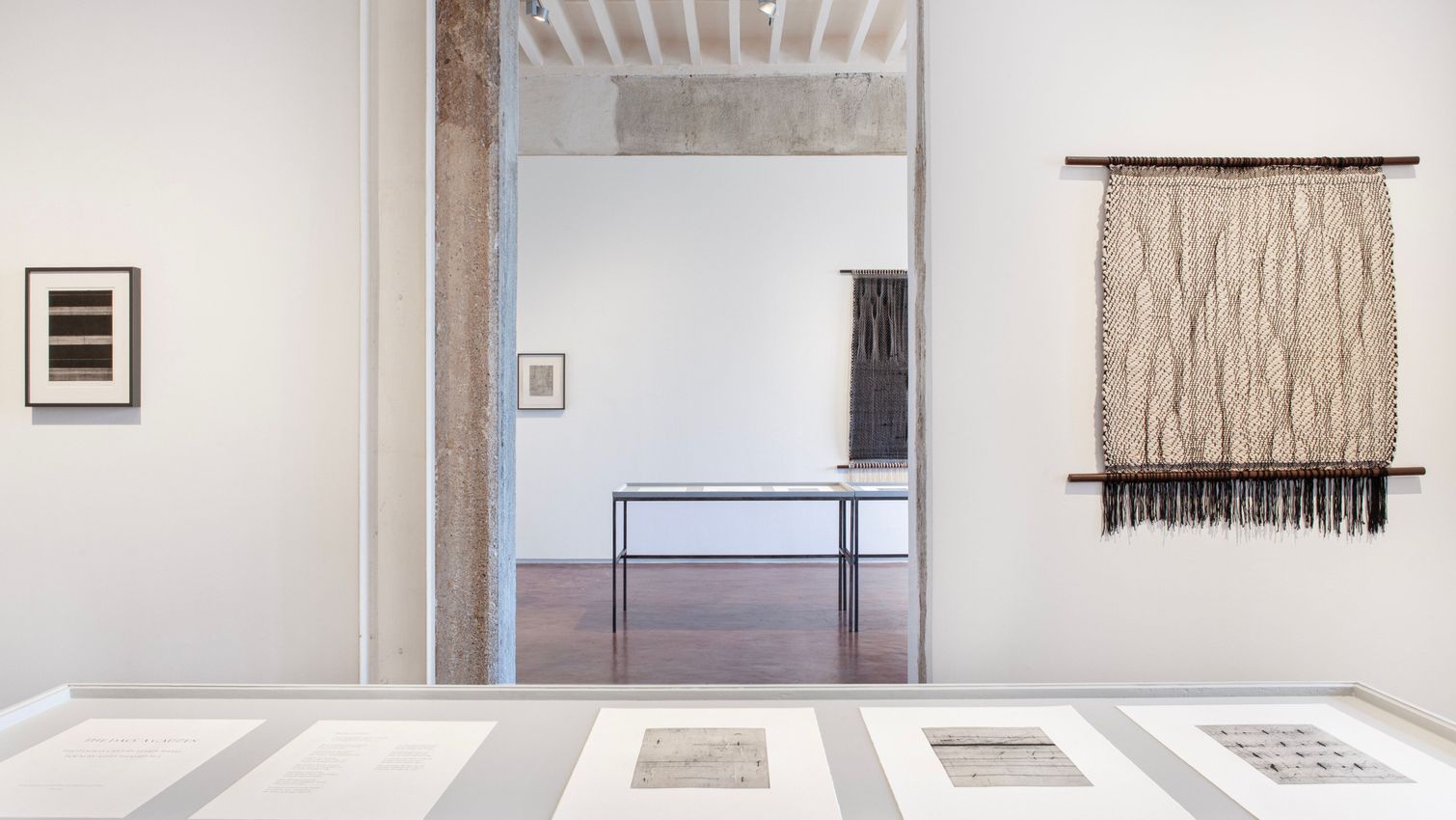
Placed in proximity, Correa’s handwoven tapestries of cotton and wool, produced over the past decade, enter into lyrical dialogue with Shah’s recent prints, drawings, and photogravures. The monochromatic and non-objective minimalism of both practices is the most immediate connection. But beneath this lies something more compelling: the deliberate, labour-intensive act of slow making and the depth of process it demands. Both artists engage with historically undervalued mediums, repositioning them as central to serious artistic inquiry. This shared pace and investment in repetition, duration, and the discoveries it allows, forms one of the strongest parallels between their works.

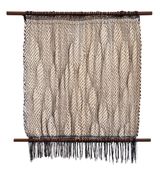
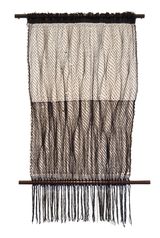
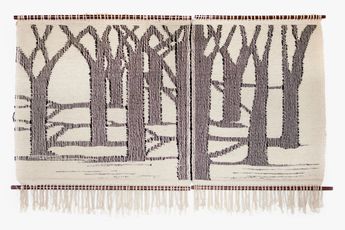
Although Correa and Shah have never met, their paths across time, place, and practice have charted remarkably similar courses. Correa originally trained in microbiology before turning to weaving, fully adopting the loom as her tool in the 1960s. From the outset, the artist used the loom as more than a machine of repetition. Modifying its mechanics, she created room for interruptions and irregularities, with the resulting textiles abstract, restrained, and often worked in black and white. Over six decades, Correa has built a practice that speaks the language of space, architecture, and minimalism. Each tapestry records the decisions of her body and hand, and moments where structure gives way to disorder. The loom becomes not only her tool, but her interlocutor, responsive to gesture, accident, and experiment, so that each work is as much about dialogue with material as it is with the instrument.

Correa’s earliest training was shaped by renowned modernist textile designer Marianne Strengell of the Cranbrook Academy in the US, and later by the architectural circles of post-independence India, where her husband Charles Correa was a central figure. While many of her peers pushed textiles into sculptural form, Correa retained the woven surface, treating it instead as a site of abstraction and spatial rhythm. Her rejection of imagery and insistence on pared-down forms allowed the thickness, slippage, and weight of the thread itself to become the subject, while working with unusual scales brought the behaviour of the medium to the fore. In a context where textiles were long dismissed as craft, this was a radical and pioneering position.

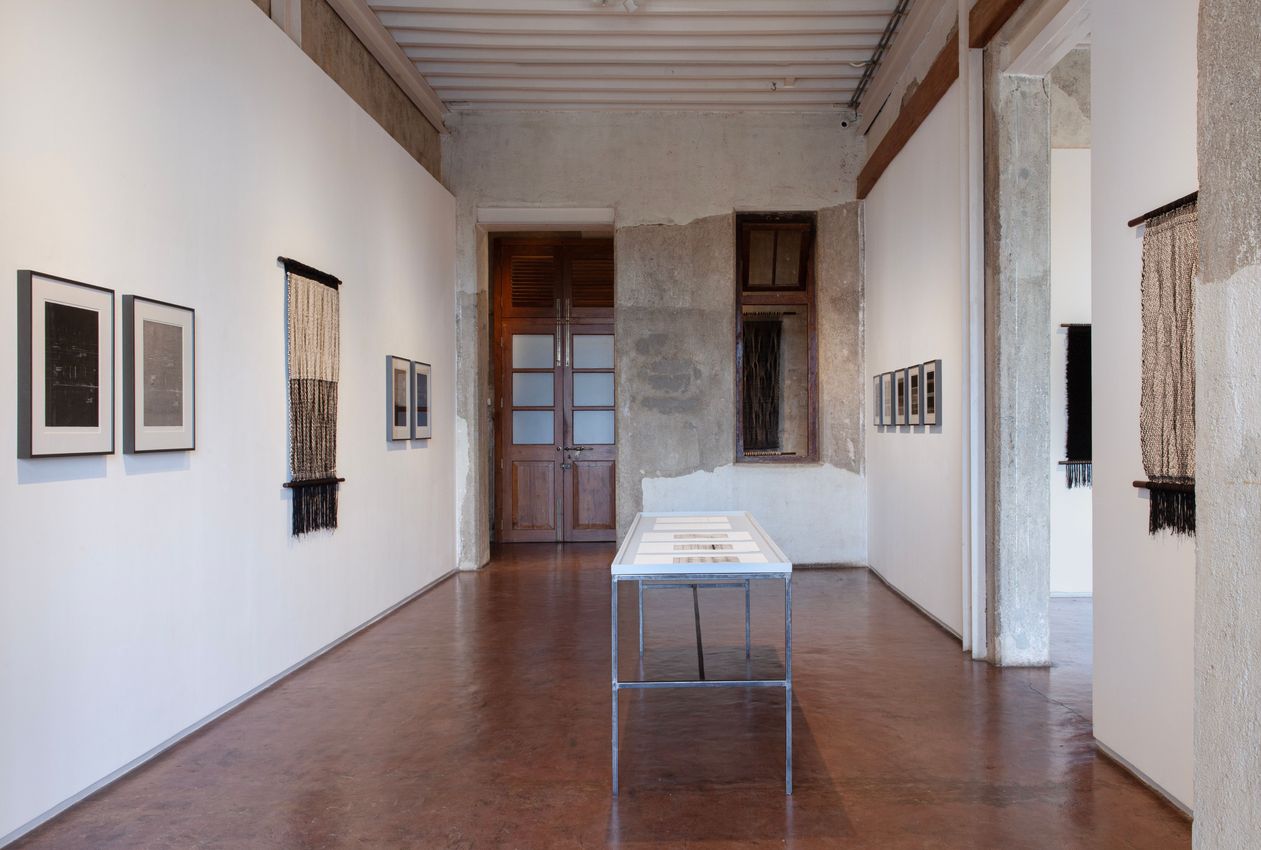
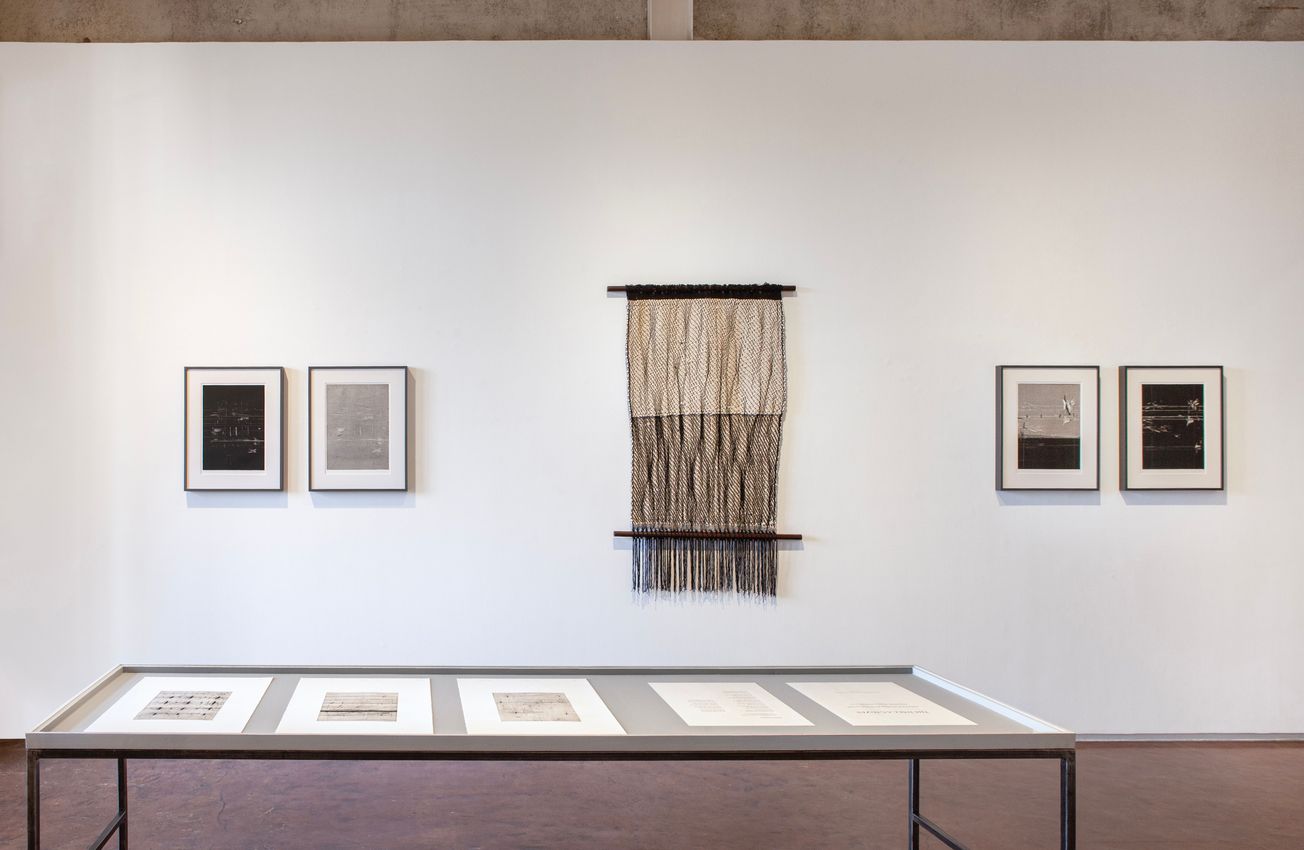
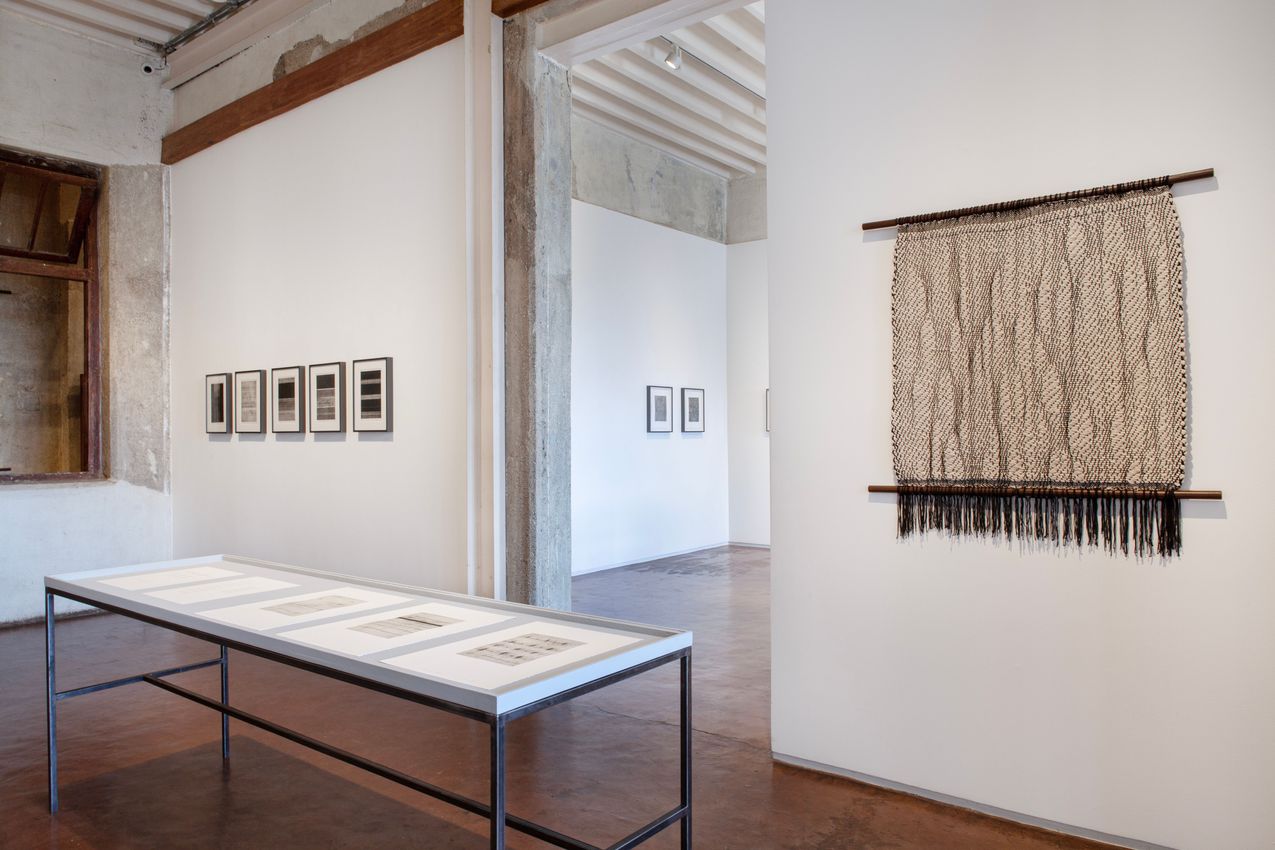
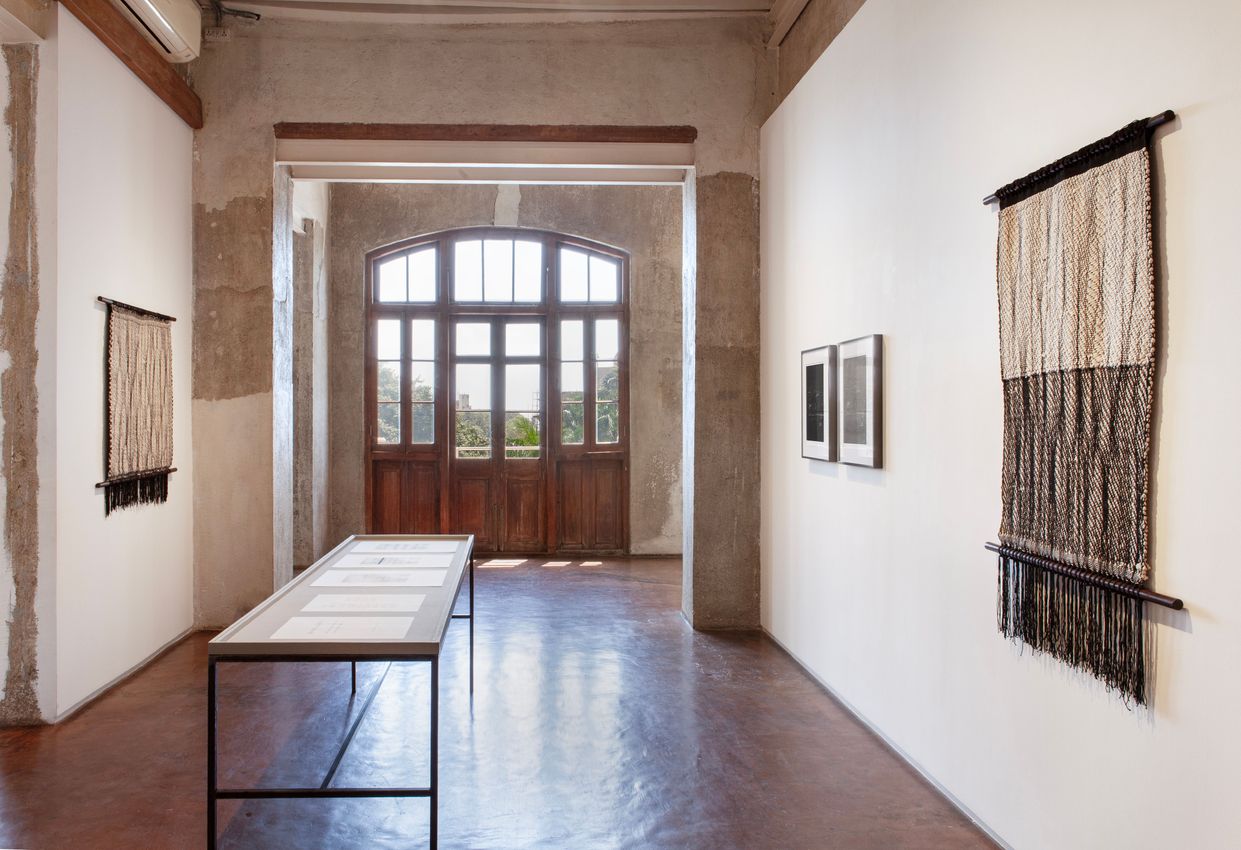
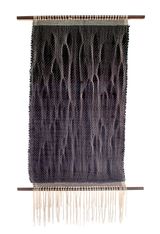
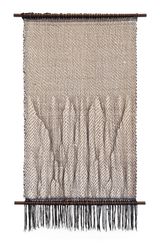
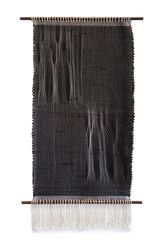
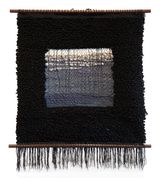
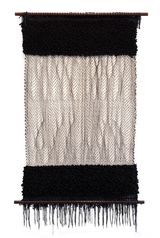
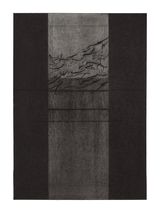
The recent works in this exhibition underline her approach. Confused (2023), in unbleached and dyed cotton and Four Quarters (2023), in bleached cotton and dyed yarn, both vibrate with the ghostly interlacing of black and white threads. In contrast, Light at the End of the Tunnel (2024) offers a dense black field of cotton interrupted by a central square of hand spun wool that dissolves from white into greys at the base. Together, they show the range of Correa’s restraint: some alive with movement, others heavy with weight and gravity.

It is in similar spirit that Shah’s trajectory also unfolds. Trained as an architect, she later turned to drawing and then printmaking, spending the last decade experimenting intensively on the press. Like Correa’s rethinking of the loom, Shah has repurposed the printing press as a site of discovery rather than a producer of multiples.

For Shah, drawing is a primary mode, extending into etching and printmaking, accumulating as grids, scratches, or erasures that form her minimal vocabulary. She experiments further with paper and pigments that respond unpredictably under pressure and heat, producing monotypes that register both failure and discovery. Here, process is central but not always visible, and the residue of labour and experiment becomes embedded in the surface.

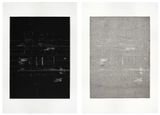
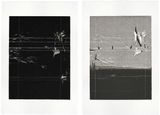
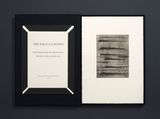
The four bodies of work in this exhibition are grounded in process and material but also channel ideas of absence and the void. At the centre of Shah’s contribution to this exhibition is The Dacca Gauzes (2024), a portfolio of twelve photogravures and three letterpress prints developed over several years. The series responds to Agha Shahid Ali’s poem of the same name, which mourns the loss of Bengal’s legendary muslin textiles; substance so fine it was once described as ‘woven air’. The poem became a lens through which Shah continues her engagement with histories erased by colonial exploitation, and, by extension, her own relationship with absence. It spoke to fractures that have marked her family heritage and the lands it populated—Chittagong, Chennai, Kochi, and Karachi—across memory, though no longer in lived reality.

Shah translated Shahid Ali’s words not by illustration, but through mark- making and processes that carried their own weight. Triptychs unfold across the portfolio: woven air, running water, a hundred years, the hands of weavers, the looms of Bengal, river lines. In one folio, Japanese paper dissolves under pigment only to reappear intact when dry. On others, silver dust and graphite turn from grey to luminous sheen, echoing the memory of the muslin hovering between visibility and disappearance.

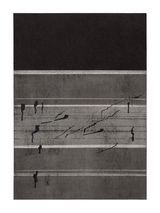
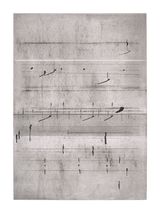
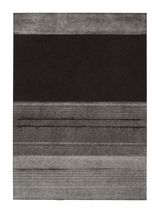
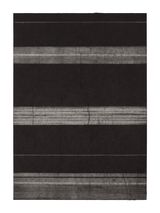
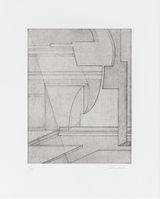
For the drawings that underpin these prints, Shah employed graphite dust as a precarious, unreliable, and beautiful partner, mimicking the ethereality of the famed muslin. These dust drawings are also presented in the exhibition in the suite Variations in Grey (2023-24). In them, Shah works with graphite dust, charcoal, and ink, using notational marks, faint traces, and erasures to develop a language that sits between calligraphy, architectural drawing, and musical score. The series considers material as both substance and metaphor, where dust represents matter once whole, now disintegrated.

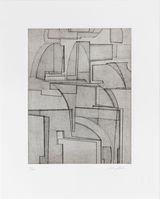
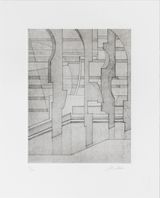
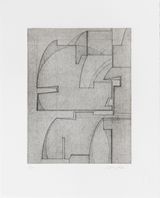
Shah also presents Studies from a Sculpture Garden (2023), drawing architectural thresholds, and Woven Nights (2024), using monotype and ghost prints to explore the layered impressions of memory and movement, both bodies emerging from years of printmaking at the Glasgow Print Studio and later in Barcelona.

This marks a loop back to Correa’s tapestries in the exhibition. Where her early textiles employed simple forms and blocks of colour, her practice over the years meandered through different experiments with symbolic forms. Here are works that return to her characteristic rejection of imagery, distilled to their most minimal. The thick, dark yarn absorbs light into a deep stillness, a pairing that converses with Shah’s own explorations of light and shadow.

Correa’s works also occupy the space differently from Shah’s. Larger in size and fewer in number, they carry a vibrational energy through shifting threads that catch and release movement. They sit with the quiet authority of sentient elders, absorbing, observing, while Shah’s more intimate drawings invite us closer.

Together, Correa and Shah bring us to a place where graphite and fibre, drawing and weaving, stand side by side, pronouncing emphatically that material is never passive. Their images, built through line, tone, trace, and gesture, are unpredictable and wonderfully mercurial. To look at their work together is to see how artists think through medium, and to witness how generations of practice can converge in shared moments of labour. A reminder that presence itself is made through slowness and disruption.

Essay courtesy Jhaveri Contemporary, Mumbai. Text: Saira Ansari, 2025.

Read More

Installation Views

Selected Works

Loading...

Artists Exhibiting

About the Gallery

Jhaveri Contemporary was formed in 2010 by sisters Amrita and Priya with an eye towards representing artists, across generations and nationalities, whose work is informed by South Asian connections and traditions. The gallery’s dedication to original scholarship, engendered through its carefully crafted shows, is one of the many ways it distinguishes itself. Entwined with this philosophy is another guiding principle: showcasing the heterogeneous practices of long-celebrated luminaries as well as emerging talents, often in generously interrogative conversations. With a focus on mining lesser-known art histories, Jhaveri Contemporary facilitates dialogue between artists, curators and historians to add to the wider field of art. Estates served by the gallery include Mrinalini Mukherjee and Anwar Jalal Shemza.

View Gallery Profile
Address
3rd Floor Devidas Mansion
4 Mereweather road
Apollo Bandar Colaba
Mumbai
India
Opening Hours
Tuesday – Saturday
11am – 6:30pm
(1)
Mumbai 3rd Floor Devidas Mansion, 4 Mereweather road
Jhaveri Contemporary
3rd Floor Devidas Mansion, 4 Mereweather road, Apollo Bandar Colaba, Mumbai, India

Opening hours
Tuesday – Saturday
11am – 6:30pm
The art world in focus