





RASHEED ARAEEN
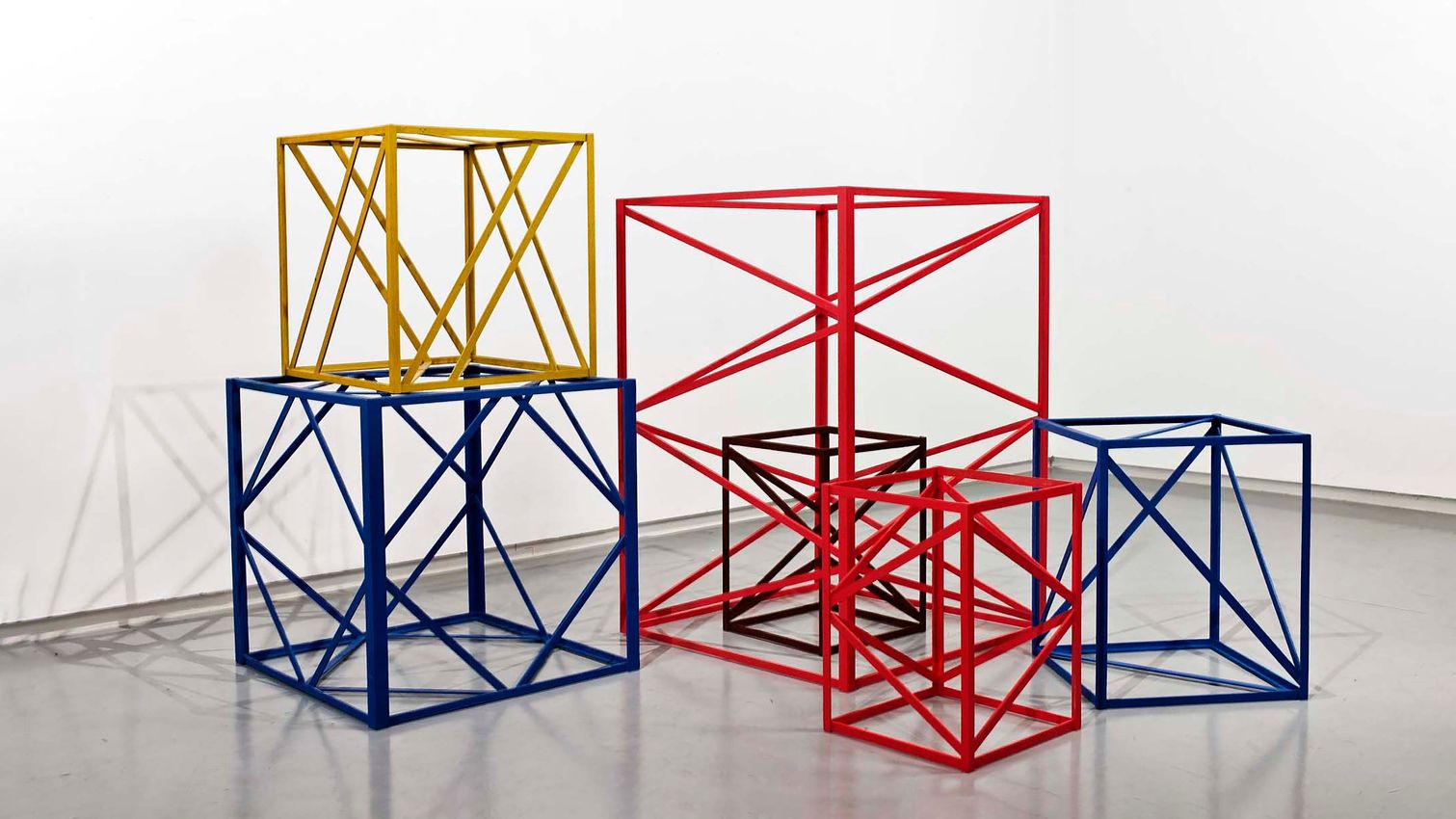
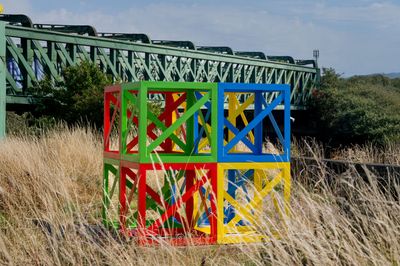
b. 1935, PakistanRasheed Araeen’s innovative approach to Minimalism grew out of his background in civil engineering. When he realized that engineering could not fulfill his creative ambitions, he exchanged its structured discipline for the expressive freedom of a full-time art practice. Drawing on his technical training, Araeen began making “structures” — open, modular works designed to be rearranged. Although working in London, far from the New York center of Minimalist art, he developed a language that echoed artists such as Donald Judd. Yet, there are important differences. As art critic Jean Fisher observed, the distinction lies between “an instrumental, abstract-logical regulation of the world and an organic one.”
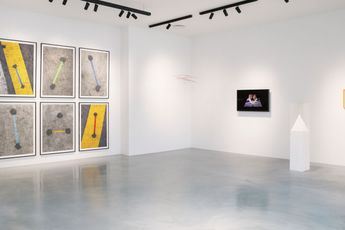
Beyond his sculptural structures, Araeen has created an extensive body of paintings and two-dimensional assemblages. His calligraphic paintings draw inspiration from the thinkers of the Abbasid era (8th–13th centuries), embedding their names within intricate geometric designs. While Arabic philosophy and Islamic calligraphy are significant influences, Araeen resists simplistic readings of his work, emphasizing that the symmetry in Islamic art serves as a metaphor for human equality. In his cruciform pieces, he pairs photographic images with painted green panels, producing raw, grainy compositions that heighten the tensions between East and West — a dialogue made especially poignant in the years following the Gulf wars.
Courtesy Baró










Explore and Follow Artists Shaping Contemporary Art
A respected voice in contemporary art discourse.
Focusing on ambitious storytelling and insightful art-world commentary. Ocula Magazine publishes in-depth interviews, critical essays and timely analysis on the artists, exhibitions and ideas driving the global art world.
Learn more about Ocula Magazine
Showcasing the best of the art world.
Ocula partners with galleries from around the world to highlight their artists, artworks and exhibitions. Gallery membership is by application and invitation, with each member vetted by an independent panel.
Learn more about Ocula Membership
Specialises in the sale of major artworks.
Led by a team with deep ties to the world’s leading auction houses, galleries and collectors. Ocula’s advisory team offers bespoke services to high-net-worth clients from around the world who are looking to acquire the best of contemporary and modern art.
Learn more about our team and services