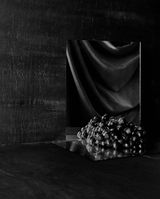
Sarah Jones’ work is highly visual, with strong formal elements and a large scale, yet it is driven by an interest in narrative, especially when relevant to psychoanalysis, the history of film, girlhood, class, body language and myth.
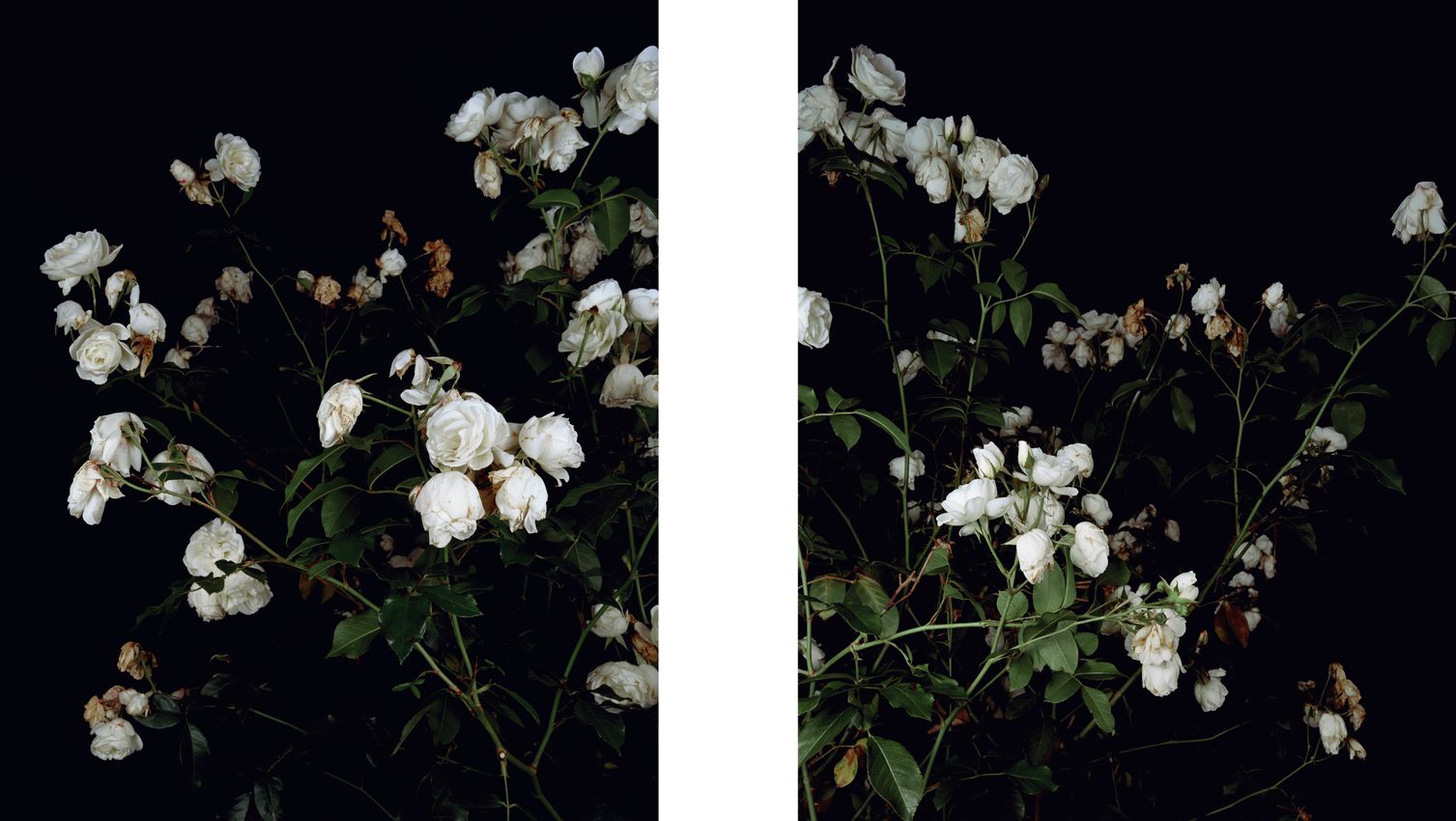
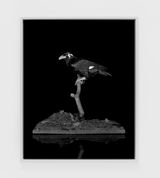
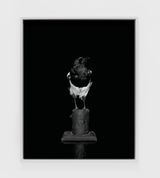
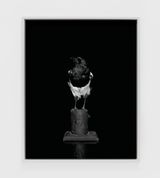
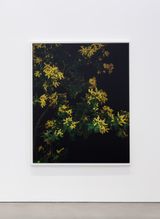
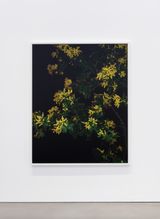
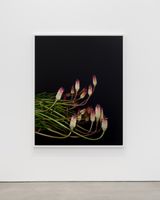
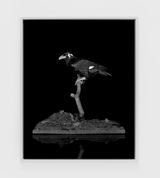
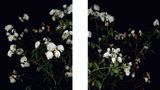
Reoccurring subject-matter often occurs, such as suites of flowers (Mimosa (Actor) (1) (2021)); The Rose Gardens (display) (V), 2012)), horses (Horse (Dapple Grey) (1) (2017)), stuffed birds, trees (The Fig Tree (1999)), recently abandoned psychoanalytic couches, wrought iron fire-screens and bored, formally dressed, adolescent girls sitting at polished tables (The dining room table (Frances Place III) (1998); The dining room, Francis Place, 1997). She is keen on ongoing series of projects, exploring variations.
Contrasting image types
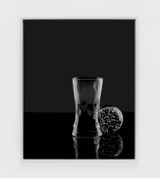
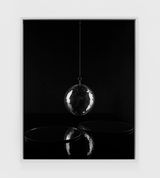
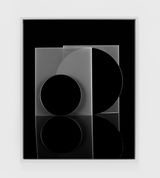
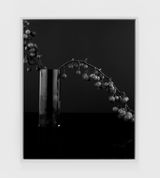
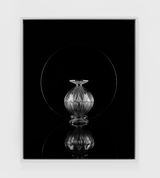
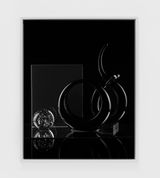
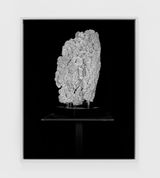
Jones basically constructs two types of photograph: one coloured and usually of teenagers posing in lavish country houses, or psychoanalysts’ consulting rooms (Consulting room (Couch) (V) (1996)), or gardens; the other impenetrable inky black and charcoal grey with deep space, simple geometry, surface textures and shiny reflections (Mirror Ball (Narcissus) (I) (2021); Vitrine (IV) (for Eric Sander) (2017); Cabinet (V) (Two Spheres) (2014)).
In the latter Jones revels in different kinds of grey so that here is often a funereal ambience, a Victorian pallor of death. Sometimes certain motifs (like polished balls, shiny table tops, glittering glass ornaments, leafy branches, or roses) turn up in both.
Often the images bring out fetishistic aspects of the displayed objects, a sense that they are alive and worthy of worship.
Some works, such as Horse (black) (profile) (II/II) (2013), are in diptych form, giving the viewer the option of choosing an ‘authentic’ original and, like a Rorschach test, proffering a range of interpretations generated by the confusion. She was very impressed by the Surrealist poet Jean Cocteau’s notion of ‘the hall of mirrors’ in his 1930 film, Blood of the Poet (Le Sang d’un Poète), where rows of mirrors (like in the halls of Versailles) are portals to other worlds, to be entered like reflecting pools of water (and perhaps infatuated, like Narcissus).