





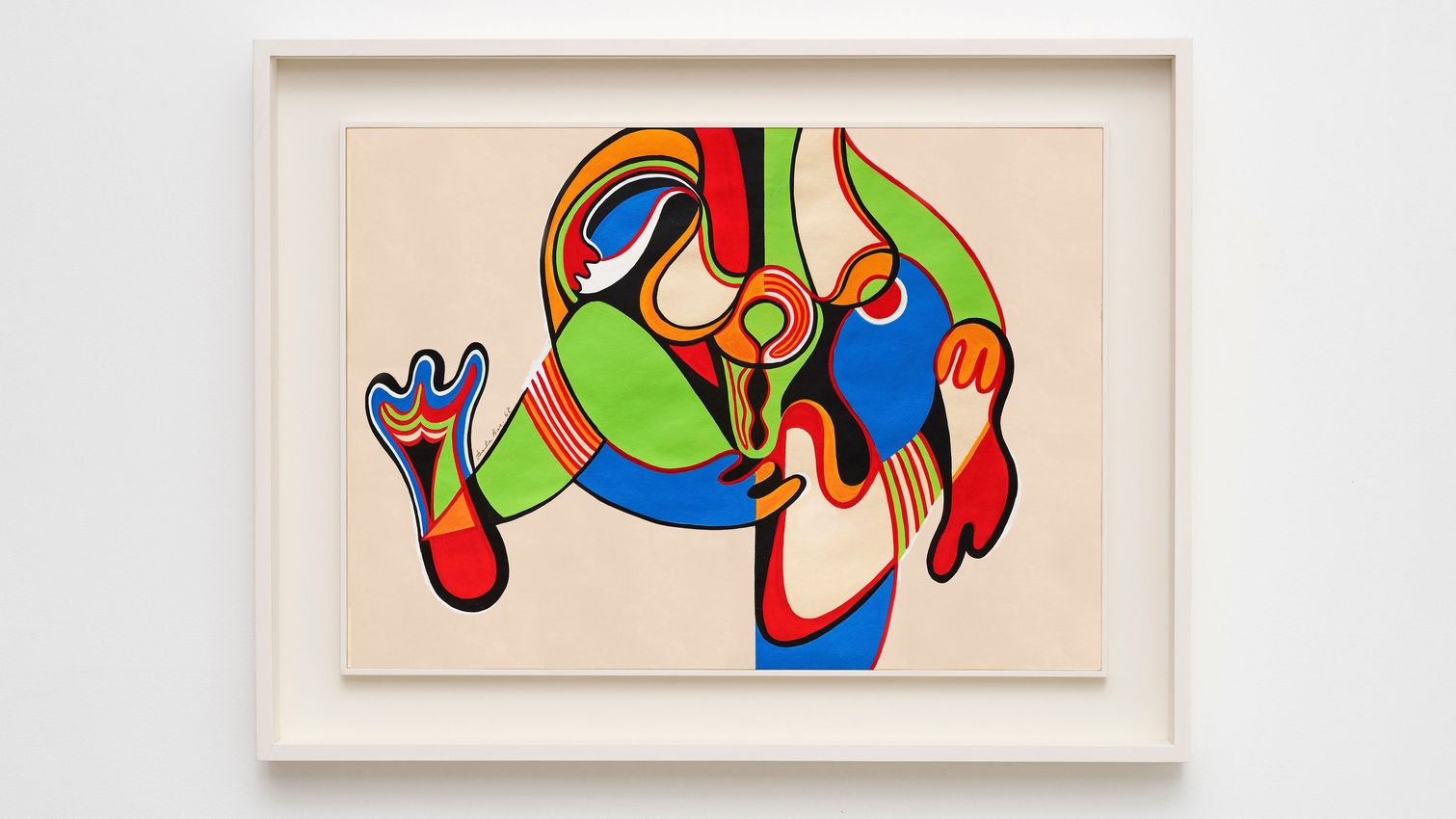
TERESINHA SOARES
1927-2026, Brazil1927, Araxá, Minas Gerais, Brasil
Lives and works in Belo Horizonte, Minas Gerais, Brazil
Teresinha Soares is a visual artist, writer and women’s rights activist, born in Araxá in 1927 andbased in Belo Horizonte since the 1950s. With a short and intense output, produced over a period ofjust over 10 years, she saw her work circulate in salons, exhibitions and biennials in the late 1960sand early 1970s. However, before seeing her artistic career catapult, Teresinha had a unique politicalcareer - she was the first elected councillor in her home town. In her thirties, she married BritaldoSoares, director of Diários Associados in Minas Gerais, and together they moved permanently toBelo Horizonte, where her artistic career began, starting with courses she took with the intention ofperfecting her art practices and studies. She also produced some noteworthy chronicles, whichwere published until the end of the 1980s in three different newspapers in Belo Horizonte. Some ofthese texts were collected and published in 2018 under the title Acontecências: crônicas dos anos60, 70 e 80, by the publisher Cobogó, in Rio de Janeiro.
With her career already in full swing, starting with her first paintings in the mid-1960s,Teresinha constantly sought to recognize women’s rights, both in the themes that ran through herwork and in the construction of a powerful, challenging and emancipated female personality. From1966 to 1976, her artistic production was intense. She took part in three editions of the BienalInternacional de São Paulo (1967, 1971 and 1973), as well as the solo shows Amo São Paulo (1968), atthe Art-Art gallery, Sao Paulo, and Corpo a Corpo in Cor-pus meus (1971), at the Petite Galerie, Riode Janeiro, among other group and solo shows she held until 1976. After this period, she withdrewfrom the art scene as meteorically as she had entered it.
Today, her work is being revisited in Brazil, as well as internationally, with the solo shows Umalegre teatro sério (2023), at Gomide&Co, and Quem tem medo de Teresinha Soares? (2017), at theMuseu de Arte de São Paulo Assis Chateaubriand-MASP. She also recently took part in the groupshows The EY Exhibition: The World Goes Pop (2015) at Tate Modern (London), Radical Women: LatinAmerican Art, 1960-1985, at the Pinacoteca do Estado de São Paulo (2018); the Brooklyn Museum (New York, 2018) and the Hammer Museum (Los Angeles, 2017). Her work is part of the collection ofinstitutions such as the Museu de Arte de São Paulo Assis Chateaubriand - MASP, the Museu de ArteModerna do Rio de Janeiro - MAM-RJ, the Museu de Arte da Pampulha - MAP, in Belo Horizonte andthe Palácio das Artes, also in the capital of Minas Gerais. In 2023, the documentary Radical Womenwas released in Brazil, featuring the artist alongside names such as Cecilia Vicuña (1948), LilianaPorter (1941) and Lenora de Barros (1953).
Courtesy Gomide&Co





Explore and Follow Artists Shaping Contemporary Art
A respected voice in contemporary art discourse.
Focusing on ambitious storytelling and insightful art-world commentary. Ocula Magazine publishes in-depth interviews, critical essays and timely analysis on the artists, exhibitions and ideas driving the global art world.
Learn more about Ocula Magazine
Showcasing the best of the art world.
Ocula partners with galleries from around the world to highlight their artists, artworks and exhibitions. Gallery membership is by application and invitation, with each member vetted by an independent panel.
Learn more about Ocula Membership
Specialises in the sale of major artworks.
Led by a team with deep ties to the world’s leading auction houses, galleries and collectors. Ocula’s advisory team offers bespoke services to high-net-worth clients from around the world who are looking to acquire the best of contemporary and modern art.
Learn more about our team and services