



Caregiving has historically been invisible and unpaid in capitalist economies, delegated to women who are expected to always care for those in need. Because it often requires the touching of bodies, care work has been disdained and undervalued as inferior to the work of the intellect and industry. Care for children, spouses, and the elderly, along with daily tasks like cleaning and cooking, were feminized and sexualized during industrialization.
Since globalisation, care work is increasingly commodified, with migrant women from the Global South caring for bourgeois families in the Global North and poor women caring for wealthy women. The global economy would grind to a halt without care work, but the structure that separates it into the private sphere and exploits it is intensifying around the world. Care work requires creativity and imagination, and deep attentiveness to the needs and preferences of the cared-for.
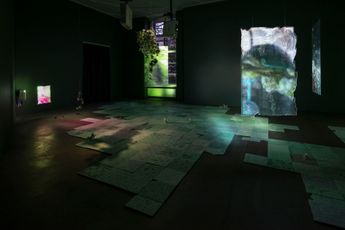
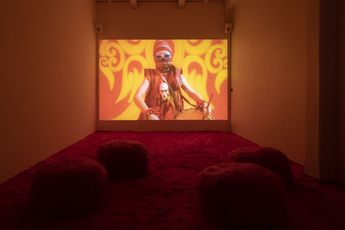
Grounded in bodied experiences of care labor, Touchy-Feely connects interpersonal physical contact, touch, and tactility, with feminist curatorial practices convening artists, whose practices are embodied in their bodily work. Each exploring care and tactile experience in their way, these artists involve participants in shared encounters that explore new forms of togetherness.
Touchy-Feely began in August 2024 as an eco-feminist summer school initiated by Ji Yoon Yang and Baruch Gottlieb at West Den Haag in The Hague, The Netherlands. During a one-week intensive program, twenty participants experienced a series of encounters — touching one another, exchanging emotions and ideas, through different guided sessions each day., examining cultural differences and intra-feminist debates on sex work and care work, and t questioning how contemporary art institutions can offer safe spaces where physical intimacy can function as artistic practice.
The program was a process of ruptures and repairs, leading to profound shifts in participants’ bodied sense of intimacy and relationality. Under the guise of minimizing state intervention, neoliberalism has instrumentalized the state for capital accumulation, dismantling the foundations of the welfare state. In response, contemporary artists have often stepped in to attend to neglected social needs—through community-based or socially engaged art—for those abandoned by the “withdrawal of the state.”
Paradoxically, many of these creative and imaginative initiatives, sustained by public arts funding, are coopted into reinforcing the dominant system. Touchy-Feely: Seoul reflects the limitations and precarious institutional conditions of socially engaged contemporary art, challenging the standards for what is considered “good art” within the art system. Artistic practices involving physical touch confront deeply embedded desires and fears, revulsions and curiosities, learned taboos and cultural repressions.
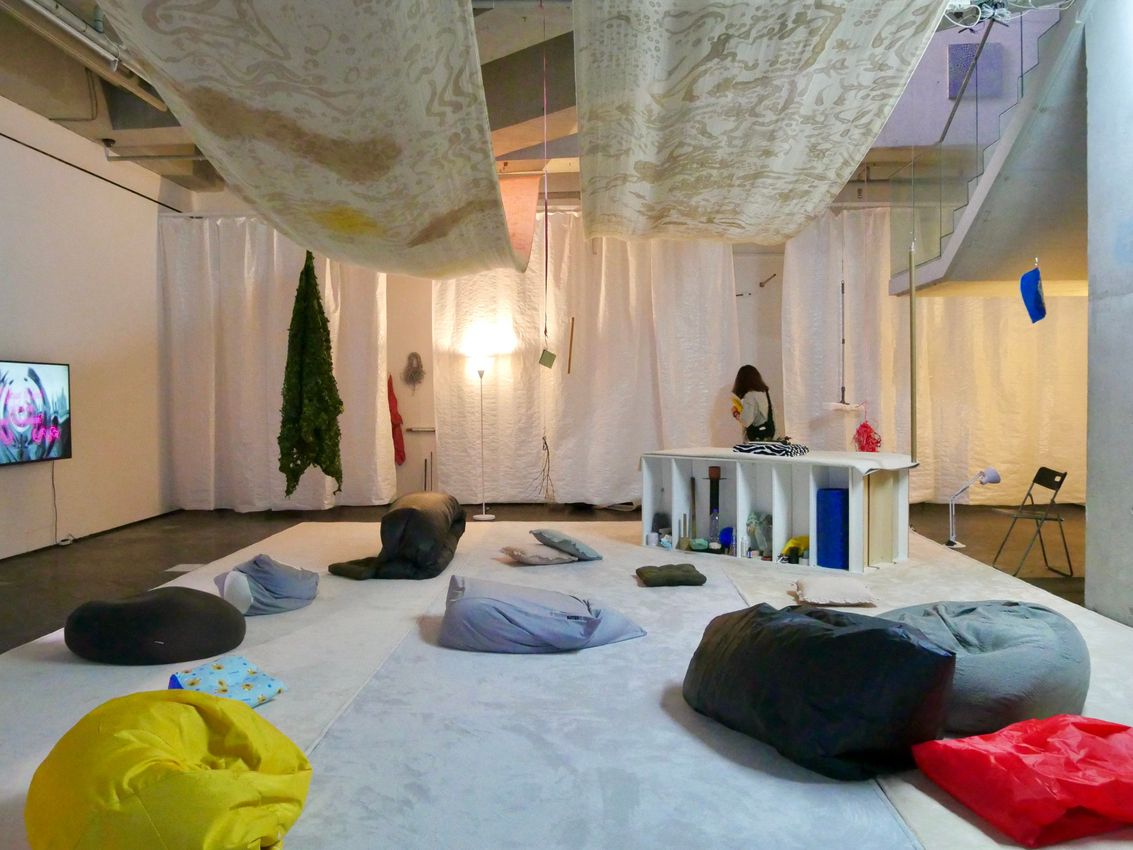
Drawing from the diverse cultural norms and constraints surrounding touch around the world, Touchy-Feely seeks to cultivate community in which artists and participants share tactile experiences, distanced from the logic of productive labor. Throughout a two-month exhibition, a series of workshops, screenings, and discussions will continuously transform the exhibition space. Rather than presenting artwork as a fixed and finalized object, Touchy-Feely: Seoul embraces a flexible practice shaped through collective participation and ongoing appropriation and transformation.
From dyeing fabric with seaweed to inscribing personal memories of food into clay, and exploring one another’s bodies through everyday objects, the project invites tactile engagement as a shared creation. At a time when we are all pressured to become disconnected and to commodify ourselves, shared artistic practices involving physical contact might cultivate space for political resistance, solace and hope.
Established in 1999, Alternative Space LOOP is Korea’s first alternative space dedicated to experimental contemporary art. It is located in Hongdae, a district in Seoul famous for its art and independent music scenes throughout the late 1990s and 2000s.

A respected voice in contemporary art discourse.
Focusing on ambitious storytelling and insightful art-world commentary. Ocula Magazine publishes in-depth interviews, critical essays and timely analysis on the artists, exhibitions and ideas driving the global art world.
Learn more about Ocula Magazine
Showcasing the best of the art world.
Ocula partners with galleries from around the world to highlight their artists, artworks and exhibitions. Gallery membership is by application and invitation, with each member vetted by an independent panel.
Learn more about Ocula Membership

Specialises in the sale of major artworks.
Led by a team with deep ties to the world’s leading auction houses, galleries and collectors. Ocula’s advisory team offers bespoke services to high-net-worth clients from around the world who are looking to acquire the best of contemporary and modern art.
Learn more about our team and services