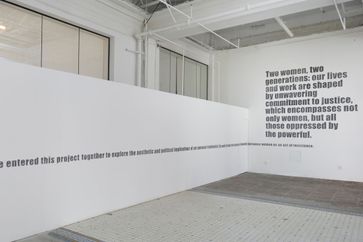
Violence and death do not effect everyone the same way. Depending on gender, but also on wealth and race, people are impacted to very different degrees. Although gender-based violence is commonplace and widespread, it is only in recent years that more attention has been paid to it by politicians and society more broadly. This is the theme of Suzanne Lacy’s video installation De tu puño y letra (By Your Own Hand) (2014 2015/2019). Based in Los Angeles, Lacy is a pioneer of feminist and activist performance art. With her participatory Social Practice, often realized in cooperation with local communities, she campaigns against social injustices and for marginalized groups. Since the early 1970s, she has been focussing attention on rape, giving a public voice to individuals who identify as women, and naming the patriarchal roots of this violence.
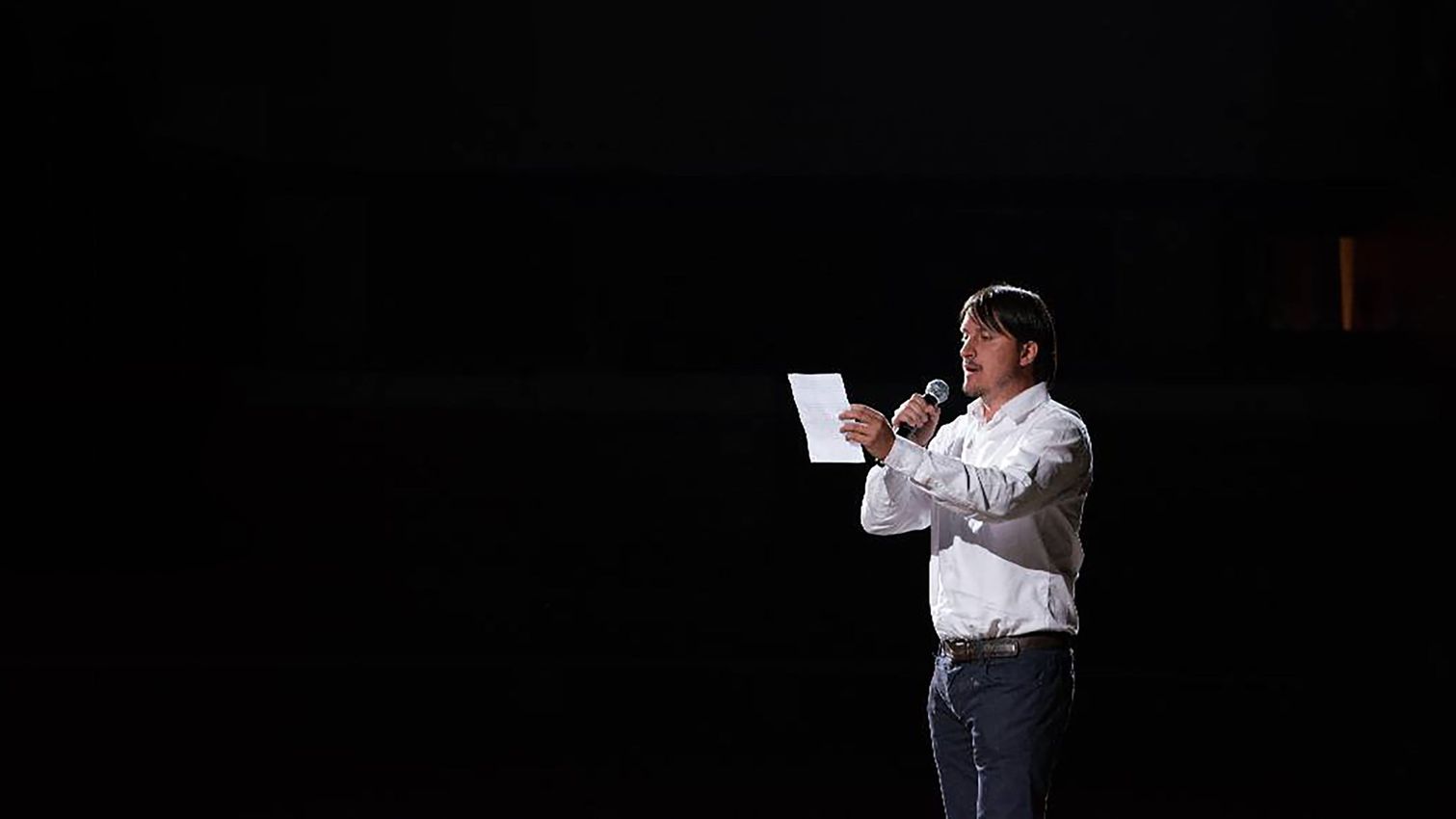
In the video installation De tu puño y letra (By Your Own Hand) (2014–15/2019), people who identify as men appear in succession and read excerpts from letters in a factual tone. The letters contain shocking reports of brutal gender-based and domestic violence that elicit deep sense of trepidation. The reports range from sexual assault to group rapes and femicide. The film material was shot in Quito, Ecuador, at an arena for bullfights, a male-connoted space that is traditionally characterized by violence and dominance. The circular arrangement of the projections transports the exhibition Visitors to the arena, directly confronting them with the words and gazes of the participants. The life-size images make the physical and emotional challenge of the performance tangible.
The conscious decision to have people who identify as men read the statements of victims who identify as women emphasizes the role of patriarchy as a structural basis for the violence. At the same time, the discrepancy between the male voices and the female experiences become a central element that encourages viewers to consider and reflect on gender, power, and credibility. The projection ends with a key message that raises the perspective from an individual to a social level:
Suzanne Lacy is widely regarded as a pioneer of socially engaged and public art. Working across installation, video and performance, Lacy confronts issues relating to gender identity, sexual violence, labour, poverty, incarceration, racism, aging and youth culture. Often working in collaboration with members of communities and other artists, Lacy’s projects merge art with activism, generating dialogue and providing a conduit for change.

Museum Tinguely is located on the banks of the Rhine in Basel. Opened in 1996, it was designed by Ticino architect Mario Botta and houses the world’s largest collection of works by the fascinating Swiss artist Jean Tinguely (1925–1991), a key pioneer of international post-war art.

A respected voice in contemporary art discourse.
Focusing on ambitious storytelling and insightful art-world commentary. Ocula Magazine publishes in-depth interviews, critical essays and timely analysis on the artists, exhibitions and ideas driving the global art world.
Learn more about Ocula Magazine
Showcasing the best of the art world.
Ocula partners with galleries from around the world to highlight their artists, artworks and exhibitions. Gallery membership is by application and invitation, with each member vetted by an independent panel.
Learn more about Ocula Membership

Specialises in the sale of major artworks.
Led by a team with deep ties to the world’s leading auction houses, galleries and collectors. Ocula’s advisory team offers bespoke services to high-net-worth clients from around the world who are looking to acquire the best of contemporary and modern art.
Learn more about our team and services