





Julia Stoschek Foundation to Close Berlin Space in ‘Strategic Realignment’

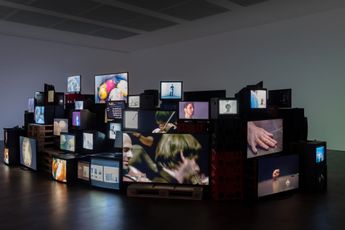
Julia Stoschek Foundation, Berlin. Photo: Robert Hamacher.
The Julia Stoschek Foundation will close its Berlin location at the end of October as part of a “strategic realignment”, the non-profit arts organisation announced today.
Since opening on Leipziger Straße in the German capital in 2016, the 3,000-square-metre space, which is dedicated to time-based art, has hosted 22 solo and group exhibitions. The organisation reported in a statement welcoming more than 450,000 visitors over the last decade.
The foundation’s namesake founder, collector Julia Stoschek, said in a statement: “Berlin remains a central point of reference for me—a city to which I feel deeply connected, and which has profoundly shaped the work of the Foundation. I am very grateful for the years we spent on Leipziger Straße.”
The statement described the closure as part of a wider shift in focus towards international projects, intended to make its 1000-work, 300-artist strong collection accessible to a wider audience.
It comes just weeks after the end of the foundation’s first major US–based presentation, What a Wonderful World: An Audiovisual Poem, which opened in Los Angeles in February. The show, which the foundation says attracted over 30,000 visitors, placed contemporary video works by Chris Burden, Douglas Gordon, and Jordan Wolfson in dialogue with silent films and early cinema classics.
Stoschek, who is heir to Brose, one of Germany’s leading automotive parts suppliers, opened her foundation’s first space in Dusseldorf in 2007, five years after she began collecting time-based art.
On the foundation’s website she describes herself as a “philanthropic producer”, and characterises her collecting as an attempt to “create an image of the cultural and social condition of my generation” .
In the past, she has faced criticism from artists due to her family history, and the origins of the money that comes with it.
Stoschek’s great-grandfather, Max Brose, was a member of the Nazi Party. During the Second World War his eponymous automotive company worked with the German military, sometimes using forced labour.
In a 2022 interview with The New York Times, the collector said she embraced scrutiny of her fortune, but argued that the money funding her collection did not stem from the Nazi era.
The foundation’s Düsseldorf space is scheduled to reopen next year following extensive renovations.







A respected voice in contemporary art discourse.
Focusing on ambitious storytelling and insightful art-world commentary. Ocula Magazine publishes in-depth interviews, critical essays and timely analysis on the artists, exhibitions and ideas driving the global art world.
Learn more about Ocula Magazine
Showcasing the best of the art world.
Ocula partners with galleries from around the world to highlight their artists, artworks and exhibitions. Gallery membership is by application and invitation, with each member vetted by an independent panel.
Learn more about Ocula Membership
Specialises in the sale of major artworks.
Led by a team with deep ties to the world’s leading auction houses, galleries and collectors. Ocula’s advisory team offers bespoke services to high-net-worth clients from around the world who are looking to acquire the best of contemporary and modern art.
Learn more about our team and services