






Turning on Tinseltown
An illicit exhibition in an abandoned Los Angeles theatre takes in over 100 years of cinematic art to reveal a darker story beneath the glittering façade. Save to My OculaI’ve been to Berlin just once. I was 17, travelling Europe with my best friend far from my home in Los Angeles’ San Fernando Valley. We added the city to our itinerary after obsessing over This Ain’t California (2012), a documentary about skaters in early-1980s East Berlin. In the movie, the Soviet-controlled Eastern Bloc city represented the kind of adolescence we yearned for: bleached hair, smuggled skateboards, furtive parties. The city’s reality didn’t entirely dispel the fantasy. In Berlin, I went to my first real nightclub, learned to smoke a cigarette the right way, and got two illegal ear piercings in a small Friedrichshain shop. Back then, Berlin felt glamorous and unconventional. ‘California, it ain’t,’ I thought. But later, I came to recognise that these same qualities were just as intrinsic to LA, a place that now feels as much defined by its sheen as by its underlying grit.
The arrival, then, of the Berlin- and Düsseldorf-based Julia Stoschek Foundation in LA this month offered a welcome blend of the two parallel cities. The foundation’s first US exhibition, What a Wonderful World: An Audiovisual Poem, is spread across five cavernous floors at the formerly abandoned Variety Arts Theater in Downtown LA. Here, Berlin-based curator Udo Kittelmann, the ‘institutional voice of Germany’ as the former director of State Museums of Berlin and the city’s Nationalgalerie, and Julia Stoschek, the Foundation’s founder and collector of almost a thousand noteworthy time-based artworks, stake out a middle ground between Hollywood’s cultural production and the avant-garde video art for which Stoschek’s foundation is known.
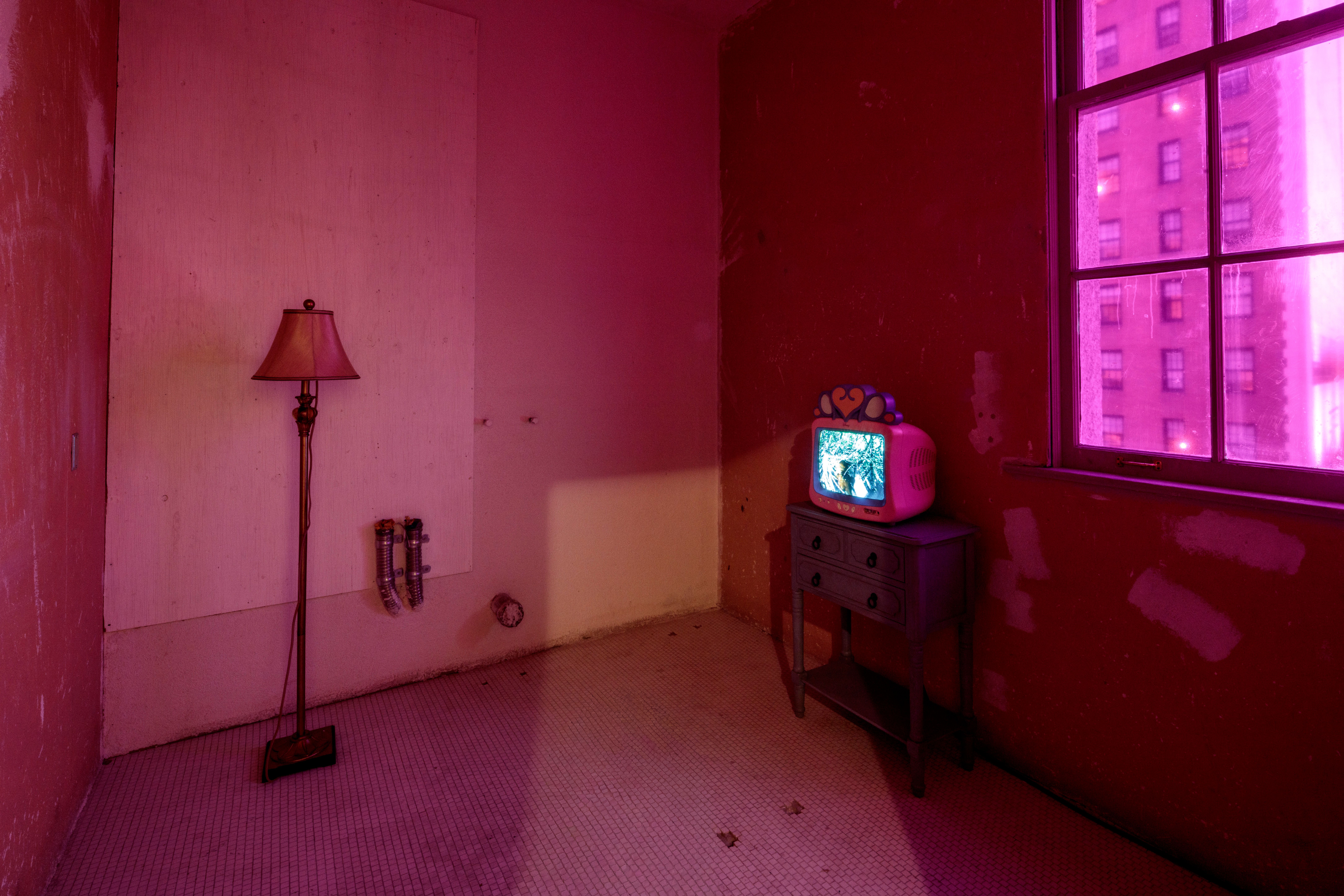
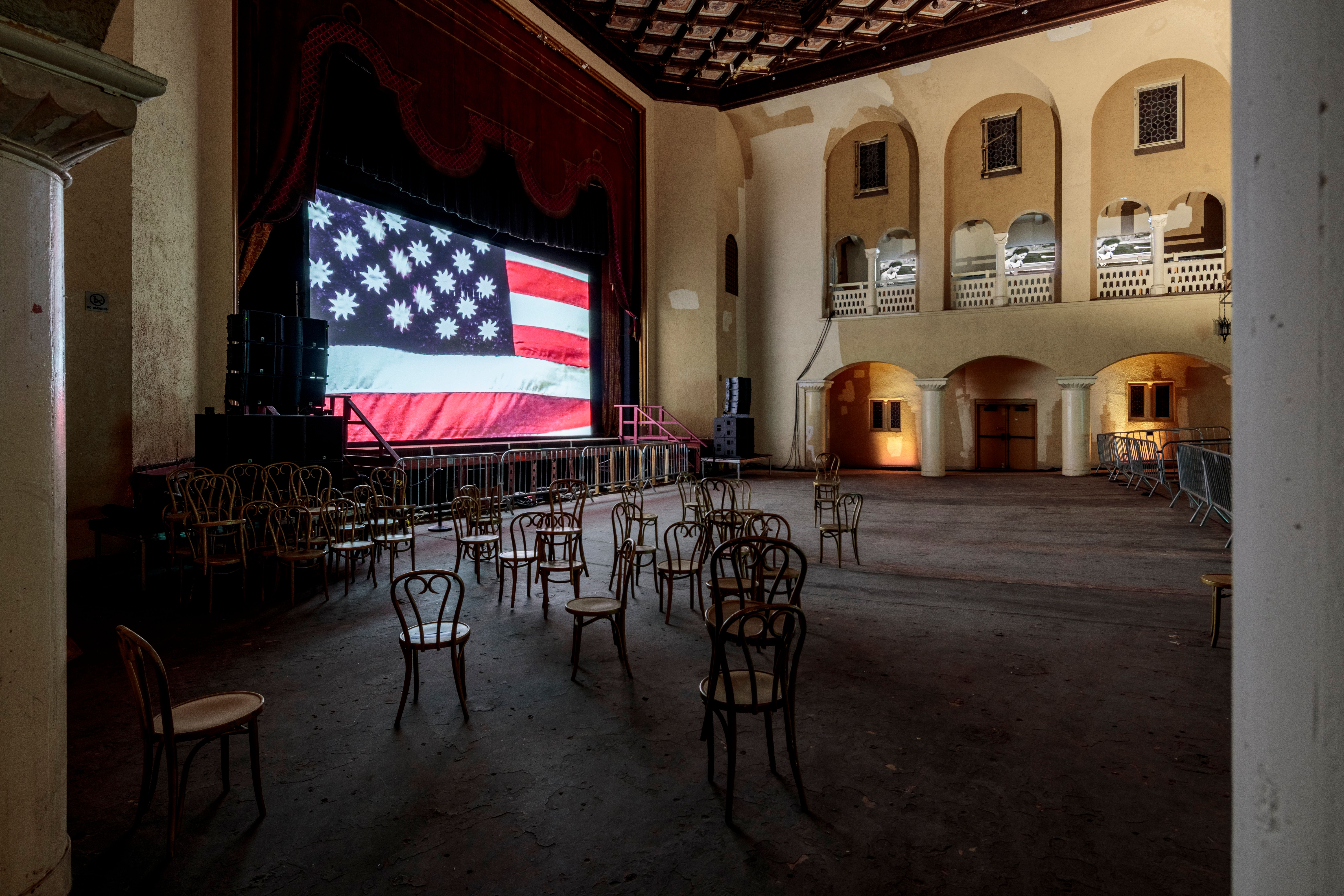

In this exhibition, Kittelmann and Stoschek favour all things subversive and illicit—their ode illuminates the permissibility and shadowy charm that infuses both LA and the German capital city, albeit in very different forms. (Licentiousness and exclusivity are more frequently found in LA’s sleepy hills, not its streets.) Their curatorial vision unfolds throughout the theatre’s clandestine informal galleries, which display more than 40 video and film works from the 1800s to the present. Viewed together, these selections trace a singular course through media history, probing cinema’s masquerade and the realities that gird it.
“LA, like Berlin, beckons newcomers with surreptitious allure”
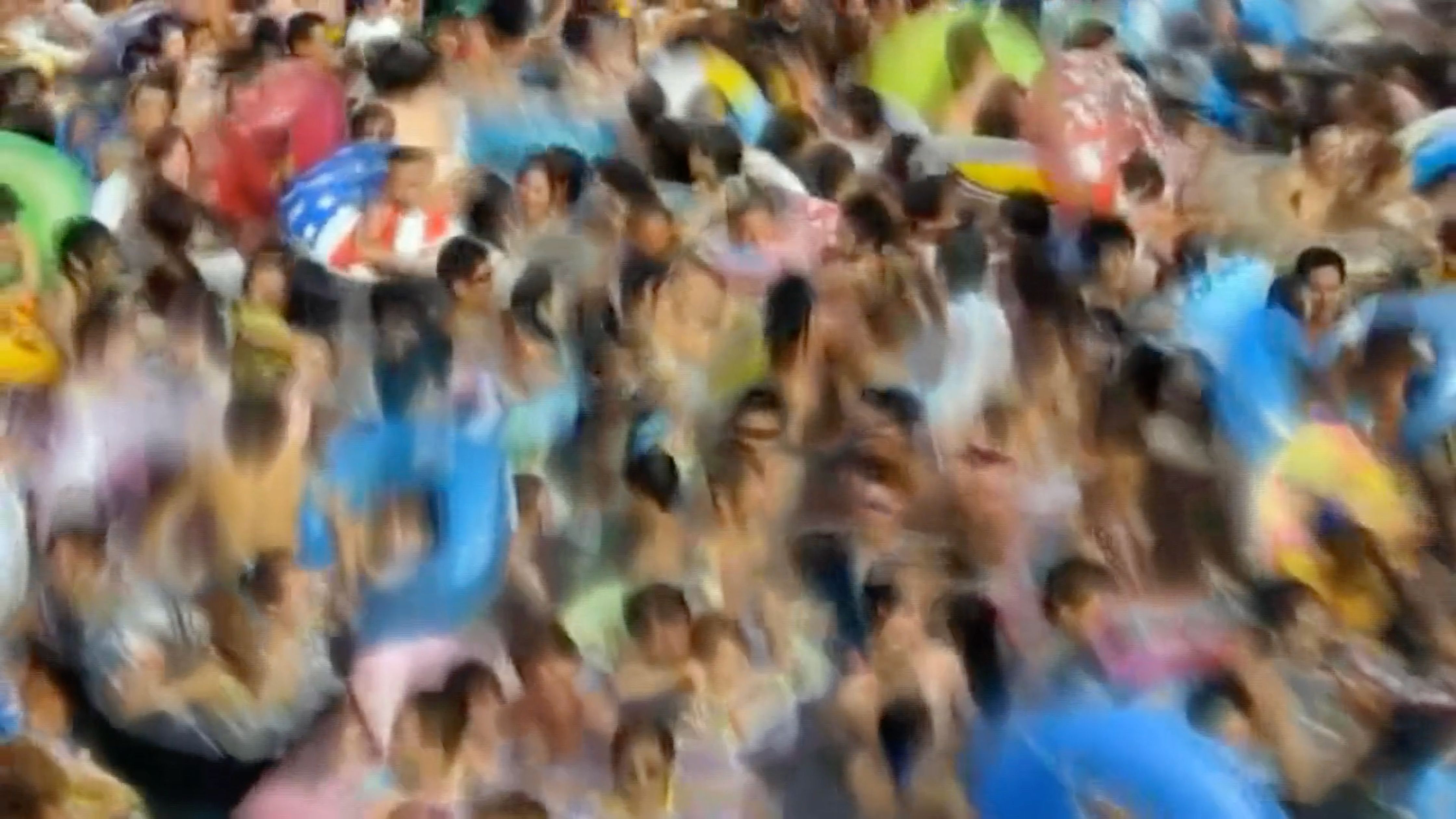
The Variety Arts Theater, a 1924 Italian Revival building, began as a progressive social and intellectual club for women. Its central auditorium, originally dubbed ‘The Playhouse’, presented public-facing programming that financially supported the organisation’s abolitionist and suffragist membership. Flanked by an upper mezzanine and original coffered ceiling, this central space, in Stoschek and Kittelmann’s iteration, presents looped single-channel videos from well-known, blue-chip contemporary artists—works that only slyly suggest the more provocative installations elsewhere. In Canadian artist Jon Rafman’s Oh, the humanity (2015), a close-cropped shot reveals a dense mass of vacationers filmed bobbing in ocean waves, their eerie suspension both intimate and claustrophobic (the titular phrase references the live radio broadcast of the 1937 Hindenburg zeppelin’s explosion). Shown on the same screen as American video artist Arthur Jafa’s APEX (2013), a rapid-fire montage that juxtaposes images of Black pop idols with snapshots of racist caricatures and violent TV coverage, the pairing suggests a latent violence simmering under the shiny surface of film history.

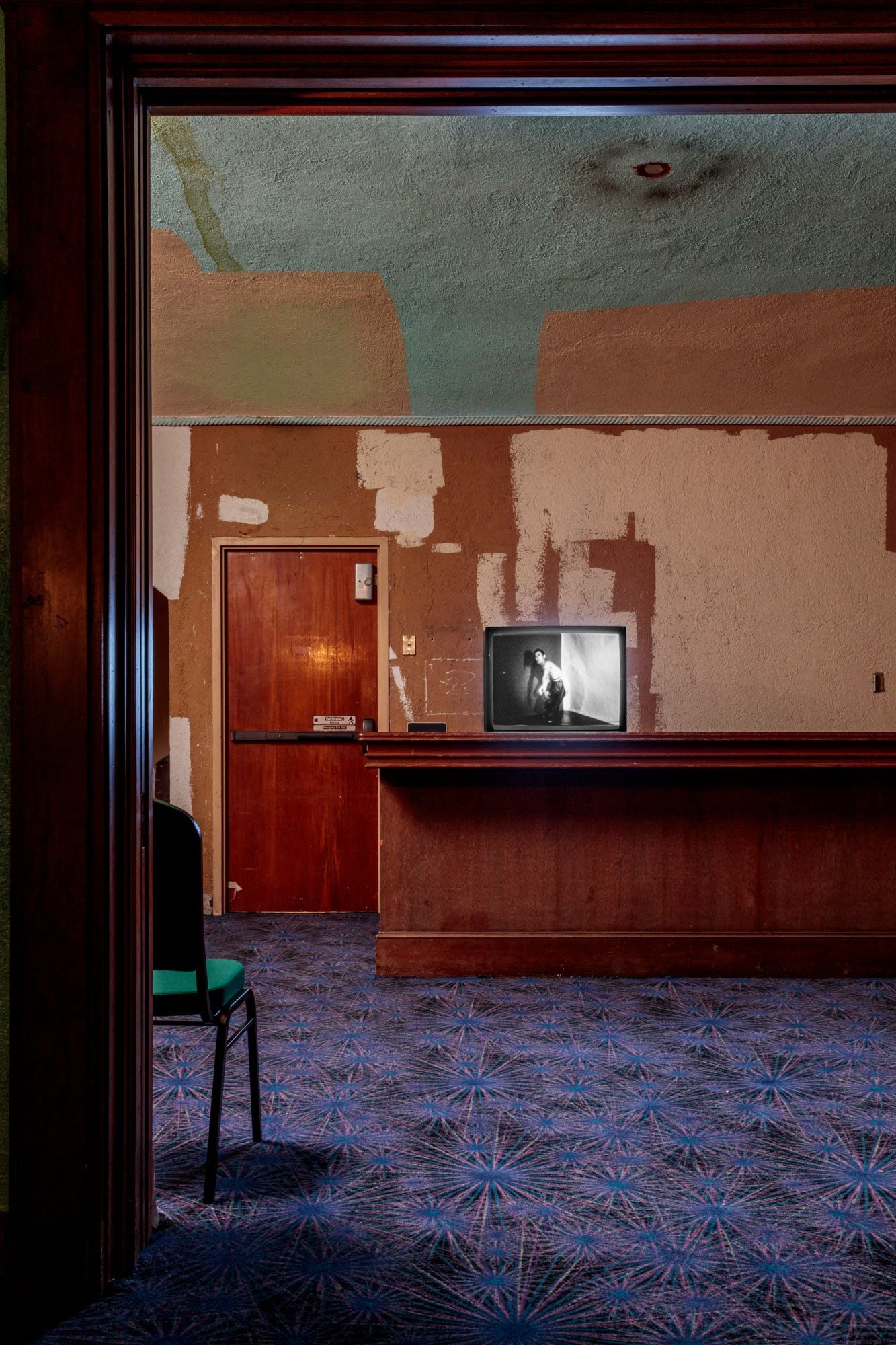
Kittelmann, in an introductory essay for the exhibition, writes that viewers ‘might feel as though someone has drawn back a velvet curtain’. In the theatre’s labyrinthine basement—just below the main auditorium—this curtain is pulled away entirely: the subtler critiques above take on a sharper edge underground, one as seductive as it is nightmarish. The bottom floor more closely resembles a Berliner club than those in LA, swapping the latter’s velvet ropes for cracked tiling, narrow corridors and exposed pipes. US artist Robert Boyd’s Xanadu (2006) entices viewers down a back hallway with a spinning purple disco ball and loud, thumping soundtrack—remixes of Madonna’s Don’t Cry for Me Argentina (1996) and Xanadu by Olivia Newton-John (1980) resound—but what lies on the other end is the hidden remainder of Boyd’s piece, a four-channel installation of gruesome video clips from the US invasion of Iraq, 9/11, and paramilitary groups.
A similar contrast infuses a nearby ‘gallery’, converted from a bathroom, that welcomes visitors with a shower of white paper confetti. Through its celebratory snowfall is Bunny Rogers’ Mandy’s Piano Solo in Columbine Cafeteria (2016), in which a video game avatar of American singer Mandy Moore tickles the ivories in a sparse, animated replica of Columbine High School’s dining hall—the scene of one of the deadliest school shootings in US history.
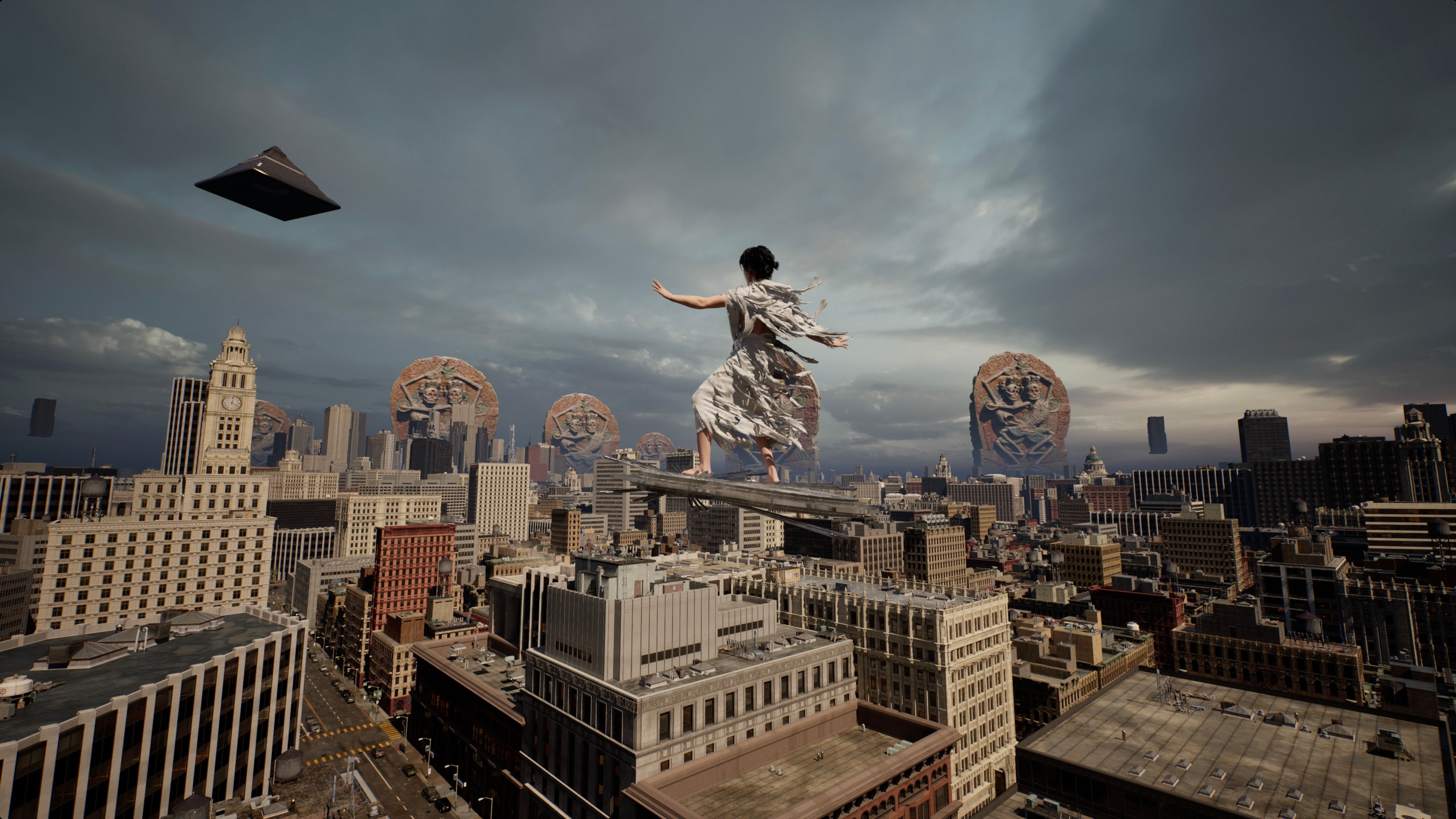
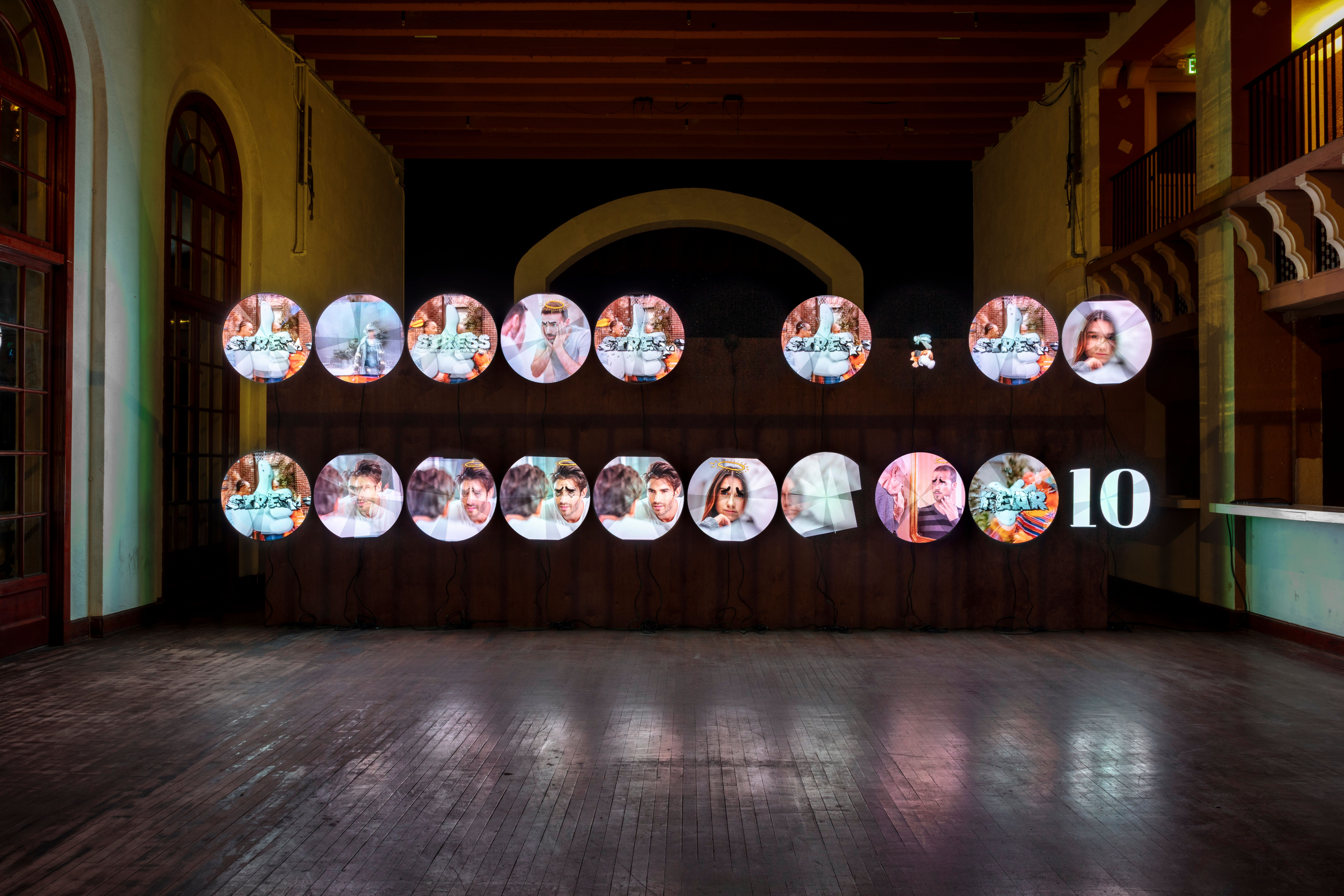
Stripped of Hollywood’s airbrushed sentimentality, What a Wonderful World may, at first glance, feel nihilistic or apolitical, its title laden with trite sarcasm. And indeed, some works, such as Jordan Wolfson’s ARTISTS FRIENDS RACISTS (2020)—a wall-mounted display of 20 holographic fans projecting the titular words alongside Wario emojis and a Star of David, among others—risk little in their regurgitations of a social media algorithm’s endless churn. But Kittelmann and Stoschek’s challenging selections are less edgy than they are honest, a deliberate reckoning with a world where cinema’s entrancing visual pleasures are inextricable from its paralysing harms. Chinese artist Lu Yang’s captivating video work DOKU the Flow (2024), for example, depicts characters that hypnotically oscillate between addictive, often damaging visual environments—casinos, gaming consoles, VR porn—and majestic natural landscapes, their bodies and faces increasingly anguished as the plot progresses. The intoxicating film, created using 3D computer graphics software Unreal Engine, knowingly lures viewers into the same narcotic thrall that its narrative critiques.
“The subtler critiques take on a sharper edge, one as seductive as it is nightmarish”
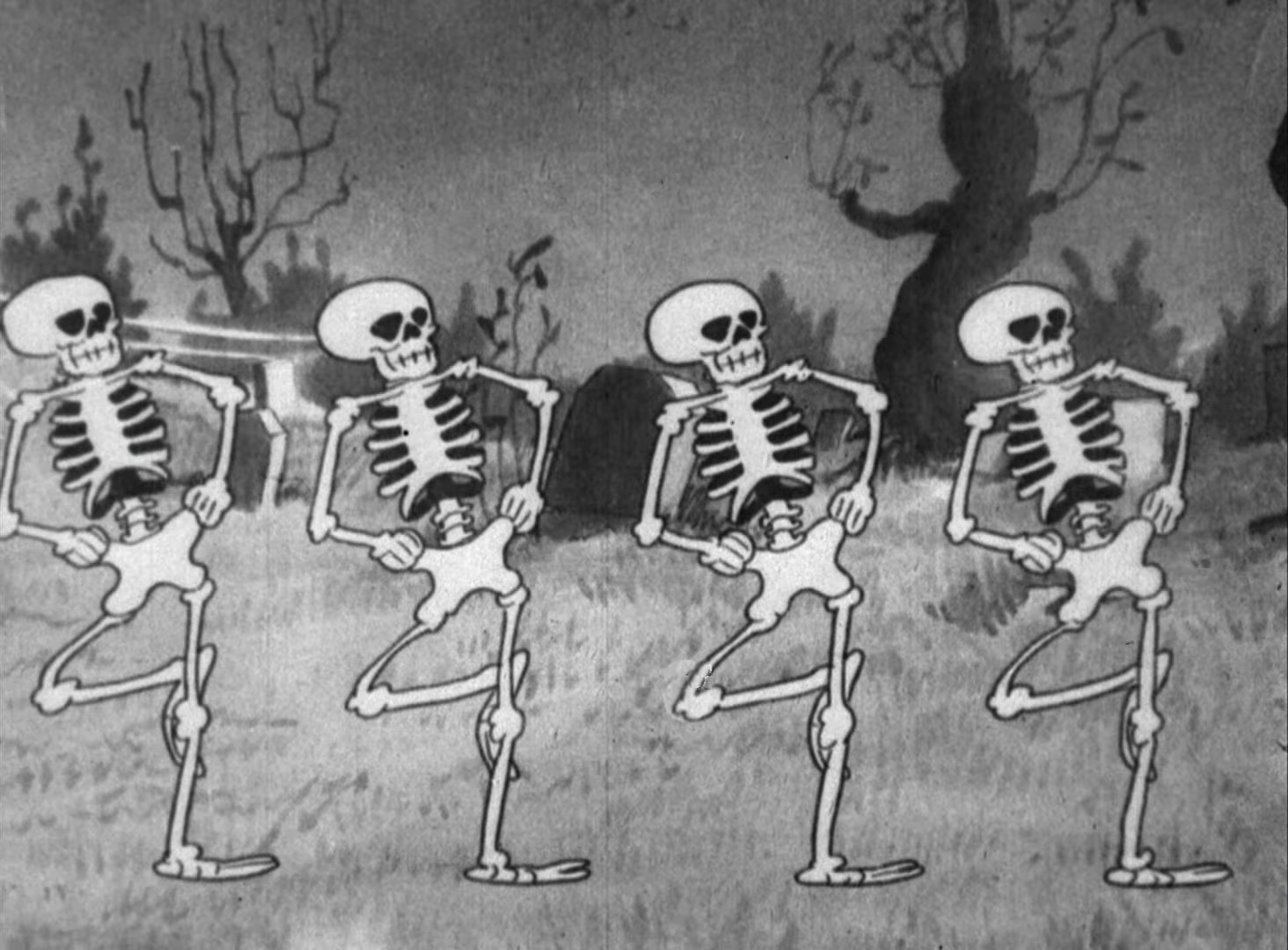
The exhibition takes pains to draw connections between early film history and video art, with curatorial stagings that make even the most nostalgic inclusions feel ominous—but newly enlightening, too. Just down the hall from Yang’s work is George Méliès’ infamous A Trip to the Moon (1902), in which a group of astronomers journeys to space—and returns with an alien captive. Alongside Yang’s video, the film’s hubristic narrative and covetous result stands out, as though these extractive attitudes were inherent to cinema itself. Destruction encodes another surprising pairing on the fourth floor, where German-Italian artist Monica Bonvicini’s Hammering Out(an old argument) (1998/2003) sits opposite Californian filmmaker Charles Reisner’s Steamboat Bill, Jr. (1928). In Bonvicini’s work, a close-up shot depicts a hammer knocking out a wall; in Reisner’s, the front façade of a home tips towards the camera, narrowly missing a young Buster Keaton.

LA, like Berlin, beckons newcomers with surreptitious allure, a siren’s song to see—or to try to see—worlds hidden from plain sight. Filmmaker Kenneth Anger’s cult classic book Hollywood Babylon (1959), which details deleterious gossip from the film industry’s early decades, features a similar appeal that also echoes Kittelmann’s introductory remark; Anger summons readers to ‘see the scalding reality behind the glittering façade of America’s dream factory’. Ultimately, What a Wonderful World offers something closer to Anger’s ‘scalding reality’ than the rosy romp its title suggests. The results may not always be palatable for the mainstream. Then again, neither were the Variety Arts Theater’s former tenants, from the club’s progressive turn-of-the-century women to the punks who filled the venue during the 1980s (just ask Doug Aitken). Instead, what’s on view diverges from Hollywood’s vision of film’s palliative comforts and into meatier territory, exposing a cinematic legacy both violent and sublime. Sounds like my kind of California. —[O]
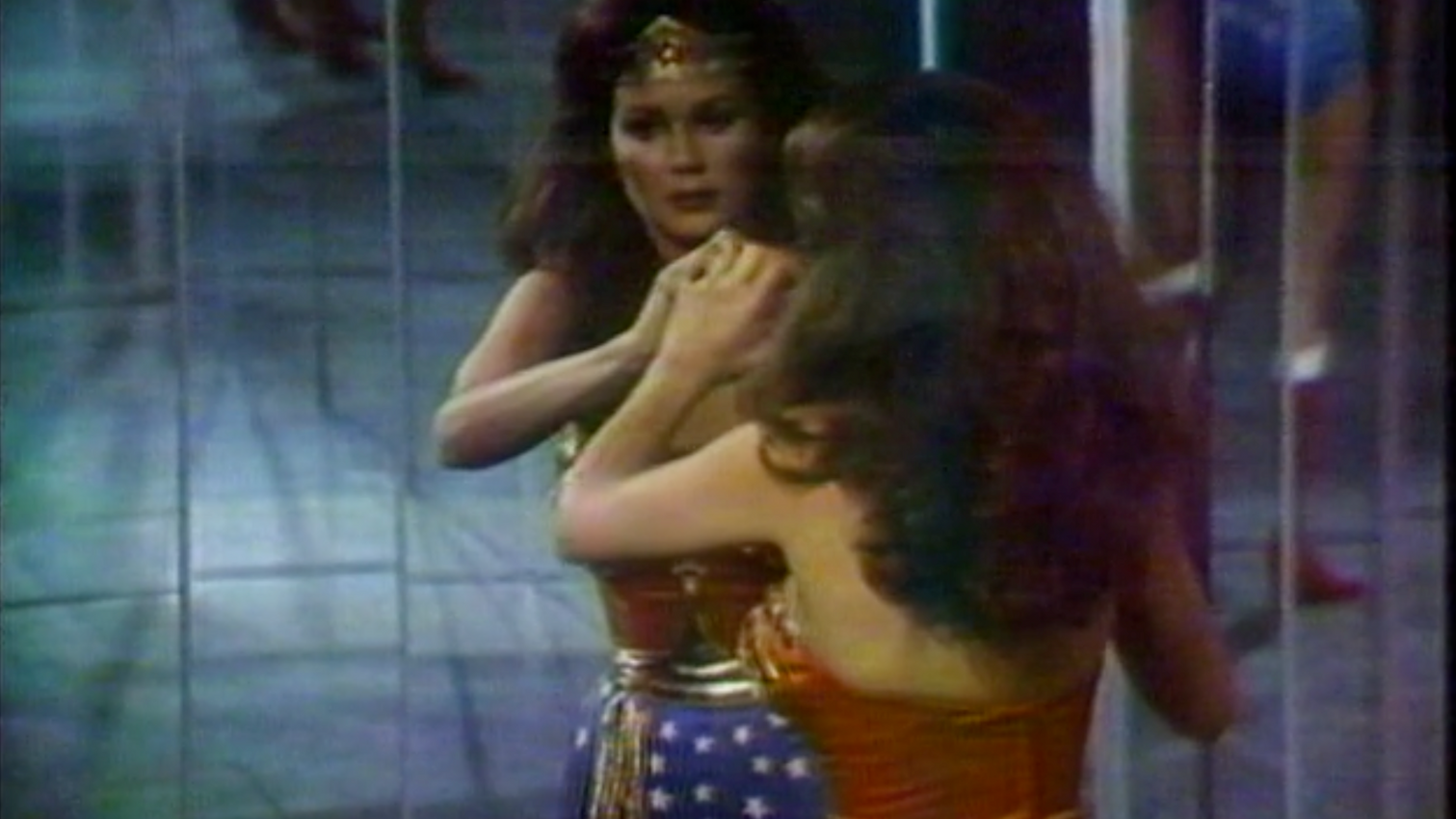
Main image: Dara Birnbaum, _Technology/Transformation: Wonder Woman (_1978/79). Courtesy Julia Stoschek Foundation.




A respected voice in contemporary art discourse.
Focusing on ambitious storytelling and insightful art-world commentary. Ocula Magazine publishes in-depth interviews, critical essays and timely analysis on the artists, exhibitions and ideas driving the global art world.
Learn more about Ocula Magazine
Showcasing the best of the art world.
Ocula partners with galleries from around the world to highlight their artists, artworks and exhibitions. Gallery membership is by application and invitation, with each member vetted by an independent panel.
Learn more about Ocula Membership
Specialises in the sale of major artworks.
Led by a team with deep ties to the world’s leading auction houses, galleries and collectors. Ocula’s advisory team offers bespoke services to high-net-worth clients from around the world who are looking to acquire the best of contemporary and modern art.
Learn more about our team and services