



The art world in focus
Subscribe to our newsletter for news and insights on artists, galleries and exhibitions.

Gray Wielebinski, Production (2026) at the Frieze London toilets. Photo: Louise Benson.
Gray Wielebinski’s Production (2026), an “olfactive site-specific intervention”, can be found this week in a somewhat unlikely location: the urinals and toilet bowls of Frieze London.
The work takes the form of sanitising toilet rim blocks and urinal cakes, encased in custom-made cages and emitting a scent made by multidisciplinary artist Wielebinski in collaboration with perfumer Alina Miron. Designed to imitate the aroma of the artist’s studio, fair-goers will encounter notes of pencil shavings, dust, paint and sweat, as well as hints of industrial cleaning products—a scent that Miron distills from coriander seeds.
The urinal cakes were created by cleaning product manufacturer Bio-Productions in custom colours: deep black and a dark red, “almost like lipstick”, as Wielebinski told Ocula. “Or like pastries, or some kind of dessert.”
The work’s title, Production, is a play on the bodily functions that (even during Frieze’s VIP opening) take place in the bathroom. It also draws attention to the often invisible labour involved in staging the fair, and in producing art, as well as questioning the value of the art object in a space where pricing is discreet but sales are key.
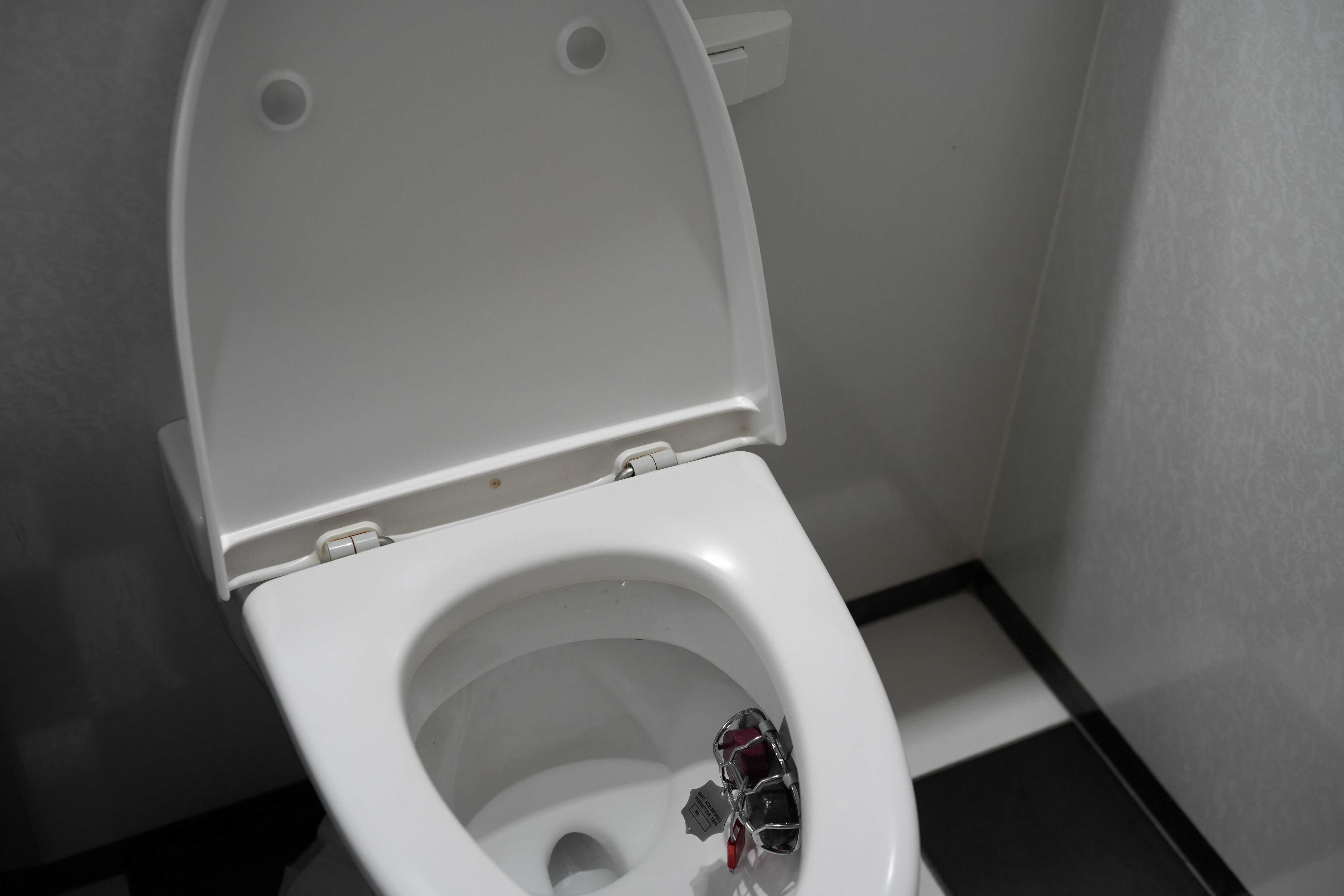
The inevitably reducing nature of Production is central to the work. Though there are 80kg of additional toilet blocks waiting to be installed, the pucks will be allowed to erode throughout the fair.
Wielebinski is alert to the implications of allowing his work to publicly degrade in such a way. “I am, in some ways, inviting myself to be pissed on,” he acknowledged. He is also sanguine about the fact that some Frieze-goers may not even notice they’re taking part in the degradation.
However, as a conceptual work, Production requires an audience, even as it diminishes the art’s value. “I’m kind of in this for the love of the game—this is a commercial art fair, but it’s not a commercial artwork,” the artist said.
“I’m doing this in a genuine and generous way, but it’s obviously also a provocation and open to interpretation, which is why I feel excited but also a bit nervous. People are going to have thoughts about it.”
These thoughts will be hard to share: photographing a toilet bowl is generally unappealing, and communicating an olfactory work via an Instagram caption is challenging. “That’s part of the conversation about how certain works are documented, disseminated or archived, and how that happens differently when they are thought of as a commodity versus of an artwork,” Wielebinski explained.
In February 2023, the artist presented Exhibition, a giant urinal built in the entrance to London’s famed department store, Selfridges. Production therefore marks an evolution in his practice, but continues his focus on specific architectural spaces, and particularly on bathrooms, which he described as “fraught, fantastical, but real environments”.
A respected voice in contemporary art discourse.
Focusing on ambitious storytelling and insightful art-world commentary. Ocula Magazine publishes in-depth interviews, critical essays and timely analysis on the artists, exhibitions and ideas driving the global art world.
Learn more about Ocula Magazine
Showcasing the best of the art world.
Ocula partners with galleries from around the world to highlight their artists, artworks and exhibitions. Gallery membership is by application and invitation, with each member vetted by an independent panel.
Learn more about Ocula Membership
Specialises in the sale of major artworks.
Led by a team with deep ties to the world’s leading auction houses, galleries and collectors. Ocula’s advisory team offers bespoke services to high-net-worth clients from around the world who are looking to acquire the best of contemporary and modern art.
Learn more about our team and services