





Revamped Awards Provide £300k Uplift for UK Arts Education

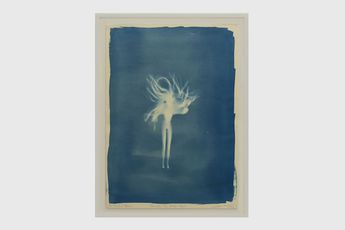
The Burton in North Devon is among the three inaugural winners of the award.Burton75, Paschale Straiton ‘The Burton Box of Treasure’, 2026. Photo by Olga Vynnyk.
Three independent UK arts organisations are set to receive £100,000 each in recognition of their progressive approaches to visual art education, after being named the inaugural winners of The Freelands Foundation’s newly revamped award scheme.
The winners are The Burton in North Devon, which was selected for outreach programmes including The Burton Art Box, a horsebox converted into a camera obscura and darkroom that travels to rural schools; Signal in Cumbria, for its development of artists through workshops, expert mentoring and exhibition-making; and Wolverhampton Art Gallery for its arts and culture youth programmes, which see participants work with the gallery team to build skills and careers in the creative industries.
The award comes against a backdrop of falling uptake for arts education in UK schools and ever-shrinking budgets for organisations working to offer other ways for young people to access the arts. Henry Ward, artistic director at the Freelands Foundation, told Ocula that funding was a challenge shared by each of the award-winners, and that each had to work hard to raise the money to support their initiatives.
“But the thing that was most striking about all three winners wasn’t so much the challenges they faced as the strategies they are using to be able to realise such outstanding work,” Ward said.
“In all three cases there was compelling evidence of the organisations being genuinely embedded in their communities, in sharing resources, and responding to the context they find themselves in. They all share absolute conviction in working collaboratively with their communities.”
Turning the problem on its head
In historic town of Bideford, The Burton, a contemporary art gallery and museum, was recognised for Burton Futures, which supports art education in a predominantly rural district that has long suffered from underinvestment, deprivation and geographic isolation. The Burton Art Box was developed as a direct response to feedback from teachers that they could no longer afford the cost of transport or staffing capacity needed to offer offsite learning to their pupils.
Ward commended the “beautiful simplicity” of the project. “They’ve turned the problem on its head and are taking the museum to the schools,” he said. “We got to see it in practice and watching the primary children working with the camera obscura in the horsebox was fantastic.”
Barrow-in-Furness-based film and media charity Signal has been running its Artist Development Lab since 2018. Participants in the programme, based in one of England’s most acutely deprived and culturally underserved communities, receive free access to visual arts, film and heritage activities, alongside tailored mentoring from experts that results in a group exhibition in the venue’s gallery space.
In Wolverhampton, the city art gallery’s arts and culture youth programme is free or includes financial support, allowing it to “ensure that talent, not circumstance, determines opportunity”. It includes ArtForum, a hands-on youth group for 14–25-year-olds, and MORE ART INC, an incubator supporting emerging artists to build creative careers.
“The energy at Wolverhampton was infectious,” said Ward, who visited each of the three winning locations alongside fellow judges radio presenter Gemma Cairney, writer Jenni Lomax, art historian Ben Street and artist Joy Gregory. “What was most striking was how much agency the young people have and how integrated the programmes are into the wider work of the gallery.”
Barriers to access
In May, a report commissioned by the Cultural Learning Alliance (CLA) found that the regions of the UK with the highest percentage of pupils eligible for free school meals—often used as a marker of socioeconomic disadvantage—have the lowest proportion of arts GCSE entries. Pupils receiving free school meals were also found to be less likely to experience out-of-school arts activities.
The regions where most children were in receipt of free school meals included the West Midlands, where Wolverhampton Art Gallery is based. All impacted regions were outside of London.
While the Freelands Foundation did receive “excellent” applications from organisations in London, none of its winners are based in the English capital. “There is still a huge problem with the resources available to organisations in the capital, compared to somewhere like Bideford in North Devon,” Ward acknowledged, “which really highlighted the additional difficulties created by often poor infrastructure outside of the large metropolitan areas.”
According to research released in August by the advocacy group Campaign for the Arts, GCSE art and design entries across the UK have fallen to 3.4 percent, and A-Level entries have slipped to 4.7 percent—their lowest point since 2010. “We’ve had 15 years of education policy and rhetoric that has contributed to the diminishing uptake of art subjects in schools and adversely affected the studying of art in further and higher education,” Ward explained.
The Freelands Foundation’s new award replaces a previous grant that enabled UK arts organisations to present an exhibition of new work by a mid-career female artist, which ran for eight editions between 2016 and 2023. Writing in Museums Journal earlier this year, Ward described this change as a “strategic reorientation”.
He hopes the refocused award, which has pledged to deliver £1.5 million in grants to 15 organisations offering visual arts education across the next five years, can play a part in addressing these issues. He said: “Our ambition is that these winning organisations will provide excellent examples of what is possible and inspire peers to take more risks and create their own genuinely progressive and impactful art education programmes.”






A respected voice in contemporary art discourse.
Focusing on ambitious storytelling and insightful art-world commentary. Ocula Magazine publishes in-depth interviews, critical essays and timely analysis on the artists, exhibitions and ideas driving the global art world.
Learn more about Ocula Magazine
Showcasing the best of the art world.
Ocula partners with galleries from around the world to highlight their artists, artworks and exhibitions. Gallery membership is by application and invitation, with each member vetted by an independent panel.
Learn more about Ocula Membership
Specialises in the sale of major artworks.
Led by a team with deep ties to the world’s leading auction houses, galleries and collectors. Ocula’s advisory team offers bespoke services to high-net-worth clients from around the world who are looking to acquire the best of contemporary and modern art.
Learn more about our team and services