





What Has Keir Starmer Done for Culture?

The UK prime minister announced his resignation on Monday, clearing the way for challenger Andy Burnham. Photo: Abdullah Bailey
Earlier this week, UK prime minister Keir Starmer announced his resignation as leader of the Labour Party, signalling the end of his time in 10 Downing Street and clearing the way for the country’s seventh leader in 10 years. The move followed months of pressure from Labour Party members of parliament, and came amid concerns that Starmer would fail to defeat the insurgent right-wing party, Reform UK, at the next general election.
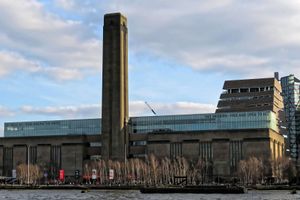
It was a premature ending for a leader who had arrived in office with lofty cultural ambitions. In 2024, Starmer celebrated his landslide election victory at Tate Modern after campaigning to put the arts “at the centre of a new, hopeful, modern story of Britain”.
Two years on, and before the end of Labour’s parliamentary term, it is too early to speak definitively of a legacy. Still, Starmer’s exit prompts an assessment from the arts community: what imprint has he left on the country’s cultural life—and what can be hoped for from whoever comes next?
Early in his premiership, Starmer laid out a 10-year growth plan that recognised the creative industries as a key economic driver and pledged to grow business investment. His government has since committed several headline figures to the arts, including £1.5 billion to buildings and infrastructure repairs in 1,000 local cultural venues within the parliamentary term.
Greg Hilty, partner at Lisson Gallery, which opened in London in 1967, reflected positively on these policies. He told Ocula: “Under Starmer’s short watch, Labour turned round a decade of underfunding of the arts including over £700 million for museums both in London and regionally.”
However, fiscal realities complicate the picture. The Department for Culture, Media and Sport (DCMS) has seen the brunt of sequential real-terms budget cuts and Arts Council England is facing reviews into how it administers public funding. More recently, further cuts to DCMS have been considered in order to fund an increase in defence spending.
Elaine Bedell, chief executive of London’s Southbank Centre, welcomed Starmer’s injections of “urgent capital funding”, but added a message for his successor. “Whilst we of course understand the ongoing fiscal realities that a new prime minister will face,” she told Ocula, “we really do urge the new government to recognise publicly the very great value arts and culture can contribute to creating a more united society”.
Across the UK’s sizeable commercial art market, where changes to business rates and broader tax reforms affecting high-net-worth individuals have caused friction, feedback for Starmer has also been mixed.
“Sir Keir Starmer came into office promising to reduce the heavy weight of bureaucracy on UK businesses,” Tom Christopherson, chairman of the British Art Market Federation, told Ocula. One such step welcomed by the trade was the extension of the tax-free import period for art and antiques from two to four years.
However, Christopherson added: “In other areas the government has been less successful in reducing unnecessary and disproportionate bureaucratic burdens on medium and small art market businesses.” In particular, lobbying continues around anti-money-laundering compliance thresholds for art transactions, and import and sales tax competitiveness.
While Starmer’s funding decisions have commanded the most attention, the full impact of some of his cultural policies may take longer to come into focus. A longtime champion of arts education who has repeatedly said that learning to play the flute changed his life, Starmer moved to give arts subjects equal status to humanities and languages in the national curriculum.
This was a reversal of the policy direction of the former Conservative government, which many felt harmed access to the arts. Starmer’s reforms will come into force in September 2028.
“Keir Starmer personally recognised the immense opportunity that the arts represent for every child,” Alison Cole, director of think tank Cultural Policy Unit, told Ocula. “Driven by this conviction, his main cultural legacy will undoubtedly be the return of the arts to the English national curriculum, following 14 years of creative subjects being cast into the wilderness.”
Starmer will remain in post until a new prime minister is appointed, which could be as early as mid-July, depending on how many candidates join newly-re-elected MP Andy Burnham in the leadership race. However, by September, when the British Museum opens one of its most-anticipated exhibitions—an historic loan of the Bayeux Tapestry brokered by Starmer—someone else will certainly be cutting the ribbon.





A respected voice in contemporary art discourse.
Focusing on ambitious storytelling and insightful art-world commentary. Ocula Magazine publishes in-depth interviews, critical essays and timely analysis on the artists, exhibitions and ideas driving the global art world.
Learn more about Ocula Magazine
Showcasing the best of the art world.
Ocula partners with galleries from around the world to highlight their artists, artworks and exhibitions. Gallery membership is by application and invitation, with each member vetted by an independent panel.
Learn more about Ocula Membership
Specialises in the sale of major artworks.
Led by a team with deep ties to the world’s leading auction houses, galleries and collectors. Ocula’s advisory team offers bespoke services to high-net-worth clients from around the world who are looking to acquire the best of contemporary and modern art.
Learn more about our team and services