





Visitor Voting Reopens Venice Biennale Awards to Israel and Russia

The changes come in response to the resignation of the Golden and Silver Lion prize jury, which was announced yesterday. LaPresse/Alamy Live News

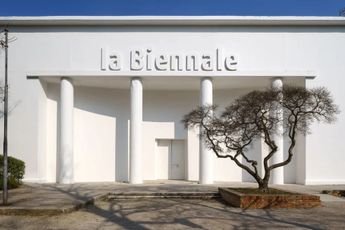
Israeli and Russian artists will once again be eligible for awards consideration at this year’s Venice Biennale following the organisation’s announcement of a visitor-based voting system.
The Visitors’ Lions will replace the traditional Golden and Silver Lions, and will be awarded to the Best Participant in the 61st Exhibition In Minor Keys and the Best National Participation in the 61st Exhibition, as decided by ticket holders.
The changes come in response to the resignation of the Golden and Silver Lion prize jury, which was announced yesterday.
Last week the five-curator jury confirmed that it would not consider for awards countries whose leaders have been charged with crimes against humanity by the International Criminal Court, which was widely understood to refer to both Israel and Russia.
In a statement, the biennale clarified that all national participants, as per its official list, will be eligible for the visitors’ award for best national participation. It described the move as “following the principle of inclusion and equal treatment among all participants”.
“This is consistent with the founding spirit of La Biennale, based on openness, dialogue, and the rejection of any form of closure or censorship,” the statement continued. “La Biennale seeks to be—and must remain—a place of truce in the name of art, culture, and artistic freedom.”
Visitors wishing to vote in the awards must visit both the Arsenale and the Giardini, where they will be verified by ticketing systems, and may cast one vote each. The change means the awards ceremony will now take place on 22 November, not 9 May.
EU commissioner blasts ‘normalisation’ of Russian participation
Yesterday’s announcement comes following weeks of international pressure on the biennale surrounding the participation of both Russia and Israel.
In March, almost 200 of the biennale’s artists, curators and art workers signed an open letter demanding the exclusion of Israel from the edition, citing ongoing atrocities in Gaza and the West Bank.
More recently, in an X post on 26 March, Israel’s Foreign Ministry branded the now-departed Gold Lion jury “a contamination of the art world”, following their decision to exclude Israeli artist Belu-Simion Fainaru from consideration.
Backlash over Russia’s participation began after it was confirmed in March that the country would present a pavilion for the first time since its full-scale invasion of Ukraine.
On Wednesday, Glenn Micallef, the European commissioner for intergenerational fairness, youth, culture and sport, announced that he had turned down an invitation to attend the biennale, becoming the latest in a string of officials to boycott the edition.
Micallef made the announcement while addressing the European Parliament in Strasbourg, as part of a debate titled Danger of normalising relations with Russia, including its participation in major cultural and sports events.
The commissioner said: “I would have very much liked to attend, to celebrate Europe Day [at the Venice Biennale] with the Italian sector, which I deeply love and admire.
“However, as long as Russia and the Russian authorities continue to be invited, while Ukrainian people continue to be targeted and attacked on a daily basis, I cannot be present.”
Speaking twice throughout the debate, Micallef criticised the “gradual normalisation” of Russian participation in international sporting and cultural events.
He said: “Allowing Russia to use sport and culture as platforms for propaganda while its aggression continues sends a very dangerous signal that such actions can be tolerated.
“This is a false neutrality that the European Union cannot accept. What we are seeing here is a clear attempt to weaponise sport and culture for legitimacy.”
Micallef went on to describe examples of Russia “trying to use European stages in a co-ordinated way and in a focused way”, and gave the example of a Russian media outlet’s recent portrayal of a Paralympic athlete as a war hero, alongside president Vladimir Putin.
He continued: “Then there is the recent decision of the Venice Biennale to invite—and I repeat, I stress—to invite Russian authorities to reopen the national pavilion.
“This is another example that is deeply incompatible with the European Union’s position, and it was met with a firm response from the European Commission.”
Was Russia invited to return?
The commissioner’s insistence that Russia was invited to return to the biennale appears to contradict a statement made by the exhibition on 4 March, in which it made clear that countries are expected to ask to participate.
The organisation said: “In response to the communications and requests for participation from countries, La Biennale di Venezia rejects any form of exclusion or censorship of culture and art.”
The biennale did not respond to a request for comment.
Micallef’s announcement was made just days after reports emerged in Italian media outlets claiming that Italian culture minister Alessandro Giuli had dispatched inspectors to the Venice Biennale headquarters, tasked with scrutinising Russia’s involvement.
A source familiar with the situation confirmed to Ocula that two inspectors had been sent. A spokesperson for the Italian culture ministry confirmed “ongoing administrative reviews”.
On 24 April, the ministry announced that Giuli would also not attend the biennale, nor participate in its opening ceremony.
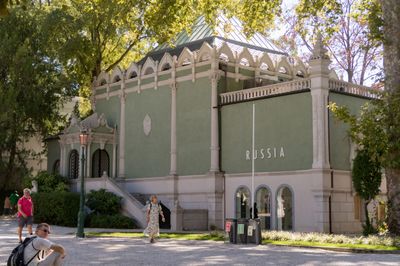
The Russian pavilion is due to present the exhibition The tree is rooted in the sky, commissioned by Anastasiia Karneeva and featuring more than 30 artists.
However, on Sunday, Italian media outlet Open said that the country’s pavilion will not open to the public on 9 May as previously planned. Instead, the publication reported, the space would open only during the exhibition’s official preview between 5 and 8 May, and recordings of the performances would be screened on its walls after this time.
Ocula reached out to the biennale and representatives of the Russian pavilion for comment.




A respected voice in contemporary art discourse.
Focusing on ambitious storytelling and insightful art-world commentary. Ocula Magazine publishes in-depth interviews, critical essays and timely analysis on the artists, exhibitions and ideas driving the global art world.
Learn more about Ocula Magazine
Showcasing the best of the art world.
Ocula partners with galleries from around the world to highlight their artists, artworks and exhibitions. Gallery membership is by application and invitation, with each member vetted by an independent panel.
Learn more about Ocula Membership
Specialises in the sale of major artworks.
Led by a team with deep ties to the world’s leading auction houses, galleries and collectors. Ocula’s advisory team offers bespoke services to high-net-worth clients from around the world who are looking to acquire the best of contemporary and modern art.
Learn more about our team and services