





Rage Against the Machine
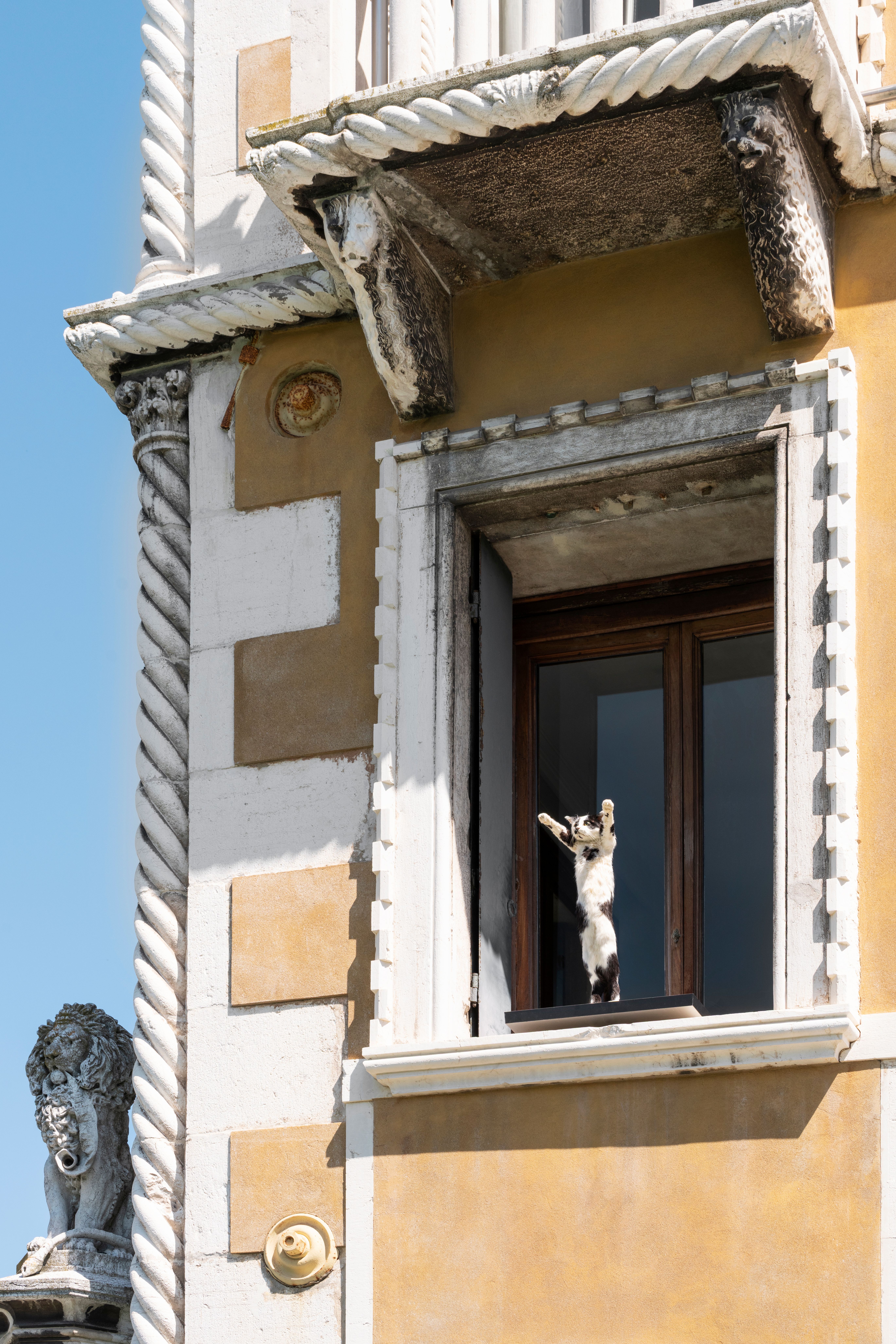
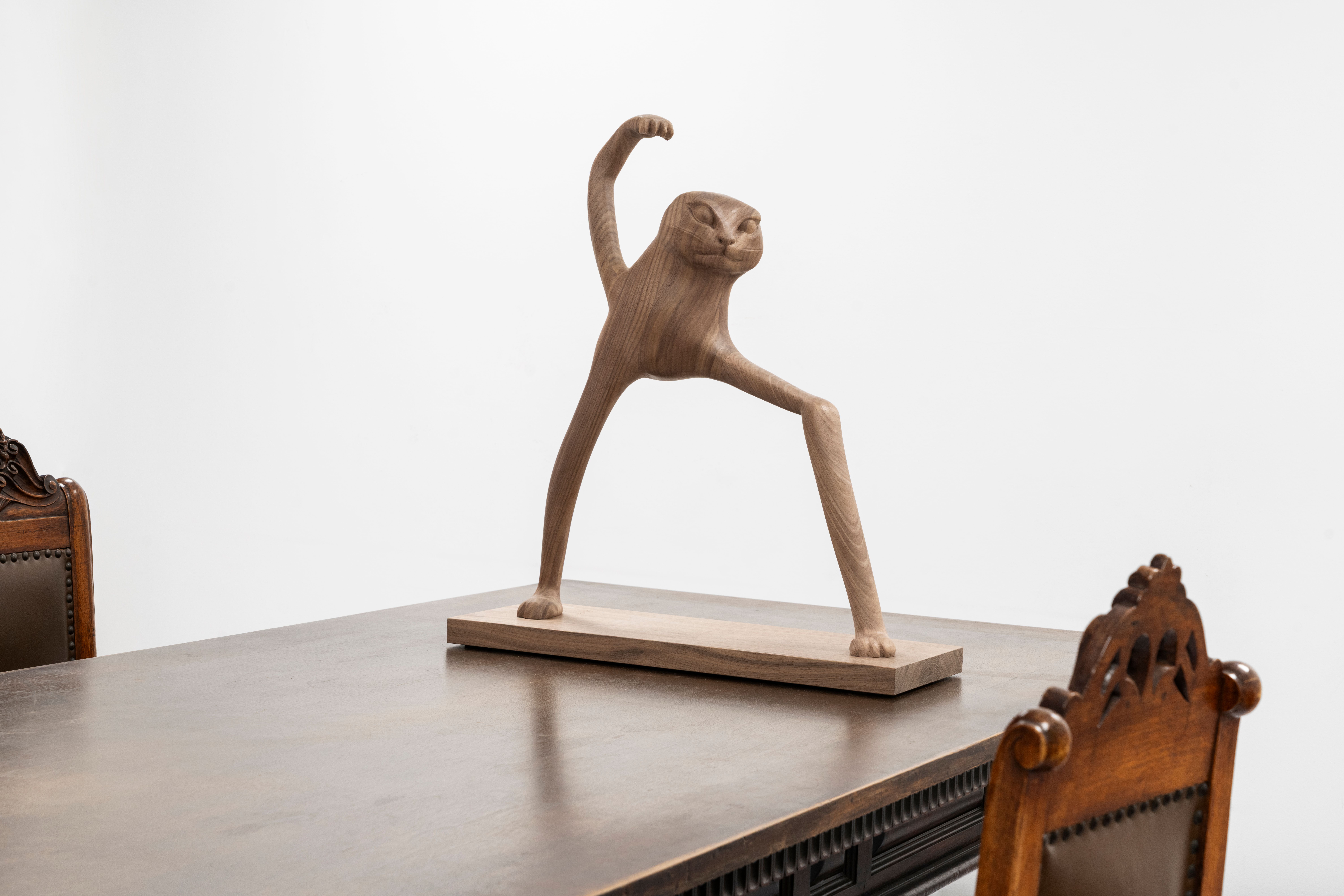
Social media and AI are optimised for user engagement, but as they evolve, Eva and Franco Mattes ask whether the only logical endpoint is “rage bait”. Save to My OculaA stuffed cat faces out of a first-floor window of an office in Palazzo Franchetti in Venice, its arms outstretched towards the Grand Canal. It’s unclear whether it’s here to greet the sunny Venetian morning or about to jump and bid farewell to white-collar life once and for all. We take a selfie. In the next room, there is a model of an angry, deformed black cat: an earless and tailless blob with paws raised in indignation. It poses on a turntable while a robotic arm photographs it from all angles. As I accidentally photobomb it, I realise that I faintly recognise this wretched creature. It is the “cursed cat” from a meme initially popularised on Russian social media and usually captioned with “ANGRY AS FUK”. Here, its rage has been rendered in physical form.
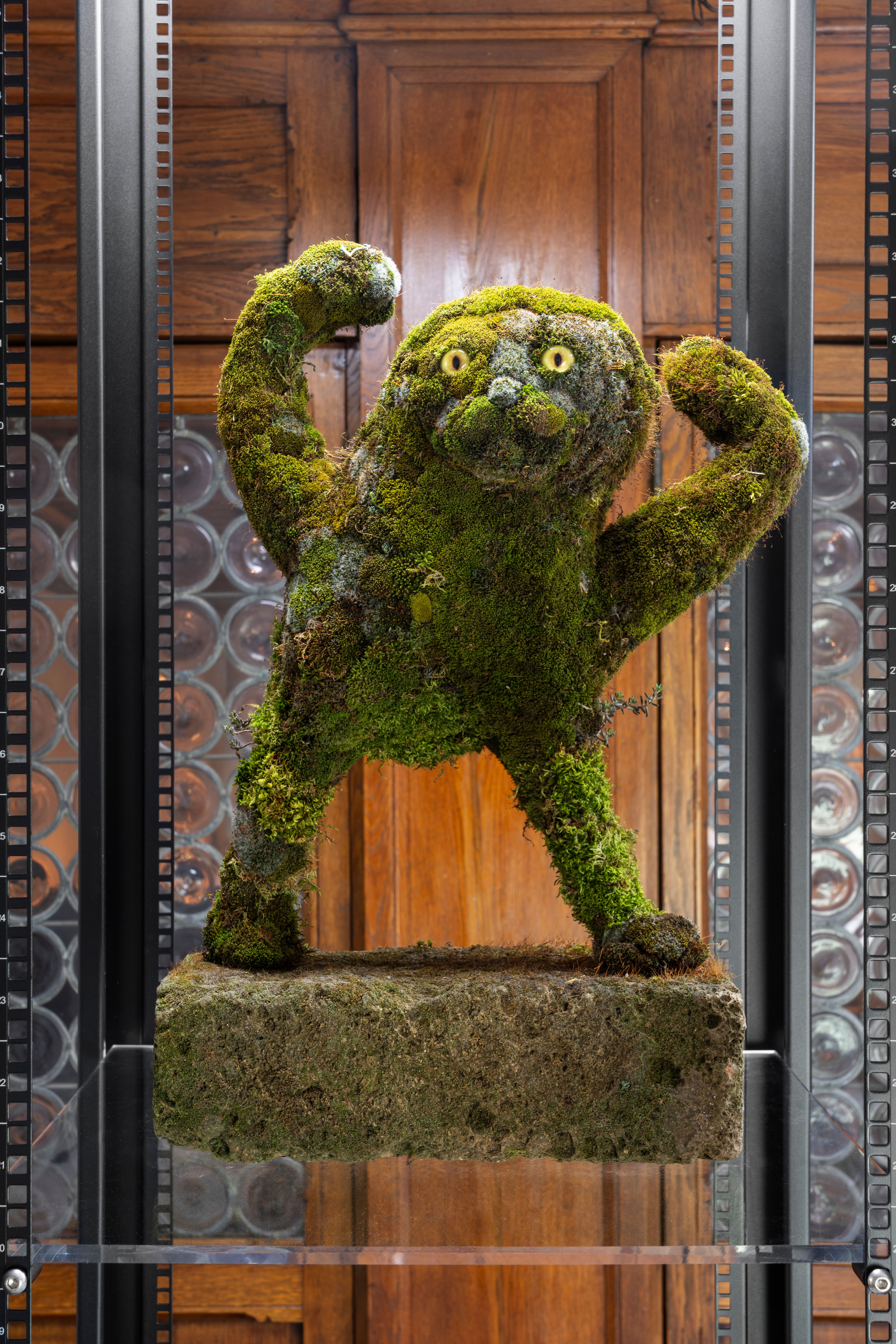
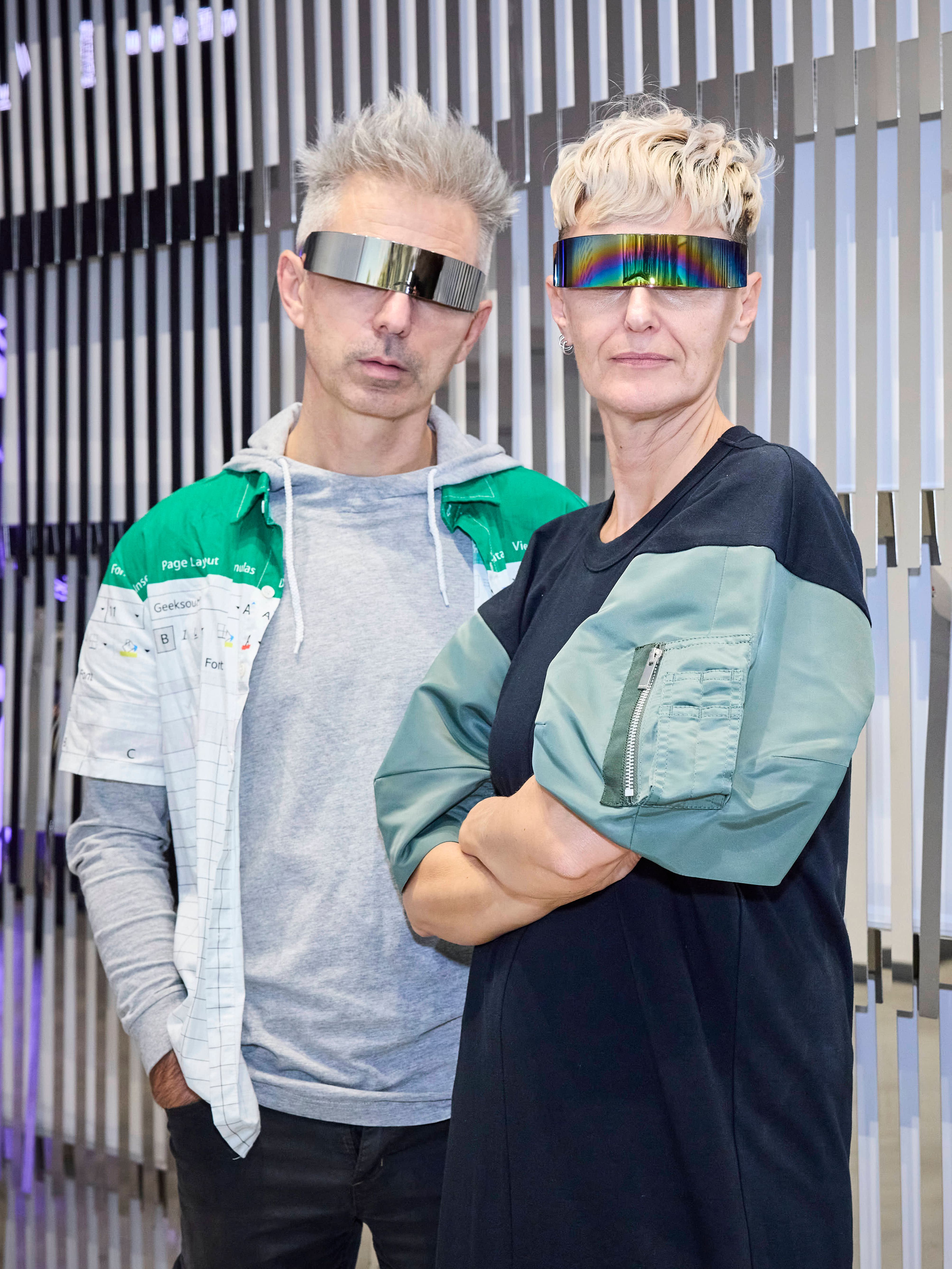
The bureaucratic backrooms of Venice were chosen by the New York-based Italian artists Eva and Franco Mattes—also known by their online base, 0100101110101101.org—for their solo exhibition Rage Bait. They have transformed the office space of Palazzo Franchetti into a data centre of sorts. As the robot photographer builds the dataset of angry cat images, a computer rig trains an image model that generates and distributes versions of the poorly drawn feline across the web, with the intention of proliferating its image and, perhaps more importantly, its mood, into the future training sets of the collective AI unconscious. Throughout the Palazzo, the cursed cat’s AI variants reappear in physical form, painstakingly crafted from wood, Murano glass, moss and other material makeovers. Lined up together, they resemble the trophies of an ongoing genetic experiment.


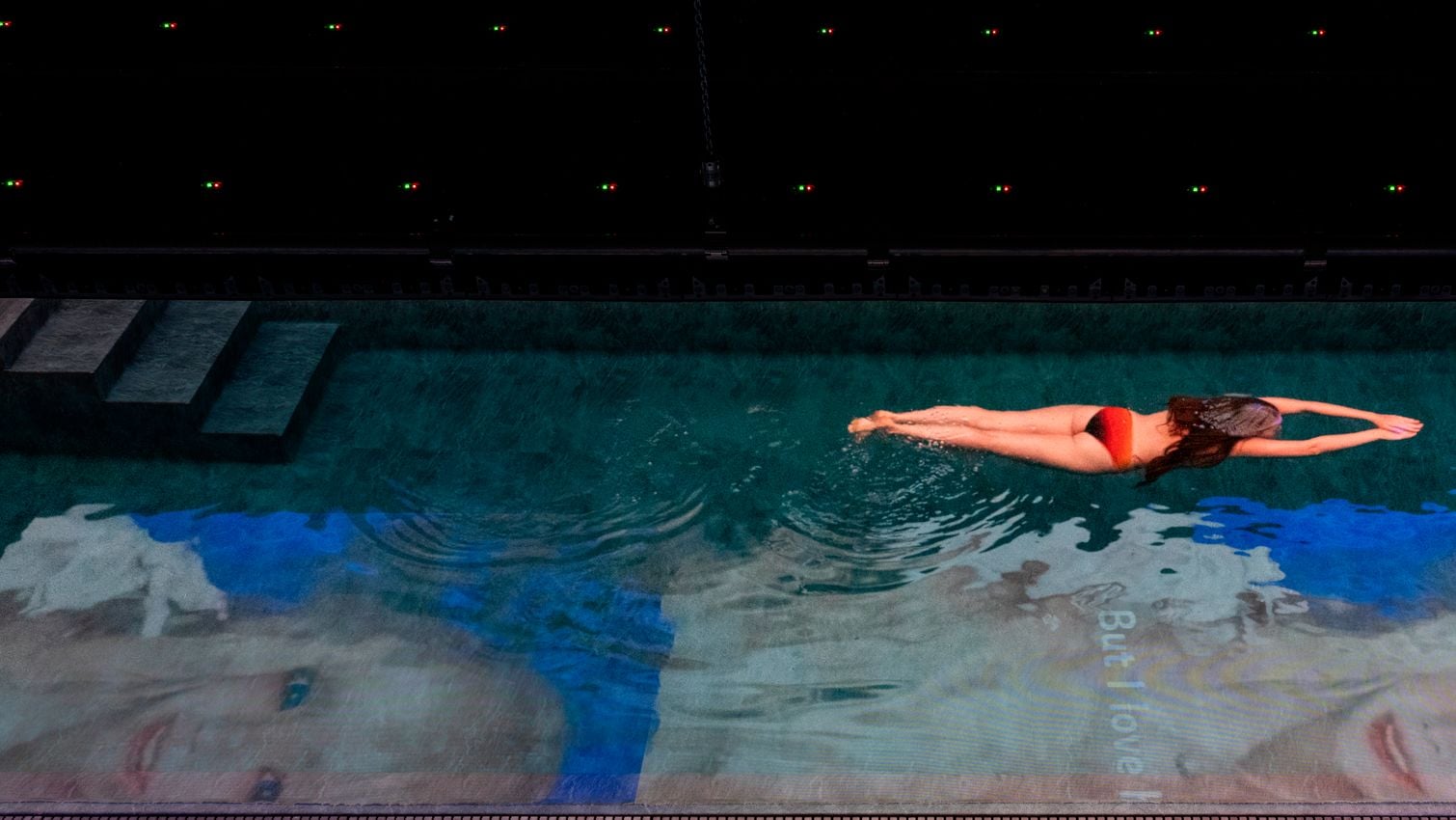
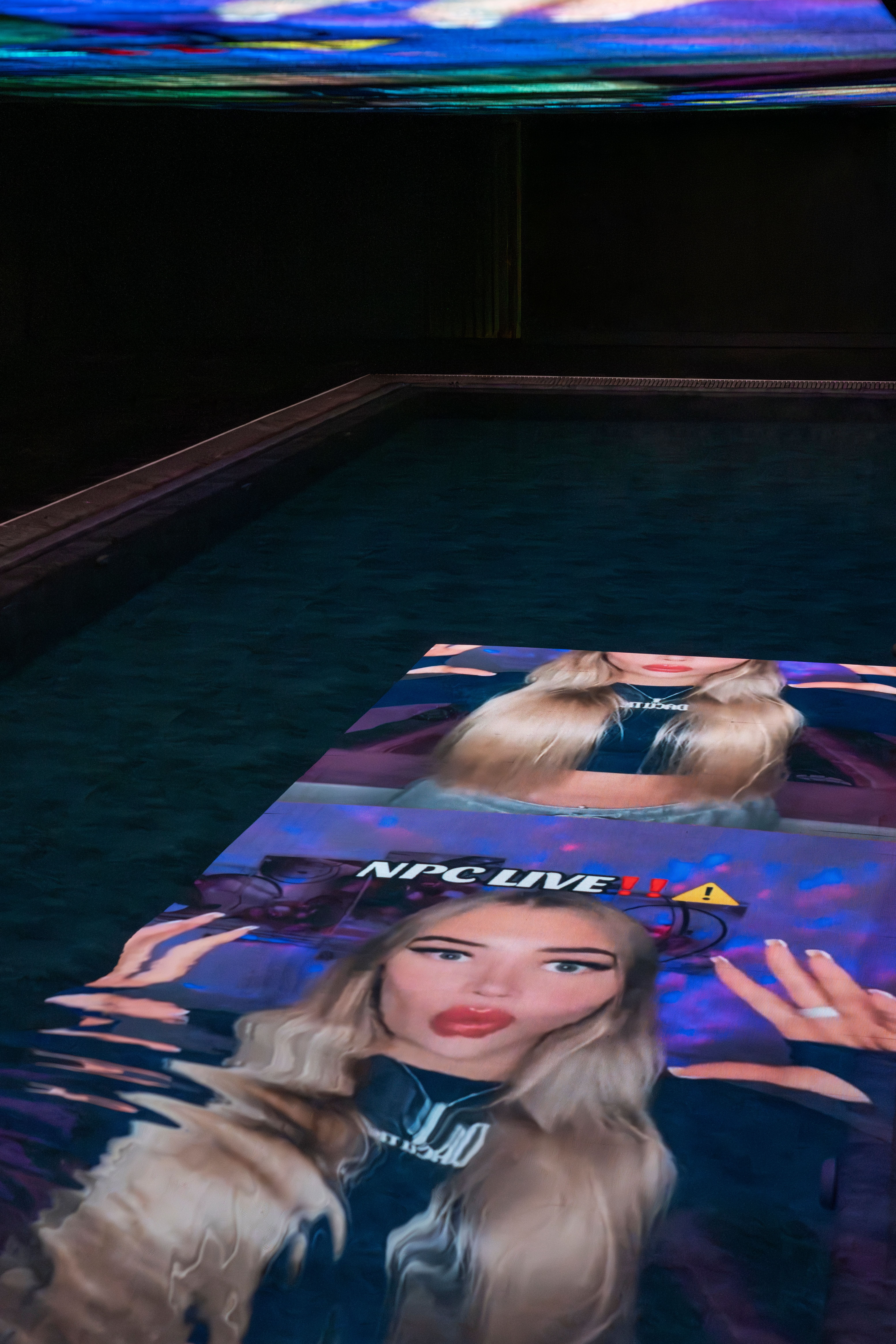
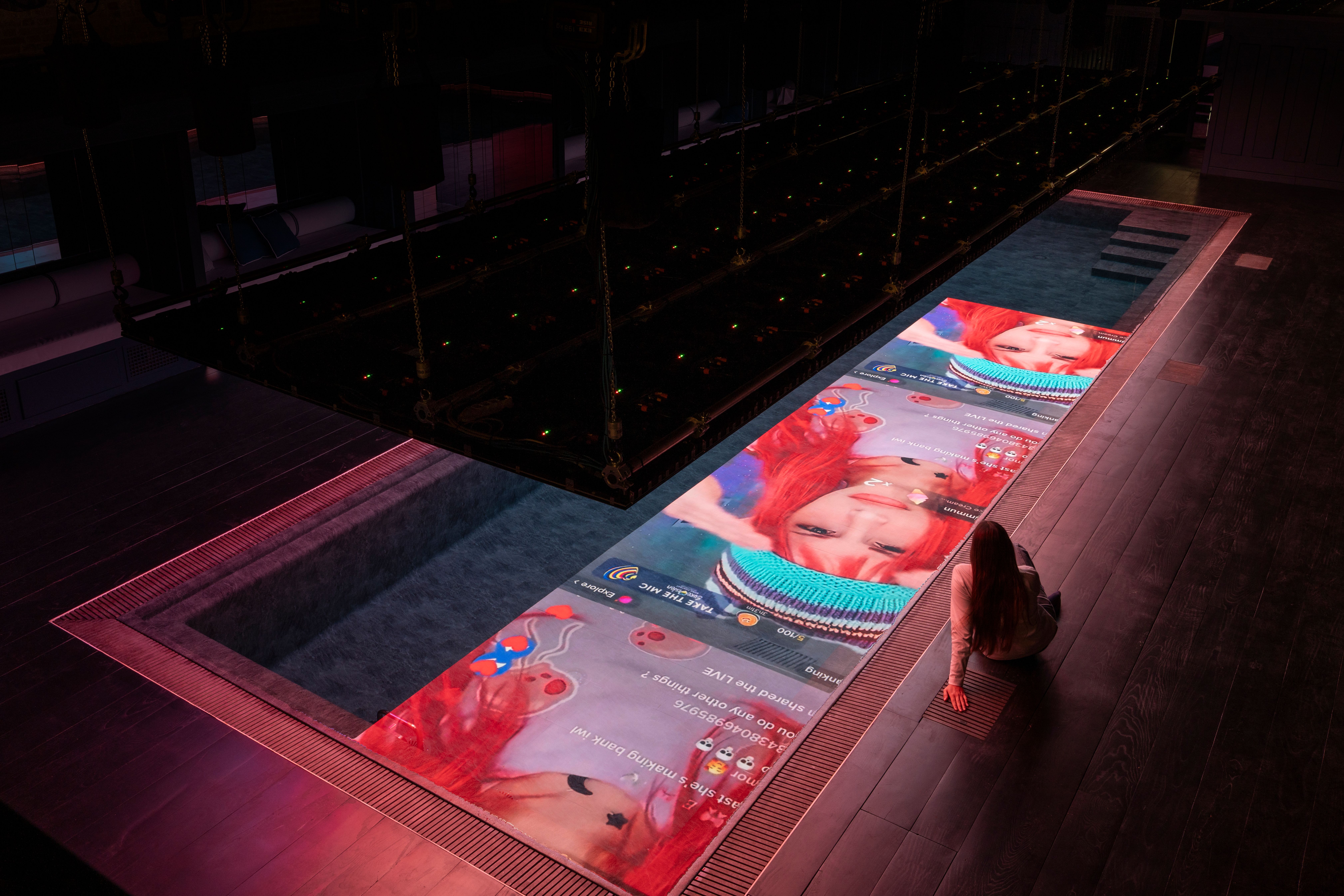
Another room features Are You Still There? (2025), a series of videos in which “Italian Brainrot” characters perform real conversations from a suicide prevention helpline, taken from a public dataset used to train large language models. In the exhibition’s other half, held at Le Cabanon on Giudecca Island, the duo have mounted a video work, But I Love Human (2025), a montage of TikTok “Non-Player Character” livestreamers, who take on the tics, scripts and gestures of video game background characters in an uncanny performance of janky automata. The video is mounted over a lavish private swimming pool, so that the work is viewed from its reflection, riffing on Narcissus. Taken together, the works of Rage Bait triangulate on the highly networked, low-resolution affect which fills up the internet: cheap feels, flowing hot and fast.
The Mattes met as teenagers in Italy. They skipped art school and started publishing their works online before finding kindred spirits in the burgeoning internet art era of the 1990s, a networked grassroots scene that took them from Ljubljana to Venice to New York City. They have since been recognised as pioneers of Net Art, a genre that uses the internet as its primary medium. Today, the couple are perhaps best known for their prankster-ish provocations, which often have a morbid edge. (The Cursed Cat, for instance, initially appeared in a 2008 press image of two police officers at the scene of a fatal shooting in Derby, England.) Thirteen Biennales ago, the Mattes staged an exhibition by a fictional Yugoslavian artist called Darko Maver, who made gruesome verité sculptures resembling severed limbs and cadavers. They eventually revealed the entire exhibition as fake, with the sculptures created using images of real atrocities taken from the late-1990s “shock site” rotten.com.
We met in Venice to discuss Rage Bait, the mystery of a meme’s success and the corners of the internet where beautiful things happen.
Gary Zhexi Zhang: A decade or so ago, the discussion around the internet was all about platform capitalism, corporate takeover and state control. Now, something else has been let loose by the frenzy of social media and AI. No one thinks the main problem with the internet is that it’s too controlled, because it’s completely insane out there.
Franco Mattes: It’s like a giant real-life avant-garde absurdist play, like Ubu Roi, you know? It’s like an absurd proto-Dada play involving all of us.
Eva Mattes: Strange is the new normal.
FM: That’s why we called the show Rage Bait, because rage bait acts on that irrational fraction of a second before your brain tries to decipher and understand the message—whether it’s an image, a sound or a text—and acts on that vibe level which is completely irrational. Emotions have proven to be much stronger than ideas and thoughts and actual communication, and these technologies are proving to be really good at manipulating emotions, which is something nobody really predicted.


GZZ: It’s still highly corporate, but somehow also a total wilderness. A lot of the ideals and expectations that we might have held on to in the 1990s, when you began your work, have been flipped on their heads.
FM: Yes. For example, think about no-copyright and creative commons: it was the countercultural position amongst artists, intellectuals, coders and leftists after the internet arrived. Things should be free for everyone to use. And now the most prolific copyright pirate of the 1990s, with 60,000 mp3s in his basement, is like a mom-and-pop shop compared to OpenAI, one of the most powerful companies in the world. So what was perceived as a form of piracy and counterculture is now fuelling the main economy of the US.
“What was perceived as a form of piracy and counterculture is now fuelling the main economy of the US”
GZZ: And ironically, the pirate libraries became some of the best places to get training data.
EM: It’s like: “You did a great job! Thank you very much, we’ll take it from here.” And which put us, of an older generation, in a difficult position, because we realised that the strategies that we contributed to or pioneered—you know, faking, pranking, rage bait—now are being used by the most powerful people on the planet.
GZZ: And when do things get real? In your work, it becomes clear from early on that the internet is as much about reaction as it is about reality. Projects like No Fun (2010), where Franco stages his suicide on a live webcam chat, were very much about provoking people with
EM: Yes, most of our work is more focused on the side of the receiver rather than the emitter—on the reaction. The layer of the reaction is where all the action happens, all the extraction; in that sense the content layer is almost irrelevant. At the time, when we were spreading the fakes, we knew that there would be a moment of revelation in which people would realise it was fake, and therefore hopefully you’d learn to doubt news, maybe you’d learn to search for different sources. Today we doubt everything, so reality is not shared any more. We all have our own version of reality.
GZZ: So in those projects, there was implicitly a pedagogical element, a punchline that puts us back in a shared world.
FM: That was the intention. It doesn’t work all the time, sometimes we totally lost control of the narration. We still met people 10 years after revealing that Darko Maver never existed, who wanted to convince us that he was real. They’d say: “Sure, maybe you invented it, but I came upon another story…” And that was very frustrating, because we realised that it’s so easy to lose control.
GZZ: I wanted to talk about the reoccurrence of death and trauma in your work. I’m thinking of the gore of Darko Maver and the work about suicide, or the more recent content moderator interviews, where it’s as if we live on this clean, corporate internet but all the shit and razor blades are being filtered out by someone in the Philippines. It feels like death is the interface between the internet and something else.
FM: Yeah, you’re right. On the one hand, the works you mentioned are a little bit closer to classical shock, avant-garde strategy. In the 1990s, we thought that giving an electro-shock to the viewer was necessary because we were working with a very mediated medium, which people constantly accused of being unreal. “Oh, the internet is virtual.” But what is virtual? If I offend you over the phone, are you going to think, “Oh well. It’s not real, it’s virtual”? In the end it can shape the fate of the world.
In the early web, death and gore erupted openly to the surface, which inspired works like Darko Maver. Today the network looks cleaner, but only because an invisible workforce absorbs the psychological cost of keeping it clean. The violence hasn’t disappeared.
“The strategies that we contributed to or pioneered—you know, faking, pranking, rage bait —now are being used by the most powerful people on the planet”
GZZ: Everything is mediated, but making you feel something before you can even think about it—that’s one of the few things that still feels immediate. After all the pranking and humour, there’s a basically humanistic kernel in your work, where you’re asking: Who are we in all of this? How real is real enough? And so with death and war, I’m also wondering, is there really a limit, at which mortality closes the distance of mediation?
FM: You know, when Iran counter-attacked the US, they bombed data centres before bombing the train station or the airport, because they know that disrupting the internet is gonna cause more damage than disrupting the military, in a sense. Which gives you an idea of what the priorities in today’s world are.
GZZ: And the war is announced on social media, where it starts and ends.
FM: In the series Are You Still There? (2025) in which Italian Brainrot characters restage conversations from a suicide prevention chat, we used the same model that many people use as a substitute for a psychoanalyst. The visualisation we chose to pair with real conversations were inspired by a TikTok video. It’s a video of a young boy who was being bullied at school—very sad in a sense; unremarkable but relatable. And he wanted to tell the story of his suffering, nothing major, just being a subject of a joke. But he also wanted to be anonymous, because he didn’t want to be bullied even more, so he put out a video of himself with a frog filter.
And in a very modest, earnest way, he’s talking as this frog character about how much he was suffering. And the video became hugely popular, in a good way. He got millions of heartwarming comments [from] other kids, saying how important it was that he did this, that they were on his side. For us, the video captured something essential about online anonymity. These anonymous crowds in the comments, the next day they might be trolling or doing Nazi salutes and all the rest, but in that moment of honesty, they wanted to unite in the suffering and solidarity.
GZZ: It’s one of the most uniting things, after everything else is done.
FM: And I feel like the success of reaction videos might be because of this. Somehow that’s when you realise that our feelings are universal. An image would probably get the same reaction all over the world. People are going to laugh, they’re going to cry, they’ll insult each other in a similar way. Reactions like this show in a very non-rational, vibey way how humans’ basic feelings haven’t changed in a million years.
GZZ: Do you feel optimistic?
FM: I’m heartened by the fact that no company, however big, was yet able to engineer an honest meme, something that lasts more than a few days. And some kid in a bedroom in Kyiv does it. We did try to deliberately engineer a meme back in 2008. It was a photo of a Mickey Mouse that had committed suicide in front his own image. We put it on 4chan and it got some reposts, but it never really took off, and after six months, we gave up. That was 2008.

In 2020, we get a message from Facebook with that image. And we’re like, “oh, that’s weird.” And then there was another one, and another one, and another one… And suddenly we found thousands of versions of that image. We still have no idea what happened. It has been silent, completely forgotten, for 12 years, and then suddenly something aligned in the world, and the image picked up, and boom! It was used for political memes and anime, manga, video games, comedians, sports stuff, all over the world. Absolutely unpredictable, irrational. I challenge you to understand why now and not back then, and why that particular image and not another one. I still find it very fascinating: this absolute unpredictability gives me hope. —[O]
Eva and Franco Mattes, Rage Bait (until 30 June) presented by the Autotelic Foundation at Palazzo Franchetti and Le Cabanon, Venice.
Main image: Installation view of RAGE BAIT (until 30 June 2026 ) by Eva & Franco Mattes presented by Autotelic Foundation. Photo: Melania Dalle Grave for DSL Studio.










A respected voice in contemporary art discourse.
Focusing on ambitious storytelling and insightful art-world commentary. Ocula Magazine publishes in-depth interviews, critical essays and timely analysis on the artists, exhibitions and ideas driving the global art world.
Learn more about Ocula Magazine
Showcasing the best of the art world.
Ocula partners with galleries from around the world to highlight their artists, artworks and exhibitions. Gallery membership is by application and invitation, with each member vetted by an independent panel.
Learn more about Ocula Membership
Specialises in the sale of major artworks.
Led by a team with deep ties to the world’s leading auction houses, galleries and collectors. Ocula’s advisory team offers bespoke services to high-net-worth clients from around the world who are looking to acquire the best of contemporary and modern art.
Learn more about our team and services