





Pussy Riot’s Nadya Tolokonnikova: ‘Art Is Being Used and Abused for the Sake of Amoral Politics’
The exiled campaigner speaks to Philippa Kelly about how Pussy Riot orchestrated one of the biggest protests of this year’s Venice Biennale, and reveals the group’s proposed alternative Russian pavilion for 2028. Save to My Ocula

Nadya Tolokonnikova, founder of protest and performance art collective Pussy Riot, has said she will continue her campaign to end Russia’s presence at the Venice Biennale throughout the next two years, with the aim of replacing the country’s 2028 pavilion with an exhibition of works by Russian political prisoners.
An overview of the proposed exhibition, prepared by the 36-year-old musician and activist and shared with Ocula, features 50 works and accounts by journalists, activists, scientists, teachers and Ukrainian fighters, all currently or formerly held in Russian prisons and penal colonies.
Tolokonnikova told Ocula that she attempted to deliver her proposal to biennale organisers during the exhibition’s opening week. “They just closed the door and we were not heard… they were running from me like scared rats,” she said.
“At this point, I really don’t believe that they have any desire to respond. I think you just have to put so much pressure that they can’t escape. And that’s what I’m going to continue doing.”
Redefining art from the margins
Titled Resistance Imprisoned, an introduction to the show describes the works as “born in the shadows of closed institutions and regimes that seek to control even images themselves”.
It continues: “They remind us that what is deemed disturbing, unsuitable or ‘incompatible’ with the prevailing order can, precisely from the margins, redefine what we are willing to call art.”
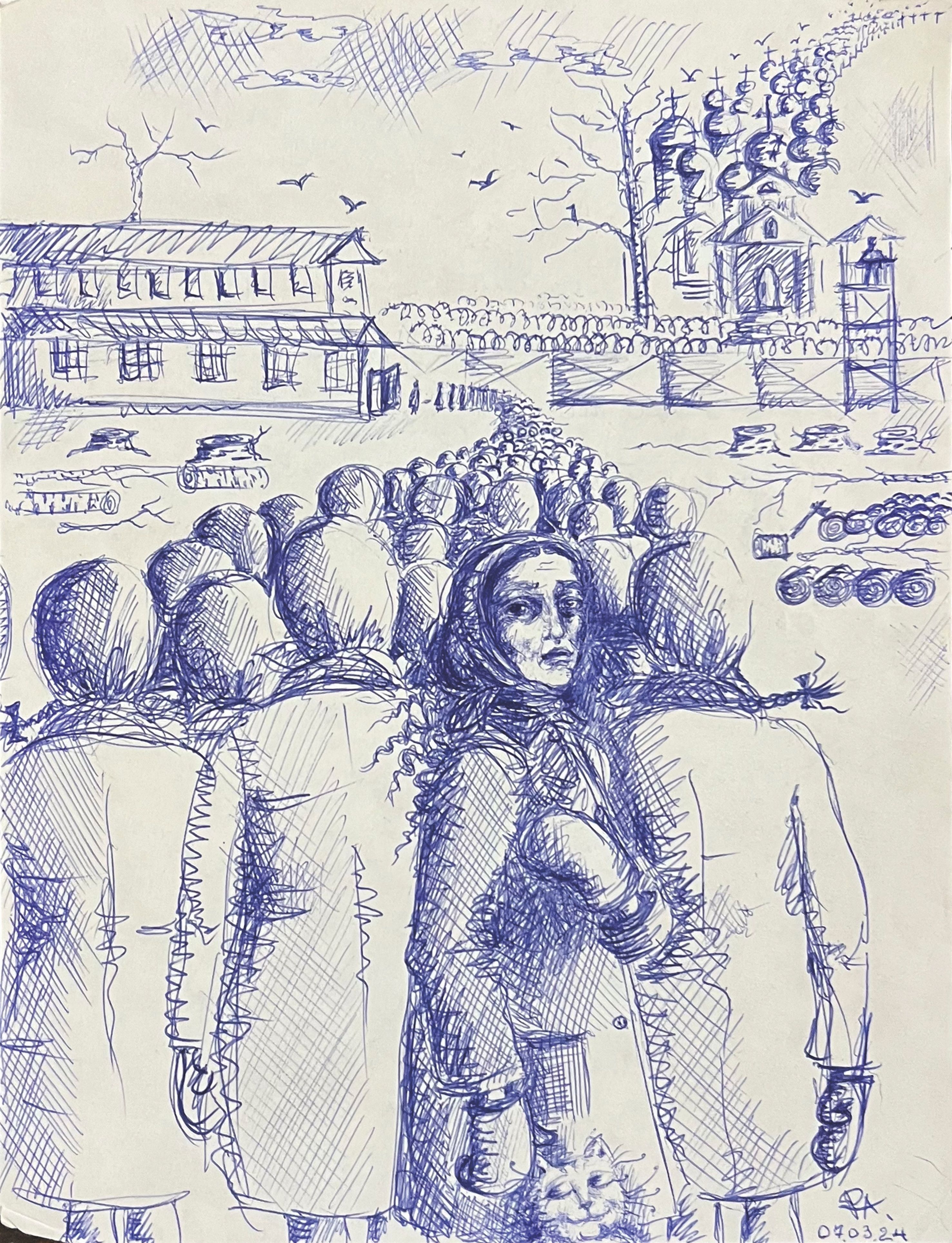
A catalogue features drawings, texts and textile works created on sheets, envelopes, notebook pages and scraps of fabric. Motifs including barbed wire, bars, suns and wings appear throughout, as do statements of resistance and solidarity.
An ink sketch by Lyudmila Razumova shows a vast line of people gathered outside a building resembling a prison or concentration camp. Shortly after Russia’s full-scale invasion of Ukraine, the Russian artist was sentenced to seven years in prison for “disseminating false information about the army” and “vandalism motivated by political hatred” after inscribing the words “Ukraine, forgive us” on a war memorial.
“They were running from me like scared rats”
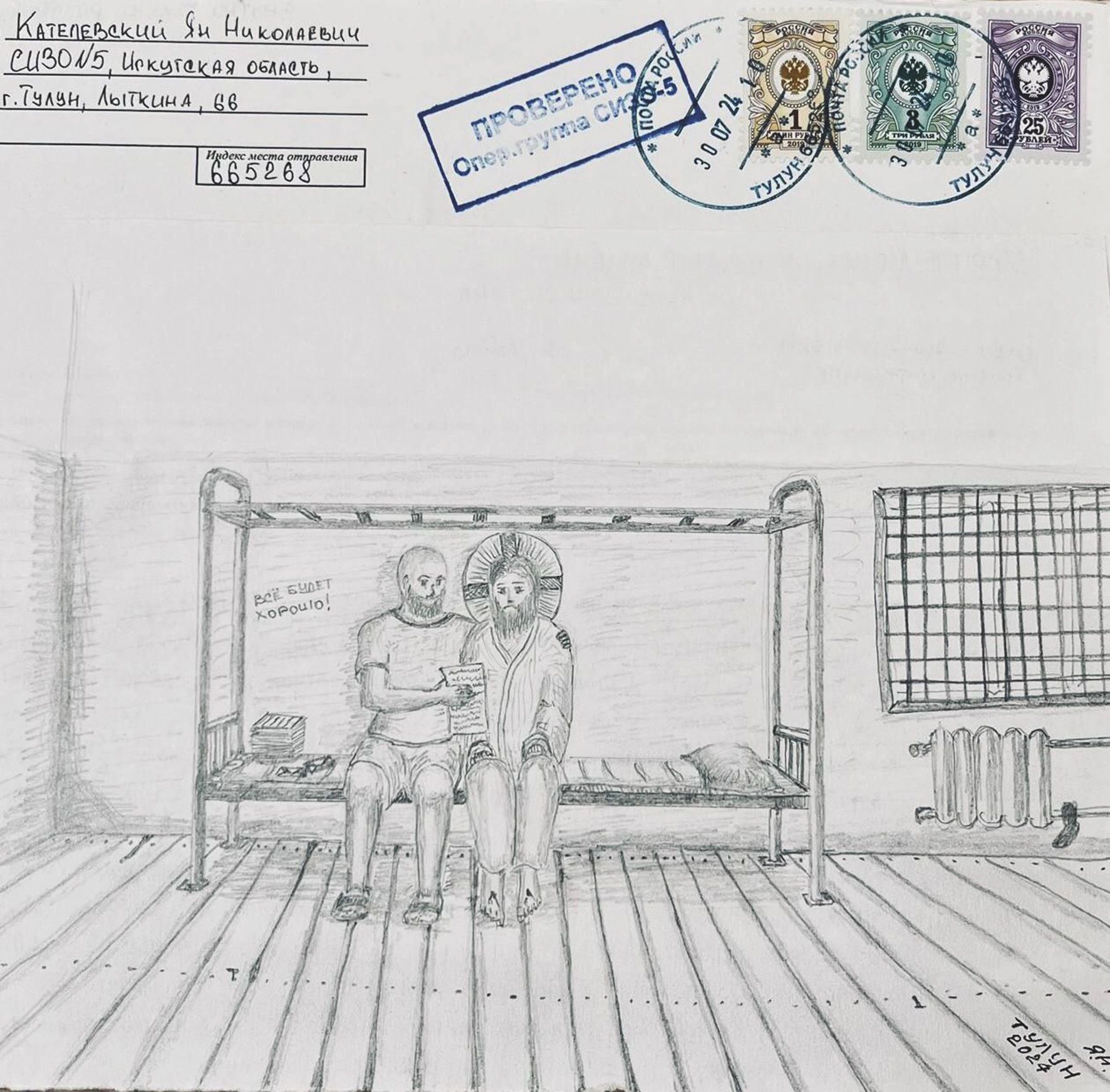
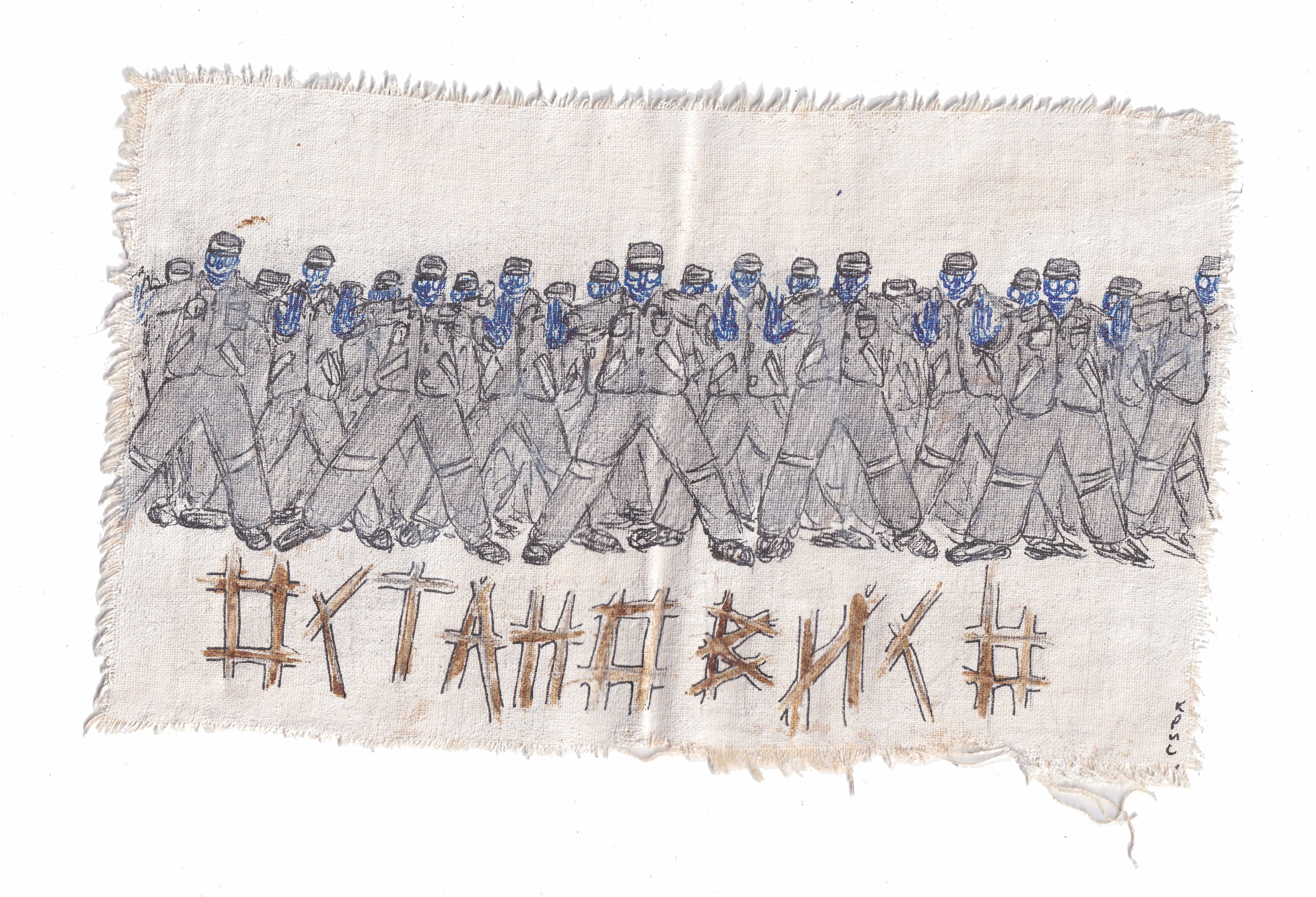
A version of the show was recently on display at Ritsch-Fisch Galerie in Strasbourg. “It was a beautiful collaboration,” Tolokonnikova said. “But that’s just the first seed of something that we want to continue to work on and evolve and hopefully present at the next biennale.”
In December 2025 Pussy Riot was categorised by a Moscow court as an “extremist organisation”. Tolokonnikova has herself been deemed a “foreign agent”, and between 2012 and 2013 served time in a Russian penal colony after being convicted of “hooliganism motivated by religious hatred”.
She now hopes to use this experience to further the work of Resistance Imprisoned and plans to invite incarcerated artists to create proposals for installations that she will then realise on their behalf.
Artists’ voices matter
“When I was in prison, the biggest, biggest joy for me always was to know that my voice still mattered and people still listened to me, that they cared about me not just as a political prisoner, but also as an artist,” Tolokonnikova said. “I didn’t want to lose that, and I was dreaming about someone reaching out to me to write a proposal like this.”
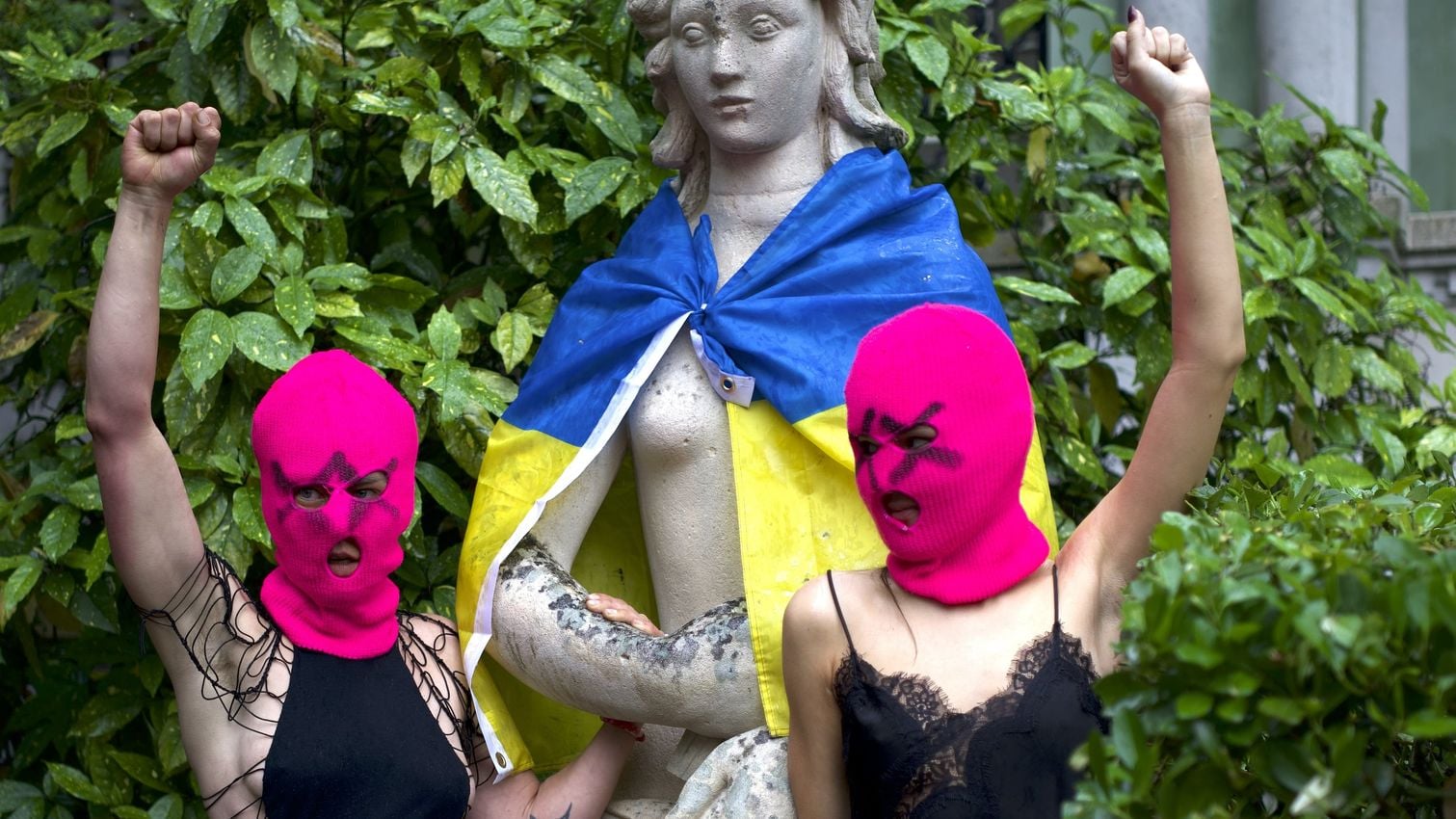
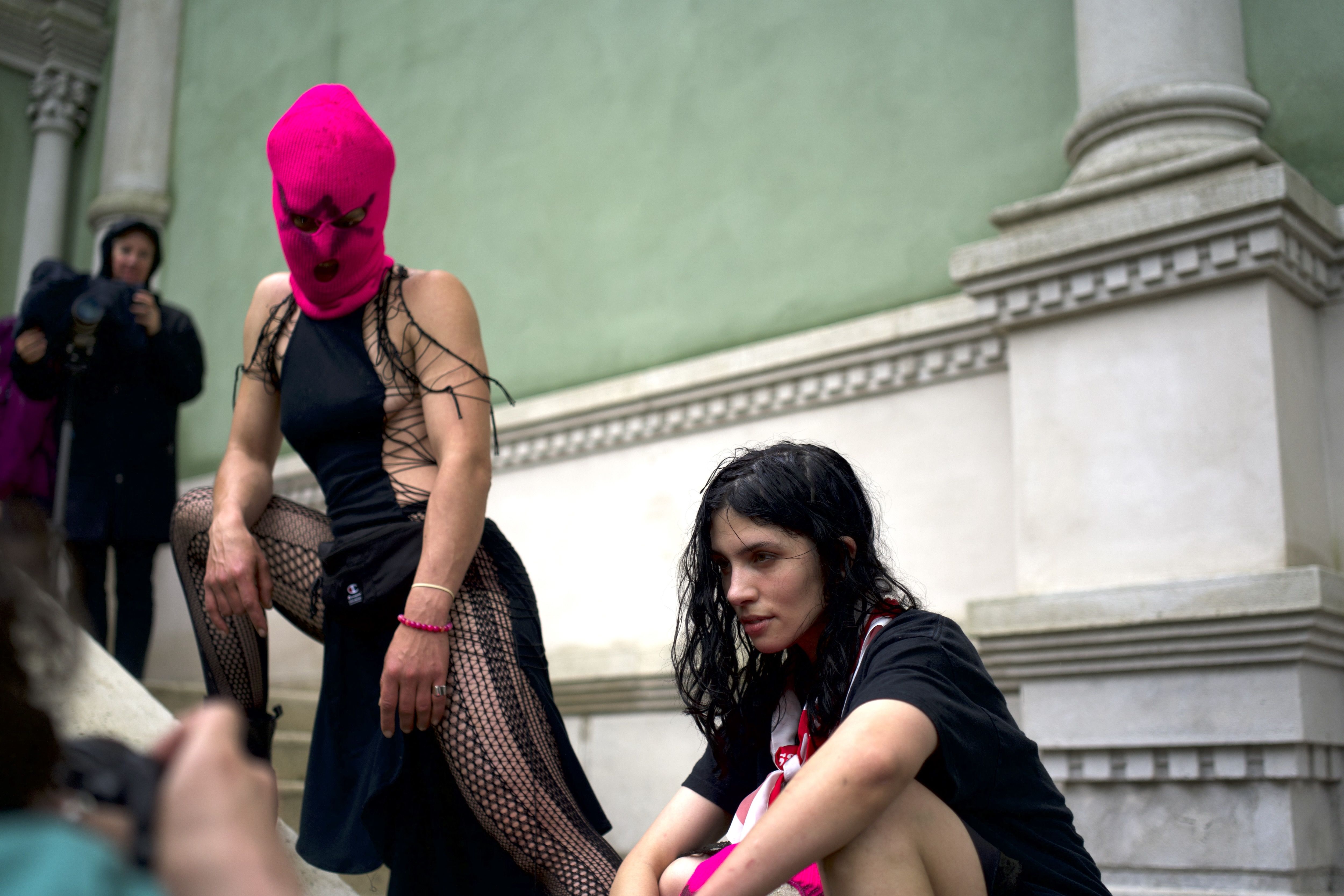
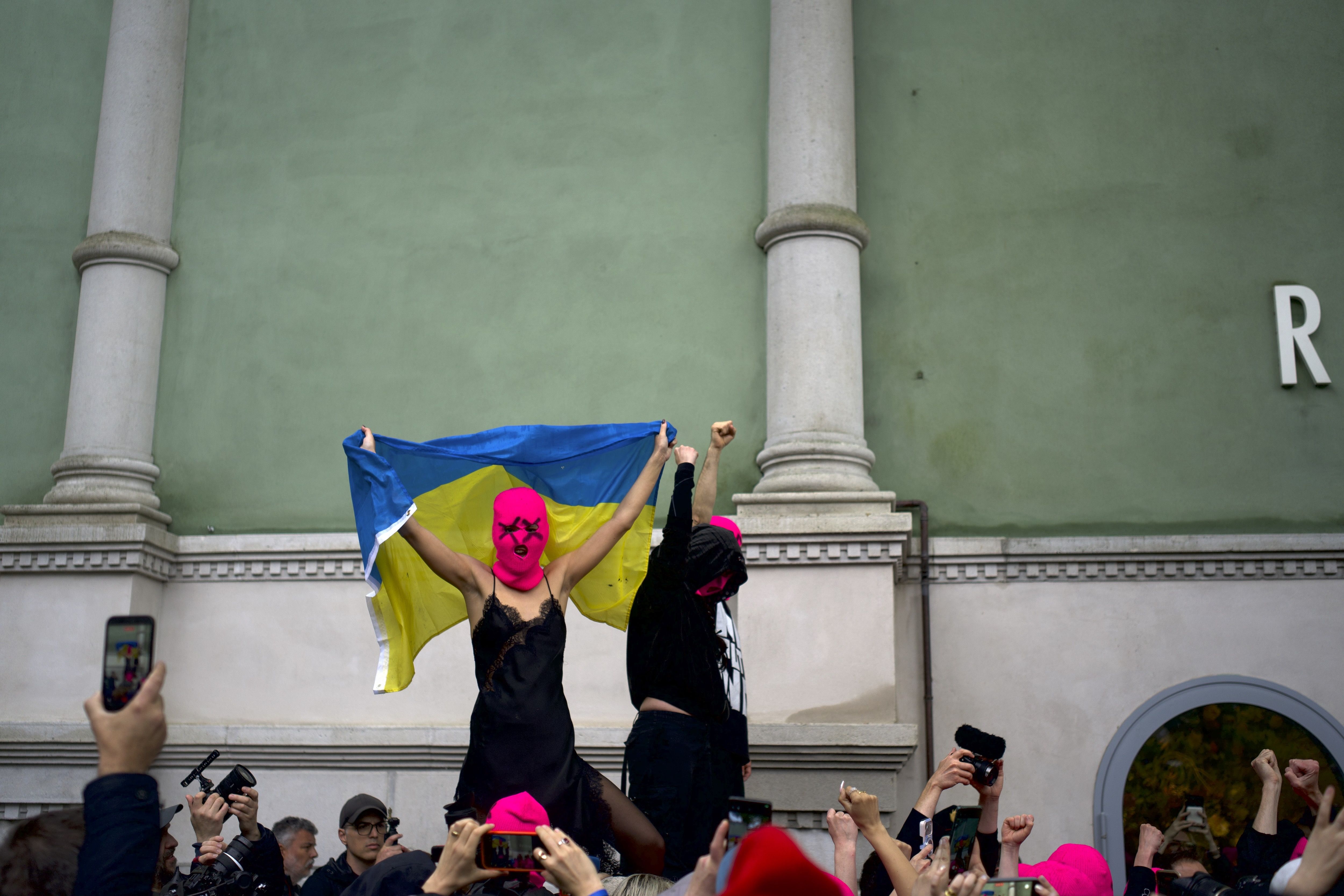
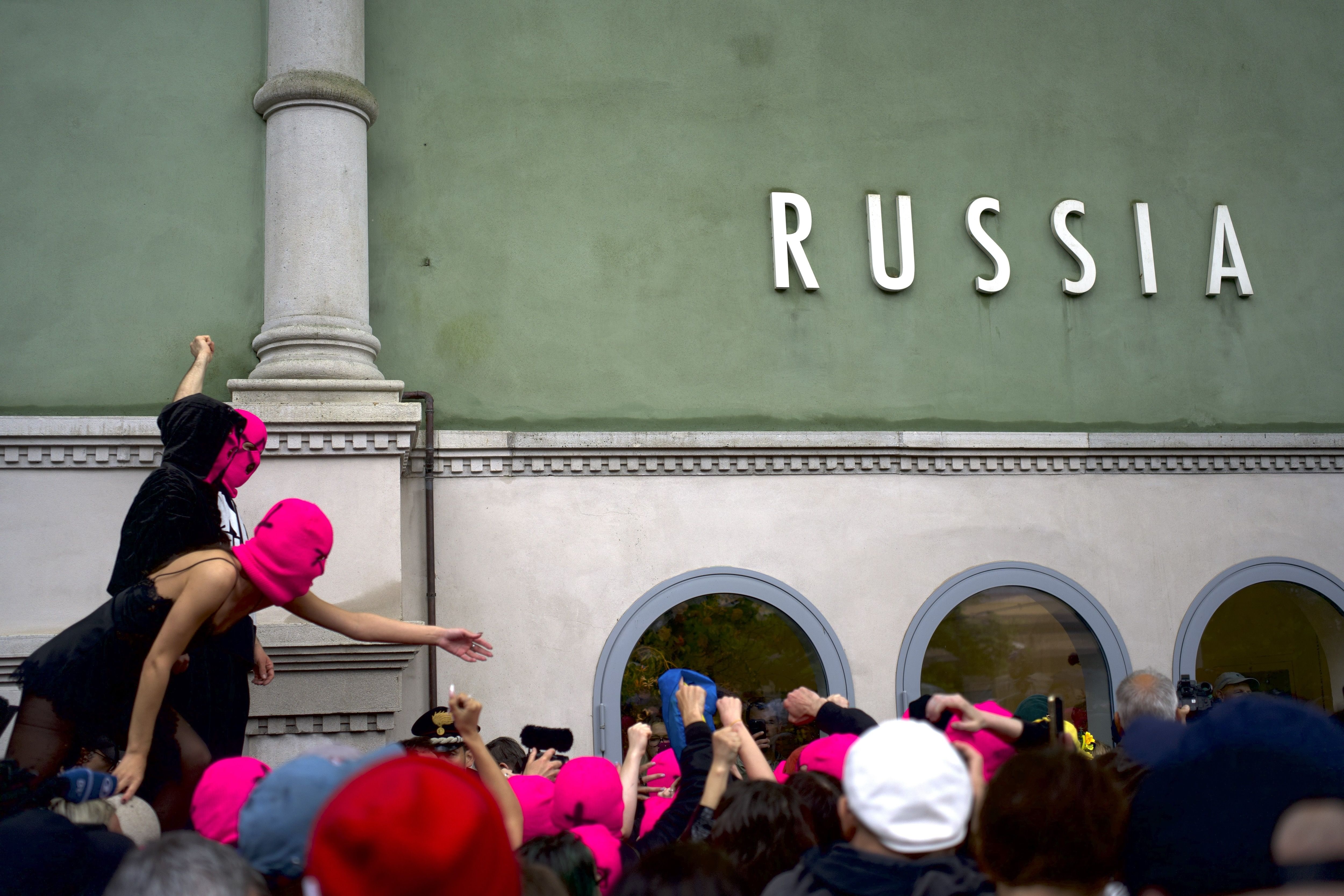
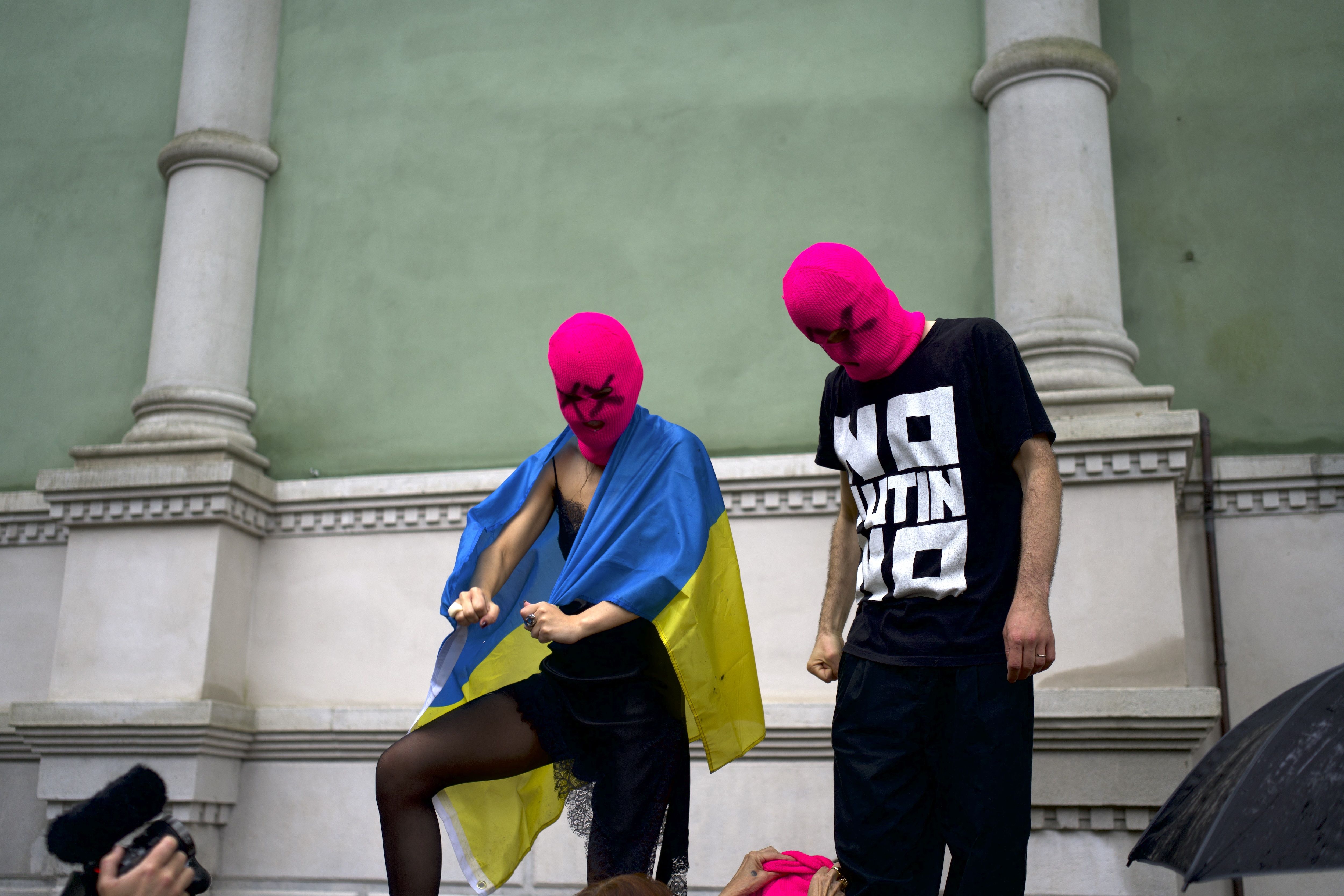
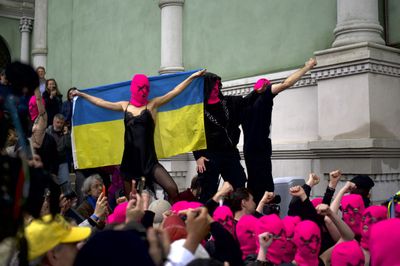
Tolokonnikova’s ongoing campaign follows Pussy Riot’s recent protest during the opening days of this year’s Venice Biennale, during which activists gathered outside the Russian pavilion wearing pink balaclavas and shouting chants criticising Russian president Vladimir Putin. The action made headlines around the world.
“When I was in prison, the biggest joy for me always was to know that my voice still mattered”
“I think this statement was a success. I think we were heard,” Tolokonnikova said. “But I still think that Russia might be winning.
“I think Russia is laughing at Europe. They’re saying: ‘We can wage a war against you, against Ukraine, we can fly our drones over Poland, and there’s nothing you can do. You can’t even close our goddamn pavilion at the biennale.’”
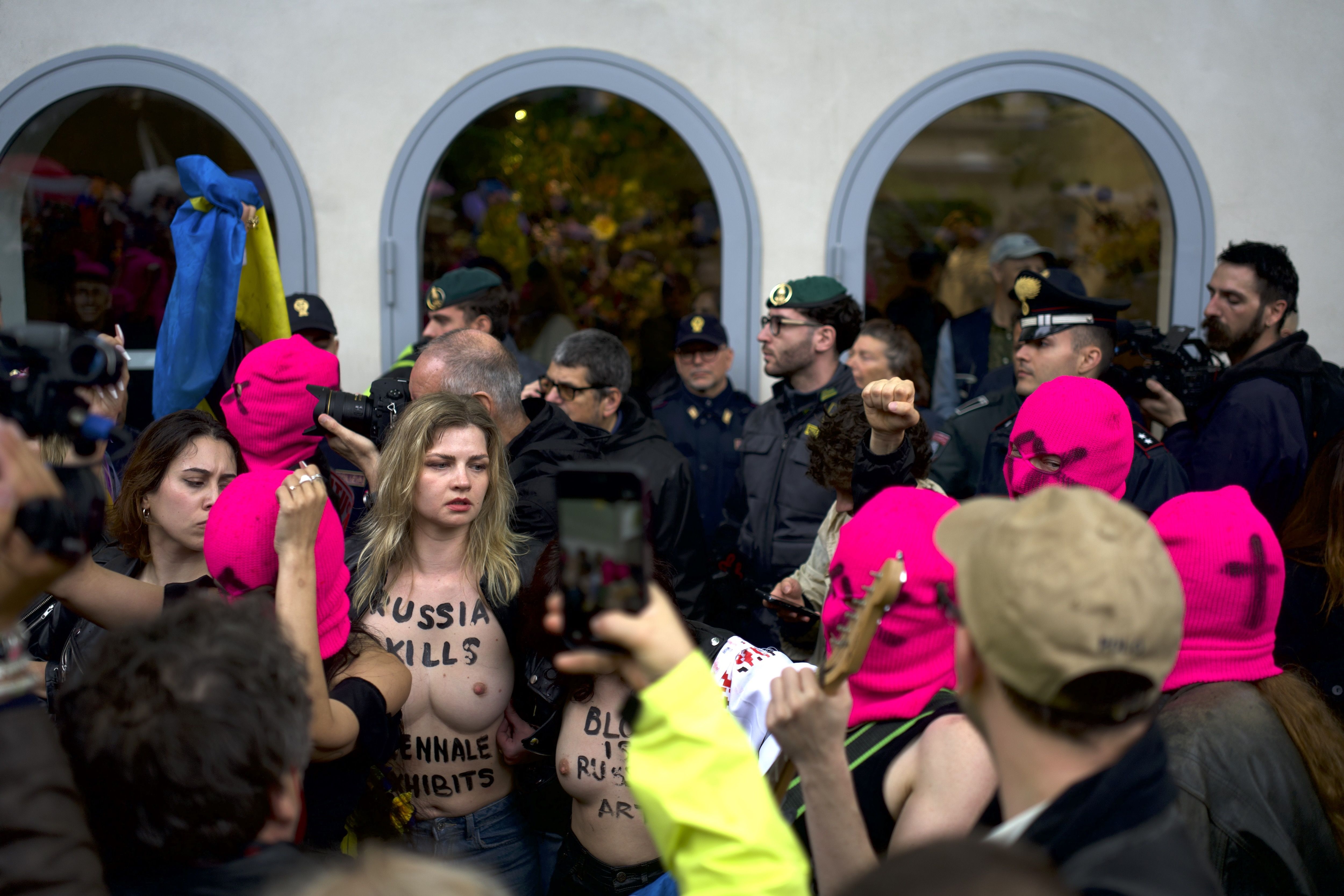
Russia’s return to Venice was confirmed in early March and, during the biennale’s recent preview days, the country’s pavilion hosted works by 38 artists in a show titled The Tree is Rooted in the Sky. However, the space did not open to the public on 9 May, and will remain closed throughout the rest of the biennale.
Asked about the Russian pavilion, Tolokonnikova said: “I went there for seconds—it’s purely disgusting, because you see how art is being used and abused and almost raped for the sake of amoral politics.”
Representatives of the Russian pavilion did not respond to Ocula’s request for comment. However, on 8 May, the space’s official Instagram account shared a video of biennale president Pietrangelo Buttafuoco speaking ahead of the exhibition’s opening.
“Art is being used and abused and almost raped for the sake of amoral politics”
In the recording, he says: “There is constant discrimination, constant violence, there are wars devastating lives and entire territories and this is where the issue lies. To prevent someone from taking part [in the biennale] means undermining openness towards others.
“And if the biennale began selecting artworks not on the basis of visions, affiliations or artistic perspectives, but on the basis of passports, it would cease to be what it always has been: a place where the world comes together and connects, even more when the world is falling apart.”
Preparing for performance
Tolokonnikova’s preparations for Pussy Riot’s Venice protest began more than two months ago. She told Ocula: “It’s funny how a very short outburst of performance art is something that you have to prepare for a long, long time.
“It’s been almost a full-time job for me and two other people, plus a bunch of others who have been contributing whatever time they can, and we had support from some national pavilions.”
According to Tolokonnikova, biennale officials were aware that action was planned during the exhibition’s opening days, but were not provided with specific details. The activist also said that officials did not issue her or other members of Pussy Riot with documentation to enter the biennale, which they instead obtained via exhibiting artists and curators.
“It was incredibly difficult to get passes this year, and that was one of our biggest hurdles,” she explained. “I guess because the biennale was ready for protest.”
Pussy Riot’s protest was just one of several anti-Russia actions that took place during the first days of the biennale.
“It’s funny how a very short outburst of performance art is something that you have to prepare for a long, long time”
Teams behind the Baltic pavilions marched through Venice in support of Ukraine, while culture ministers from Poland, Estonia, Latvia and Lithuania and Ukraine gathered to assert that “the aggressor cannot be rewarded with participation in the world’s most prestigious cultural events, including the Venice Biennale, while it continues its brutal war”.
The Financial Times recently reported that, according to the European Union (EU), the biennale would be in breach of EU sanctions should Russia’s pavilion be allowed to open. The biennale foundation previously said it had ‘‘verified and complied with all national and international regulations’’, and had ‘‘operated within the scope and limits of its own authority”.
Tolokonnikova was sentenced to prison in 2012 following her performance of the anti-Putin Punk Prayer inside Moscow’s Christ the Saviour Cathedral, alongside fellow Pussy Riot members. She fled Russia following the country’s invasion of Ukraine and now lives in exile.
She told Ocula that being branded a “foreign agent” by the Russian state means that, when it comes to both her art and her activism, she often finds her hands are tied. She said: “I can’t travel to most of the countries in the world because I might be in danger of being extradited to Russia, where I would most likely spend the rest of my life in jail.”
Ocula approached representatives of the Venice Biennale for comment.
Main image: Pussy Riot protestors outside the Russian pavilion at the 61st Venice Biennale (2026). Photo: Louise Benson.





A respected voice in contemporary art discourse.
Focusing on ambitious storytelling and insightful art-world commentary. Ocula Magazine publishes in-depth interviews, critical essays and timely analysis on the artists, exhibitions and ideas driving the global art world.
Learn more about Ocula Magazine
Showcasing the best of the art world.
Ocula partners with galleries from around the world to highlight their artists, artworks and exhibitions. Gallery membership is by application and invitation, with each member vetted by an independent panel.
Learn more about Ocula Membership
Specialises in the sale of major artworks.
Led by a team with deep ties to the world’s leading auction houses, galleries and collectors. Ocula’s advisory team offers bespoke services to high-net-worth clients from around the world who are looking to acquire the best of contemporary and modern art.
Learn more about our team and services