





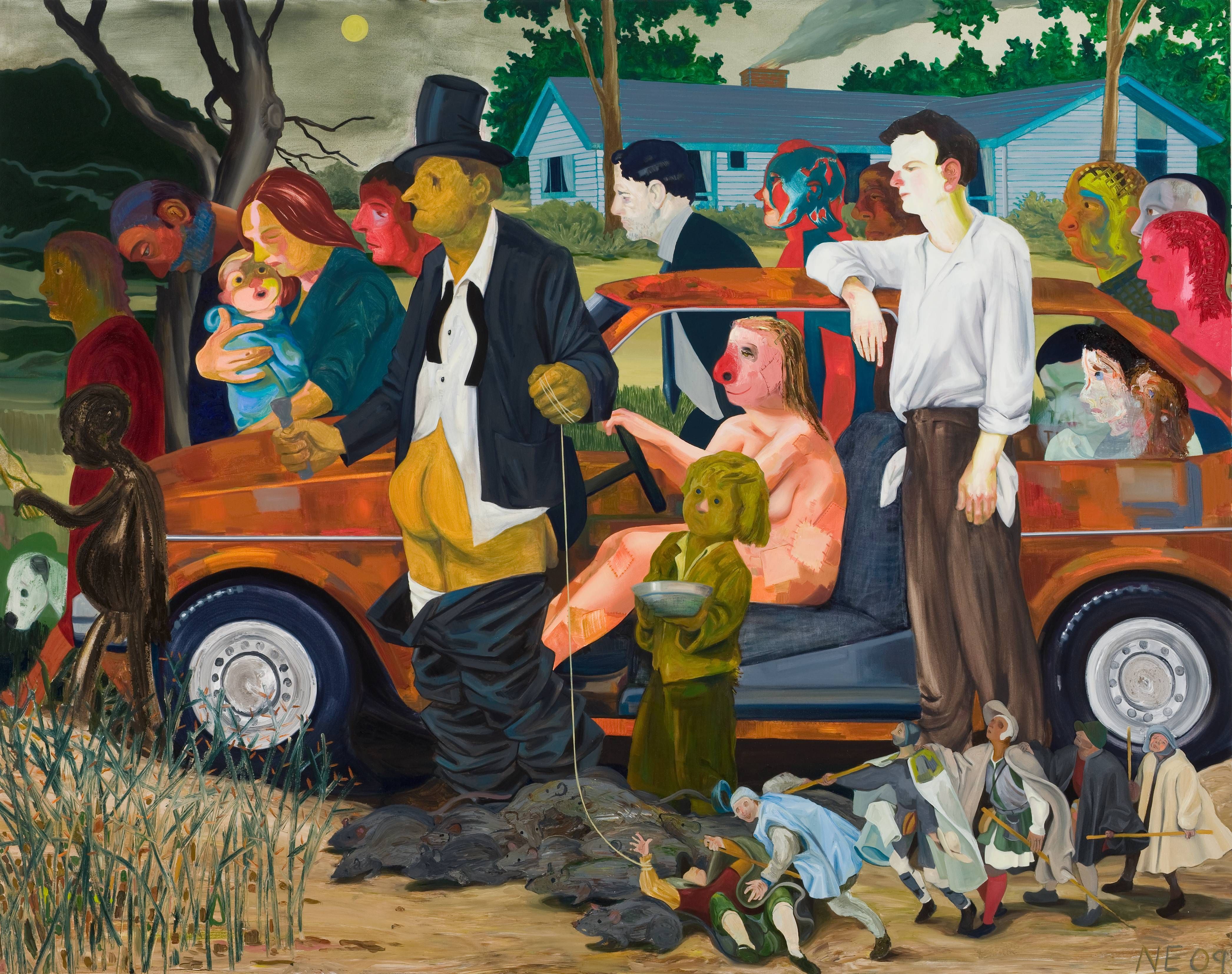
Nicole Eisenman, The Triumph of Poverty (2009). Oil on canvas. 165.1 x 208.3 cm. Courtesy Leo Koenig Inc., New York, and Whitechapel Gallery, London.
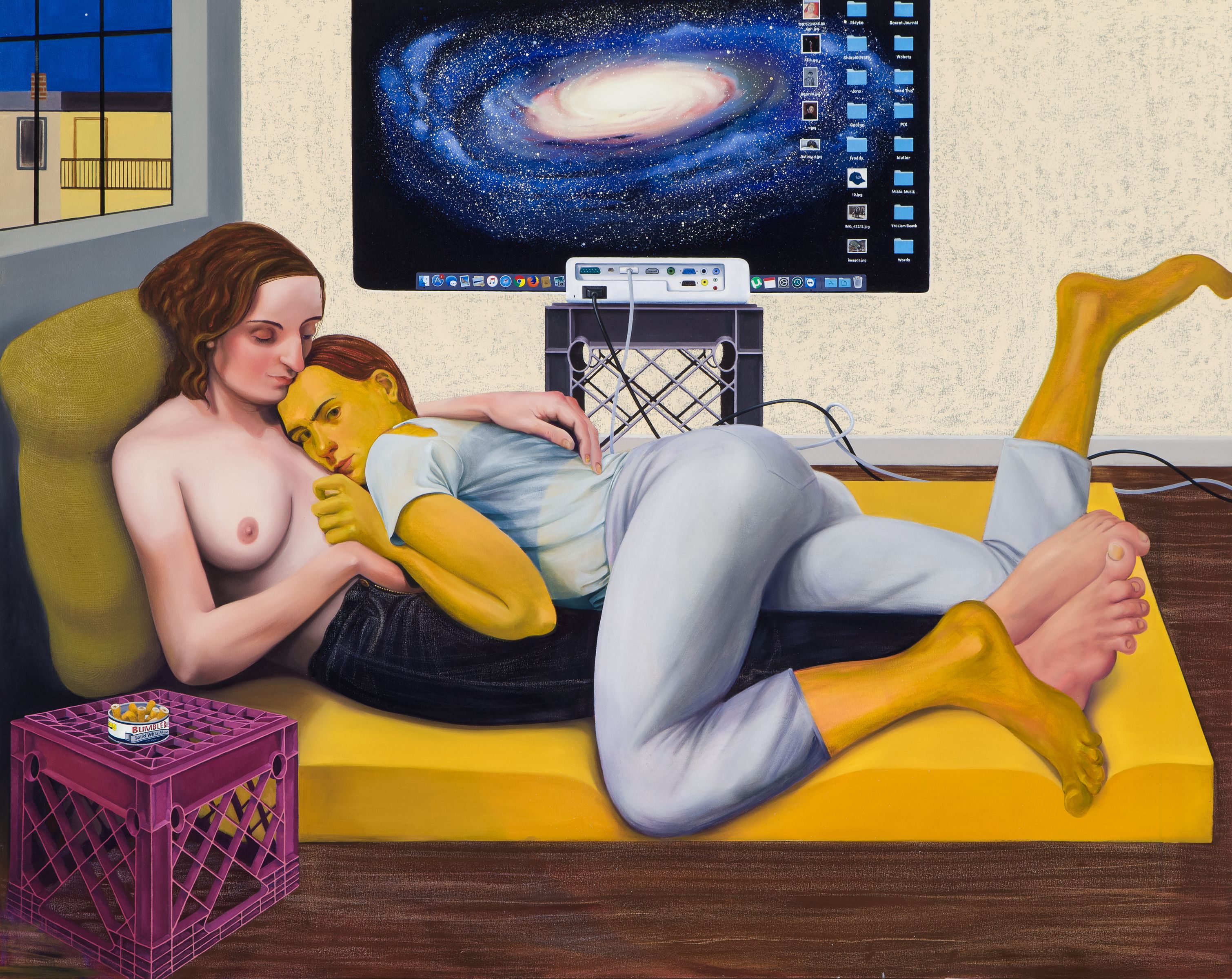
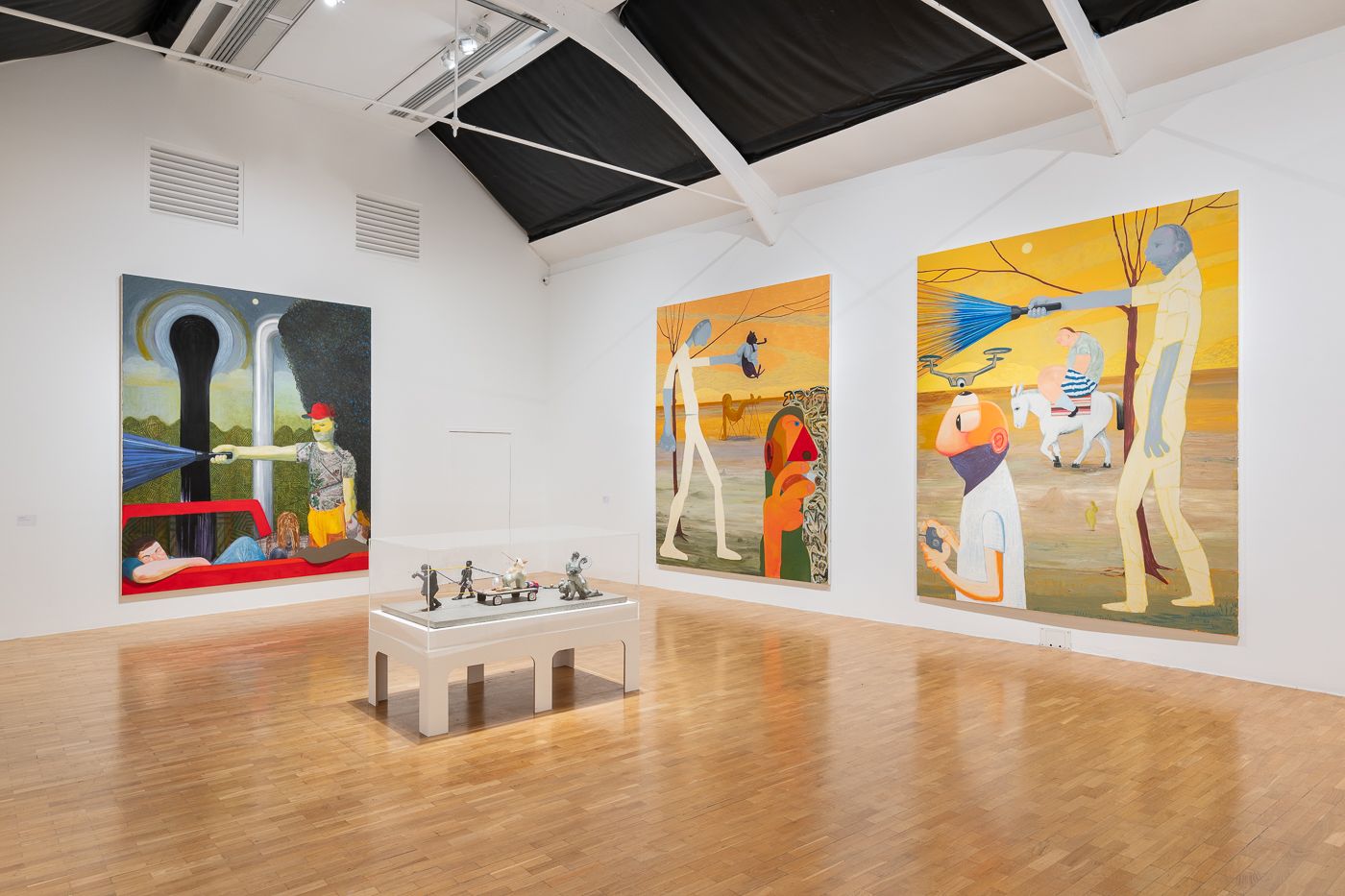
Nicole Eisenman, Morning Studio (2016). Oil on canvas. 167.6 x 210.8 cm. Courtesy the artist, Anton Kern Gallery, New York, and Whitechapel Gallery, London.
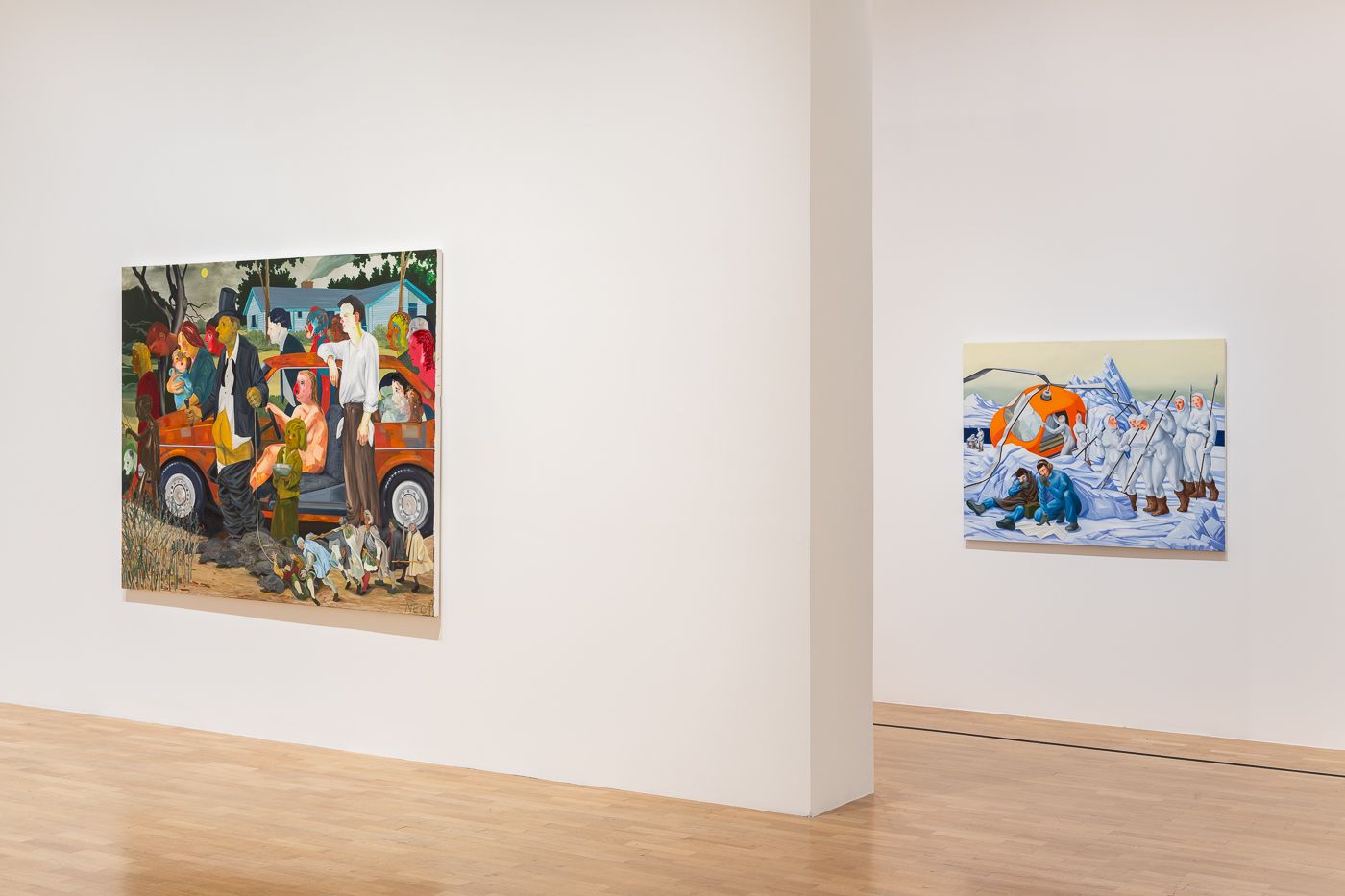
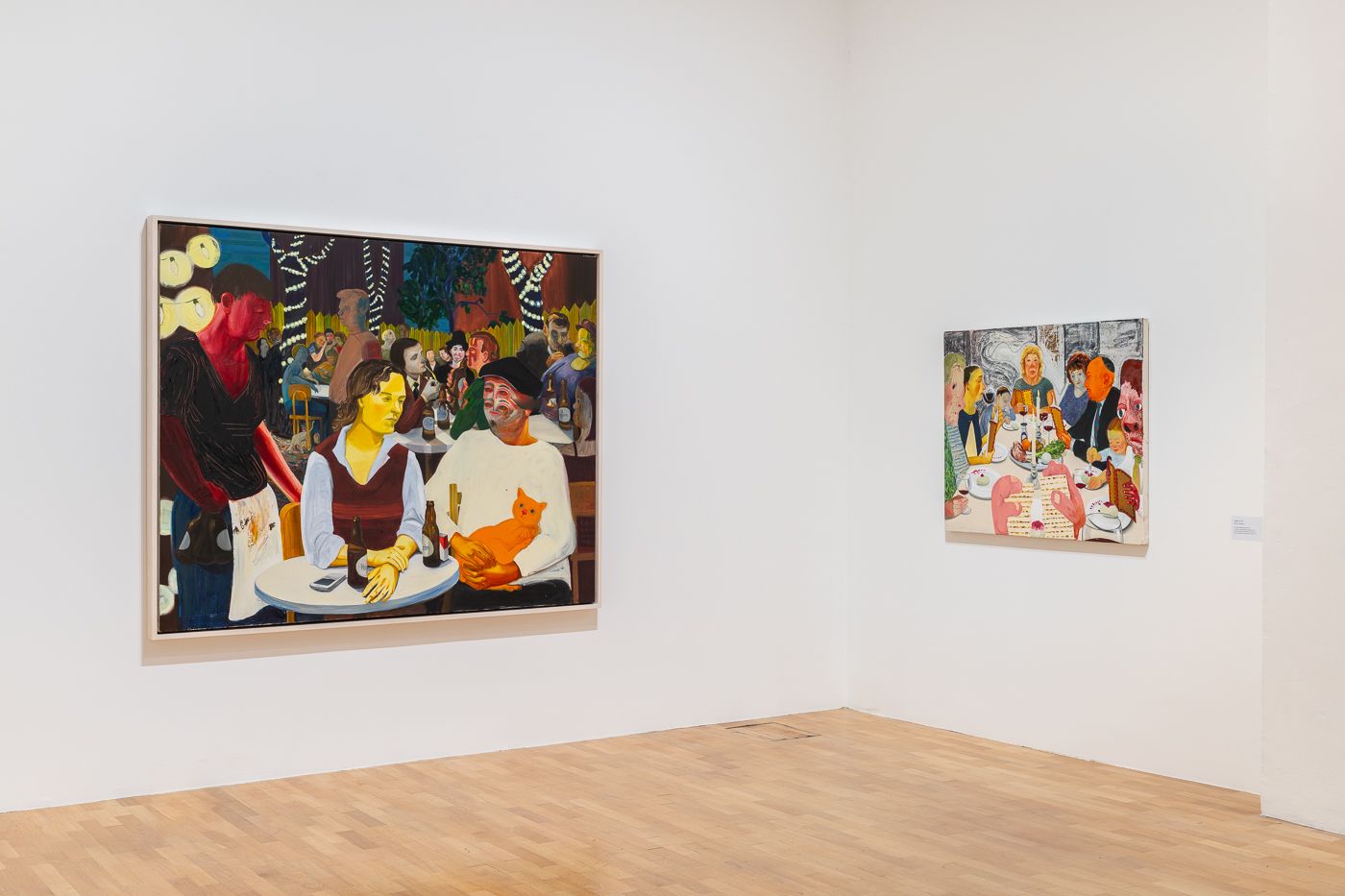
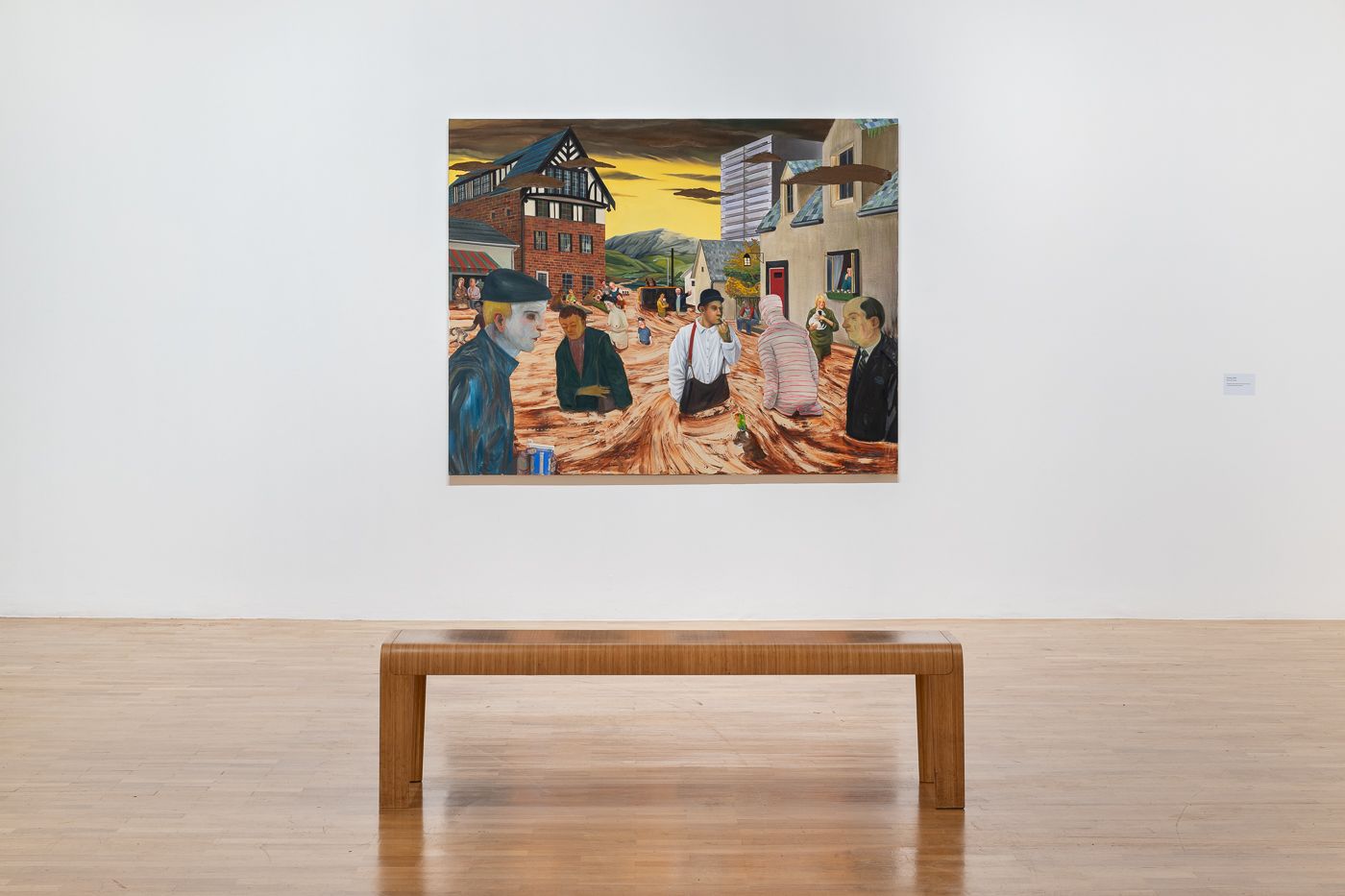
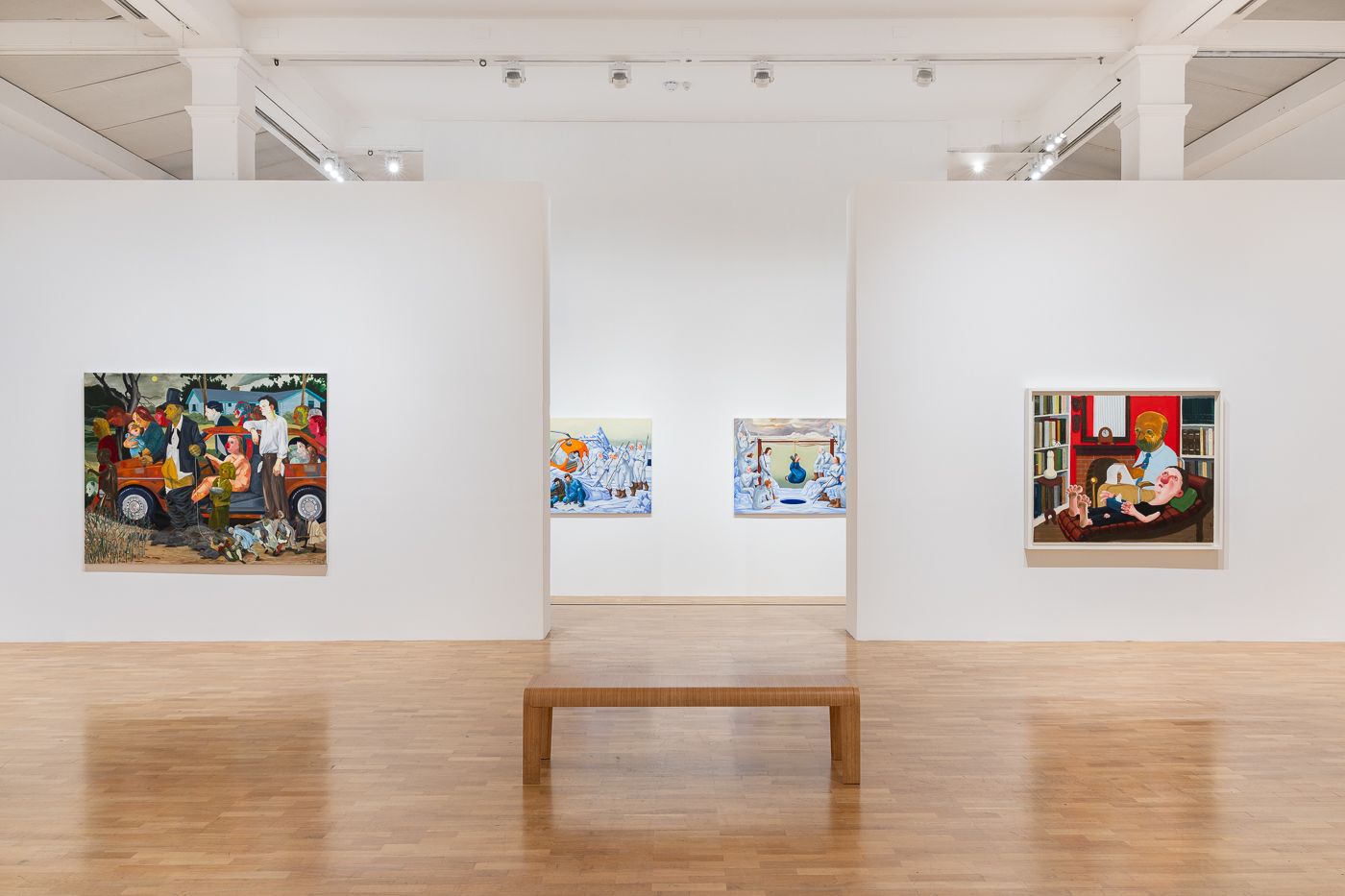
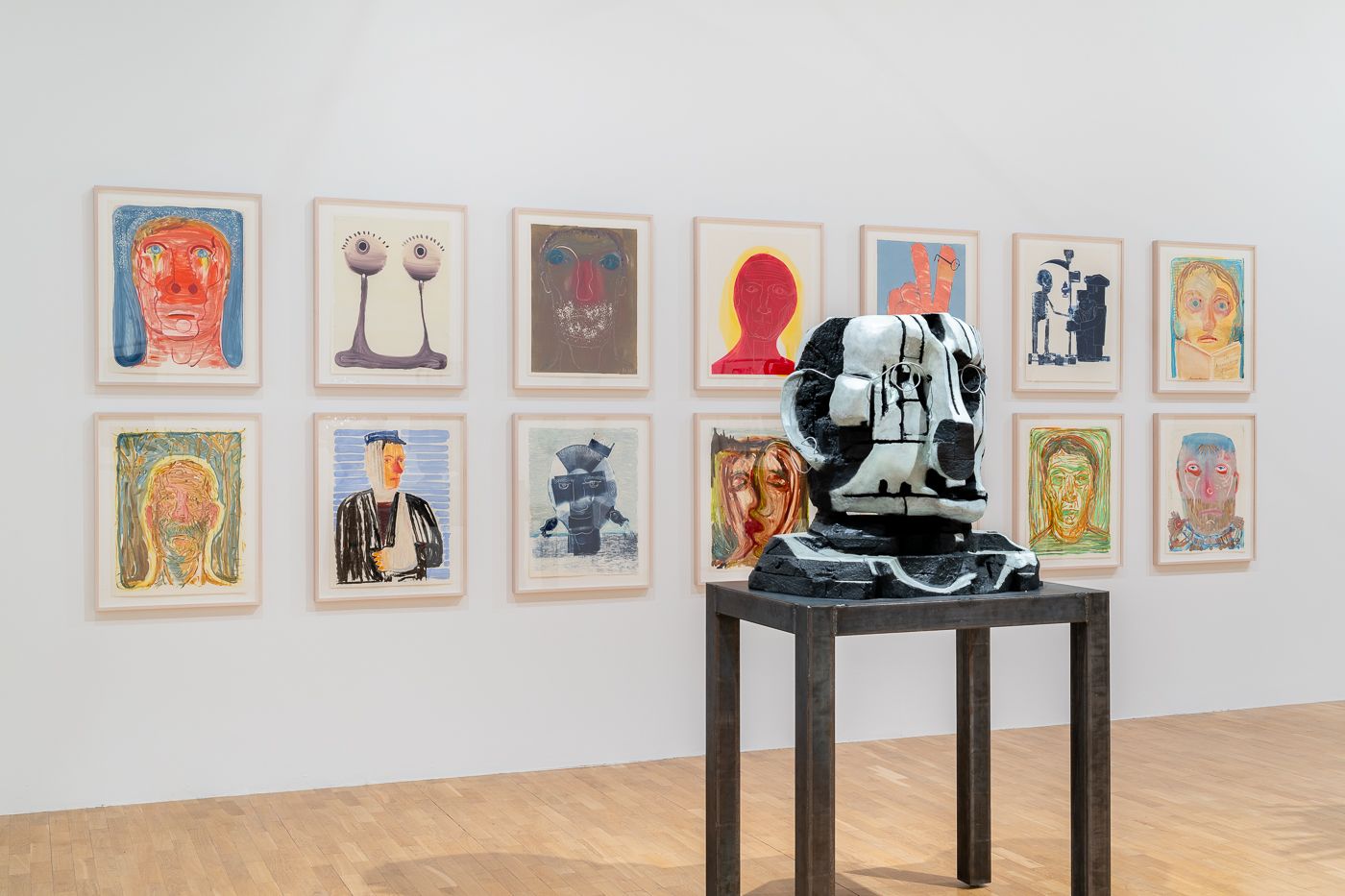
Nicole Eisenman‘s paintings and sculptures are not only witty and astute, but remarkably moving. Many of her works have an unsettling quality as evidenced by the French-American artist’s first U.K. retrospective.
What Happened at Whitechapel Gallery, London, runs until 14 January 2024. The title is fitting for Eisenman’s paintings, which often feel like scenes in a narrative. Some seem contemporary and true to life, others more outlandish, as if taken from a parable.
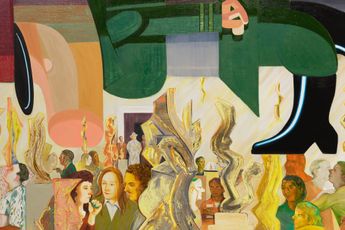
A particular standout is The Triumph of Poverty (2009). This painting features a solemn crowd trudging through a rural scene, its composition inspired by the works of 16th-century painters Hans Holbein the Younger and Pieter Bruegel the Elder, and British novelist Charles Dickens.
In this scene characterised by vibrant colours and smooth brushwork, Eisenman teases viewers with fragments of familiar tales. The title derives its name from Holbein’s (now lost) painting, The Triumph of Poverty (c. 1533-1534). A sickly, yellow-toned boy holding a bowl alludes to Dickens’ novel Oliver Twist (1837–1839), while a procession of tiny figures donning capes and wielding walking sticks invokes Bruegel’s painting The Blind Leading the Blind (1568).
The painting exudes a sense of sorrow as Eisenman’s subjects convey feelings of defeat and despair. Despite the struggle of her subjects, she introduces a compelling contrast by painting people with green, pink, and blue skin, along with playful details such as patchwork skin and enlarged noses. These whimsical elements infuse the work with a cartoonish feel, adding a layer of complexity to the overall emotional tone.
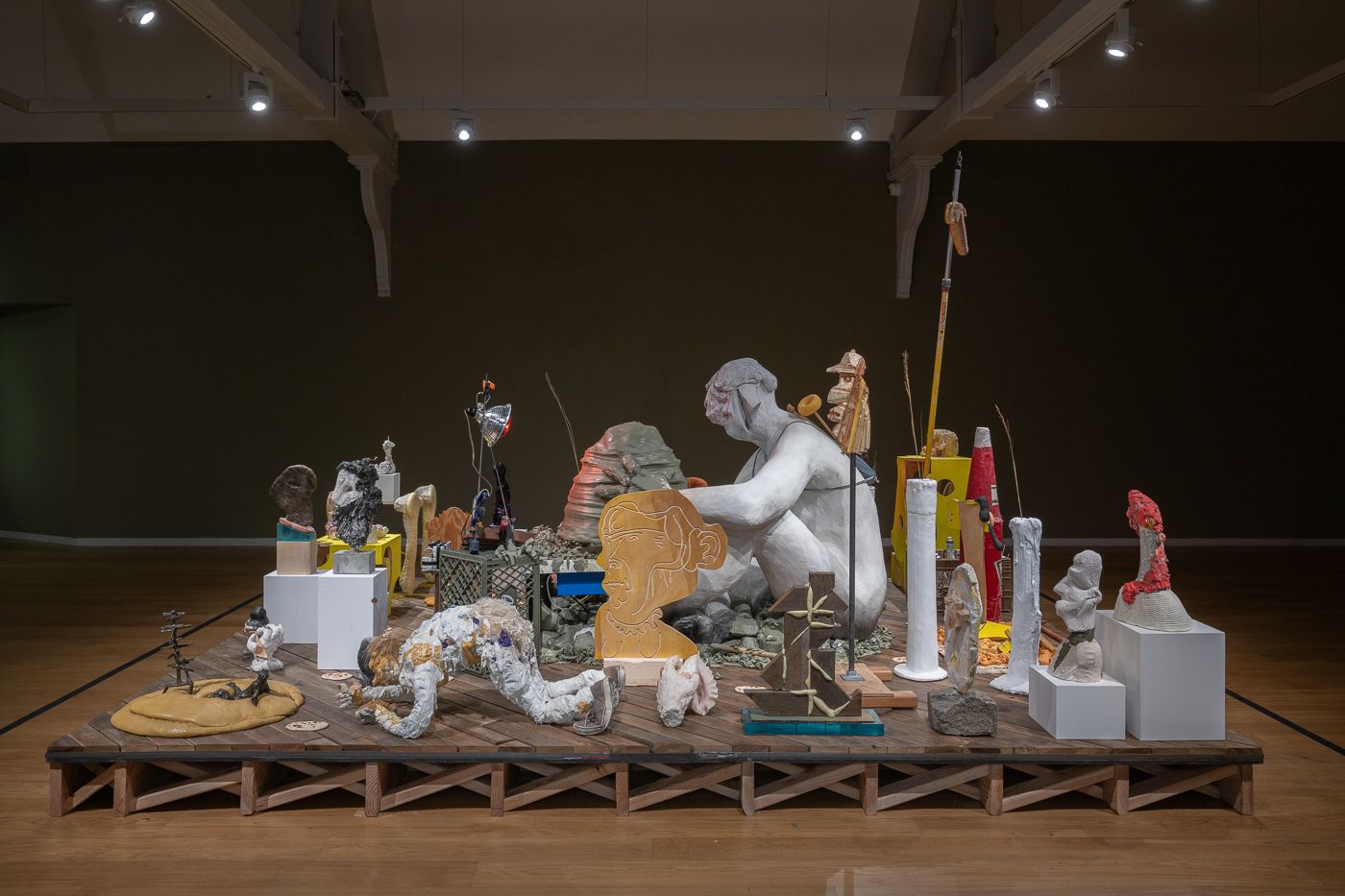
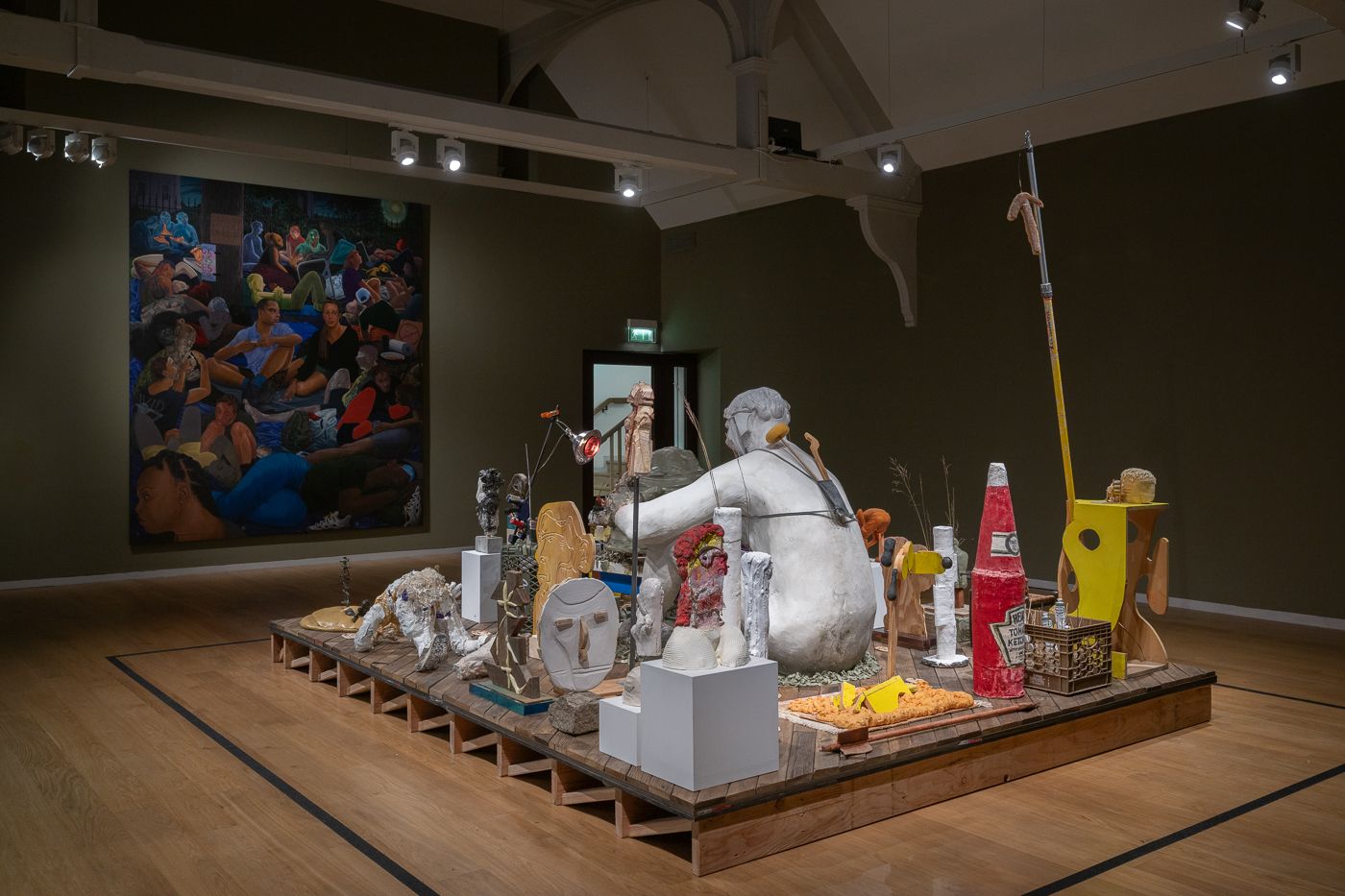
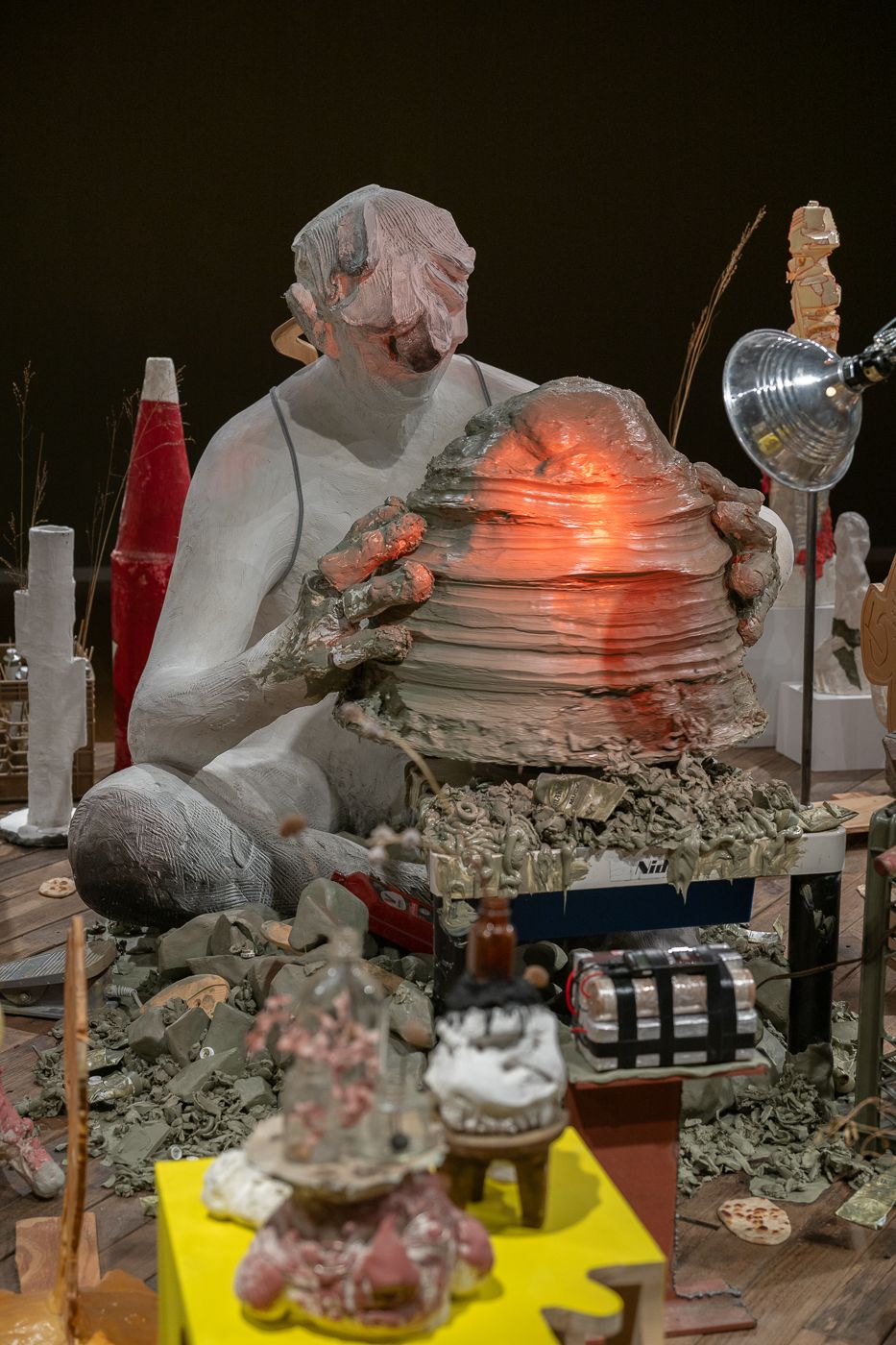
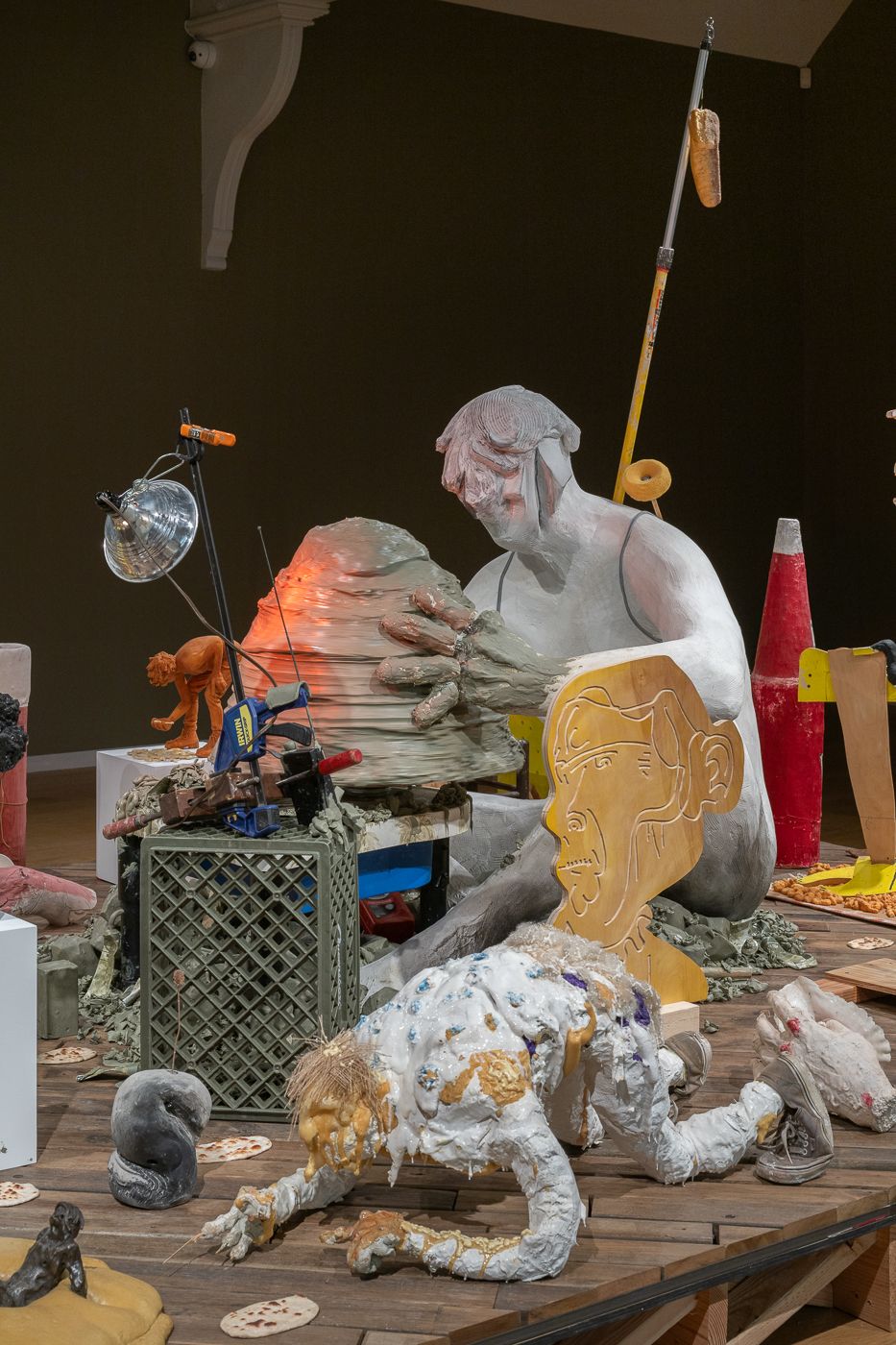
Another must-see work in the exhibition is Maker’s Muck (2022). Almost four metres long by three metres wide, the sculpture dominates the room in which it’s displayed. Positioned at the centre of the room, it invites viewers to explore it from every angle.
Raised on a wooden floor, a figure sits at a potter’s wheel; a heap of wet clay spins through their hands. More sculptures on plinths surround the figure: a pink hand reminiscent of Philip Guston’s paintings, a lumpy bottle of Heinz ketchup, and miniature naans. The sculpture is something of a self-portrait, providing a window into Eisenman’s practice.
Main image: Exhibition view: Nicole Eisenman, What Happened, Whitechapel Gallery, London (11 October 2023–14 January 2024). Courtesy Whitechapel Gallery, London. Photo: Damian Griffiths.




A respected voice in contemporary art discourse.
Focusing on ambitious storytelling and insightful art-world commentary. Ocula Magazine publishes in-depth interviews, critical essays and timely analysis on the artists, exhibitions and ideas driving the global art world.
Learn more about Ocula Magazine
Showcasing the best of the art world.
Ocula partners with galleries from around the world to highlight their artists, artworks and exhibitions. Gallery membership is by application and invitation, with each member vetted by an independent panel.
Learn more about Ocula Membership
Specialises in the sale of major artworks.
Led by a team with deep ties to the world’s leading auction houses, galleries and collectors. Ocula’s advisory team offers bespoke services to high-net-worth clients from around the world who are looking to acquire the best of contemporary and modern art.
Learn more about our team and services