The art world in focus
Subscribe to our newsletter for news and insights on artists, galleries and exhibitions.
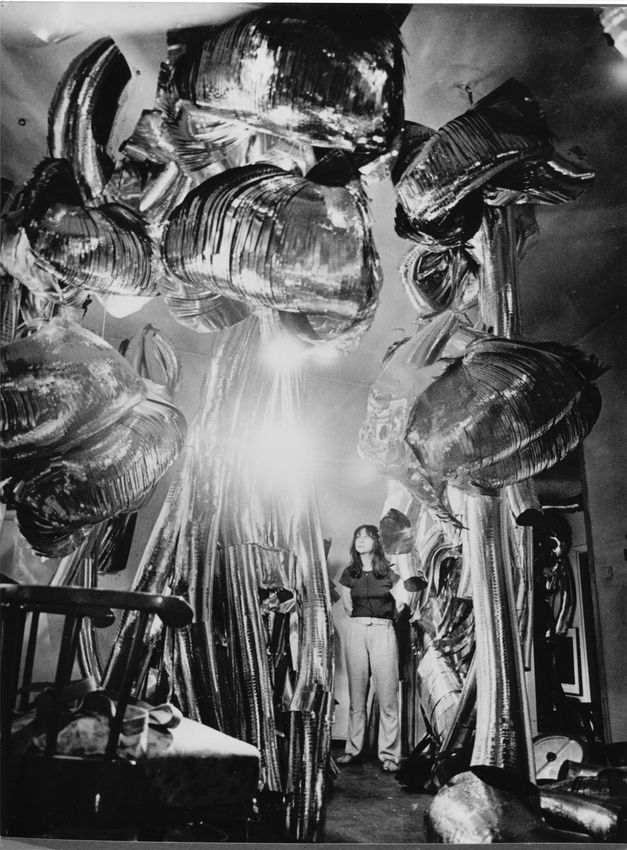
A young girl watches her mother bring a monster into their kitchen. Her mother curls strips of aluminium around each other, one at a time, and staples them together. The metal twists and bulges, loops and puckers. It’s as though an industrial duct has sprouted tentacles and made its home above their dining table. Or nested in the stove’s exhaust hood. Or perched elsewhere in their Turin apartment, peering down from the ceiling. This is five-year-old Beatrice and her mother, Marisa Merz, who began making these Living Sculptures in 1965.
The sculptures hung in different configurations, crowding the family’s overhead space, until they vanished, removed for an exhibition or to be worked on further. They became a normal part of Beatrice’s life. Merz once said that the name of the series was a tribute to The Living Theatre, an experimental theatre troupe based in New York City. The artist’s futuristic creatures experimented with living in different ways: early versions hung in one of Turin’s avant-garde nightclubs and in a tree to publicise a Galleria Sperone show. One even had a starring role in a horror film, Il Mostro Verde (1967), in which it seemed to eat the naked bodies of human actors. Merz often exhibited them in the apartment she shared with her husband, the artist Mario Merz. She recognised no boundary between home and studio, domestic and artistic.
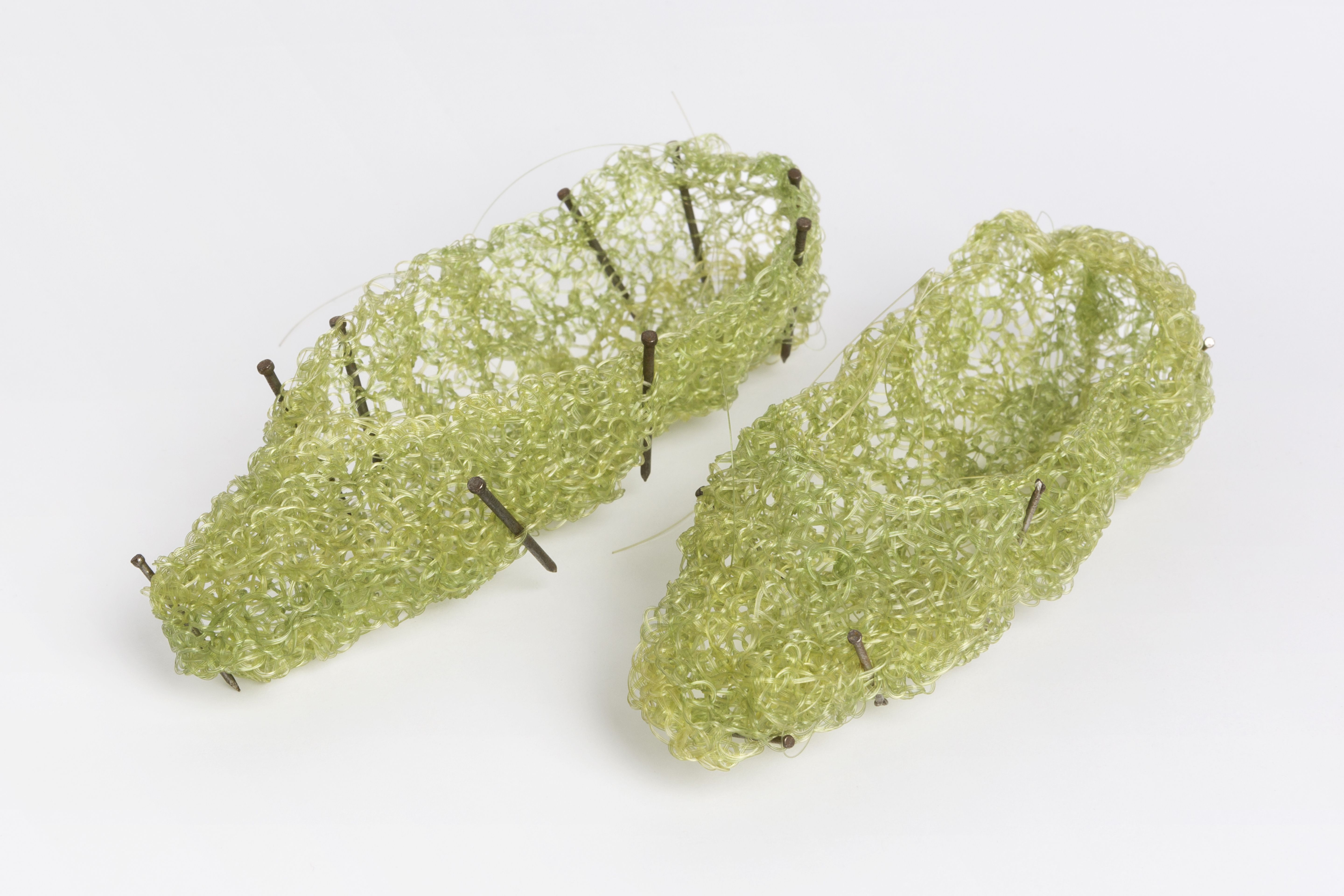
Both husband and wife are best known for their association with the Arte Povera movement, so named by the critic and curator Germano Celant for its members’ rejection of the commercial art market. With that rejection came an embrace of unconventional materials: rags and burlap sacks, pipes and wire, soil and tree branches. When Celant first introduced the term “Arte Povera” in his 1967 manifesto, he namechecked Mario but not Marisa. He did, however, include one of her works in the first official exhibition, organised a year later: the letters “BEA” formed from knitted nylon and pierced with needles. They are droopy, imperfect, maternal. Like many artist-wives of artist-husbands, Merz was historically overlooked by the international art establishment. That began to change towards the end of the 20th century with a landmark solo show in Paris followed by more in London, New York City, and several in her home country.
A major new retrospective of Merz’s work is now taking place in Turin. La danza delle ore is being held across three sites: Galleria Civica d’Arte Moderna e Contemporanea (GAM), Fondazione Merz and Castello di Rivoli. As part of this exhibition, British artist Tacita Dean has made a new series of photographs and a film, Via Milano 13 (2026), depicting the Merz home. In Dean’s work we encounter surfaces cluttered with plastic nativity characters, paintbrushes, a photograph of Pope Francis; the stuff of creating and the stuff of living, indistinguishable from each other. In the industrial-sized rooms of the Fondazione, Merz’s works on paper, ghostly mixed media portraits depicting smudged memories of faces, are held up by bulldog clips. One mounted on board leans against a window. The effect of such informal presentation in a cavernous, pristine space is slightly jarring, but this is how Merz hung works during her lifetime. She insisted on an open dialogue between high and low—between gallery and domestic item, and earthly and spiritual realms.
“The stuff of creating and the stuff of living are indistinguishable from each other”
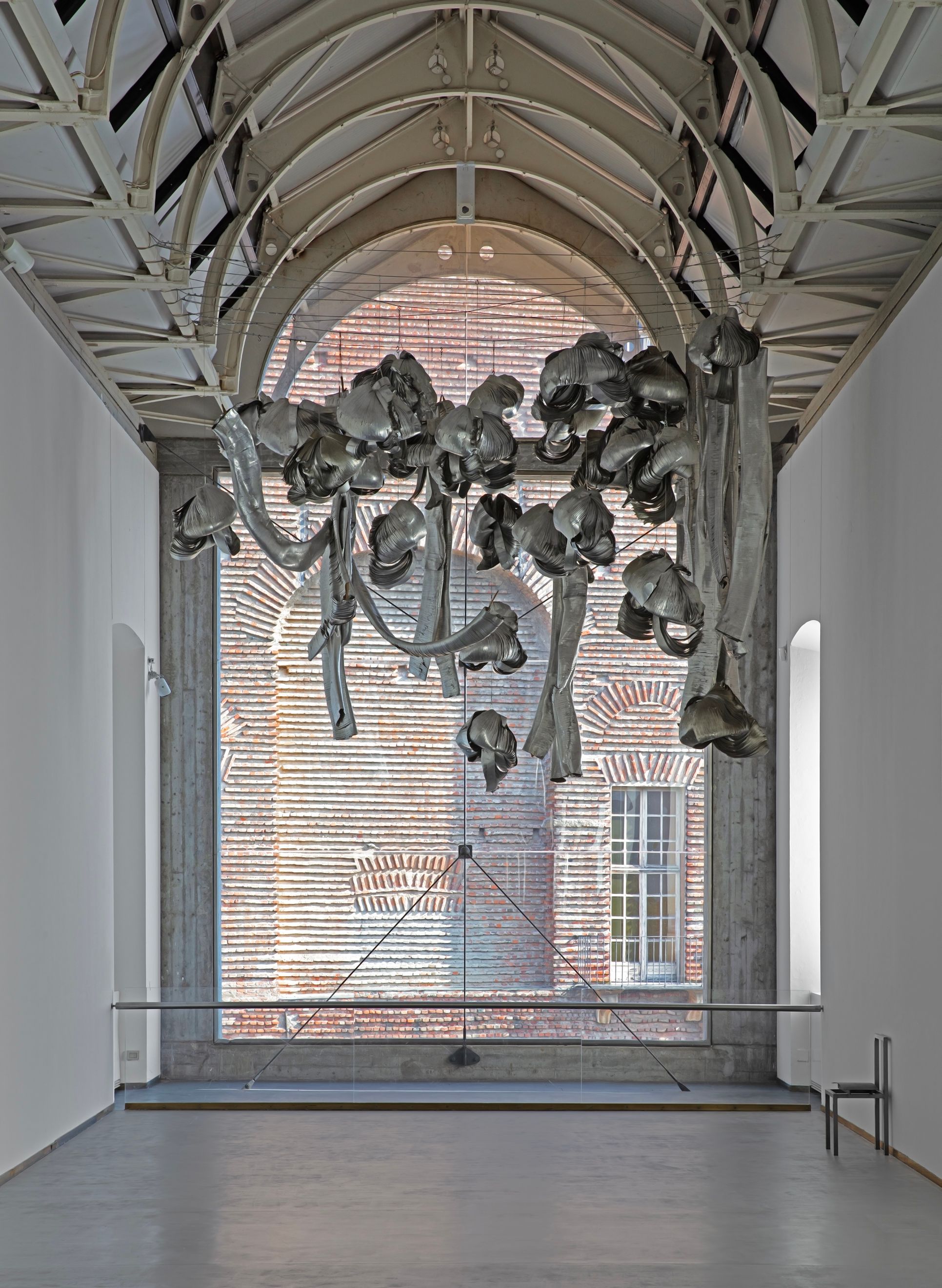
Standing perilously close to the dangling metal tail of a Living Sculpture in GAM, I purse my lips and blow a stream of air into its folds. Perhaps I’m imagining it, but the whole thing seems to ripple and twist slightly. Curator Chiara Bertola tells me that motion was a crucial tenet of Merz’s practice. “Just look at the portraits on rice paper. Each seems to be many faces in one, looking straight at you and off to the side at the same time. Even the eyes are impossible to stop.”
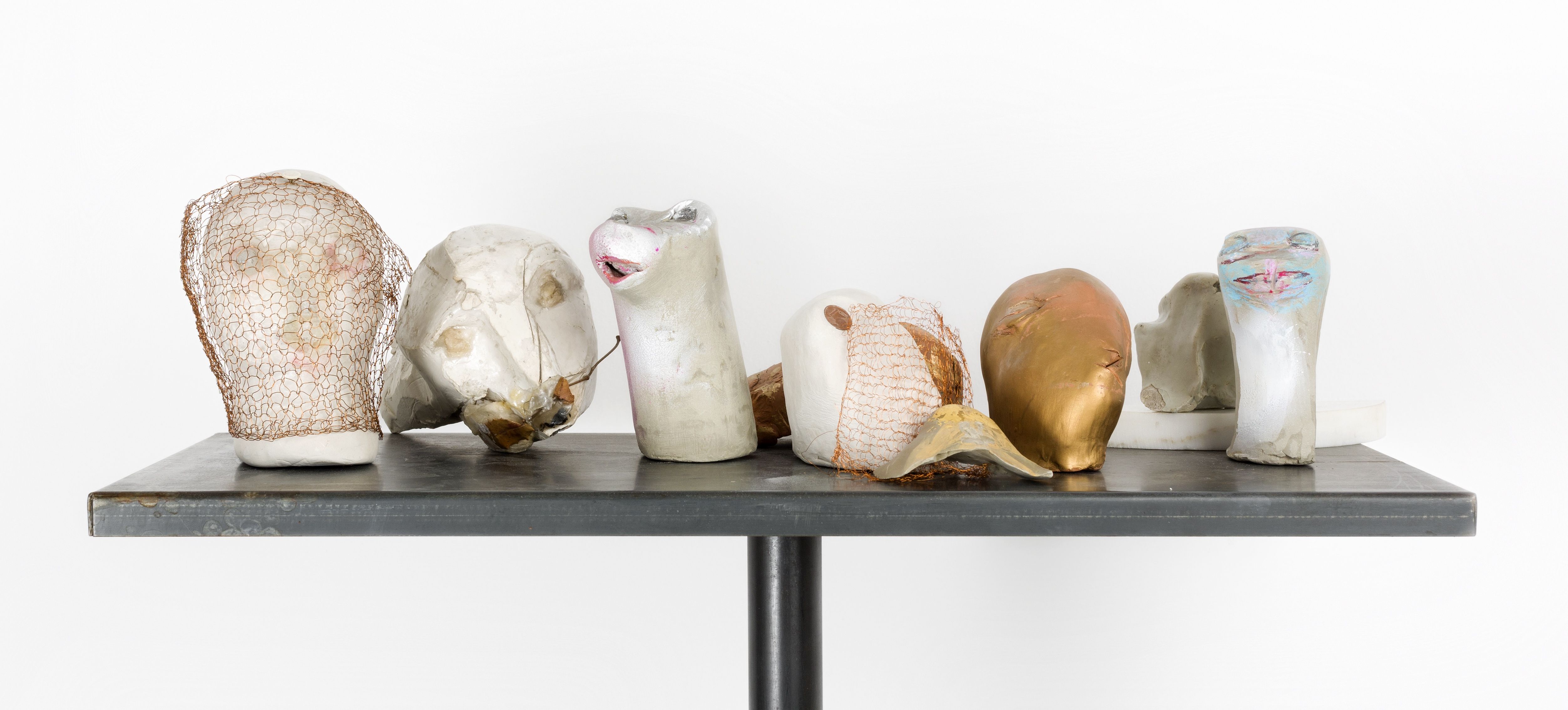
Many of the pieces here are listed as “untitled” and “undated”: Merz didn’t want to fix her art in time. Some of the works on paper were rolled up in her studio until after her death in 2019. Even Beatrice had never seen them before. Are they finished? Are they studies for paintings that she never started? But then again, everything Merz made could be seen as incomplete, awaiting the next adjustment or addition. Why should an artwork not change and soften and grow just as we do? In the hot summer of 2000, she exhibited a sculpture of a violin made out of wax in a group show, in the gardens of Rome’s Villa Medici. During the installation, it began to melt. Merz was unfazed. “Why would an exhibition have to last?” Hans Ulrich Obrist remembers her asking. “Who made the decision that it has to last for two months?”
La danza delle ore coincides with Merz’s centenary. Her birthdate (23 May 1926) and her father’s profession (he worked at the Fiat factory) are easy enough to find, but there’s very little other biographical information available on her life before 1960, when she married Mario and Beatrice was born. Even her maiden name was unknown until recently. The known details of Merz’s life are slippery, as malleable as the materials she favoured: wax, clay, thin copper wire. She eschewed interviews, but that is not to say that she hid her life. Indeed, it is everywhere in her work—in Post-it notes she left on paintings, in the domestic materials she used, in the unfinished wood plinths on which several sculptures sit. Merz pushed against the idea that an artist’s life story could be applied to their output, used to explain their art. By collapsing her home with her studio, she folded the biographical into the artistic; her work is an argument that they are one and the same. Here is a chair, a kitchen exhaust hood; why should they not be integral to the artwork?
“She insisted on an open dialogue between high and low”
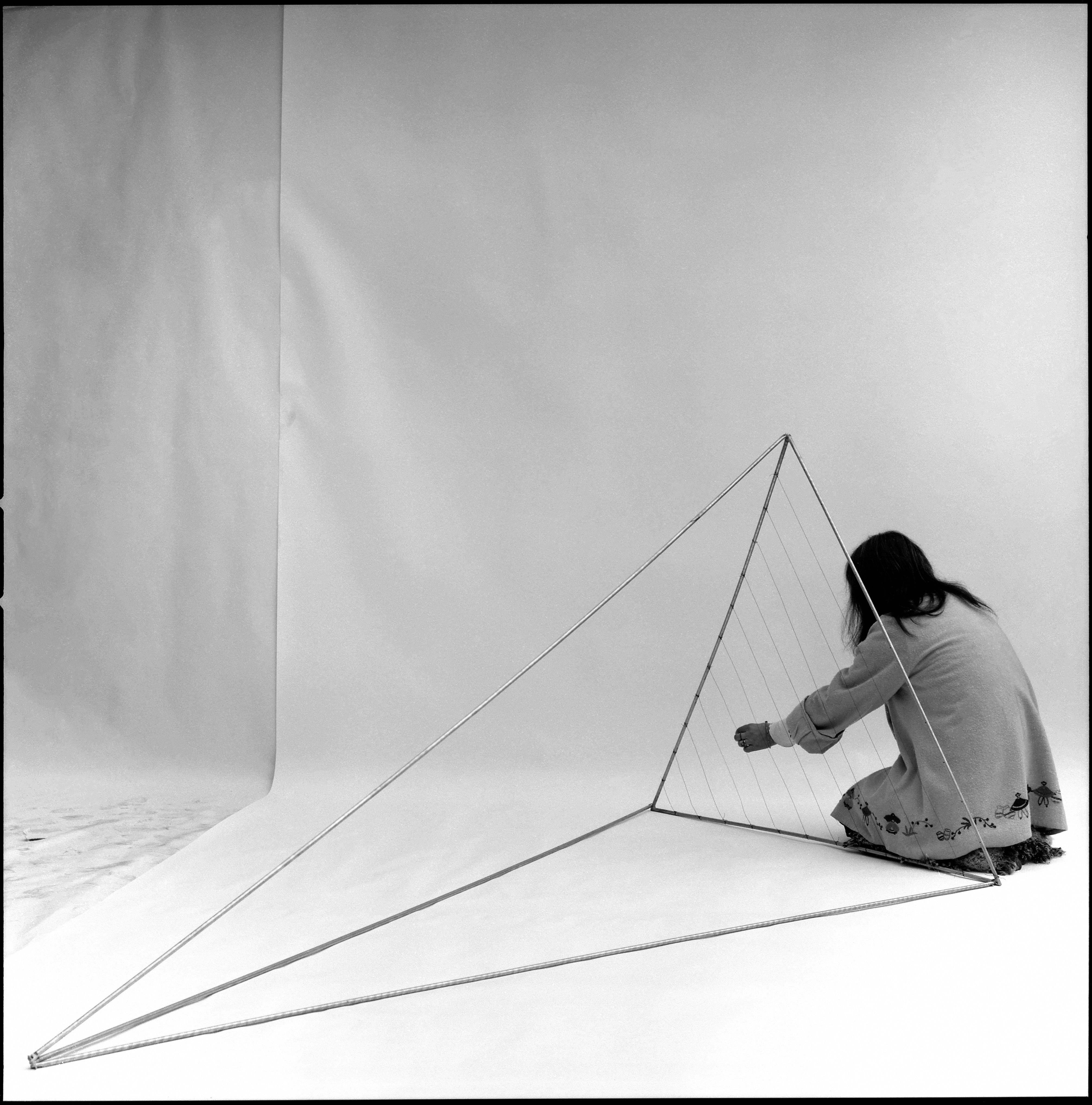
There are strands of copper wire nailed to the tiny iridescent chair in GAM—the right size for Beatrice when it was first brought into the apartment—and wrapped around the crossbars of its back. Like the bands of copper captured in a wooden frame elsewhere, these glimmering threads catch the light, but something more, too. Bertola, who worked with Merz on a previous exhibition, sees them as nets for the sublime. In one large installation, more of these copper nets, laboriously knitted and woven into squares, have been stretched and nailed to the wall. With its pins and horizontal copper lines, it looks like a musical score. Elsewhere, triangular nets are pinned in a vertical spiral. Then there are the scarpette, delicate little slippers of woven wire or nylon, the size of a young child’s foot.
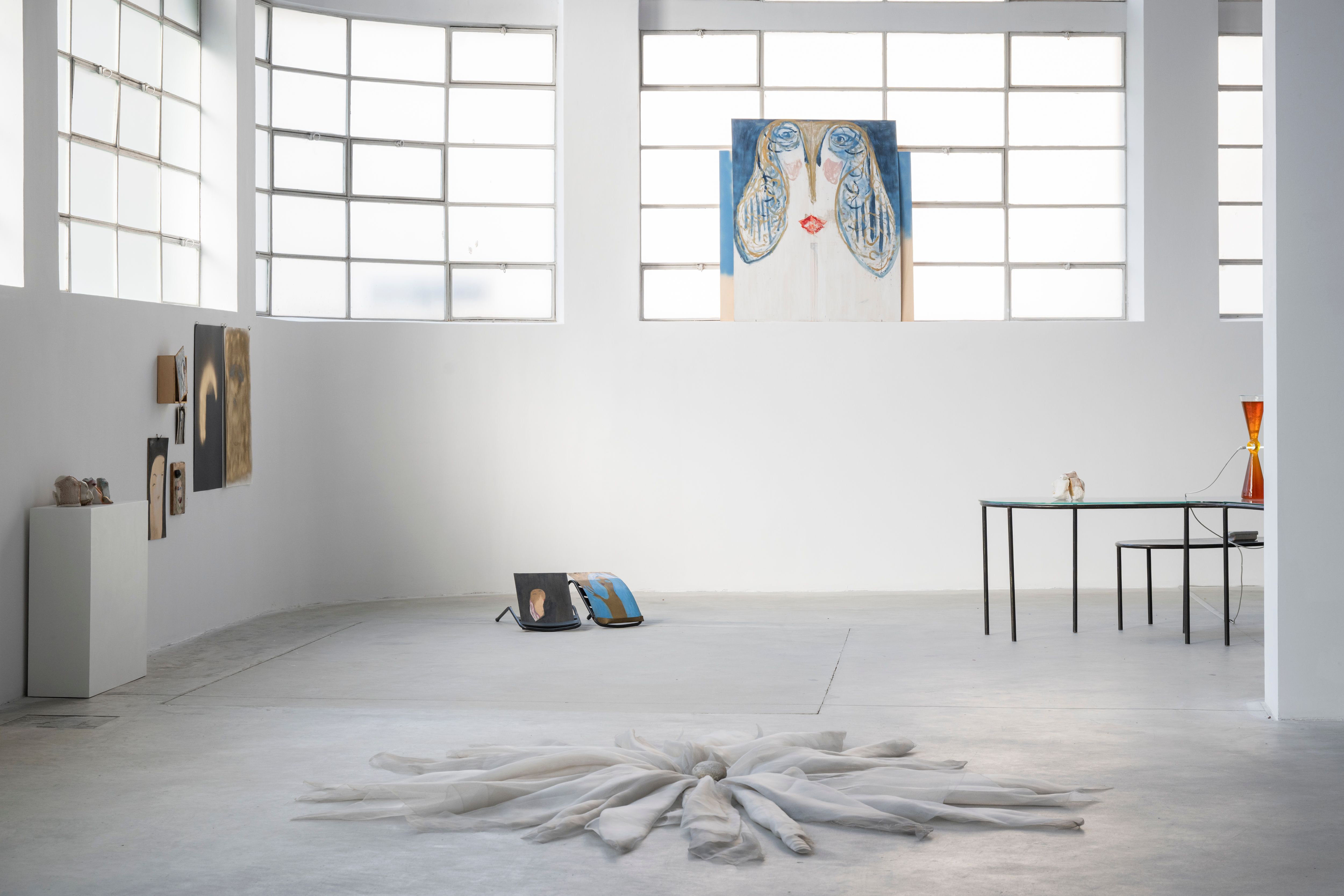
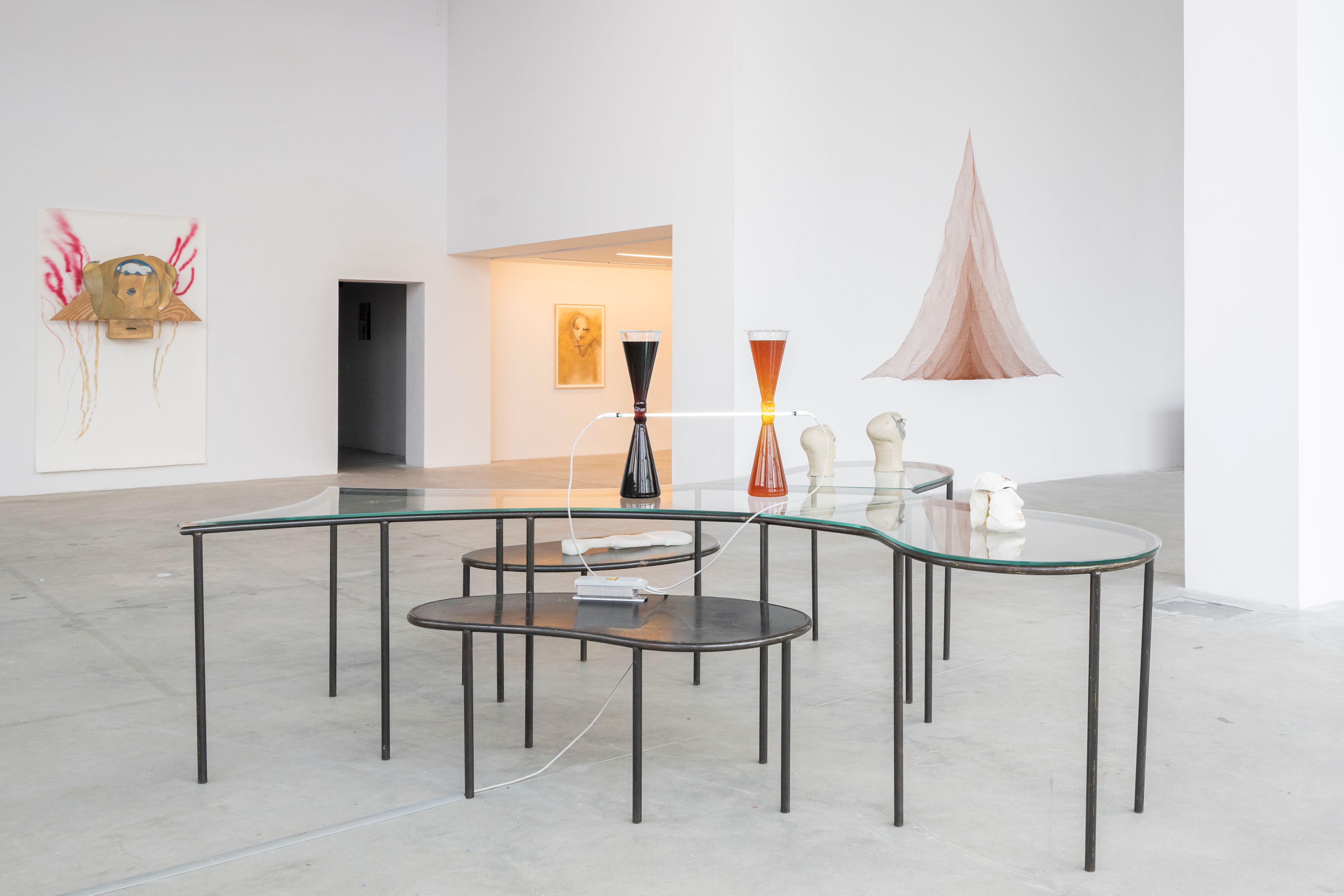
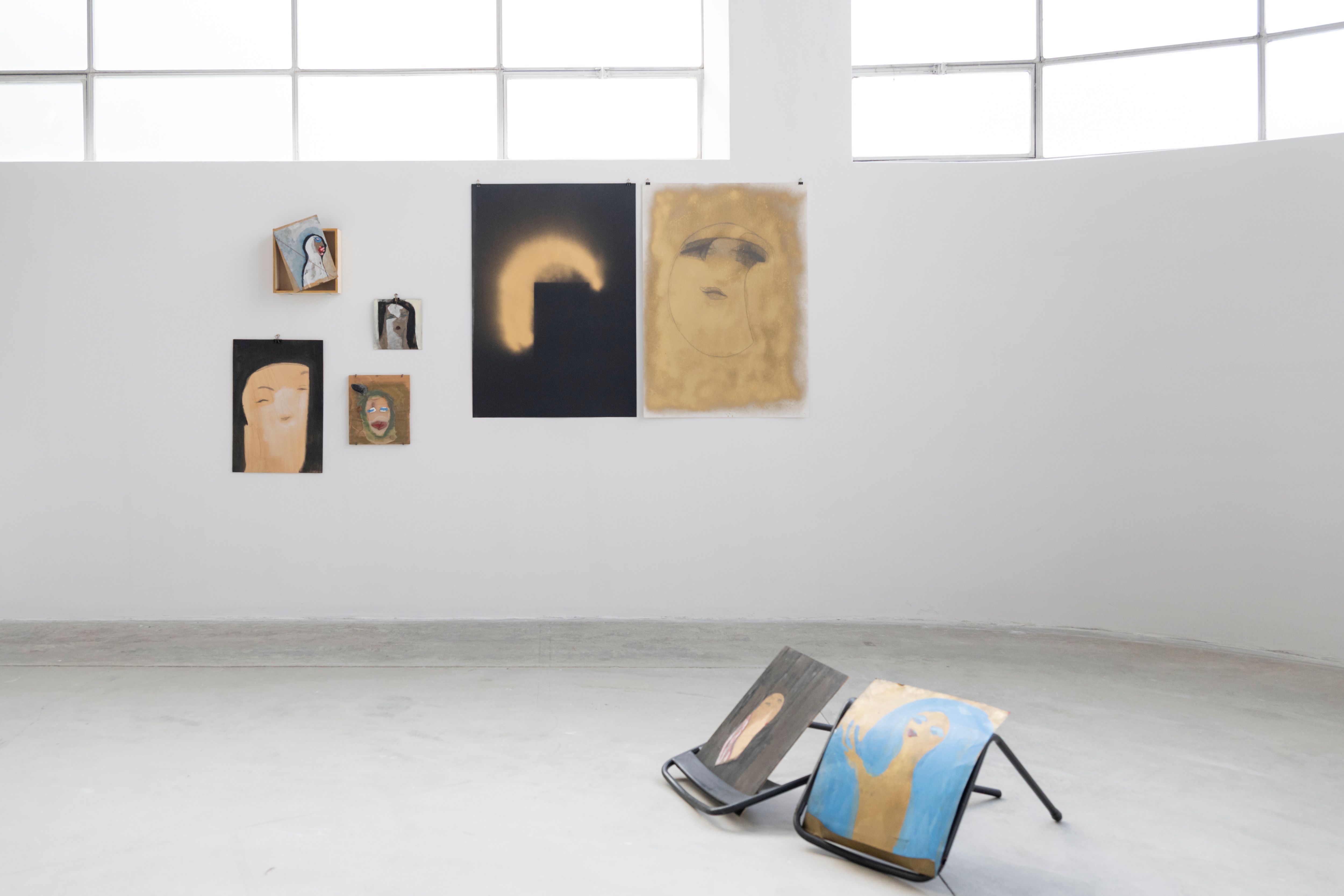
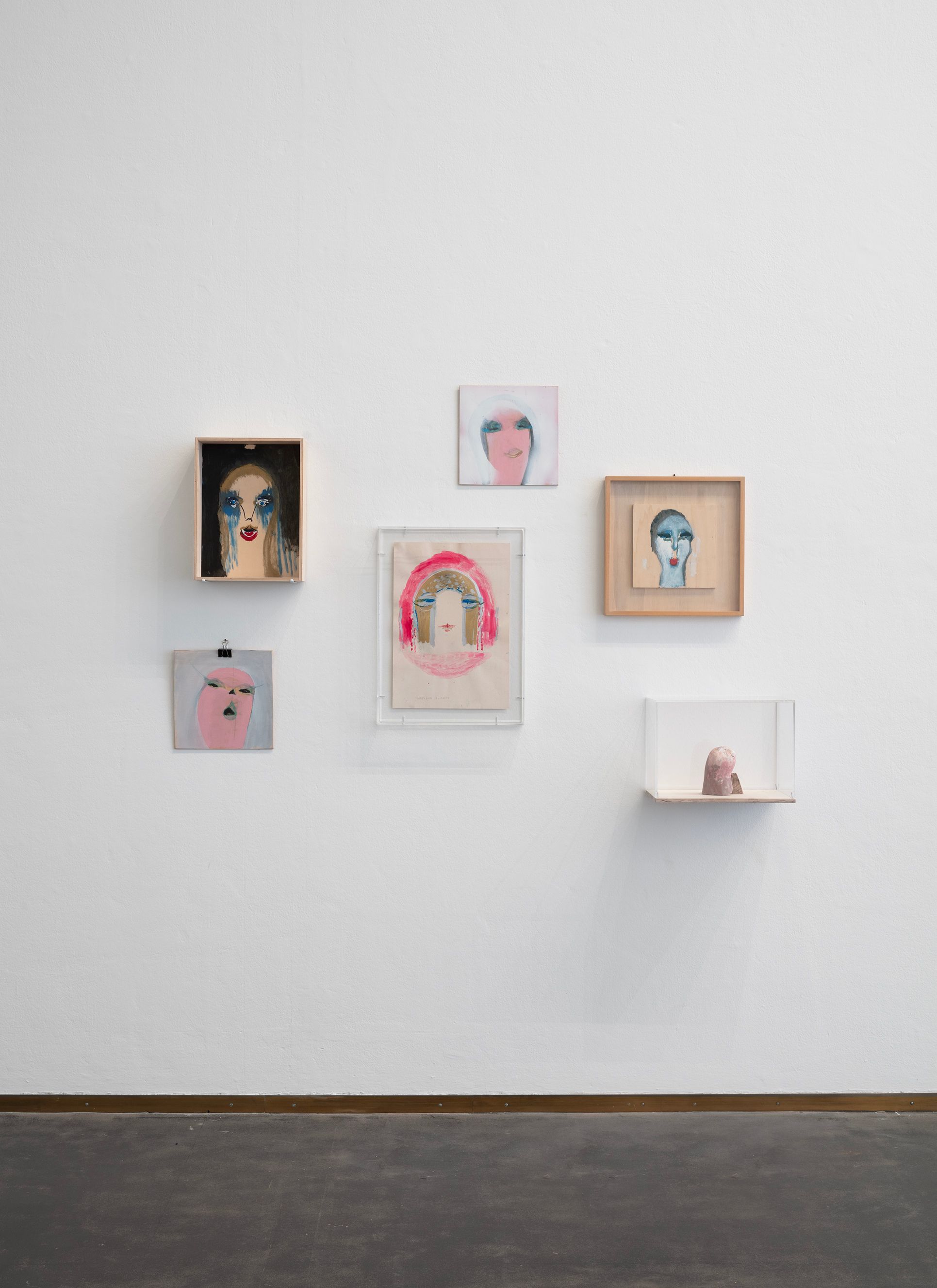
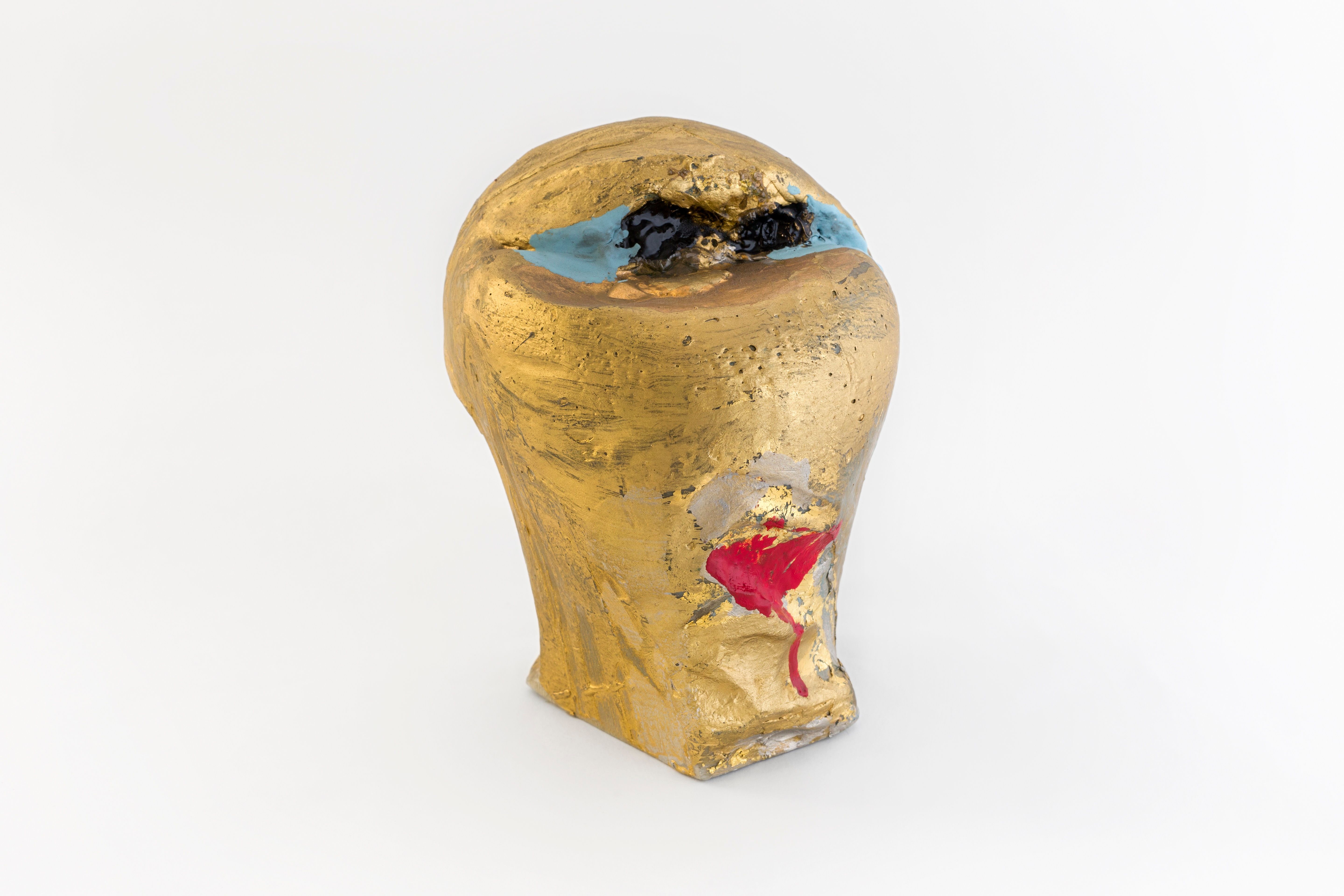
Merz worked every day at home, either knitting copper, drawing, or fashioning one of the twisted clay sculptures of indistinct heads also on display at all three venues. Unfired, they remain forever in a state of potential flux. One seems to be tilting its face towards the heavens, waiting for rainfall. Towards the end of her life, Merz became very religious, attending Mass every day. During the 1990s, she started painting angels. These are large works in which tendrils of blue, red and gold pigment surround open-faced figures. Merz stuck a napkin bearing Mario’s scribbles in the lower corner of one and a Post-it note with her own handwriting higher up; it reads: “PREGHIERA” (prayer). At Castello di Rivoli, the inclusion of additional works by 10 contemporary women artists muddies rather than illuminates Merz’s multifaceted practice. But a triptych by the 14th-century painter Agnolo Gaddi—a pink-winged archangel on gold ground—beautifully refracts Merz’s own angels which, bathed in this historical light, seem to transcend time.
From the undulating metal shapes to the precarious heads to the never-finished paintings with their Post-it note memos, Merz’s works were intended to exist in a constant state of possibility—rejecting categorisation or pronouncements of completion. Although she is no longer here to readjust a strip of aluminium or add a dash of gold to an angel’s wing, to rearrange a piece on a windowsill and lean another against a wall, the art retains that sense of potential, of motion. I kept returning to the score-like installations with their squares of knitted copper pinned into place. What would they sound like if played? Like the bustling market outside the Merz apartment, perhaps, or the bells sounding time from one of the nearby churches? Or like the laughter of a little girl, looking on as her mother creates something monstrous yet familiar.—[O]
A respected voice in contemporary art discourse.
Focusing on ambitious storytelling and insightful art-world commentary. Ocula Magazine publishes in-depth interviews, critical essays and timely analysis on the artists, exhibitions and ideas driving the global art world.
Learn more about Ocula Magazine
Showcasing the best of the art world.
Ocula partners with galleries from around the world to highlight their artists, artworks and exhibitions. Gallery membership is by application and invitation, with each member vetted by an independent panel.
Learn more about Ocula Membership
Specialises in the sale of major artworks.
Led by a team with deep ties to the world’s leading auction houses, galleries and collectors. Ocula’s advisory team offers bespoke services to high-net-worth clients from around the world who are looking to acquire the best of contemporary and modern art.
Learn more about our team and services