





Garessio to Turin: The Formative Path of Giuseppe Penone
On the occasion of the artist’s exhibition at Serpentine, London, Federico Campagna journeys through the places that primed his early years. Save to My Ocula
It was a widespread belief among the ancients that a person’s destiny was inscribed outside of their flesh—in the time of their birth, the letters of their name or the geography of the place where they were born. The story of Giuseppe Penone, a native of Garessio, in southern Piedmont, seems to vindicate this seemingly outdated belief.
Nestled in a valley on the Maritime Alps, on the border between Piedmont and Liguria, Penone’s hometown is a small cluster of human artefacts surrounded by a vast expanse of forests, rocks and gorges. The Tanaro River, flowing out of the snowy peaks of the Alps, cuts the town in half along its course towards the North, where it will merge with the powerful flow of the River Po. For an artist as steeped in nature as Penone, the crown of forests around Garessio might have played a role similar to a zodiacal constellation, whose influx is thought to persist throughout a person’s life. Already in its name, Garessio contains a hint of the untamed love of nature that breathes through all Penone’s work: combining the Latin noun garricus (wild place) with the suffix -esce (place of passage), Garessio’s toponym implies a position somewhat ‘outside’ the confines of anthropised Modernity, together with an active process of ‘moving out’ of all established categories.

Just to the north-west of Garessio, past the peaks of the Maritime Alps, the province of Cuneo spreads out as a large, cultivated expanse. Known as la granda (the large one), the province of Cuneo is one of the biggest in Italy, and accounts for most of Piemonte’s agricultural production. A land characterised by the pragmatic attitude and the understatement of its people, the area of Cuneo rolls northwards as a wide, verdant bridge between Penone’s native Maritime Alps and the city of Turin, Piedmont’s capital, the scene of most of Penone’s artistic career.
From Turin, the industrial heartland of Italy throughout the 19th and 20th centuries, the green-and-white shades of snowy mountains feel within reach. From the height of the Mole building, or as one drives along the highways leading to the city, the profile of the Cozie Alps soars magnificently towards the sky, as a visible testimony to that natural ‘excess’ that always escapes and surrounds the cultured conversations that occupy the life of city-dwellers.
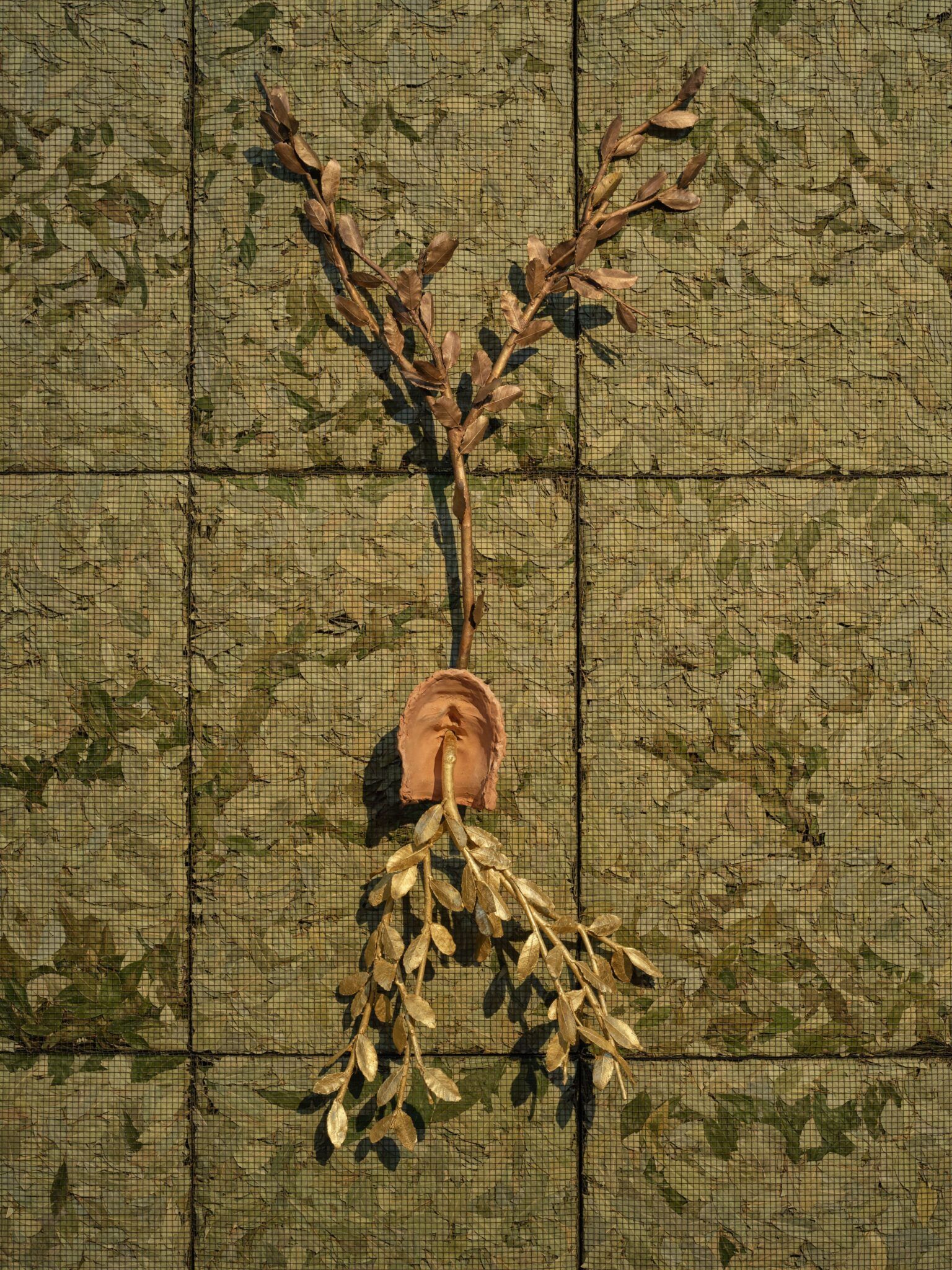
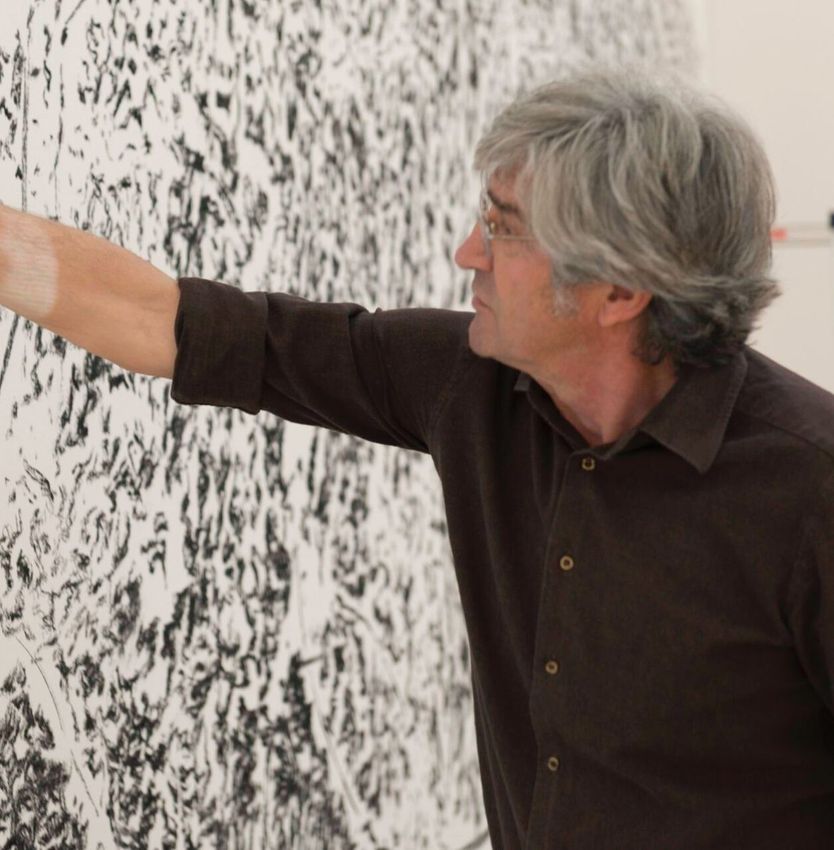
Penone spent most of his life in Turin. During the years of his education, just before producing his first iconic works, the city was still the epicentre of Italian metalwork and car production, enveloped in the low-hanging clouds of industrial smoke and in the constant buzz of worker’s agitations against capitalist exploitation. Those were the years when Penone, in his physical reality, was sharing the streets of Turin with an imaginary, ethereal character invented by the pen of Italo Calvino: Marcovaldo. First appearing in a book of the same title published in 1963, Marcovaldo was a manual labourer who survived the hardships of everyday life with a mix of humour, melancholy and a quasi-magical ability to transform his surroundings. He rode his bicycle around town, making his way through clouds of air pollution and the even thicker fog of consumerist culture, looking for traces of nature among the elegant buildings of the centre and the busy factories of the outskirts of Turin. He looked for the possibility of a different life, and what he could not find, he invented. Like Penone’s chisel, Marcovaldo’s imagination carved the urban landscape to the bone, searching for that primordial kernel where the ‘tree’ of social life still contains a thread that leads back to a direct relationship with nature.
There, Marcovaldo’s steps and those of Penone seemed to cross each other: at the level of mythopoiesis. Formed by a crasis of ‘myth’ (story) and ‘poiein’ (to create), mythopoiesis defines the wide range of poetic acts that bring about a new narration of the cosmos, casting a fresh light on the essence and the possibilities of everything that exists. It is not so much a matter of inventing, as of discovering. Penone’s imagination, like Marcovaldo’s daydreaming, discovered in the urban landscape of Turin the hidden essence of what appeared in full evidence on the mountains surrounding Garessio.
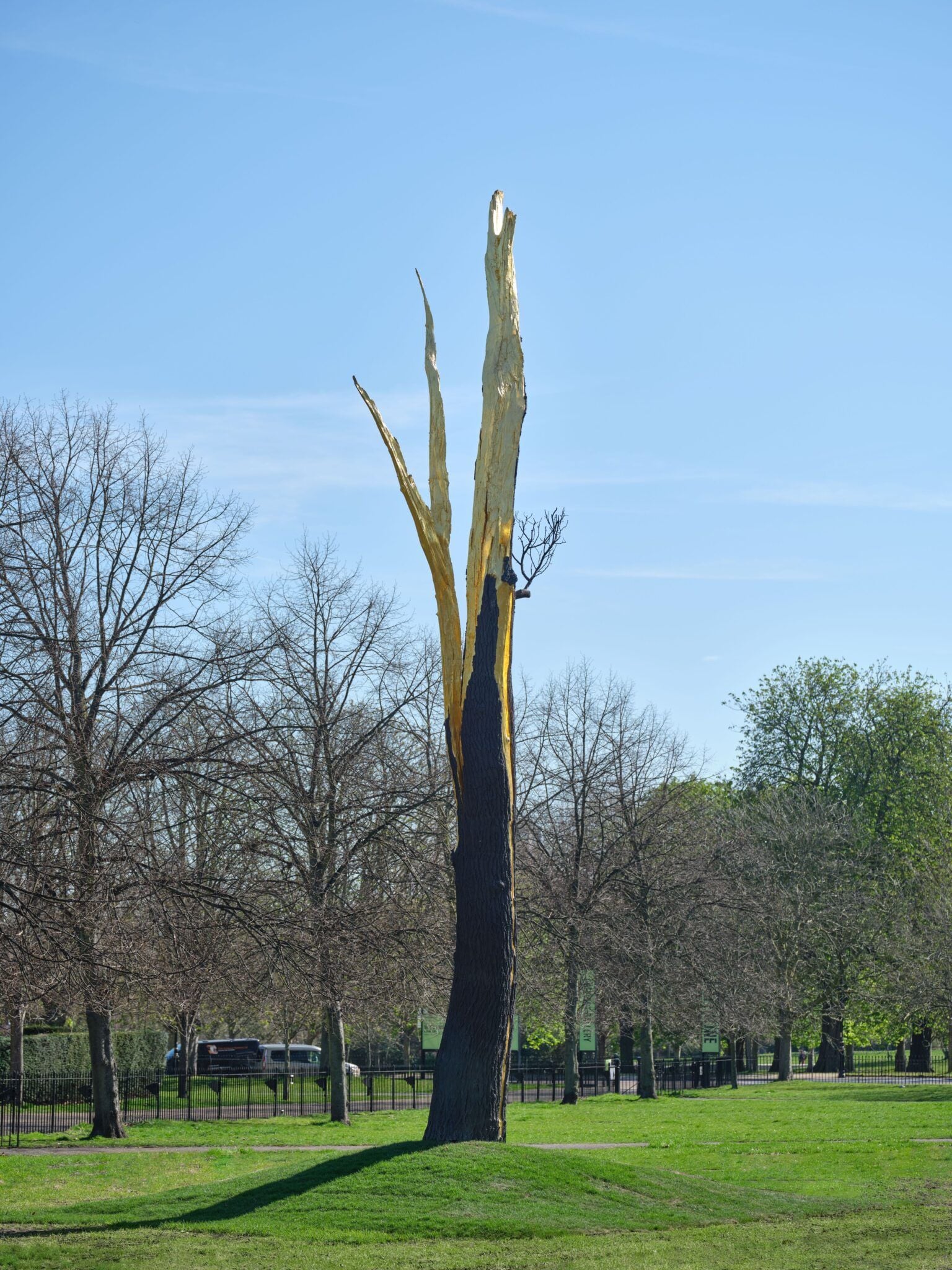

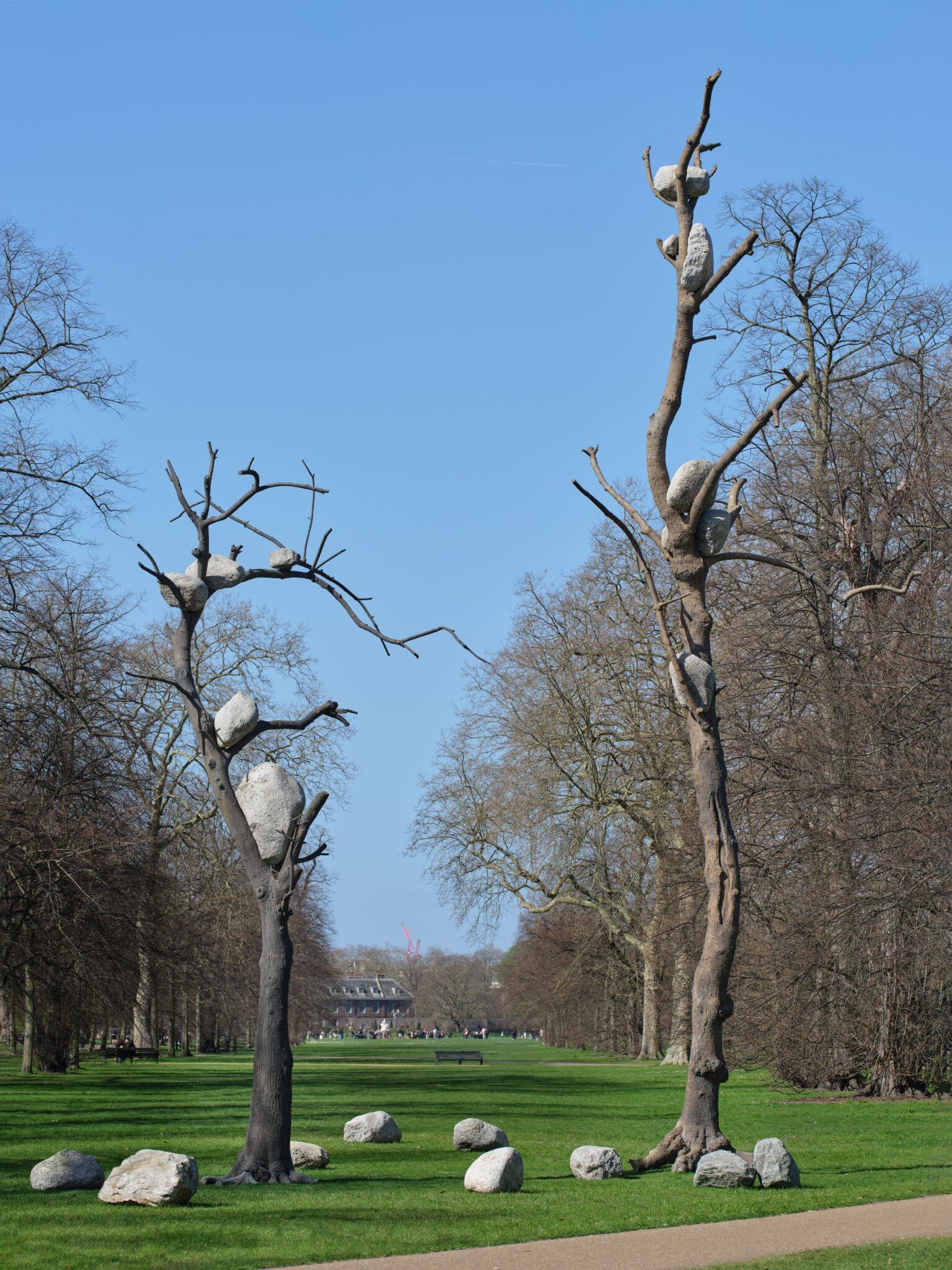
Even in a city park, where trees stand as if imprisoned between metal rails and the sonic knots of traffic, it is possible to witness the interlacing that exists between the slow movements of plants and the rapid manufacture carried out by humans. Both of them, albeit according to different temporalities, shape the environment along systems of order, which simply wait to be noticed and decoded by the observer. Under the lens offered by Penone’s work, even the swirling of an autumnal leaf speaks of a web of correspondences connecting the forms of natural beings (like the spiral of a shell), human artefacts (like a screw), and cosmic aggregates like the galaxies.
If these connections seem to point back to ancient forms of Hermeticism (whose micro-macro cosmic connections so deeply influenced the development of Mediterranean thought), it would be more correct to see it as a thoroughly materialistic rediscovery of pantheism—where the role that was once played by the invisible presence of the ‘divine’ is now performed, and enacted, by the study of ‘forms’.
Once again, Penone’s work seems to develop the ‘destiny’ that was already inscribed in the geography and history of his birthplace. Although small and sheltered by the mountains, the town of Garessio has not been spared any of the horrors and atrocities of the modern age. Ravaged by wars and pestilence across the centuries, the town’s inhabitants played a significant role in the war of Liberation that healed 20th-century Italy—who knows for how long?—from the illness of Nazi-fascist dictatorship. The partisans took refuge in the mountains, and from there they descended to the valley to attack the German and Italian contingents. Like Penone, the guerrillas did not so much invent, as discover the hidden essence of social life, since the possibility of freedom, like that of a more authentic relationship with nature, already lay dormant in the fabric of 20th-century Italian society. It took their sacrifice to reveal it—just as it takes Penone’s hands, breath, imagination and working tools, to reveal the wealth of insight that always already lies dormant in the smallest natural specimens, however deeply buried under the crust of human societies they might be. —[O]
This essay was originally commissioned by Serpentine, London, for the exhibition catalogue accompanying Giuseppe Penone: Thoughts in the Roots (3 April-7 September 2025) at Serpentine South. Republished on Ocula with kind permission of Serpentine and Federico Campagna.
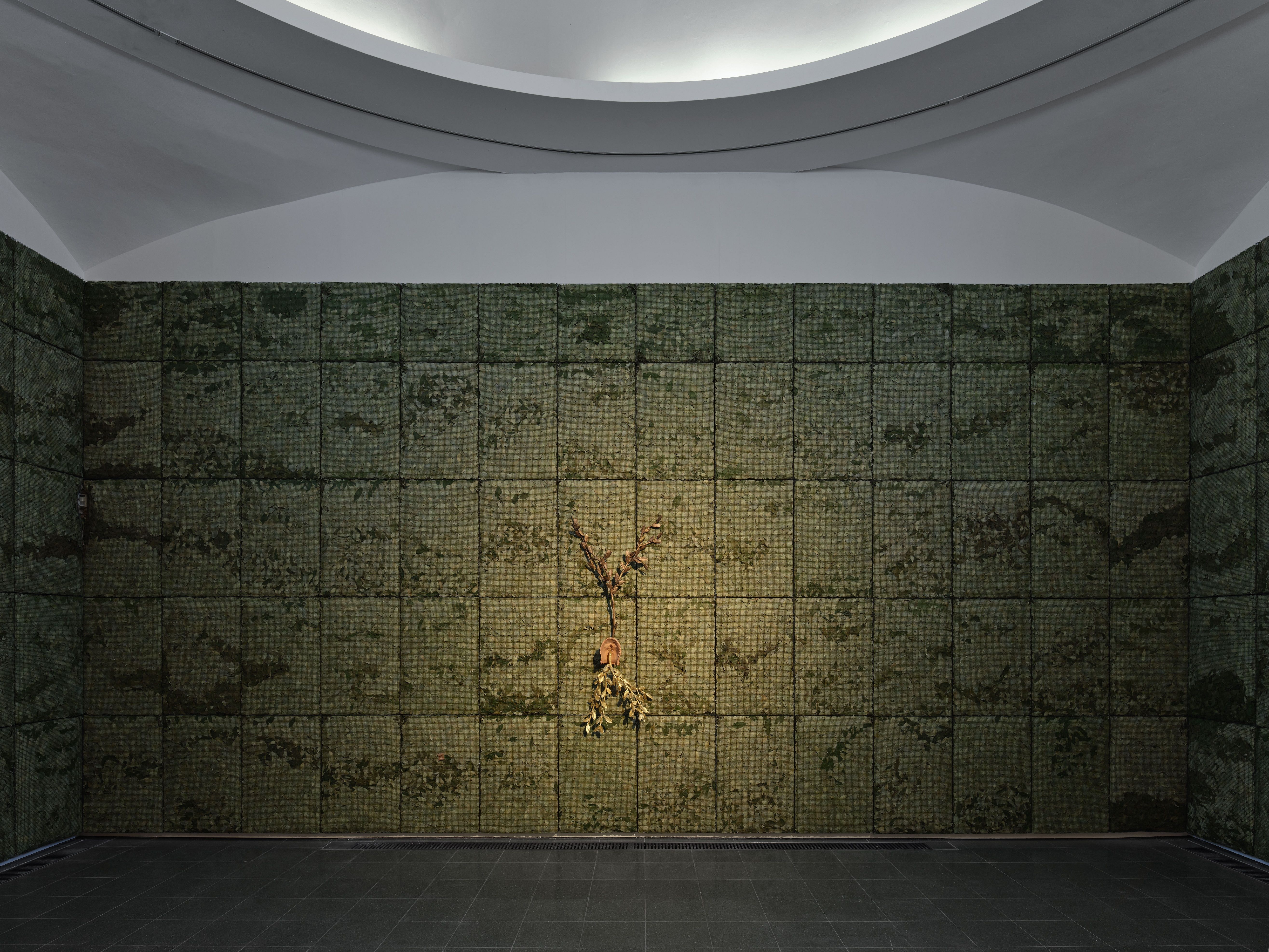
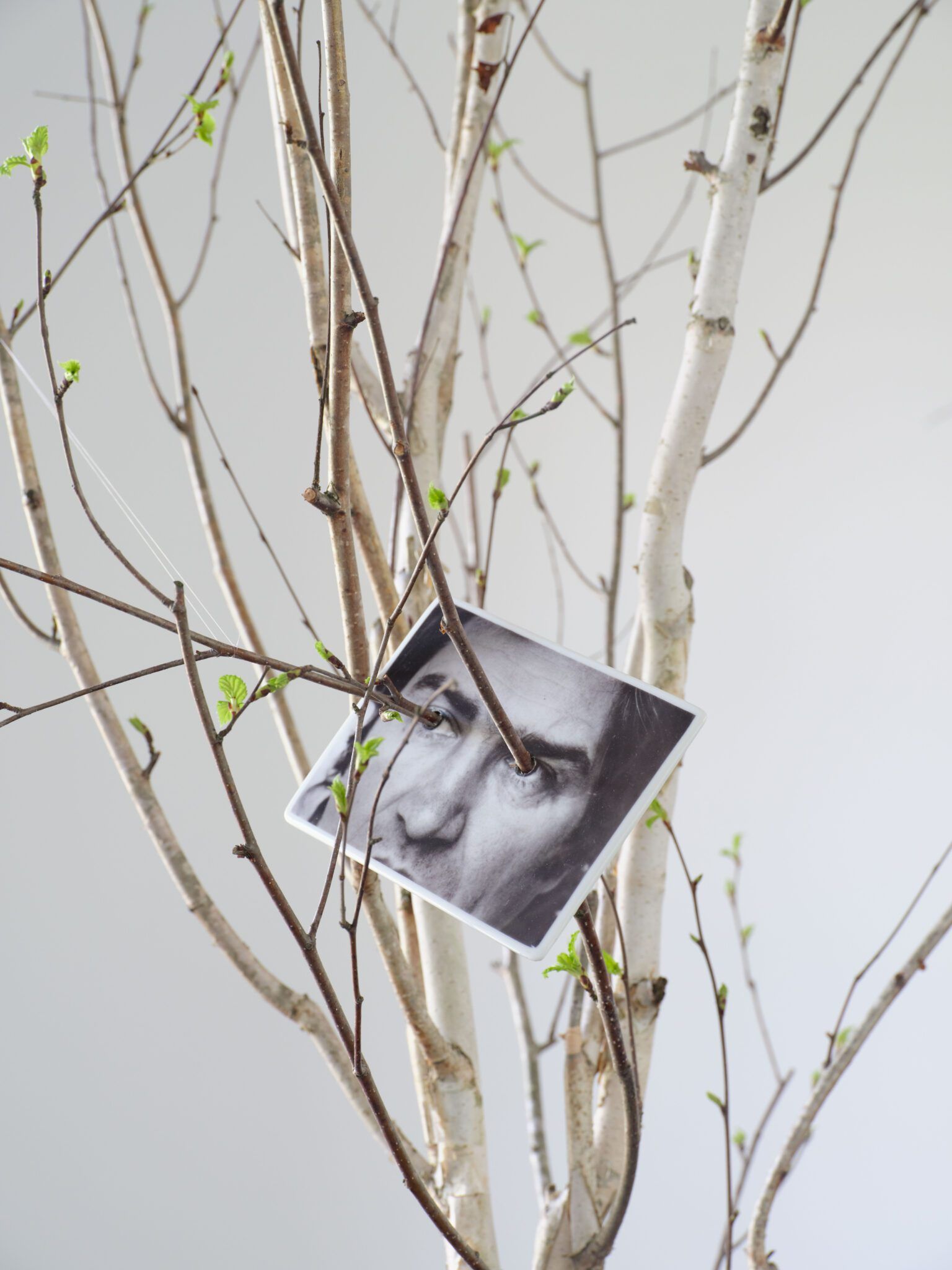
Main image: Giuseppe Penone, Sguardo vegetale (Vegetal Gaze) (1995) (detail). Photo ceramic. Courtesy Giuseppe Penone and Serpentine. Photo: © George Darrell.



A respected voice in contemporary art discourse.
Focusing on ambitious storytelling and insightful art-world commentary. Ocula Magazine publishes in-depth interviews, critical essays and timely analysis on the artists, exhibitions and ideas driving the global art world.
Learn more about Ocula Magazine
Showcasing the best of the art world.
Ocula partners with galleries from around the world to highlight their artists, artworks and exhibitions. Gallery membership is by application and invitation, with each member vetted by an independent panel.
Learn more about Ocula Membership
Specialises in the sale of major artworks.
Led by a team with deep ties to the world’s leading auction houses, galleries and collectors. Ocula’s advisory team offers bespoke services to high-net-worth clients from around the world who are looking to acquire the best of contemporary and modern art.
Learn more about our team and services