






We Know Little About Lutz Bacher, but She Knew About Society
A posthumous exhibition of the elusive artist’s works in Oslo compels us to consider the place of our individual fears in a precarious and complicated world. Save to My OculaWith a pseudonymous identity and sparse public biography, Lutz Bacher can be deceiving. Like a phantom or an orphan—possibly even both—we don’t know the California-born artist’s real name, nor where her public-facing persona came from, but we do know this lifelong game of hide-and-seek was deliberate, an act of authorial resistance that framed her 50-year oeuvre (some sources indicate she was born in 1943). Finding footage of Bacher is near impossible. But there is one video, a lecture she gave at the Vienna Secession in 2016. In it, she takes off her trousers to reveal another pair underneath. She sits barefoot on a shaggy armchair, reeling off memories of high school formals, book reports and family road trips.
Her words are considered, drawn out, each sentence punctuated by a lingering, watchful pause. It’s anti-algorithmic, the opposite of TikTok. It’s sincere, too—intimate, even—but tells us very little about who Bacher might be. Perhaps the real mystery is why we still bother to ask. Like a magician, Bacher never reveals the mechanics of her tricks, only our own stakes in the illusion. She constructs an image, then shows us what’s behind it. At the end of the lecture, she laughs, gingerly, and puts her trousers back on. Maybe the better question is: who are we, watching her?
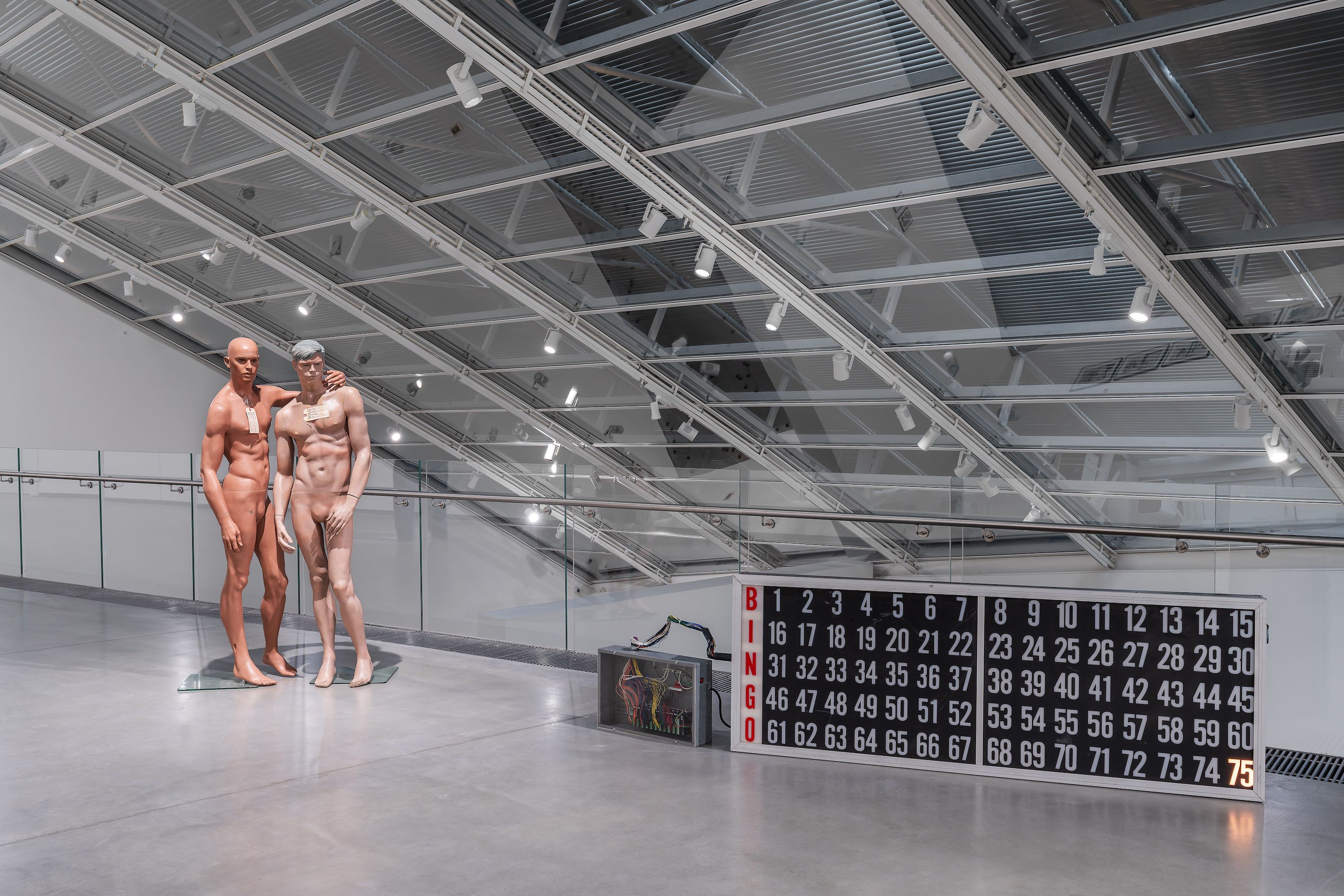
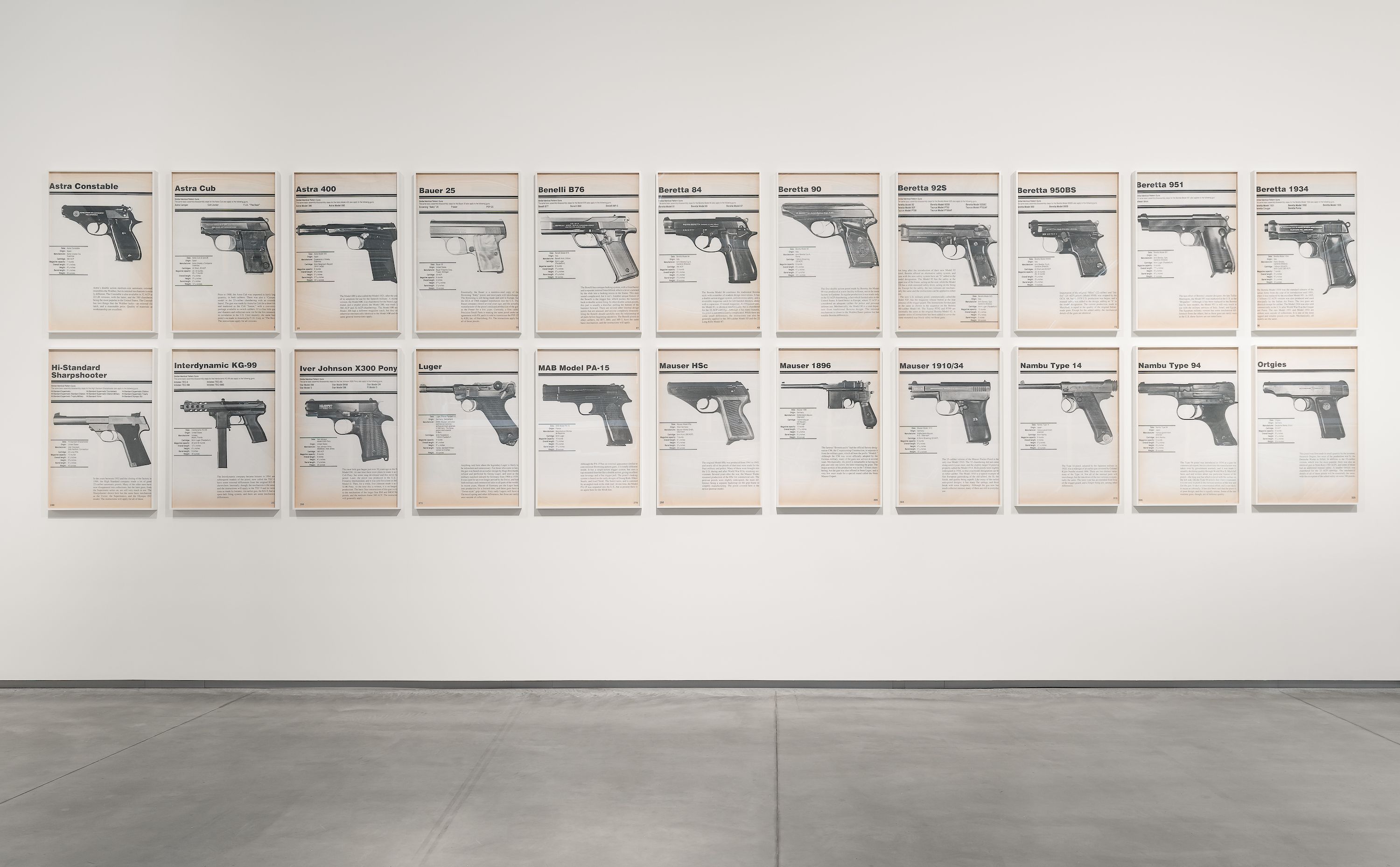
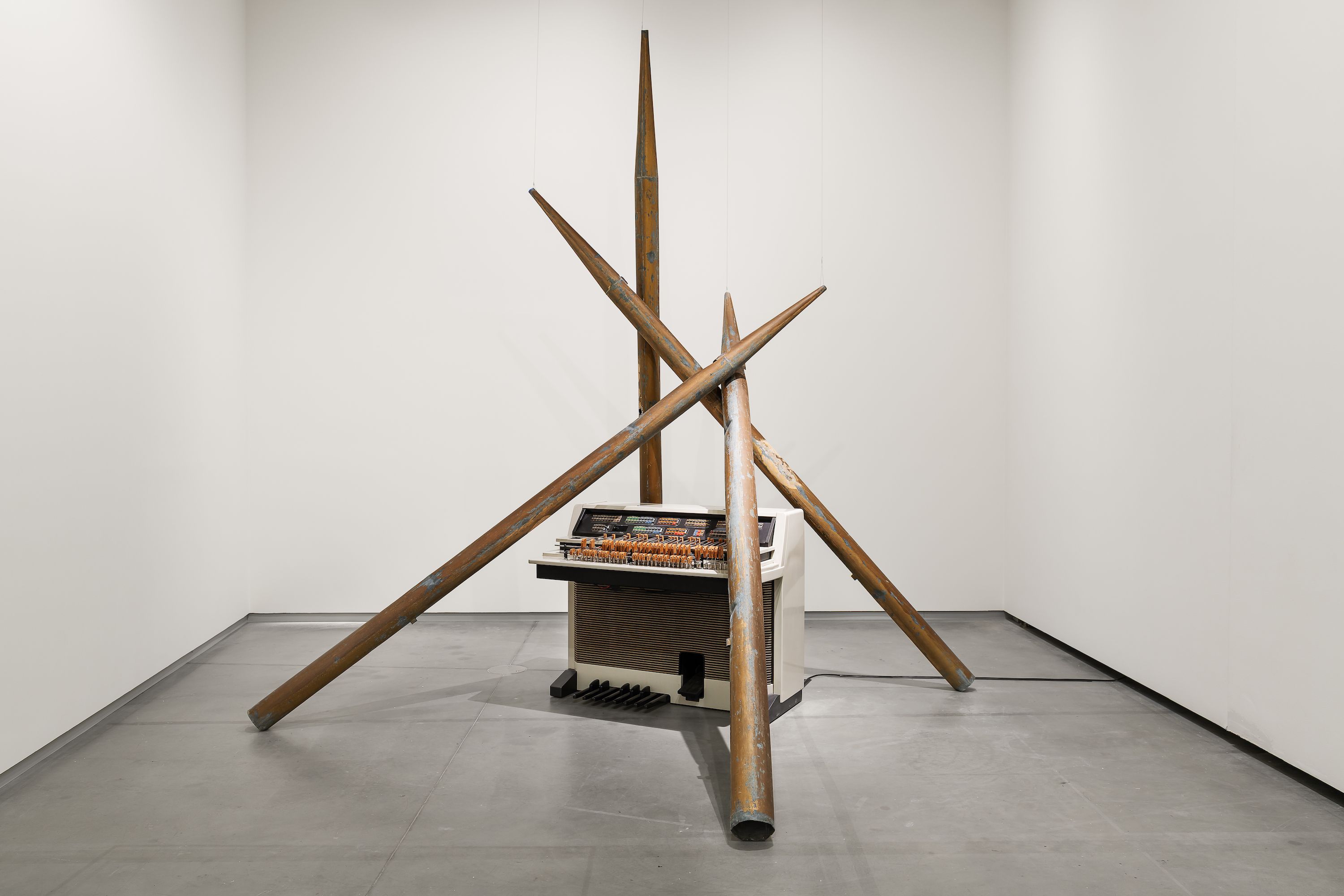
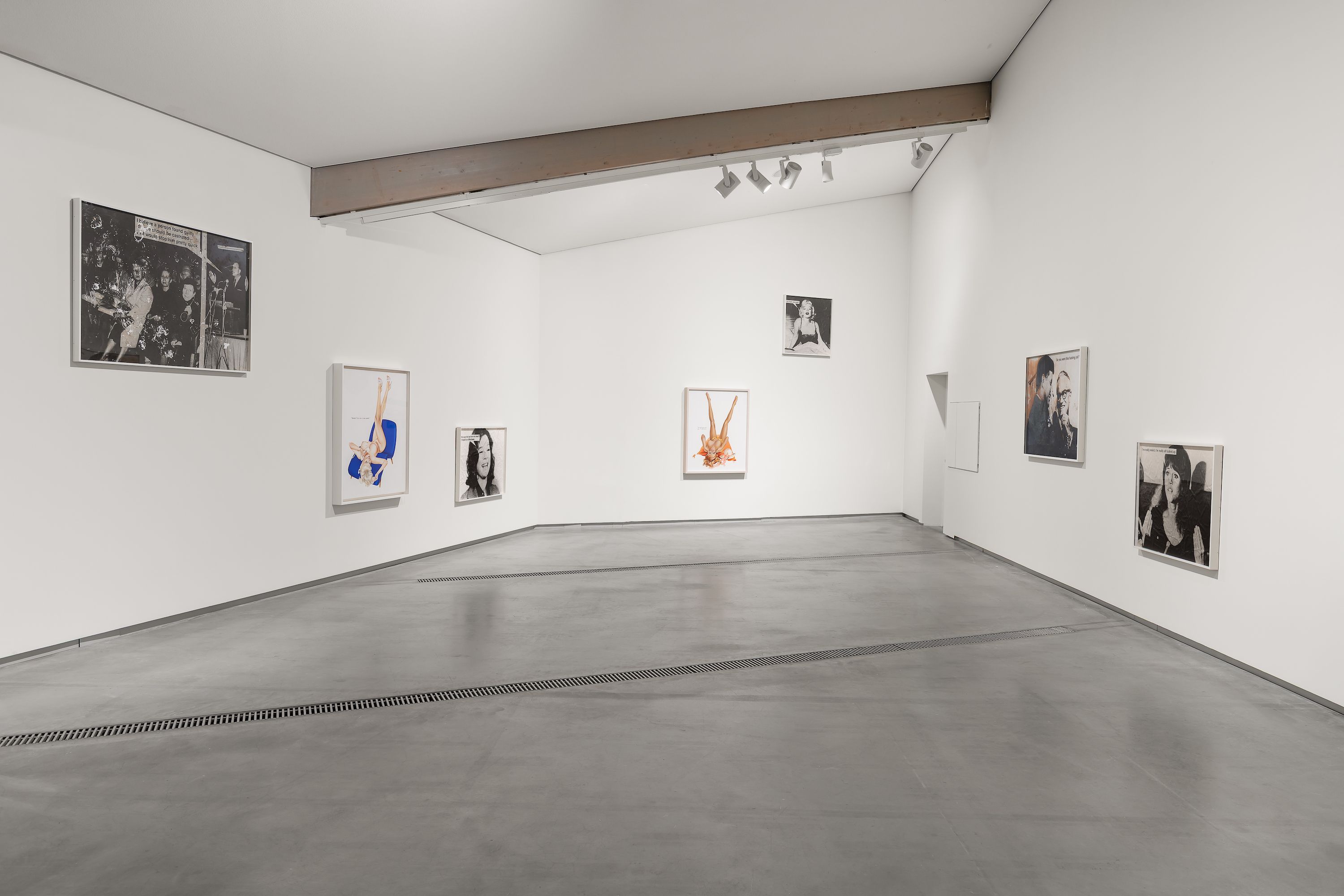
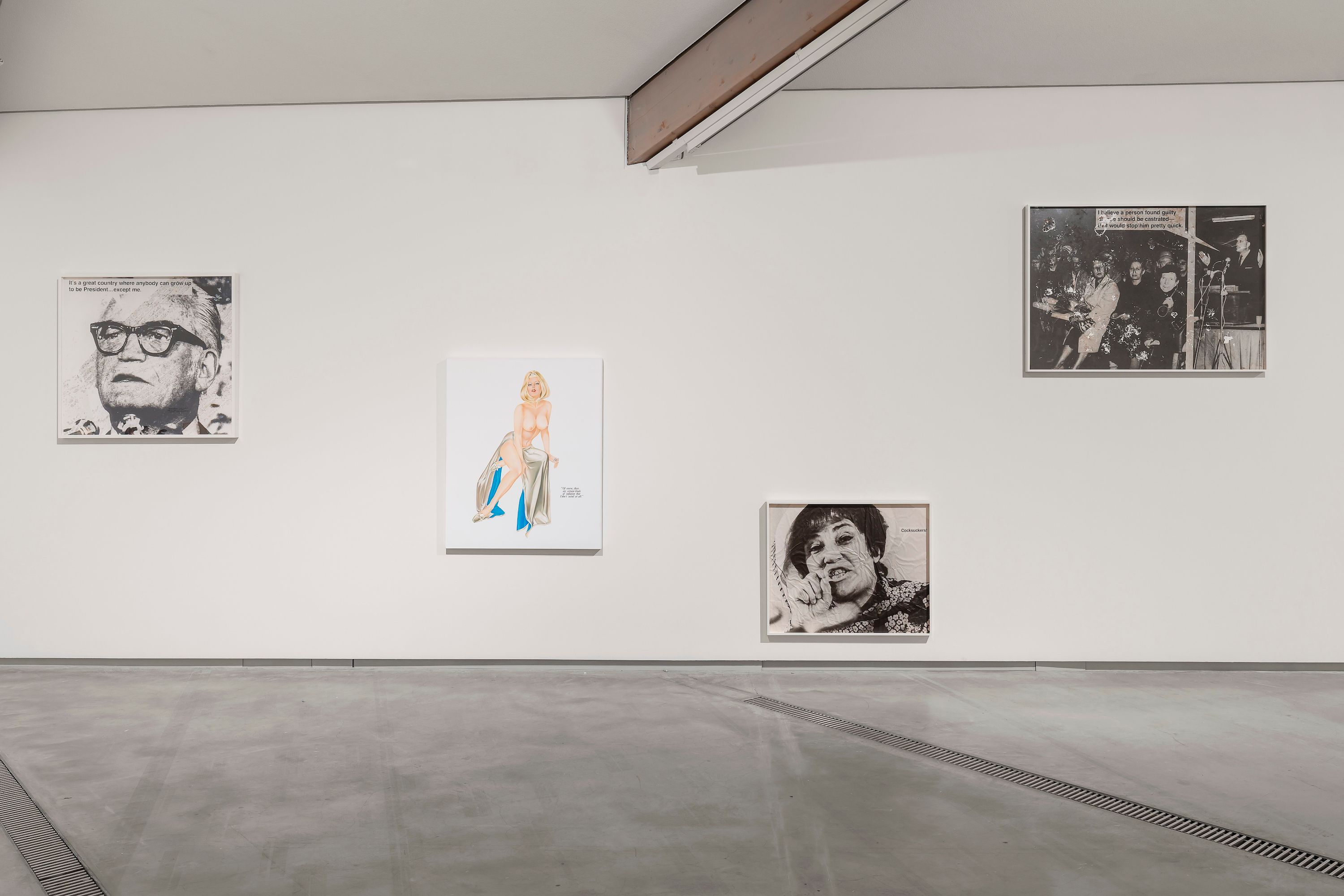
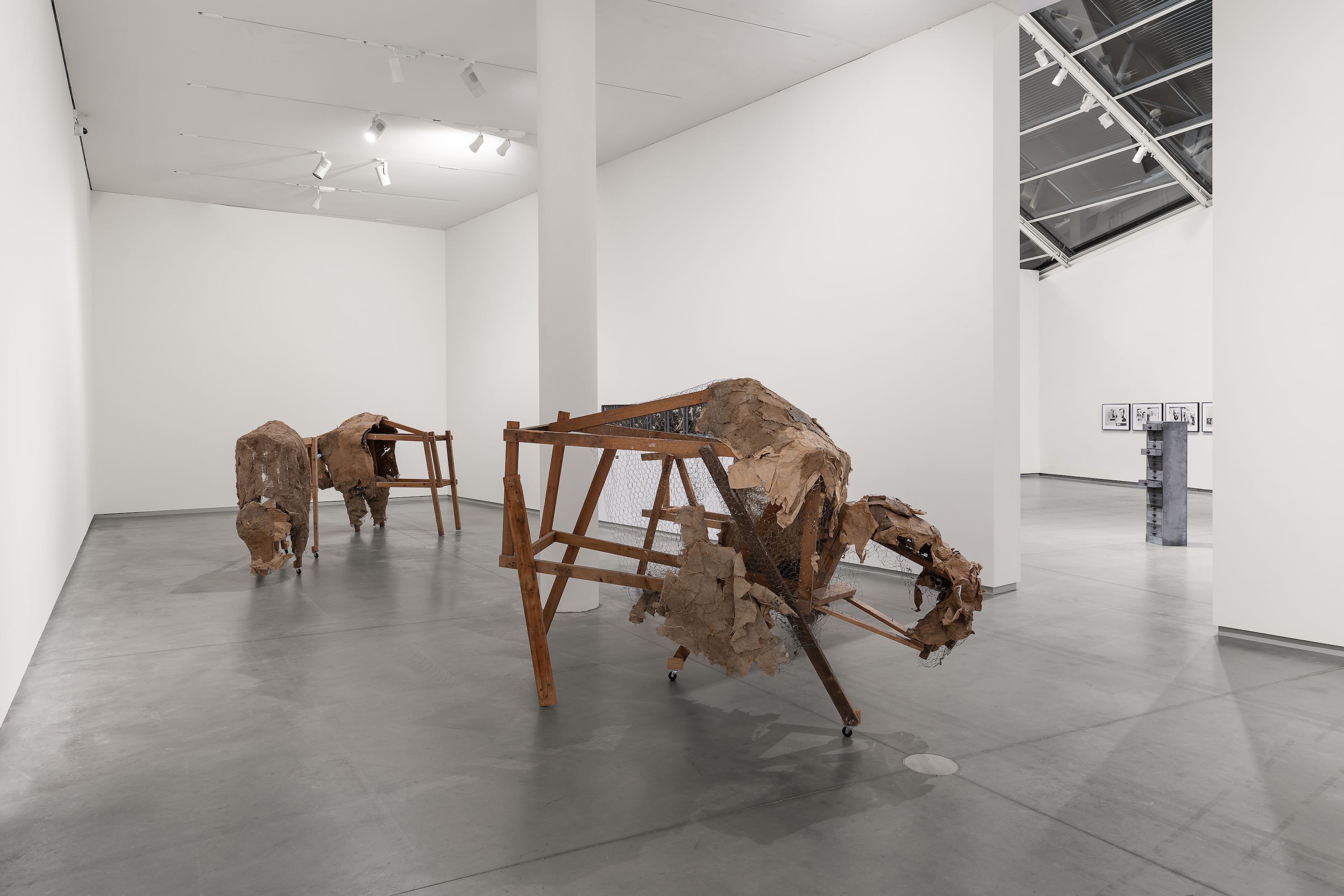
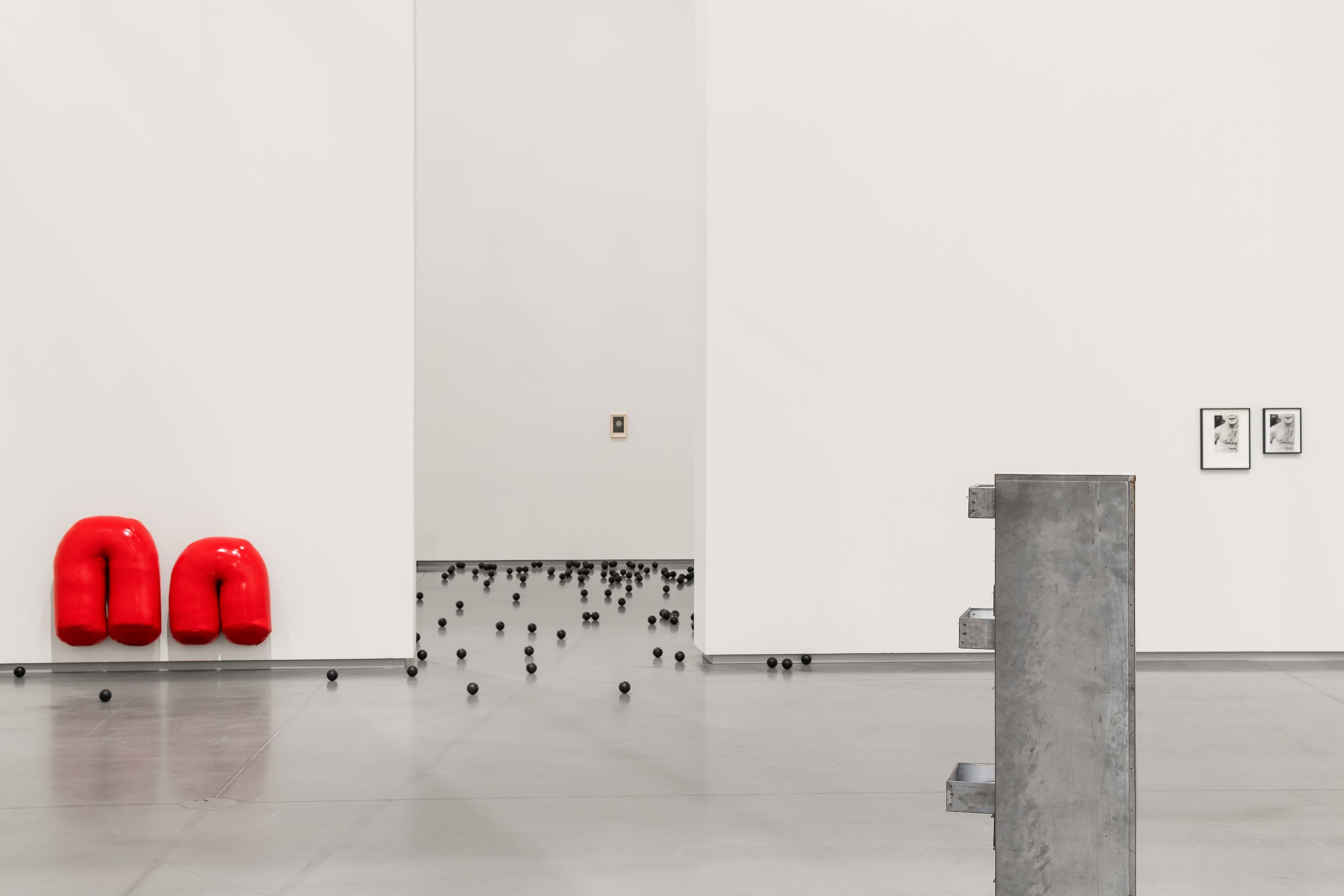
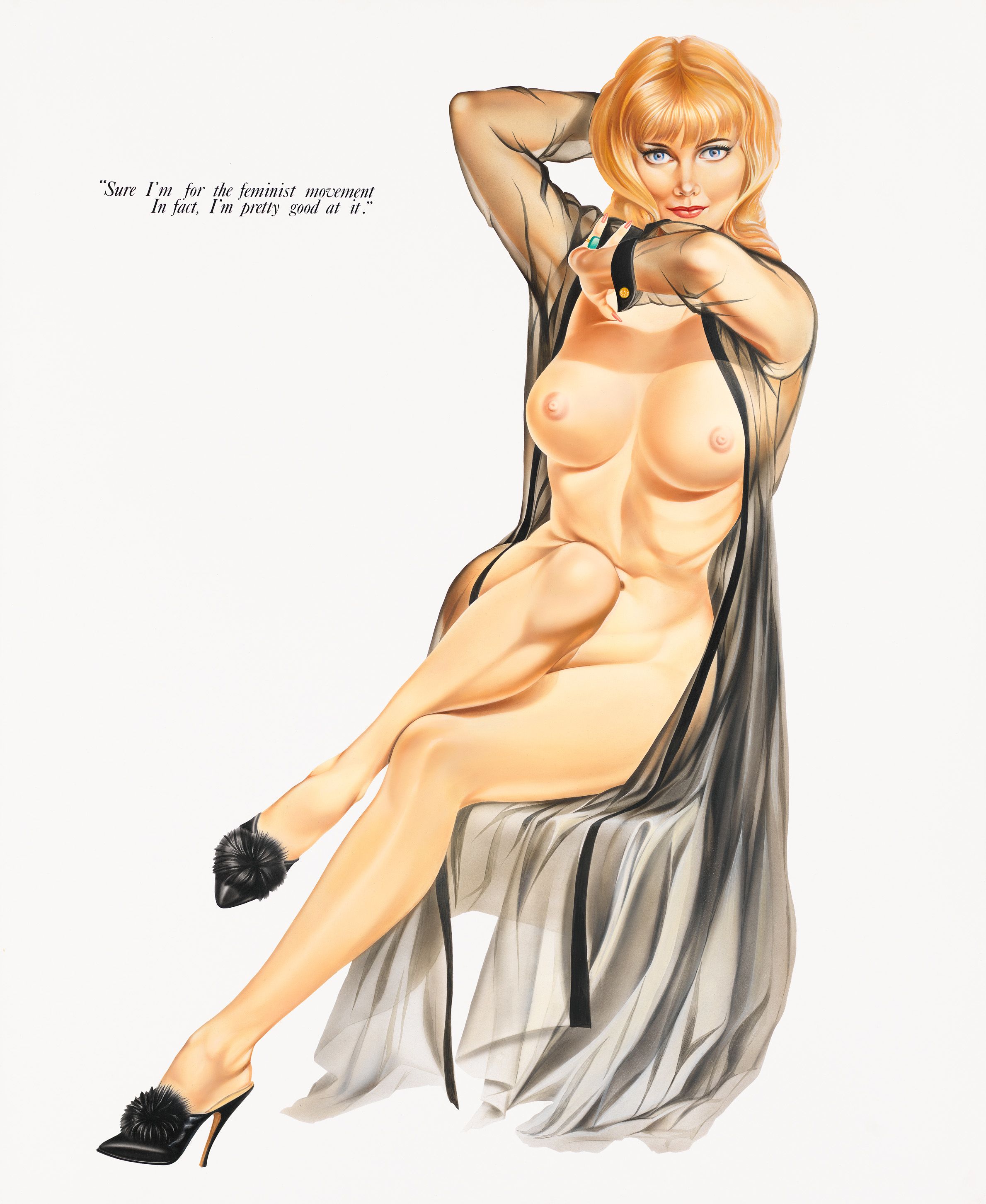
Burning the Days is the title of Bacher’s posthumous survey currently on show at the Astrup Fearnley Museet, Oslo, and scheduled to travel to WIELS Centre for Contemporary Art in Brussels in March. It takes its name from a book the artist never finished, while also referencing the downtime of deployed soldiers during the Vietnam War. The show is associative, a seemingly random collection of photographs, readymades, soundtracks, sculpture and paintings, deftly curated without regard for chronology or formal logic. Across ten rooms, mannequins and bingo screens sit next to giant Levi’s jeans, prints from a gun repair manual and airbrushed paintings of Playboy girls. Bacher called them ruins and, on some level, they are: the fragment-strewn rubble of post-war Americana fizzing like a well-shaken Coca-Cola across the gallery’s white walls.
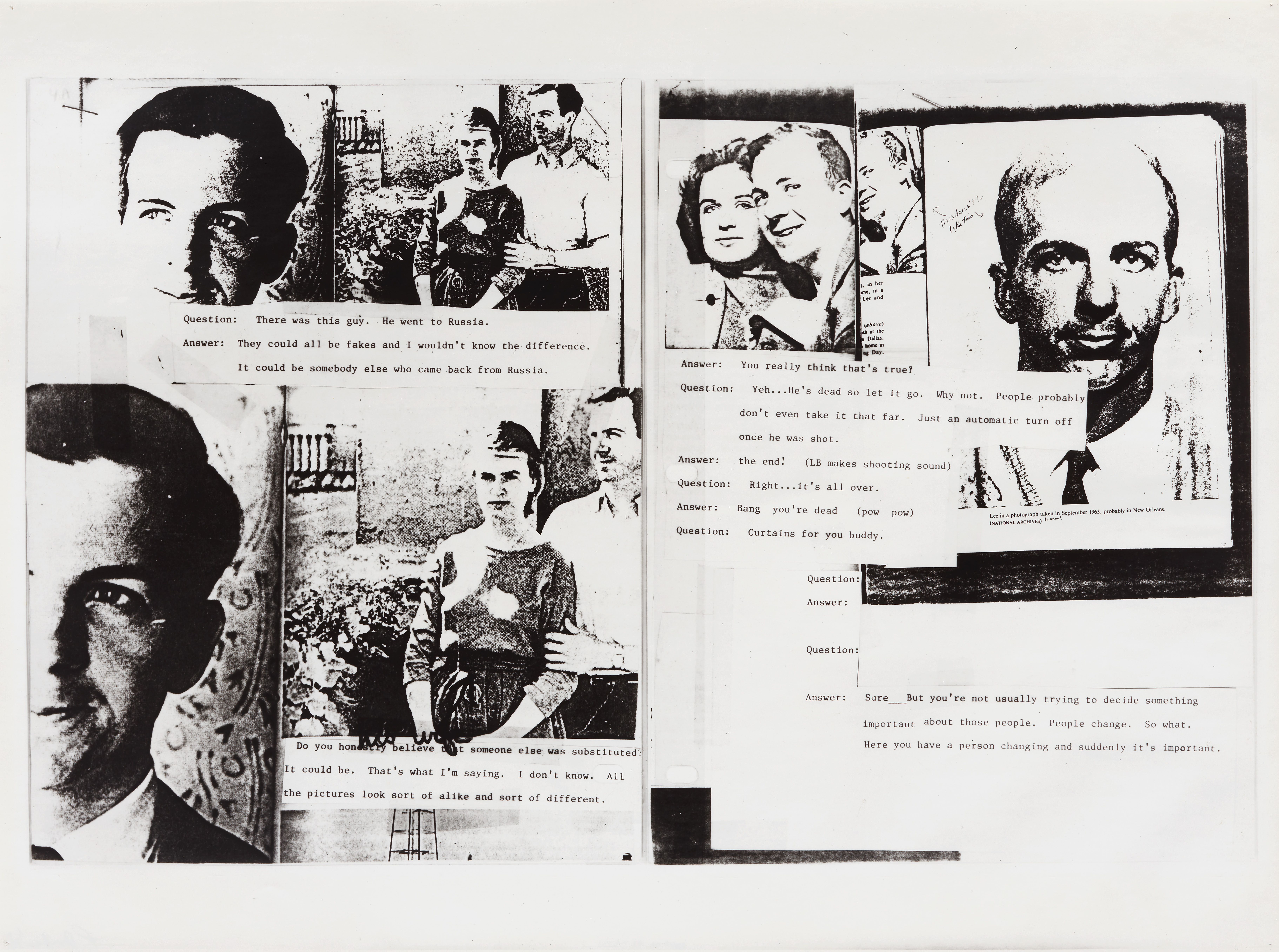
What binds the works, perhaps, is a suspicion of fixed historical narratives, and a probing, often humorous, excavation into the arbitrary nature of truth. This is best exemplified by The Lee Harvey Oswald Interview (1976), a series of cut-and-paste collage works in which the artist interviews herself about U.S. president John F. Kennedy’s alleged killer. Oswald, the 24-year-old marine veteran charged with the assassination, makes a fitting subject: a figure whose image has become a surface of projection, an emblem of Cold War paranoia and shattered American innocence. Through a series of stuttering photocopies, Bacher layers text upon image upon text to create increasingly incoherent photocollages. They have a forensic quality but, rather than clarify, they bleed into a patchwork of confusion—same person? … they’re connected, right? … that’s the story… if he was switched…—acting as triggers for the same kind of slippery desire that underpins the conspiratorial reverb of contemporary America through 9/11 to Covid-19 to the stolen election narrative.
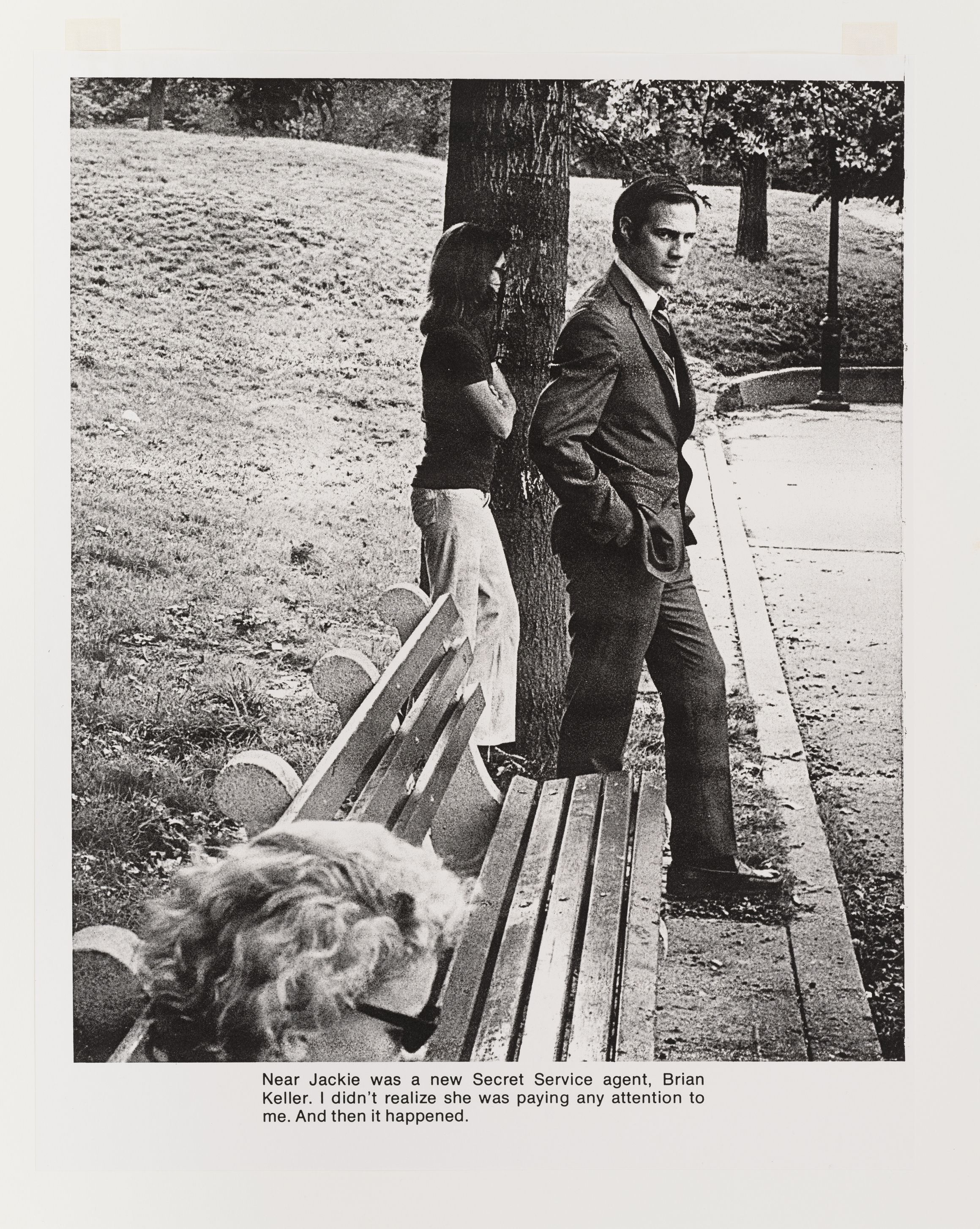
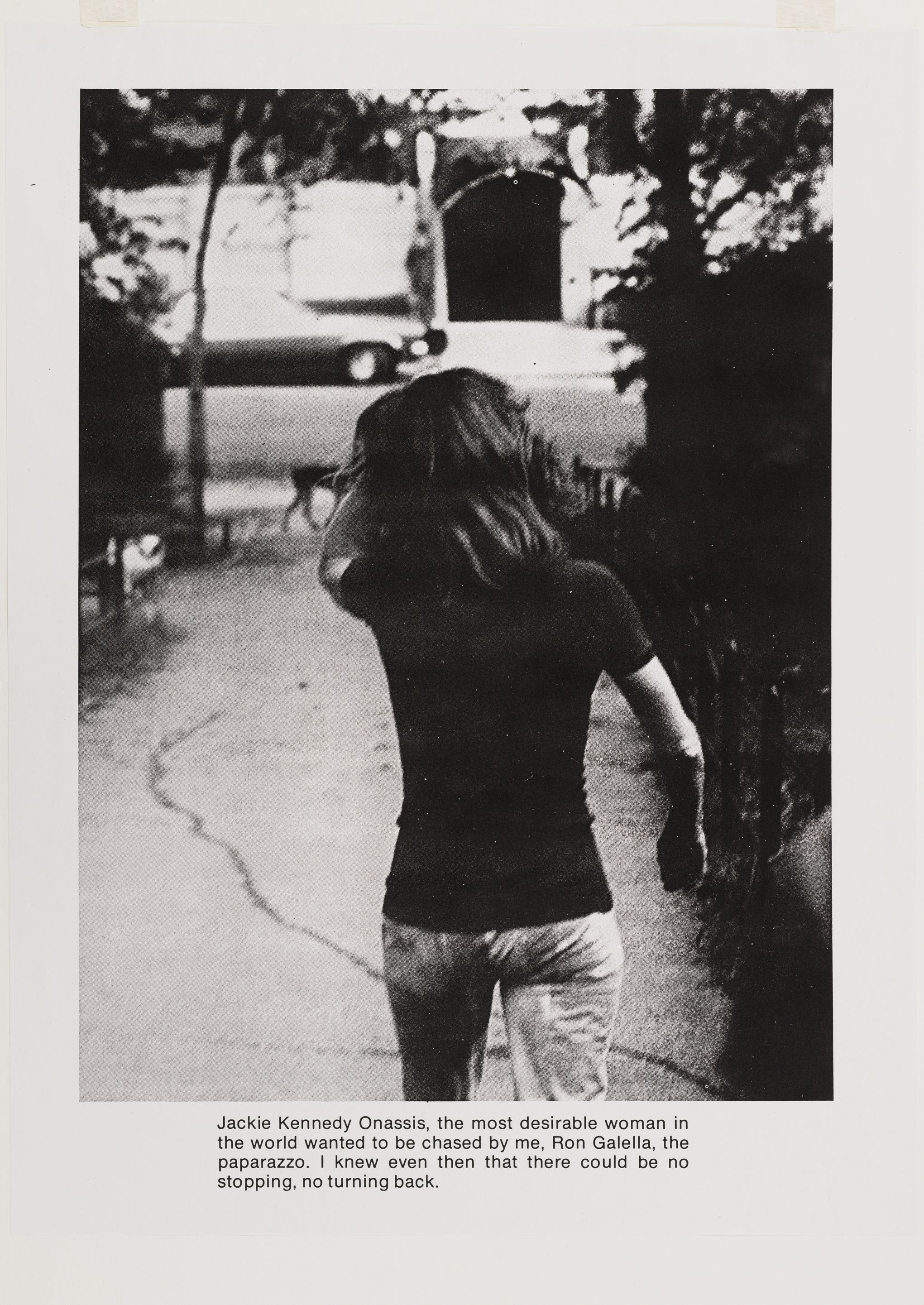

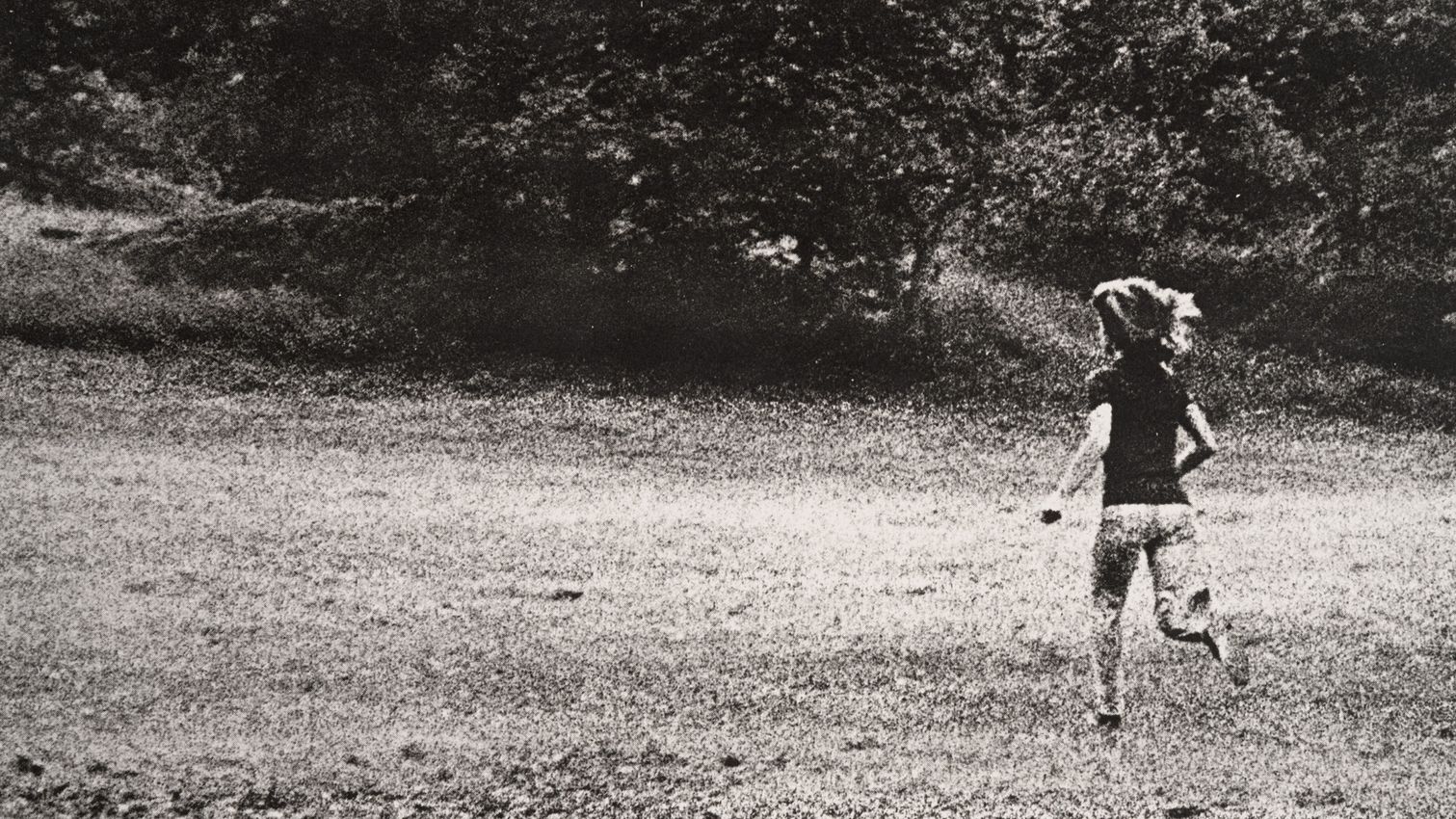
‘It should be that more pictures would tell you more,’ she writes, ‘but what happens is they tell you less?’ It’s a statement that feels eerily relevant in our disorientating digital age, where the abundance of images, from deepfakes to A.I.-generated visuals, makes any claim on reality feel obsolete. Just as Oswald’s alleged body doubles broke the illusion of a single, verifiable subject, our feeds are riddled with a pervasive sense of the uncanny. Across the room, Jackie & Me (1989) reflects like an inverted mirror. In it, a series of images purporting to show Kennedy’s widow, Jackie Kennedy Onassis, running from a paparazzo, captures a fantasy of escape. Bacher recognised that these figures functioned as psychological containers; Jackie as a proxy for the nation’s grief, perpetually fleeing capture, and Oswald as a cipher for its mounting anxieties.
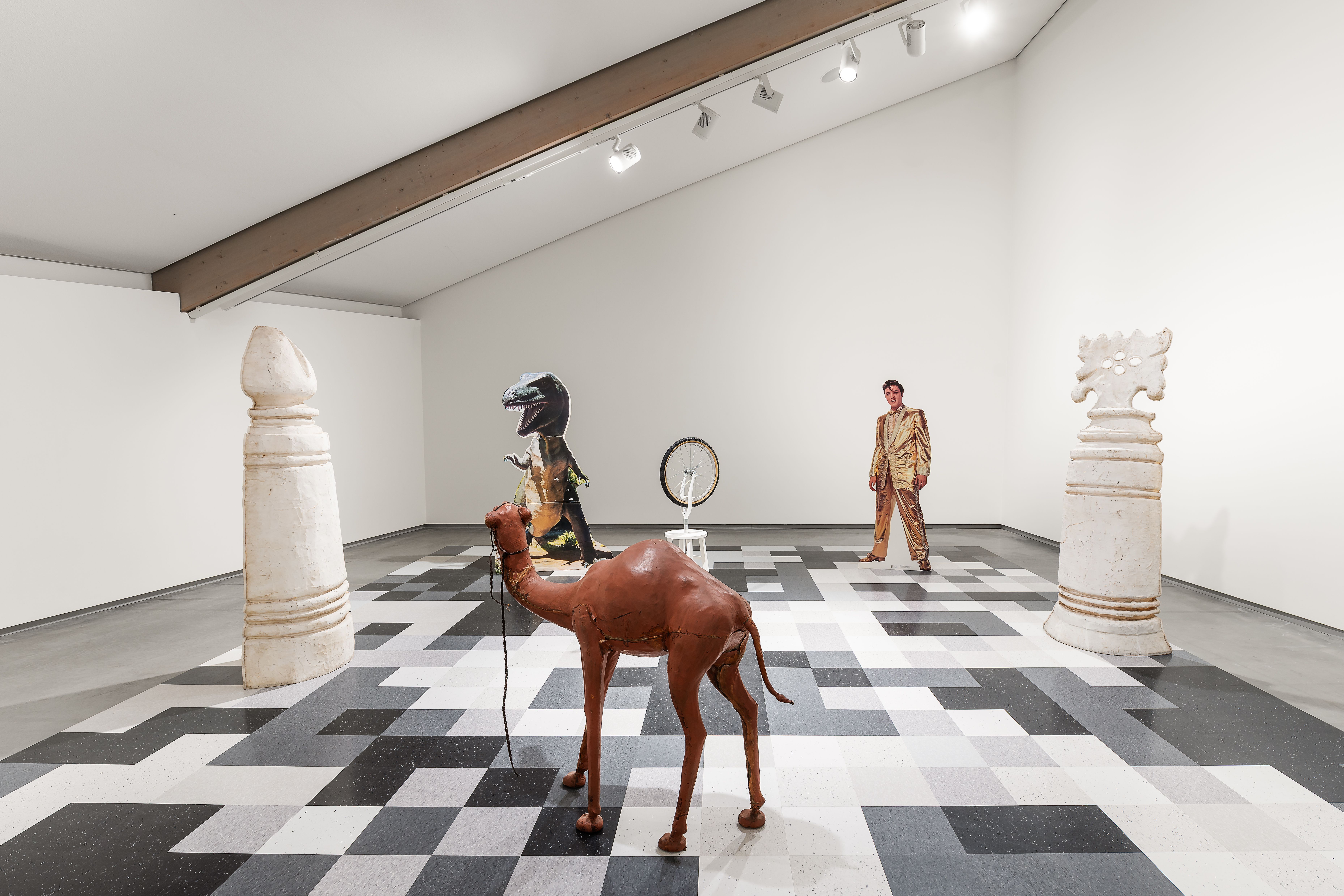
This dynamic is replicated in our contemporary attachments, where subjectivity is replaced by a highly charged, volatile image, constantly reinforced through news cycles, social media and Hollywood. Embalmed in the cultural imagination, the symbolic power of these images becomes a tool. In Chess (2012), traditional pieces are replaced with disparate, unstable figures: a cardboard Elvis, a Tyrannosaurus Rex, and Marcel Duchamp’s Bicycle Wheel, laying bare the structures of power as an absurd game of chance that only appears logical because we collectively agree to follow the rules.
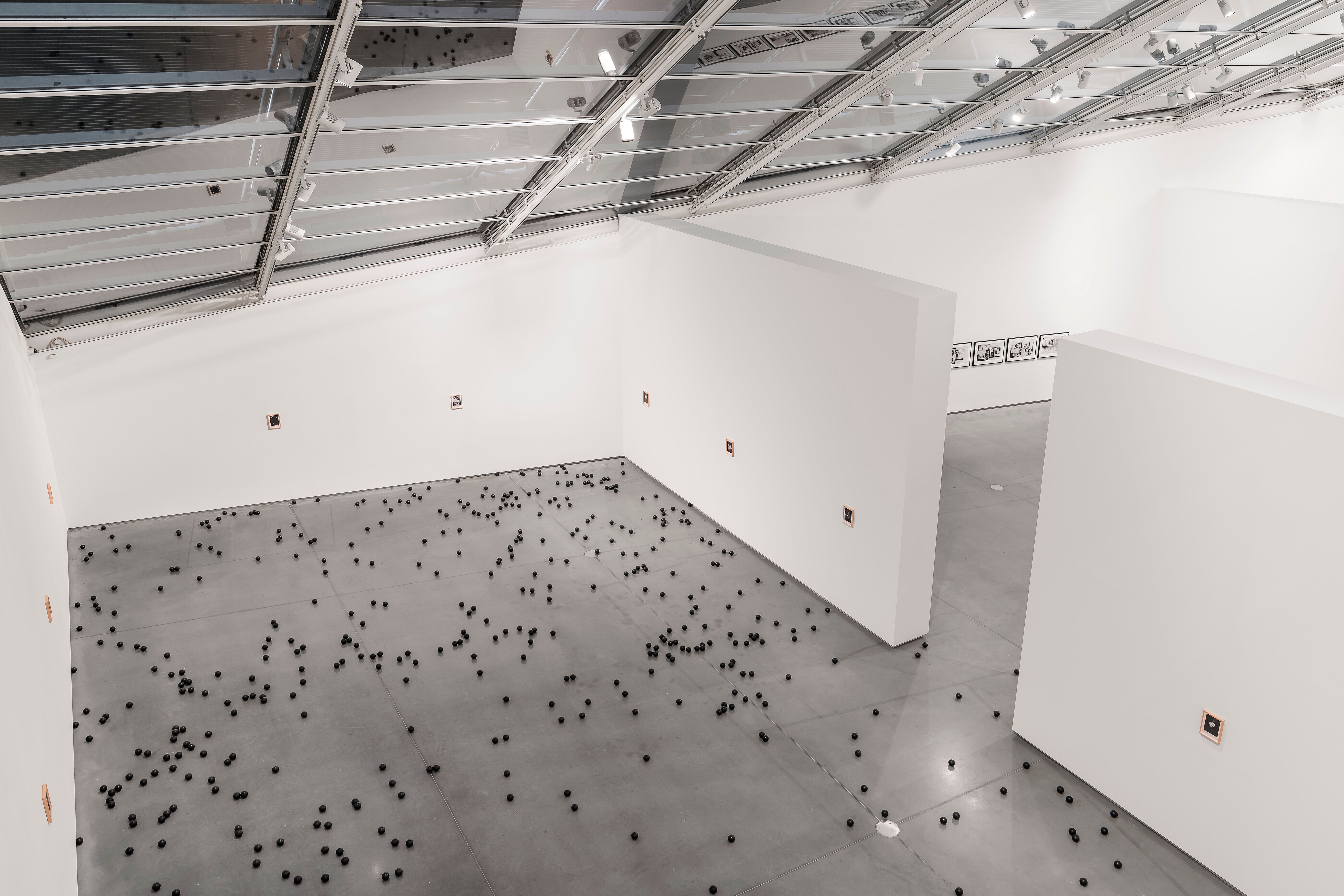

These themes are echoed in Stress Balls (2012), where tools designed to calm us instead swallow the floor space, making the experience of navigating it overwhelming. In their sprawling babel, they resemble galaxies, escalating private anxiety into a cosmic, almost metaphysical dread. They mirror a modern and somewhat ubiquitous feeling that our individual struggles exist inside an incomprehensible, dangerous world. Bacher observed this brutal juxtaposition decades ago in Men at War (1975). These cropped photographs of young men with glistening bodies and salty hair could have been plucked straight from a Jean Paul Gaultier fragrance advert. But zoom in, and the swastika painted on one boy’s chest gives context. It is leisure sandwiched between horror. And isn’t that the space we all occupy now, where the scroll of the thumb transports us from makeup tutorials to genocide?
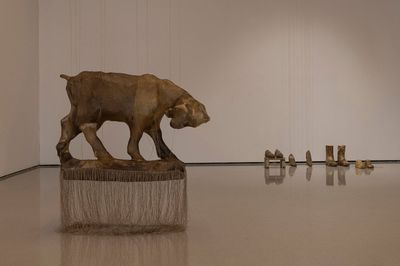
In 2017, the artist enlarged Trump’s famously pointy signature into a looping scrawl that lined the walls of Cushion Works in San Francisco like the erratic ECG of an amped-up cokehead or, in this case, a politically destabilised nation. For Bacher, the stabilising force was always humour. And when the monstrous shadow cast on the wall turns out to be a plywood horse with a party hat and a fake tail, what else is there to do but take off your trousers and laugh? —[O]
Lutz Bacher: Burning the Days is on view at Astrup Fearnley Museet in Oslo until 4 January 2026.
Main image: Lutz Bacher, Jackie & Me (1989) (detail). Print. Astrup Fearnley Collection, Oslo. Courtesy Estate of Lutz Bacher and Galerie Buchholz.






A respected voice in contemporary art discourse.
Focusing on ambitious storytelling and insightful art-world commentary. Ocula Magazine publishes in-depth interviews, critical essays and timely analysis on the artists, exhibitions and ideas driving the global art world.
Learn more about Ocula Magazine
Showcasing the best of the art world.
Ocula partners with galleries from around the world to highlight their artists, artworks and exhibitions. Gallery membership is by application and invitation, with each member vetted by an independent panel.
Learn more about Ocula Membership
Specialises in the sale of major artworks.
Led by a team with deep ties to the world’s leading auction houses, galleries and collectors. Ocula’s advisory team offers bespoke services to high-net-worth clients from around the world who are looking to acquire the best of contemporary and modern art.
Learn more about our team and services