





Beyond ‘The Rose’, Jay DeFeo Wins a New Generation of Fans
As a new exhibition of her work opens in New York, the San Francisco artist’s monumental paintings continue to fascinate today’s artists, filmmakers and poets. Save to My Ocula
‘This is an artist who could really do anything,’ says Trisha Donnelly of the late Jay DeFeo, as Garnets on the Boulder: Jay DeFeo Paintings of the 1980s opens at Paula Cooper Gallery in New York. Donnelly (concurrently the subject of a one-person exhibition at The Drawing Center) is an artist who makes art critic Jerry Saltz feel like a self-proclaimed ‘dorky fanboy’, so enchanting is the effect of her ice-cool, anti-didactic conceptualism (for one exhibition, her press release was simply a blank sheet of paper) and her unmatched lore (she famously rode into the opening of one of her gallery exhibitions on a white horse and delivered a statement of surrender). But it is DeFeo’s paintings that turn Donnelly herself into an endearing dork as she introduces (along with curator Jordan Stein) the new exhibition at Paula Cooper to an assembled crowd on a cold autumn morning: ‘You know there are artists where you see their work and you think, okay, I quit.’
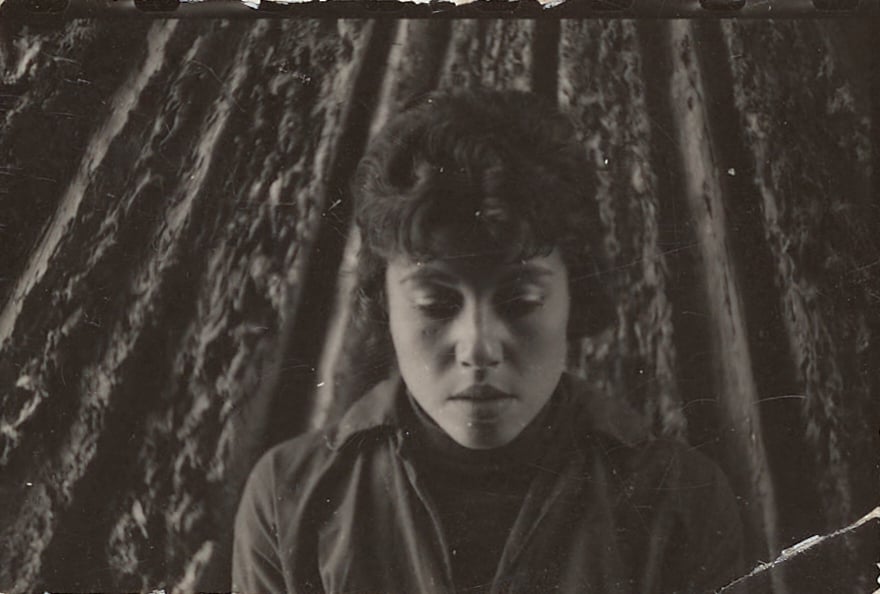
DeFeo’s paintings have in recent years captivated a younger generation of fellow conceptual artists (including Donnelly). DeFeo moved to the Bay Area as a child and made it her lifelong residence, minus a brief tour of Europe (after which she remarked that ‘the old crumbly walls [of Parisian buildings] … looked like ready-made abstract expressionist paintings’), and a short stint in New York City (which she called ‘the most foreign place I’d seen in all my travels … I loved it’). She settled into a 1950s art community in San Francisco whose tightknit nature and slower pace made it quite distinct from the worlds of Europe and New York, where exhibition calendars dictated how and when artists make work. ‘It was a much different time, and San Francisco artists were somewhat feral,’ Stein reflects. ‘The art world, such as it is now, was truly non-existent. DeFeo lived a modest, bohemian lifestyle.’
That world included time spent with the Beat poets who made San Francisco their pilgrimage. Alongside novelist Jack Kerouac and poet and painter Lawrence Ferlinghetti, DeFeo attended poet Allen Ginsberg’s historic 1955 reading of Howl at Six gallery (which was co-founded by DeFeo’s husband, Wally Hedrick). It was this association with the Beats that initially brought the international spotlight to DeFeo, six years after her death in 1989 from lung cancer, aged 60.
DeFeo is perhaps best known for her monumental sculptural oil painting The Rose (1958–1966), currently on view at the Whitney Museum (the piece is in its permanent collection). The Whitney acquired and restored the work in 1995, when the NYC museum staged the exhibition Beat Culture and the New America, 1950–1965, a show that travelled to other institutions but was largely panned (New York Times critic Michael Kimmelman stated, of its hodge-podge perspective, ‘History may be messy, but it is not this messy.’)
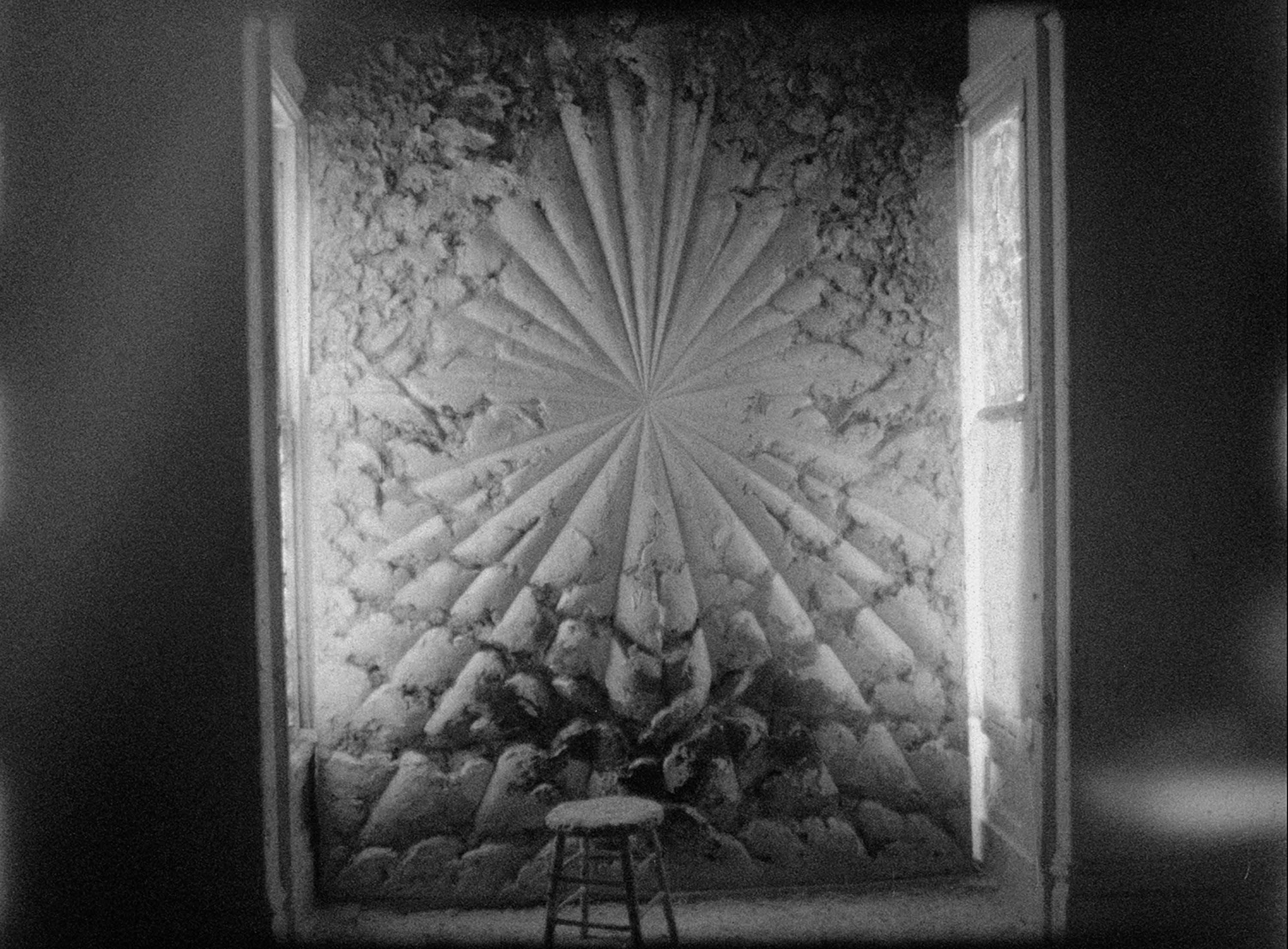
Still, The Rose bloomed in the mud, becoming the star of the exhibition and surfacing a dramatic narrative arc that makes the painting feel less like an artwork and more like a beleaguered heroine in a Victorian novel. The Rose began life in the window of DeFeo’s Fillmore Street apartment, where, according to Stein, ‘It blocked most of the bay window. She painted it in the window so she could see the paint through the raking light that came in through the side.’
Composed on an almost 11-foot-tall, eight-foot wide canvas, and eventually weighing some 2,000 pounds, the piece—a startling, pale-toned starburst form that could plausibly have been made by aliens—was worked on by DeFeo for eight years. In an oral history conducted in 1975 for the Archives of American Art, Smithsonian Institution, DeFeo stated: ‘It was the work of a sculptor as well as a painter, because of the nature of the material. It actually had to be carved and hacked. It was a very hard physical job. It was done with a combination of building up and tearing back during every stage of the game. More than once, it was removed [from] the original canvas.’
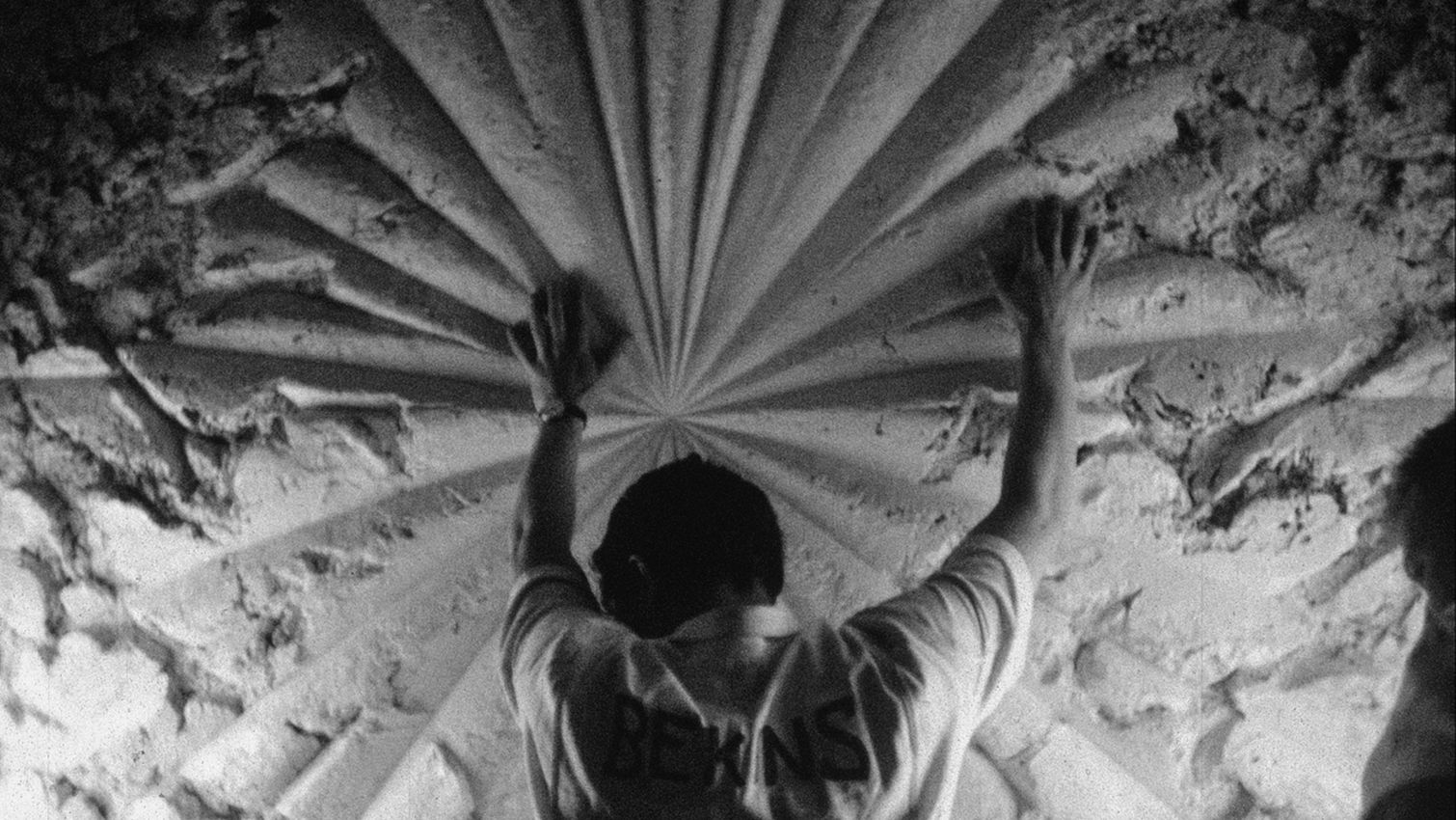
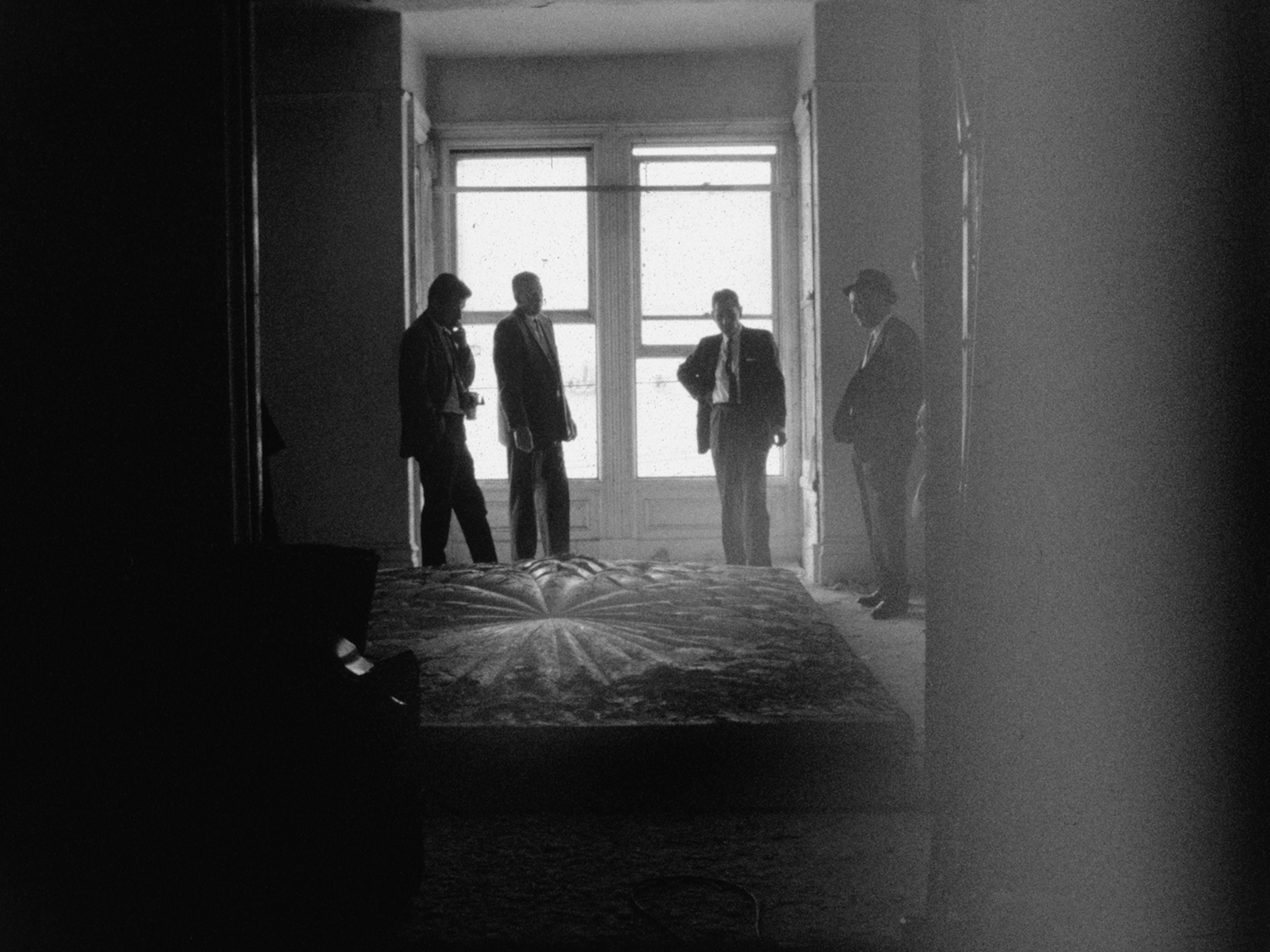
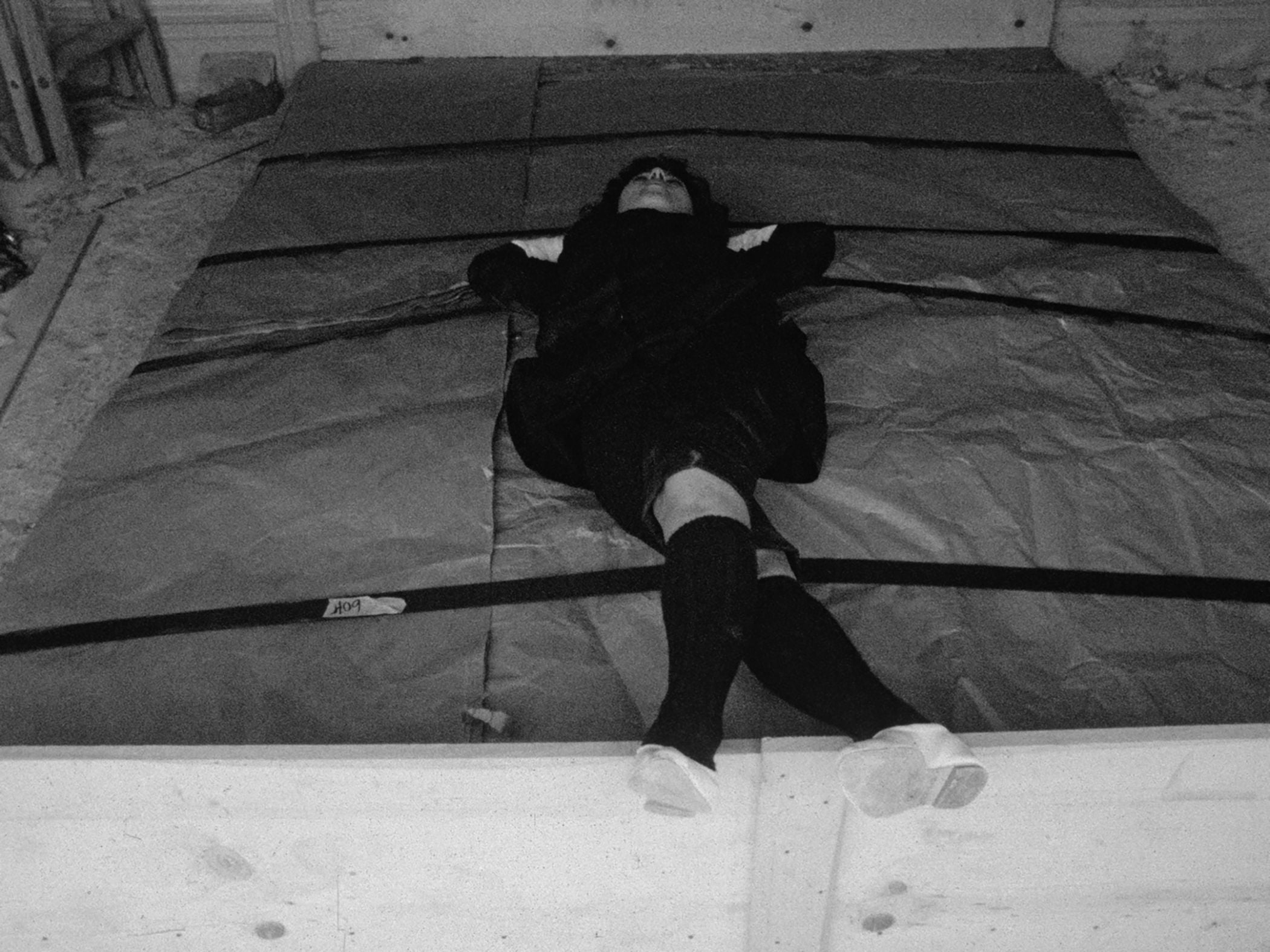
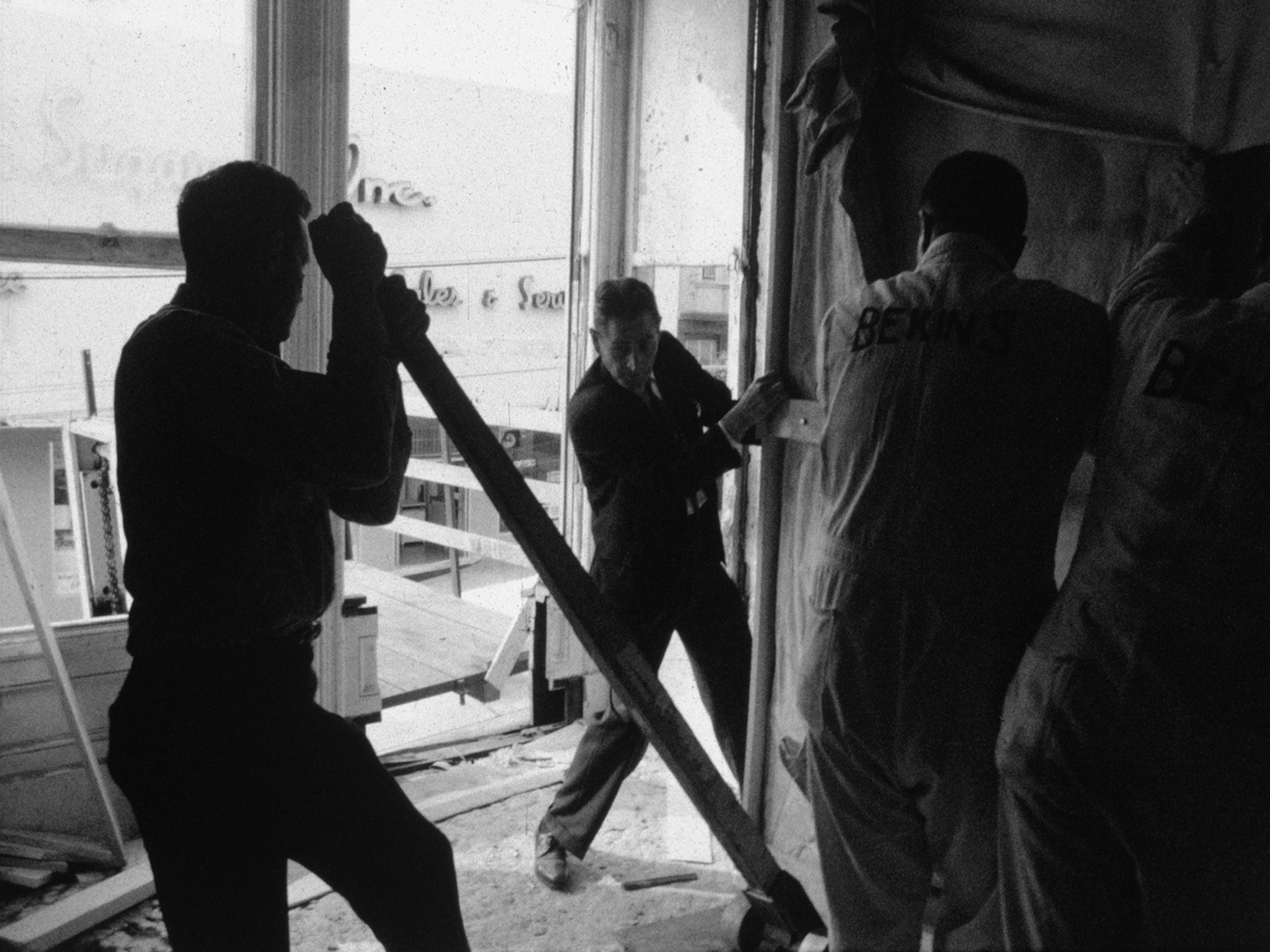
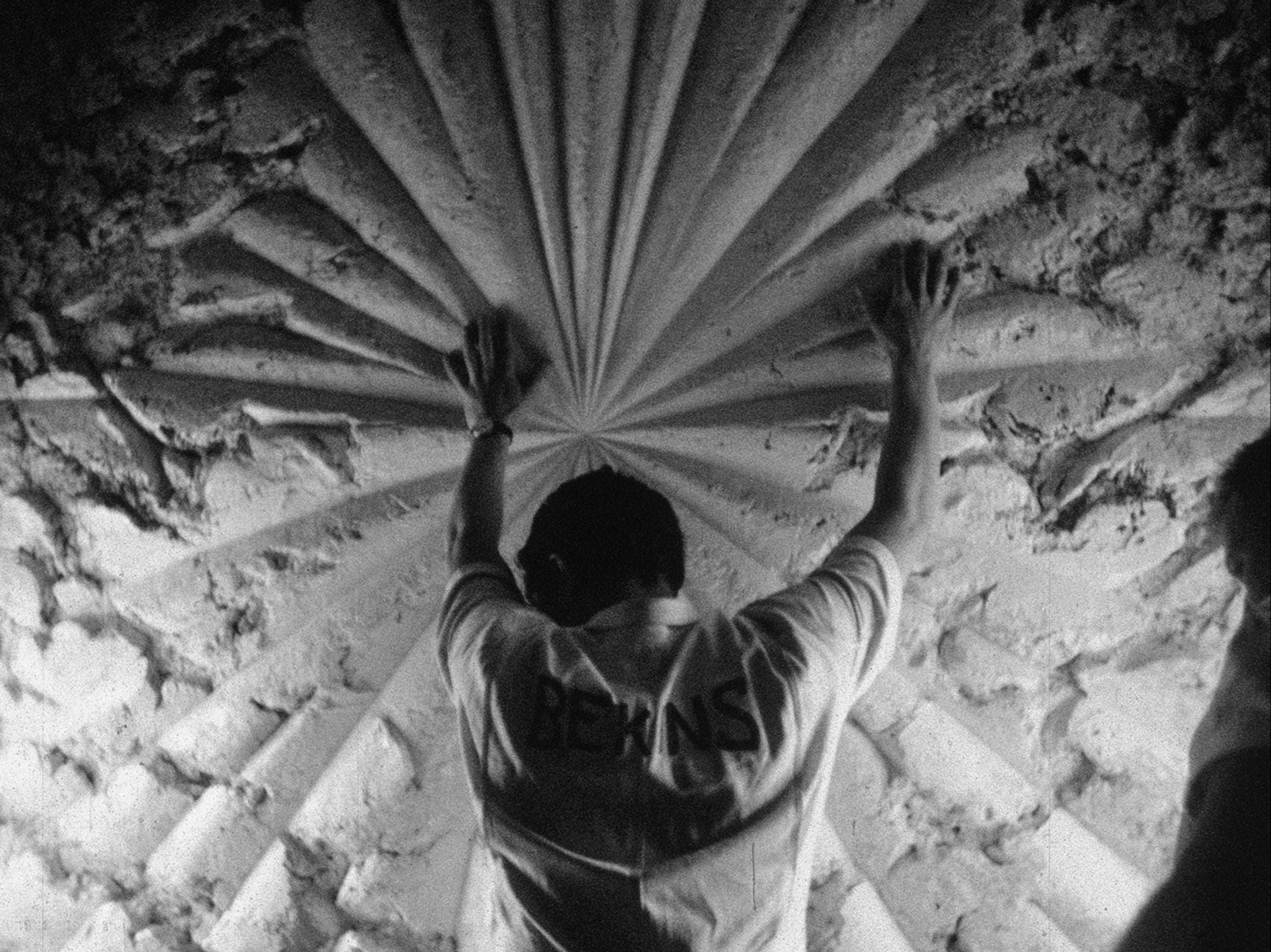
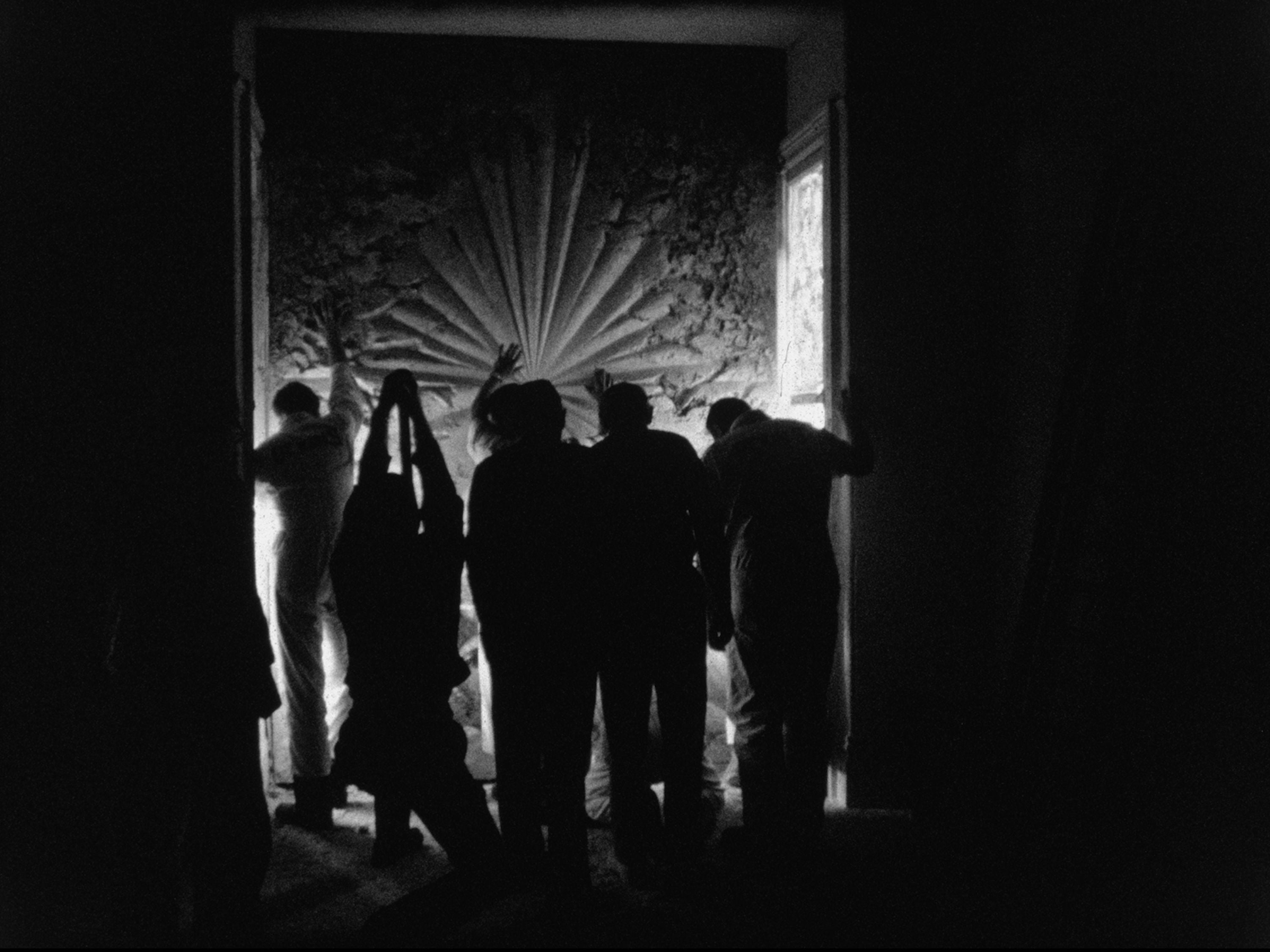
Eventually, DeFeo’s apartment building was sold and her new landlord doubled her rent. According to Stein, ‘The painting had to go.’ Special movers were hired to cut The Rose out of the window physically and, befitting the work’s star quality, this process was documented by fellow San Franciscan artist Bruce Conner for his luminous short film THE WHITE ROSE (1967). Conner’s signature editing was so significant that actor and director Dennis Hopper stated that the artist ‘...changed my entire concept of editing. In fact, much of the editing of Easy Rider came directly from watching Bruce’s films’.
From there, The Rose went on an epic journey, first being moved to the Pasadena Art Museum, where it was stored in a small room. Then, in 1969, it was exported to a conference room at the San Francisco Art Institute. At the Institute, the work was eventually sequestered and partially sealed behind a wall for protection, like Miss Havisham abandoned in her tattered wedding dress. Decades later, when the Whitney decided it was an essential work to be included in their Beat Culture show, it was at last removed and restored.

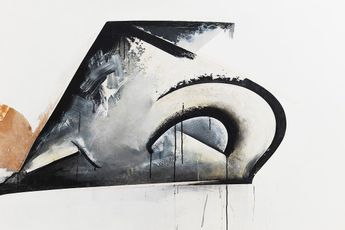
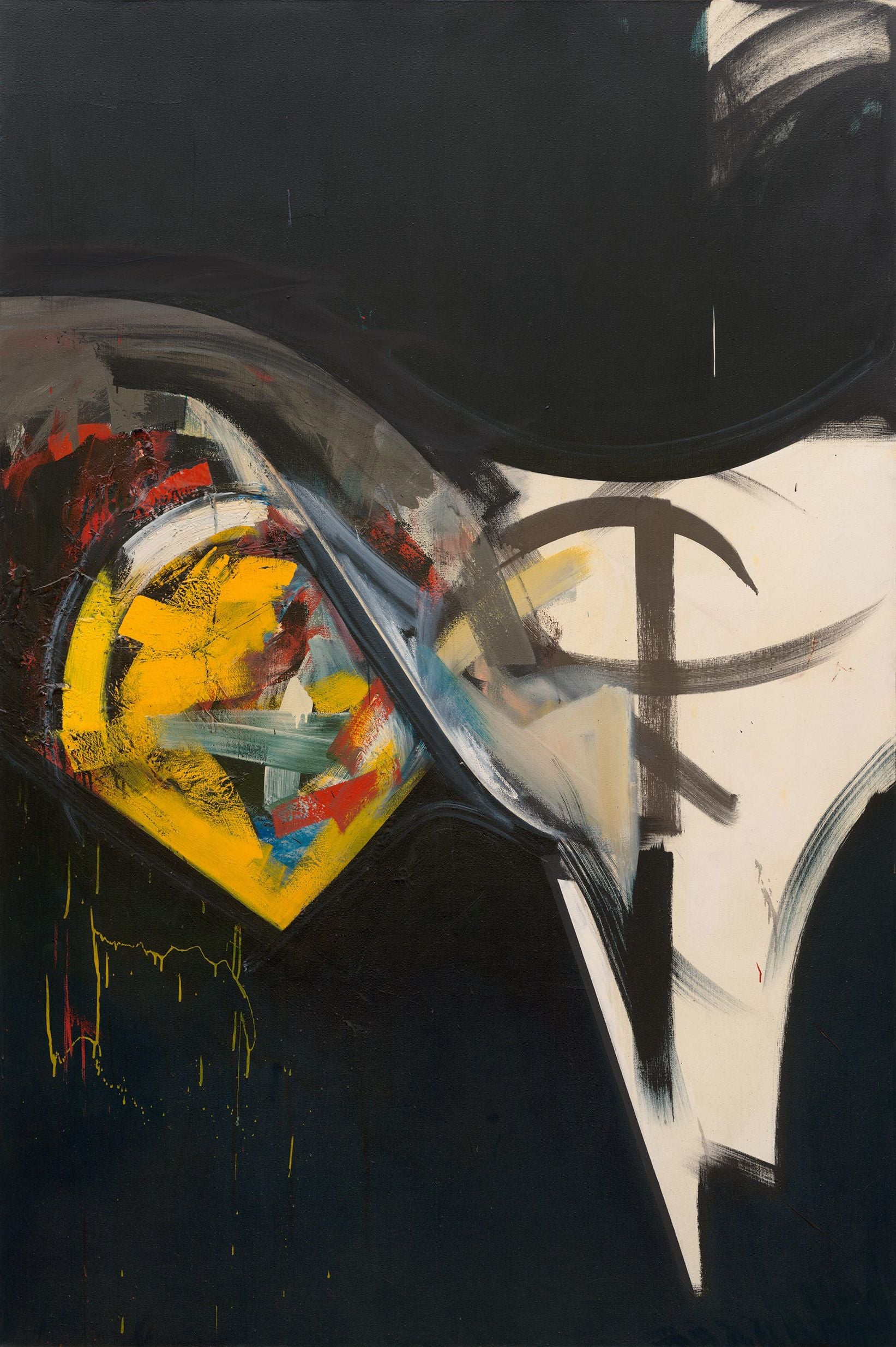
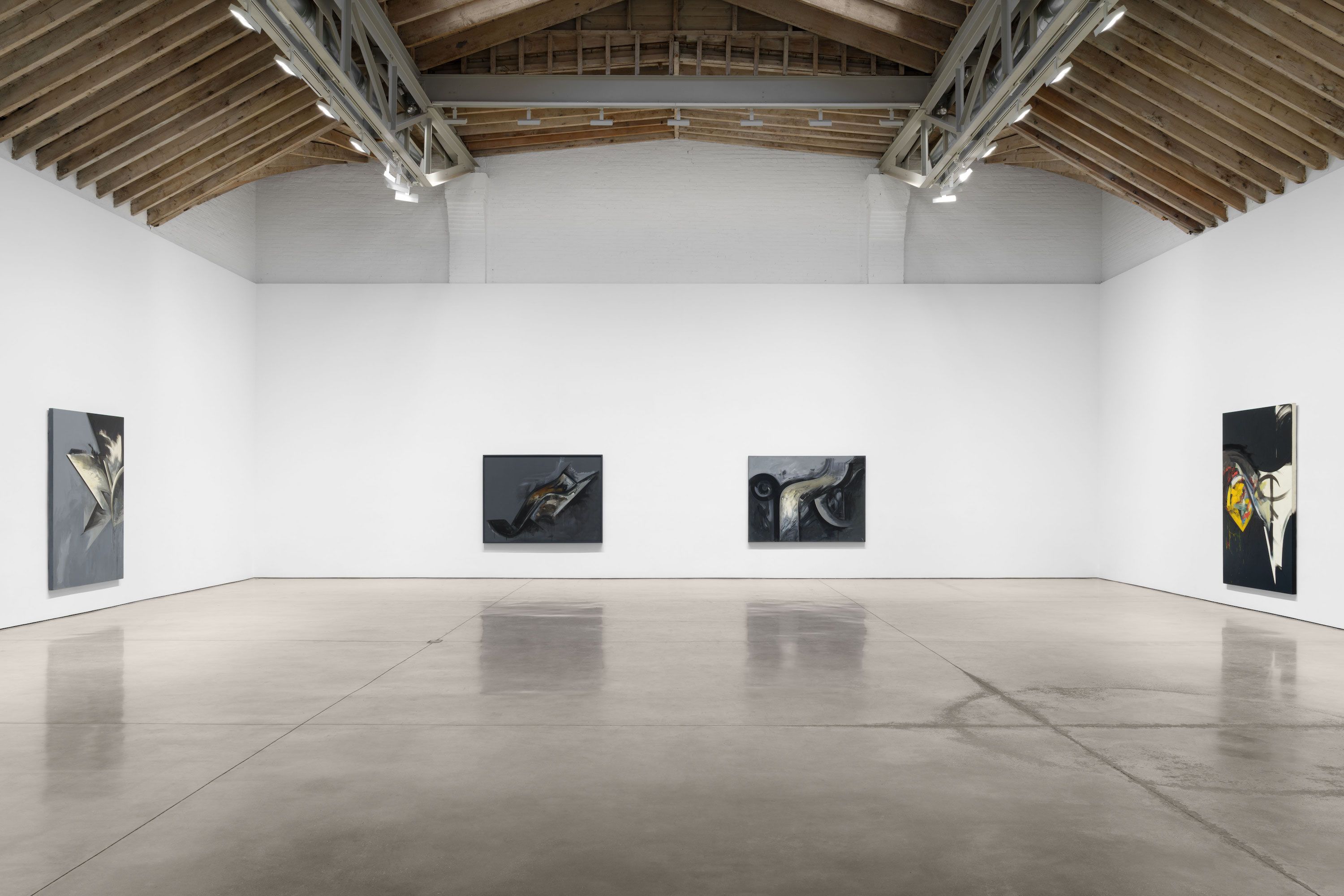
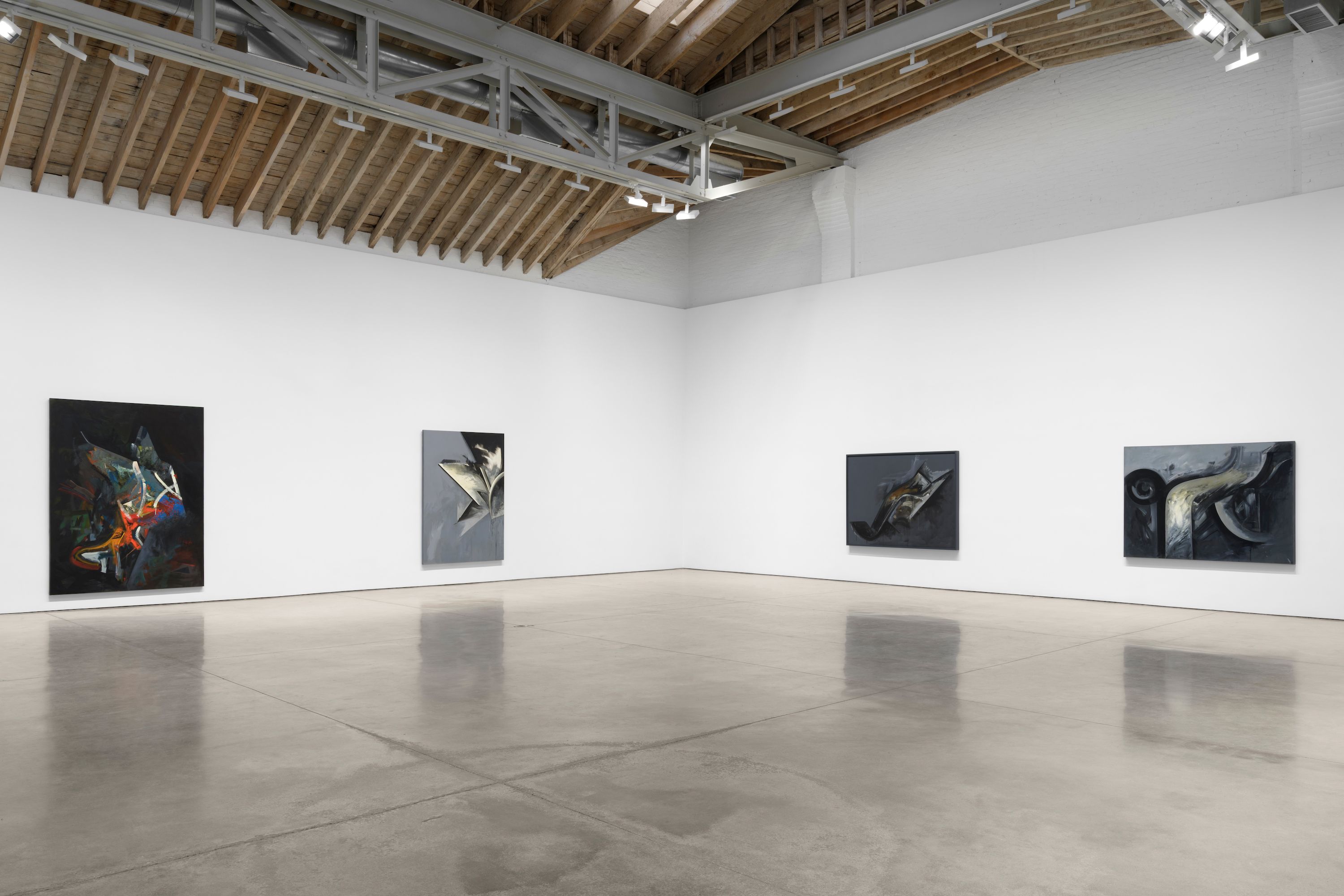
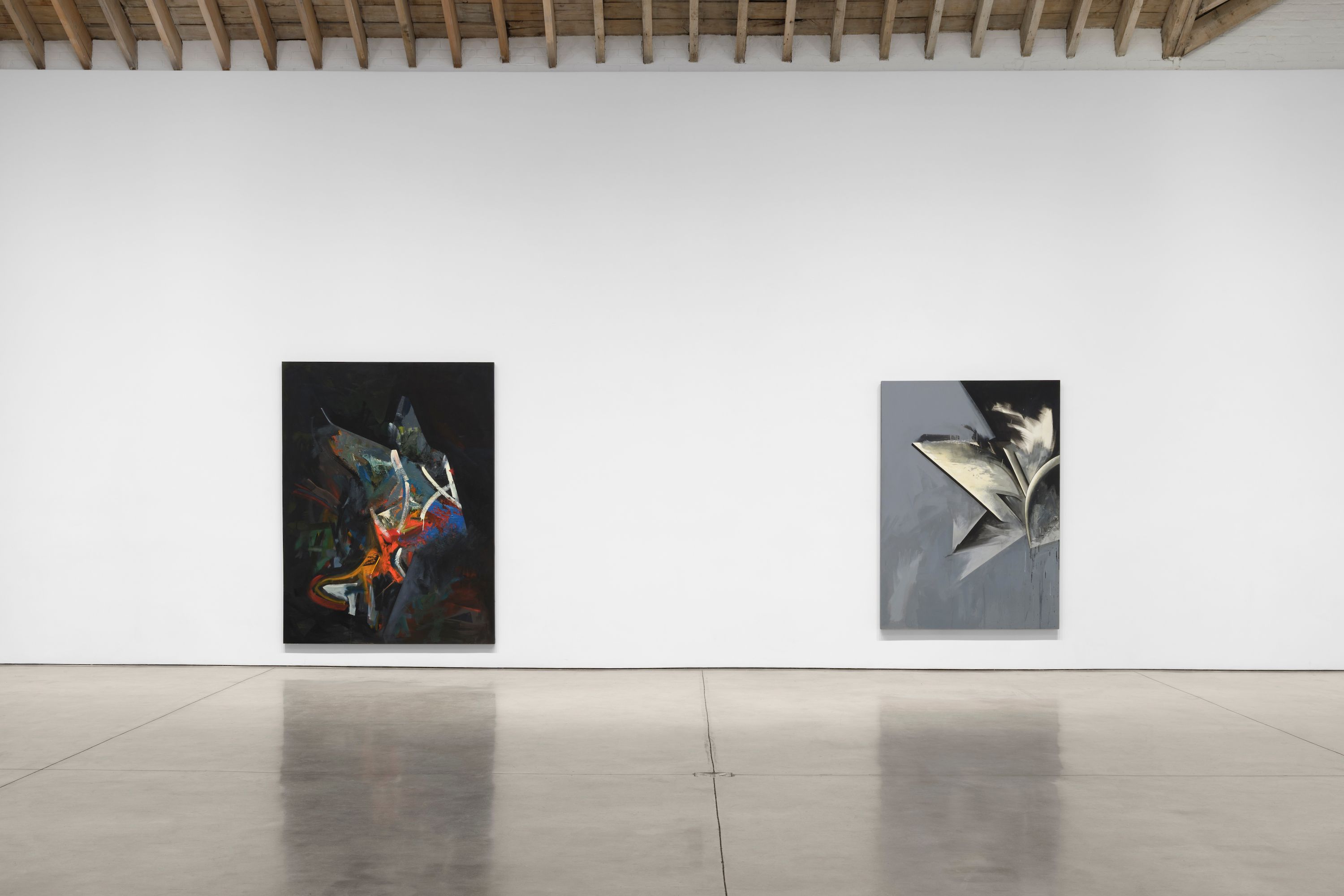
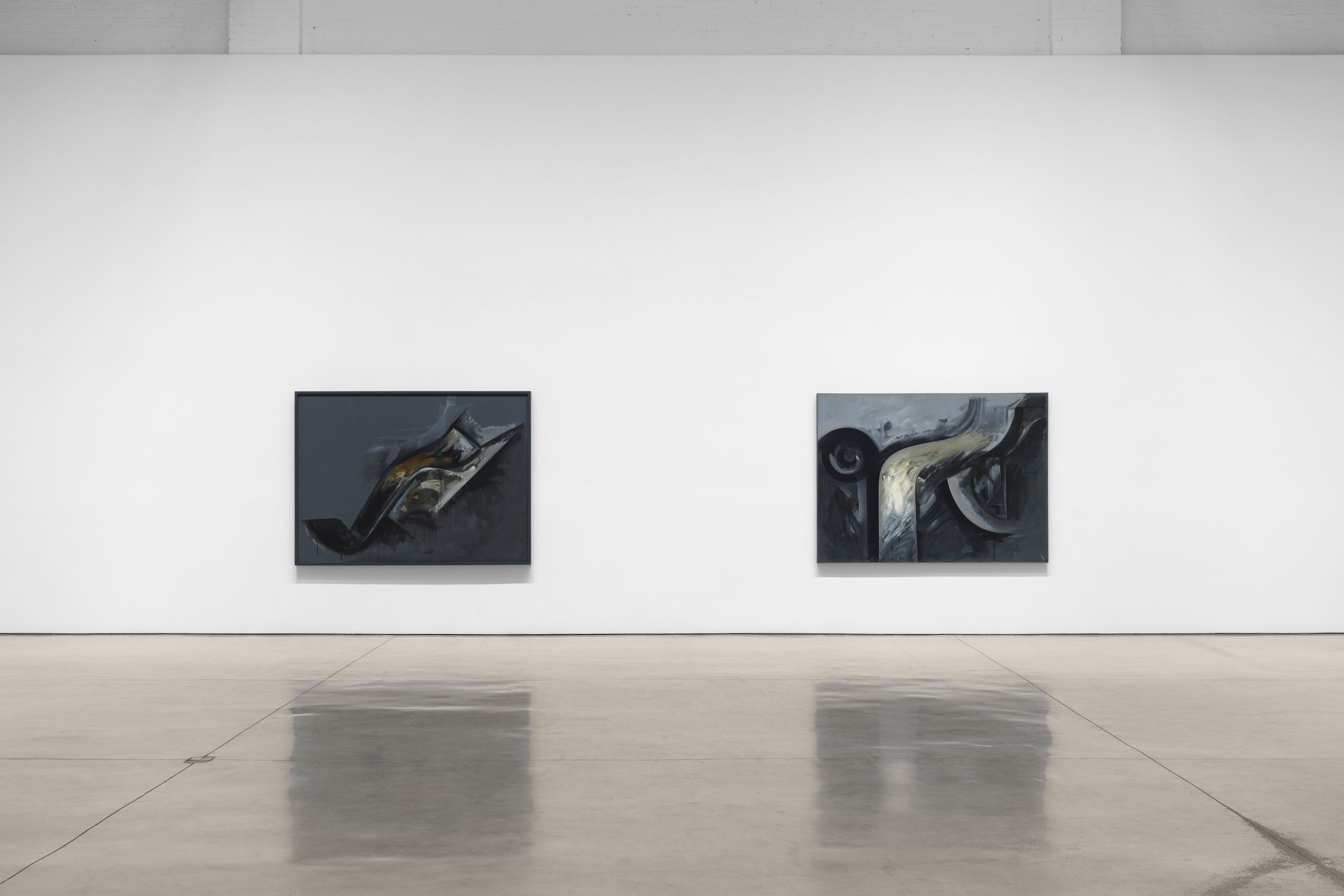
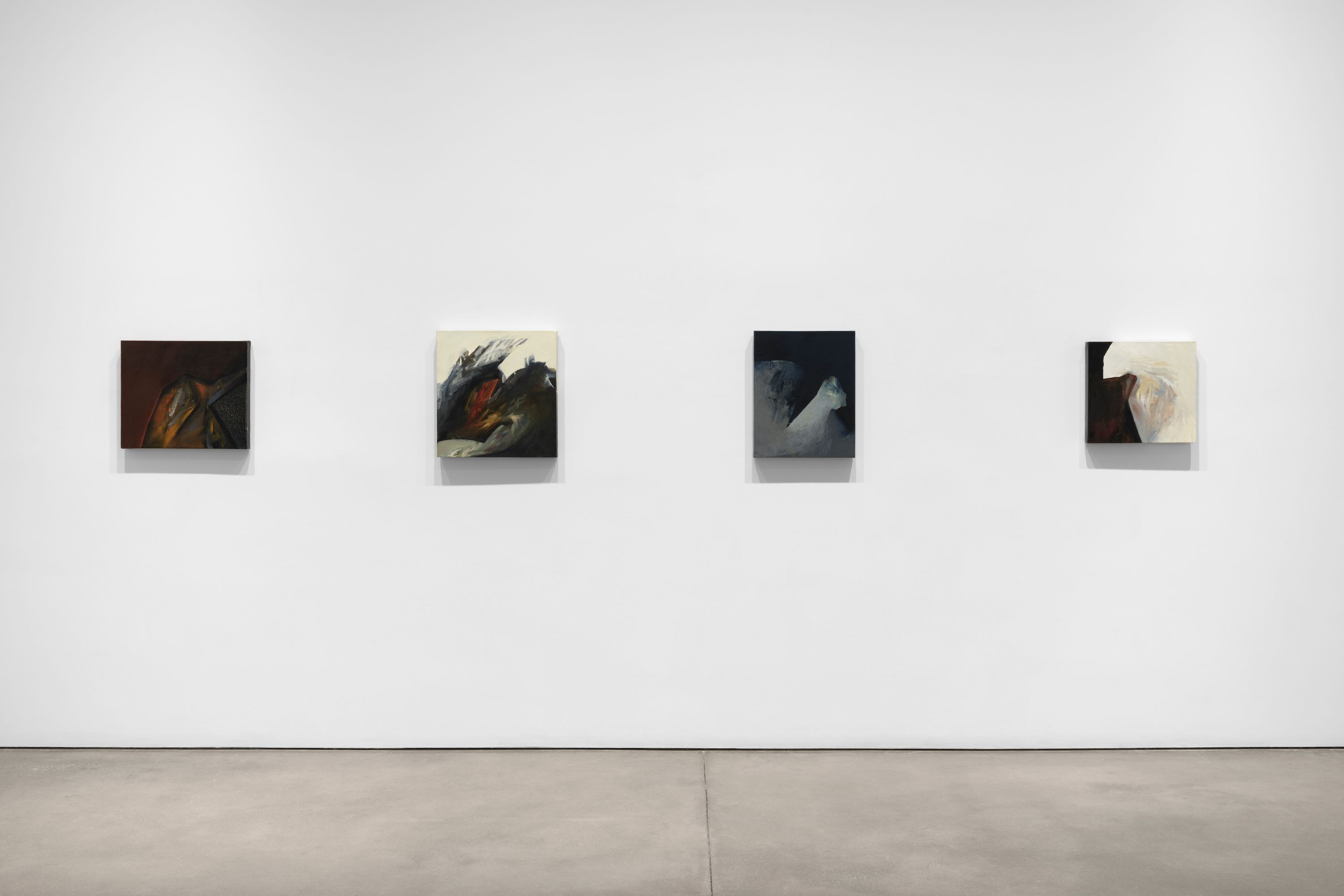
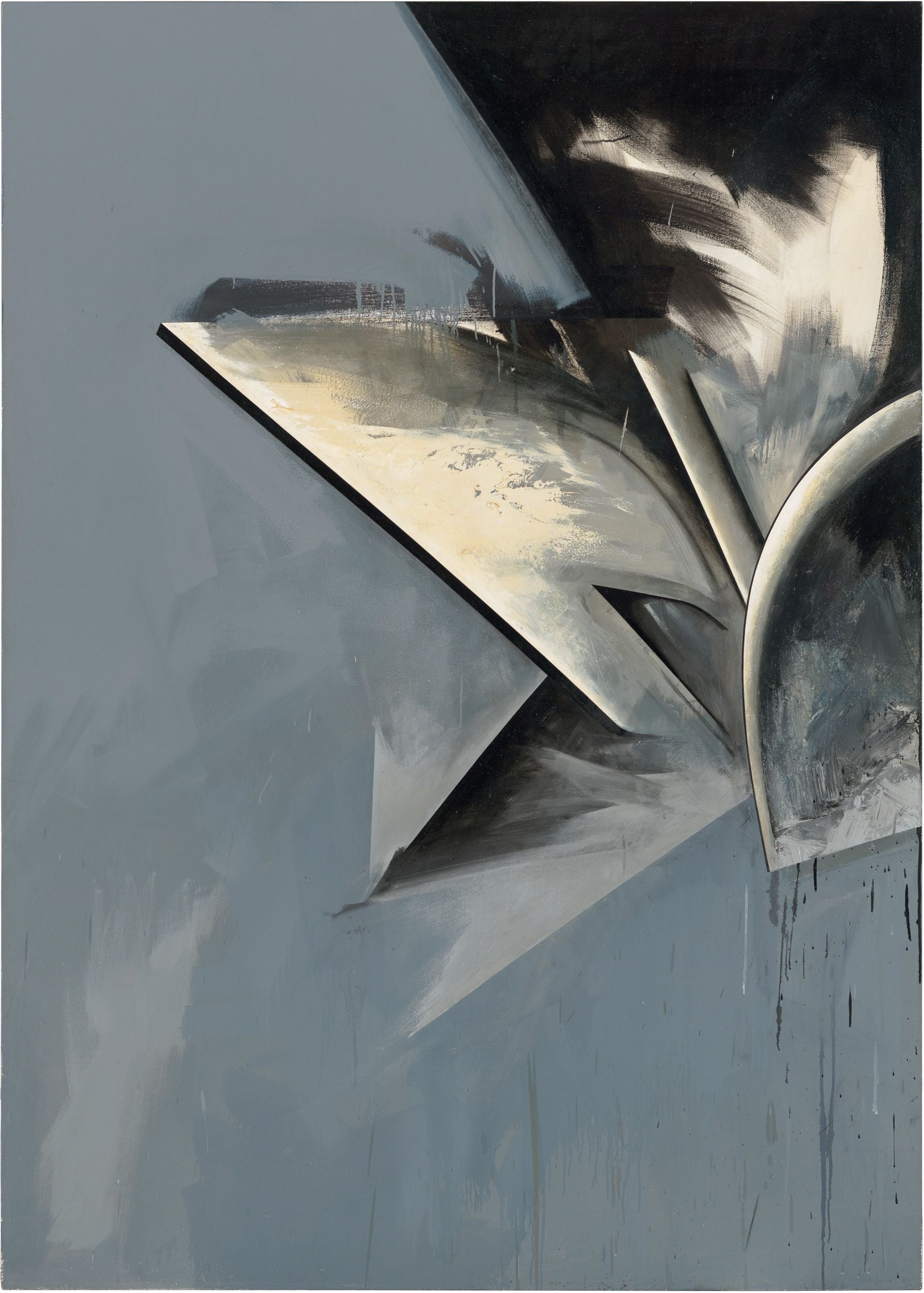
In time, the light that found The Rose has landed on the rest of DeFeo’s works, leading to exhibitions like this one at Paula Cooper. One standout painting here is a large oil-and-tape on canvas titled Verdict No. 1 (1982). A lifelong, diehard abstract expressionist, DeFeo depicts sunset-toned triangular shapes against a beige background, with odd landscape-like mountainous forms, black, white and red angular racing stripes composed of tape, and gobs of gooey paint. Only a few cheeky drip marks reveal a nod to DeFeo’s New York Ab-Ex forebears, of whose influence she remarked, ‘Due to all the national publicity, everybody dripped a bit. You know, you couldn’t help it.’ During the walkthrough, Stein gives more background information on the piece: ‘Studio photographs reveal that she tore a page from Scientific American of the nose of a plane breaking the sound barrier.’ Of the source material for the work, Donnelly notes: ‘Sometimes she reminds me of Lee Lozano, who, at the same time, was fascinated with Scientific American.’
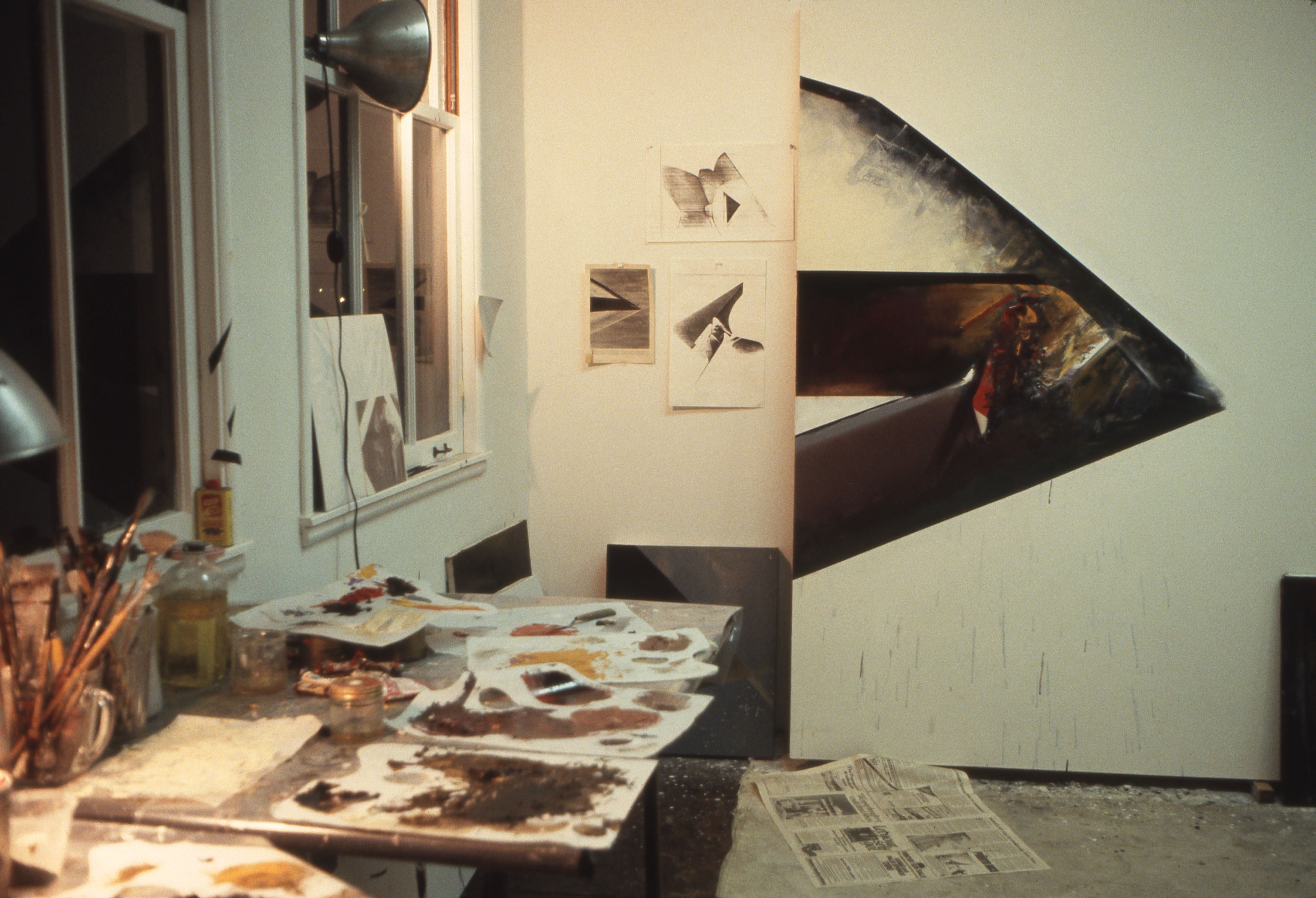
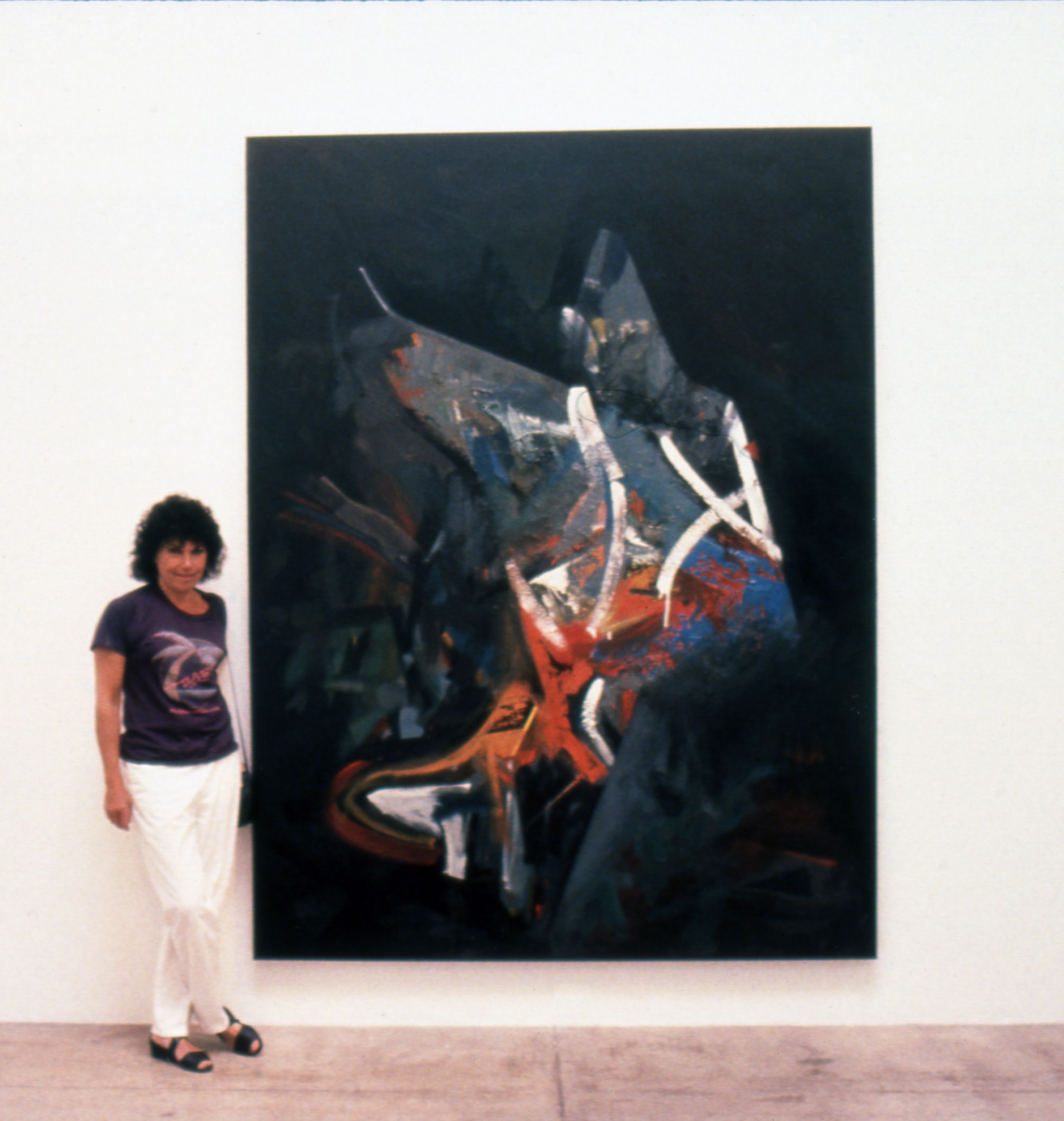
Bizarrely, as remarkable as they are when viewed in person, certain paintings seem to benefit from being looked at again as photographic images on a screen. In another scorching oil-and-tape abstraction, La Brea (1984–1985). DeFeo depicts a kind of phantom light that is revealed in all its multidimensionality when one can zoom in and out on its layered forms. In this manner, the painting resembles both itself and the memory or replication of itself.
Memory is deeply related to prescience, and that was a gift particular to DeFeo. In a taped interview from 2013. Leah Levy, executor of DeFeo’s estate, reveals the artist always knew The Rose would have an impact on the world, and that both she and the work would not be forgotten. At the end of her life, DeFeo told Levy she saw a ‘scenario’ wherein: ‘I’m in another life, and I’m walking in a museum and I come upon The Rose, and I see someone looking at it. And I walk up to them and nudge them and say, “I did that”.’ —[O]
Main image: Bruce Conner, THE WHITE ROSE (1967) (still, detail). 16 mm to 35 mm blow-up, black and white, music by Miles Davis. 7 min. Digitally restored 2021. © Conner Family Trust, San Francisco. © 2021 The Jay DeFeo Foundation/Artists Rights Society, New York. Courtesy Paula Cooper Gallery, New York.





A respected voice in contemporary art discourse.
Focusing on ambitious storytelling and insightful art-world commentary. Ocula Magazine publishes in-depth interviews, critical essays and timely analysis on the artists, exhibitions and ideas driving the global art world.
Learn more about Ocula Magazine
Showcasing the best of the art world.
Ocula partners with galleries from around the world to highlight their artists, artworks and exhibitions. Gallery membership is by application and invitation, with each member vetted by an independent panel.
Learn more about Ocula Membership
Specialises in the sale of major artworks.
Led by a team with deep ties to the world’s leading auction houses, galleries and collectors. Ocula’s advisory team offers bespoke services to high-net-worth clients from around the world who are looking to acquire the best of contemporary and modern art.
Learn more about our team and services