





Reality Check
The Singaporean government is investing massively in arts and culture, but locally created art is at its most fascinating when it co‑exists alongside the city state’s ever‑evolving identity. Save to My OculaHere in the U.K., cuts to the arts have been brutal in recent years. So much so, that anyone receiving £60 from the government to spend on visiting art and culture, with no strings attached, might think they’re experiencing some kind of hallucination. Yet this is now the reality for every citizen in Singapore, regardless of age or income, until at least 2028.
The SG Culture Pass (worth a total $300 million SGD) was launched with much fanfare last year by the Southeast Asian island’s National Arts Council. The idea is that by getting all citizens, regardless of their economic background, into cultural spaces where they might not imagine they are welcome, those citizens are more likely to return. While some countries—including South Korea, France, Spain and Germany—offer comparable passes for young people or those in a lower-income bracket, it is virtually unheard of for every single citizen to receive one.
Singapore has undergone rapid, state-driven modernisation since its independence just 60 years ago. The arrival of a centralised cultural scheme, one that goes beyond the basic tenets of survival, is in keeping with an administration that has consistently kept tight social and political control while delivering exceptional public services. As I walked through Singapore’s Chinatown on a warm January evening during the state-organised annual Singapore Art Week (SAW), where galleries, museums and artist-run spaces collectively present hundreds of new exhibitions across the city, I could see these services in motion.
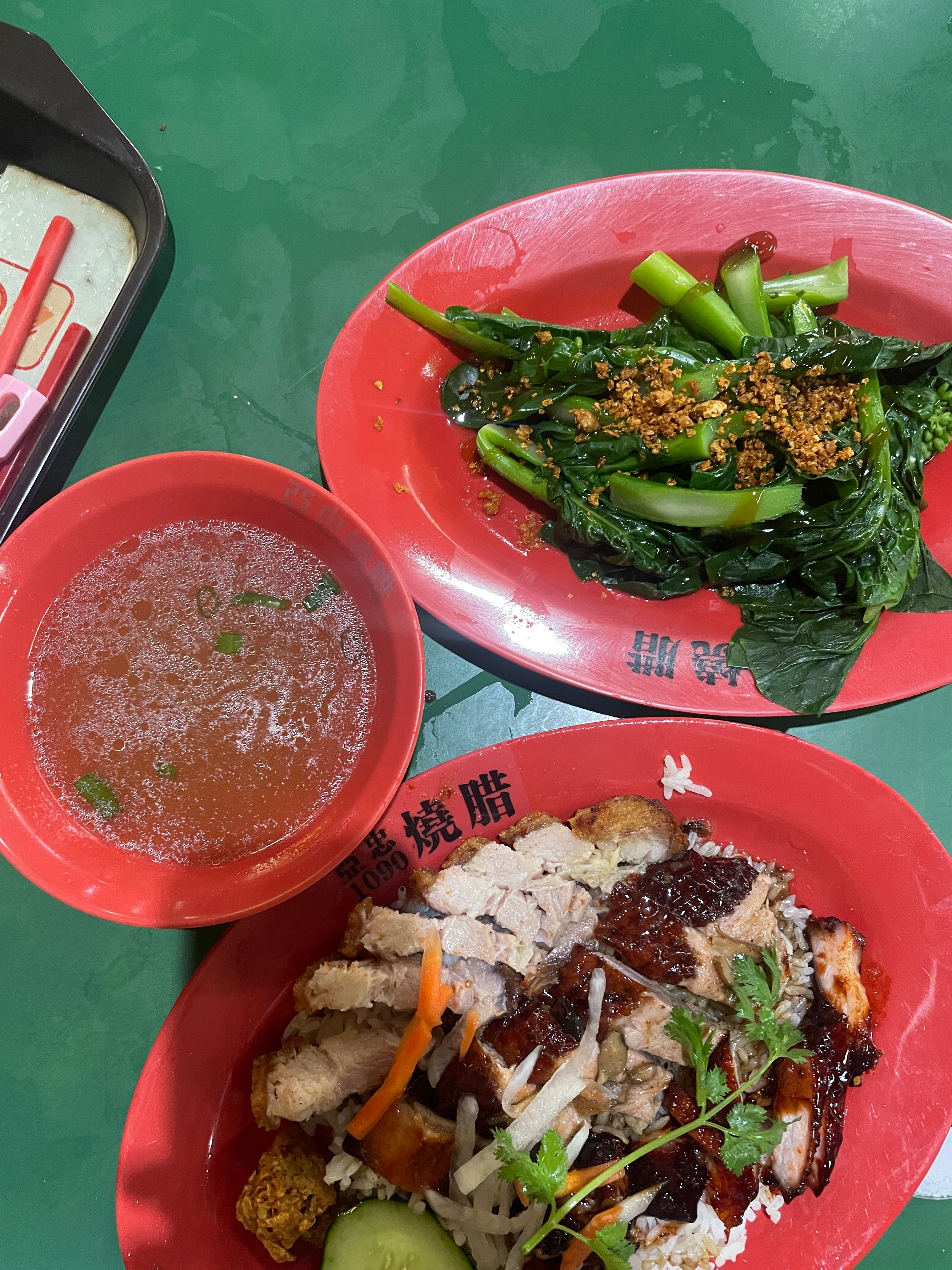
I gazed up at a series of colourful, high-density social housing towers. Some were decorated in rainbow hues, each floor labelled with an enormous number from 1 to 40 splashed across the concrete exterior; another in the distance was painted in bright red. At nearby Maxwell Food Centre, a hawker (or street-based) food court where I swiftly joined the longest queue and waited patiently to order a plate of roasted duck, gai lan broccoli and steamed rice, the tables were spotless, cleaned by the diners themselves before they deposited their used trays in neat stacks.
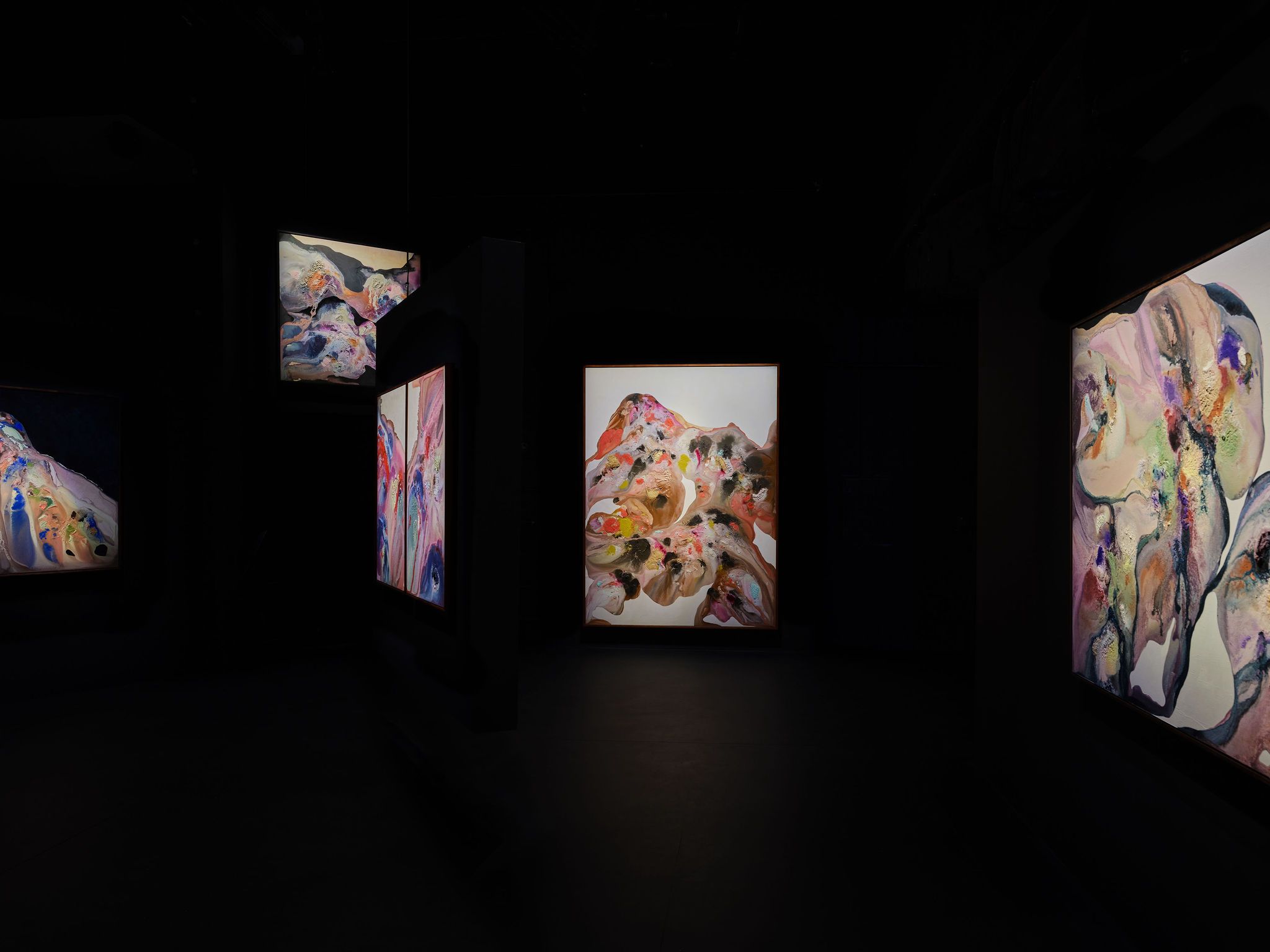
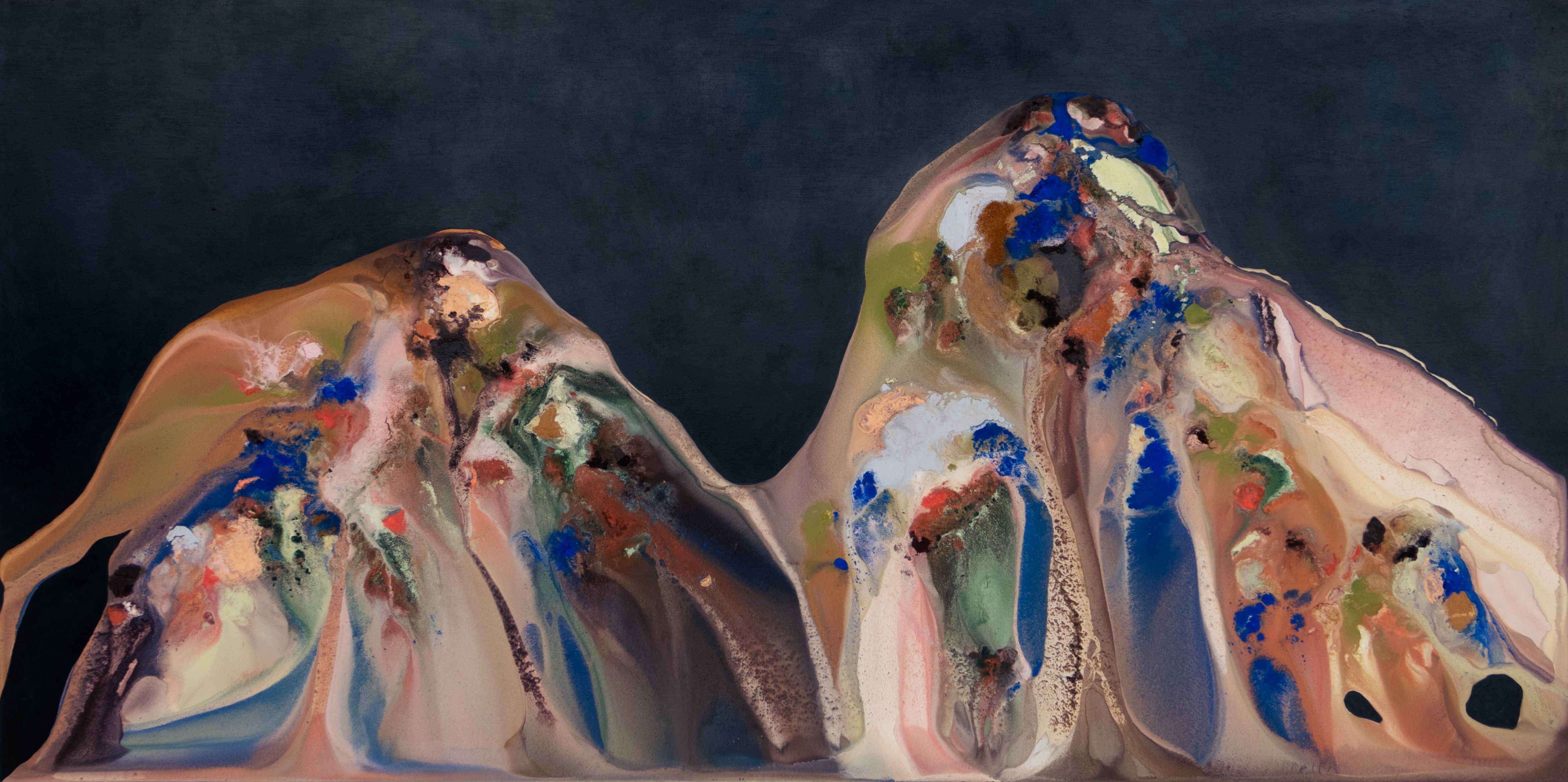
Throughout my time in the city, I was repeatedly struck by this same sense of quiet civic pride at every level of society, from the taxi drivers who praised the calm roads (the government has imposed strict limits on car ownership as a means of combating congestion) to the curators who noted Singapore’s multiculturalism as an anchor of the state’s national identity (the country’s four official languages are English, Mandarin Chinese, Malay and Tamil). But, as one local collector put it while we sipped red wine at The Earth Laughs in Flowers, an exhibition of Dawn Ng’s morphing, abstract paintings in the dramatically-lit Singapore Repertory Theatre, the effect is that of a gilded cage.
“I was repeatedly struck by a sense of quiet civic pride at every level of society”
State investment in the arts has risen dramatically over the past decade, and this was reflected in the sheer volume of events at this year’s Singapore Art Week programme, with several institutional exhibitions directly supported by the government. It would not be possible for one person to visit every show on offer, nor is that the intention; this is more of a buffet from which to pick and choose.
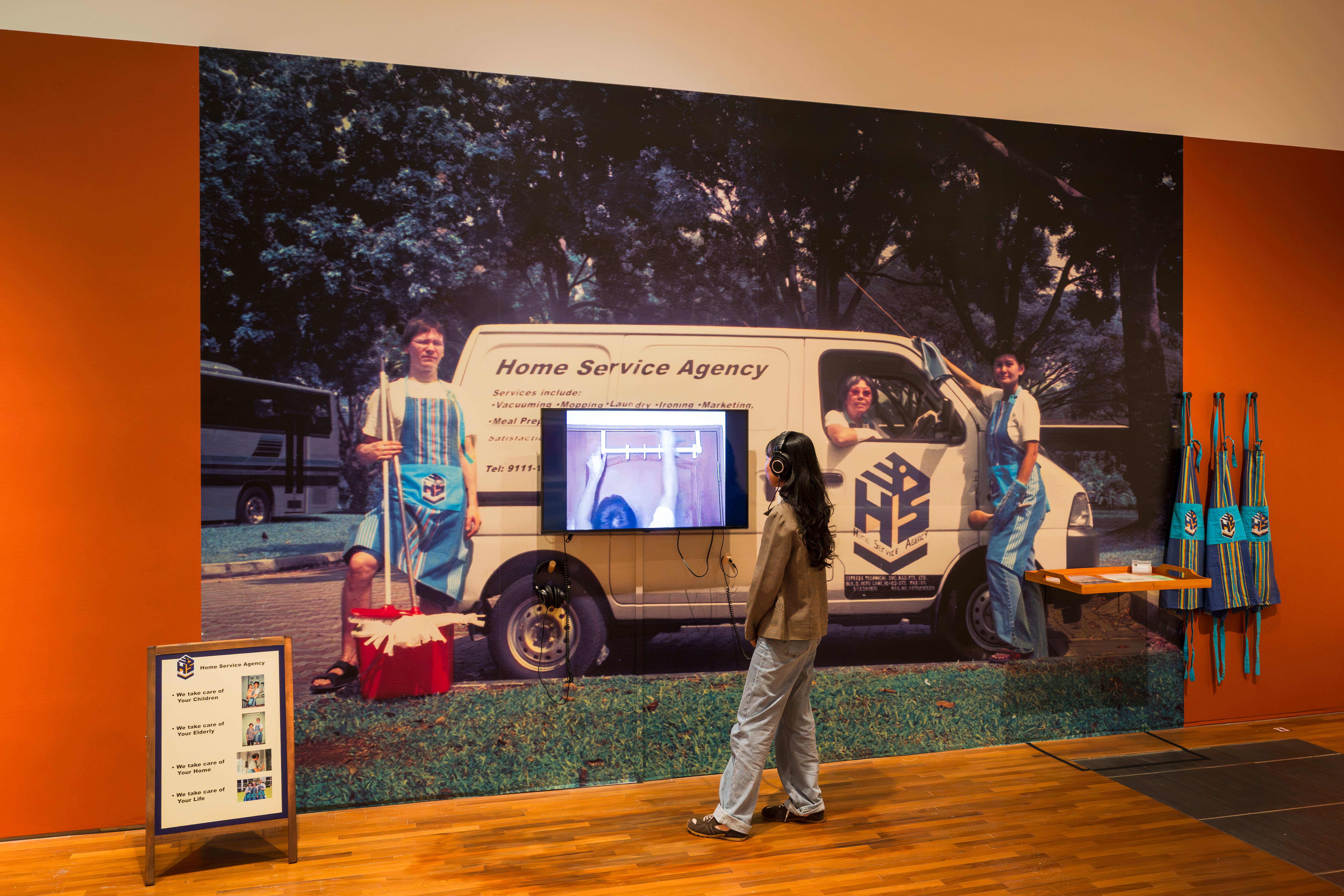
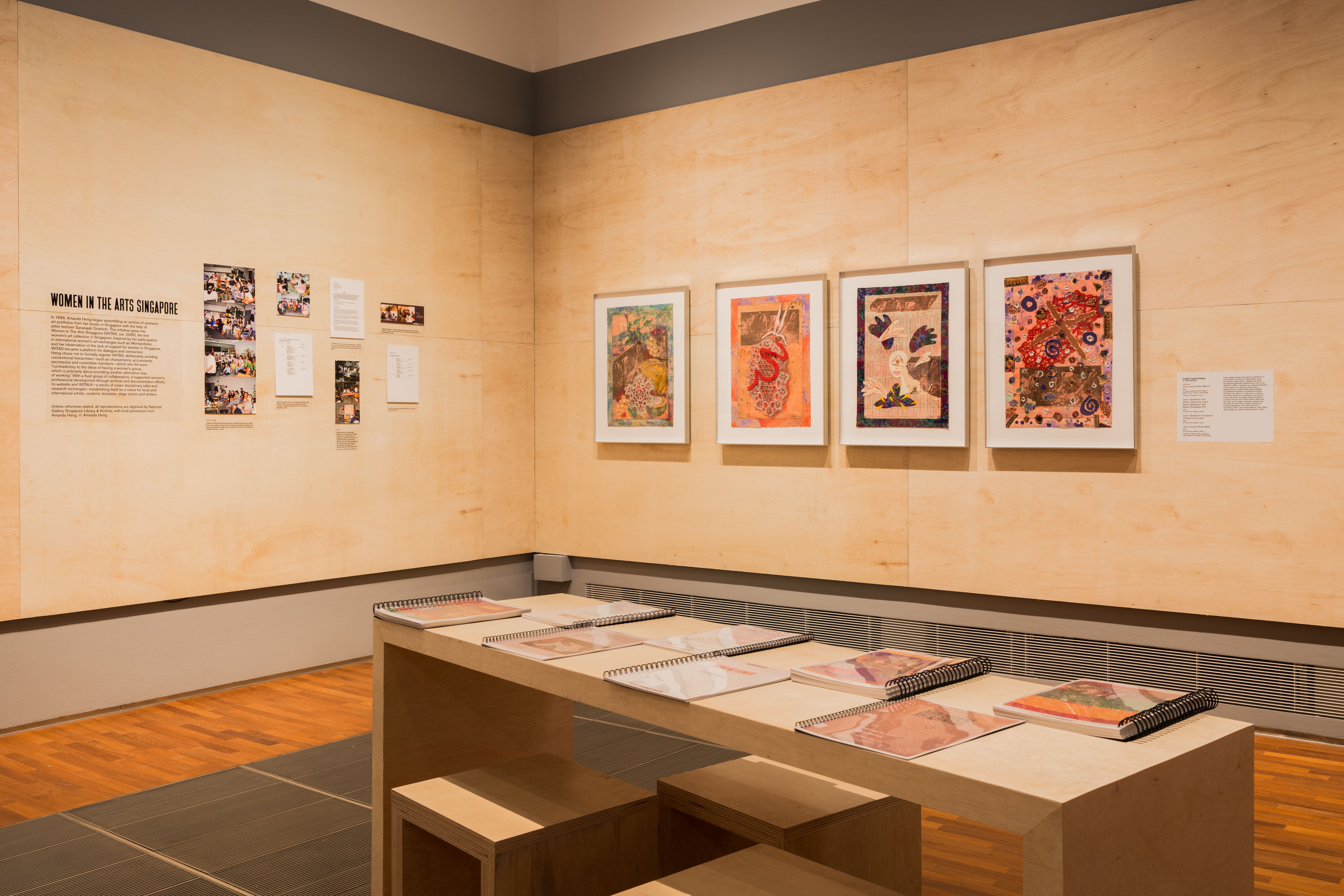
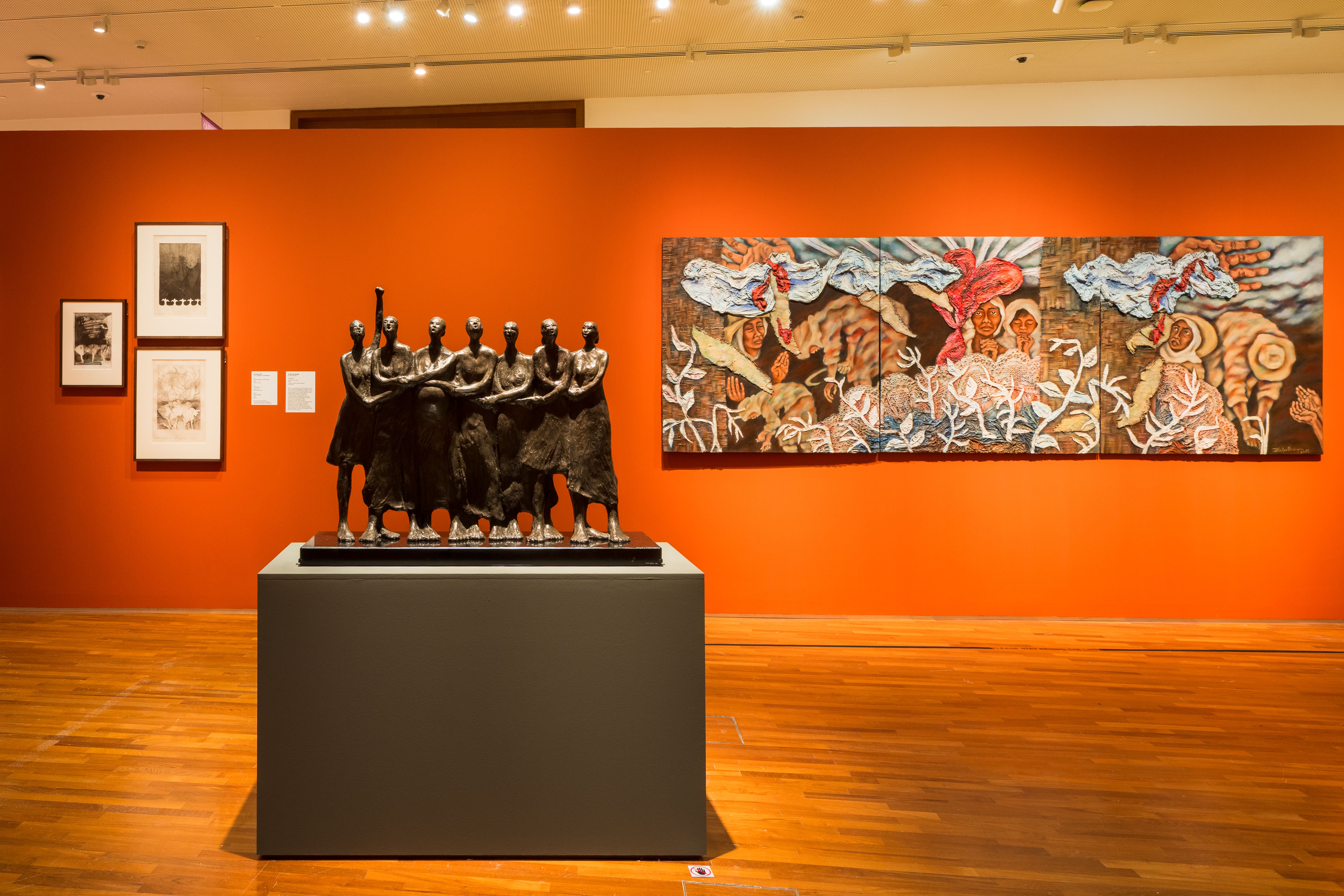

At the National Gallery of Singapore, the group exhibition Fear No Power: Women Imagining Otherwise brings together the work of five artists from Southeast Asia: Amanda Heng (who will represent Singapore at the 61st Venice Biennale in May), Dolorosa Sinaga, Imelda Cajipe Endaya, Nirmala Dutt and Phaptawan Suwannakudt (on display until 15 November). When I visited during SAW’s opening event, the sombre tone of the exhibition was undermined by thumping house music and flashing disco lights bouncing from wall to wall throughout the museum, where miniature pineapple cakes circulated on trays and queues formed for pocket-sized bowls of steamed chicken with rice.
In an attempt to block out the noise, I made a break for any works that came with headphones, and found myself lingering over Home Service (2003) by Heng. In a series of grainy home videos, photographs and texts displayed across a single wall, I was confronted by her experience of setting up and running a domestic cleaning company within her local community, alongside two artist collaborators. In one short film, she vacuums, dusts and cleans windows, before preparing a meal for a family in their home.
Afterwards, Heng interviews her clients about the experience and asks them to name the price they feel would be fair to pay for the service. These encounters are as awkward as they are revealing. One man, who happens to be sporting a T-shirt bearing the slogan ‘Life is short. Play Hard’, does not see why housework is worthy of remuneration at all. ‘I’ll just do it myself,’ he says, before his wife interrupts to point out that he has never, in fact, done it himself.
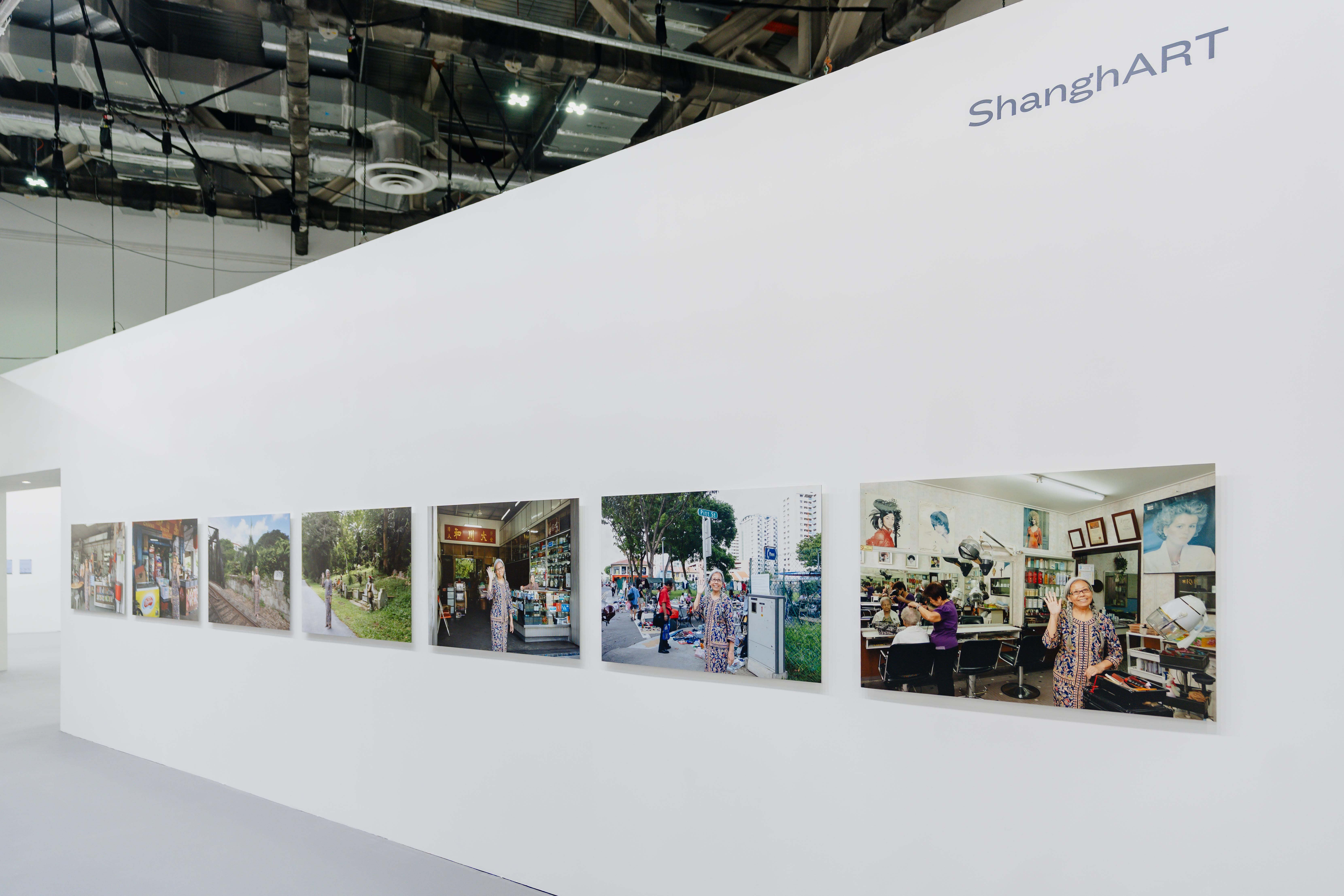
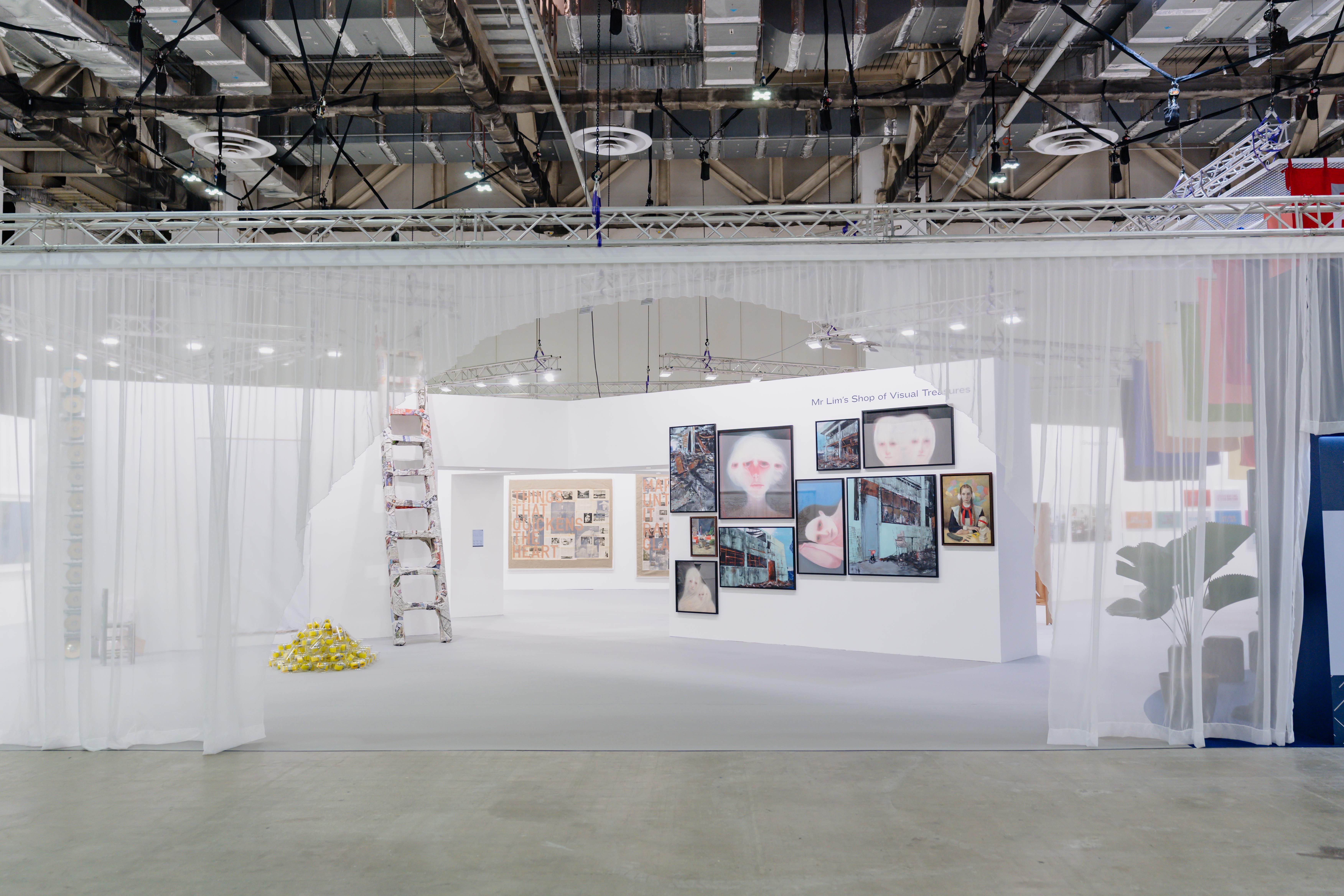
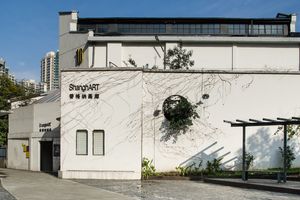
Another work by Heng, a tongue-in-cheek photographic series of self-portraits titled Singirl (2000–ongoing), was on display at the ShanghART presentation at the government-supported art fair, S.E.A. Focus. Staged for the first time this year alongside the larger Art SG fair, prominent signs for the adjacent casino stood out among the fair’s collectors—themselves easy to spot in bright shades of Issey Miyake’s ‘Pleats Please’—neatly underscoring its bottom line.
This time, Heng waves to the camera while dressed in the distinctive batik-printed garb of a Singapore Airlines hostess, her forced smile reminiscent of the grin one might assume for an unwanted family photo. Behind her, flea markets, nostalgic convenience stores and utilitarian restaurants with plastic stools can be seen. Each image memorialises places in Singapore that have already been demolished, or are in the process of disappearing.
“Singapore is most alive in the moments when its suspiciously flawless facade slips just slightly”
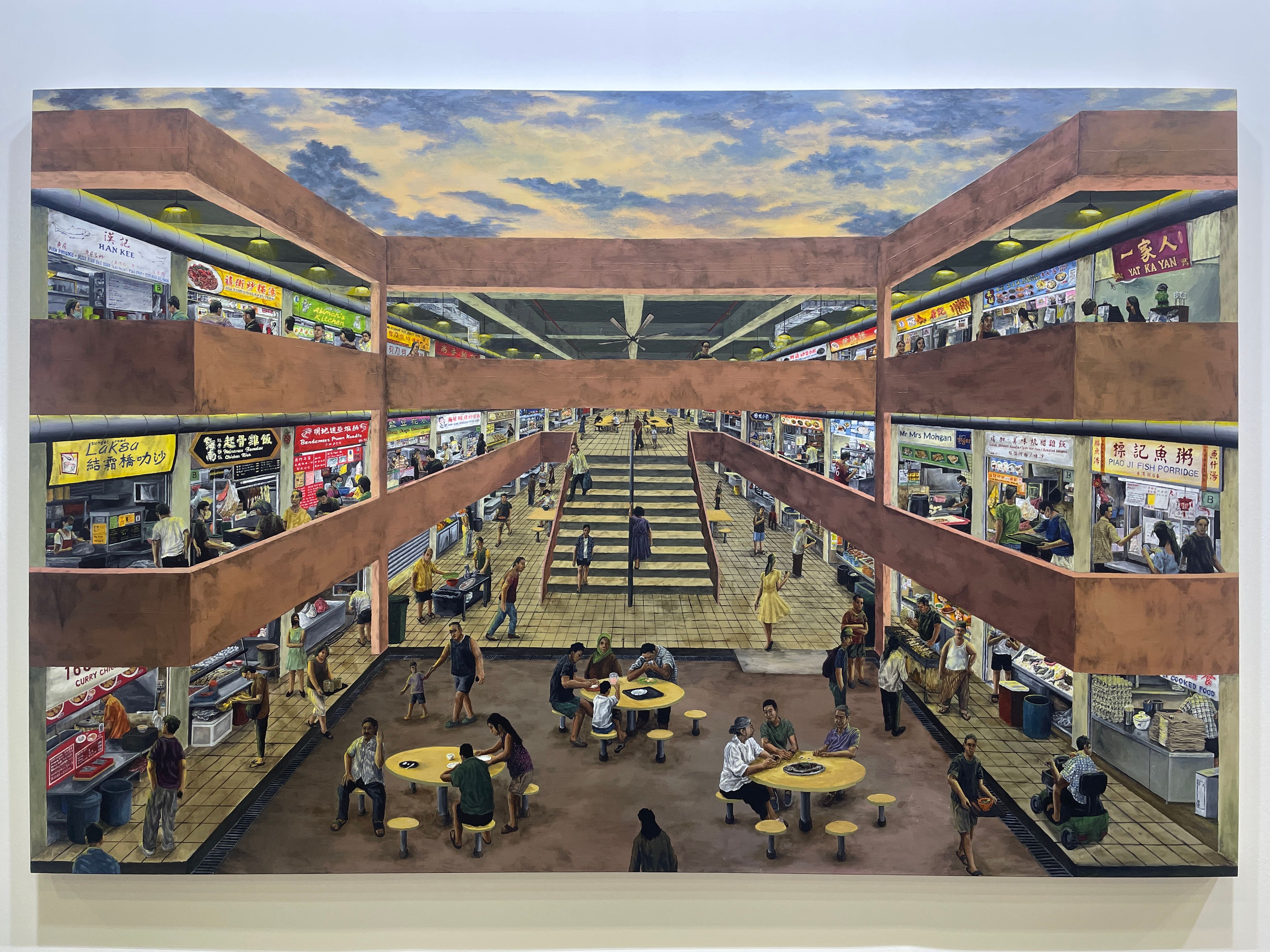
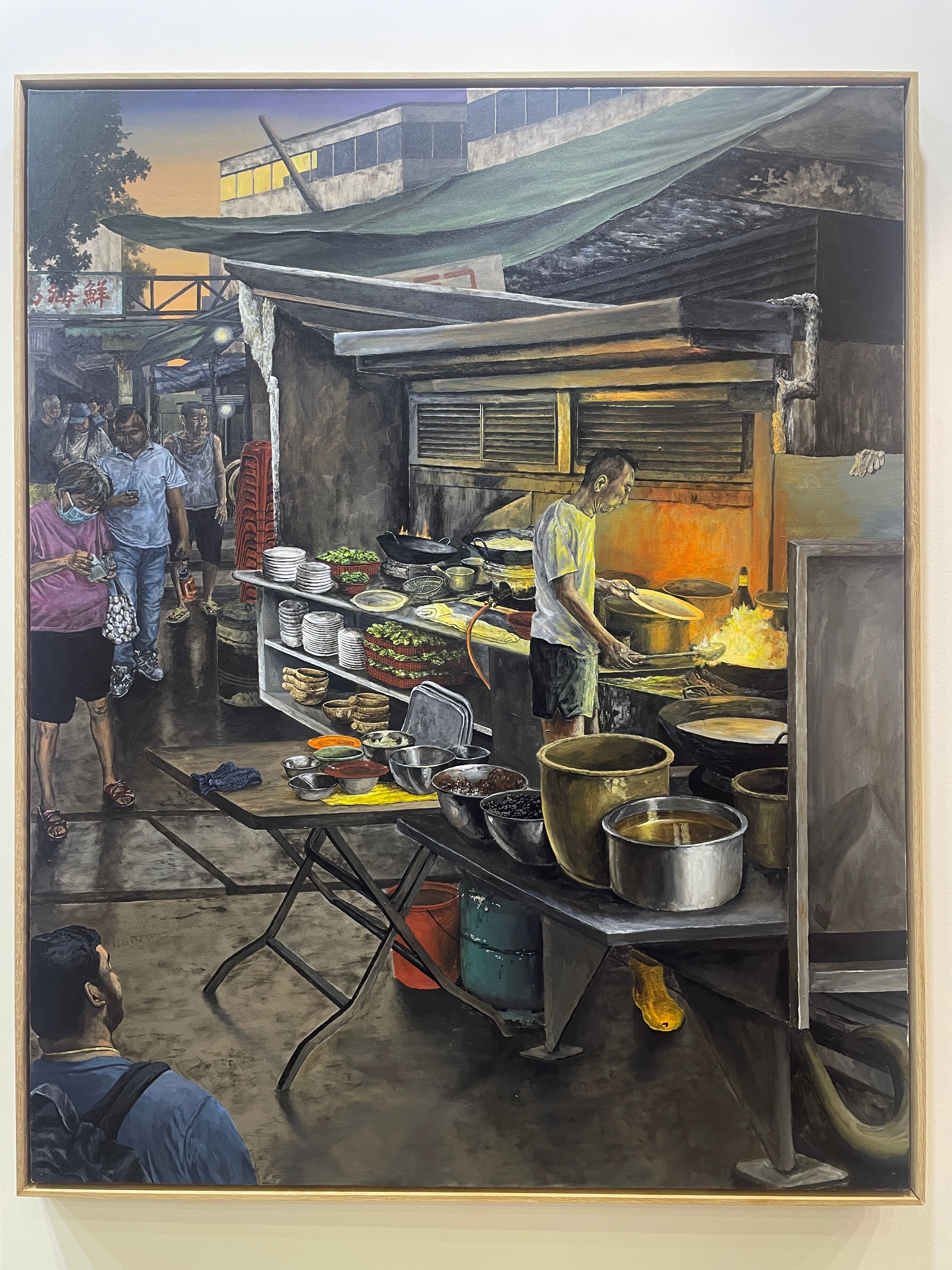
At Haridas Contemporary on the main floor of Art SG, I spotted detailed, large-scale paintings by Esmond Loh. The young Singaporean artist tenderly documents the city-state’s itinerant spaces, from informal hawker stalls to immigrant-centred malls (serving primarily Filipino and Burmese communities), which act less as a memorial than as an insistent reminder of the many sides to Singapore that cannot be neatly compressed into a single, easy narrative.
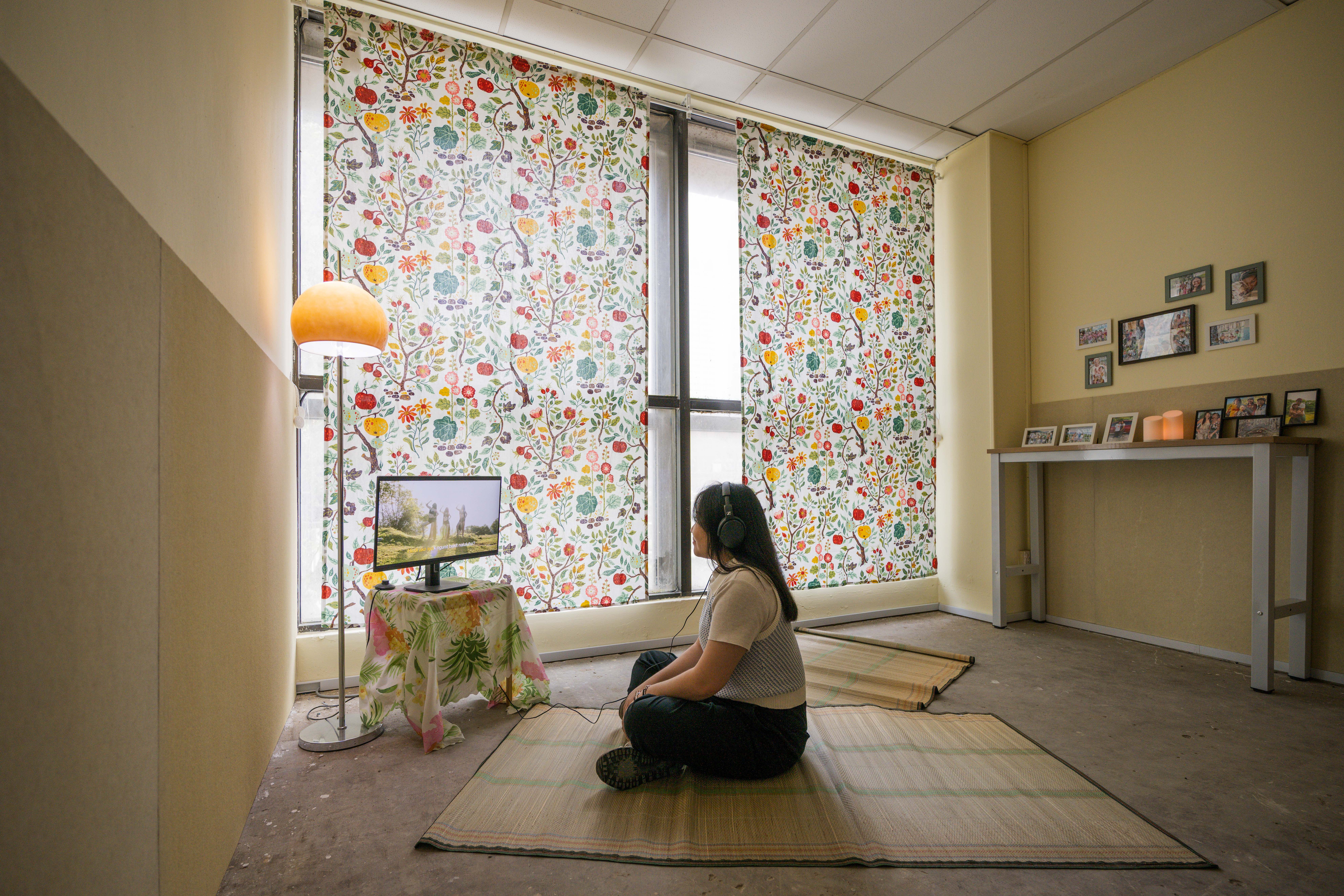
As I walked through the city at twilight, I found it to be most alive in the moments when its suspiciously flawless facade slips just slightly—in the cracks between the fantasy and the reality. On the commercial Orchard Road, international luxury stores jostle for space with crowded malls like Lucky Plaza, where nail salons, snack stores and charity shops are stacked together. Here, as part of the National Arts Council’s programming, museum shows are counterbalanced with more nomadic presentations inserted within the public realm.
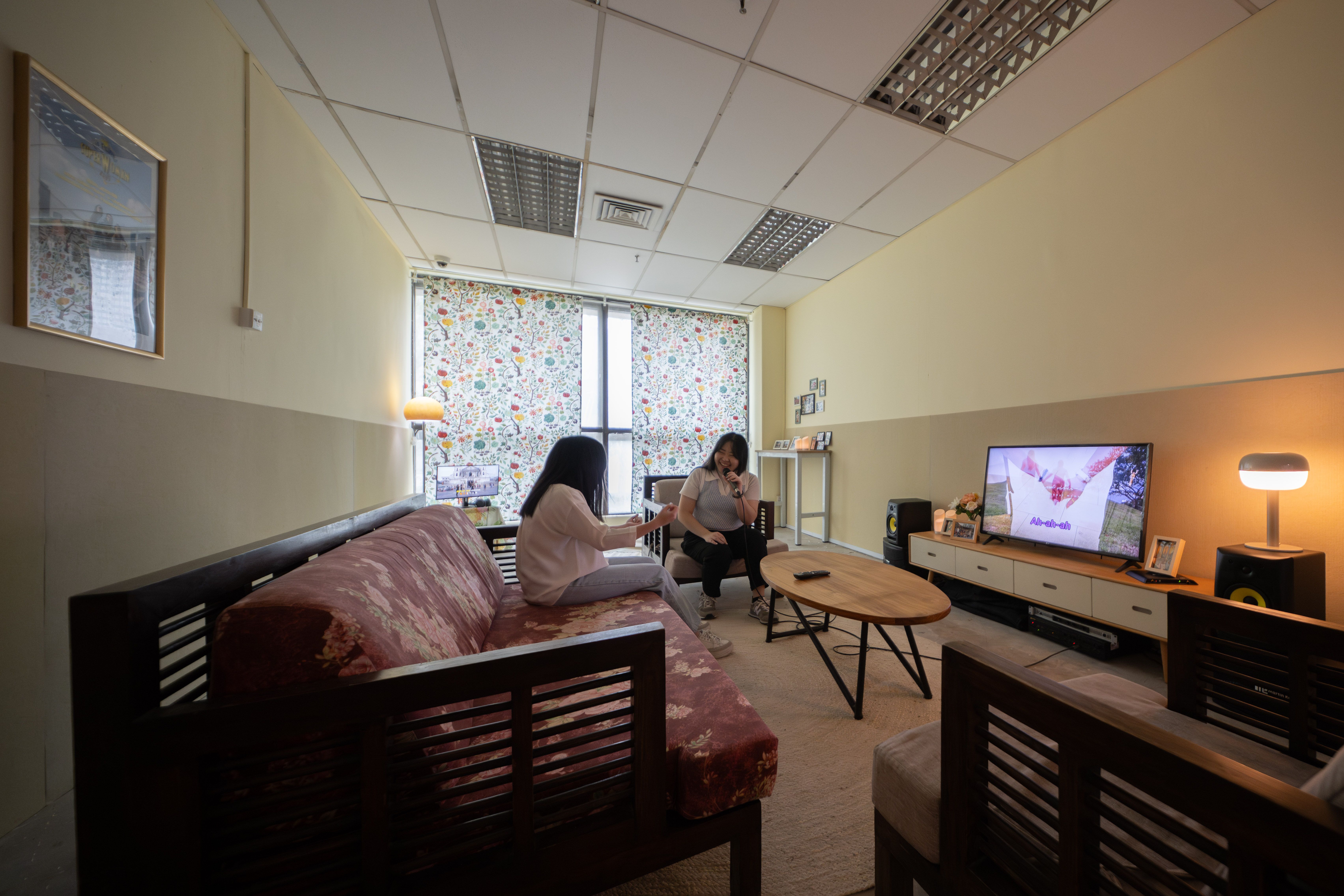
Lucky Plaza itself is currently home to a faux-Filipino living room, set-up in a vacant shop unit by artist Eisa Jocson, as part of the Eighth Singapore Biennale, which opened last October and runs until the end of March this year. A television played karaoke videos created by the artist in collaboration with domestic workers from the Philippines living in Singapore. Yet, as I watched, I couldn’t help wondering whether I’d have been better off immersing myself in some of the real Filipino stores at the mall, rather than this artist-led simulation.
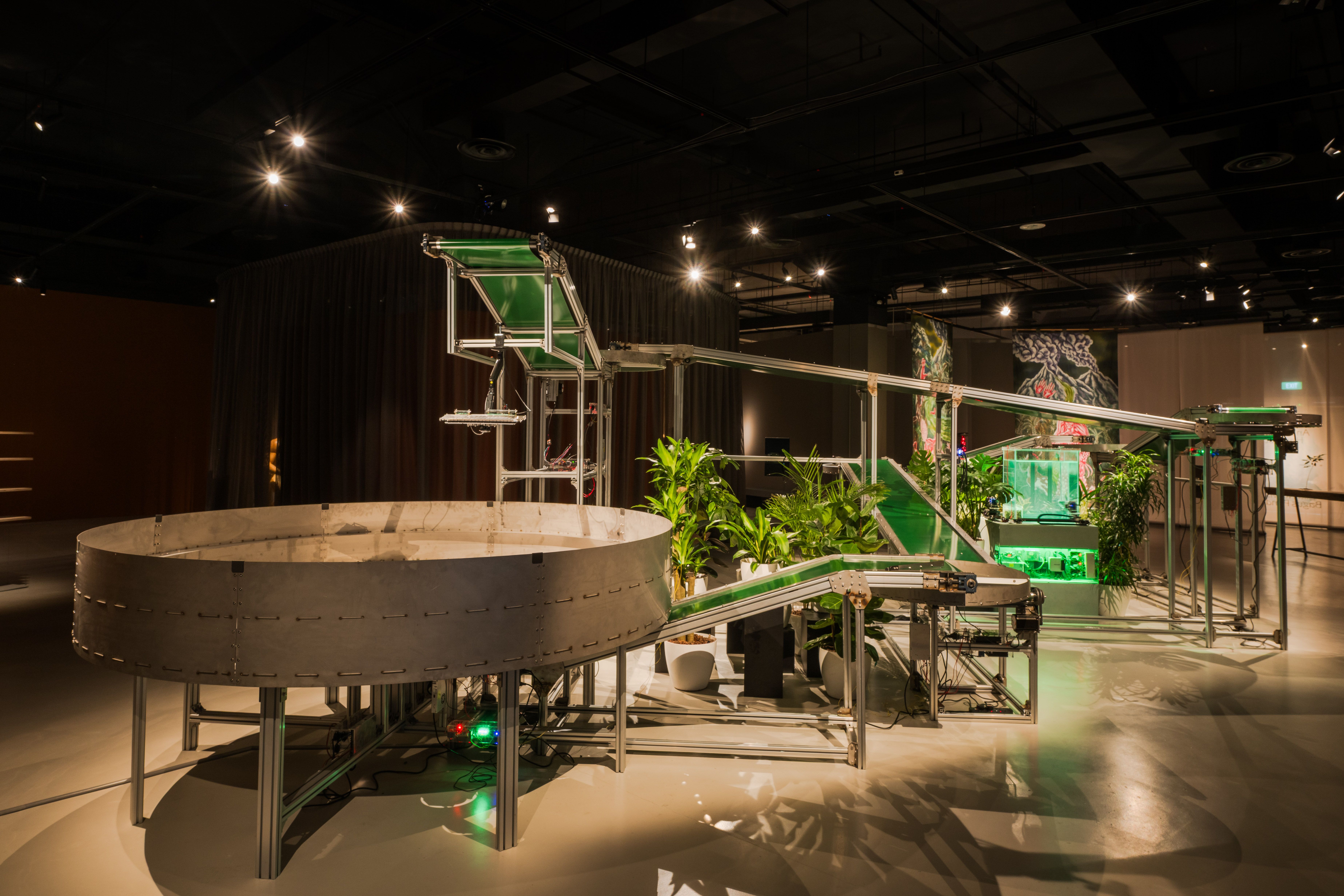
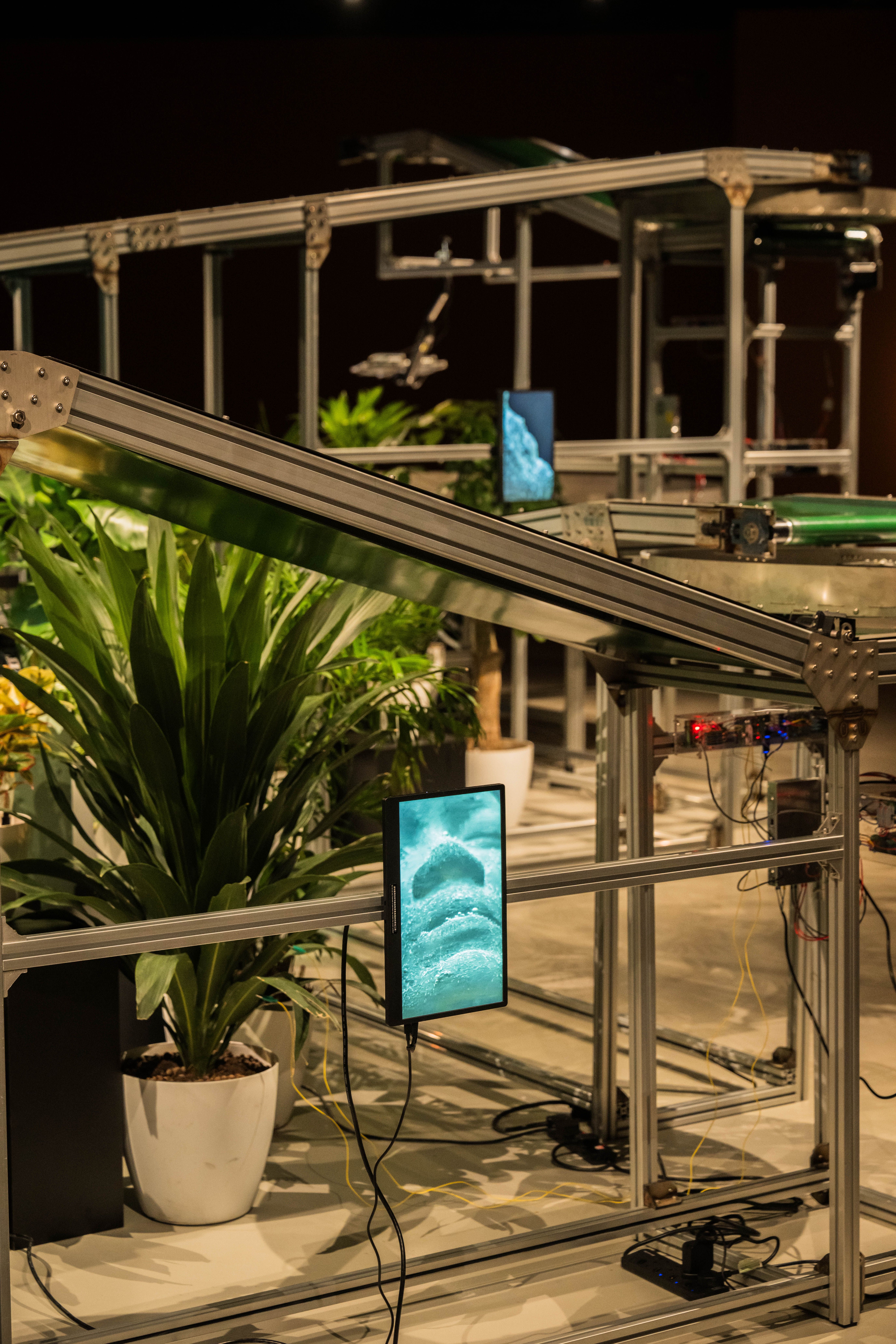
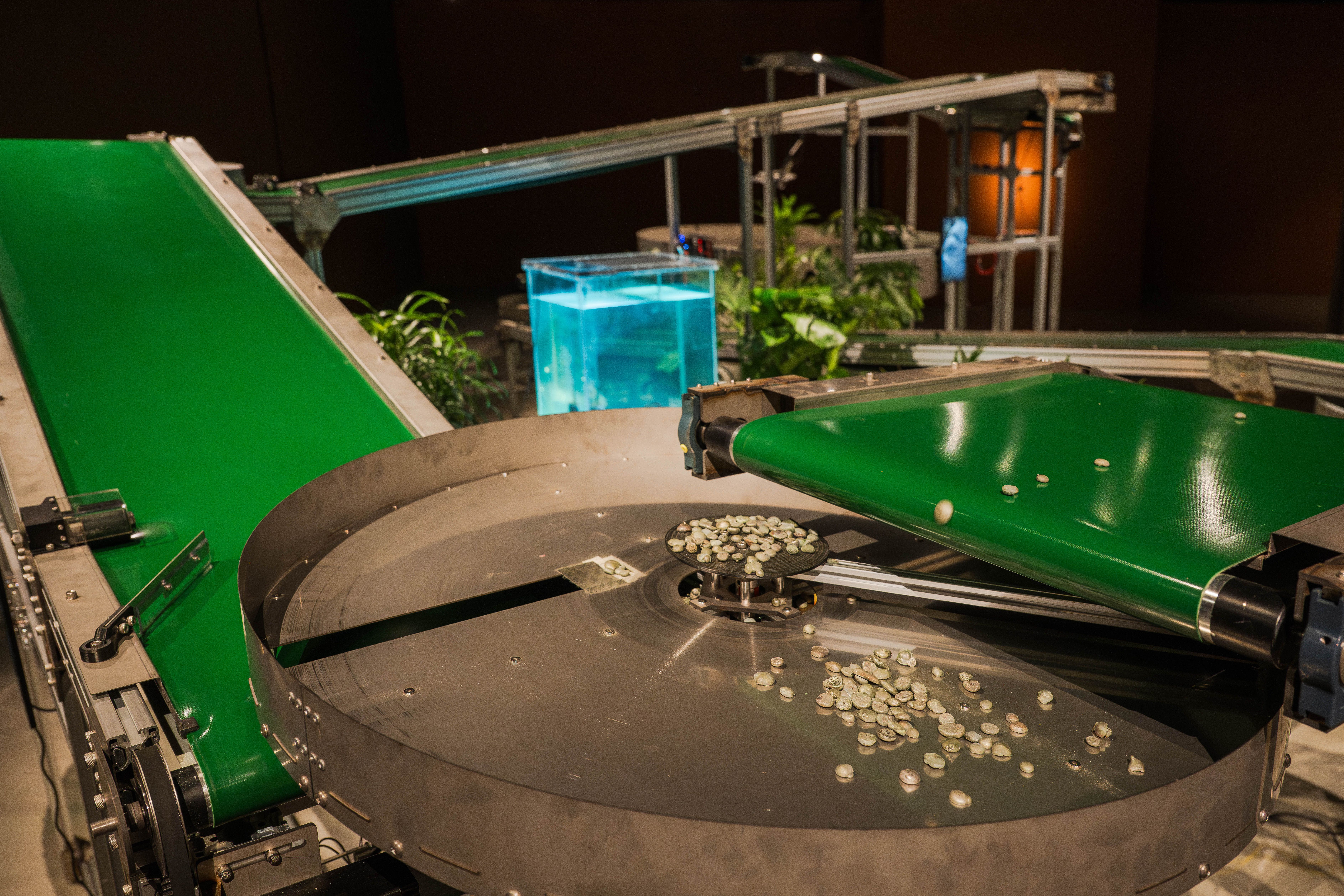
I encountered another surprising juncture between art and reality at the Singapore Art Museum, which since 2022 has been operating out of the industrial warehouses of a still-active dock, while its former site at the Bras Basah heritage building undergoes renovations. The contrast between the museum’s exhibitions and the working docks is stark. This is not down to the paintings that bear no relation to their surroundings, but to those works that are more difficult to separate from them.
“The contrast between the museum’s exhibitions and the working docks is stark”
Alone, I took an industrial lift large enough for 20 people, the interior of which had been covered in distorting infinity mirrors (Yayoi Kusama, eat your heart out), to Nafasan Bumi ~ An Endless Harvest, a dual exhibition of Indonesian artists Elia Nurvista and Bagus Pandega (until 31 May). A continuous clanking sound filled the room as fragments of nickel ore travelled along a 10-metre-long conveyor belt. In a surreal, absurdist simulation of an industrial production line turned upside-down, their pace was set by measurements drawn from the varying emissions of the lush potted tropical plants scattered alongside the machinery.
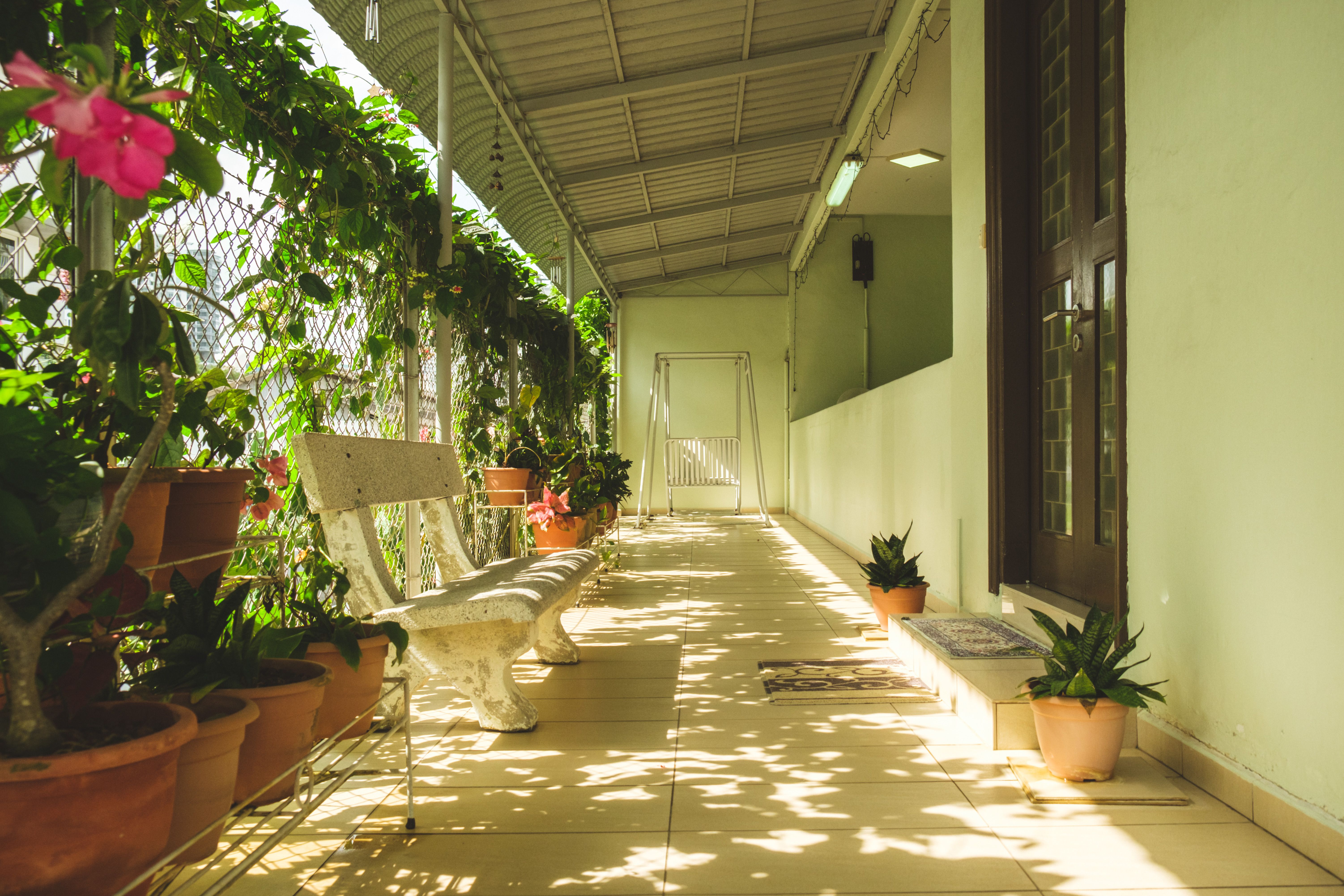
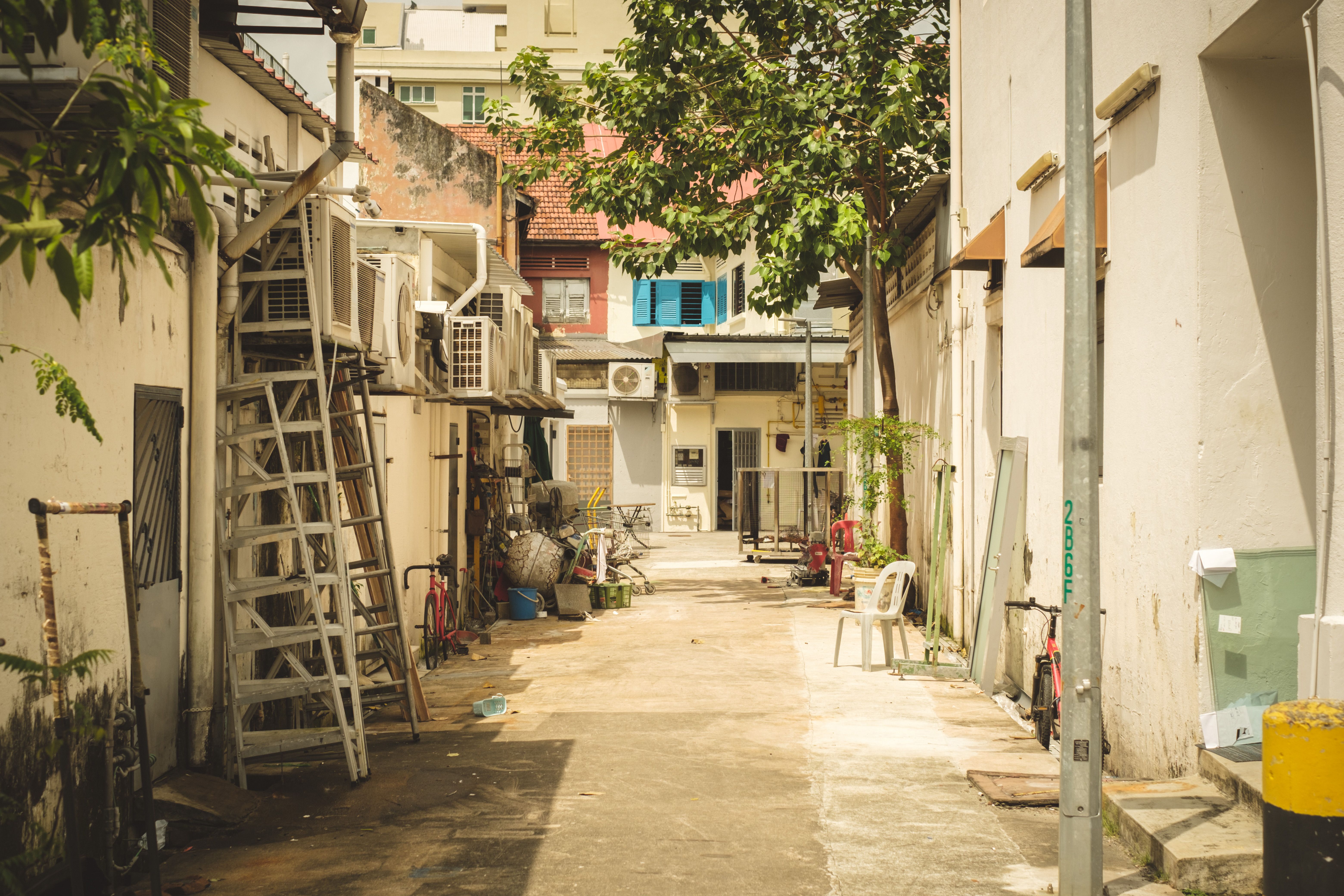
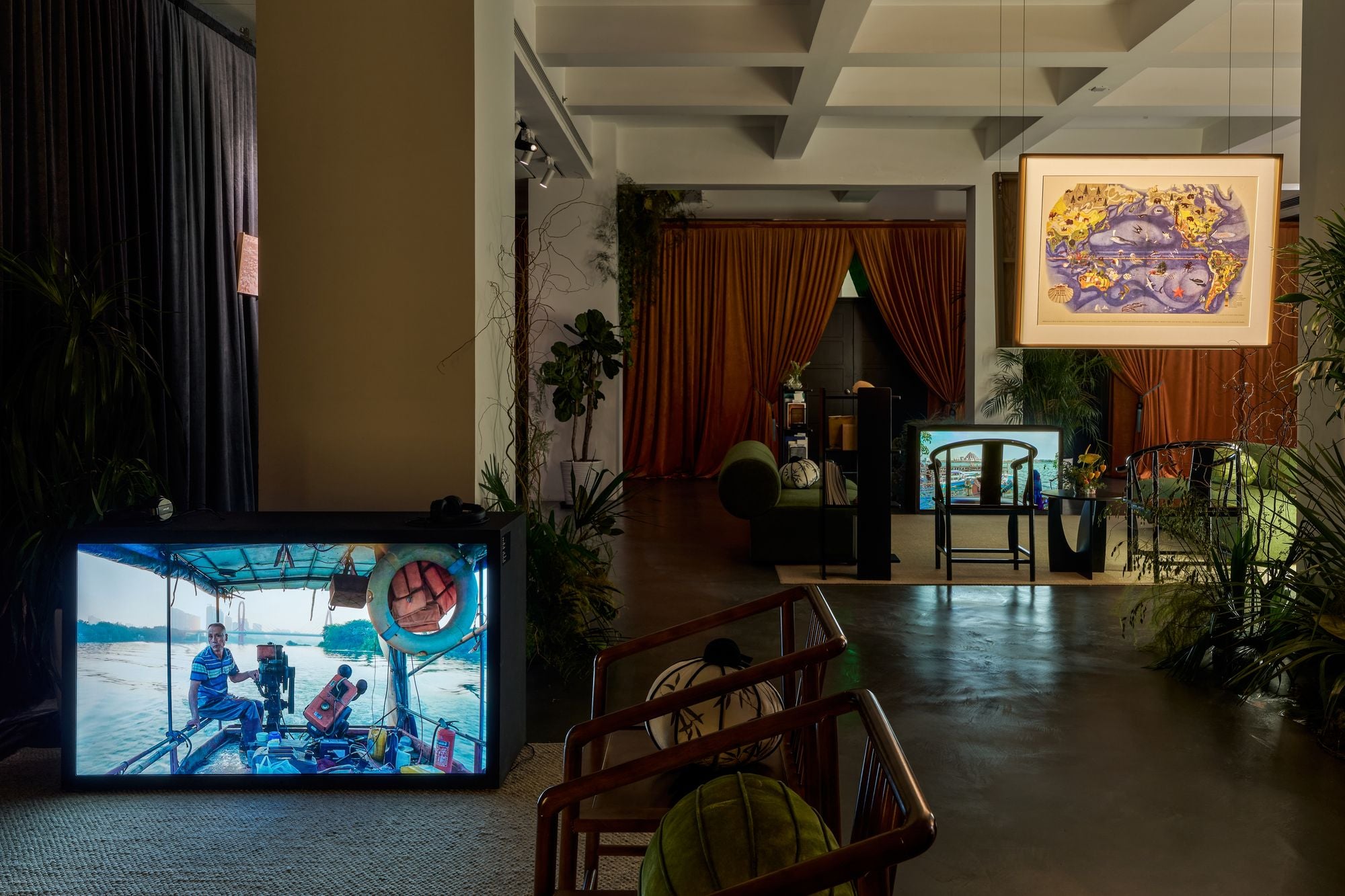
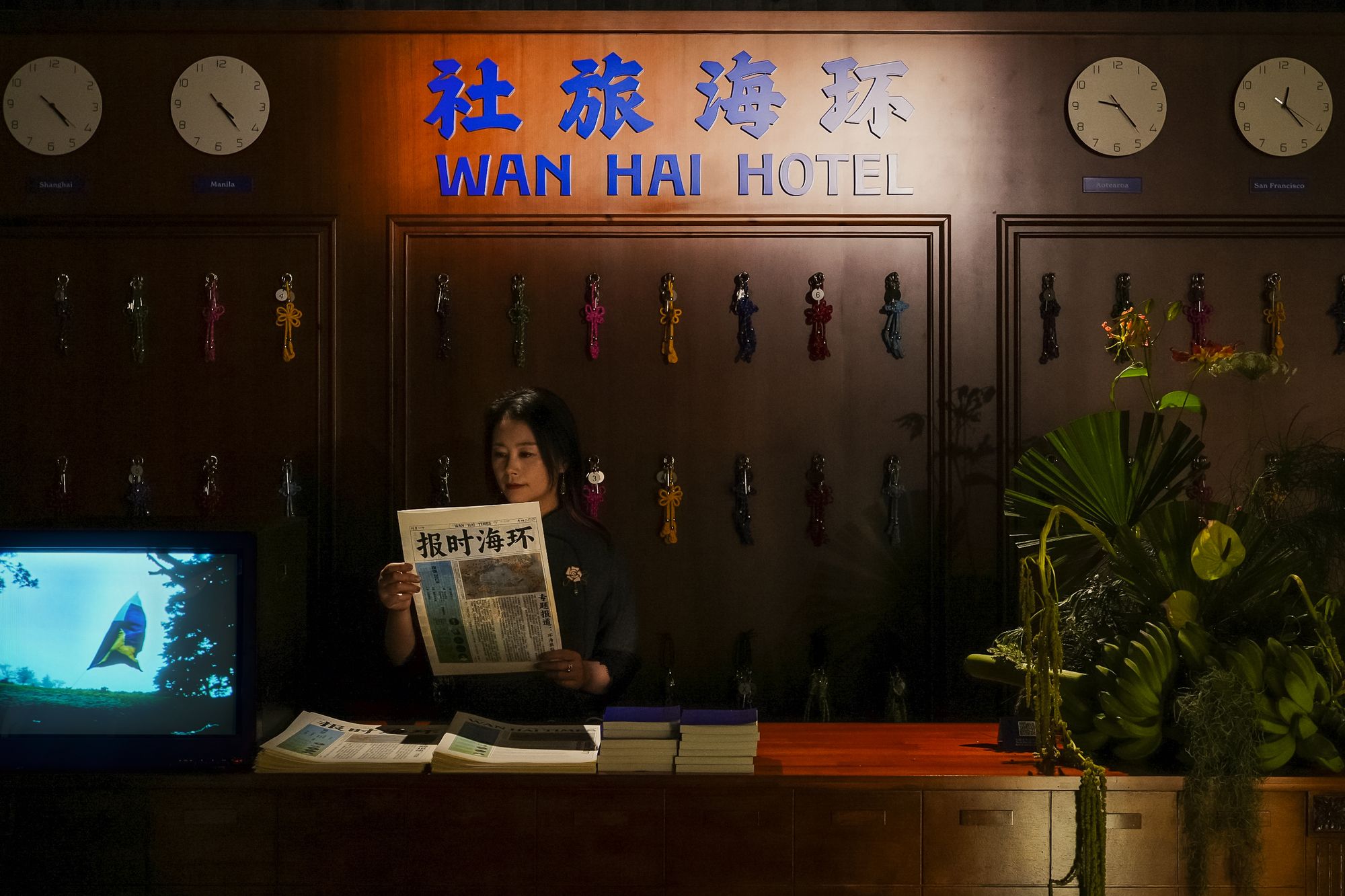
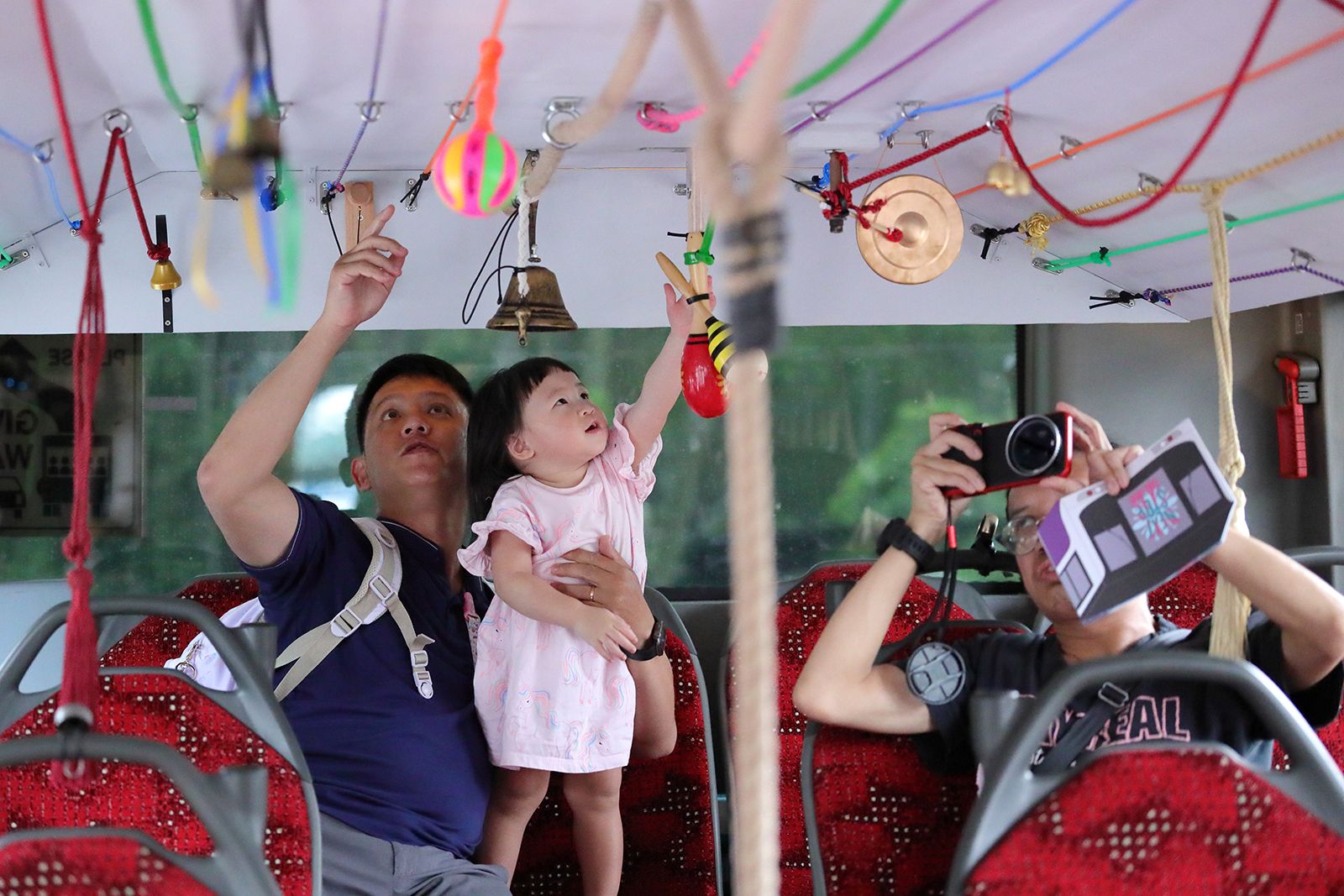
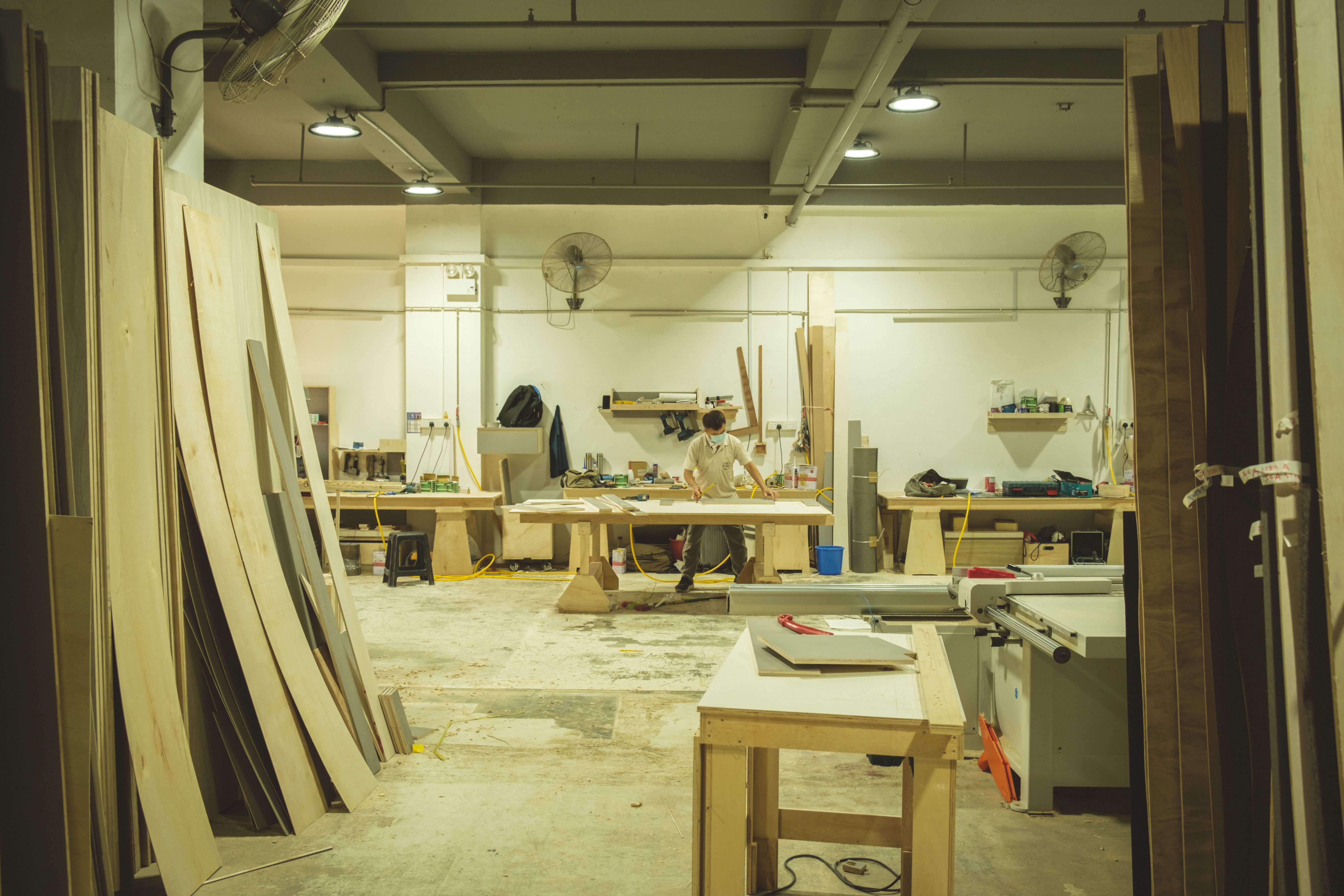
Again and again, I came across exhibitions that went beyond the confines of the traditional gallery and entered the city’s vernacular. Take OH! Moonstone, an open-house project on the Moonstone Lane Estate, where works by four local artists were nestled between buildings that hint at the previous life of this now-residential neighbourhood, from a former bottled water factory to a shrine. Or In Our Own Frame, the photography exhibition staged in an underpass by the small but perfectly formed photography gallery DECK; or Wan Hai Hotel: Singapore Strait, the conceptual, maritime-themed exhibition presented by Shanghai’s Rockbund Art Museum in the lobby of a working hotel.
“Works by four local artists were nestled between buildings that hint at the previous life of this now-residential neighbourhood”
Then there was the state-run Next Stop: Together! project, which brought art into railway stations, public buses and neighbourhoods across Singapore throughout Art Week, and private initiatives such as New Bahru. The scheme last year transformed a former school into a shopping, art and restaurant complex, with the kind of sleek, pastel branding that has become synonymous with a kind of generic, international ‘hip’ aesthetic.
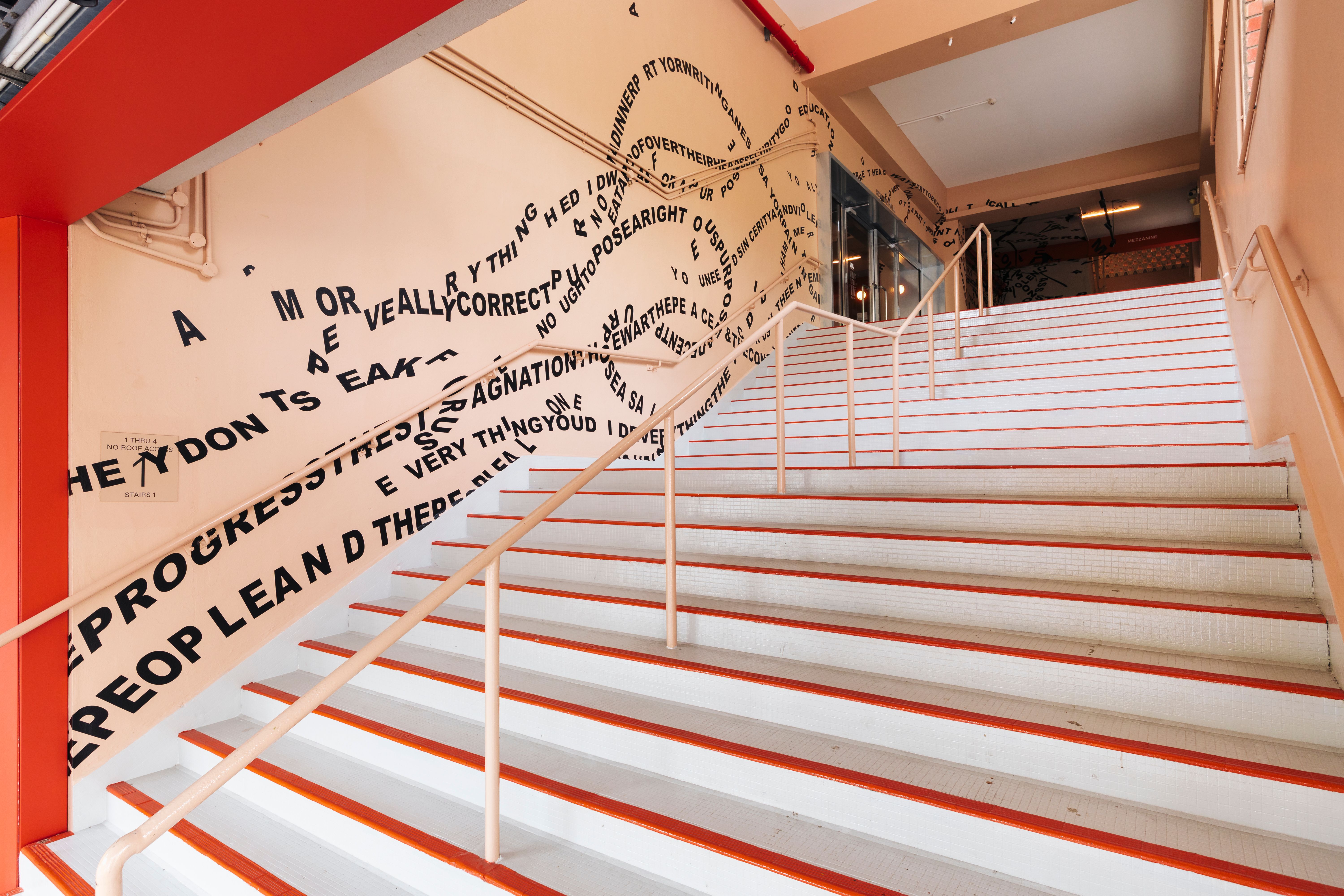
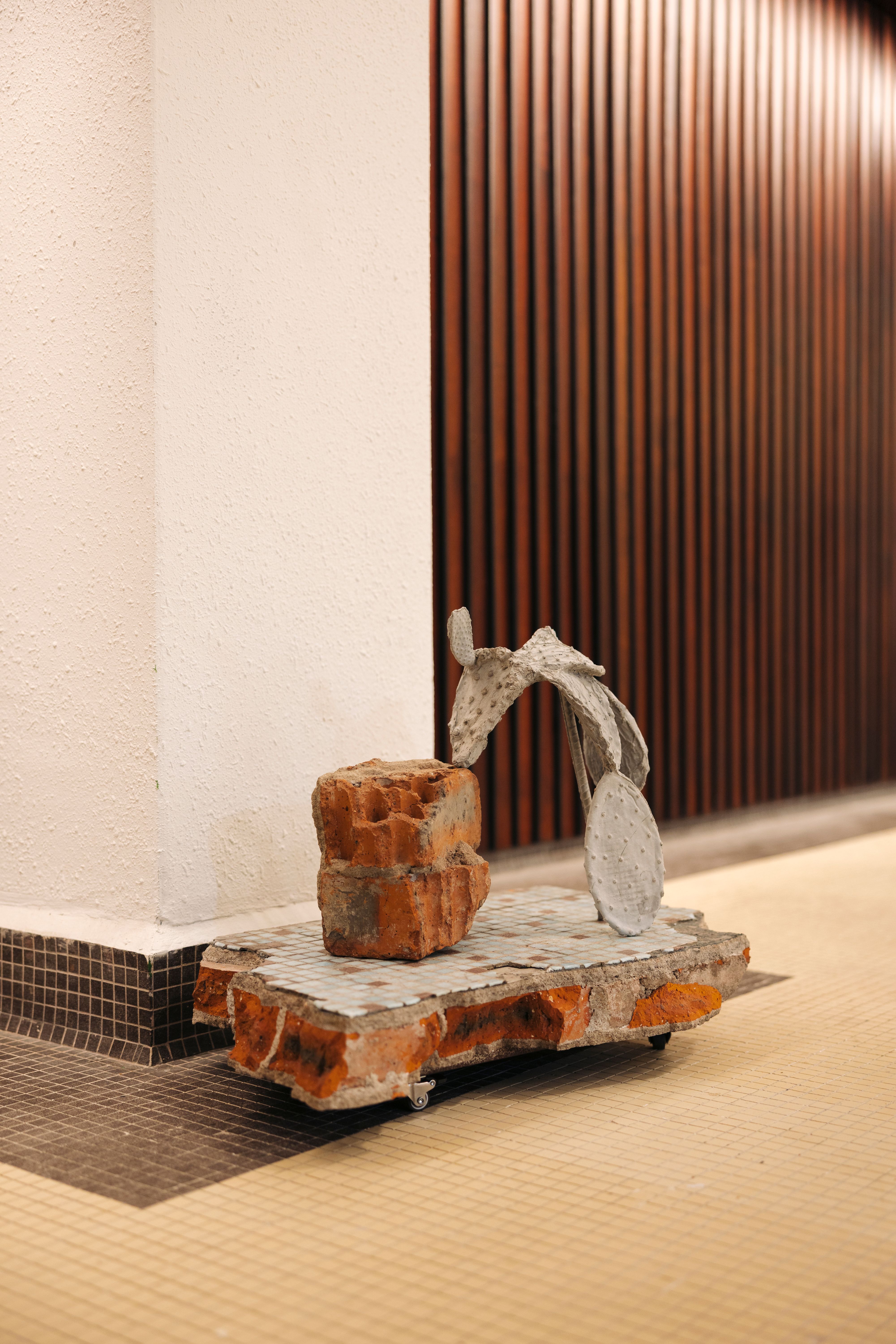
It was here, in what was once the school hall, that I confronted Silent Inhabitation (2023), a relic by Shanghai-born artist Zhang Ruyi in Rituals of Perception, a group show staged by the Tanoto Art Foundation (until 1 March). A wilting concrete cactus made from construction debris appears to grow from a fragment of a blue-tiled mosaic floor, taken from another unknown former building. Outside the old school hall, a new hyper-modern residential development was noisily under construction, while billboard renderings displayed a too-perfect projection of its future for prospective buyers. ‘It’s hard to connect with our heritage when the landscape is changing so fast with redevelopment,’ a local writer said one afternoon as we walked through yet another evolving part of the city.
This thought served as a reminder that for each artist project that inhabits the past lives of Singapore, there are more sites that have already been cleared away—the two sit uneasily side-by-side. And, as the city continues to invest in the arts and attract growing international attention, this architectural history and the stories that it represents will not be easily forgotten. For me, however, against this fluctuating backdrop, it was the image of Ruyi’s cactus growing haphazardly from the ruins that will be remembered. —[O]
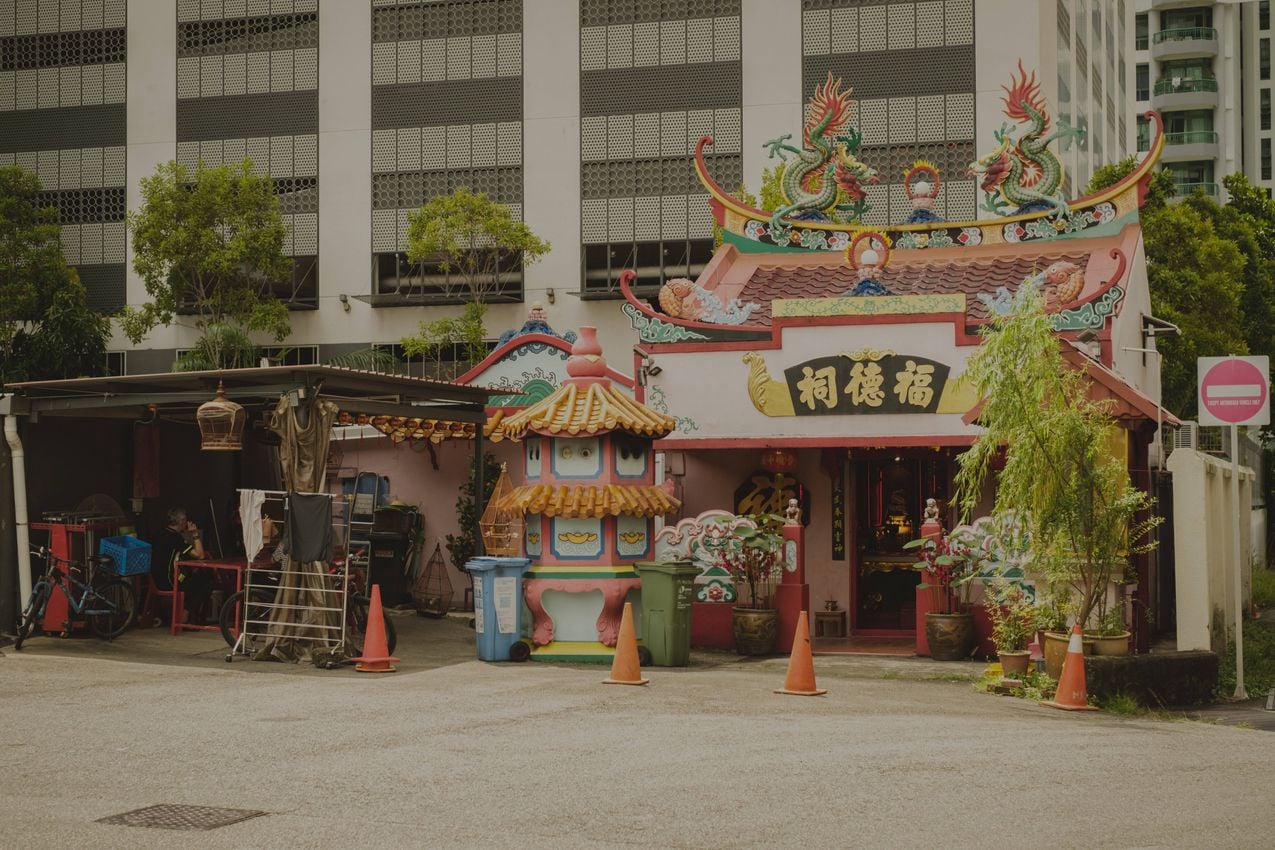
Main image: On the route of the OH! Moonstone project (2026). Photo: Marvin Lee.




A respected voice in contemporary art discourse.
Focusing on ambitious storytelling and insightful art-world commentary. Ocula Magazine publishes in-depth interviews, critical essays and timely analysis on the artists, exhibitions and ideas driving the global art world.
Learn more about Ocula Magazine
Showcasing the best of the art world.
Ocula partners with galleries from around the world to highlight their artists, artworks and exhibitions. Gallery membership is by application and invitation, with each member vetted by an independent panel.
Learn more about Ocula Membership
Specialises in the sale of major artworks.
Led by a team with deep ties to the world’s leading auction houses, galleries and collectors. Ocula’s advisory team offers bespoke services to high-net-worth clients from around the world who are looking to acquire the best of contemporary and modern art.
Learn more about our team and services