






Victor Man, the Anti-Modern Painter Illuminating the Present
Contemporaries of the Romanian artist reflect on his rise from Cluj’s post‑communist scene of the 1990s to global recognition. Save to My Ocula

‘Victor Man wanted to be in the most visible contexts, yet remain the most invisible person there,’ says Mihai Pop, co-founder of Galeria Plan B, who has known the artist since their childhood in Cluj, Romania’s second-largest city. Pop has stood beside Man at every stage, from his first exhibition at Plan B, in 2005, to his inclusion in the Romanian Pavilion at the 2007 Venice Biennale, as part of a group presentation commissioned by Pop.
It was there that formidable American art dealer Barbara Gladstone first encountered Man’s work; she soon invited him to show in New York, marking the beginning of a partnership that would carry him far beyond Romania. ‘We talk endlessly about paintings—how they are made, their place in the continuum of Western culture, their symbolism and allegories,’ she wrote in the catalogue for Man’s 2024 show, shortly before her death that same year. ‘Through his astute observations and passion for the medium, I see anew.’
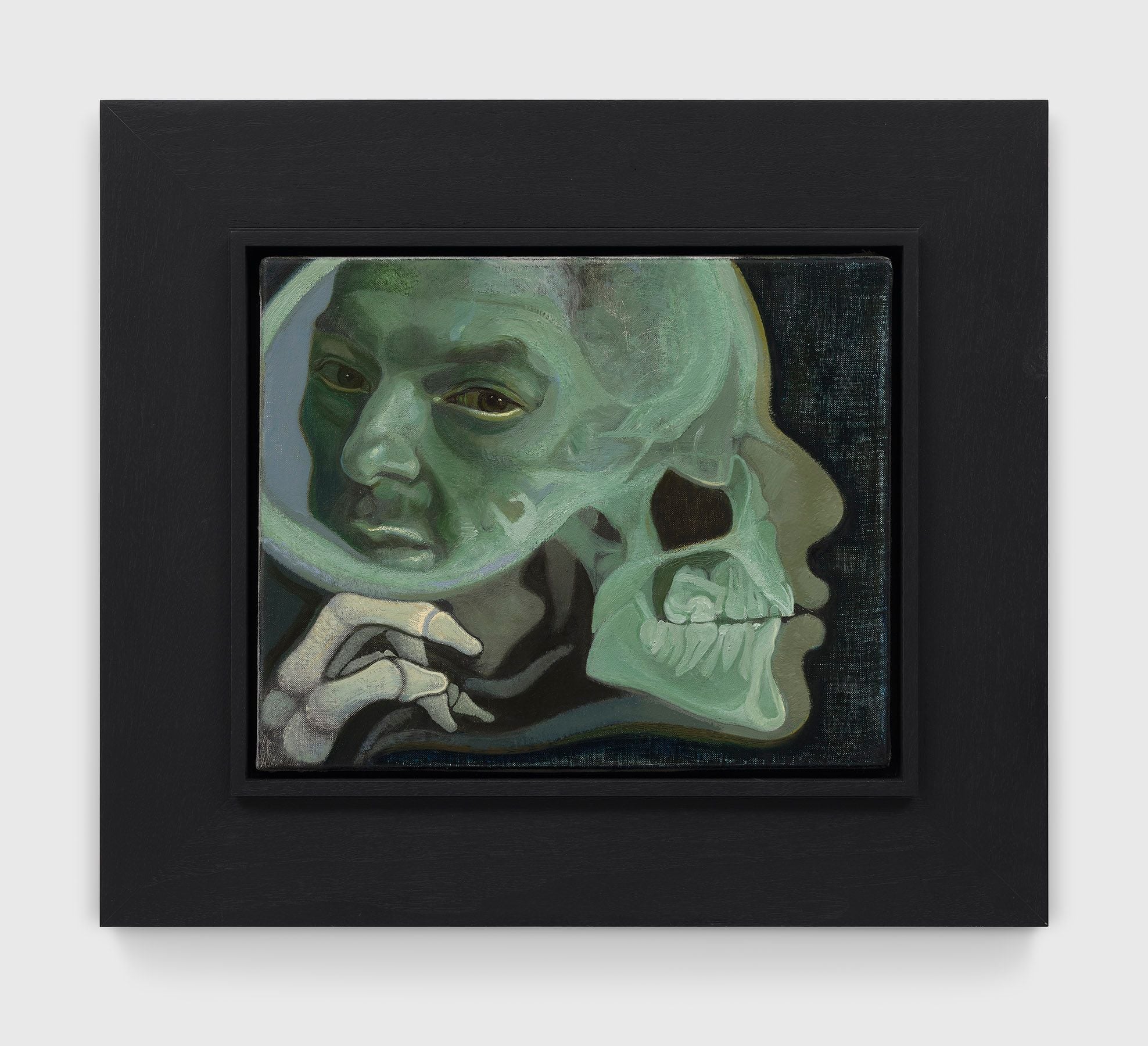
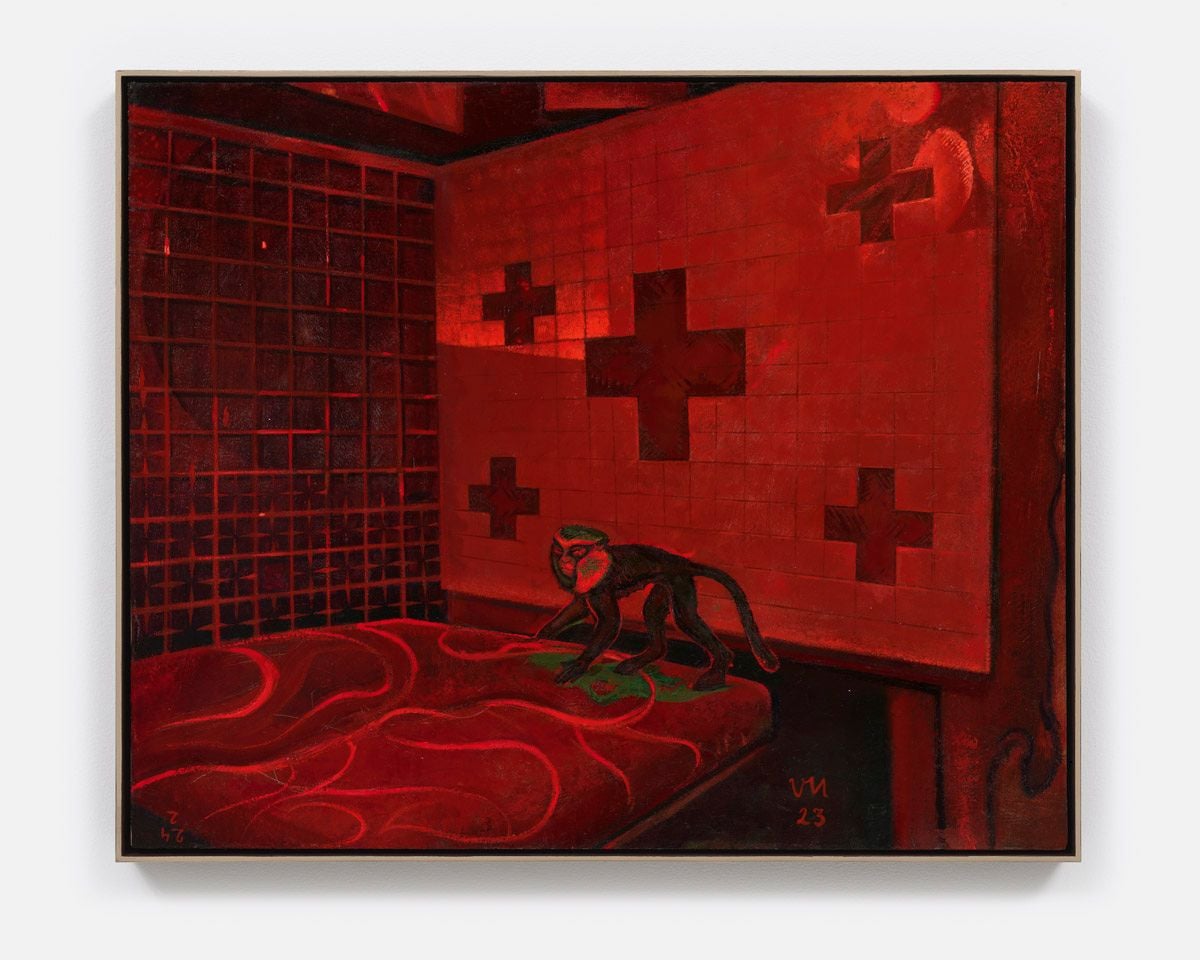
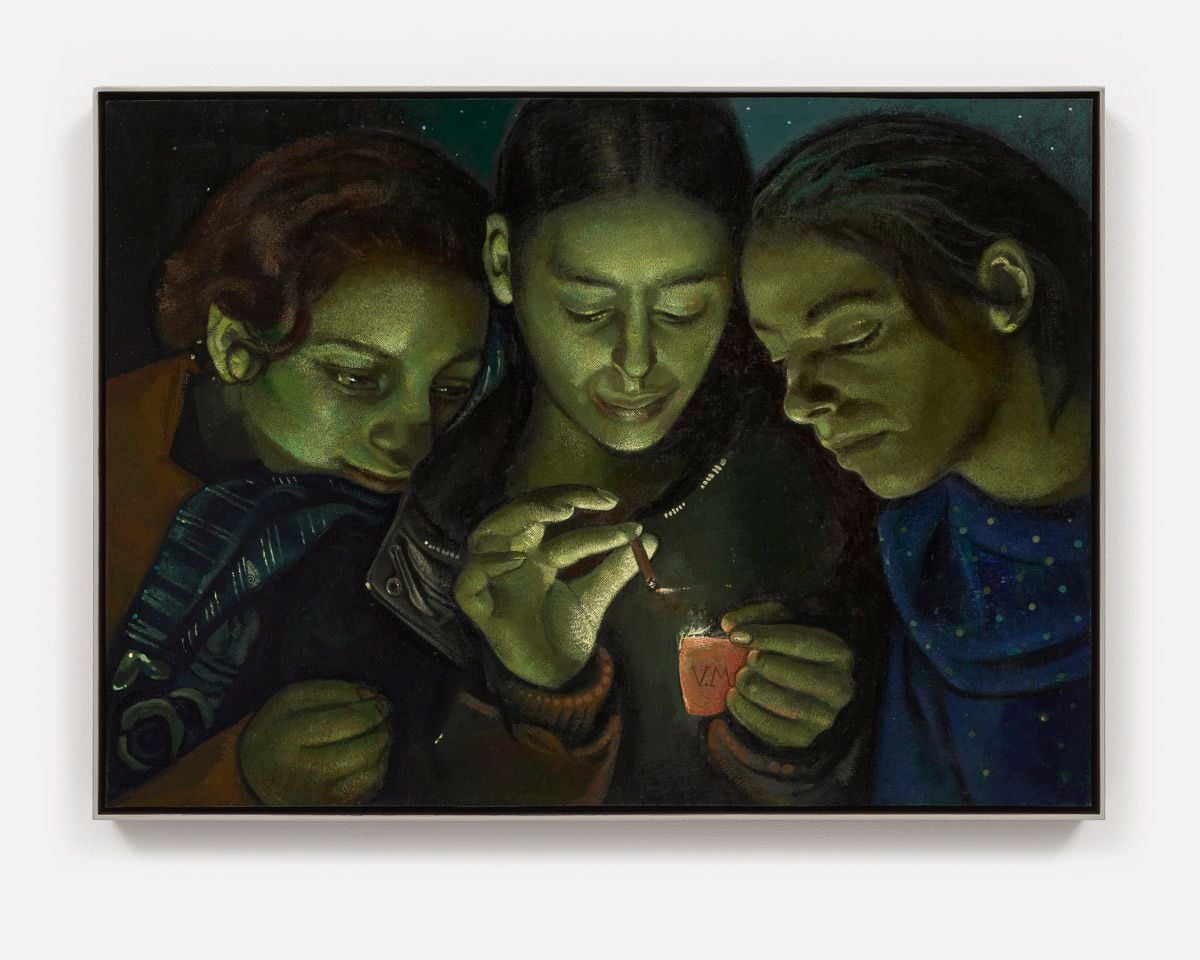
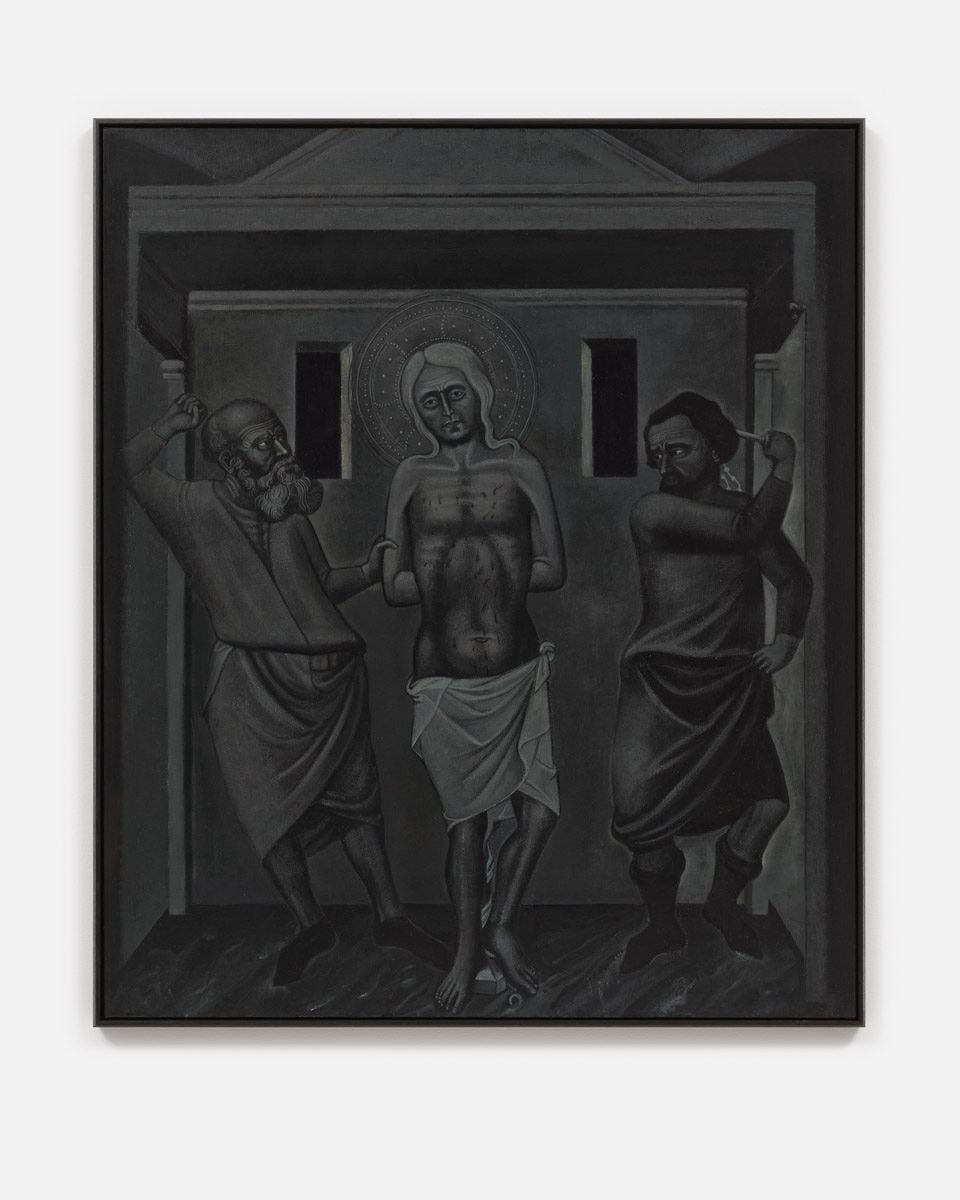
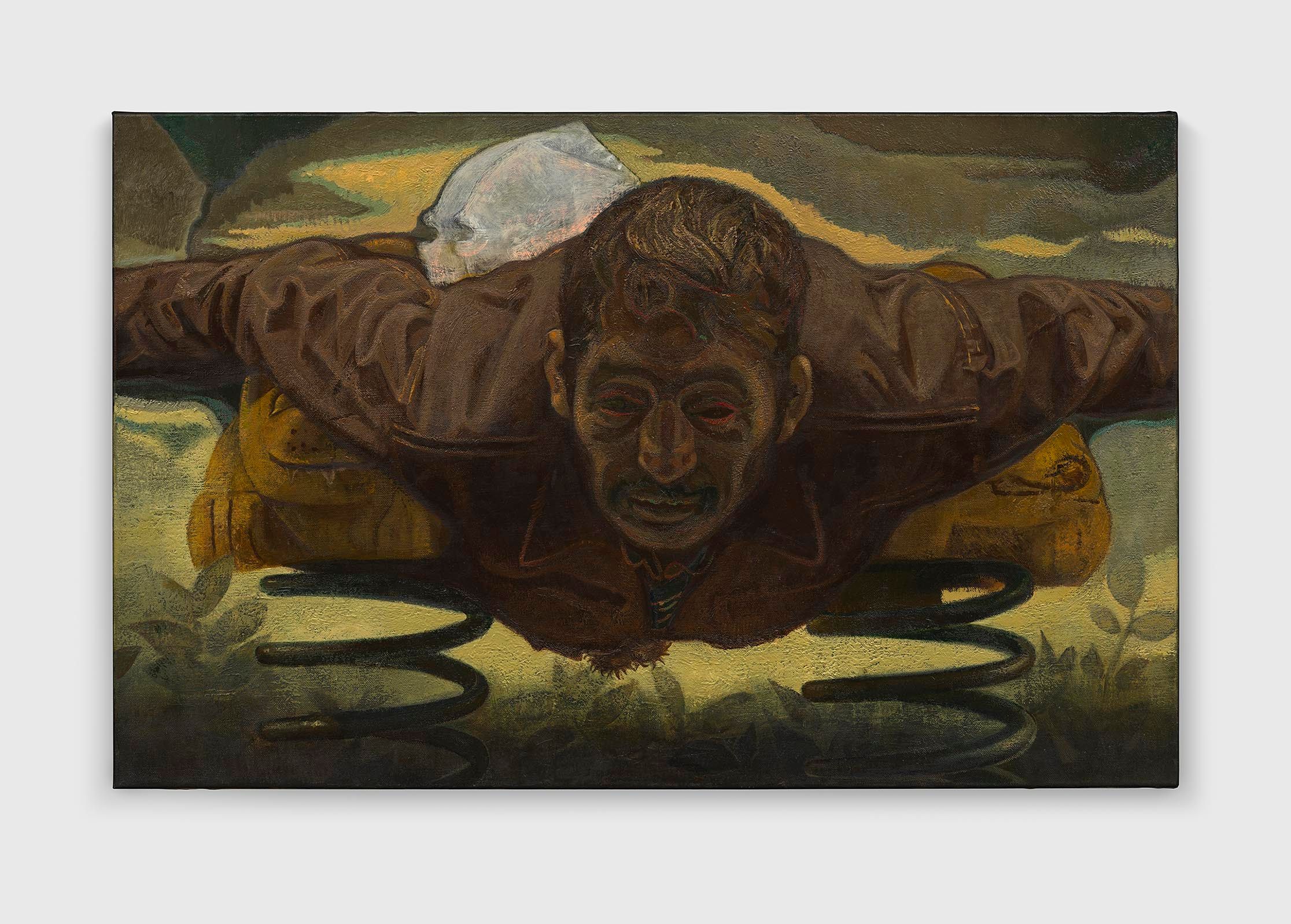
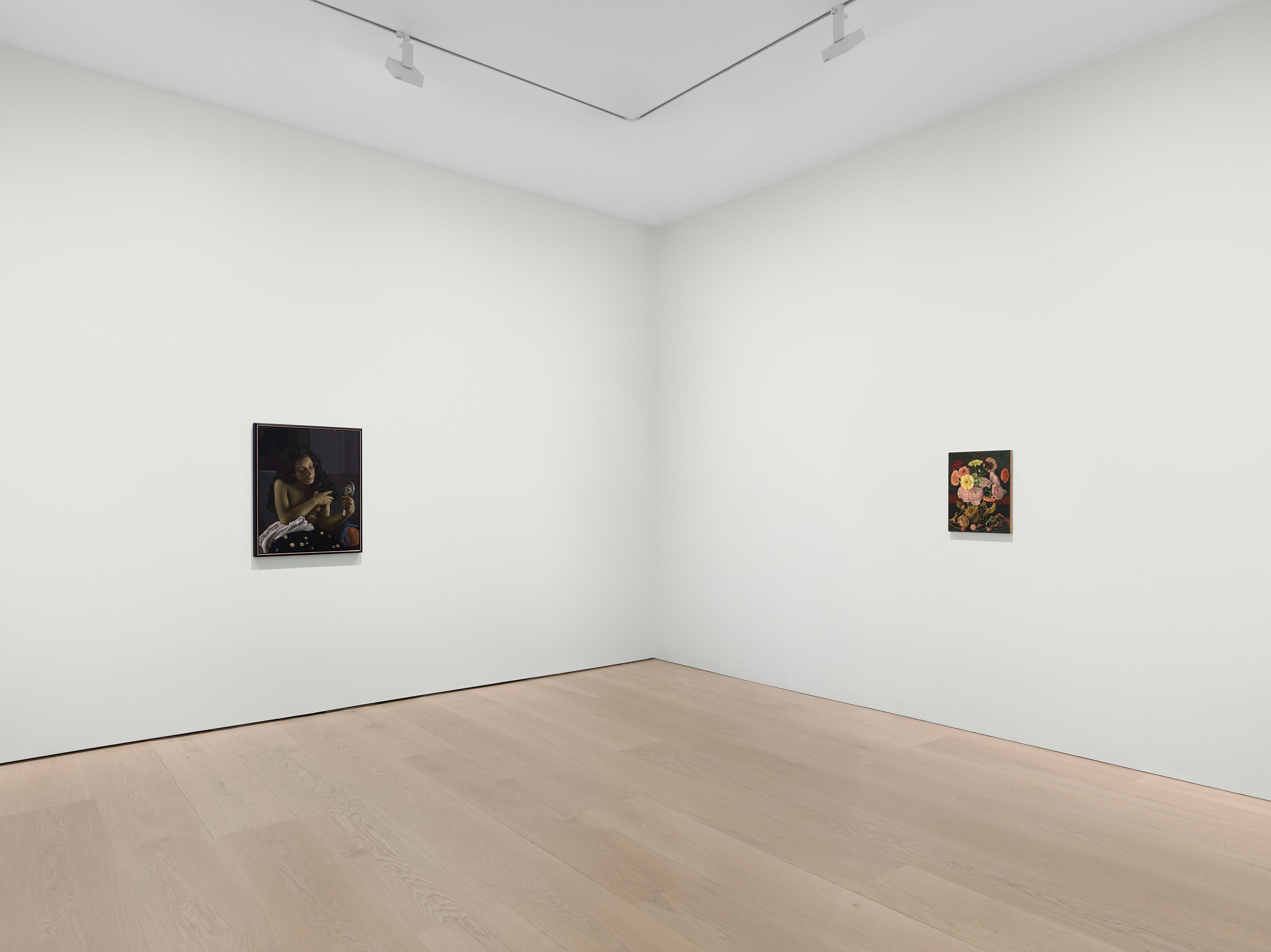
The Absence That We Are, Man’s first exhibition at David Zwirner in London, centres on the cycle of birth and death. The show takes its title from the closing line of Rainer Maria Rilke’s poem, ‘The Future’, written during the final four years of the Austrian poet’s life. Across these new paintings (all but one produced during the past two years), Man treats mortality not just as an ending but as a constant presence throughout our lives. They’re dark in colour, dark in subject, and generally small in format. Figures—mothers, women, and Man himself—are caught between states of being, absorbed in private acts of reflection, sleep, or care; poised between life and whatever lies just beyond it.
The paintings appear as if from another age. Their surfaces carry a woollen fuzz that evokes the timeworn patina of Old Master panels, yet seemingly anachronistic details yank the viewer back into the present. In Maiden with Skull (2024), for instance, a discarded bra lies beside the figure, its garish colour and synthetic lace more at home on the shelves of Victoria’s Secret than in a devotional tableau.
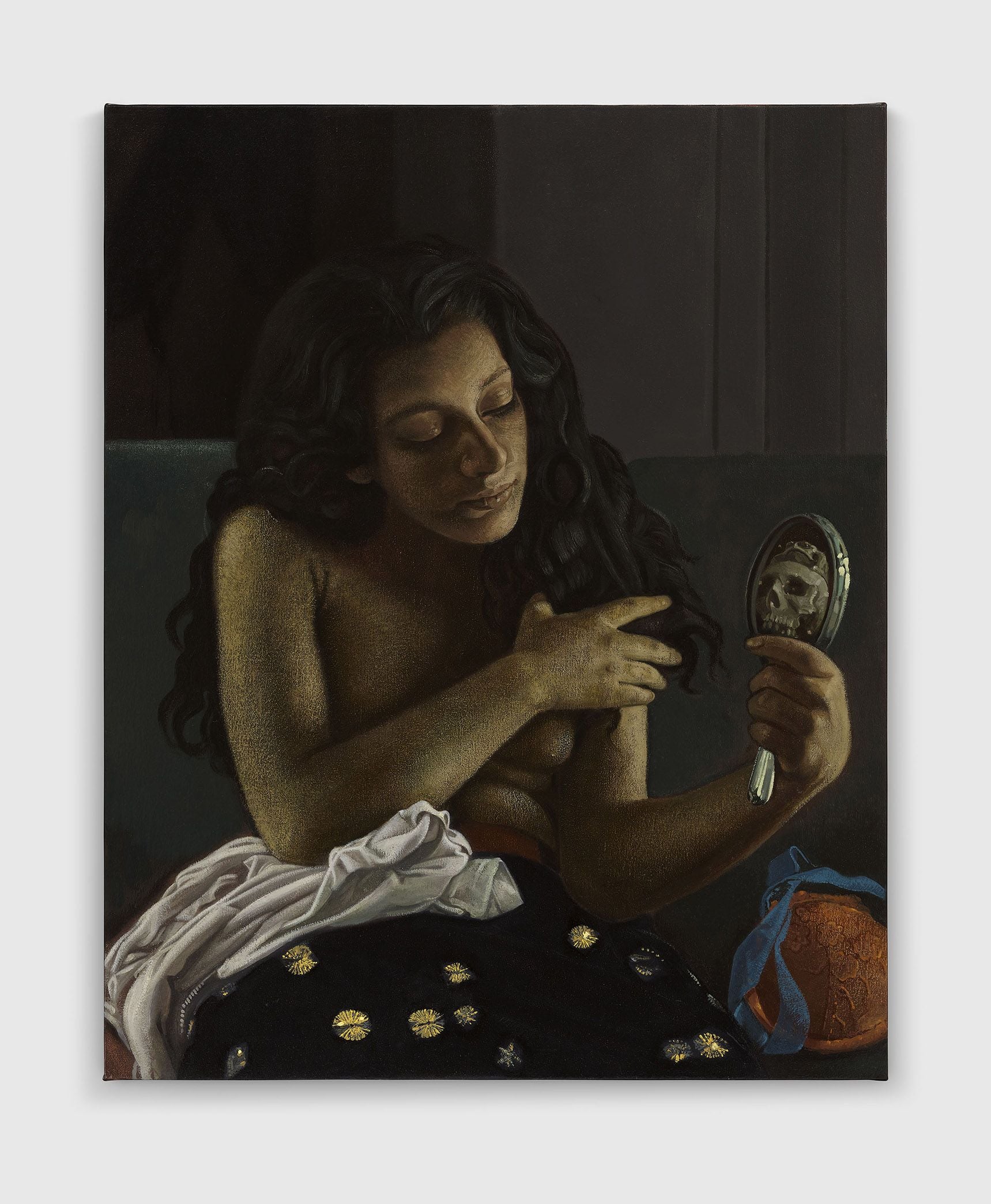
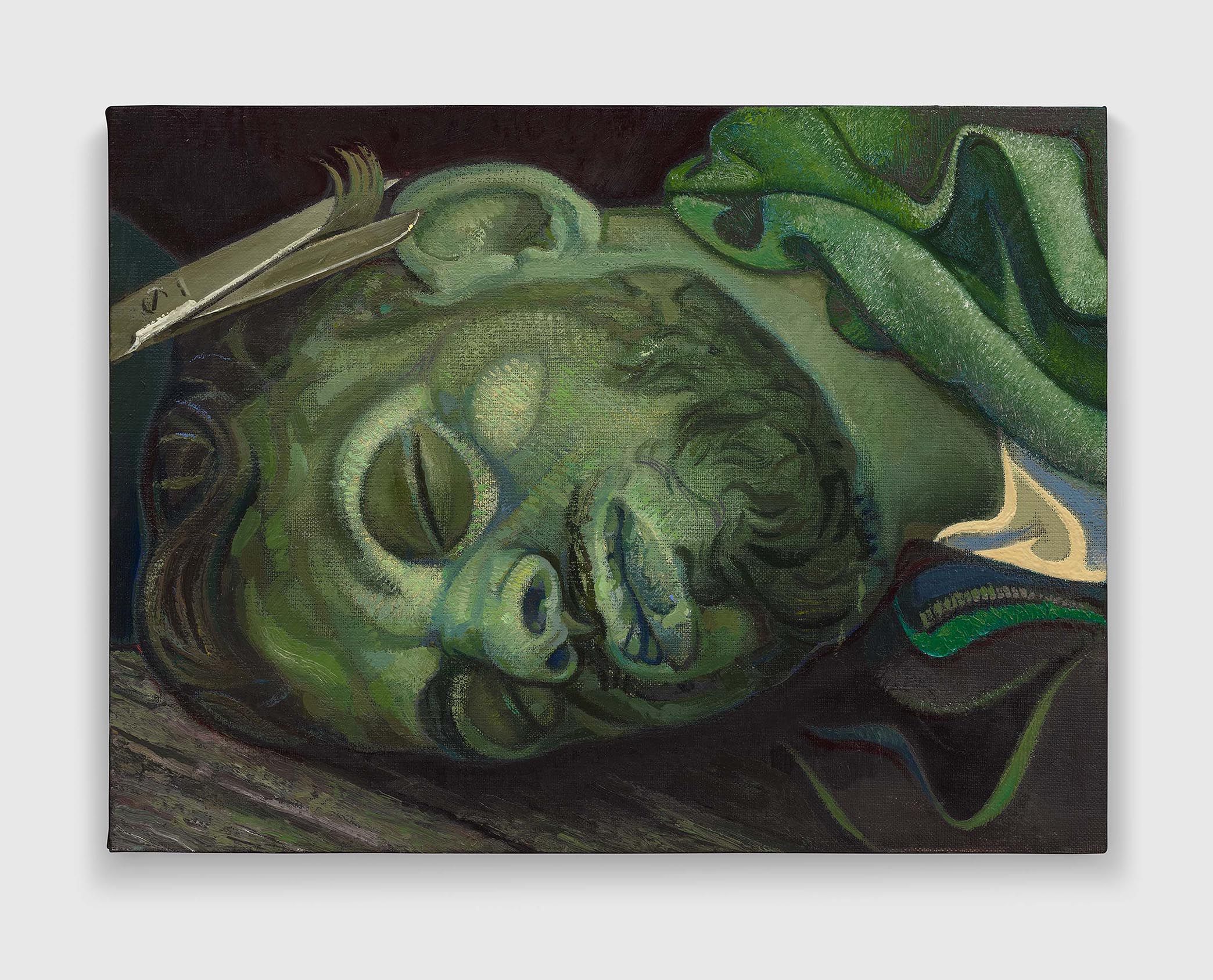
This conversation with painting’s past also extends to the self. Across a series of self-portraits displayed throughout the gallery, Man consciously places himself within the lineage of the genre. For an artist who has spent his career sidestepping visibility (he rarely gives interviews and maintains no social media presence), this feels subversive: in an age of digital overexposure, these paintings may be the only likenesses of Victor Man to endure. In Self with Saint Michael the Archangel (2024), he joins a long tradition of artists who use self-portraiture to inscribe themselves into history. Behind his own image, Saint Michael battles a dragon, while Man holds a palette on which two beasts clash in miniature, suggesting the extension of the struggle into the act of painting itself. Rather than celebrating himself, Man seems to ask what it means to paint at all—to work alone with history at one’s back and the weight of its images pressing forward through one’s hand.
Man has looked to the past since his very first show at Plan B in 2005 (the gallery’s inaugural exhibition), for which he painted an imaginary duel in monochrome directly onto the wall. The mural unfolded from left to right, the duel playing out scene by scene until the fallen bodies had burned and their ashes had become the pigment. It was, as Pop remembers, ‘beautiful and unsettling, and it made clear who Victor Man was, and still is, as an artist.’
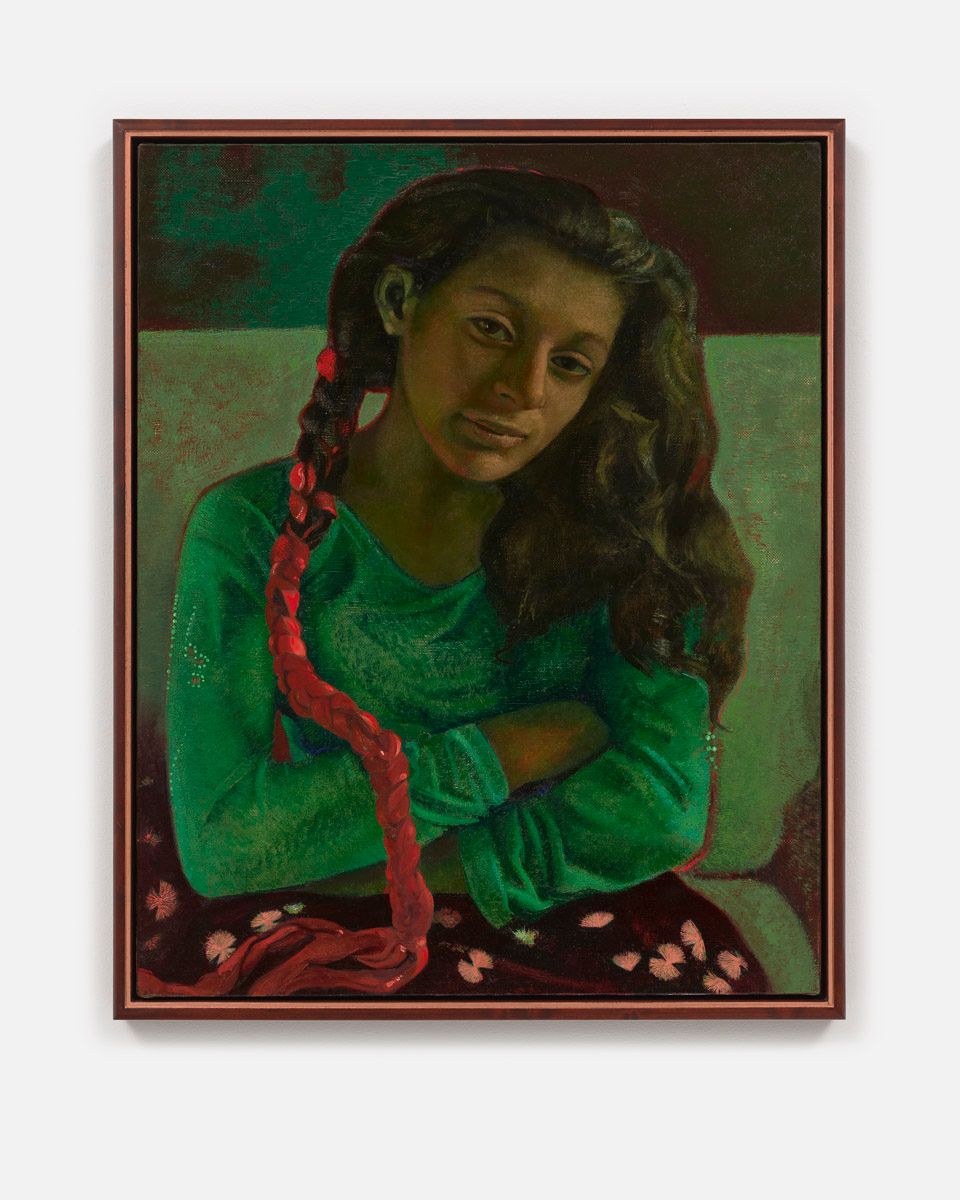

That darkness and sense of renewal mirrored the mood of a generation coming of age in post-communist Romania during the 1990s. Under former dictator Nicolae Ceaușescu’s regime, there were ‘no collectors, no state funding, no coherent art system’, Pop recalls, while the era that followed saw a period of wild, capitalistic growth for the scene. It was against this backdrop that Cluj began to attract international attention. When Man introduced Pop to fellow Romanian painter Adrian Ghenie, the pair opened what would become one of Romania’s foremost galleries. Man’s debut at Plan B was reviewed in Art in America, and within a year the gallery was showing at The Armory Show in New York—the first from Eastern Europe or Russia to do so.
In 2005, the term ‘Cluj School of Painting’ surfaced at the Prague Biennale, coined by Italian art critic Giancarlo Politi to describe an emerging generation of Romanian painters—among them Ghenie, Șerban Savu, Marius Bercea, and Man—who came of age in the shadow of the 1989 revolution. What loosely connected these artists was a shared reckoning with the country’s recent history: the uneasy shift from totalitarian rule to capitalism and the pressures of globalisation that came with it. Romanian art critic Mihnea Mircan described their collective ‘allergy to utopia’, a phrase that captured the group’s wary scepticism towards ideology, and their instinct to probe and reassemble meaning through painting. These artists were united by a belief in the expressive power of painting, and its value as an aesthetic object. The opening in 2009 of the Paintbrush Factory, in a disused industrial block in downtown Cluj, gave that label a physical anchor. Run as an artists’ cooperative, it housed studios, project spaces, and galleries, including Plan B.
In truth, however, the ‘Cluj School’ encompassed a constellation of distinct sensibilities. It was never a moment in any formal sense: the artists issued no manifestos, followed no programme, and shared no unified style—many worked across other media besides painting. Ghenie reimagined the theatre of 20th-century power, his brushwork a turbulent excavation of figures such as Hitler, Göring, and Ceaușescu. Savu’s restrained realism turned to the quiet rhythms of post-communist life, the aftermath of what he saw as a failed utopia. Bercea’s large-scale canvases spliced the palm-lined boulevards of Hollywood with the block architecture of the Black Sea coast, conjuring paradoxical visions that bridged East and West. As the artist Flaviu Rogojan later observed, the label was treated with irony at home; local artists even satirised it in exhibitions, one attempting to pin down the ‘perfect formula’ for a Cluj painter.
Man, meanwhile, continued to look further back into art history. The greyscale vignettes of his early works gave way to something more atmospheric, even spectral. Faces dissolved into veils of colour; flesh became translucent, almost phosphorescent, as if lit from within. His palette, once rooted in black and umber, drifted toward bruised mauves, waxy blues, and sulphurous yellows—hues of the kind that we see in his exhibition at David Zwirner, poised between illumination and decay.

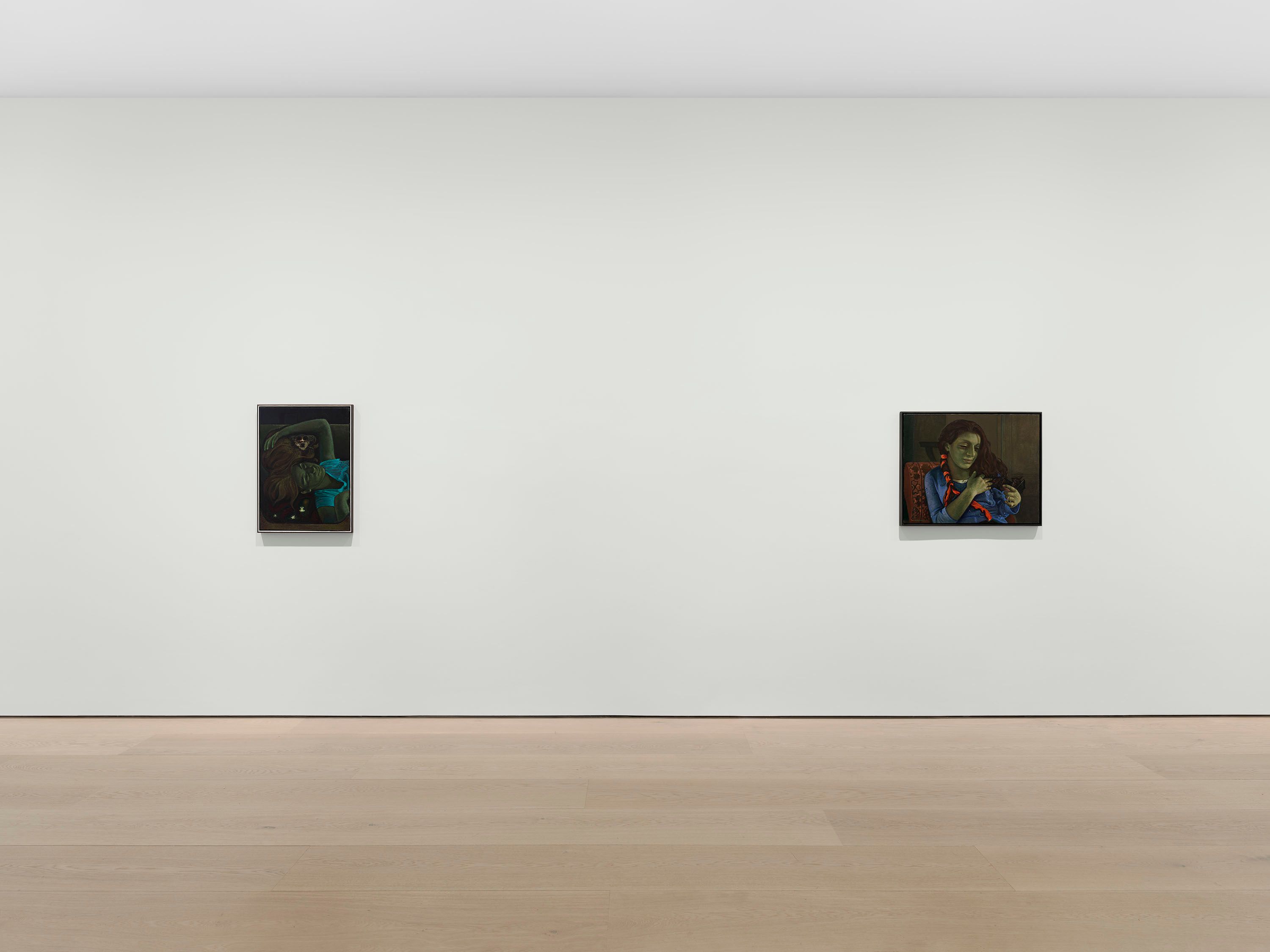
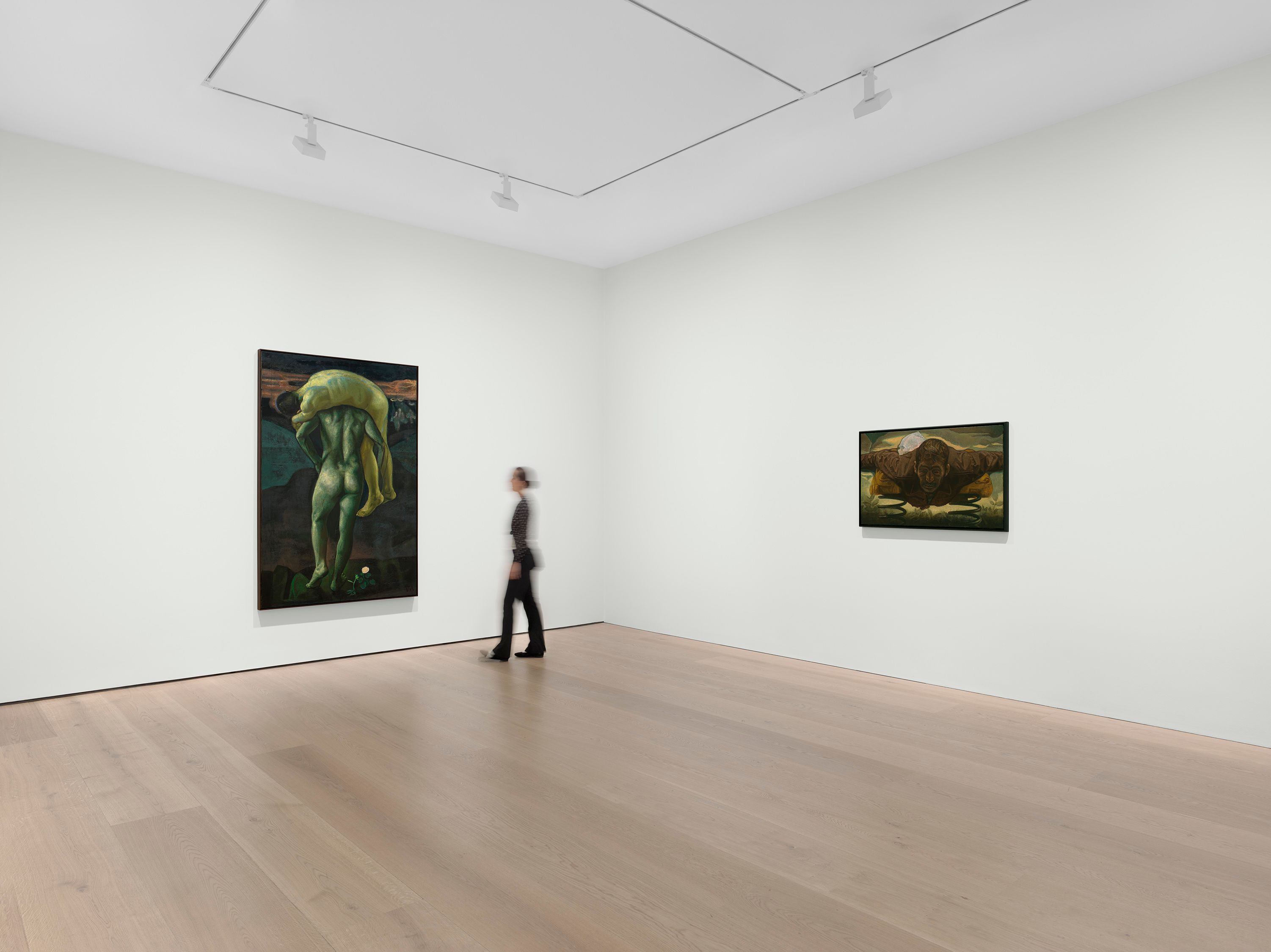
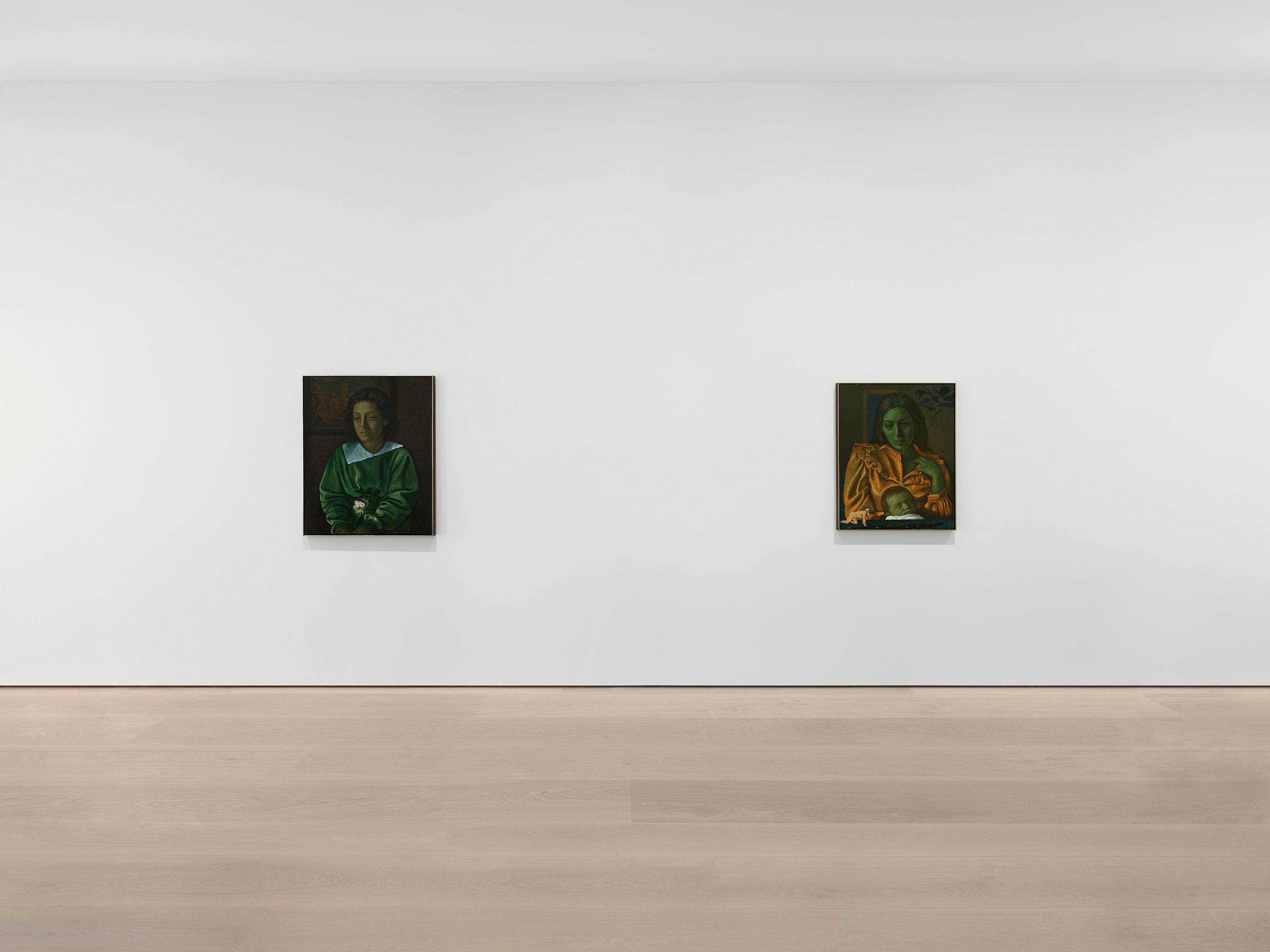
By the 2010s, the external gaze of Man’s earlier works, assembled from Western comic books and the scattered traces of his Hungarian and Transylvanian heritage, had turned inward. His newer works withdrew from the present altogether, looking instead to the longue durée of Western painting, evincing a deep appreciation of the art of Renaissance and 19th-century Europe, and turning to poetry, death, and the existential undercurrent running through art history. ‘Victor understood very early on that he had to connect with the history of art,’ says Pop. ‘Even then,’ recalls Bercea, ‘his grasp of painting was extraordinary. We were all trying to look outward but Victor was already there. He’s a magician.’
For Pop, the story was never about a movement but a moment shaped by the conditions of its time. Under Ceaușescu, Romania had little electricity, food, or access to wider culture, and the so-called freedom of the 1990s brought—for at least another decade—instability instead of opportunity. In this environment, young artists in Cluj pushed themselves with urgency, driven by what Pop calls a hidden energy—a survival instinct to get out, do better, go further. ‘The ones who endured did so as highly individual artists,’ Pop concludes. ‘And Victor Man is one of them. Even in person, he carries something of the 19th century’s culture and paradox. He’s a modern artist who is, in many ways, anti-modern.’ —[O]
Victor Man: The Absence That We Are is on view at David Zwirner in London from 18 September—31 October 2025.
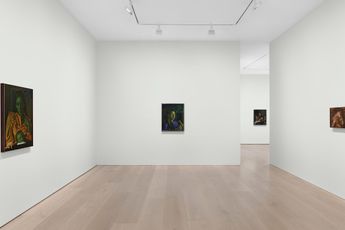
Main image: Exhibition view: Victor Man, The Absence That We Are, David Zwirner, London (18 September–31 October 2025). Courtesy David Zwirner. Photo: Anna Arca.


A respected voice in contemporary art discourse.
Focusing on ambitious storytelling and insightful art-world commentary. Ocula Magazine publishes in-depth interviews, critical essays and timely analysis on the artists, exhibitions and ideas driving the global art world.
Learn more about Ocula Magazine
Showcasing the best of the art world.
Ocula partners with galleries from around the world to highlight their artists, artworks and exhibitions. Gallery membership is by application and invitation, with each member vetted by an independent panel.
Learn more about Ocula Membership
Specialises in the sale of major artworks.
Led by a team with deep ties to the world’s leading auction houses, galleries and collectors. Ocula’s advisory team offers bespoke services to high-net-worth clients from around the world who are looking to acquire the best of contemporary and modern art.
Learn more about our team and services