




MARK ROTHKO
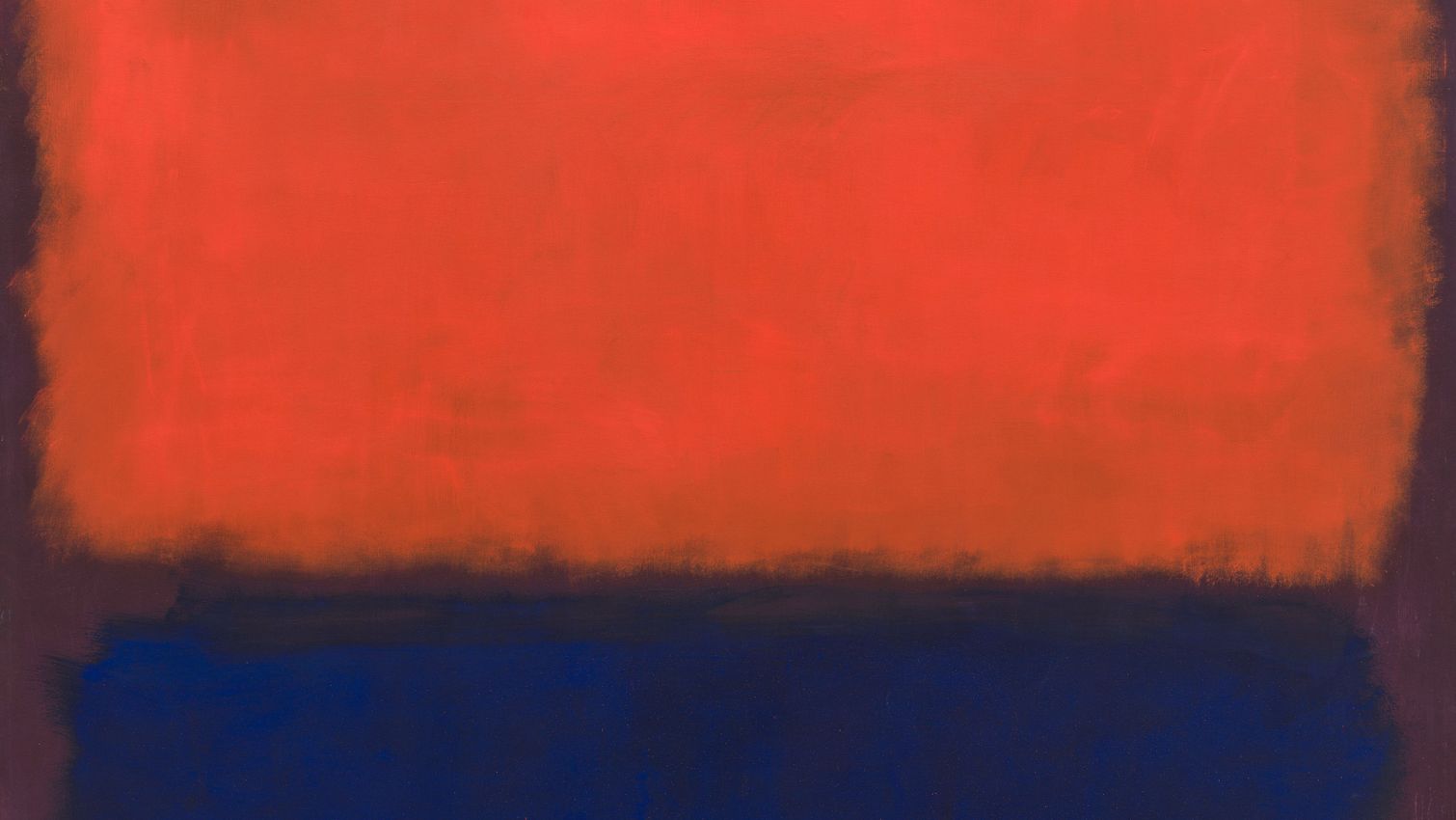
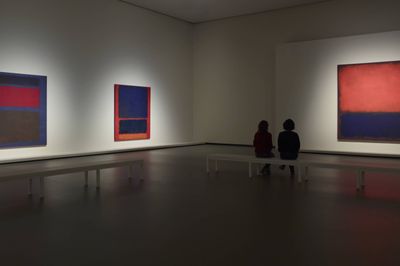
1903-1970, Latvia“The people who weep before my pictures are having the same religious experience I had when I painted them,” painter Mark Rothko once remarked. Born in 1903, Rothko became one of the most influential American postwar artists associated with Abstract Expressionism and colour field painting. His large-scale canvases, stained in swathes of vivid colour, continue to shape how historians, museums and contemporary artists understand modern art.
In 2026, Mark Rothko is the subject of a major retrospective, Rothko in Florence (14 March–23 August 2026) at Fondazione Palazzo Strozzi, Italy, bringing together more than 70 works from leading international museums and private collections to trace his career from early figurative painting to the late immersive colour fields.
Early life and education
Mark Rothko was born Marcus Rothkowitz in Dvinsk, Russia (today Daugavpils, Latvia). In 1913, he emigrated with his family to the United States and settled in Portland, Oregon. Rothko entered Yale University in 1921 but left in 1923 and moved to New York, where he studied at the Art Students League under Jewish-American artist Max Weber. In New York, Rothko became close with influential 20th-century artists, including the painters Milton Avery and Adolph Gottlieb, connections that helped shape his transition from figurative work to abstraction.
Mark Rothko’s colour field paintings
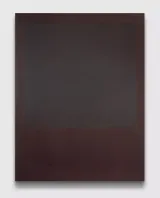
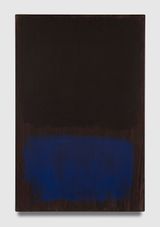
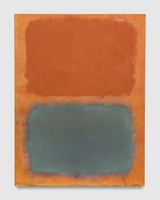
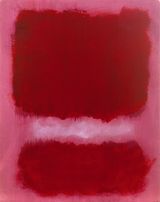
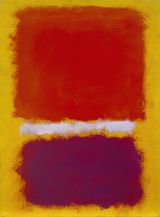
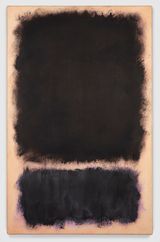
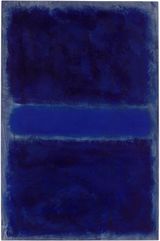
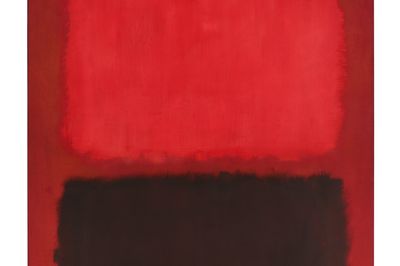
Rothko began developing the colour field paintings for which he is best known in the late 1940s. A subset of Abstract Expressionism, colour field painting refers to postwar abstract painters who used large areas of flat colour or softly modulated colour to create an immersive visual field; the term originally referred to Rothko, Clyfford Still, and Barnett Newman, and later extended to artists such as Morris Louis, Helen Frankenthaler, and Kenneth Noland. In Rothko’s work, colour field painting typically appears as large vertical canvases covered in layers of thinned paint that form stacked rectangles of colour hovering over a ground.
Although many viewers experience these paintings as soothing, meditative, or contemplative, Rothko is said to have described himself as one of the most violent American painters and suggested that behind his colours lay a sense of impending catastrophe. While he often resisted being labelled an Abstract Expressionist, his view of his paintings as harbouring a sense of destruction aligns with the movement’s broader response to the atrocities of World War II and to humanity’s capacity for violence.
Viewing Rothko’s paintings
Throughout his life, Rothko emphasised the importance of viewing his paintings with full attention, in spaces that encouraged slow looking and emotional intensity. He admired Michelangelo’s Laurentian Library in Florence for encouraging this kind of engagement, an effect he sought to echo in his own enveloping, chapel‑like environments.
The Seagram Murals
In the late 1950s, Mark Rothko was commissioned to produce a series of canvases for the Four Seasons Restaurant in New York’s Seagram Building. Dissatisfied with the distracting and commercial nature of the restaurant setting, he ultimately withdrew from the project and later presented the paintings as a gift to Tate in London in the late 1960s. The Seagram Murals have been shown in a dedicated, chapel‑like room at Tate in London, reinforcing the artist’s preference for quiet, concentrated viewing.
Selected Exhibitions
Mark Rothko has been the subject of both solo and group exhibitions. Important solo exhibitions include:
- Mark Rothko, Rothko in Florence, Fondazione Palazzo Strozzi, Florence (14 March–23 August 2026)
- Mark Rothko, Paintings on Paper, National Gallery of Art, Washington (16 May–22 September 2024)
- Mark Rothko, Fondation Louis Vuitton, Paris (18 October 2023–02 April 2024)
- Mark Rothko, Museum of Modern Art, New York (18 January–12 March 1961)
Group exhibitions include:
- Lee Ufan and Mark Rothko,Correspondence, Pace Gallery, Seoul (4 September–26 October 2024)
- Monsters & Myths: Surrealism and War in the 1930s and 1940s, Baltimore Museum of Art (24 February–26 May 2019)
- Just What Is It..., ZKM | Museum für Neue Kunst, Karlsruhe, Germany (5 December 2009–11 April 2010)
The Mark Rothko Chapel and his legacy
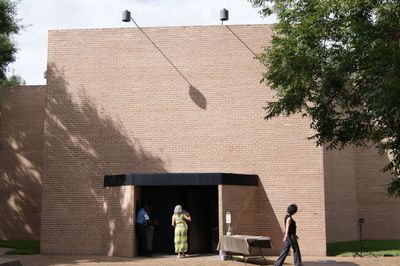
Mark Rothko died in 1970 by taking his own life. The 14 dark, looming murals of the non-denominational Rothko Chapel in Houston (founded by the de Menil family as a centre for religion, human rights, and interfaith dialogue) remain on permanent display and continue to define his reputation for creating spaces of intense spiritual and emotional experience.
Rothko’s paintings are also held in most major museum collections around the world, including The Metropolitan Museum of Art, New York; Museum of Modern Art, New York; National Gallery of Art, Washington; National Gallery of Victoria, Melbourne; and The National Museum of Art, Osaka.
Mark Rothko prices and auction records
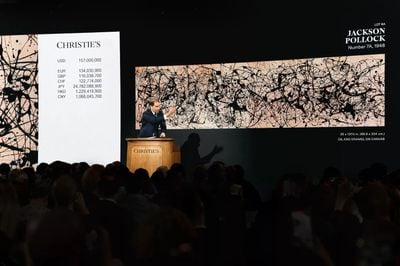
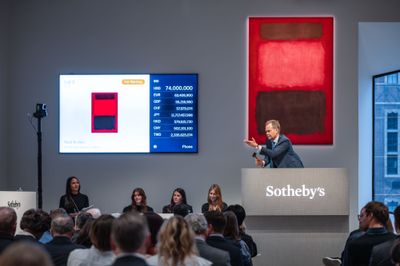
Today, Mark Rothko’s paintings rank among the most expensive works of postwar art ever sold at auction, with major canvases from the 1950s and 1960s achieving prices in the tens of millions of dollars. High‑profile sales, including record‑setting results at Christie’s and Sotheby’s in New York and Hong Kong, have cemented Rothko’s status as a blue‑chip figure in the global art market, even as museums continue to foreground the spiritual and emotional qualities of his work over its monetary value.
Recent auction spotlight: Mark Rothko and Agnes Gund
In May 2026, Christie’s announced that Mark Rothko’s No. 15 (Two Greens and Red Stripe) would be offered in its 20th/21st Century evening sale in New York, coinciding with Frieze Week, as part of a trio of masterworks from the collection of philanthropist and museum patron Agnes Gund.
Gund acquired the nearly eight‑foot‑wide canvas directly from Rothko in 1967 during a visit to his studio, and it became a centrepiece of her legendary collection alongside Cy Twombly‘s Untitled (1961) and Joseph Cornell‘s Untitled (Medici Princess). Positioned by Christie’s in the context of Gund’s legacy as a visionary collector and champion of museums, the high‑profile sale underscores how Rothko’s work continues to sit at the intersection of museum‑level connoisseurship, philanthropy, and the top tier of the global auction market.
Mark Rothko FAQs
Who was Mark Rothko?
Mark Rothko (born Markus Yakovlevich Rothkowitz in 1903 in Dvinsk, now Daugavpils, Latvia) was an American abstract painter best known for his large colour field paintings. He is widely associated with Abstract Expressionism in postwar New York.
What is Mark Rothko famous for?
Rothko is most famous for his monumental canvases of soft‑edged, stacked rectangles of colour, developed from around 1949, which are often described as colour field paintings and are intended to provoke intense emotional and spiritual responses in viewers.
What influenced Mark Rothko’s art?
Rothko’s art was influenced by mythology, philosophy, and a desire to convey deep emotional states. His early work drew from surrealism and symbolism, eventually evolving into a purely abstract style that aimed to evoke spiritual or transcendent experiences.
How much are Mark Rothko’s paintings worth?
Original Mark Rothko paintings typically sell for many millions of dollars at auction, with exceptional colour field canvases from his mature period sometimes exceeding 80 million USD, placing him among the highest‑valued postwar artists.
What is the most expensive Mark Rothko painting sold at auction?
A Mark Rothko auction record was set in 2012, when one of his large colour field paintings sold at Christie’s in New York for just under 87 million USD, a result that helped confirm his position at the top of the postwar art market.
Was Mark Rothko an Abstract Expressionist?
Although Rothko resisted being firmly labelled, art historians generally place him within the Abstract Expressionist movement in New York, where he worked alongside artists such as Jackson Pollock, Willem de Kooning, and Barnett Newman while developing his distinct colour field style.
What is colour field painting and how does Rothko fit into it?
Colour field painting is a branch of Abstract Expressionism in which artists use large areas of flat or gently modulated colour to create an immersive visual field, and Rothko, alongside Clyfford Still and Barnett Newman, is considered one of the key pioneers of this approach.
Where did Mark Rothko live and work?
Rothko emigrated from the Russian Empire to the United States in 1913, grew up in Portland, Oregon, and later settled in New York City, where he developed his mature abstract paintings and became part of the mid‑20th‑century New York School.
What are some of Mark Rothko’s most important works and series?
Among Rothko’s most significant works are his classic colour field paintings of the 1950s and 1960s, the Seagram Murals originally conceived for the Four Seasons Restaurant in New York, and the 14 dark paintings installed in the non‑denominational Rothko Chapel in Houston.
What is the Rothko Chapel and why is it important?
The Rothko Chapel in Houston is a non‑denominational, octagonal space housing 14 large, dark Mark Rothko murals, conceived as a place for contemplation, spiritual reflection, and human rights events, and it has become central to his legacy as a creator of immersive, chapel‑like environments.
Why did Mark Rothko paint rectangles of colour?
Rothko moved away from figurative and mythological imagery in the 1940s toward simplified blocks of colour in order to strip away narrative and focus directly on fundamental human emotions such as tragedy, ecstasy, and doom, which he believed could be conveyed purely through colour and scale.
Has Mark Rothko featured in recent high‑profile auctions?
Mark Rothko’s paintings continue to appear in major evening sales at leading auction houses, including Christie’s and Sotheby’s, where works from prominent collections such as that of philanthropist Agnes Gund highlight both his enduring market strength and his close ties to museum‑level collecting and arts philanthropy.
How and when did Mark Rothko die?
Mark Rothko died in New York City in 1970, taking his own life at the age of 66, shortly after health problems limited his ability to produce the large‑scale canvases for which he was known.
Where can I see Mark Rothko’s work in 2026?
In 2026, a major exhibition, Rothko in Florence is on view at Fondazione Palazzo Strozzi, Florence, from 14 March to 23 August 2026.
Ocula | 2026


















Explore Mark Rothko's Exhibitions




Mark Rothko in Ocula Magazine








Explore and Follow Artists Shaping Contemporary Art
A respected voice in contemporary art discourse.
Focusing on ambitious storytelling and insightful art-world commentary. Ocula Magazine publishes in-depth interviews, critical essays and timely analysis on the artists, exhibitions and ideas driving the global art world.
Learn more about Ocula Magazine
Showcasing the best of the art world.
Ocula partners with galleries from around the world to highlight their artists, artworks and exhibitions. Gallery membership is by application and invitation, with each member vetted by an independent panel.
Learn more about Ocula Membership
Specialises in the sale of major artworks.
Led by a team with deep ties to the world’s leading auction houses, galleries and collectors. Ocula’s advisory team offers bespoke services to high-net-worth clients from around the world who are looking to acquire the best of contemporary and modern art.
Learn more about our team and services