




ROB PRUITT
b. 1964, United StatesRob Pruitt is an American post-conceptual contemporary artist known for a playful but incisive practice spanning painting, sculpture, installation, performance, and social projects that draw on pop culture and the art world itself.
Based between New York and Los Angeles, Pruitt’s artworks often use humour, glitter, and everyday materials to address celebrity, consumerism, anxiety, and self-image, from his notorious Cocaine Buffet (1998) to his long-running ‘Suicide Paintings’ and panda paintings. His work has been widely exhibited in major contemporary art galleries and institutions in the United States and Europe.
Early life and education of Rob Pruitt
Rob Pruitt was born in 1964 in Washington, D.C., United States, and studied at the Corcoran College of Art and Design in Washington, D.C., before attending Parsons School of Design in New York. Moving to New York in the late 1980s, Pruitt immersed himself in the city’s downtown art and club scenes, which became a key reference point for his use of fashion, celebrity culture, and mass media imagery.
In the early 1990s, Pruitt worked collaboratively with Jack Early, producing pop-inflected sculptures and installations that engaged American identity, race, and consumer culture; a controversial exhibition at Leo Castelli Gallery in 1992 led to the dissolution of the duo and a period of professional setback for Pruitt. The experience would later shape his candid, autobiographical approach and his interest in failure, reinvention, and the shifting status of the contemporary artist.
Rob Pruitt artworks and style
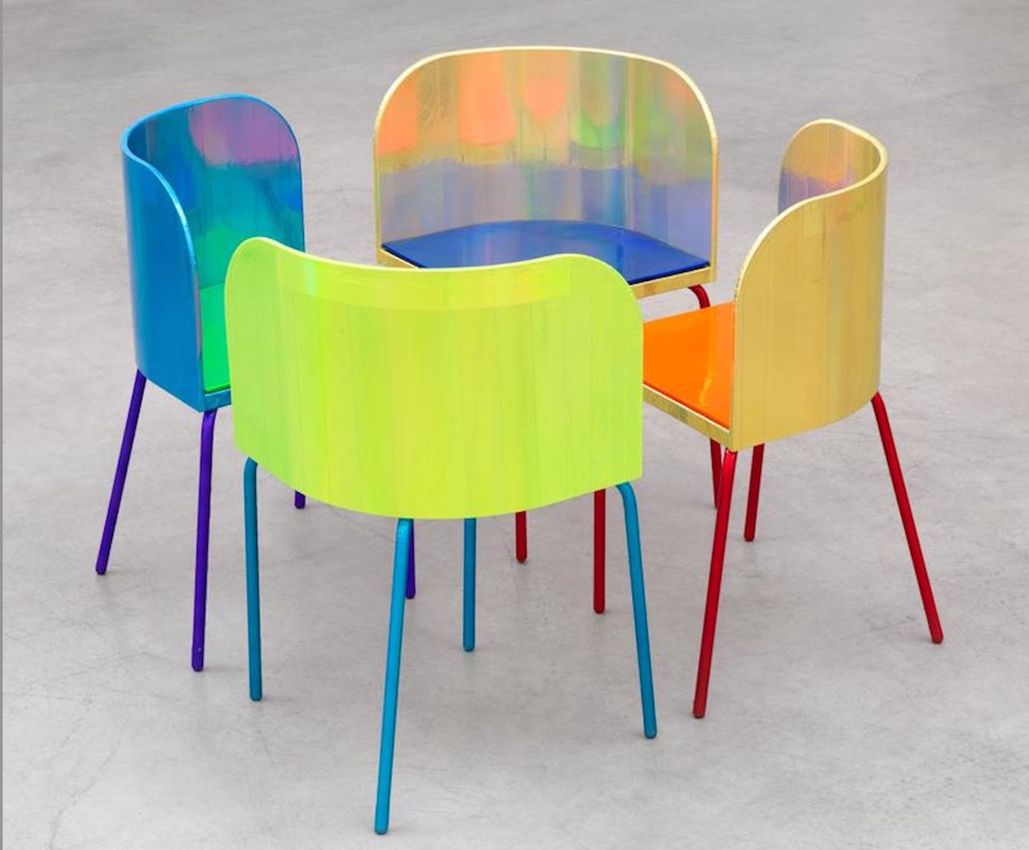
Rob Pruitt’s artworks don’t adhere to an easily definable style. However, they do often combine a high-gloss pop sensibility with wry, sometimes abrasive, reflections on art, fame, and everyday life, moving easily between glitter paintings, sculptural objects, performance formats, and participatory events. Across pandas, gradients, flea markets, and celebrity tributes, Pruitt treats the art world and himself as both subject and stage, using repetition, kitsch materials, and serial formats to explore how value and meaning are constructed in contemporary culture.
Early works and developments, 1990s
In the early 1990s, after his collaboration with Jack Early resulted in controversy, Pruitt’s solo work engaged ideas of exclusion, self-image, and the desire to re-enter the New York contemporary art gallery system. An early sculpture installed at Gavin Brown’s Enterprise, an Evian water fountain, used the language of minimalism and retail display to stage baptism, refreshment, and a tongue-in-cheek rebirth of the artist’s public persona.
In 1998, Cocaine Buffet at the artist-run space The Fifth International presented a 16-foot mirror with a line of real cocaine down its centre, which visitors could consume, creating a highly charged situation that has become one of Pruitt’s most discussed works. The installation has been read as a critique of art-world excess and spectacle, but also as a risky publicity gambit that cemented Pruitt’s reputation as a provocateur.
Mature practice and key series, 2000—2010s
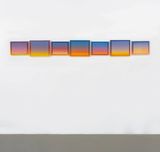
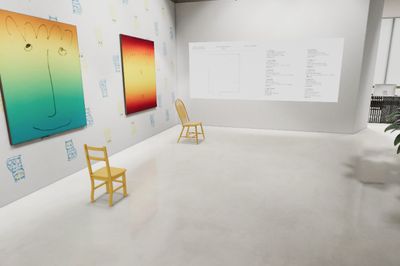
From the late 1990s onwards, Pruitt developed several signature bodies of work, including glitter-encrusted panda paintings, gradient ‘Suicide Paintings’, and sculptural assemblages using coins, furniture, and domestic objects. The panda works use a cartoonish, endearing animal motif to frame questions about innocence, cuteness, and mass-market imagery, while the ‘Suicide Paintings’ present luminous colour gradients bordered by darker frames, suggesting both screensavers and emotional thresholds.
In 2010 the large-scale exhibition Pattern and Degradation at Gavin Brown’s Enterprise and Maccarone in New York brought together patterned paintings influenced by Amish quilt designs, sculptural installations, and environment-scale works, and has been regarded as a pivotal confirmation of Pruitt’s place in the contemporary art establishment. These works used repetition, craft references, and pop colour to examine freedom, hedonism, and the idea of the artist’s life as a kind of extended rumspringa.
Other projects and ongoing themes, 2010s—
Since the 2010s, Pruitt has extended his practice into daily and durational formats, including serial painting projects like ‘A Year of Panda Paintings’ and observational series such as A Month of Sunsets produced in locations like Joshua Tree, California. These works treat everyday observation, diaristic image-making, and the changing American landscape as material for painting, while still retaining his preference for bold colour, repetition, and a light touch.
Pruitt has also staged socially driven projects, such as the ‘Flea Market’ exhibitions, which was presented at the Brant Foundation, that transform galleries into functioning markets for artworks, clothes, and commodities, and his ‘Art Awards’ event presented at the Guggenheim, which parody and celebrate art-world prize ceremonies. Running through these projects is an interest in participation, the circulation of objects, and the often uneasy overlap between commerce, friendship, and community in contemporary art.
Brand collaborations by Rob Pruitt
Rob Pruitt’s collaborations with fashion and lifestyle brands extend his post-conceptual practice into the realms of luxury goods and mass culture, using his panda motifs and colour-gradient imagery to bring contemporary art into everyday accessories. These partnerships with brands such as Jimmy Choo, J Brand, and others sit alongside his gallery work, reinforcing his interest in celebrity, consumer desire, and the crossover between the art world and global retail.
Pruitt’s most widely recognised fashion collaboration is his project with luxury shoe and accessories label Jimmy Choo on a Cruise 2013 capsule collection, which translated his pop-art pandas and rainbow palettes into high-end footwear and bags. The collection included vivid prints, animal patterns, and limited-edition panda minaudières—‘angel and devil’ panda clutch bags studded with Swarovski crystals—that echoed the light—dark, playful—melancholic tension running through his contemporary artworks.
Beyond Jimmy Choo, Pruitt has worked with Los Angeles—based denim brand J Brand on a collaboration that expanded the label’s colour palette using gradients inspired by his painting practice. The J Brand x Rob Pruitt project produced boldly coloured jeans and garments that functioned as wearable extensions of his ‘Suicide Paintings’ and other gradient works, blurring the boundary between art object and fashion item while remaining firmly rooted in his studio vocabulary.
Exhibitions of Rob Pruitt
Rob Pruitt has presented solo exhibitions and group exhibitions at major contemporary art galleries and museums in New York, Los Angeles, Aspen, and across Europe, often in collaboration with galleries such as Gavin Brown’s Enterprise, MASSIMODECARLO, and 303 Gallery. Below is a selection of important exhibitions of Rob Pruitt’s artworks.
Select solo exhibitions
- Rob Pruitt at 303 Gallery, New York, United States, 2025
- Holiday at MASSIMODECARLO, Milan, Italy, 2024
- Rob Pruitt: An American Folk Artist at Aspen Art Museum, Aspen, Colorado, United States, 2013
- Pattern and Degradation at Gavin Brown’s Enterprise and Maccarone, New York, United States, 2010
Select group exhibitions
Group exhibitions at major museums and contemporary art centres in New York, Los Angeles, and European capitals focusing on post-conceptual and pop-influenced contemporary art
Thematic shows on humour, celebrity, and social practice in art at institutions in the United States and Europe including Aspen Art Museum and other public museums
Rob Pruitt FAQs
Who is Rob Pruitt?
Rob Pruitt is an American post-conceptual contemporary artist, born in Washington, D.C. in 1964, whose multidisciplinary practice spans painting, sculpture, installation, and performance, often addressing pop culture, the art world, and the anxieties of everyday life. Rob Pruitt studied at the Corcoran College of Art and Design and Parsons School of Design, and his artworks have been exhibited widely in New York, Aspen, and internationally.
Where can I see work by Rob Pruitt?
You can see work by Rob Pruitt at contemporary art galleries such as 303 Gallery in New York and MASSIMODECARLO in Europe, as well as institutions like Aspen Art Museum that have organised major exhibitions of his art. Rob Pruitt’s artworks are also shown in group exhibitions at museums and contemporary art centres in the United States and abroad; viewers can check gallery and museum programmes or view exhibitions featuring Rob Pruitt on Ocula.
Where does Rob Pruitt live?
Rob Pruitt is an American contemporary artist based in the United States, maintaining a strong presence in New York’s contemporary art gallery scene while working on projects that also connect to Los Angeles and other American locations. Rob Pruitt’s engagement with American popular culture, suburban imagery, and California landscapes in series like A Month of Sunsets (Joshua Tree) reflects his ongoing relationship with different U.S. regions.
How is Rob Pruitt’s name pronounced?
Rob Pruitt’s name is generally pronounced ‘Rob PROO-it’, with two syllables in the surname and emphasis on the first. Rob Pruitt’s surname spelling means that online searchers sometimes enter ‘Pruit’ or ‘Pruett’, so using the correct form ‘Rob Pruitt’ helps locate accurate information about the artist and his artworks.
Where can I buy Rob Pruitt’s work?
Rob Pruitt is represented by leading contemporary art galleries, and his artworks can be acquired through galleries such as 303 Gallery in New York and MASSIMODECARLO in Milan and other cities. You can explore sites like Ocula to find out which Ocula galleries represent Rob Pruitt and enquire directly about buying art by Rob Pruitt, including paintings, sculptures, and limited editions.
What type of art does Rob Pruitt make?
Rob Pruitt makes post-conceptual contemporary art that includes glitter panda paintings, gradient ‘Suicide Paintings’, experimental installations like Cocaine Buffet, and socially oriented projects such as flea markets and awards ceremonies. Rob Pruitt’s artworks often use bright colour, humour, repetition, and familiar pop imagery to explore themes of celebrity, failure, self-presentation, and the strange rituals of the art world.
Why is Rob Pruitt famous?
Rob Pruitt is famous for his provocative and often humorous contributions to American contemporary art, including the controversial 1998 installation Cocaine Buffet and major exhibitions such as Pattern and Degradation and his Aspen Art Museum retrospective. Rob Pruitt’s ability to combine pop culture references, glittering surfaces, and candid self-reflection has made him a distinctive voice in post-conceptual art and a regular presence in international contemporary art galleries and museums.
Ocula | 2026





Explore and Follow Artists Shaping Contemporary Art
A respected voice in contemporary art discourse.
Focusing on ambitious storytelling and insightful art-world commentary. Ocula Magazine publishes in-depth interviews, critical essays and timely analysis on the artists, exhibitions and ideas driving the global art world.
Learn more about Ocula Magazine
Showcasing the best of the art world.
Ocula partners with galleries from around the world to highlight their artists, artworks and exhibitions. Gallery membership is by application and invitation, with each member vetted by an independent panel.
Learn more about Ocula Membership
Specialises in the sale of major artworks.
Led by a team with deep ties to the world’s leading auction houses, galleries and collectors. Ocula’s advisory team offers bespoke services to high-net-worth clients from around the world who are looking to acquire the best of contemporary and modern art.
Learn more about our team and services