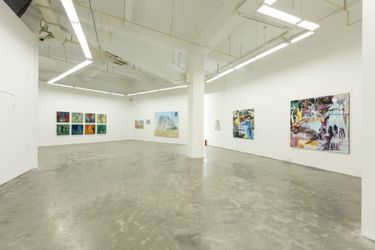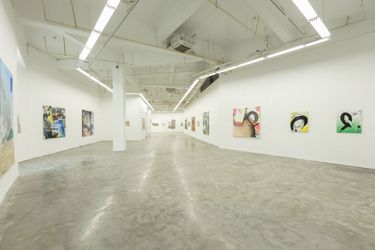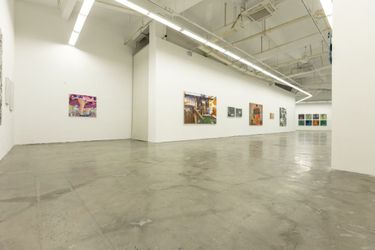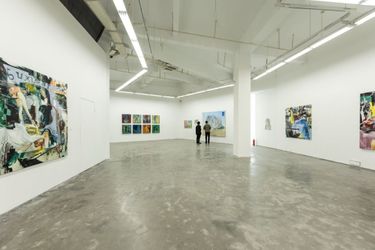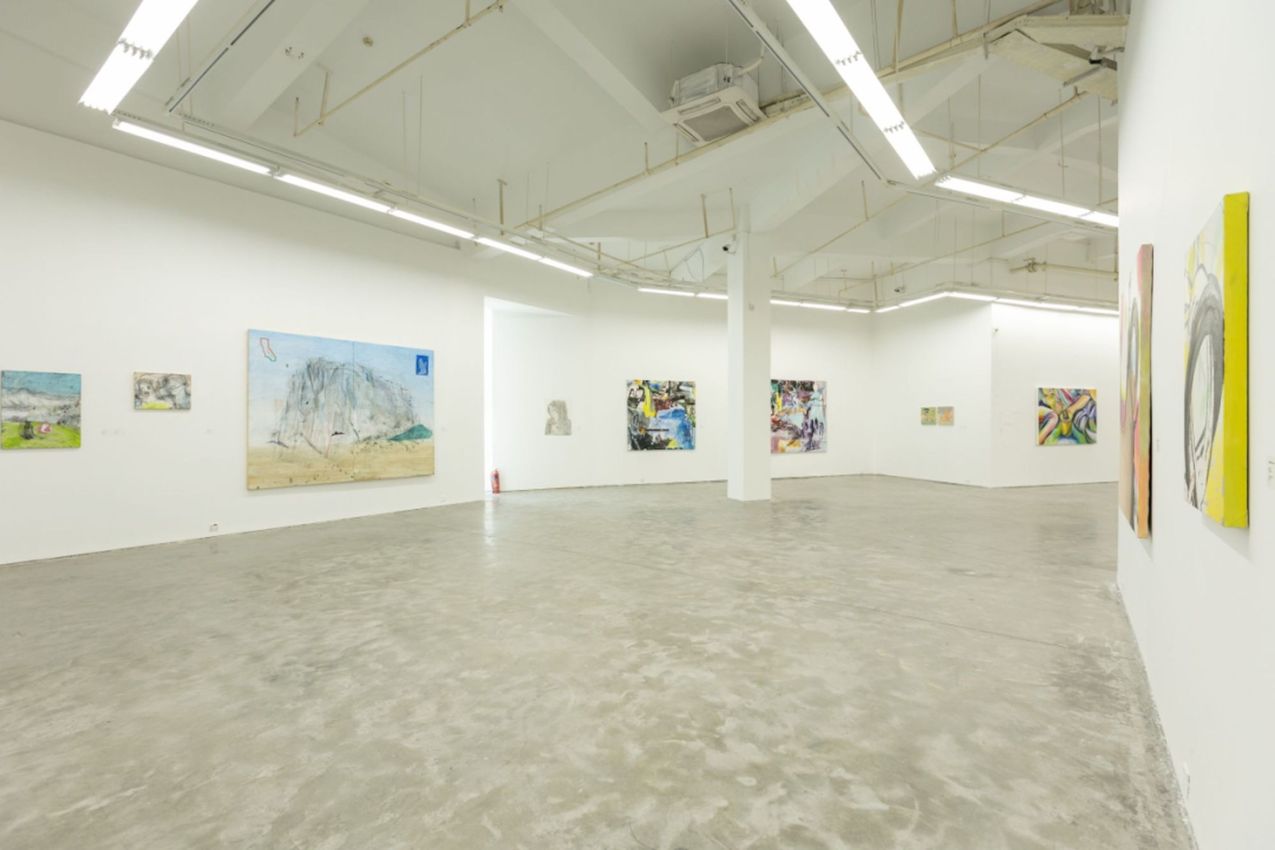
A Thousand Plateaus Art Space will launch this new spring’s artist group exhibition I-Define II — 7 Questions on March 11. Eight young artists, Bu Xuan, Cao Gen, Hou Yijie, Huang Jie, Liu Kewang, Liu Shiqi, Liu Weiyi and Zhu Xin, were invited to participate in the exhibition, which will be curated by Xu Sheng.
‘I-Define’ means independent thinking and free creation, as well as natural and unrestrained growth, which may also be the basic method and value practiced by the young generation of artists. The participated artists may be strangers to each other. When they get together in the exhibition, they first use questions to get to know each other. Each artist raises the first question to the other seven artists, and began to understand and communicate with each other. Questions not only represent the beginning of understanding others, but also the vivid reflection of self in the group. Questions and answers are equally important, just as everyone in life often knows the world and themselves through questions. The process of asking questions to others is also the process of self-introduction and the beginning of the audience to know them.
In the process of asking questions, we found that Bu Xuan said that the most frequently asked question in the past was ‘why do you draw your legs’. If she needs to gaze at herself in some form when she is painting, her picture is more like the external world that is unrealised outside her focus of vision, and the ‘legs’ are only the fulcrum of that world. Sometimes people will sneer at the whole world, but they have to be in it. In this respect, the works of Cao Gen and Huang Jie are like the deconstruction of the external world. Cao Gen’s disassembly has a kind of grand sense of nihility, while Huang Jie seems to be filling such nihility with various ‘noisy’ consumer parts. This reminds people of Dada or the artists of the New Leipzig School of Painting, who sometimes fall into meditation and then suddenly make a face. In the contemporary world, similar feelings and the desire of breaking something always extend in the creation of artists. On the other hand, Hou Yijie describes all kinds of stories, characters, scenes, emotions, or imaginations that belong to the world but are difficult to settle in. They form a map to lead people to look for things that are familiar but gradually become ‘distant’ in contemporary society. Liu Kewang’s ‘distant’ place comes from the humanism he emphasises. In contrast, those comic scenes are full of the ‘inner smoothness’ unique to flat aesthetics. It seems that everything is irrelevant. Liu Shiqi’s picture is serious, and the black coloured parts are similar to that represented by Pluto, such as taboo, struggle, or rebirth, which originates from the energy in the deep universe, and is transformed into the brilliance of the soul under sincere treatment. In Zhu Xin’s eyes, this energy becomes the courage to walk out of sadness. The calm and penetrating eyes with self-deprecating meanings in the picture are the traces left by this uneasy spiritual journey. Liu Weiyi’s unique creation not only stems from her past that she once dreamed of becoming a fashion designer, but also includes her observation of vivid details of characters. Beauty and fantasy have become a kind of deep emotional representation in her perspective. They are everywhere and hidden in every ordinary person’s every move.
The above is the initial impression of the eight artists to the audience. From March 11, their works will have a more direct and in-depth communication with the audience in the exhibition hall. On the opening day of the exhibition, there will also be an open forum. We welcome all audiences to take part in.


A Thousand Plateaus Art Space was founded in 2007 in Chengdu, China. It is a professional gallery committed to present and promote China’s contemporary art. Equipped with exhibition hall for artworks and collection and screening room for video data, it is mainly on researching, presenting and promoting outstanding works and experimental projects of China’s contemporary art and culture, actively carries out domestic and international cooperation projects.

A respected voice in contemporary art discourse.
Focusing on ambitious storytelling and insightful art-world commentary. Ocula Magazine publishes in-depth interviews, critical essays and timely analysis on the artists, exhibitions and ideas driving the global art world.
Learn more about Ocula Magazine
Showcasing the best of the art world.
Ocula partners with galleries from around the world to highlight their artists, artworks and exhibitions. Gallery membership is by application and invitation, with each member vetted by an independent panel.
Learn more about Ocula Membership

Specialises in the sale of major artworks.
Led by a team with deep ties to the world’s leading auction houses, galleries and collectors. Ocula’s advisory team offers bespoke services to high-net-worth clients from around the world who are looking to acquire the best of contemporary and modern art.
Learn more about our team and services