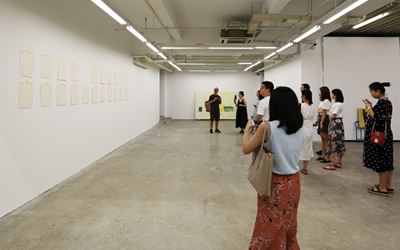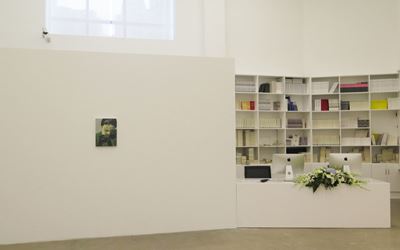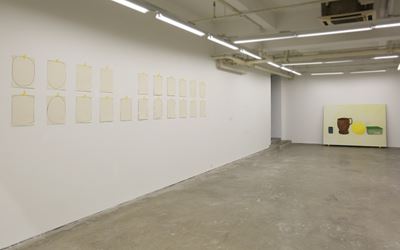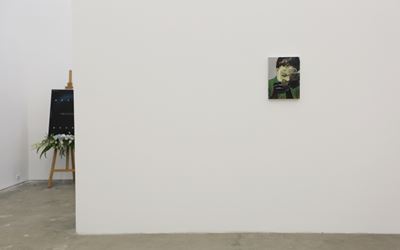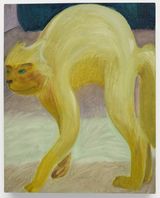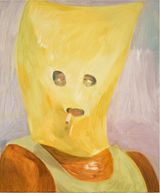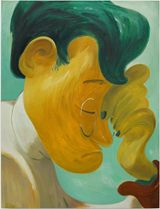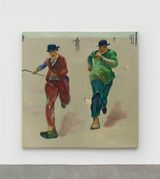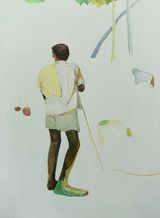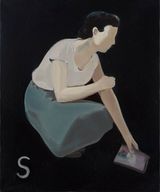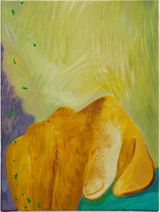
Zhai Liang is an excellent storytelling artist, for his works can always lead audiences to endless imagination. Especially, what he tells is not just confined to the story itself, but the “story” hidden under it, such as the story of “Text”, the story of “Logic”, the story of “Narrative”, and so on. These stories are then transformed into paintings and 3-D works. Take his trilogy of exhibitions - “The Garden of Forking Paths” as an example, which were presented in A Thousand Plateaus Art Space from 2011 to 2015. The inspiration of them comes from Borges’s work of the same name, and together they narrate the complex relationships among “Readers,” “Critics” and “Author” behind this fantastic story. He transformed this into visual language of painting, highlighting the feedback and imagination of viewers, as well as the spark between artist’s different creative demands, pulling the audience into a field of thoughts where high-speed operations occurs. Later on, he created the “The Night Ferry” series, a new story originated from “Library” and “Notes.”
Having experienced his own leaping thoughts and wandering, Zhai entered a new progress of thinking and accumulation. For him, “SLOW”, the diametrically opposite way, acts as a reference for his art. In arts and literature, from his point of view, “SLOW” exists in an indistinct way. Throughout history, the spiraling and forward process of times seems to be slow. Maybe, “FAST” is just an illusion? Or, perhaps “SLOW” is only a yearning for idyllic family life against this rapidly changing society? Following this clue, Zhai created a batch of new works, which will be shown in a solo exhibition with the name of “SLOW.” Exhibition opening is July 22, 2017.
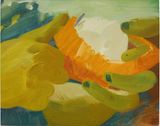
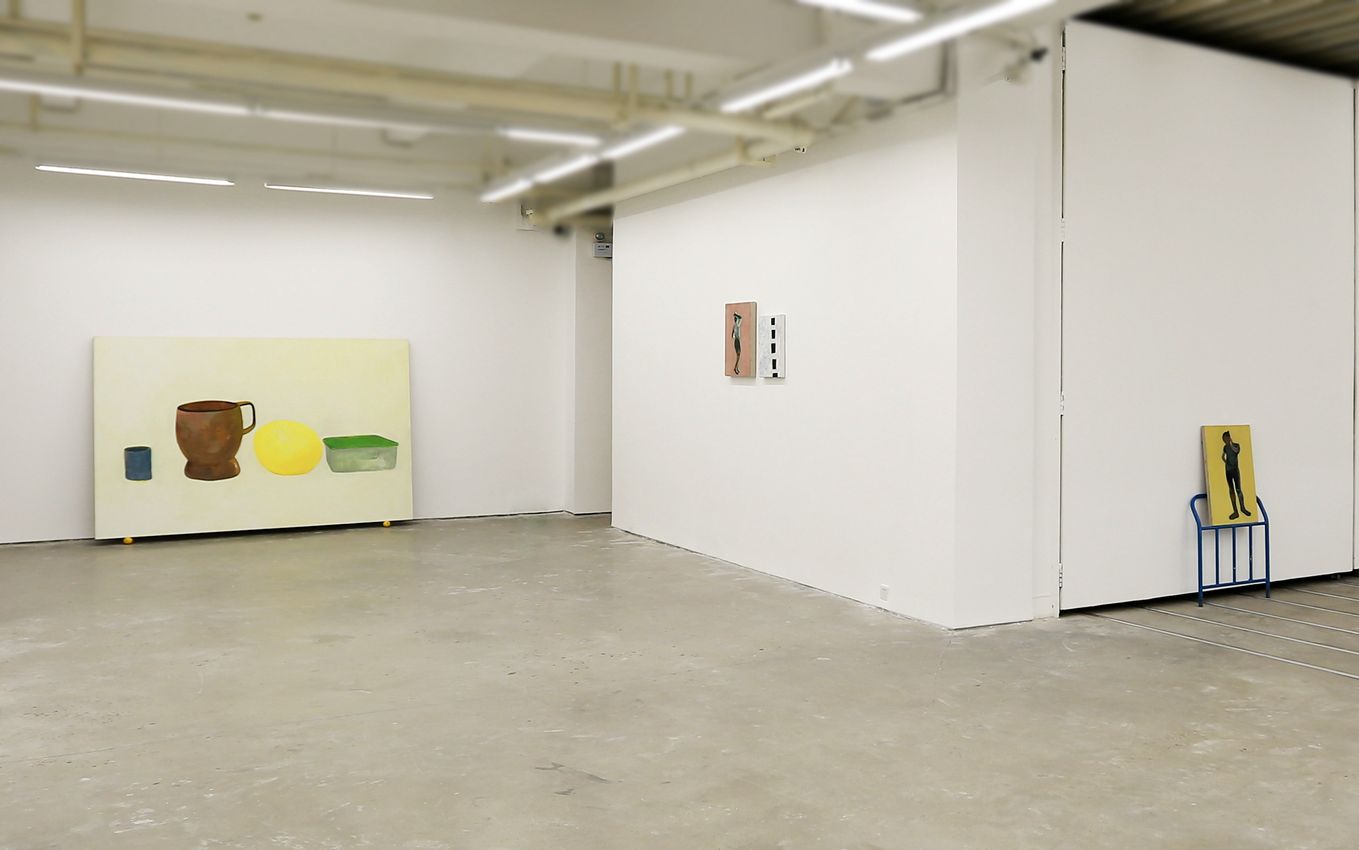
In his new works, Zhai made some important shifts in his methodology of painting by simplifying the narrative structures, and strengthening the experiments of brush strokes and picture’s textures, through which he strove to make direct association between ideological contents in “SLOW” and visual perception. For more direct depiction of characters, he discarded some graphic details, such as facial expressions, and adopted the logic of brushes instead of the logic of images to redefine a character.
In view of this, he restudied the master of the Northern Renaissance - Pieter Bruegel the Elder’s masterpieces by learning the interactions between colors and brushwork, together with Jasper Jonhs’s solutions to stroke borders. When Zhai talked about his creating experiences, he realized that his works are not that thick as Jonhs’s, but both their works end with sudden peace regarding their treatments of the color borders, no matter how trivial the strokes are. Such presentation of brushworks, as the reflection of his exploration in “SLOW,” is indeed a kind of practice in action. Perhaps, the edge of brushstroke and the border of artist’s inner world are the same thing but in different dimensions?


Knowledge serves as a nutrient for painting, flashing before us spontaneously, or acting as a suitable background that can incite the imagination of the artist. Whether it’s a story or a word: eventually they all take on this role of incentive. Within his bulky, diversified knowledge system, Zhai Liang takes a hopping/dipping approach to his selection of themes. Based on a previous painting he then further infers how a new piece should be done, which results in a visual logic. Hence, every work is brimming with freshness and life, reflecting the clumsiness and modesty of the artist with respect to any new painting. As for the works among themselves, some are large and some are small, but all of them share a similar orientation of interest. By means of gradual, substantial and personal experience of the artist himself, his paintings contribute to the forging of an unbridled visual system.
A Thousand Plateaus Art Space was founded in 2007 in Chengdu, China. It is a professional gallery committed to present and promote China’s contemporary art. Equipped with exhibition hall for artworks and collection and screening room for video data, it is mainly on researching, presenting and promoting outstanding works and experimental projects of China’s contemporary art and culture, actively carries out domestic and international cooperation projects.

A respected voice in contemporary art discourse.
Focusing on ambitious storytelling and insightful art-world commentary. Ocula Magazine publishes in-depth interviews, critical essays and timely analysis on the artists, exhibitions and ideas driving the global art world.
Learn more about Ocula Magazine
Showcasing the best of the art world.
Ocula partners with galleries from around the world to highlight their artists, artworks and exhibitions. Gallery membership is by application and invitation, with each member vetted by an independent panel.
Learn more about Ocula Membership

Specialises in the sale of major artworks.
Led by a team with deep ties to the world’s leading auction houses, galleries and collectors. Ocula’s advisory team offers bespoke services to high-net-worth clients from around the world who are looking to acquire the best of contemporary and modern art.
Learn more about our team and services