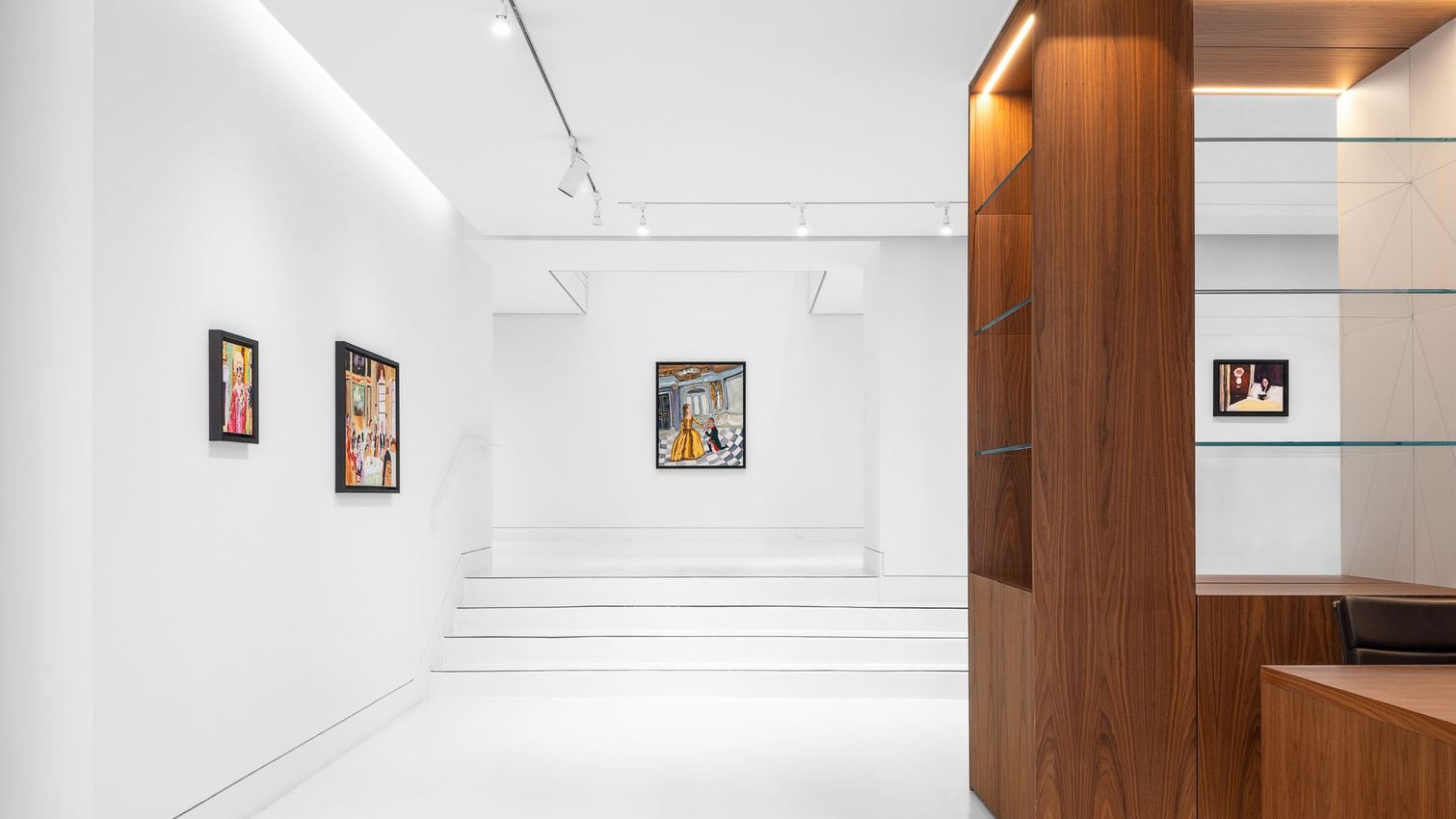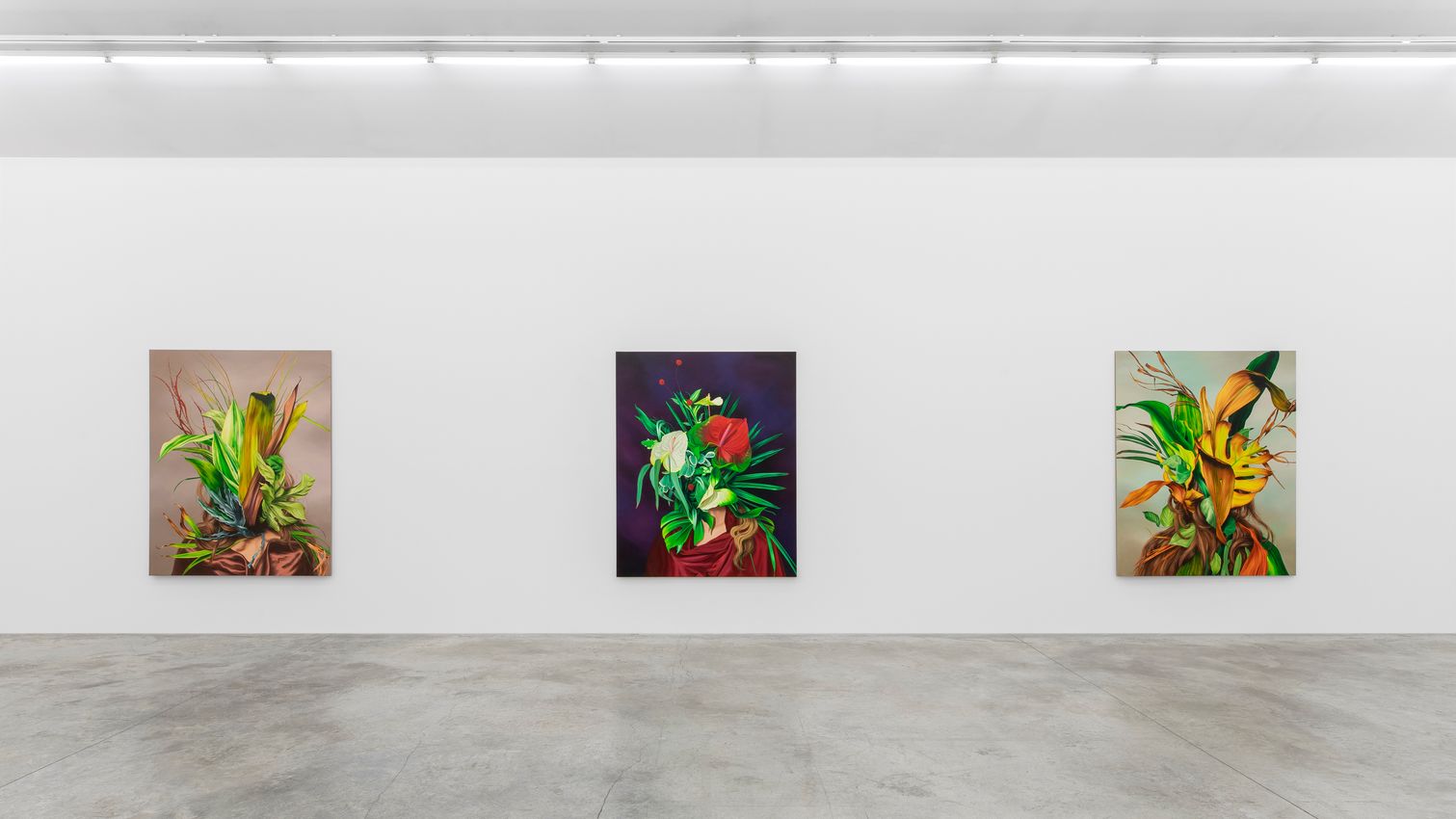
Almine Rech Paris is pleased to present Ewa Juszkiewicz‘s second solo exhibition with the gallery, on view from September 4 to October 9, 2021.
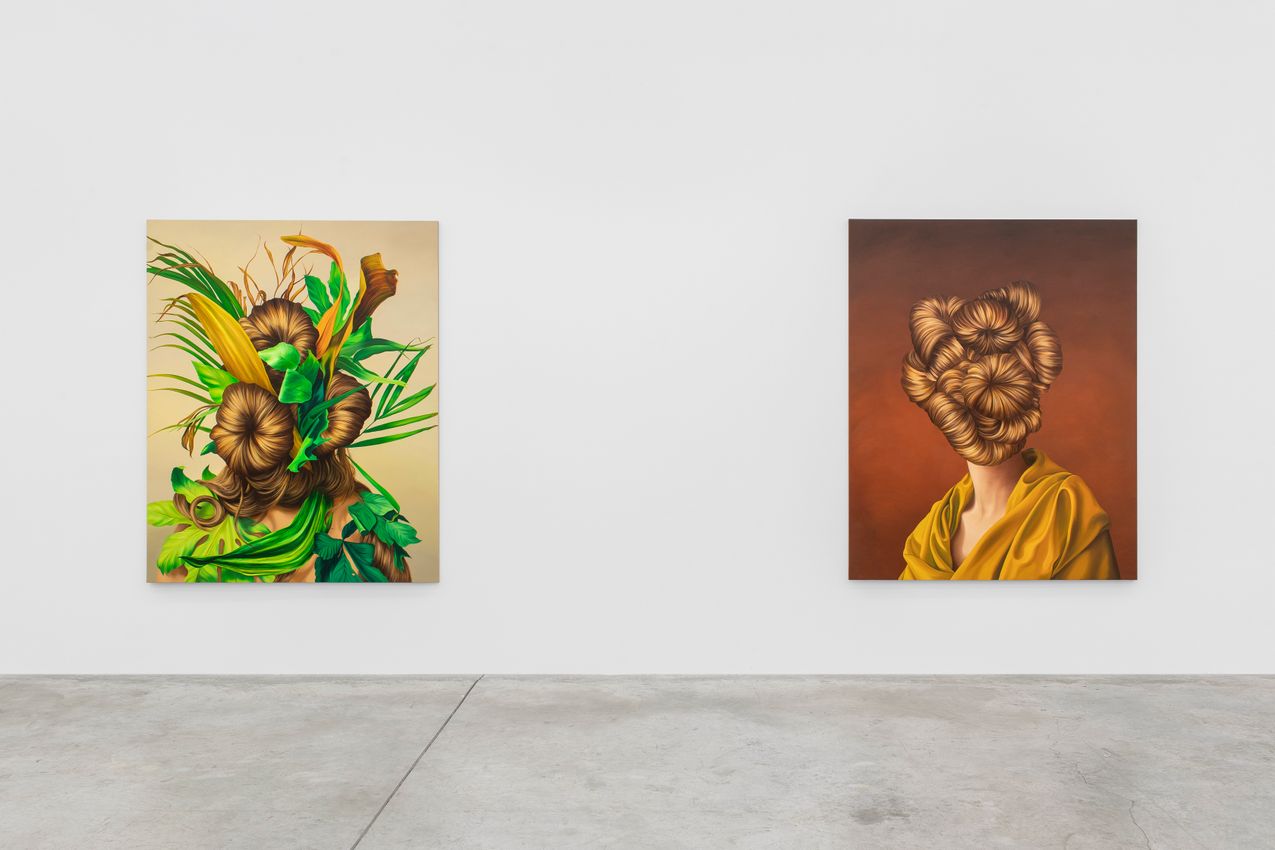
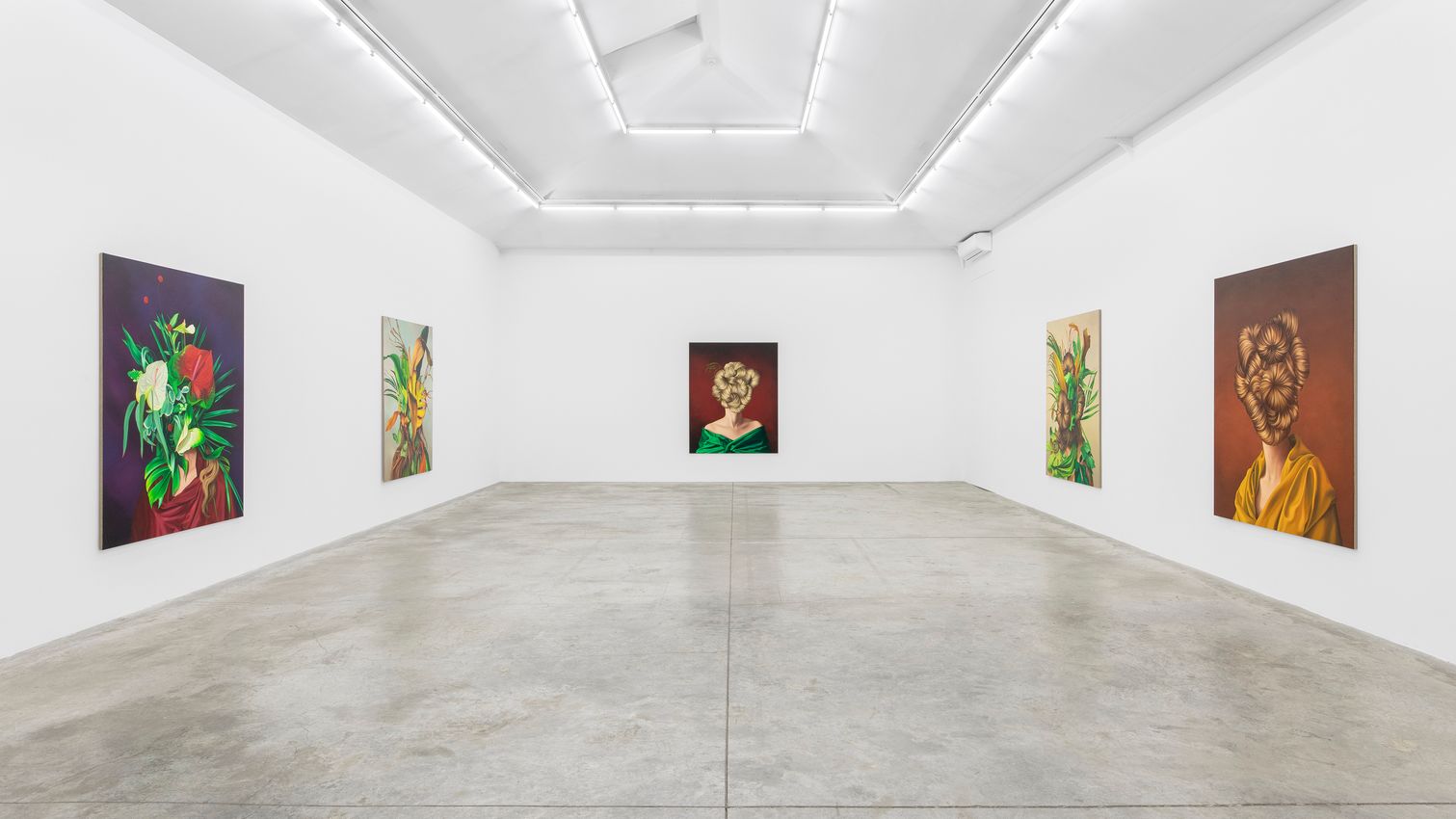
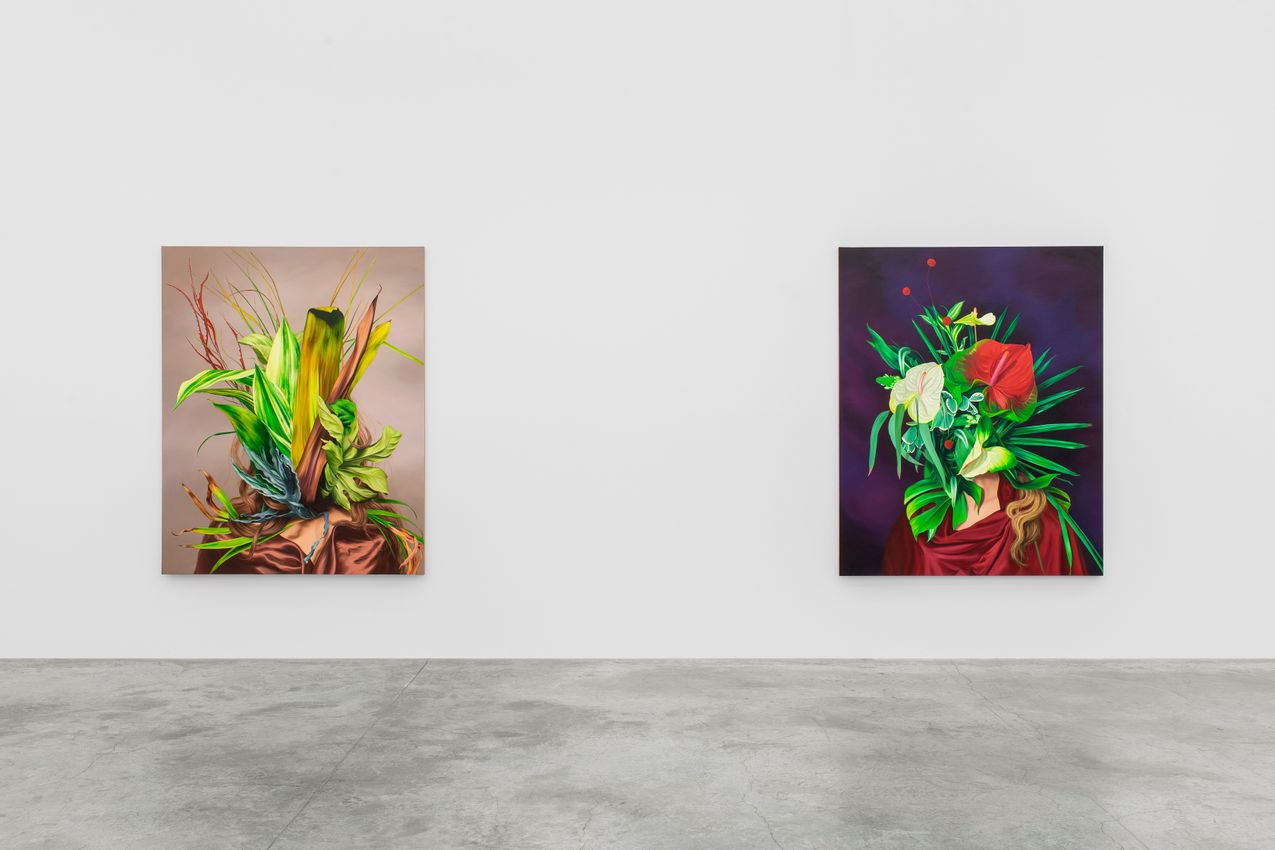
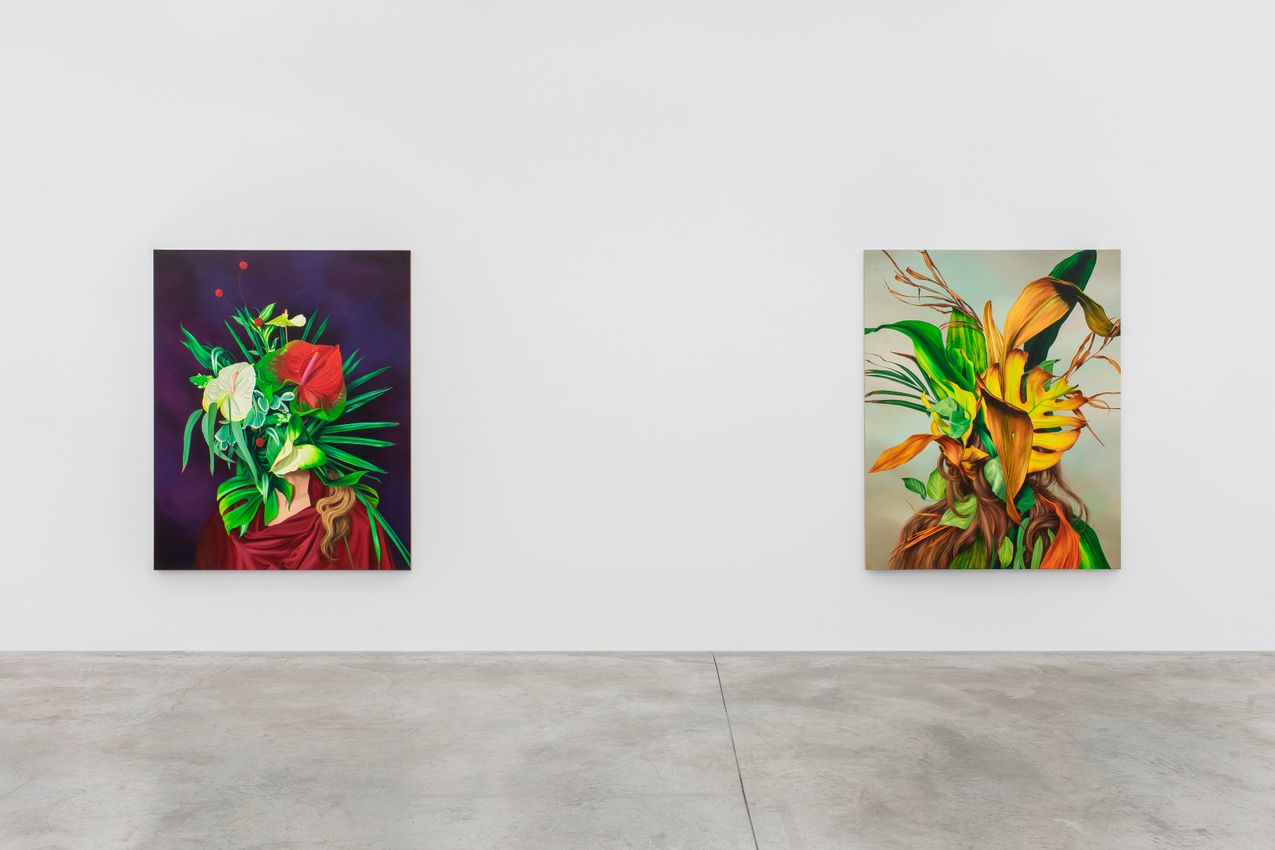
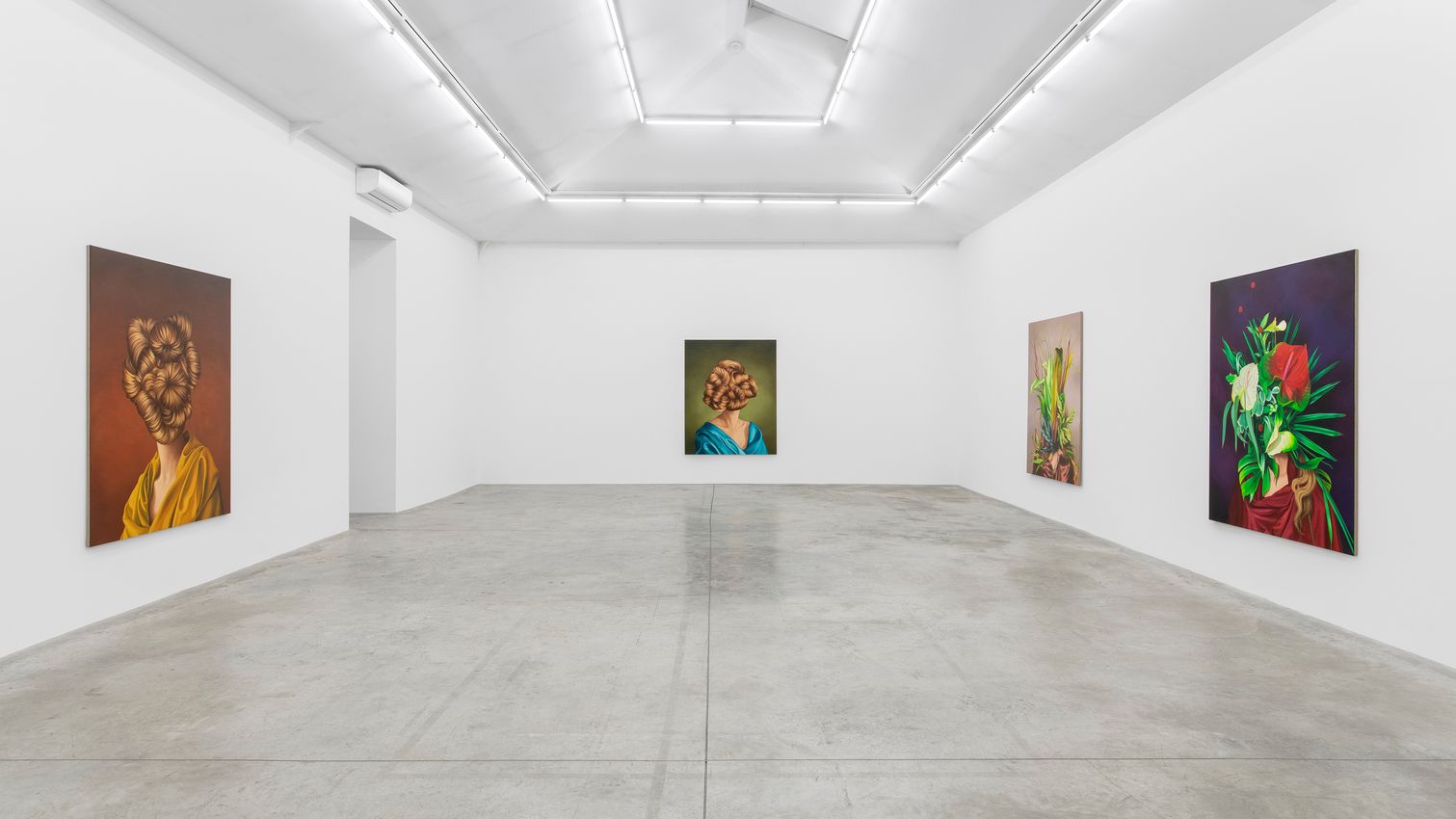
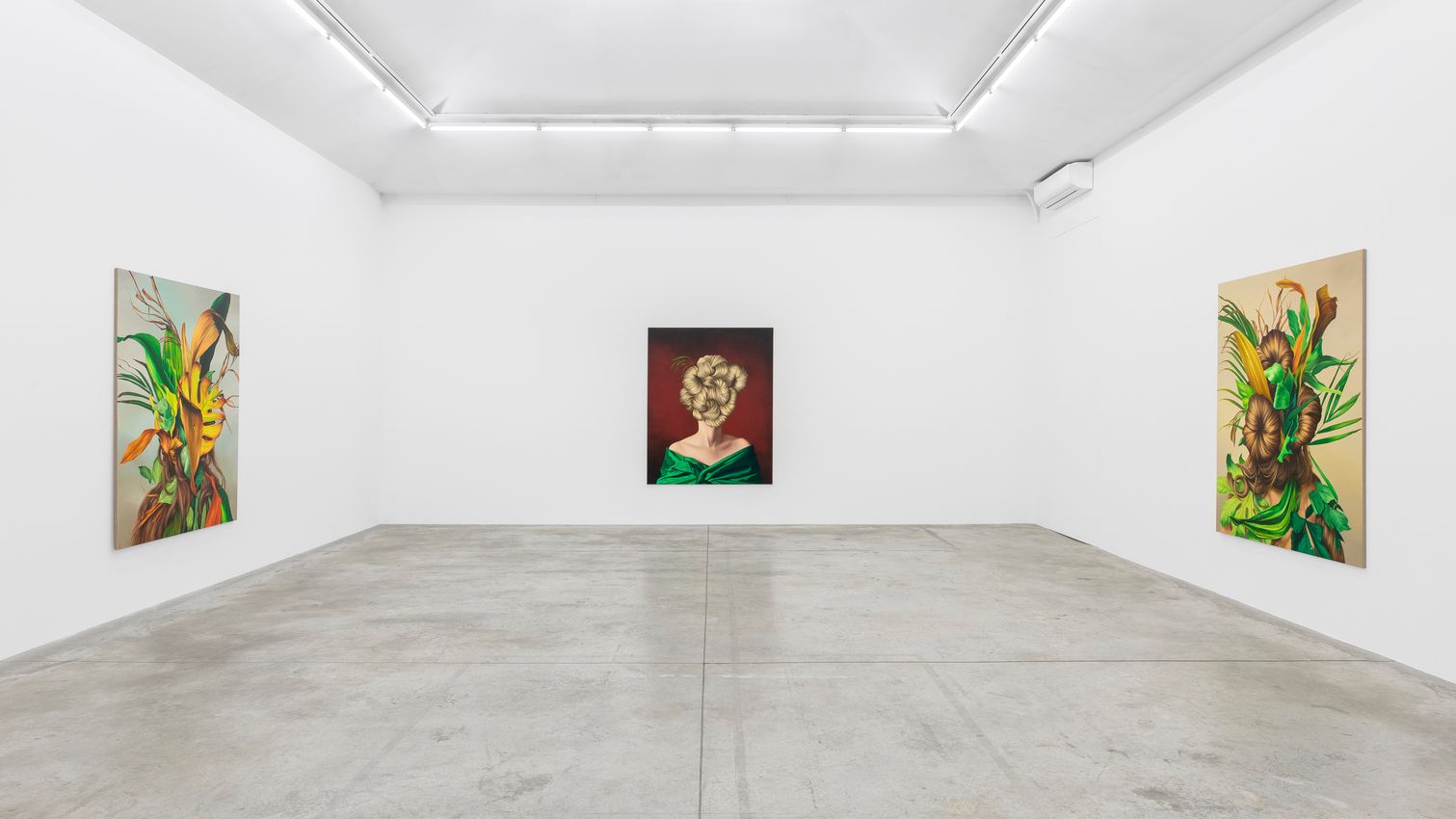
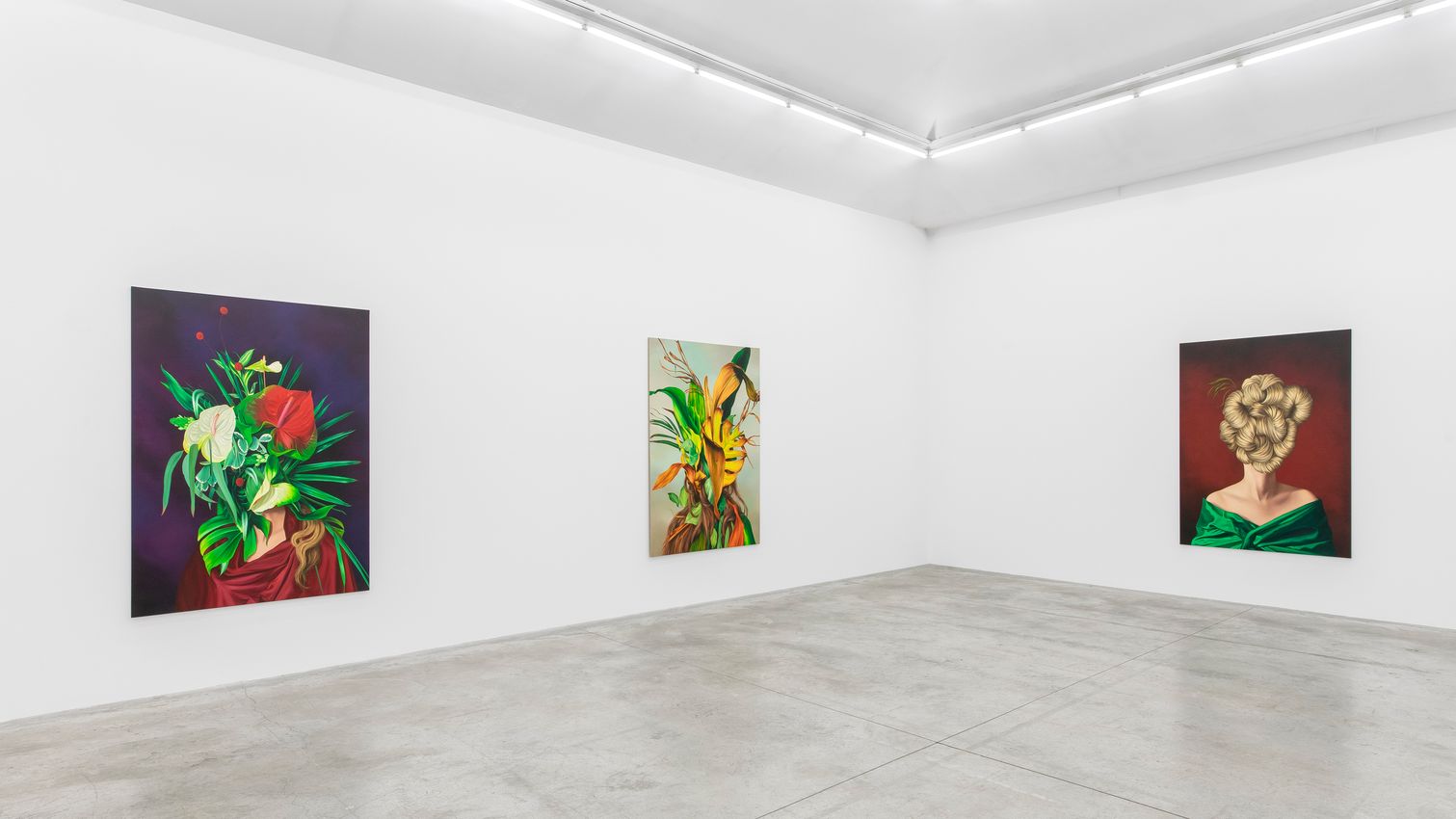
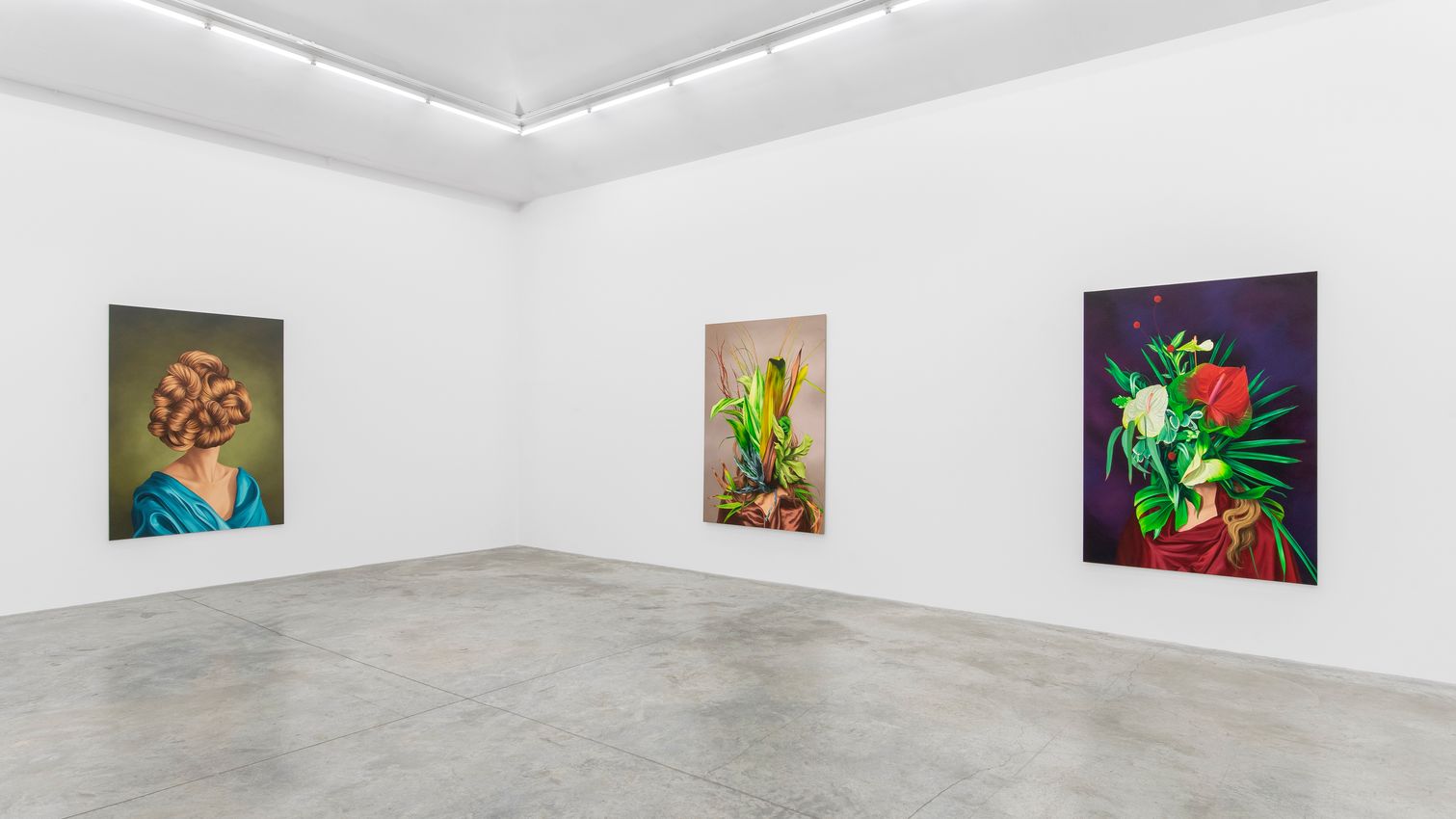
In her second solo exhibition at Almine Rech, Ewa Juszkiewicz unveils seven large-scale oil paintings depicting braided hair and vegetation such as buds, fresh leaves, or fallen leaves and dry grasses that are mutating in different ways. These can be seen literally occupying and outgrowing the confines of the canvas and creating unified surfaces against a neutral, almost monochromatic background. Each canvas harks back to portraiture during the Ancien Régime. For some time, Ewa has been working on small-scale portrait paintings. In these new works, she has increased the scale dramatically.
The exhibition’s title is a direct reference to the 18th-century poem by Anna Laetitia Barbauld, ‘Ode to Spring’. The original verse reads: ‘Crown’d with fresh blooms, and ever springing shade.’ In the spirit of Barbauld, the artist invites us to consider nature in all its terrible and beautiful incarnations, and to see it under the prism of a more clinical gaze. By embracing the profusion of the vegetal and the organic in these finely executed portraits, the artist affirms her reverence for nature, as a reminder perhaps of the resilience of things during such a devastating pandemic.
For some time, the artist has been wanting to paint living vegetal organisms at different stages of their development, so as to reflect on life cycles and various stages of growth of blossoms, withered leaves, wilted matter, dried grass. She observes, ‘While working on these paintings, I thought a lot about the transience of life. I show signs of wilting and rotting. From blossom to dying-inevitable cycle that doesn’t bypass any of the living beings.’
Ewa’s way of painting consists of layering and varying textures. At times she applies several layers of glaze. Sometimes, the paint appears to be thin, almost translucent. The artist looks at the tactility of grass and loose or braided hair. ‘I wanted to show differences between them, but also in some parts I wanted to emphasize the relationships and similarities in the texture of the skin and fresh leaves, the texture of pinned-up hair and withered vegetation.’
A form of displacement is at work in these paintings, once we realise that the human and the non-human are interrelated. This interdependence of the human and nature serves as an injunction to look at the world from a different vantage point. This ambiguity reinforces a symbiosis of sorts. Still-life subjects are given the treatment usually associated with portraiture; and the ways in which braided hair is being depicted questions the traditional values that had been ascribed to the female body. All in all, paintings that are metaphysical become a way of looking at ordinary things as transient matter, as snapshots of fluid and evanescent states of things.
Instead of referring directly to specific paintings, the artist evokes the spirit of 17th and 18th-century art. In terms of careful modelling, colour schemes, mood, poses or light, names such as Elisabeth Vigée Le Brun, Maria Verelst, Adélaïde Labille-Guiard, Anne Vallayer-Coster come to mind. She also evokes the 17th Century still lifes of Margareta Haverman, Clara Peeters, Rachel Ruysch, Alida Withoos and Giovanna Garzoni.
In those days, women artists had limited access to art education and they were given few opportunities to further their careers. They had been denied the opportunity to study human anatomy and so they had little choice but to turn to still lifes and botanical subjects.
This exhibition takes place in a former hotel particulier in the Marais, the kind of space that would have been occupied by the aristocracy and gentry back in the 18th century. It is ironic that these upper classes of society encouraged and supported the loving depiction of nature and the human form, yet often denied such opportunities to the great women artists to whom Ewa Juszkiewicz pays homage in her paintings today.
Text by Olivier Berggruen, historian and curator. Courtesy Almine Rech.
Through her painting, Ewa Juszkiewicz (b. 1984, Gdansk, Poland) challenges visual conventions and confronts stereotypical perceptions of women’s beauty in classical European painting. By deconstructing and reinterpreting the female subject in historical artworks, Juszkiewicz undermines their constant, indisputable character. One of the most celebrated contemporary Polish painters of today, Juszkiewicz challenges the viewers’ perception by experimenting with the form of the female figure and face, balancing human and inhuman elements within her work to reveal a style that is at once classical in technique, yet subversive and rebellious in content.


Almine Rech opened its doors on April 1st, 1997 in the 13th arrondissement in Paris. The gallery was founded on an axis of California Minimal, Perceptual art and Conceptual art, representing artists such as James Turrell, John McCracken and Joseph Kosuth.

A respected voice in contemporary art discourse.
Focusing on ambitious storytelling and insightful art-world commentary. Ocula Magazine publishes in-depth interviews, critical essays and timely analysis on the artists, exhibitions and ideas driving the global art world.
Learn more about Ocula Magazine
Showcasing the best of the art world.
Ocula partners with galleries from around the world to highlight their artists, artworks and exhibitions. Gallery membership is by application and invitation, with each member vetted by an independent panel.
Learn more about Ocula Membership

Specialises in the sale of major artworks.
Led by a team with deep ties to the world’s leading auction houses, galleries and collectors. Ocula’s advisory team offers bespoke services to high-net-worth clients from around the world who are looking to acquire the best of contemporary and modern art.
Learn more about our team and services