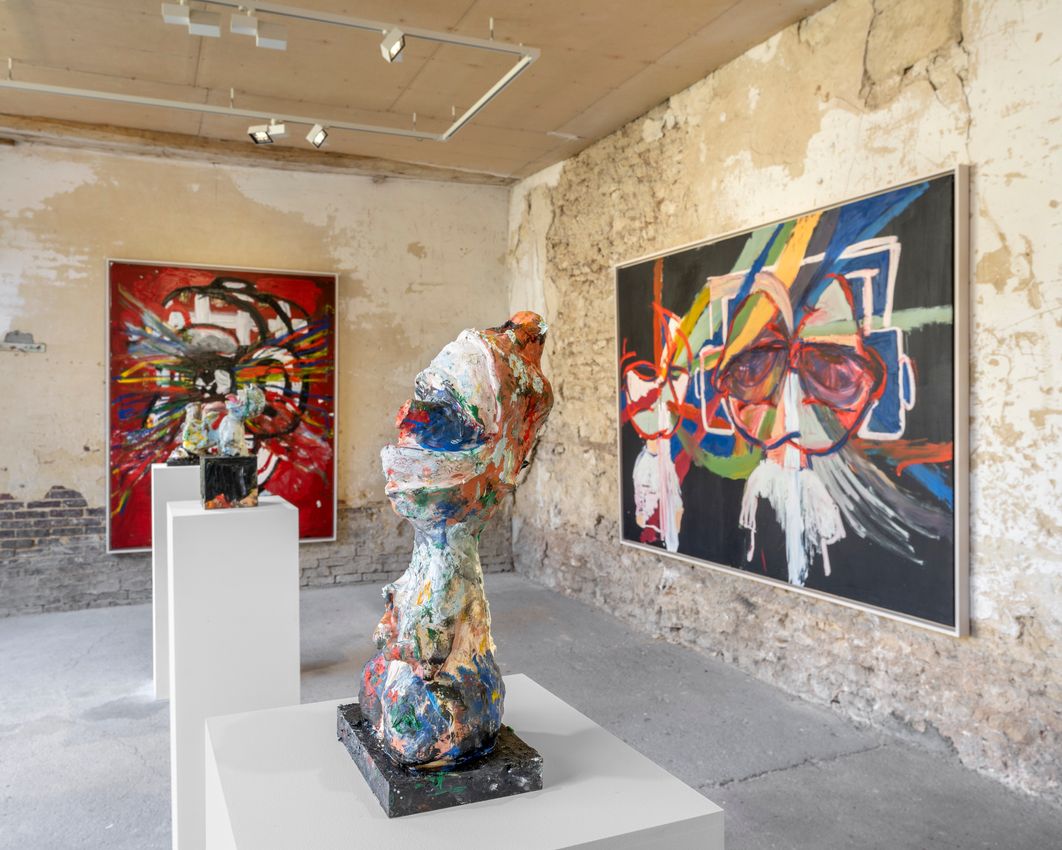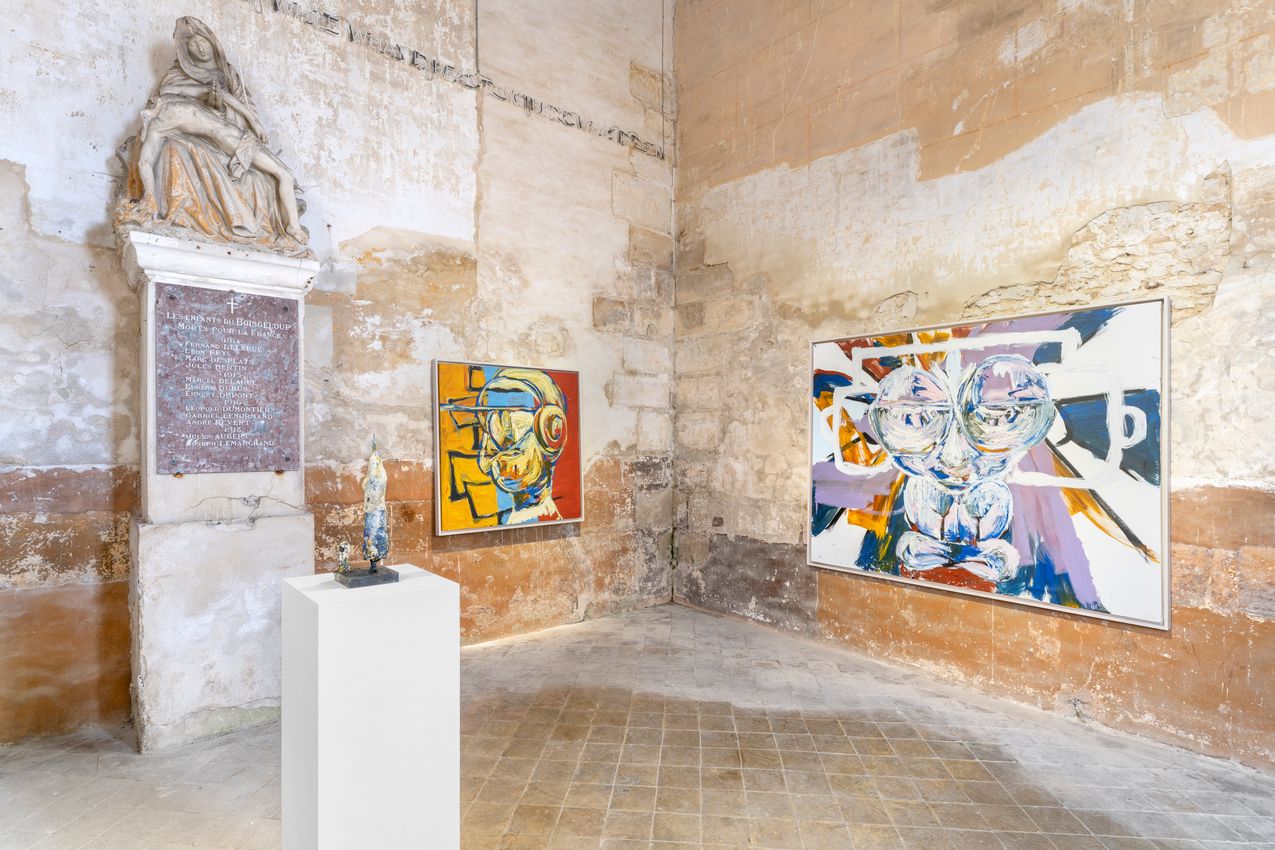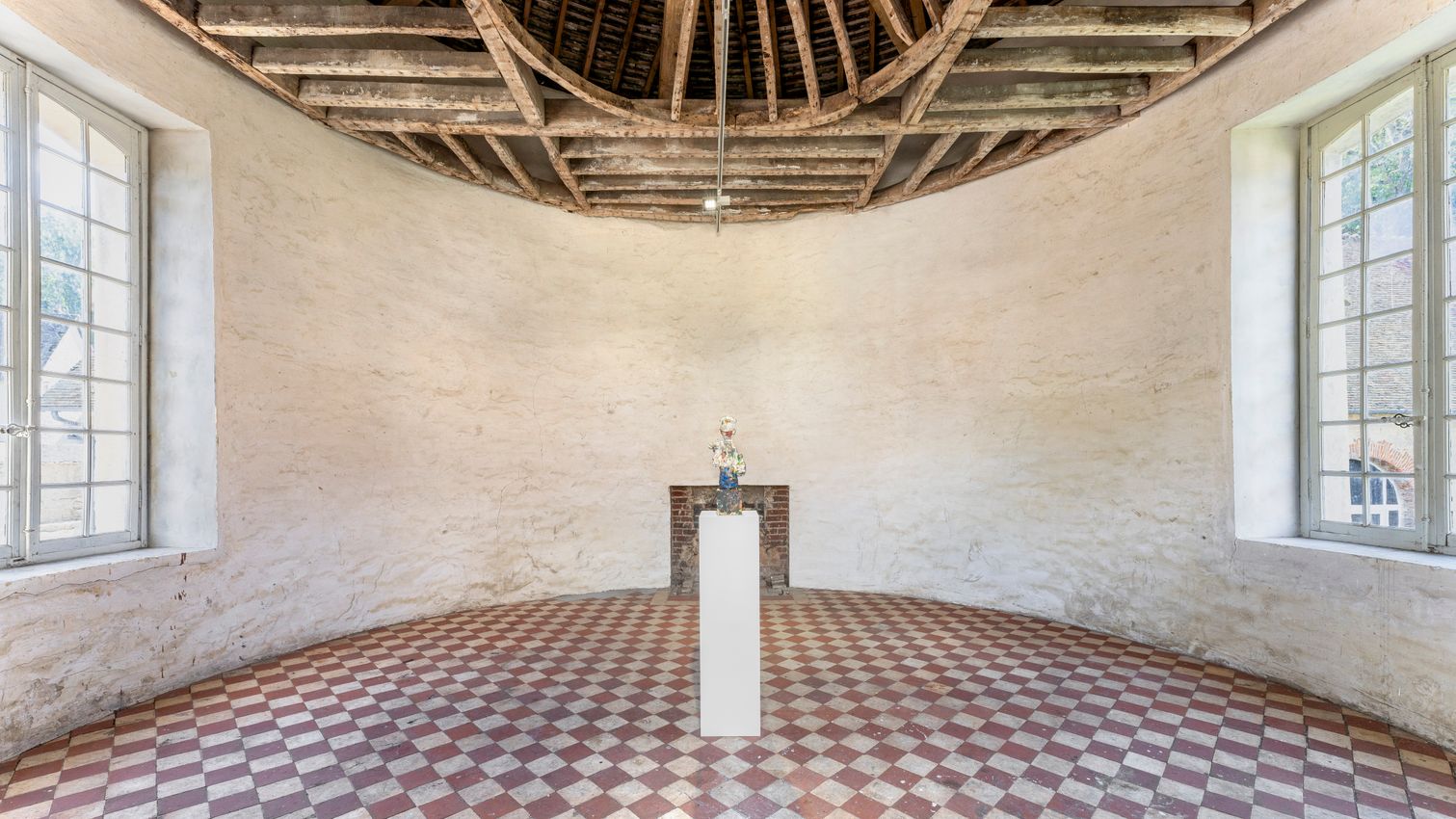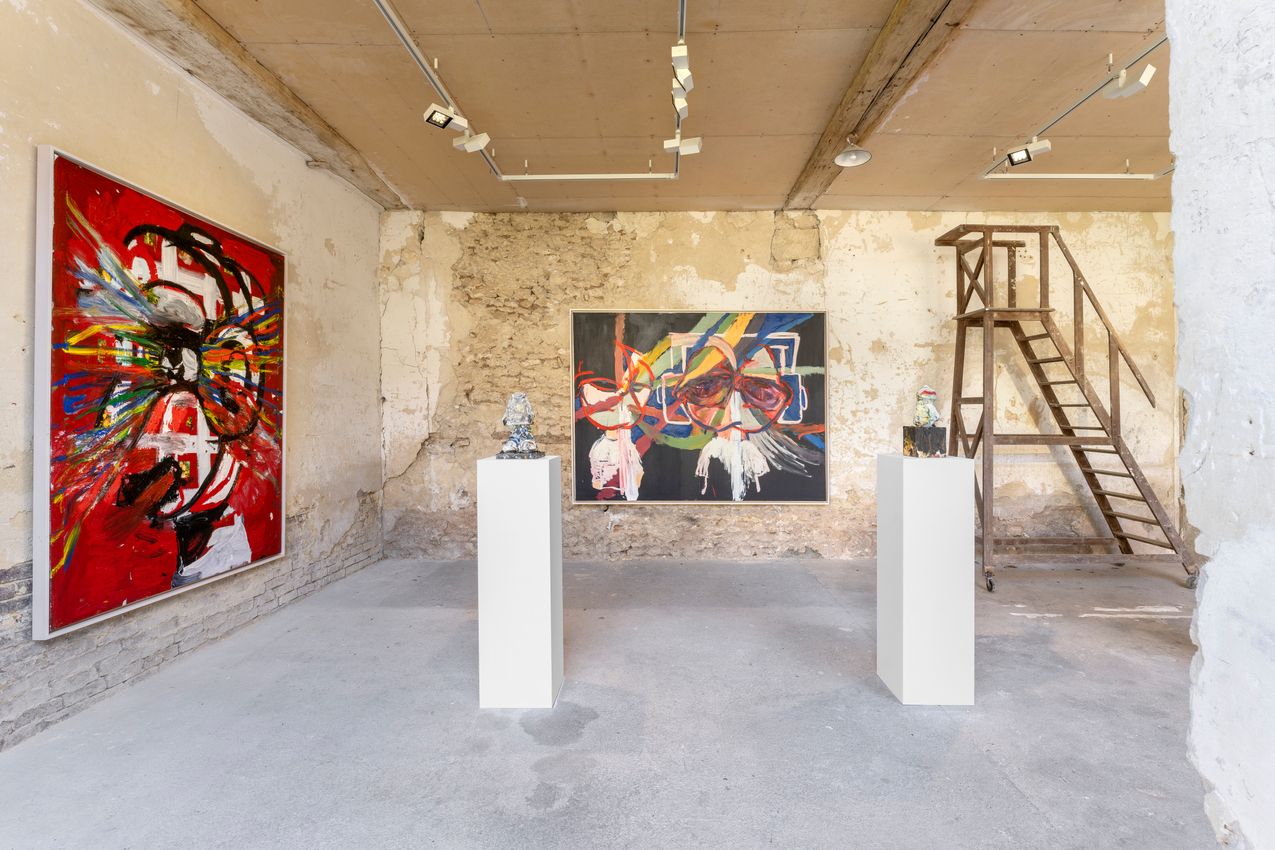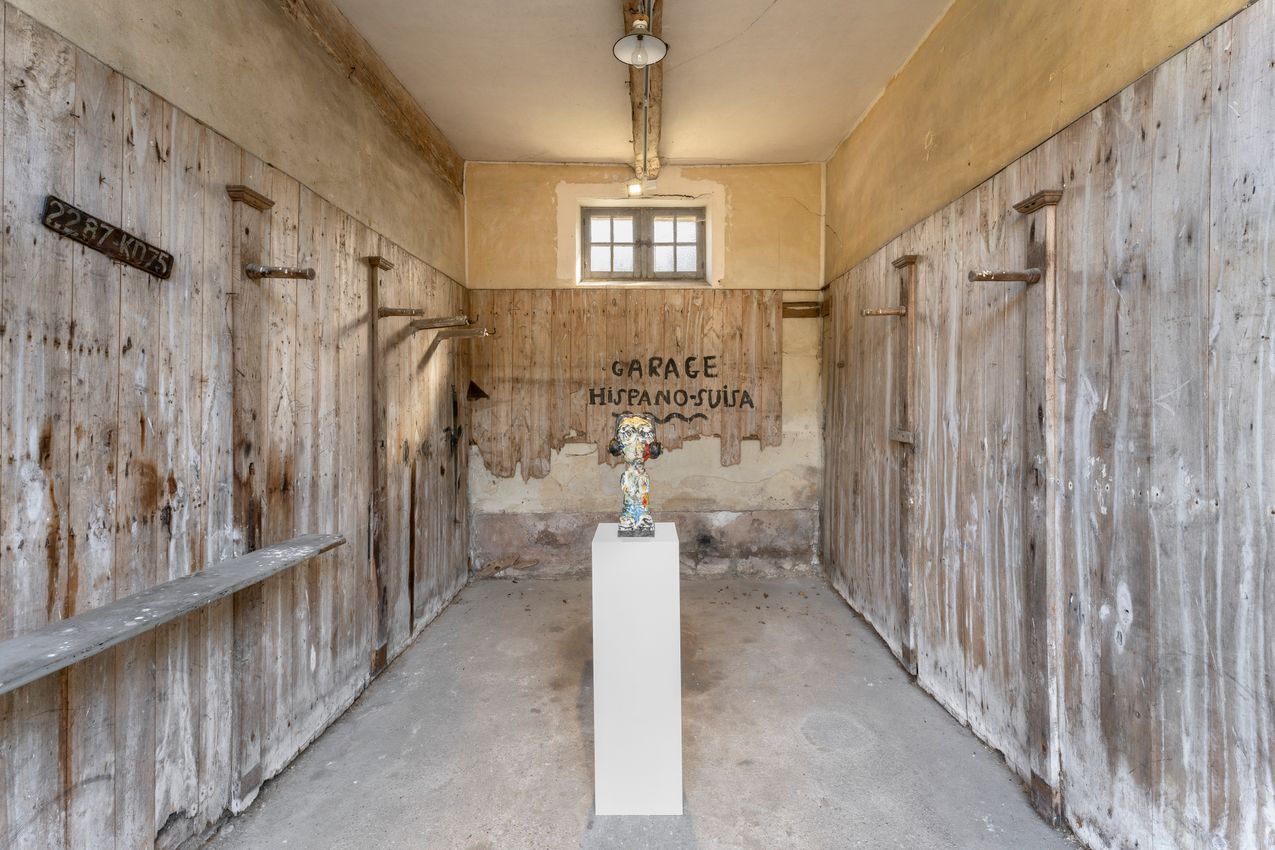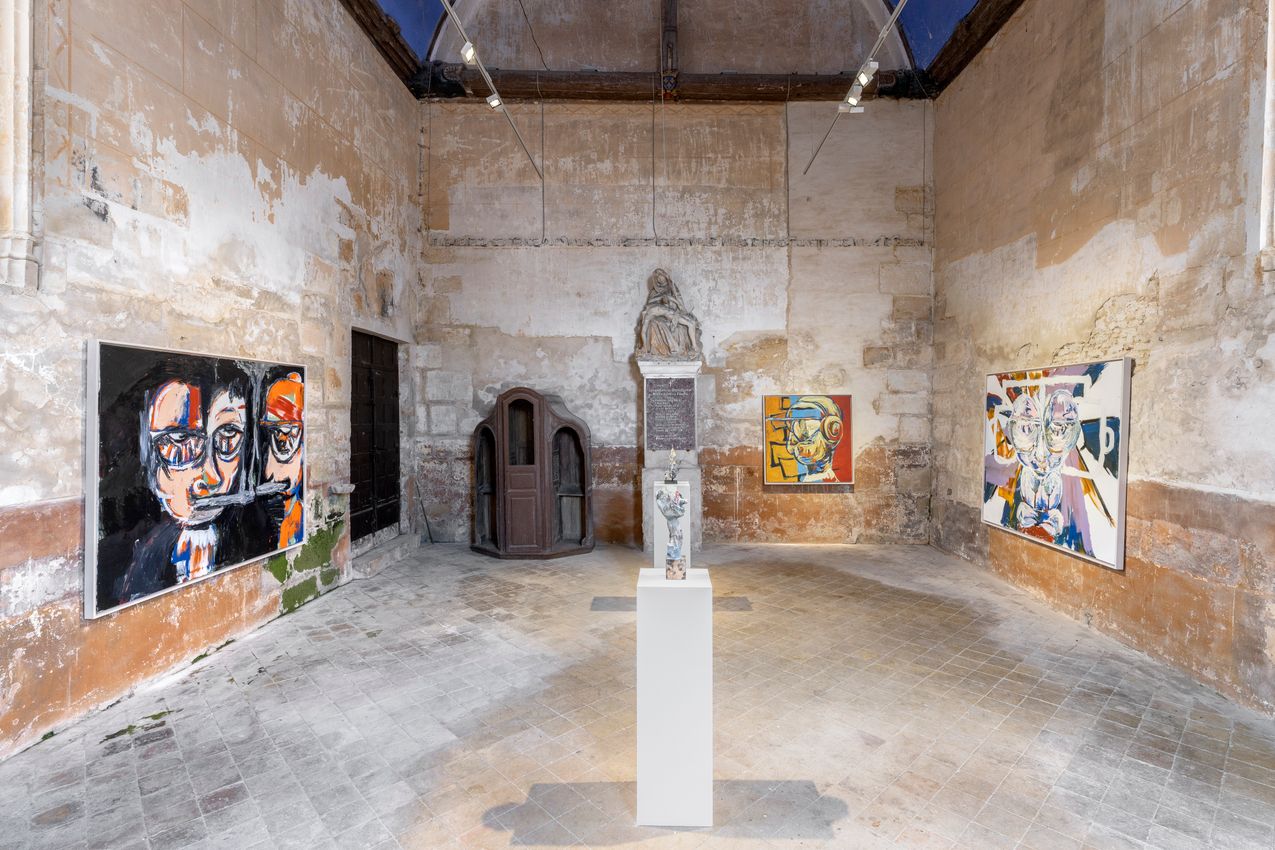
Almine Rech and Fundación Almine y Bernard Ruiz-Picasso para el Arte (FABA) are delighted to announce Hymn, Gerasimos Floratos first solo exhibition taking place in Picasso’s historic studio at Boisgeloup (Gisors, France).
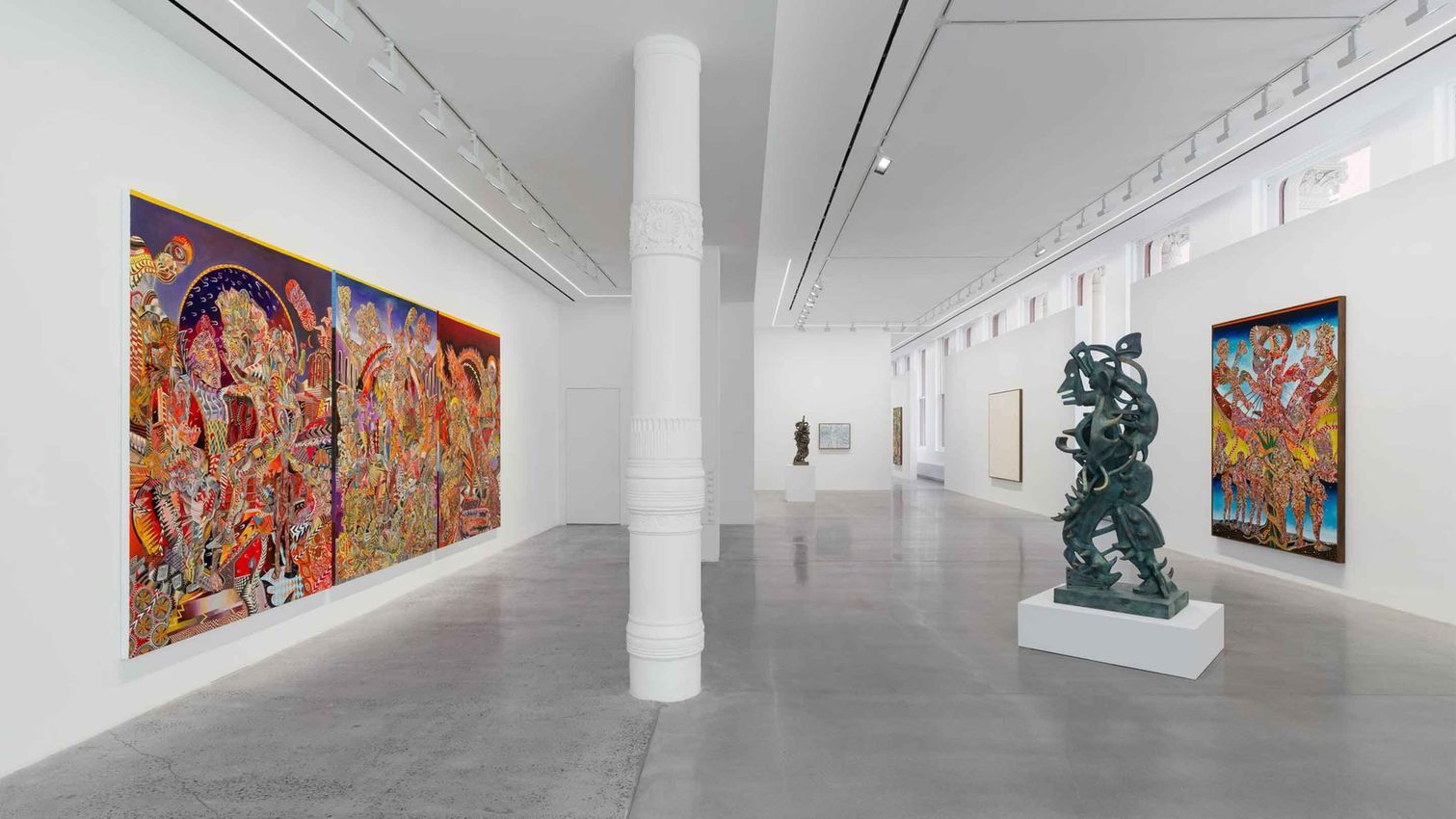
Adjacent to Floratos’ Brussels show, the Boisgeloup exhibition includes many sculptures which relate to a selection of paintings. The title of the exhibition, Hymn, might surprise some at first, but the sculptures do have a sonic quality.They seem to be singing, shouting, or speaking. The artist leaves the interpretation of his works open, like the mouths of his figures.
Floratos wholeheartedly believes that facial recognition is a crucial neural ability that allows us to survive in cities.The brain is capable of deciphering a fake smile from an honest one, a sincere word from irony.His paintings bear a similar ambiguity.However his sculptures are more than 3D translations of his paintings in the way that Baselitz, Lüpertz, or Appel sculptures live and exist on their own.
Floratos chose clay: a playful, malleable medium that allows for mistakes. There can also be ugliness or sloppiness, which is what the funk ceramists from the West Coast brilliantly explored in the 1970s, reinventing the expressionist language in their own political way. Actually, unlike in ceramics, Floratos uses non-firing clay, an even-more basic medium. Supposedly it becomes harder than rock once it dries. Floratos has always admired Tàpies, and his great disrespect of material...He alternates fast and slow gestures, caring and aggressive interventions. A certain violence and physicality is evident in the production process. When he finds the clay figure too perfect, he might smash it and roll it in the dirt of his studio. Some pieces lose a body part, or maybe even a head.
Floratos began making sculptures with aluminium foil. He sometimes uses glue. He also adds readymade objects, like a small Empire State Building taken out of a kitschy snowglobe. Loud colours are injected at the end of the process. These vivid tones are directly inspired by the flashiness of Times Square advertising billboards and the packaging of products sold in a deli like the one owned by his family. In fact, both seriality and vivid colours can be traced back to an ancient, pre-industrial time.
If we think of molded greek ex votos figurines, or of the original polychromy of antique sculptures–before the whitewashing of the 19th century made us think that purity and perfection were white. Floratos has vivid memories of the site of Knossos in Crete, with all its columns and frontons, repainted in flashy red. A current show at the Metropolitan Museum focuses on the original colours of statues which, in our contemporary view, might even look tacky or counterintuitive.
Floratos is an artist who values relativity and imperfection. Indeed, he seeks it out. One of his figures is seated in a Buddha posture.His figures are confronting: the more you look at them, the more they trigger you. Their hats, headphones, and sneakers are the petticoats of the present. These archeological signs will be a direct testament to our highly contrasted times.
Press release courtesy Almine Rech. Text: Anne Dressen (Curator at Musée d'Art Moderne de la Ville de Paris).
Gerasimos Floratos (b. 1986) lives and works in New York City. Floratos grew up enmeshed within the overwhelming sensorial experience that is Times Square, the pounding commercial and touristic heart of the city, a place the artist refers to as ‘the centre of the centre’. To this day, his studio is stationed there, where he continues to work and live. Surrounded by the restlessness of midtown Manhattan, Floratos uses the hyper-charged atmosphere of his neighbourhood as a springboard for deeper explorations of the urban matrix and the human subconscious. Impastoed paintings that are at once luminous and torpidly congested feature a rotating cast of anthropomorphic creatures: sauntering pedestrians, skyscraper bouquets, honking commuters, trudging oversize shoes, and hands with gigantic mushrooming fingers. Laden with the sonic qualities of city life, Floratos’ psycho-figurative bodies simultaneously map the internal workings of the artist’s mind, and the visceral experience of his physical environment in what he describes as a form of ‘psychogeography’, a term borrowed from Guy Debord, a founding member of the Situationist International movement of the 1960s. By examining the ways the urban environment shapes our lived experience, Floratos captures the chaotic and anxious pace of the city, creating dense spaces crowded by larger than life subjects that radiate the oblivious audacity of big city personas.


Almine Rech opened its doors on April 1st, 1997 in the 13th arrondissement in Paris. The gallery was founded on an axis of California Minimal, Perceptual art and Conceptual art, representing artists such as James Turrell, John McCracken and Joseph Kosuth.
Gisors
France

A respected voice in contemporary art discourse.
Focusing on ambitious storytelling and insightful art-world commentary. Ocula Magazine publishes in-depth interviews, critical essays and timely analysis on the artists, exhibitions and ideas driving the global art world.
Learn more about Ocula Magazine
Showcasing the best of the art world.
Ocula partners with galleries from around the world to highlight their artists, artworks and exhibitions. Gallery membership is by application and invitation, with each member vetted by an independent panel.
Learn more about Ocula Membership

Specialises in the sale of major artworks.
Led by a team with deep ties to the world’s leading auction houses, galleries and collectors. Ocula’s advisory team offers bespoke services to high-net-worth clients from around the world who are looking to acquire the best of contemporary and modern art.
Learn more about our team and services