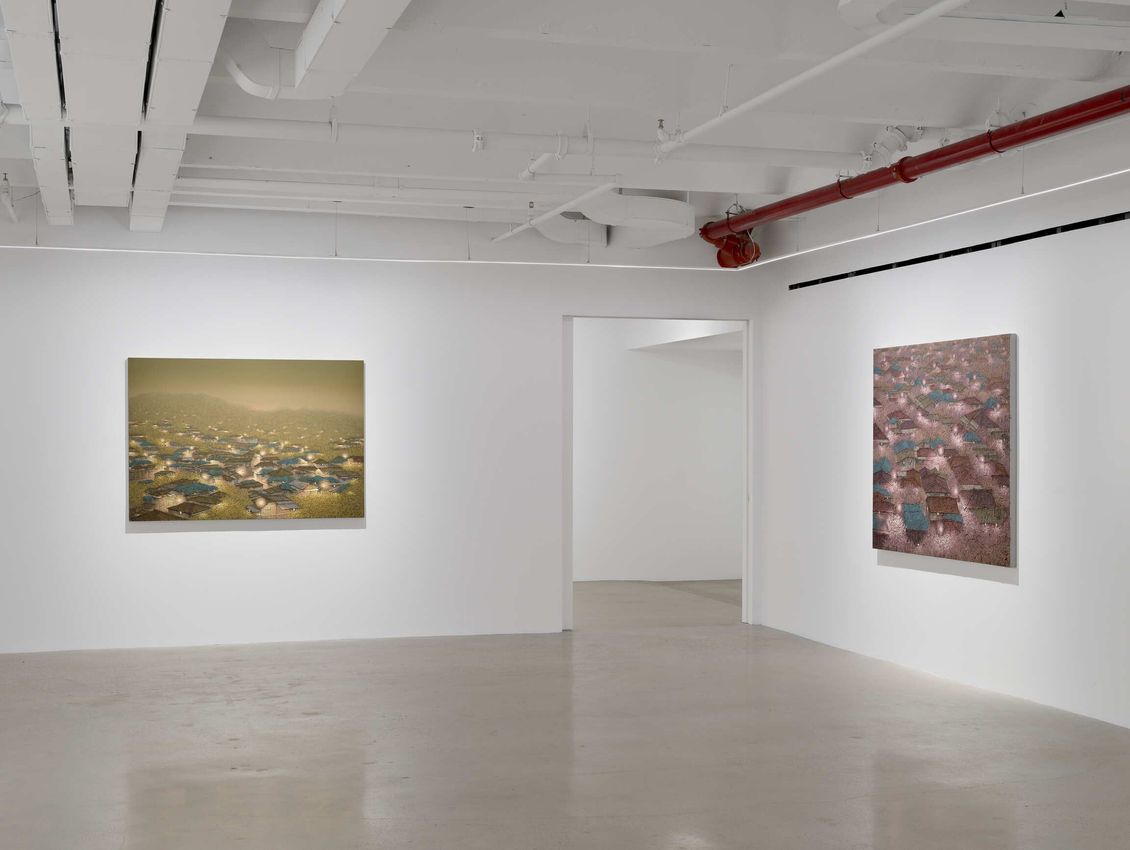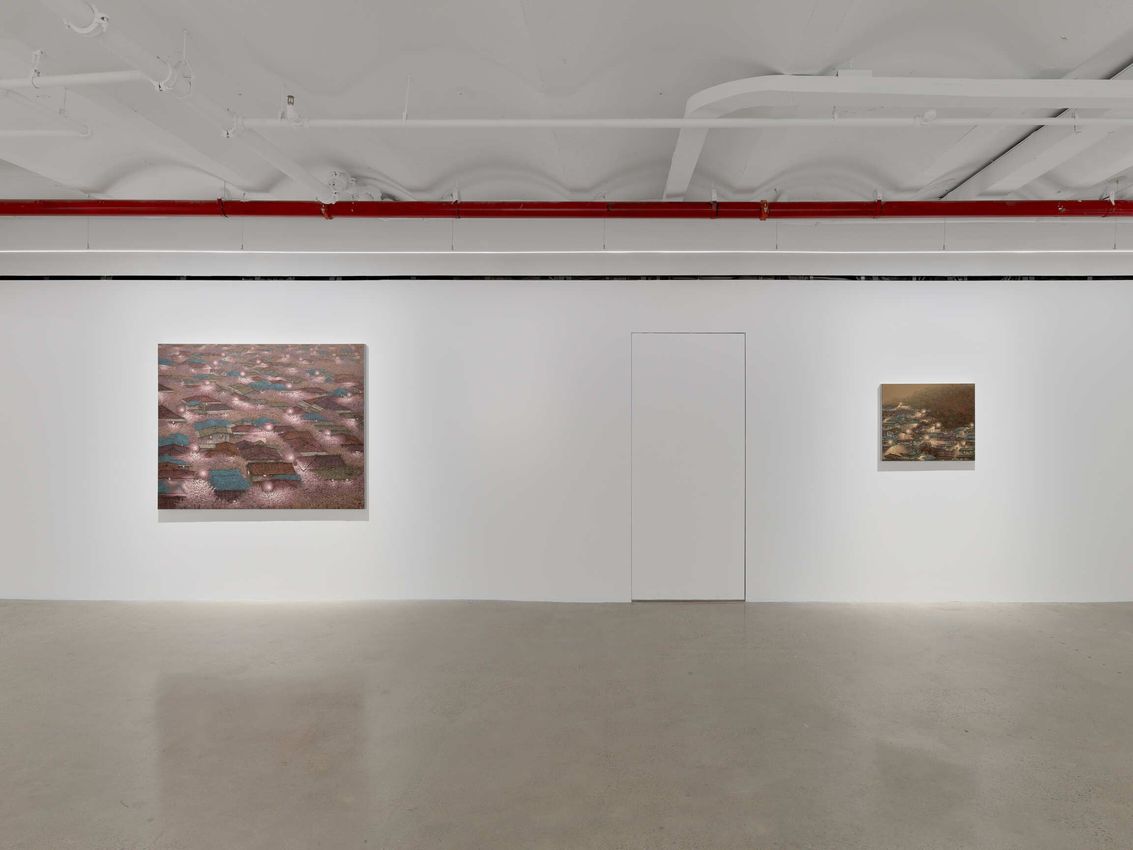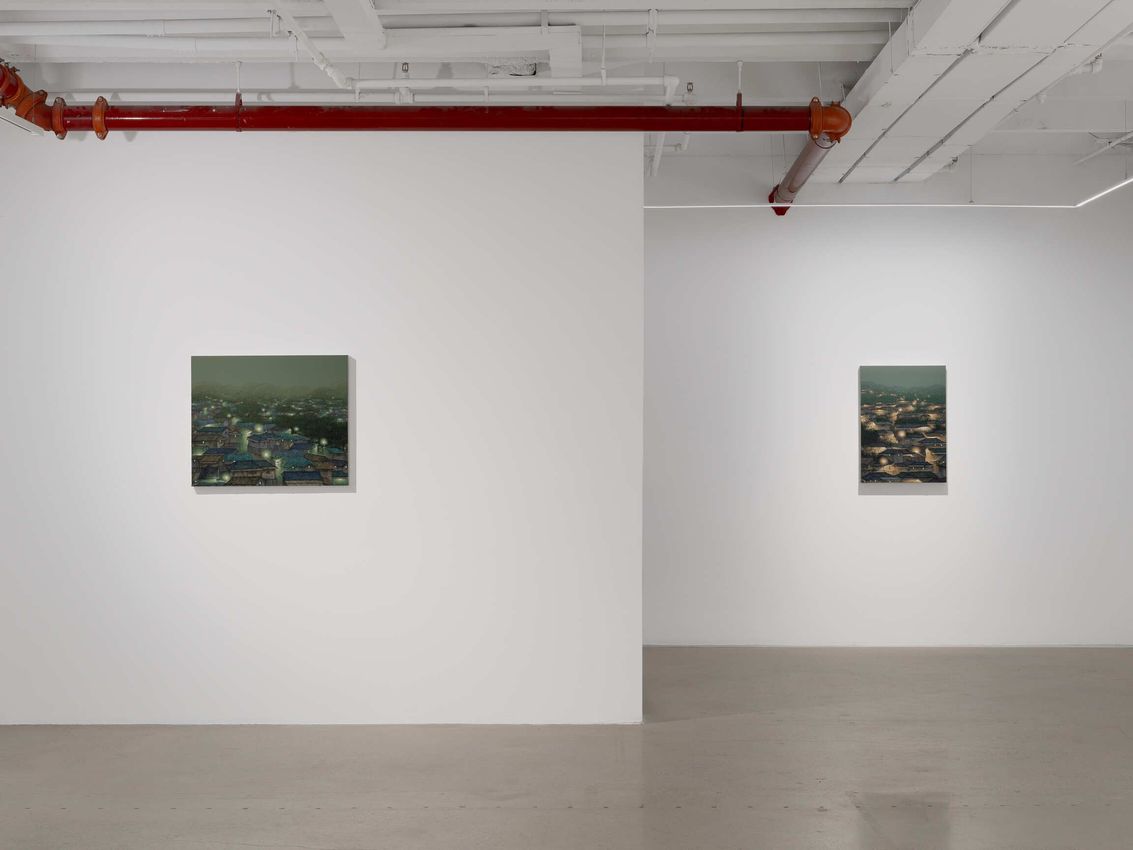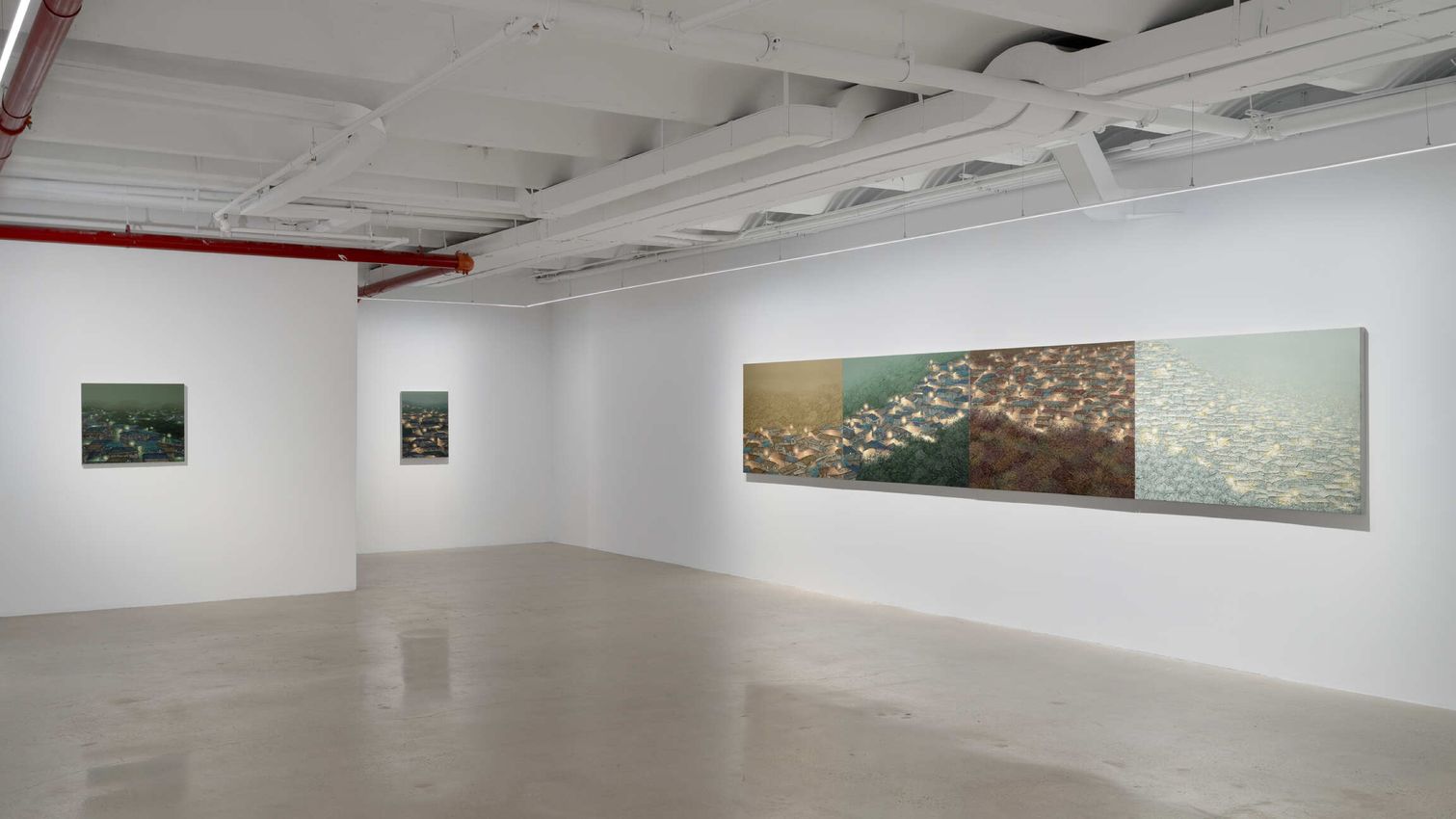
From an elevation, the roof tops of Korean homes made of tiles, corrugated metal, tarp, or any makeshift material that dress the hills in the outskirts of Seoul appear enchanting. Perhaps that alone makes the dal dong nae, or “moon village,” denoting slums or shanty towns, deserving of depiction and memorialization – indeed, South Korean films and dramas frequently feature these panoramic views of the city.
But to make these villages the fixation of one’s work feels fraught, due to the painful history of South Korea’s modernization. Artist Youngju Joung could not be indifferent to this, as she was born in Seoul’s dal dong nae in 1970. To be born in 1970 means Joung’s life began during a time where there was immense nationwide effort to modernize the Korean economy from an agrarian society. The growth of the economy also meant an influx of migration from rural areas into urban centers. But those with low paying factory jobs settled in slums at the mercy of urbanization requiring constant resettling, higher up the hills and out of reach from infrastructure such as plumbing and irrigation.
What makes Joung’s work compelling is not romanticized nostalgia where she mourns the disappearance of these villages. The creased, crumpled, and unfolded hanji that Joung attaches and paints on is emblematic of the lives in such slums. No object is new and everything is reused, over and over. Joung’s hanji should not be mistaken for those of the upper class literati but their detritus. These are the scrap papers used by storekeepers to keep their inventory, the papers children used to draw on to pass the time, and what families used to patch up holes on their walls. If the glimmering lights in her work for a moment allow for amnesia of actual material hardship faced by those living in those villages, Joung reminds her viewers, as well as herself, through the paper’s texture.
It was the distance that Youngju Joung experienced through her sojourn in France in her young adulthood that scenes of these dal dong nae’s became newly visible to her. Her incessant repetition of this subject matter does not come from a desire to monumentalize these villages, or to champion their beauty despite hardship. It is rather that these disappearing villages have become for the artist, a metaphor for time and life itself.
For this body of work, Joung took the subject of passing time further, by thinking of the villages through the four seasons. And as she was painting these scenes, both from memory and from imagination, when she was painting a winter scene, she would wait for the winter; when it was time to paint the spring, it was only when spring came that she would approach the work. And by doing so, Joung attempts to close the gap between the time of her work and the time of her lived memories.
The dynamism and vitality in Joung’s work does not come from her succeeding to depict and translate her lived experience for her audience – it is that through the act of painting, she immerses herself fully into memory, entering it, so that the sensations she has for the home of her past comes alive. It is this phenomenological and ritualistic attitude towards her subject matter which gives her work its power, even as she does not desire to abstract their source. This is why Joung does not omit the essential details that would clue one into their Korean origin, but these signs are not loud, nor didactic.
Though the persistence of time may be felt most pressingly by those who live marginal lives like those in the dal dong nae’s, even the rich whose days may be full of leisure and luxuries are not exempt from it. Time, like water, flows without discrimination or recognition of those categories. And it is from that knowledge that Joung’s work derives its strength, dignity, and unwavering spirit.
— Diana SeoHyung, writer and translator
Courtesy Almine Rech.


A respected voice in contemporary art discourse.
Focusing on ambitious storytelling and insightful art-world commentary. Ocula Magazine publishes in-depth interviews, critical essays and timely analysis on the artists, exhibitions and ideas driving the global art world.
Learn more about Ocula Magazine
Showcasing the best of the art world.
Ocula partners with galleries from around the world to highlight their artists, artworks and exhibitions. Gallery membership is by application and invitation, with each member vetted by an independent panel.
Learn more about Ocula Membership

Specialises in the sale of major artworks.
Led by a team with deep ties to the world’s leading auction houses, galleries and collectors. Ocula’s advisory team offers bespoke services to high-net-worth clients from around the world who are looking to acquire the best of contemporary and modern art.
Learn more about our team and services