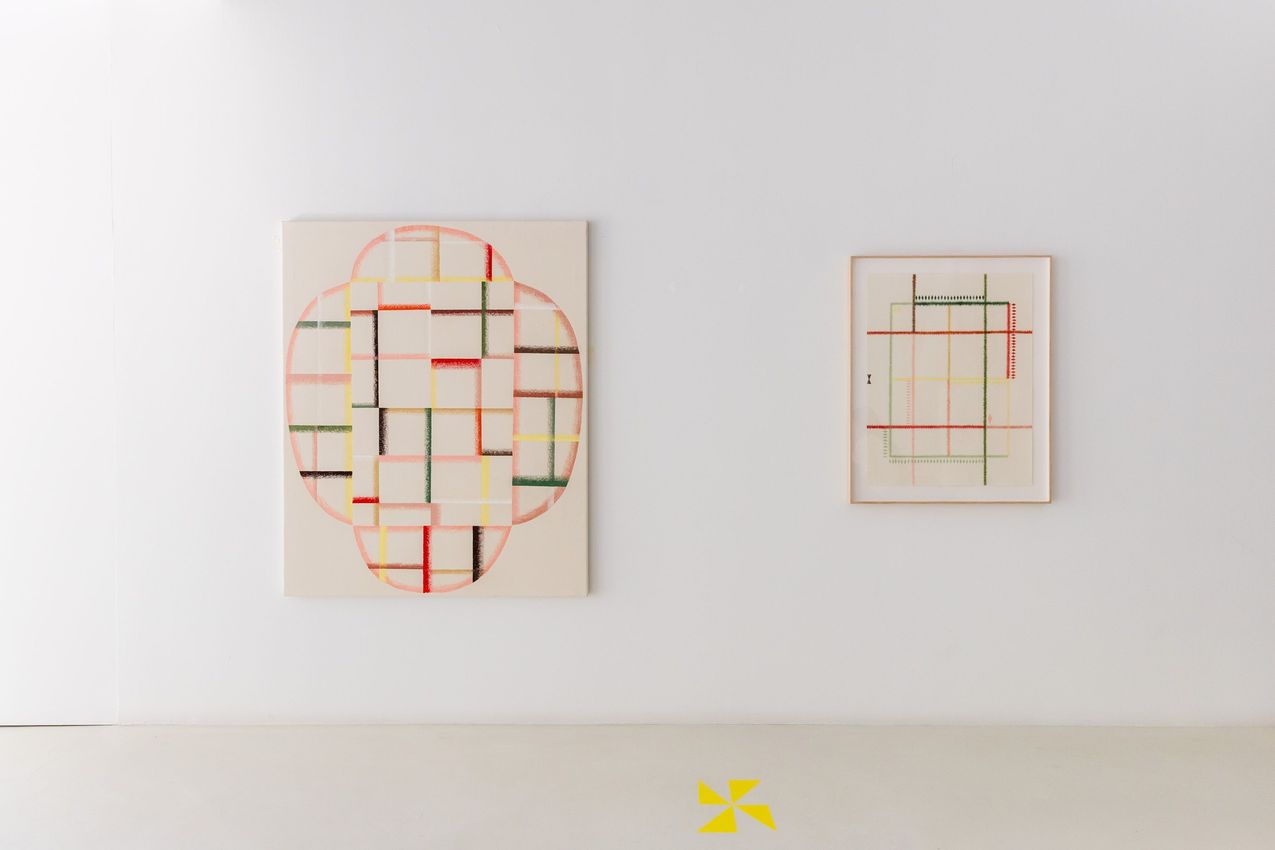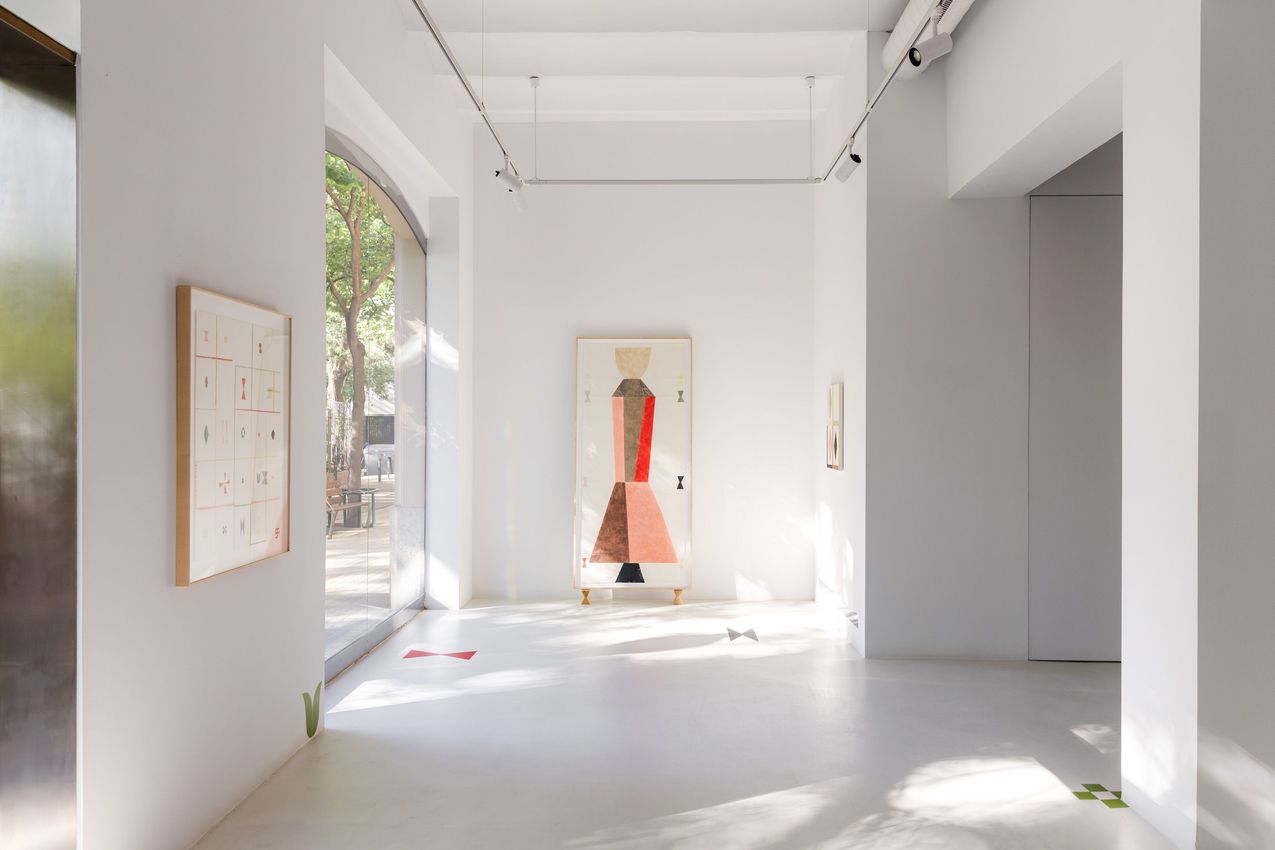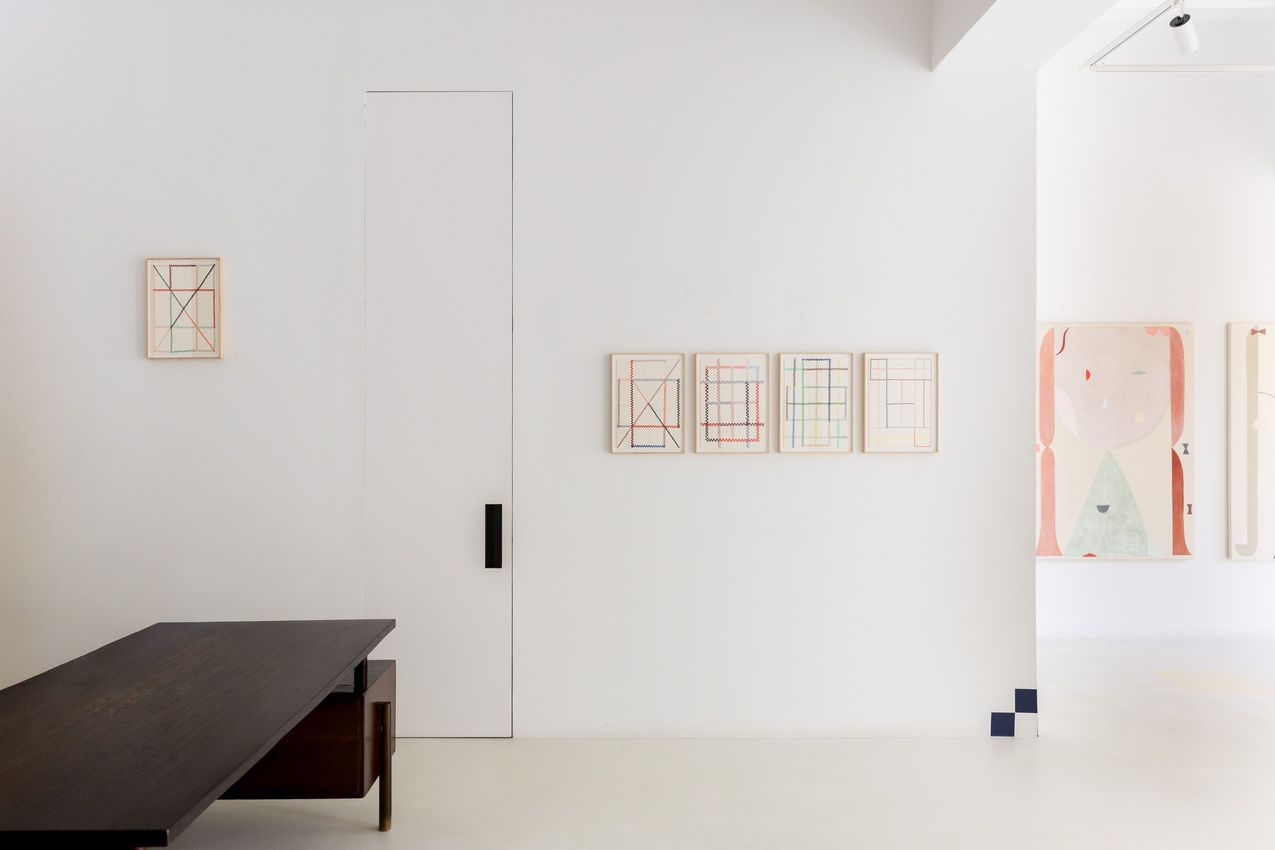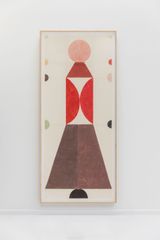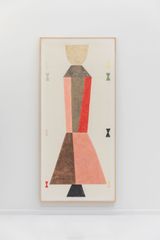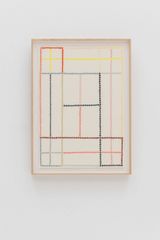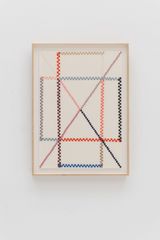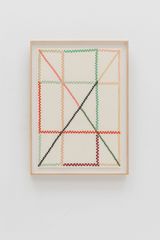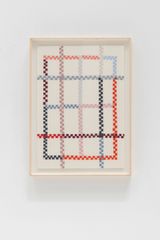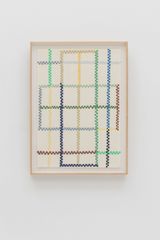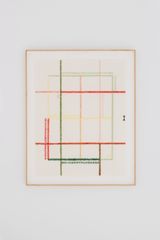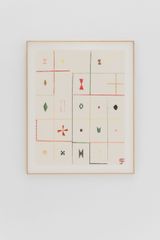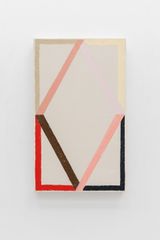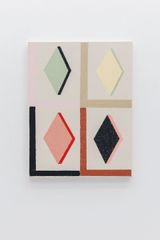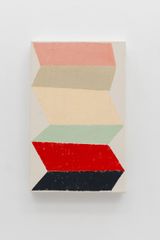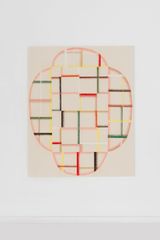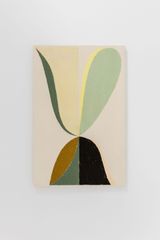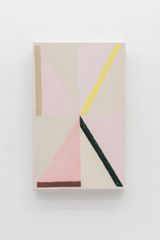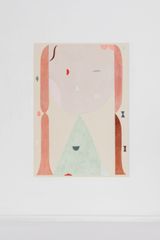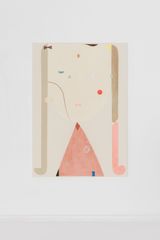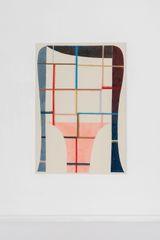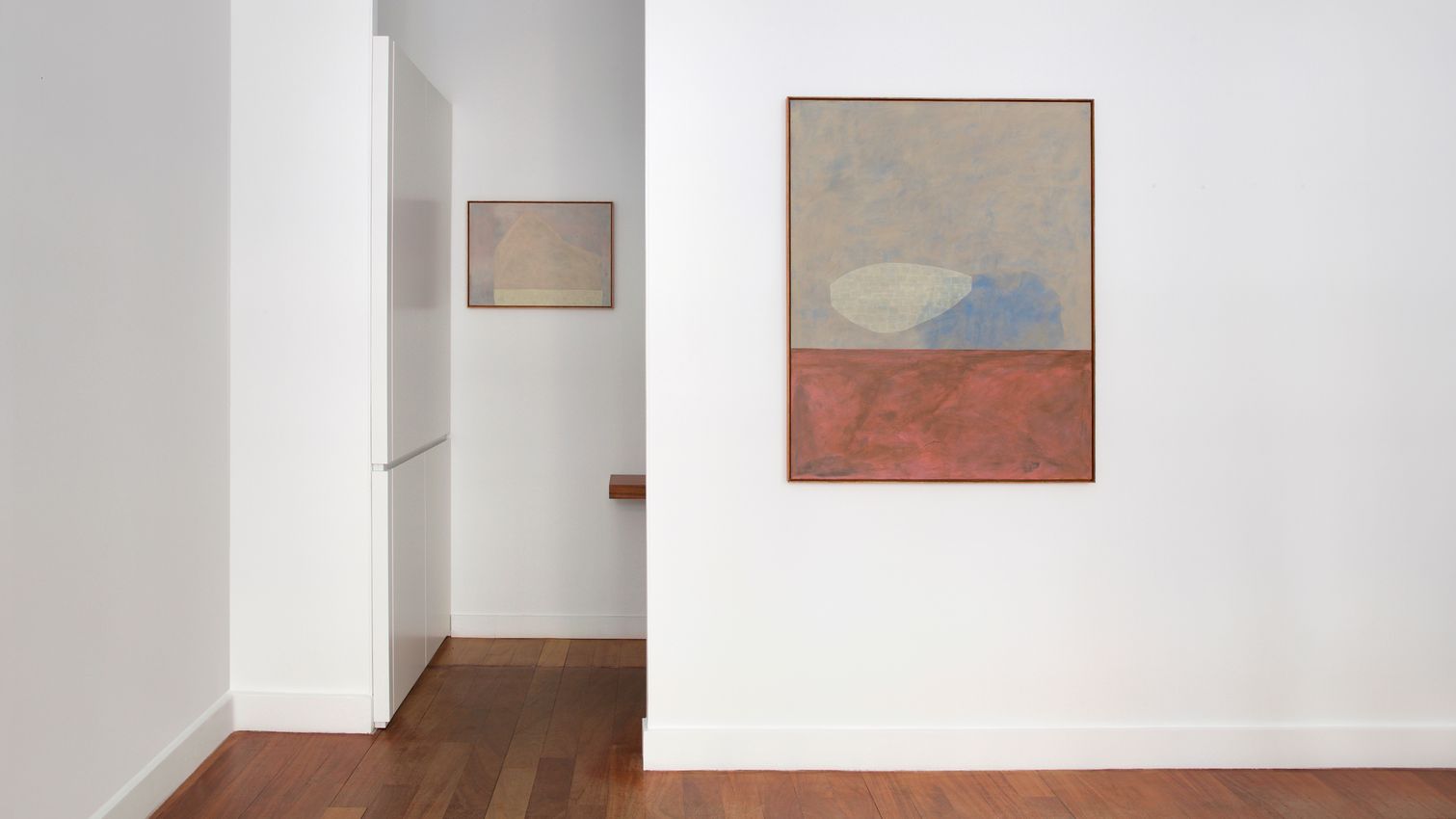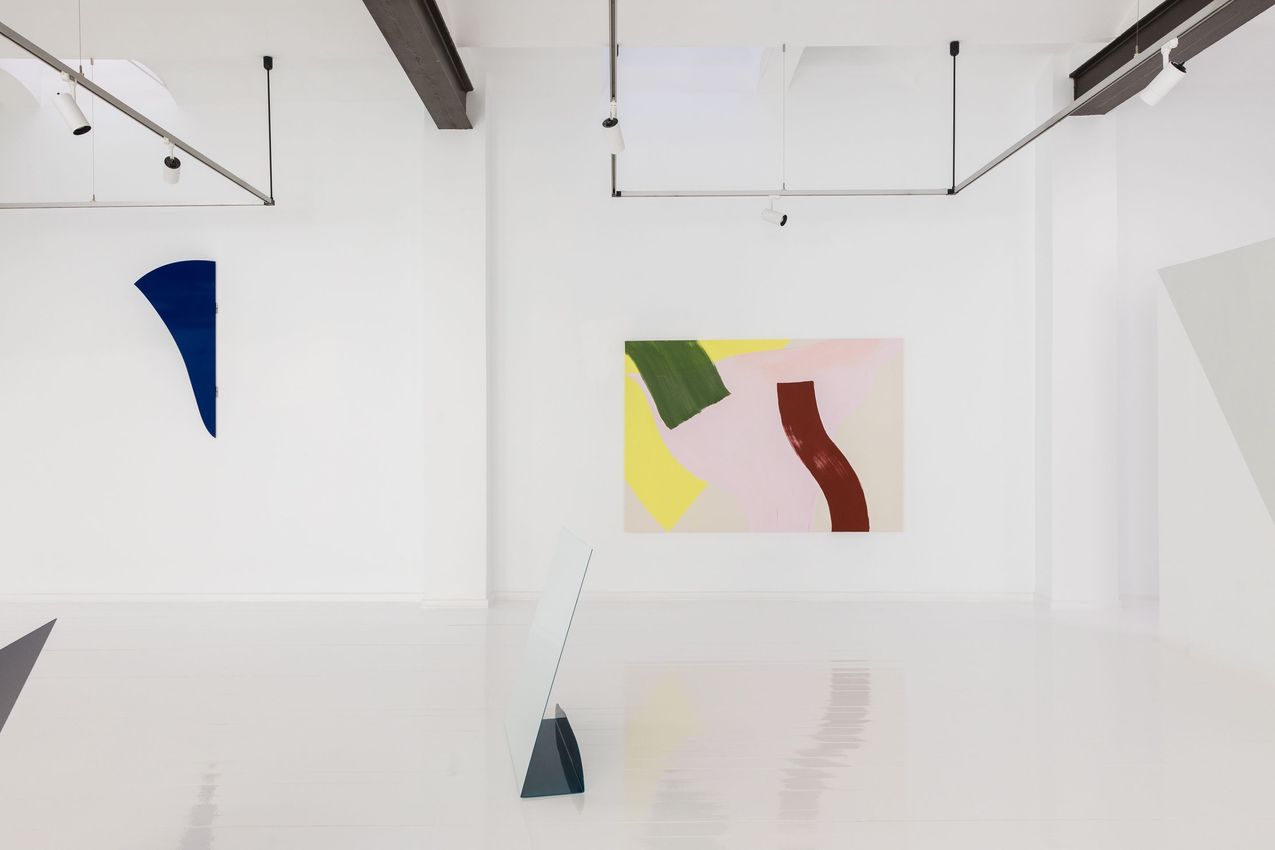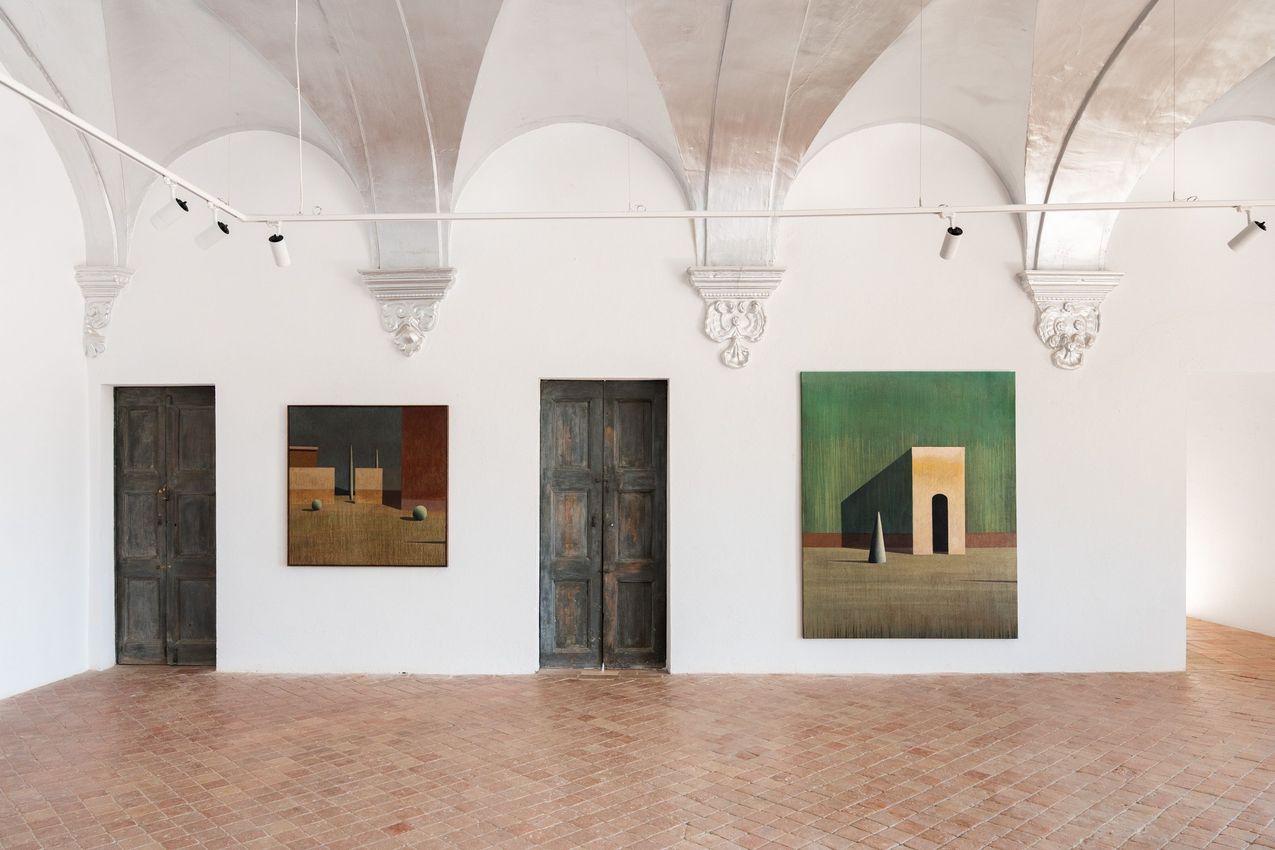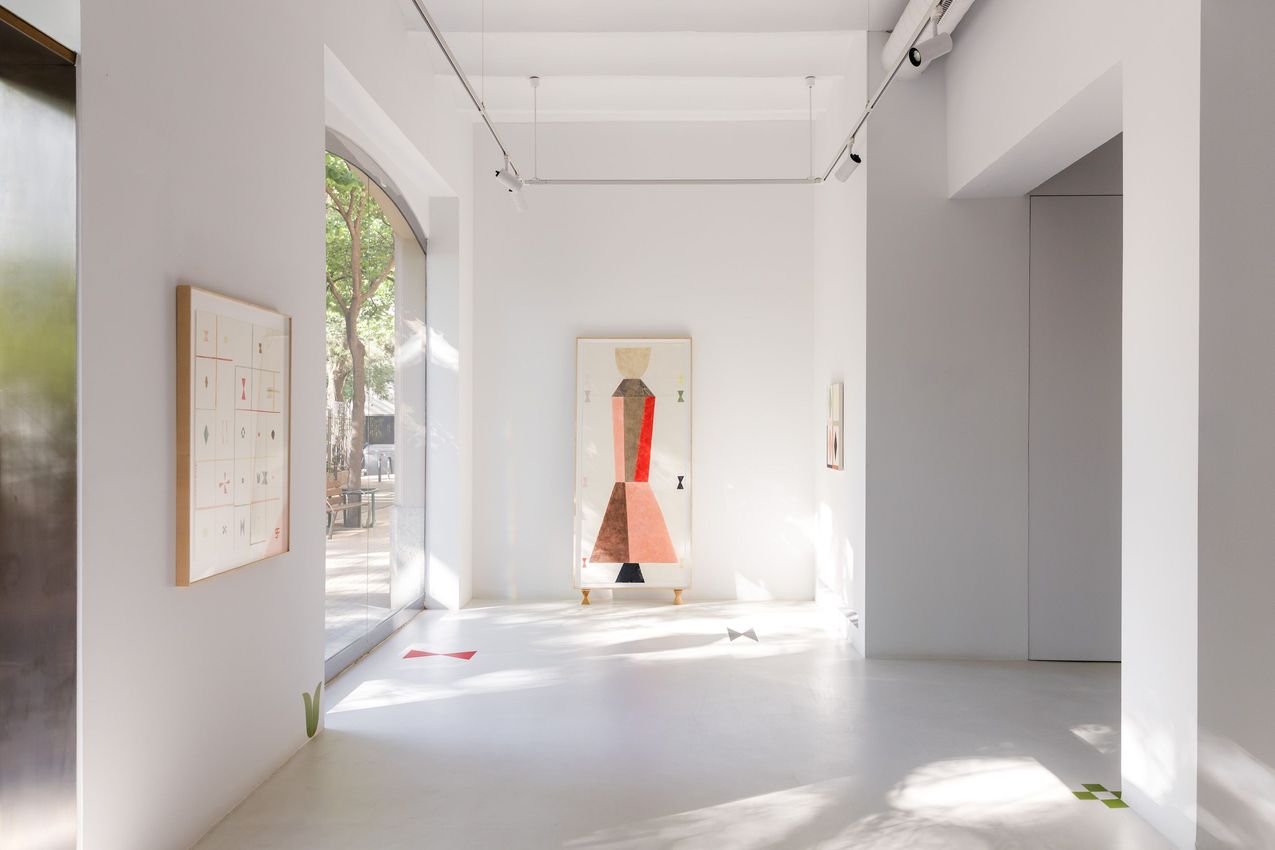
Alzueta Gallery presents CEREMONY, an exhibition by artist Sabine Finkenauer that will be on view from May 14 to June 16, 2026, at Alzueta Gallery Turó.
In CEREMONY Sabine Finkenauer offers an approach to the idea of ritual through her characteristic language: a vocabulary of simple forms, refined over years of work, which here unfolds as an open system of signs. The title evokes a celebratory dimension, not in its most solemn sense, but as a form of attention to the everyday. In this context, a ritual can be understood as a symbolic action that not only organizes gestures and time, but also creates community. Faced with the contemporary age, marked by an overabundance of communication yet fragile in its bonds, the ritual introduces a different mode of relation based on recognition and shared experience.
At the core of this exhibition is an “alphabet” of symbols: small recurring forms in her work that, brought together, function as a kind of legend or visual code. These minimal units, which appear both in her drawings and across the floor and walls of the gallery, are arranged in sequences and patterns that suggest an order. It is not an imposed order, but one built through repetition, variation, and play. As in every ritual, there are rules (though not always explicit) that structure the experience.
The term symbol derives from the Greek symbolon, which referred to a sign of recognition or a password exchanged between guests: an object that is broken in two pieces, with each party keeping one half. Upon meeting again, the two parts allow for mutual recognition. This form of recognition does not simply mean seeing something again, but acknowledging it as something already known. Here, to recognize means to capture the permanence within the fugitive. Finkenauer suggests that this set of signs can be understood as the instructions for an unknown ritual. A ritual that does not need to be deciphered, since its meaning does not lie in a fixed significance, but in the possibility of activating a relationship between forms, space, and gaze. In this way, the exhibition becomes a field in which each element occupies its precise place, establishing correspondences between the visual order and a certain idea of vital order.
At the same time, the artist conceives CEREMONY as a reflection on the contemporary loss of rituals. In contrast to a present shaped by immediacy and banalization, Finkenauer’s work emphasizes the importance of giving form to gestures, objects, and shared time. As in the Japanese tea ceremony or in the care with which a gift is wrapped, attention to detail and form becomes a meaningful act in itself.
Formally, her compositions, whether figures or geometric patterns, oscillate between tenderness and rigor. The economy of means, the use of color, and the repetition of modules generate structures that are at once precise and open, disciplined yet playful. In them, the artist articulates a poetics in which the minimal acquires intensity and the apparently simple reveals a certain complexity. Thus, rather than representing, Finkenauer constructs situations. Her spatial arrangements subtly evoke the collective dimension of ritual and the way in which meaning is produced through repetition and recognition.
CEREMONY is, ultimately, a celebration of small things and the capacity of forms to generate meaning. A reminder that arranging space with care and attention can also be a way of ordering life.


In her latest exhibitions, Sabine Finkenauer (1961) has focused on architectural aspects, apparently more hedonistic and formal, and has left behind a side that could even be considered romantic because of its themes (related to nature, childhood and feelings), although not because of a happy and luminous tone that is exceptional in today’s art. This tone is maintained in her recent work and I like to believe that it anticipates, that it prefigures a different art and future, already free from post-modern cowardice and the old excuses of nihilism.


A respected voice in contemporary art discourse.
Focusing on ambitious storytelling and insightful art-world commentary. Ocula Magazine publishes in-depth interviews, critical essays and timely analysis on the artists, exhibitions and ideas driving the global art world.
Learn more about Ocula Magazine
Showcasing the best of the art world.
Ocula partners with galleries from around the world to highlight their artists, artworks and exhibitions. Gallery membership is by application and invitation, with each member vetted by an independent panel.
Learn more about Ocula Membership

Specialises in the sale of major artworks.
Led by a team with deep ties to the world’s leading auction houses, galleries and collectors. Ocula’s advisory team offers bespoke services to high-net-worth clients from around the world who are looking to acquire the best of contemporary and modern art.
Learn more about our team and services