Press Release

How brightly nature

Shines this morning!

What radiant sun!

How the fields sing!

These are the exuberant opening lines of Johann Wolfgang von Goethe’s famous poem “Mailied” (1771). Full of buds, sun, dew, and flowers, the poem is a quintessential ode to spring written by a young poet on the verge of a brilliant career. But its message is also not quite as straightforward as one might initially think. The unnamed narrator of the poem first appears to be addressing nature, then God, and then, in the last half of the piece, a woman appears. However, her human presence is textually commingled with birds, blue skies, and omnipotent powers that make us wonder who or what exactly Goethe is praising. Already in the poem’s first stanza, we see this sort of cross-pollination: after all, fields do not have throats or voices to sing.

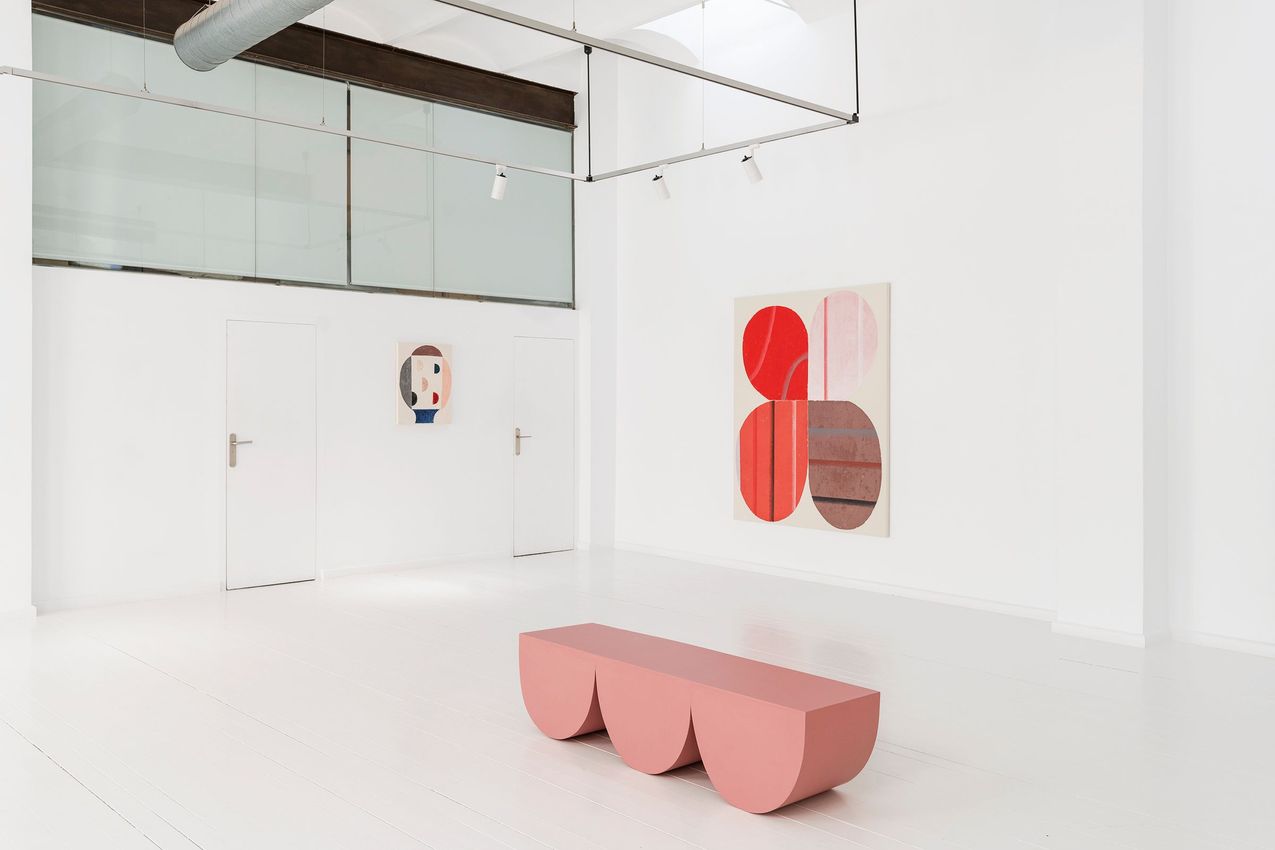
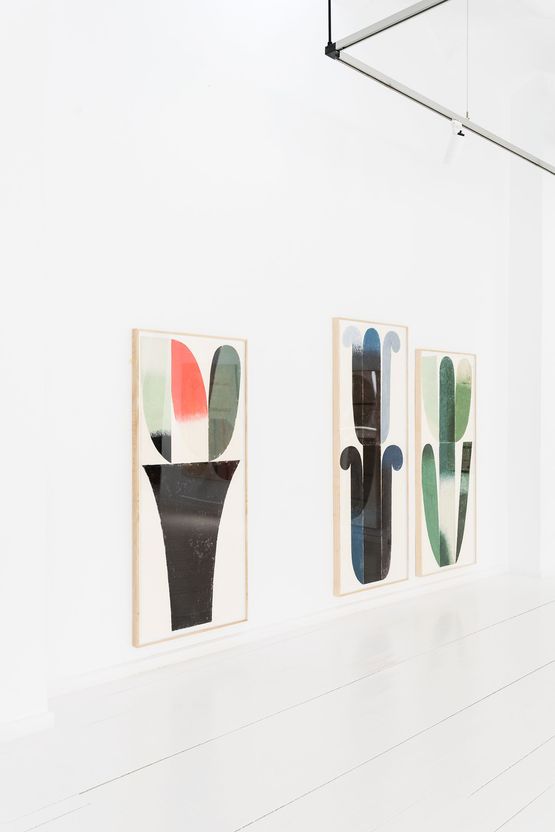
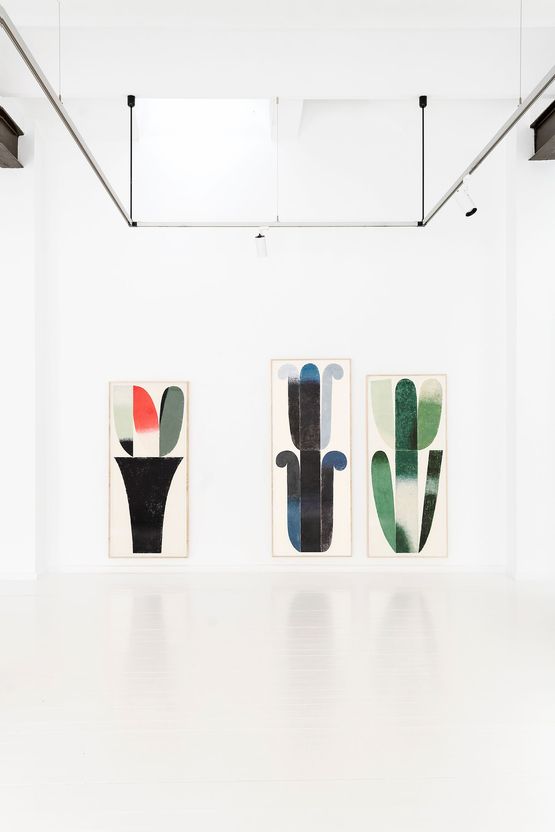
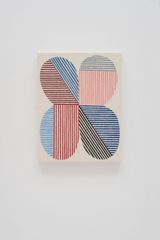
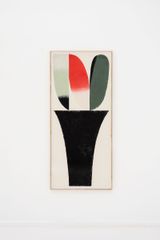
A similar sort of graceful slippage between things happens in Sabine Finkenauer’s work. The artist creates pictures that we might perceive as the representation of a certain thing — a flower or a woman, for example — without those works ever actually staying tied to that particular visual reading. This balance between definition and ambiguity ultimately leaves generous room for the viewer and their own imagination. Rather than asking ourselves what the artist has depicted, Finkenauer’s work gives us the space to ask, What is it that I see?

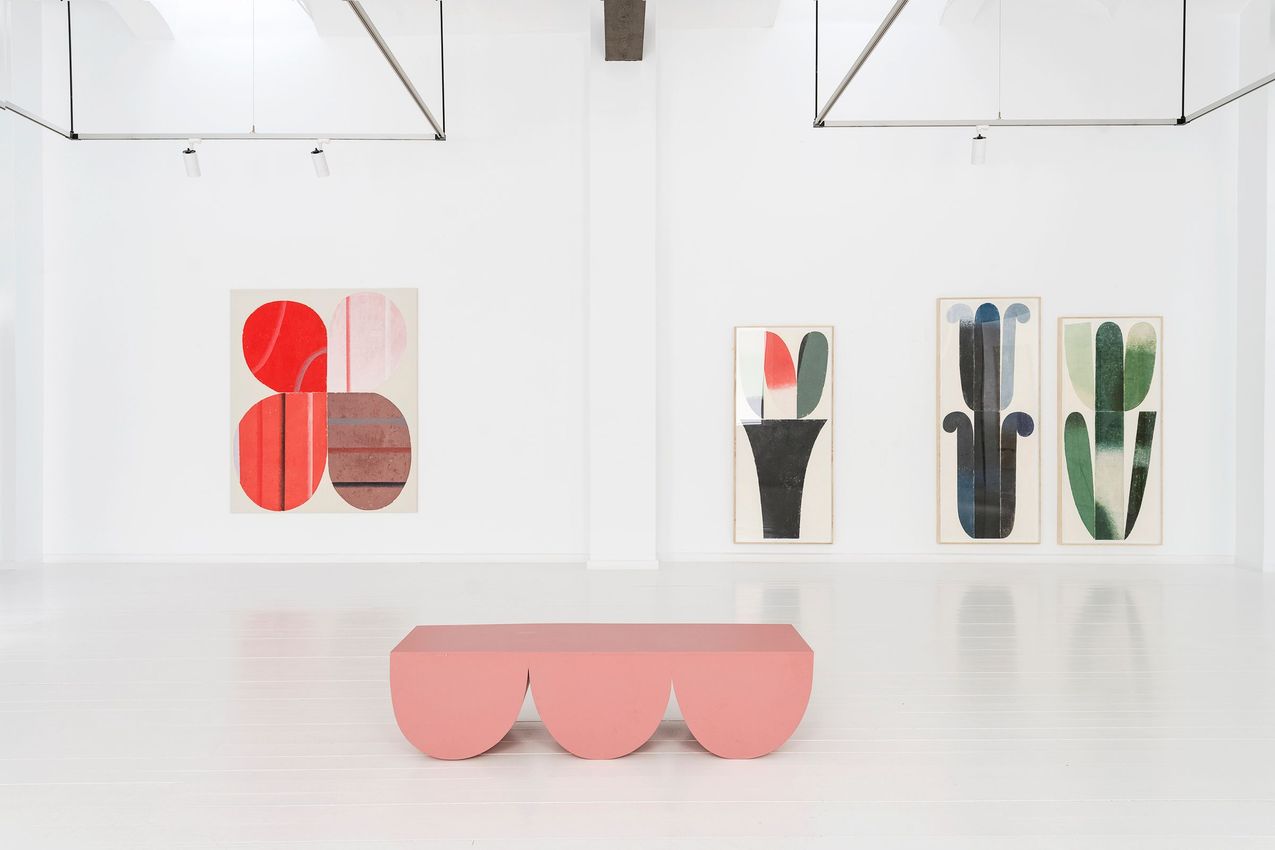
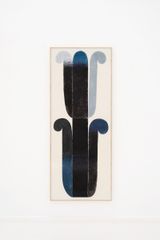
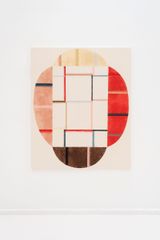
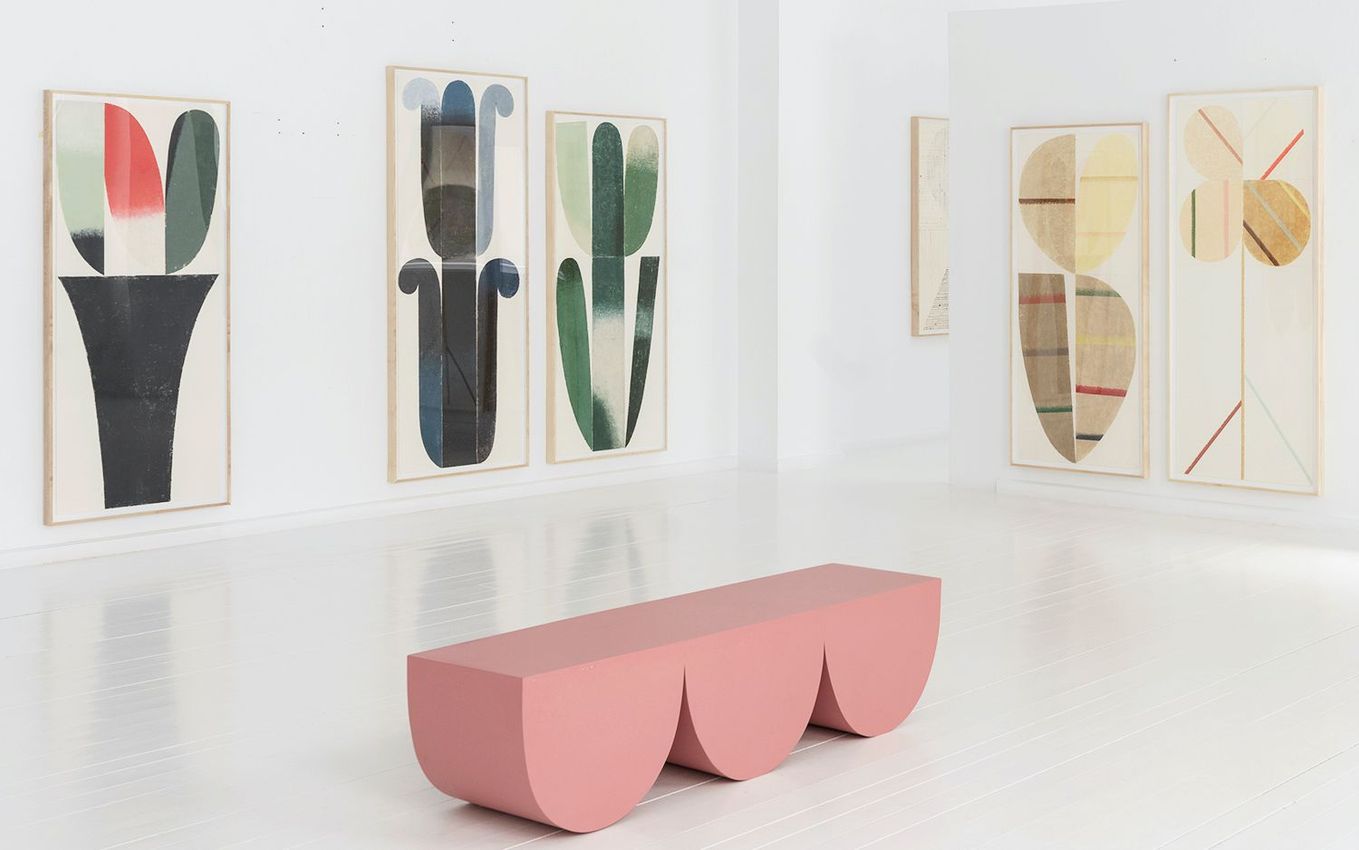
Shapes are the foundation of Finkenauer’s work, and those shapes are extremely particular to her. The artist describes her forms as synthesized and simplified, and — as in Goethe’s poem — these distillations often flow between human and natural associations. Arranged inside of unobstructed fields of white, Finkenauer’s forms feel even more decisive, imbued with a symbolic force that feels universal. They also sometimes resemble something we might have drawn in childhood. That sensation of an early shared memory points to the artist’s strong determination to excavate and transmit her subjects’ essence.

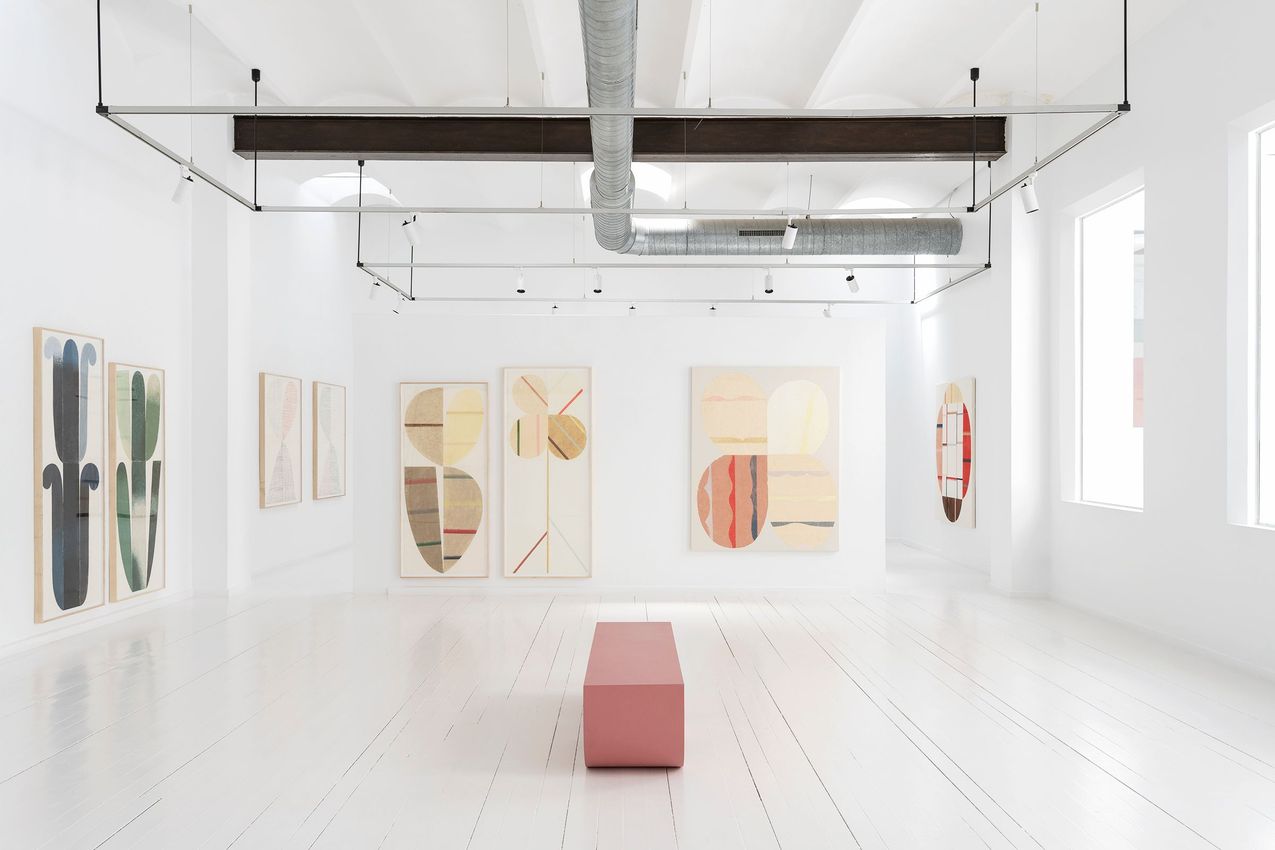
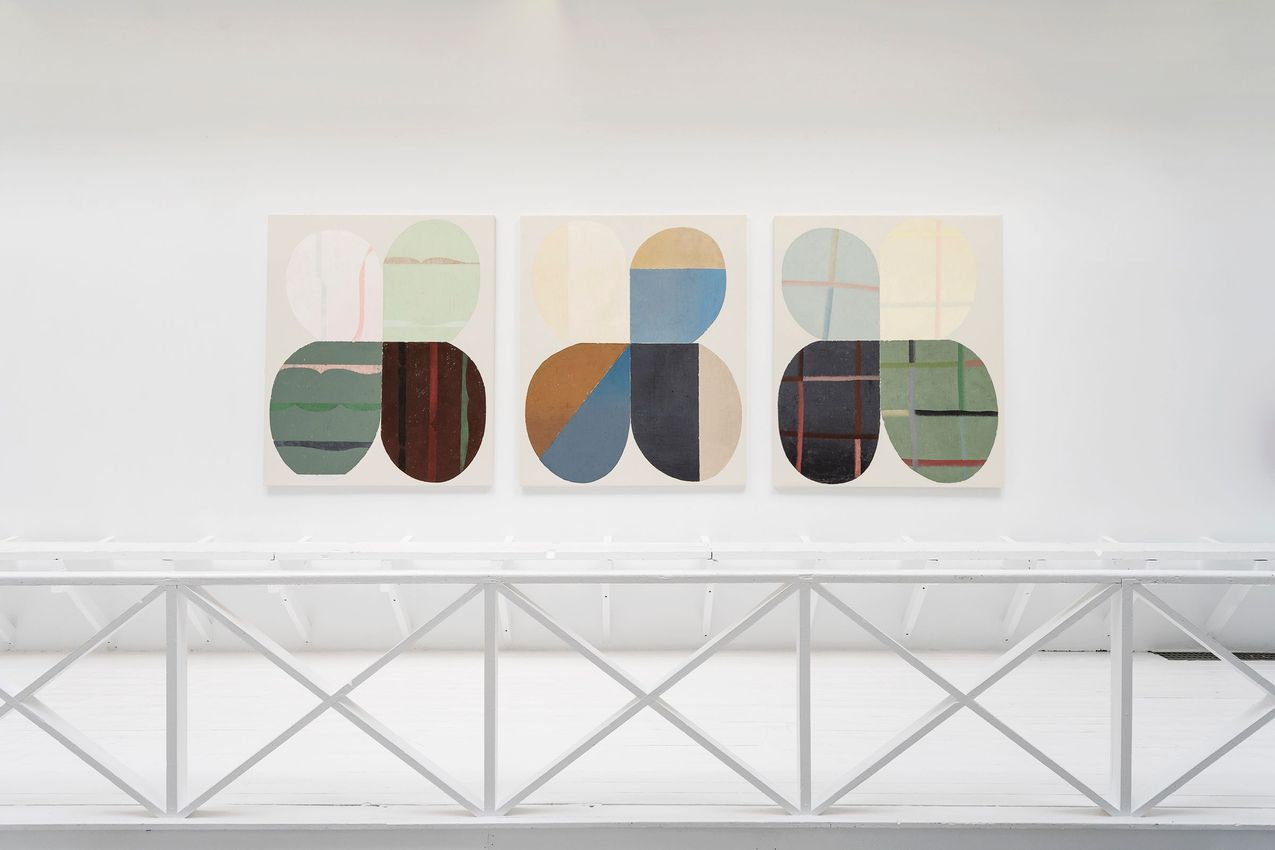
At the same time, Finkenauer’s forms are crucially open-ended and not quite set. In fact, her recent technique using oil pastel on multiple pieces of paper emphasizes the primacy of pure shape in her work. Each surface contains just one shape which — taken on its own — is purely non objective. But these modular components are like building blocks, and when they are configured together they become something new. The composite image contains both individual abstractions and a holistic sort of depiction. That flexibility represents a rare freedom for both the creator and her audience.

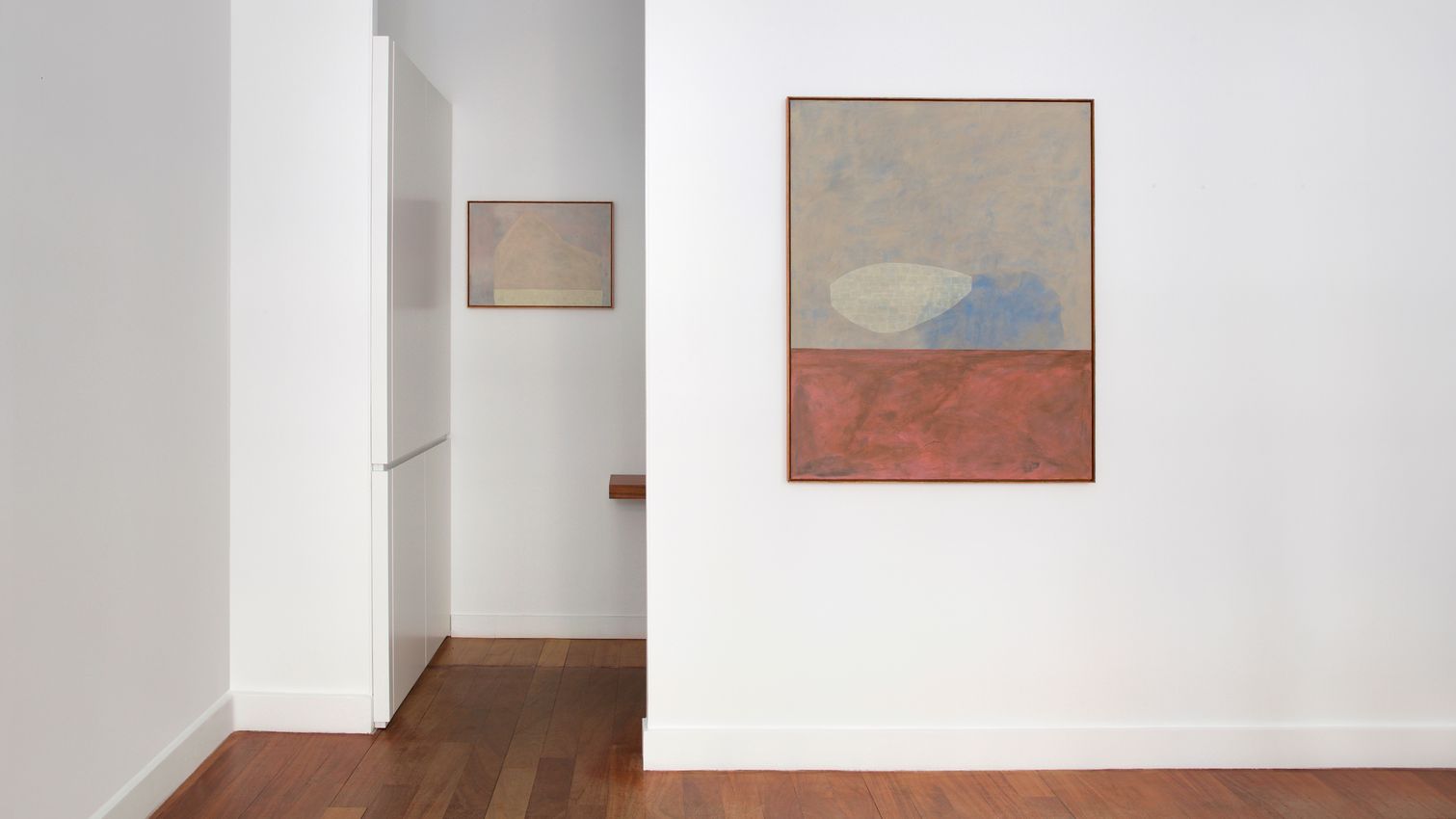
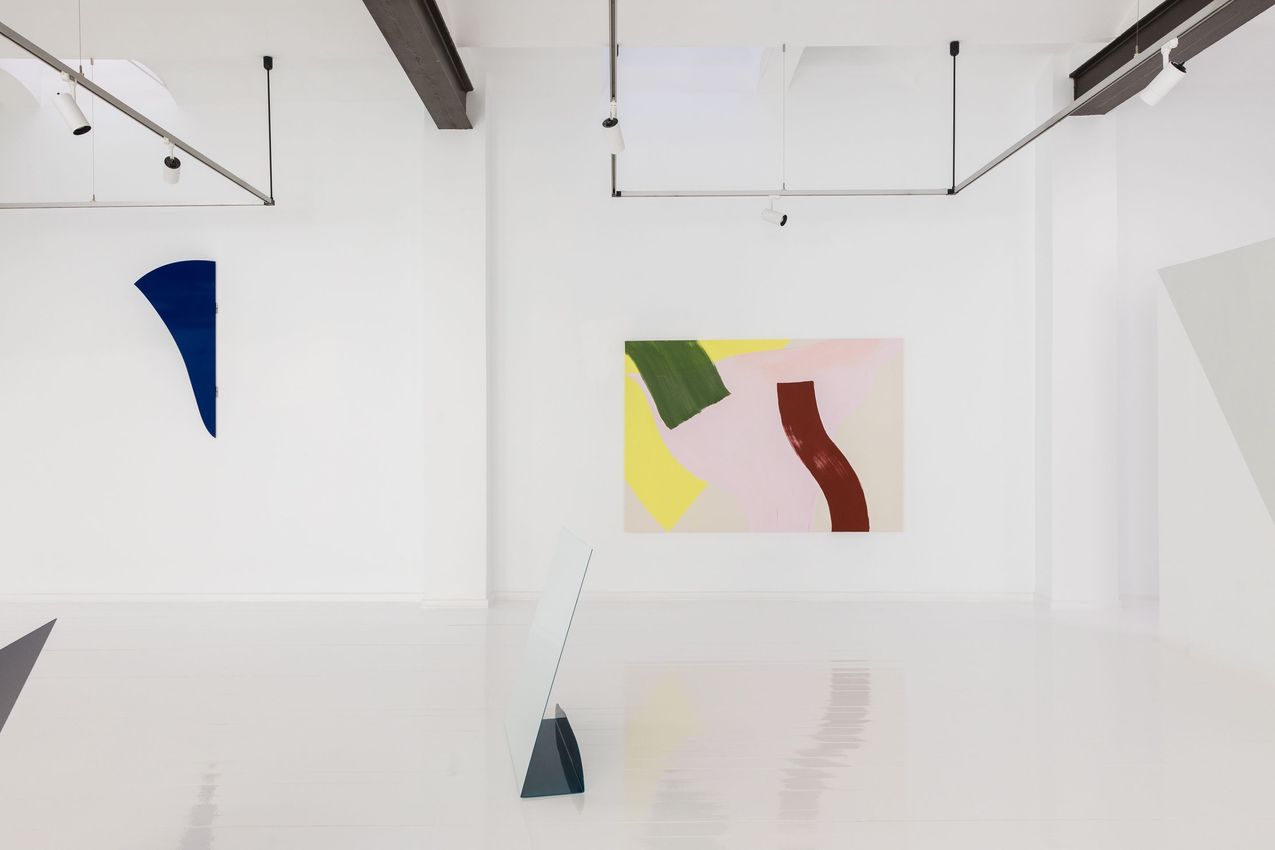
Of course, Finkenauer’s new exhibition at Alzueta Gallery is named for Goethe’s poem because she too is paying homage to the exhilaration of spring. Earthy reds, fleshy beiges, and herby greens bloom all over these new works, where petal, leaf, and flower forms nearly match the size of people’s bodies. The pieces are bold and joyful, and the unpredictable materials that they are drawn with make it impossible to ignore the artist’s tender hand. After years of collaborating with Alzueta Gallery, Finkenauer now presents her first solo exhibition at its principal location on Carrer Seneca. With it, Finkenauer is celebrating spring, where in Goethe’s words “A thousand bushes / Resound with song.” We should sing and celebrate it, too.

  • Lauren Moya Ford
Read More

Installation Views

About the Artist

In her latest exhibitions, Sabine Finkenauer (1961) has focused on architectural aspects, apparently more hedonistic and formal, and has left behind a side that could even be considered romantic because of its themes (related to nature, childhood and feelings), although not because of a happy and luminous tone that is exceptional in today’s art. This tone is maintained in her recent work and I like to believe that it anticipates, that it prefigures a different art and future, already free from post-modern cowardice and the old excuses of nihilism.

View Artist Profile

Also Exhibiting

About the Gallery
Alzueta Gallery is committed to the development of contemporary artistic language, fostering both physical and digital spaces where creativity and reflection establish new dialogues. Constantly seeking ideas and projects, the gallery continues to evolve as a dynamic presence in the art world.

With over twenty-five years of experience, Alzueta Gallery, founded by Miquel Alzueta in Barcelona, has become a leading name in contemporary art. The gallery has solidified its presence both locally and internationally, with five locations across Barcelona, Madrid, Casavells and Paris. Its program includes exhibitions, art fairs, artist residencies and collaborative projects, involving both physical and digital platforms.

View Gallery Profile
Address
C/ Séneca 9-11, Int Bajos
Barcelona
Spain
Opening Hours
Monday – Friday
9am – 2pm / 4pm – 7pm
Saturday
11am – 2pm / 4pm – 7pm
(1)
Barcelona C/ Séneca 9-11, Int Bajos
Alzueta Gallery
C/ Séneca 9-11, Int Bajos, Barcelona, Spain

Opening hours
Monday – Friday
9am – 2pm / 4pm – 7pm
Saturday
11am – 2pm / 4pm – 7pm
The art world in focus