



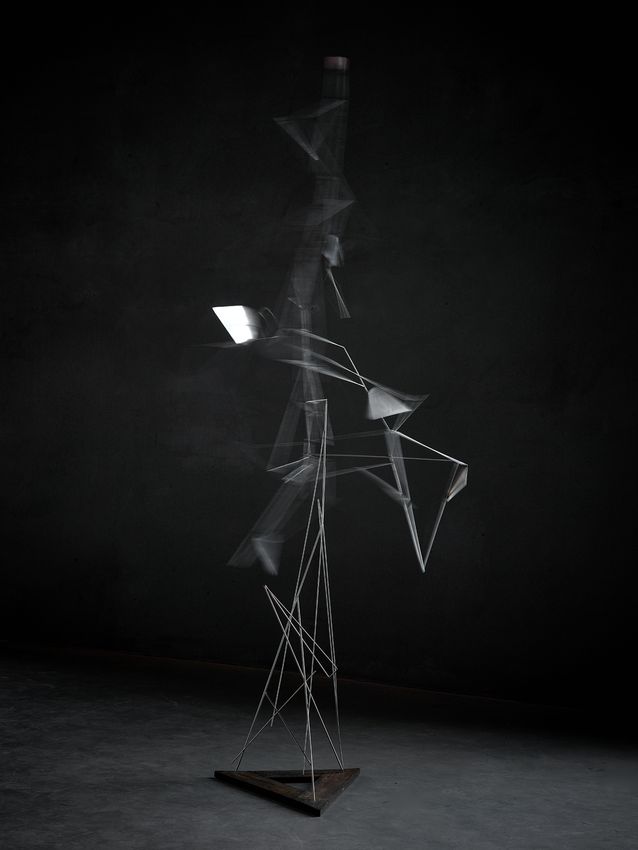
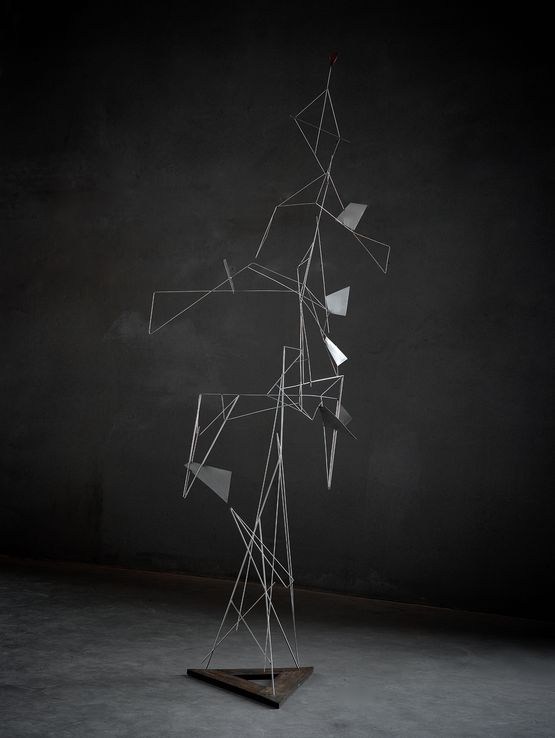
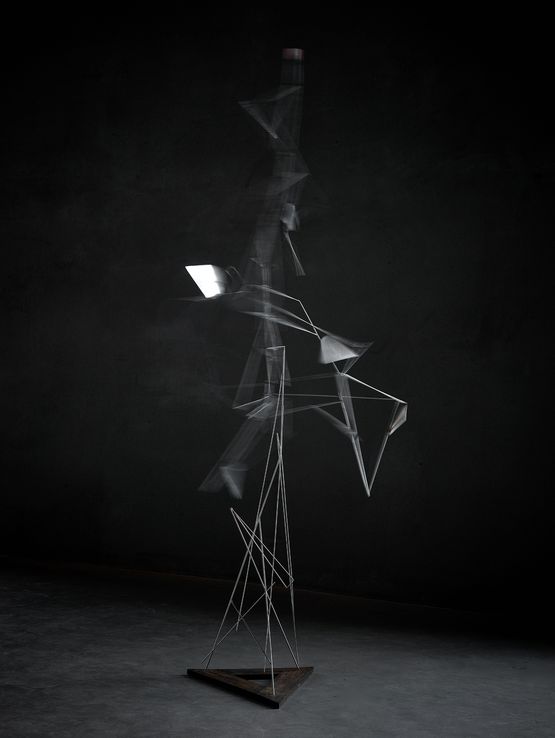
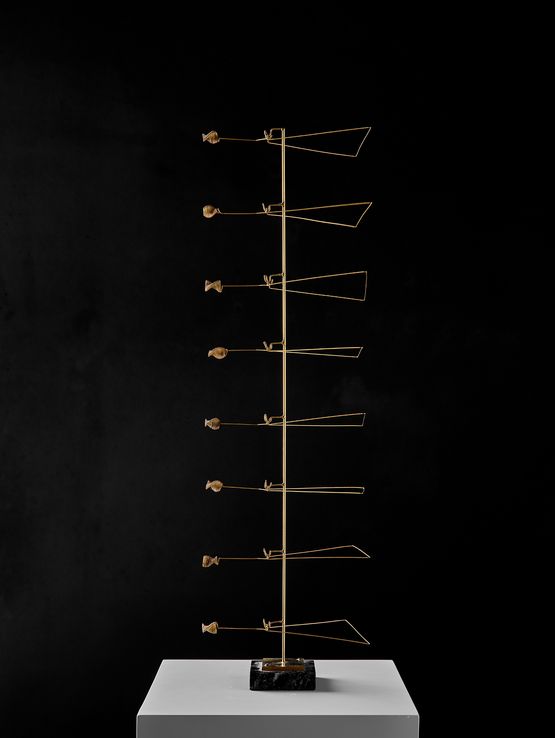
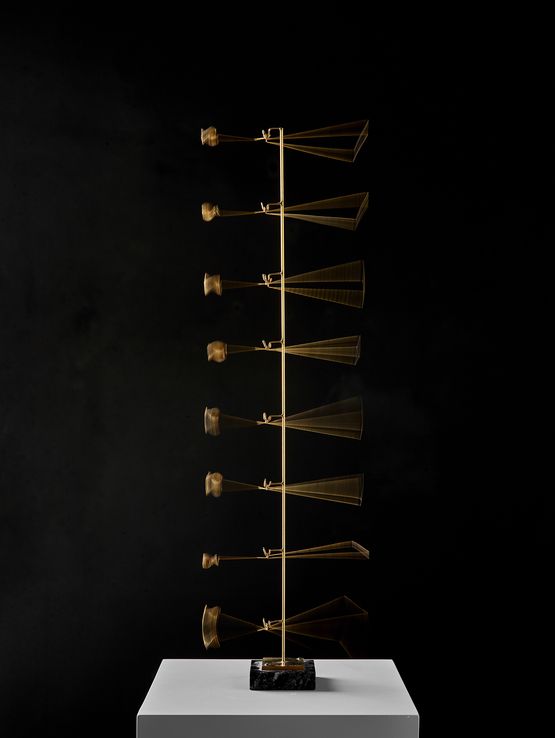
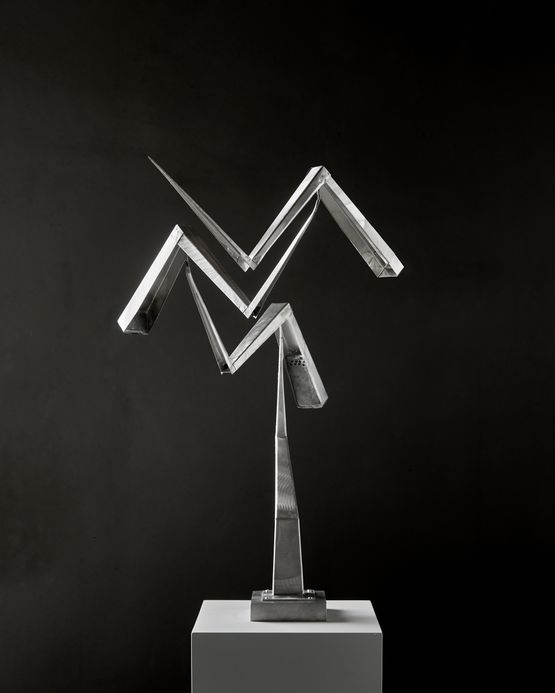
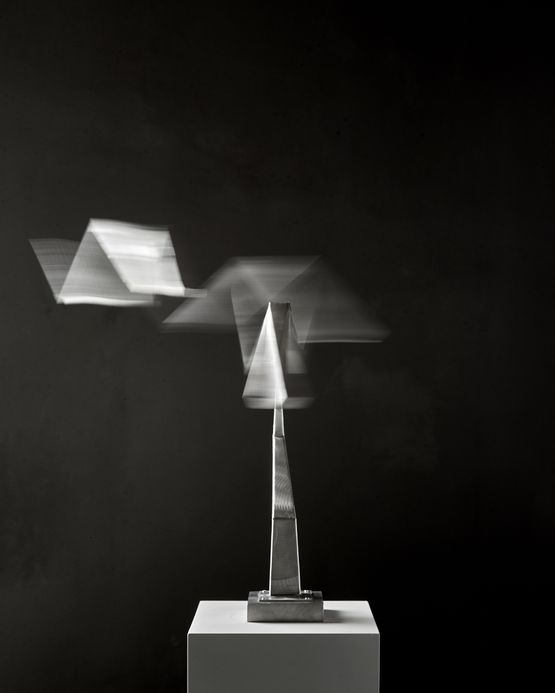
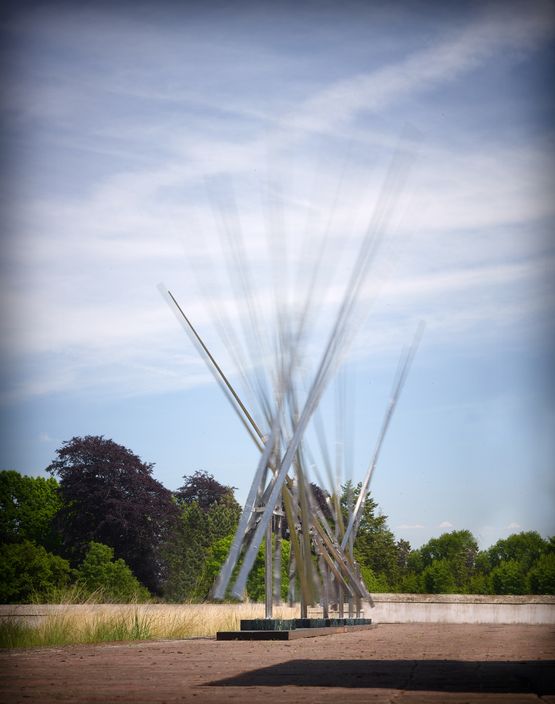
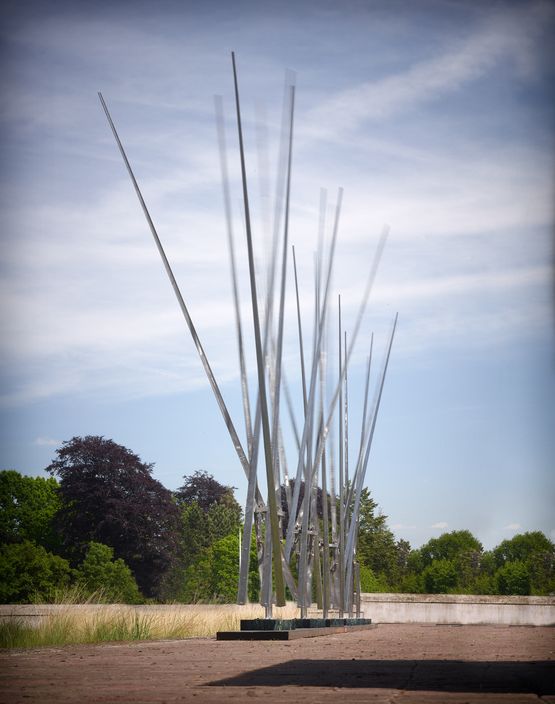
Axel Vervoordt Gallery is proud to present its first solo exhibition of American kinetic sculptor George Rickey (South Bend, Indiana, 1907 – Saint Paul, Minnesota, 2002), in collaboration with the George Rickey Estate and George Rickey Foundation. The exhibition, which will take place in the Terrace Gallery as well as in the open air of Kanaal, will show a selection of his sculptures, which he referred to as ‘useless machines’. Often intended to be placed in public spaces, Rickey always created an intriguing field of tension in his sculptures, in which geometric, constructivist metal parts, sometimes weighed up to hundreds of kilos, but were set in motion by light air currents. The manually grinded components of the works are chosen by the artist and always remain the same, but the movement driven by the will of nature is unpredictable and always different. The sculptures invite to a moment of rest and stillness, as they reveal their true nature only after some time and pause.
‘I did not want merely to set a static art in motion, nor did I want to describe the dynamic world around me with a series of moving images. I wanted the whole range of movements themselves performing in a world of their own.’
Trained as a painter and historian, Rickey only discovered the appreciation of mechanics in his forties when he was researching aircraft, engineering, and maintenance during the Second World War. Memories of his childhood, the compass on the family’s yacht in Scotland or his grandfather’s clock-making shop, helped to shape his interest. ‘Technology is not art, but every art has its technology.’ His first sculpture was not shown until 1951, at the Metropolitan Museum of Art. In Europe, the first of many sculptures followed in 1957; some of them are now widely known in these parts, such as the one on Binnenwegplein in Rotterdam, the one in Kröller-Müller or the one in Münster, which has been there since 1973 and was partly the reason for the organisation of the first documenta in 1977 (two years before he had his first retrospective, at the Guggenheim Museum). Other works of art can be found in Albertina Museum, Hyogo Prefectural Museum, Joseph Albers Museum, MoMA, National Gallery of Art Washington, Solomon R. Guggenheim Museum, TATE, Walker Art Center, and Whitney, among others.


The Axel Vervoordt Company and Axel Vervoordt Gallery are located at a site known as Kanaal–a converted industrial distillery that has become a cultural and residential community.

A respected voice in contemporary art discourse.
Focusing on ambitious storytelling and insightful art-world commentary. Ocula Magazine publishes in-depth interviews, critical essays and timely analysis on the artists, exhibitions and ideas driving the global art world.
Learn more about Ocula Magazine
Showcasing the best of the art world.
Ocula partners with galleries from around the world to highlight their artists, artworks and exhibitions. Gallery membership is by application and invitation, with each member vetted by an independent panel.
Learn more about Ocula Membership

Specialises in the sale of major artworks.
Led by a team with deep ties to the world’s leading auction houses, galleries and collectors. Ocula’s advisory team offers bespoke services to high-net-worth clients from around the world who are looking to acquire the best of contemporary and modern art.
Learn more about our team and services
