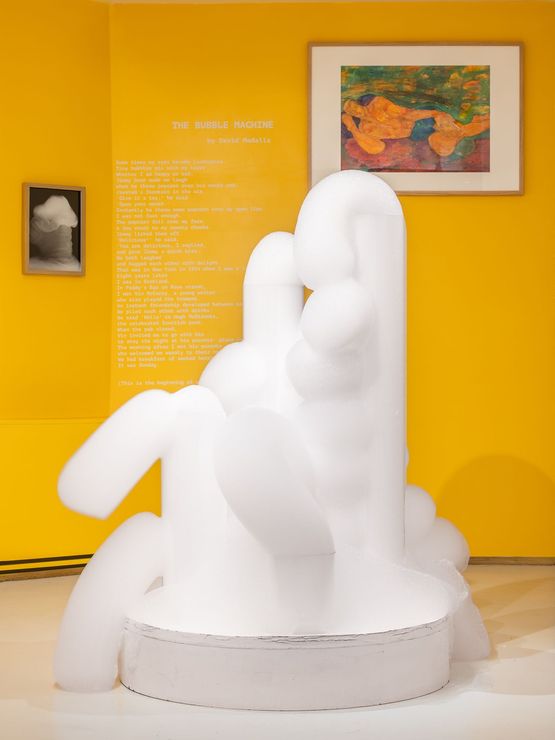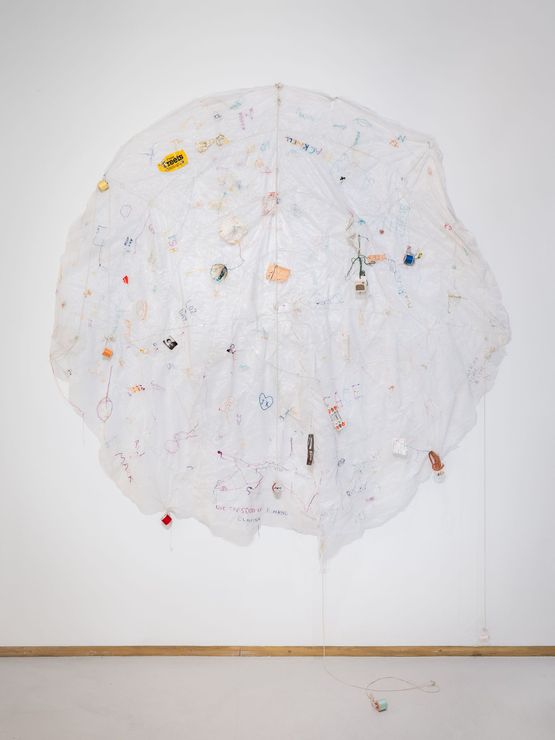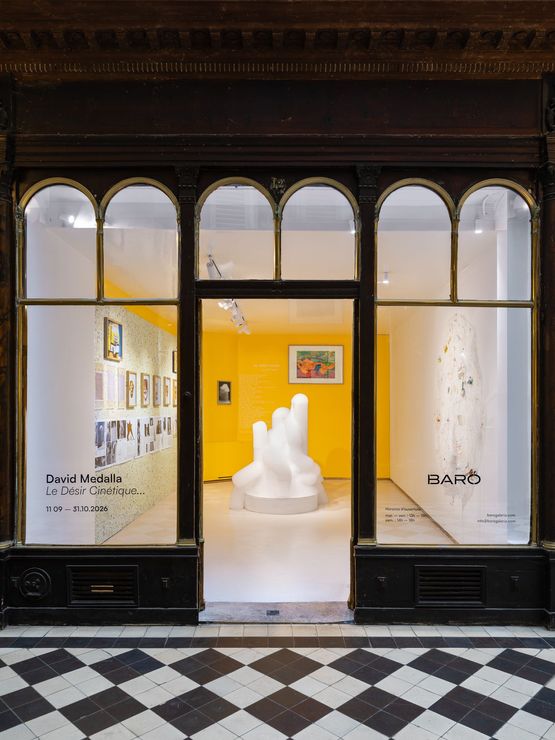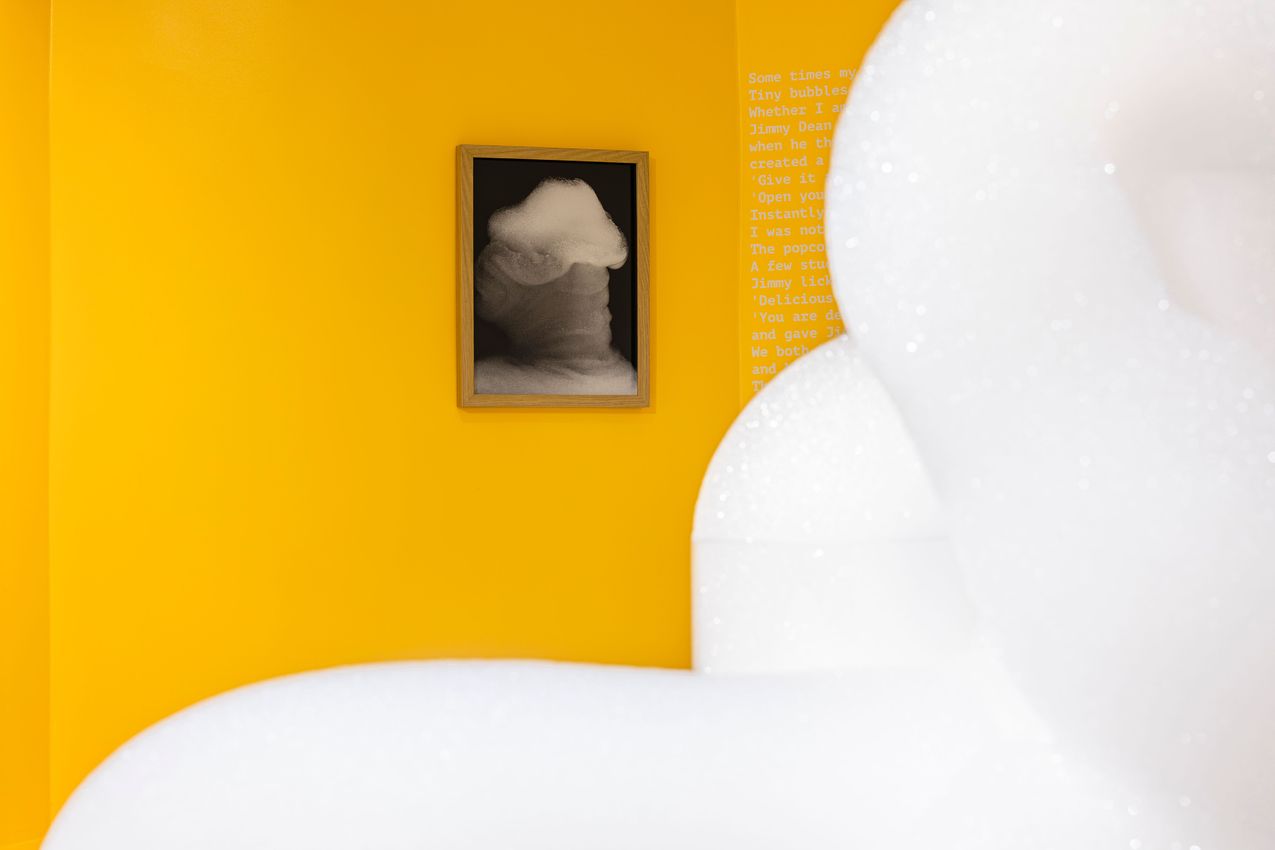
Baró is pleased to announce David Medalla, Le Désir Cinétique..., an exhibition dedicated to the life and work of pioneering Filipino artist David Medalla (1938–2020). The exhibition is curated by Rolando J. Carmona in collaboration with Mountains, Berlin. Le Désir Cinétique... brings together one of Medalla’s Bubble Ma- chine sculptures with a historical panorama of works spanning six decades of his practice.
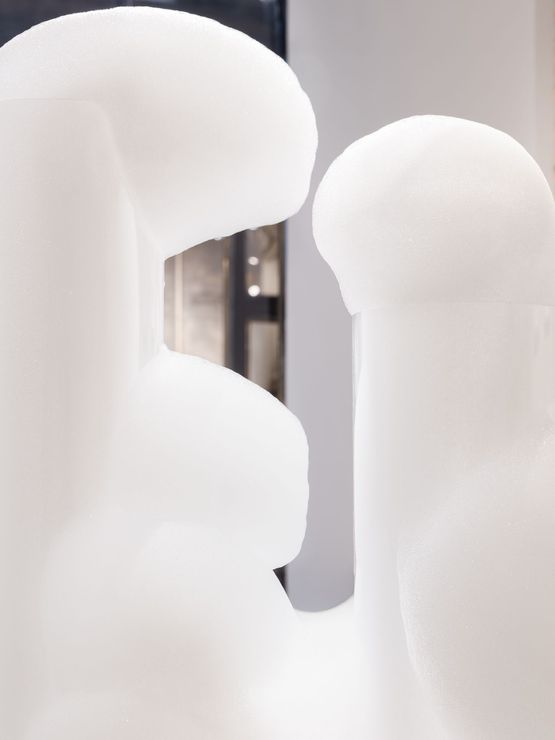
Conceived in the early 1960s, Medalla’s Cloud Canyons, popularly known as Bubble Machines, are considered his signature body of work. Composed of basins and tubes through which water and soap are continuously pumped, the sculptures generate slow, un- repeatable formations of foam that rise and dissolve in real time.
Medalla described them as “auto-creative,” a term coined in dialogue with fellow Signals co-founder Gustav Metzger’s “au- to-destructive” art. Metzger called Medalla “the first master of auto-creative art.” In his 1965 Mmmmmmm Manifesto, Medalla wrote that his sculptures would “breathe, perspire, cough, laugh, yawn, smile, wink, pant, dance, walk, crawl.”
Recent institutional surveys at the Hammer Museum, Los Ange- les (2024), and Tate Modern, London (2025), reflect Medalla’s growing recognition within the history of kinetic and participatory art. Central to his legacy was Signals London, the gallery and journal he co-founded in 1964, which became a meeting point for an international generation of artists.
Paris was among the cities that shaped David Medalla’s practi- ce. In 1960, philosopher Gaston Bachelard introduced Medalla’s first performance in France, staged at the Academy of Raymond Duncan, brother of the dancer Isadora Duncan. Years later, the poet Louis Aragon, co-founder of Surrealism, introduced another of Medalla’s performances. Paris remained one of the cities, along with London and New York, between which Medalla moved and worked for over six decades. He lectured at the Sorbonne. His work has been presented across the city’s institutions, including L’informe: mode d’emploi, curated by Yves-Alain Bois and Ro- salind Krauss at the Centre Pompidou, and Live/Life, curated by Hans Ulrich Obrist at the Musée d’Art Moderne, both in 1996, as well as at the Jeu de Paume in 2013.
Because each Bubble Machine sculpture must be specially ins- talled and operated with water and soap, public presentations of Medalla’s work remain rare. Le Désir Cinétique... offers visitors in Paris the opportunity to see one of these kinetic sculptures in motion, alongside a broader archive of the artist’s six-decade practice.
Medalla was a pioneering Filipino-born artist whose practice encompassed performance, installation, kinetic sculpture, and participatory art. He moved across Manila, New York, London, Paris, and Berlin, connecting avant-garde communities worldwide.


A respected voice in contemporary art discourse.
Focusing on ambitious storytelling and insightful art-world commentary. Ocula Magazine publishes in-depth interviews, critical essays and timely analysis on the artists, exhibitions and ideas driving the global art world.
Learn more about Ocula Magazine
Showcasing the best of the art world.
Ocula partners with galleries from around the world to highlight their artists, artworks and exhibitions. Gallery membership is by application and invitation, with each member vetted by an independent panel.
Learn more about Ocula Membership

Specialises in the sale of major artworks.
Led by a team with deep ties to the world’s leading auction houses, galleries and collectors. Ocula’s advisory team offers bespoke services to high-net-worth clients from around the world who are looking to acquire the best of contemporary and modern art.
Learn more about our team and services