





KIMIYO MISHIMA
1932-2024, JapanKimiyo Mishima was a pioneering Japanese contemporary artist celebrated for her hyperrealistic ceramic sculptures of newspapers, cardboard boxes, and other ‘breakable printed matter’. Her witty, critical artworks transform everyday throwaways into fragile monuments, compelling viewers to reconsider the value and permanence of information and consumer waste.
Mishima’s practice, which spanned over six decades, is internationally recognised for its technical innovation and conceptual depth, and she is widely regarded as a foundational figure in postwar Japanese art and contemporary ceramics.
Early Years
Born in the Juso district of Osaka in 1932, Mishima grew up amid the devastation of World War II, an experience that shaped her sensitivity to impermanence and destruction. Encouraged by her art teacher and father, she began painting in her teens and later joined Atelier Montagne Youga Kenkyusho in Tokyo, where she studied under Shigeji Mishima, whom she later married. Immersed in the intellectual circles of the Dokuritsu Art Association and influenced by Gutai and international movements such as Art Informel, Abstract Expressionism, and Pop Art, she shifted from figurative painting to abstraction by the late 1950s. Mishima lived and worked in Osaka and Gifu, with formative periods in Tokyo and New York (Rockefeller Scholarship, 1986–87).
Kimiyo Mishima Artworks
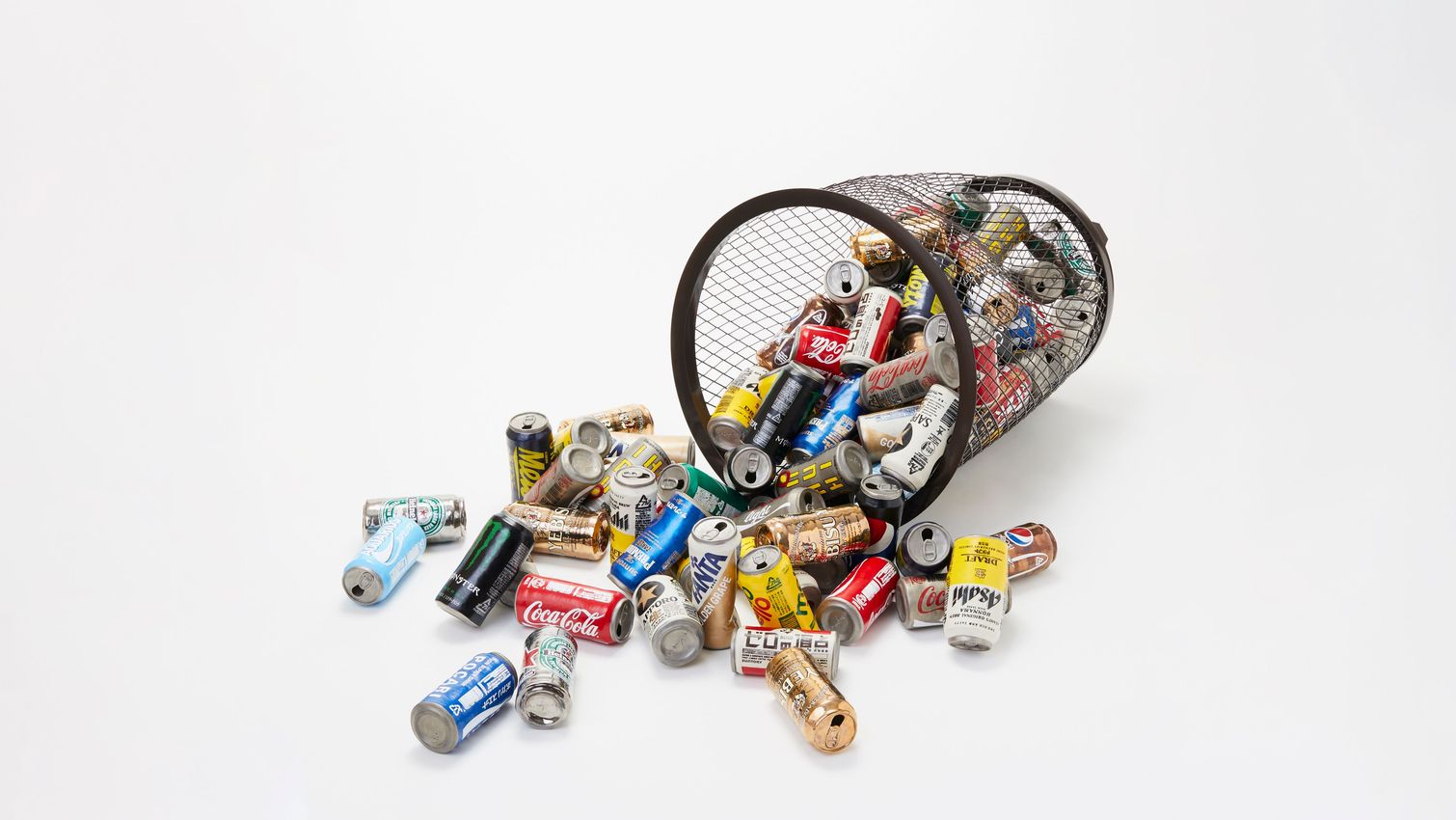
Mishima’s contemporary art is defined by her transformation of disposable printed materials—newspapers, magazines, boxes—into meticulously crafted ceramic sculptures. Her work explores the tension between the ephemeral and the permanent, the mass-produced and the handmade, and the environmental impact of consumer culture.
Painting, Collage, and Early Abstraction (1950s–1960s)
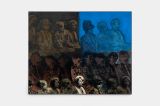
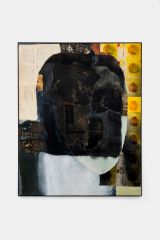
Mishima began her career as a painter, moving from still lifes and representational works to abstraction and collage. Her paintings from the 1960s, such as Work 60-B (1960) and Recollection I–III (1962), feature appropriated lettering and magazine fragments, expressing anxiety about information overload and the changing material world.
Breakable Printed Matter: Ceramic Newspapers and Boxes (1971–2024)
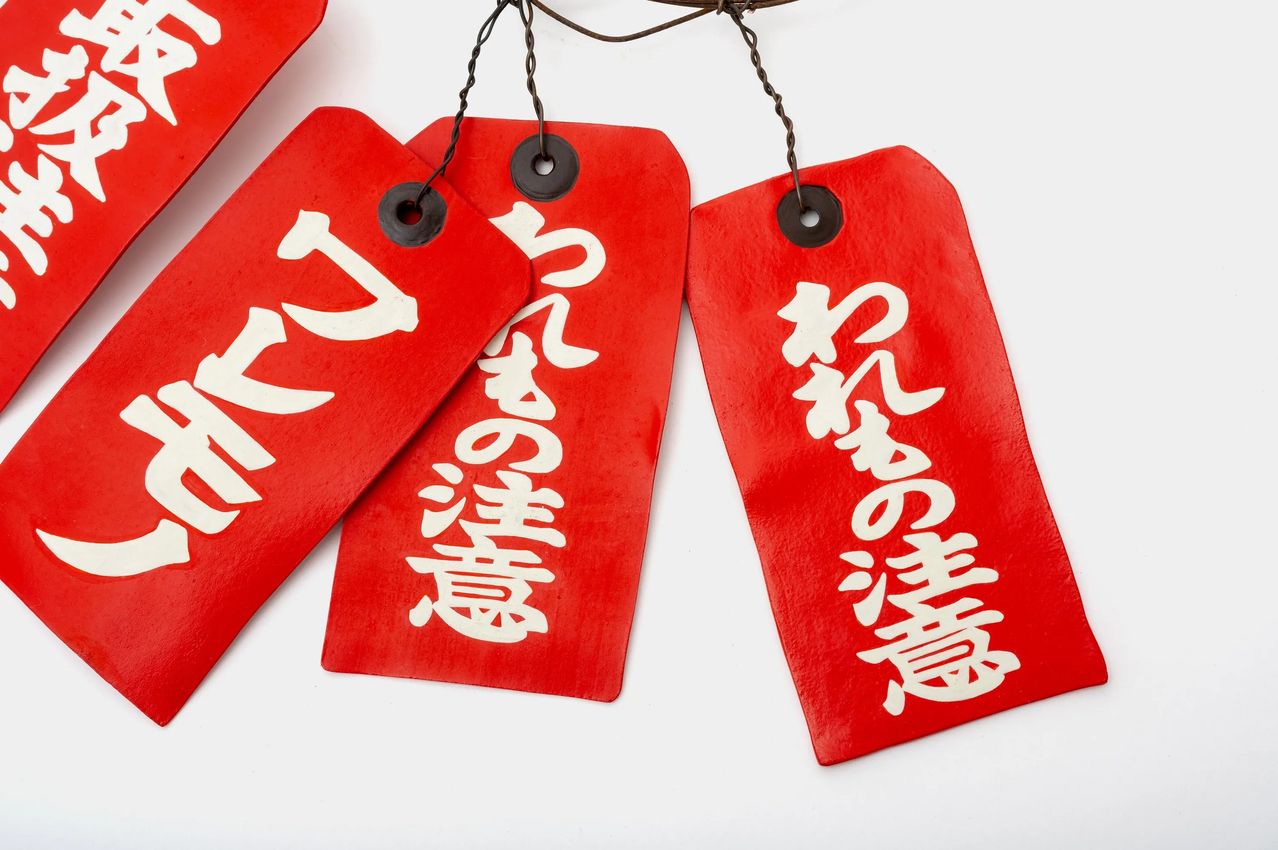
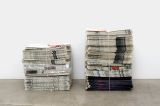
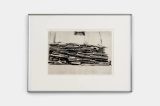
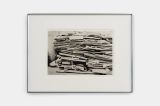
In 1971, Mishima debuted her first ceramic newspaper sculptures, using silkscreen techniques to transfer newsprint, advertisements, and comics onto clay. These works, including Package-73 (1973) and Newspaper-F-82 (1982), mimic rumpled paper or discarded packaging, but are rendered in breakable, permanent ceramic. Mishima’s sculptures critique mass media, material waste, and the contradictions of modern consumerism, drawing parallels to Pop Art and the work of Claes Oldenburg and Andy Warhol. Her large-scale installations, such as Another Rebirth 2005-N (Naoshima), feature monumental wastebaskets overflowing with ceramic trash, highlighting the absurdity and environmental cost of overproduction.
Monumental Works and International Recognition (1980s–2020s)
Throughout her career, Mishima continued to expand her repertoire, creating life-sized ceramic telephone poles, beer cans, and fruit boxes, as well as public installations. Her works have been featured in major exhibitions and are held in significant museum collections worldwide, including the National Museum of Modern Art, Kyoto; Museum of Contemporary Art Tokyo; Benesse Art Site Naoshima; M+ Hong Kong; Everson Museum of Art, New York; and Musée Cernuschi, Paris.
Select Public Commissions
- Another Rebirth 2005-N, Naoshima, Kagawa Prefecture, Japan
- Monumental ceramic sculptures for public and private collections in Japan and internationally.
Select Awards and Accolades
- Mainichi Art Award (2022)
- Gold Prize, Japan Ceramic Society (2021)
- Agency for Cultural Affairs Commissioner’s Commendation (2021)
- Sardi per l’Arte Back to the Future Prize, Artissima, Italy (2019)
- Ando Tadao Cultural Foundation Prize (2019)
- Rockefeller Scholarship, Asian Cultural Council, New York (1986–87)
- Gold Prize, International Ceramic Exhibition, Faenza, Italy (1974)
Exhibitions
Kimiyo Mishima has been the subject of both solo and group exhibitions at important spaces. Below is a selection of exhibitions.
Solo Exhibitions
- Kimiyo Mishima: Paintings, Nonaka-Hill, Los Angeles (2018)
- Kimiyo Mishima, Anne Mosseri-Marlio Galerie, Basel (2018)
- Kimiyo Mishima, Taka Ishii Gallery, New York (2016)
- Contemporary Art Museum, Ise, Mie (2004)
- Minami Gallery, Tokyo (1974)
Group Exhibitions
- Radical Clay – Contemporary Women Artists from Japan, touring US museums (2023–2025)
- Another Energy: Power to Continue Challenging – 16 Women Artists from around the World, Mori Art Museum, Tokyo (2021)
- 10th Asia Pacific Triennial of Contemporary Art, QAGOMA, Brisbane (2021)
- Contemporary Japanese Ceramic, Everson Museum of Art, New York (1992)
- The Fifth British International Print Biennale, Bradford, UK (1976)
- International Ceramic Exhibition, Faenza, Italy (1972–80)
- Trends in Contemporary Japanese Painting and Sculpture, National Museum of Modern Art, Kyoto (1964)
Kimiyo Mishima FAQs
Where can I see Kimiyo Mishima’s art?
Her works are in the permanent collections of the National Museum of Modern Art, Kyoto; Museum of Contemporary Art Tokyo; Benesse Art Site Naoshima; M+ Hong Kong; Everson Museum of Art, New York; Musée Cernuschi, Paris; and are regularly exhibited at BLUM, Nonaka-Hill, and Taka Ishii Gallery.
What is Kimiyo Mishima best known for?
She is celebrated for her ceramic sculptures of newspapers, boxes, and wastebaskets—works that transform ephemeral, disposable printed matter into fragile, lasting objects, questioning the value of information and the consequences of mass consumption.
What themes did Mishima’s art address?
Her art explores the impact of mass media, the absurdity of overproduction, the fragility of information, and environmental concerns, often with a sense of humour and irony.
Has Kimiyo Mishima received major awards or recognition?
Yes, she received the Gold Prize from the Japan Ceramic Society, the Mainichi Art Award, and the Rockefeller Scholarship, among others.
What is an interesting fact about Kimiyo Mishima?
Mishima was inspired by both Japanese and Western art movements, and her work is often compared to Pop Art. She described her sculptures as ‘breakable printed matter’—objects that appear disposable but are, in fact, precious and fragile.
How is Kimiyo Mishima’s name pronounced?
Her name is pronounced ‘kee-MEE-yo mee-SHEE-ma’.
Ocula | 2025























Explore and Follow Artists Shaping Contemporary Art
A respected voice in contemporary art discourse.
Focusing on ambitious storytelling and insightful art-world commentary. Ocula Magazine publishes in-depth interviews, critical essays and timely analysis on the artists, exhibitions and ideas driving the global art world.
Learn more about Ocula Magazine
Showcasing the best of the art world.
Ocula partners with galleries from around the world to highlight their artists, artworks and exhibitions. Gallery membership is by application and invitation, with each member vetted by an independent panel.
Learn more about Ocula Membership
Specialises in the sale of major artworks.
Led by a team with deep ties to the world’s leading auction houses, galleries and collectors. Ocula’s advisory team offers bespoke services to high-net-worth clients from around the world who are looking to acquire the best of contemporary and modern art.
Learn more about our team and services